
Key Takeaways
1. Longstreet's Post-War Conversion: A "Confederate Judas" Embracing Reconstruction
Longstreet was "le Judas Confedéré," as the reactionary francophone New Orleans paper Le Carillon charged, to go along with the labels of "Benedict Arnold," "Lucifer," and other such favorites of the unreconstructed press.
A shocking pivot. James Longstreet, a celebrated Confederate general and Robert E. Lee's "war-horse," became a pariah in the post-Civil War South for his audacious support of Radical Reconstruction. His decision to align with the Republican Party, the party of Lincoln and emancipation, and to advocate for Black enfranchisement, earned him vitriolic condemnation from his former comrades. This dramatic political conversion, unprecedented among high-ranking Confederates, made him a symbol of betrayal to many white Southerners.
Embracing the new order. Longstreet's transformation was publicly cemented in 1870 when he conspicuously reviewed an African American militia parade in New Orleans, a city central to Reconstruction's success. As Adjutant General of the Louisiana State Militia, he ensured Black regiments were well-equipped and trained, promoting Black officers and granting them legitimacy. This direct challenge to the prevailing racial caste system and Lost Cause orthodoxies solidified his reputation as an apostate in the eyes of those who resisted change.
An iconoclastic figure. His post-war career as a Republican operative and public figure saw him take controversial stances on race relations, sectional reunion, and military history. While not a "true racial egalitarian" by abolitionist standards, his insistence on Black political influence and leadership in the South was a clear threat to white supremacy. Longstreet's complex journey forces a confrontation with the "haunting complexity of Southern history" and the elusive nature of reconciliation.
2. Shaped by the Proslavery South, Driven by Ambition
As he embarked on his career as a college president in the 1840s, Augustus would continue to own a domestic workforce of roughly a dozen enslaved persons, which classified him as a "middling" slaveowner rather than an elite "planter."
Deep Southern roots. James Longstreet's upbringing was steeped in the proslavery ideology of the plantation South. Born in Edgefield County, South Carolina, in 1821, his family owned slaves, and he himself was deeded eight enslaved individuals at age eleven. His influential uncle, Augustus Baldwin Longstreet, a fervent proslavery ideologue and nullification advocate, heavily mentored young James, priming him to defend Southern interests.
Military aspirations. Despite being an "indifferent student" at West Point, Longstreet excelled in the physical aspects of soldiering and formed a lifelong friendship with Ulysses S. Grant. His Mexican War service, where he distinguished himself at battles like Churubusco and Chapultepec, earned him promotions and public acclaim. However, he felt his temporary "brevet" promotions were insufficient, fueling an ambition for higher rank and recognition.
Choosing the Confederacy. When the South seceded in 1861, Longstreet, then a US Army paymaster in New Mexico, swiftly resigned his commission to join the Confederacy. While he later claimed to be a "reluctant secessionist" swayed by family pressure, evidence suggests he "acted with surprising haste" to secure a leadership role in the rebel military. His decision was driven by a blend of loyalty to his "people" (white Southerners) and a desire for the advancement that the new Confederate army promised.
3. Military Prowess and Personal Tragedy Amidst Rising Slave Resistance
Longstreet’s speech conjured images of slave resistance and race war because he knew this kind of rhetoric would resonate with his troops.
Early war triumphs. Longstreet quickly rose to prominence in the Confederate army, earning renown at First Bull Run, the Peninsula Campaign, and Second Manassas. He became known for his belief in defensive tactics, allowing the enemy to attack fortified positions before launching devastating counterattacks. Robert E. Lee recognized his abilities, promoting him to major general and later lieutenant general, making him Lee's senior subordinate.
Profound personal loss. Amidst these military successes, Longstreet endured immense personal tragedy. In January 1862, a scarlet fever epidemic claimed three of his four children within six days. This devastating loss left him "very serious and reserved" and fueled his indignation against the Union, which he blamed for bringing the "scourge of war into Southern communities."
Confronting slave resistance. Longstreet's wartime experience also forced him to confront the "problem of the slaves' political allegiance." As enslaved people increasingly fled to Union lines, providing intelligence and labor, Longstreet responded with rhetoric of "servile insurrection" and policies of re-enslavement. He actively sought to preempt and punish Black resistance, including seizing free Blacks during the Gettysburg campaign to send them South as slaves, demonstrating his deep commitment to the Confederacy's racial politics.
4. Gettysburg: A Fateful Clash of Strategies and Lingering Controversy
Longstreet objected that "no fifteen thousand men ever arrayed for battle can take that position"—he felt that at least 30,000 men were required.
Strategic disagreement. At Gettysburg, Longstreet advocated for a defensive strategy, proposing to maneuver the Confederate army between the Union forces and Washington D.C., thereby forcing the Federals to attack a strong Confederate position. However, Lee, "impatient of listening" and "off his balance" with overconfidence, rejected this advice, insisting on a direct assault. This fundamental disagreement became the root of Longstreet's enduring post-war controversy.
The second day's delays. On July 2nd, Longstreet's attack on the Union left flank was delayed, leading to accusations of insubordination. While critics claimed he deliberately sabotaged Lee's plan, Longstreet maintained that the delays were necessary for troop positioning and awaiting reinforcements, and that Lee was "present on the field all the time & was apparently consenting to the situation from hour to hour." His troops fought heroically, but the attack ultimately failed due to strong Union defenses and lack of coordinated support.
Pickett's Charge and its aftermath. Longstreet vehemently opposed Lee's plan for a frontal assault on the Union center on July 3rd, famously telling Lee, "I should not have been so urgent had I not foreseen the hopelessness of the proposed assault." Despite his grave misgivings, he reluctantly gave the order. The devastating failure of Pickett's Charge, which resulted in staggering Confederate casualties, solidified Longstreet's belief that Lee's "impatience" and "overexcitement" had led to a "fatal error."
5. Western Campaigns and the Road to Appomattox: A Shift in Perspective
In my judgment, our last opportunity was lost when we failed to follow the success at Chickamauga, and capture or disperse the Union army.
Triumph and frustration in the West. Longstreet's transfer to the western theater in September 1863, though initially desired, proved to be a period of mixed fortunes. He achieved a decisive victory at Chickamauga, leading a "shattering blow" against the Union center, which he considered "the most complete victory of the war, except perhaps the first Manassas." However, his triumph was marred by deep frustration with General Braxton Bragg's leadership, whom he openly criticized for failing to capitalize on the victory and pursue the retreating Union army.
Knoxville debacle. Longstreet's subsequent detached mission to Knoxville, East Tennessee, against Ambrose Burnside, was a "doomed mission." Plagued by poor supplies, bad weather, and inadequate forces, his ill-conceived frontal assault on Fort Sanders failed disastrously. This period marked a nadir in his personal confidence, leading him to offer his resignation, which Jefferson Davis refused.
Fatalism and Grant's rise. Chastened by his western experiences, Longstreet developed a fatalistic view of the Confederacy's prospects, attributing its failures to logistical shortcomings and a "lack of command harmony." He increasingly recognized the formidable threat posed by Ulysses S. Grant, whom he described as "not lightly to be driven from his purpose." Longstreet's growing respect for Grant, coupled with his belief that the 1864 presidential election offered the Confederacy its last chance for an "honorable peace," foreshadowed his post-war political alignment.
6. Embracing the "Conqueror's Terms" and Aligning with Grant
There can be no discredit to a conquered people for accepting the conditions offered by their conquerors. Nor is there any occasion for a feeling of humiliation.
Appomattox as a turning point. For Longstreet, the surrender at Appomattox was not merely a military defeat but a profound personal and political turning point. He interpreted Grant's lenient parole terms as a "conditional freedom" for Confederates, obligating them to accept the war's verdict and the new political order. This perspective, rooted in his long-standing friendship with Grant, set him apart from many former Confederates who clung to the "Lost Cause" narrative.
Pardon and political awakening. Longstreet swiftly took the amnesty oath in May 1865 and sought a presidential pardon, initially denied by Andrew Johnson who deemed him "rebel No. 3." His admiration for Grant deepened as the Union general consistently advocated for his pardon and clemency. Longstreet saw Grant as a principled leader, a stark contrast to the "reckless divisiveness" and "incompetence" of President Johnson, whose policies he believed were reviving wartime hatreds.
Public declaration of support. In 1867, Longstreet published a series of controversial letters endorsing Congressional Reconstruction. He argued that the "sword has decided in favor of the North," making Northern principles the new law, and urged Southerners to "abandon ideas that are obsolete," including the Democratic Party itself. This public embrace of Reconstruction, fueled by his respect for Grant and the unique biracial politics of New Orleans, irrevocably altered his standing in the South.
7. Active Participation in Biracial Governance and Challenging Racial Norms
It matters not whether I bear the mantle of Mr. Davis or the mantle of Mr. Sumner, so [long as] I may help to bring the glory of 'peace and good-will toward men.'
A radical shift. Longstreet's political conversion was not merely rhetorical; he actively participated in Louisiana's biracial Republican government. In 1870, Governor Henry Warmoth appointed him Adjutant General of the Louisiana State Militia, a force that included both white former Confederates and Black Union veterans. Longstreet publicly promoted Black regiments and their leaders, requiring all militiamen to pledge acceptance of "the civil and political equality of all men."
Integrating institutions. He further challenged racial norms by serving on the municipal school board, which aimed to establish integrated public schools, and by conspicuously hiring Black men for positions in the New Orleans Custom House, where he served as surveyor. These actions, which earned him praise from Republican papers and Black leaders like P. B. S. Pinchback, were seen by white conservatives as "social equality" and further proof of his "race traitor" status.
Alliance with Black leaders. Longstreet forged strong alliances with prominent Black politicians and military officers, including Pinchback, Alexander E. Barber, and James Lewis. He worked alongside them in the Central Republican Club and participated in celebrations of the Fifteenth Amendment. His willingness to play a subordinate role to Black leaders and to publicly reject the "negro supremacy" trope of Lost Cause politics marked him as a truly iconoclastic figure in the Reconstruction South.
8. Defending Reconstruction: The Bloody Battle of Canal Street
If every citizen would use his best efforts to frown down and discourage the banding together of citizens for the purpose of overturning the legal government, there would be no trouble.
Rising white supremacist violence. Longstreet's active role in biracial governance intensified the backlash from white conservatives, who formed paramilitary groups like the Crescent City White League. These groups engaged in propaganda campaigns, spreading false rumors of "Black Leagues" and planning a coup d'état against the Republican state government. The Colfax Massacre in 1873 and the Coushatta Massacre in 1874 demonstrated the escalating violence and the limits of federal protection.
The Canal Street Coup (1874). On September 14, 1874, the White League launched an armed insurrection in New Orleans, aiming to depose Governor William Pitt Kellogg. Longstreet, as commander of the Metropolitan Police and state militia, led the defense of the besieged government. In a fierce hour-long battle on Canal Street, his forces, though outnumbered and outgunned, engaged the White Leaguers. Longstreet was wounded, and Kellogg's forces were ultimately routed, leading to the White League's temporary seizure of the city.
Scapegoating and retreat. Despite his bravery, Longstreet was widely scapegoated by conservative papers, accused of cowardice and "bad generalship." The integrated police force was discredited, and the state militia's reputation was severely damaged. The coup, though reversed by federal intervention, effectively signaled the demise of Reconstruction in Louisiana. Demoralized and in ill health, Longstreet began to transition his political base to Gainesville, Georgia, seeking refuge from the "turbulent Louisiana scene."
9. Rebuilding Reputation and Political Influence in Georgia
I believe that now, more fully than then, the public is ready to receive, in the spirit in which it is written, the story which I present.
A new chapter in Gainesville. Longstreet's move to Gainesville, Georgia, in 1875 marked a new phase in his life, where he sought to rebuild his political career and defend his wartime record. He secured federal patronage positions, serving as deputy collector of internal revenue and postmaster of Gainesville. While mocked by the conservative press for "licking postage stamps," he remained a vocal Republican, advocating for the party's growth in the South.
Defending his war record. The 1870s and 1880s saw an escalation of attacks on Longstreet's Gettysburg performance by former Confederate generals like Jubal Early and William Nelson Pendleton, who blamed him for the Southern defeat. Longstreet responded by publishing articles in the Philadelphia Weekly Times and Century magazine, meticulously detailing his strategic disagreements with Lee and defending his actions. He also played a prominent role in exonerating Union General Fitz John Porter, who had been similarly scapegoated.
Reconciliation and political maneuvering. Longstreet cultivated an image as a prophet of sectional reconciliation, emphasizing the shared heroism of Union and Confederate soldiers. He found allies in the "New South" movement, particularly Henry W. Grady of the Atlanta Constitution, who saw Longstreet as a valuable symbol for promoting Southern commercial development and white unity. His embrace of Grant's magnanimity and his participation in blue-gray reunions further burnished his reconciliationist credentials, even as he continued to face skepticism from those who could not reconcile his Confederate past with his Republican present.
10. Federal Marshal and the Fight for Voting Rights in Jim Crow Georgia
The lynchings in Georgia and elsewhere throughout the South are much to be deplored, but, as indicated in the case of your strikes, disorders that even lead to considerable loss of life are not by any means confined to the South.
Marshal in a hostile South. Longstreet's appointment as US Marshal for the Northern District of Georgia in 1881 placed him at the forefront of federal law enforcement in a state increasingly dominated by Jim Crow politics. He used his position to dispense patronage and advance Republican fortunes, often promoting Black officeholders. However, he faced intense opposition from Democratic state officials and white supremacist groups, who sought to undermine federal authority and suppress Black voting rights.
The Ex parte Yarbrough case. Longstreet played a crucial role in the landmark Ex parte Yarbrough case (1884), which involved the violent "kukluxing" of Black voters in Banks County, Georgia, for supporting a Republican-endorsed candidate. His deputies arrested the perpetrators, and he oversaw their transfer to prison. The Supreme Court's unanimous decision, affirming Congress's right to protect federal elections from private violence, was a significant, albeit anomalous, victory for voting rights in the post-Reconstruction South.
Political setbacks and evolving views. Despite his efforts, Longstreet was eventually forced to resign as marshal due to Republican factionalism and accusations of corruption, though he vigorously defended his conduct. He briefly supported a "white man's party" in Georgia, a move rejected by Black leaders, yet he consistently condemned voter suppression and mob violence. His 1899 essay, "The Loyal South To-Day," while still reflecting some paternalistic and mitigating views on lynching, also denounced it as "deplorable" and called for cooperation with Black leaders like Booker T. Washington.
11. Memoir as Vindication: Demythologizing Lee and Praising Grant
Bad as was being shot by some of our own troops in the battle of the Wilderness,—that was an honest mistake, one of the accidents of war,—being shot at, since the war, by many officers, was worse.
A final reckoning. In 1896, Longstreet published his 690-page memoir, From Manassas to Appomattox: Memoirs of the Civil War in America, a culmination of his decades-long effort to vindicate his wartime record. He aimed to present a "plain statement of facts" in a spirit of sectional reconciliation, while also settling scores with his persistent critics, particularly Jubal Early and the "Virginia cabal."
Challenging Confederate myths. The memoir offered a demythologized portrayal of Robert E. Lee and Stonewall Jackson, humanizing them and critiquing their strategic and tactical errors, especially at Gettysburg. Longstreet reiterated his belief that Lee's "overexcitement" and "lost equipoise" led to the disastrous Pickett's Charge. He argued that Confederate failings, including hubris and disunity, rather than overwhelming Union numbers, were ultimately responsible for the South's defeat.
Praise for Grant, and a personal touch. Longstreet lauded Ulysses S. Grant as a "great soldier" and "the highest type of manhood America has produced," emphasizing Grant's "deliberate" generalship and magnanimous terms at Appomattox. He framed his own post-war political conversion as an act of gratitude to Grant and a fulfillment of his parole obligations. The memoir concluded with a poignant anecdote about his former slave, Daniel, suggesting a personal journey toward understanding and forgiveness, even as it reflected paternalistic sentiments.
12. Enduring Legacy: A Complex Figure in the Memory Wars
To me, the surrender of my sword was my reconstruction. I looked upon the 'Lost Cause' as a cause totally, irrevocably lost.
A life of contradictions. Longstreet's final years saw him continue to serve as a federal railroad commissioner, travel the country, and comment on national affairs, including the Spanish-American War. His death in 1904 brought a wave of tributes, particularly from the North, praising his "high-souled patriotism" and "commendable service to his country when the war was over." However, the South's response remained divided, with many still unable to reconcile his Confederate past with his Republican present.
Helen's tireless defense. His second wife, Helen Dortch Longstreet, became his fierce posthumous defender, publishing Lee and Longstreet at High Tide (1904) to counter his detractors. Her own political views evolved, moving from Lost Cause assumptions to a bold defense of Black civil rights and a condemnation of lynching, which she linked to her husband's "courage to meet the enemies of the peace time." She tirelessly campaigned for a monument to him at Gettysburg, emphasizing his military genius and his role as a statesman.
A contested memory. Despite Helen's efforts, Longstreet remained a controversial figure. His funeral, though large, was a local rather than national event, with Lost Cause iconography often overshadowing messages of reconciliation. The "Battle of Liberty Place" monument in New Orleans, a symbol of white supremacy, continued to cast him as a "henchman" of the Radicals. Modern scholarship and the ongoing debates over Confederate monuments continue to grapple with Longstreet's complex legacy, recognizing him as a figure whose courage to change his convictions makes him an enduringly relevant voice in American history.
Review Summary
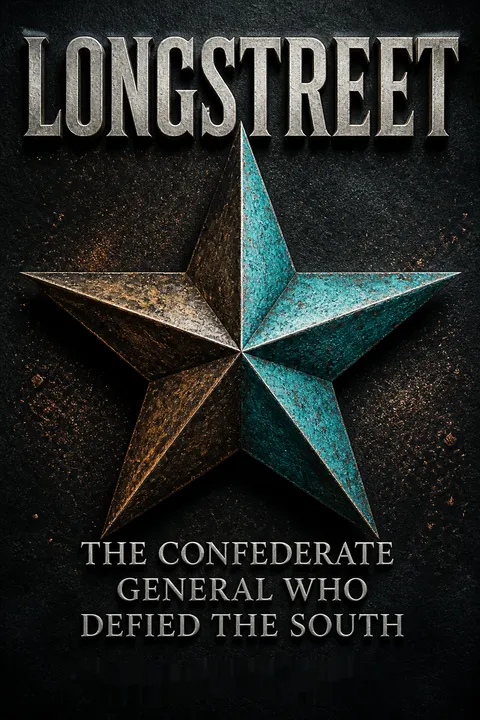
Reviews of Longstreet: The Confederate General Who Defied the South are largely positive, averaging 4.06/5. Readers praise Varon's balanced, thoroughly researched portrayal of a complex historical figure. Many highlight the book's focus on Longstreet's post-war life, his rejection of the Lost Cause, and his support for Reconstruction as particularly compelling. Some critics note the book's dry sections and wish for deeper psychological insight into Longstreet's motivations. Most agree it's essential reading for Civil War enthusiasts, offering a nuanced perspective on a largely forgotten but historically significant figure.
People Also Read

Download PDF
Download EPUB
.epub digital book format is ideal for reading ebooks on phones, tablets, and e-readers.








































