
Key Takeaways
1. Liberalism's Foundational Ideas: Conflict, Power, Progress, and Respect
Liberalism from birth was as much a search for order as a pursuit of liberty.
A New Political Practice. Liberalism emerged in the early 19th century not as a static ideology, but as a dynamic political practice guided by four core, often conflicting, ideas. These were: the inescapable reality of conflict within society, a deep distrust of concentrated power, an unwavering faith in human progress, and a fundamental respect for individuals, regardless of their beliefs or status. This framework allowed liberals to navigate a world undergoing unprecedented social and economic upheaval, seeking a stable yet adaptable order.
Beyond Liberty Alone. While often associated solely with liberty, liberalism's distinctiveness lies in its commitment to all four ideas simultaneously. Unlike rivals who claimed liberty for specific groups or under specific conditions, liberals insisted on a broader application. This comprehensive approach distinguished liberalism from both conservatives, who prioritized tradition and authority, and socialists, who sought to eliminate conflict through radical social transformation.
Internal Tensions as Strength. The inherent tensions among these guiding ideas – for instance, the desire for individual respect clashing with the drive for social progress – were not seen as weaknesses but as sources of dynamism and resilience. Liberalism's ability to accommodate these "family quarrels" and continuously seek a balance, rather than imposing a single, dominant principle, proved crucial to its endurance and adaptability in a constantly changing world.
2. The Birth of Liberalism: Order Amidst Ceaseless Change
Liberalism responded to a novel condition of society energized by capitalism and shaken by revolution in which for better or worse material and ethical change now appeared ceaseless.
A World Transformed. The early 19th century, marked by the rise of industrial capitalism and the aftershocks of the American and French Revolutions, presented a new predicament: society was in constant, unpredictable flux. This era saw the breakdown of old hierarchies, the rapid growth of cities, and the emergence of new technologies like the steam engine and telegraph. Liberals, like Wilhelm von Humboldt, were both thrilled by the potential for human advancement and horrified by the accompanying social disorder.
Dream and Nightmare. Liberals envisioned a "masterless world" – a peaceful, prosperous place free from arbitrary authority, monopolies, and fixed social structures. This was their dream. However, they also harbored a nightmare of disorder, drawing on memories of revolutionary terror, religious strife, and urban unrest. Their political project was to reconcile these extremes, channeling inevitable conflict into productive competition, argument, and exchange, thereby creating a dynamic yet stable social order.
Beyond Enlightenment. While building on Enlightenment ideals of reason and individual freedom, early liberals faced a reality far more turbulent than their predecessors had imagined. Thinkers like Adam Smith and Immanuel Kant had encouraged ideas of liberty and societal change, but none had experienced the full force of industrialization or mass revolution. Liberalism thus became a practical response to a bewildering new state of affairs, seeking to adapt law and government to ceaseless material and ethical change.
3. Early Liberalism's Dual Vision: Individual Flourishing and Limited Government
Developing human capacities to the full in their diversity and individuality was an urgent task, but a task for which laws, government, and regulation were generally inept.
Unleashing Human Potential. Pioneers like Wilhelm von Humboldt championed the full development of individual capacities, believing that people should discover and utilize their talents in their own unique ways. This vision emphasized "liberal education" over vocational training, aiming for well-rounded individuals rather than specialized workers. Benjamin Constant reinforced this, stressing the inviolable privacy of individuals and their right to be free from state intrusion, a concept he termed "modern liberty."
Restraining Power, Fostering Progress. François Guizot, a key figure in the July Monarchy, articulated the "radical illegitimacy of all absolute power," arguing that government was most stable when power was divided and rulers were accountable. He saw society as inherently conflict-ridden, but believed that constant public argument and a free press could tame these conflicts. Richard Cobden, a champion of free trade, believed that removing economic barriers would unleash prosperity and social progress, benefiting everyone through a "nobody-loses" argument.
Self-Reliance and Social Order. This early liberal period also saw a strong emphasis on personal progress. Samuel Smiles's "Self-Help" celebrated hard work and self-reliance as paths to material advancement, while William Ellery Channing preached moral self-improvement through civic engagement. Alexis de Tocqueville, observing American democracy, worried about the "tyranny of the majority" and the atomization of society, advocating for robust civil society and local associations as a counterweight to state power and mass conformity.
4. The Democratic Challenge: Expanding Liberalism to All
We are forced in equity to share the government with the working class.
Reluctant Embrace of Suffrage. While early liberals championed constitutional government and individual rights, they were often hesitant to extend full political participation to all citizens, particularly the working class and women. Fears of "the mob," the lessons of Jacobin terror, and concerns about the "capacity" of uneducated masses to govern led to ingenious arguments for restricted franchises. However, the inexorable pressure of growing populations, rising literacy, and the impracticality of maintaining stratified voting systems eventually forced liberals to concede.
The "Who?" Question. The struggle for suffrage highlighted the core distinction between liberalism's "how?" (how authority is restrained and rights protected) and democracy's "who?" (who belongs in the circle of protection). Figures like John Stuart Mill, despite his reservations about the "unlettered masses," ultimately argued for universal suffrage, including for women, believing that education and participation would elevate citizens. This marked a crucial shift towards a more inclusive understanding of civic respect.
Compromise and Adaptation. The "new liberals" of the late 19th and early 20th centuries, like T.H. Green and Leonard Hobhouse, further pushed for the state to actively create "conditions of freedom" by addressing social obstacles like poverty and poor housing. This "positive freedom" approach, alongside the gradual acceptance of universal suffrage, represented liberalism's historic compromise with democracy. It meant acknowledging that liberal ideals, once claimed for a propertied elite, must now apply to everyone, leading to the emergence of "liberal democracy."
5. Liberalism's Darker Side: Imperialism and Warfare
Liberal empire also brought progress and modernity in the form of schools, medicine, science, trade, and rising prosperity.
The Imperial Paradox. The late 19th and early 20th centuries saw liberal nations, despite their ideals of self-determination and resistance to domination, actively expand and defend vast colonial empires. This "liberal imperialism" was driven by a complex mix of economic interests, national pride, and a genuine, albeit paternalistic, belief in a "civilizing mission" to uplift "backward" peoples. Figures like Joseph Chamberlain in Britain and Ernst Bassermann in Germany championed empire as a solution to domestic social tensions and a means to secure national power and prosperity.
Violence and Justification. The pursuit of empire often involved brutal colonial wars and massacres, which liberals justified as necessary for maintaining order or for the temporary tutelage of subject peoples. The "capacity" argument, previously used to deny suffrage to the working class, was extended to rationalize denying full citizenship to colonized populations. This period exposed a profound tension within liberalism: the commitment to universal human progress often clashed with the reality of violent imposition and exploitation.
The Warfare State. The First World War delivered a profound shock to liberal confidence, shattering the belief that modern, progressive nations would avoid large-scale conflict. Liberal leaders like David Lloyd George, Georges Clemenceau, and Woodrow Wilson, despite initial pacifist leanings, became implacable "liberal hawks," mobilizing their states for total war. This era saw the emergence of the "liberal warfare state," a powerful, centralized entity capable of unprecedented violence, even against its own citizens, justified by the defense of liberal values.
6. Crisis and Reinvention: The Economic Slump and the Rise of the State
It is worse in an impoverished world to provoke unemployment than to disappoint the rentier.
The Great Depression's Challenge. The economic crisis of the 1930s, unprecedented in its scale and duration, severely shook liberal faith in self-correcting markets and limited government. Mass unemployment and widespread despair led to a desperate search for solutions, with governments turning to economists for guidance. This period forced a fundamental re-evaluation of the state's role in managing the economy, moving beyond the "new liberal" reforms to more direct intervention.
Conflicting Economic Cures. Economists like John Maynard Keynes argued that the slump was a crisis of "underspending" (lack of effective demand), necessitating government intervention through fiscal policy to stimulate the economy. Irving Fisher, focusing on monetary factors, blamed central bank blunders and advocated for monetary reflation to combat debt-deflation. Friedrich Hayek, conversely, argued against intervention, believing that government actions had caused the crisis and that markets must be allowed to self-correct, even if painful.
The State's New Role. Despite conflicting advice, the crisis led to a massive expansion of government responsibility for economic performance. In the U.S., Franklin Roosevelt's New Deal, though pragmatic and often improvisational, fundamentally reshaped the relationship between citizens and the federal government, raising expectations for state action. Even Herbert Hoover, often caricatured as a do-nothing, initiated many federal programs. This era cemented the idea that governments were accountable for national economic well-being, a legacy that would define post-war liberal democracies.
7. Post-War Triumph: Human Rights and the Welfare State
All human beings are born free and equal in dignity and rights. They are endowed with reason and conscience and should act towards one another in a spirit of brotherhood.
A Global Liberal Aspiration. The moral ruin of World War II and the rise of totalitarianism prompted a profound re-commitment to liberal ideals. The 1948 UN Universal Declaration of Human Rights, drafted by a diverse group including Eleanor Roosevelt and René Cassin, became a global charter for liberal democracy. It codified a comprehensive list of civil, political, social, and economic rights, asserting that human dignity was inviolable and that governments had a duty to protect it, regardless of national law.
The Exemplary German Model. In West Germany, the 1949 Basic Law provided a concrete model for a self-correcting liberal democracy, learning from the failures of the Weimar Republic. It entrenched human dignity, balanced federal and state powers, strengthened parliamentary oversight, and established a powerful constitutional court to safeguard rights. This constitution, alongside economic reforms that created a "social-market" economy, anchored West Germany firmly in the Western liberal order and paved the way for its moral rehabilitation.
The Welfare State's Expansion. In Britain, William Beveridge's 1942 report laid the groundwork for a comprehensive welfare state, promising universal social insurance "from the cradle to the grave." This, along with the National Health Service, represented a significant expansion of liberalism's social compromise with democracy, acknowledging that rights were shallow without the means to exercise them. Across Western Europe, similar welfare provisions became an integral, albeit increasingly costly, part of liberal capitalism, ensuring a more widely shared prosperity and social security.
8. The Philosophical Turn: Justifying Liberalism and its Limits
Justice is the first virtue of social institutions, as truth is of systems of thought.
Re-founding Liberalism. After 1945, liberal thought, particularly in academia, shifted towards rigorous philosophical justification. John Rawls's A Theory of Justice (1971) became a landmark, seeking to establish principles for a "well-ordered" society that ensured fairness and accommodated profound ethical disagreements. Rawls argued that a just society would prioritize equal basic liberties, fair equality of opportunity, and arrange inequalities to benefit the least advantaged ("the difference principle"), moving beyond utilitarian calculations that might sacrifice individuals for the "common good."
Rights as a Core Concept. Rawls's work, and the extensive debates it sparked, cemented "rights" as a central concept in liberal philosophy, offering a robust defense against both utilitarian expediency and collectivist demands. Robert Nozick, from a right-liberal perspective, challenged Rawls, arguing that redistributive policies inherently infringed on individual liberties. Ronald Dworkin, conversely, built on Rawls, asserting that equal rights stemmed from a fundamental requirement for the state to show everyone equal respect and concern.
Skepticism and Pluralism. Other thinkers, like Michael Oakeshott and Isaiah Berlin, offered more modest, yet influential, perspectives. Oakeshott, a conservative liberal, cautioned against "rationalism in politics" and grand schemes, emphasizing the importance of tradition and practical wisdom. Berlin, with his "Two Concepts of Liberty," championed "negative liberty" (freedom from interference) as the only kind liberals should pursue, warning that "positive liberty" (freedom to achieve one's potential) could lead to coercive attempts to impose a single vision of the good life.
9. The Neoliberal Counter-Revolution: Markets Over State
The nine most terrifying words in the English language are, 'I'm from the government and I'm here to help.'
The Fiscal Revolt. The 1970s witnessed a significant shift in liberal attitudes towards the state, fueled by economic stagflation and a growing middle-class tax burden. The "tax revolt," exemplified by California's Proposition 13, signaled widespread discontent with government spending and intervention. This period saw a powerful intellectual counter-movement, "neoliberalism," which advocated for less government, lower taxes, and greater reliance on market mechanisms.
Economists Against Intervention. James Buchanan, a pioneer of public-choice theory, argued that politicians and bureaucrats, like all individuals, act out of self-interest, leading to an oversupply of public goods and inefficient government. He advocated for constitutional limits on taxing and spending to protect taxpayers from majoritarian excesses. Milton Friedman, a leading monetarist, fiercely attacked Keynesian demand management, asserting that inflation was "always and everywhere a monetary phenomenon" and that governments should focus solely on maintaining stable money supply through fixed rules, not discretionary authority.
Political Champions. Leaders like Margaret Thatcher in Britain and Ronald Reagan in the United States became the political faces of this neoliberal shift. Thatcher, deeply influenced by Hayek, used state power to dismantle union power, deregulate industries, and promote market-led solutions, often appealing to national pride and self-reliance. Reagan, with his folksy charm, effectively channeled public distrust of government, advocating for lower taxes, reduced regulation, and a strong stance against communism, despite often expanding government in practice.
10. Liberalism's Enduring Tensions: Progress vs. Respect, State vs. Market
The liberal project is what it was when liberalism began: a search for order amid endless conflict and unceasing change guided by resistance to power, faith in progress, and respect for people.
The Unfinished Project. Throughout its history, liberalism has grappled with inherent tensions among its core ideals. The pursuit of social progress, for instance, often clashes with the demand for individual respect, as seen in early liberal paternalism or the welfare state's potential for overreach. Similarly, the desire for a strong, effective state to address collective problems frequently conflicts with the liberal imperative to resist concentrated power and protect individual liberties.
Cycles of Debate. The "state versus market" debate, a recurring theme, illustrates this dynamic tension. While early liberals like Cobden championed free markets, "new liberals" like Hobhouse advocated for state intervention to create "positive freedom." The post-war era saw a broad consensus on a mixed economy, only for the neoliberal counter-revolution to reassert market primacy. These shifts are not mere ideological swings but reflect ongoing attempts to balance competing liberal values in response to changing economic and social realities.
Beyond Simple Dichotomies. Liberalism's strength lies in its capacity to accommodate these "family quarrels" and avoid rigid, "either-or" thinking. The challenge is to find a "middle way" that acknowledges the necessity of both individual autonomy and collective action, both market efficiency and social justice. This continuous process of adjustment and re-evaluation, rather than the achievement of a static ideal, defines the liberal project in a world that remains characterized by endless conflict and unceasing change.
11. The 21st Century Predicament: Self-Doubt and Global Challenges
None of the major problems facing humanity in the 21st century can be solved by the principles that still dominate the developed countries of the West: unlimited economic growth and technical progress, the ideal of individual autonomy, freedom of choice, electoral democracy.
A Return to Anxiety. After the triumphalism of 1989, the 21st century has brought a resurgence of liberal self-doubt, fueled by new global challenges and internal strains. The 2008 financial crisis exposed deep flaws in neoliberal orthodoxy, while rising economic inequality and fiscal overstretch threaten the sustainability of the welfare state. The rise of illiberal populism, militant Islamism, and the assertive power of one-party states like China challenge the universal appeal and practical efficacy of liberal democracy.
New Fault Lines. The old ideological battles have given way to new forms of conflict. The tension between national sovereignty and globalized economic forces, the demands for social equity versus the realities of market-driven inequality, and the imperative of toleration against resurgent intolerance all test liberalism's adaptability. The "liberalism of fear," as Judith Shklar termed it, emphasizes the core task of resisting abuses of power and minimizing harm, rather than pursuing grand, potentially hubristic, ideals.
The Primacy of Politics. Despite these challenges, the fundamental liberal project remains relevant: the search for order amidst conflict, guided by resistance to power, faith in progress, and respect for people. The lesson from two centuries of liberalism is the "primacy of politics" – that human agency, argument, bargaining, and compromise are essential, not economic or historical determinism. While the path ahead is uncertain, the capacity for self-correction and adaptation, honed through past crises, offers a cautious hope for liberalism's continued evolution and global relevance.
Review Summary
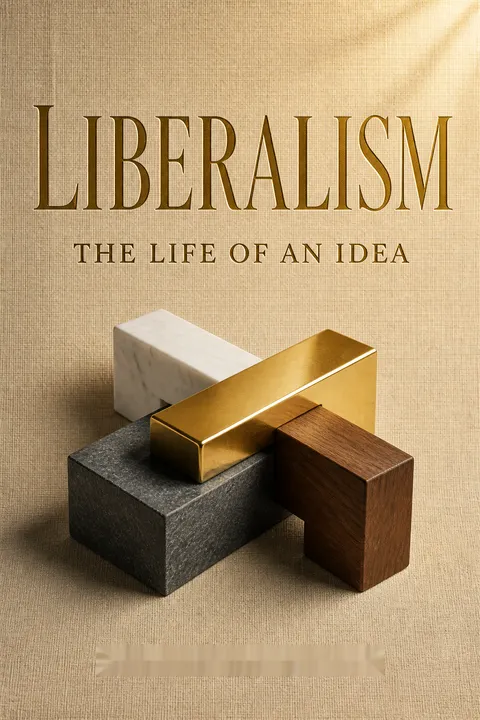
Reviews of Liberalism: The Life of an Idea are largely positive, averaging 3.9/5. Readers praise Fawcett's ambitious, wide-ranging historical approach, covering liberal thought across the UK, France, Germany, and the United States. His four defining liberal principles—conflict, distrust of power, faith in progress, and civic respect—are well-received. Common criticisms include dense, verbose prose, uneven pacing, and notable omissions such as feminism, racial justice, and figures like John Dewey. Many find the concluding section on post-1989 liberalism underdeveloped, and some disagree with Fawcett's broad, inclusive definition of liberalism.
People Also Read




Download PDF
Download EPUB
.epub digital book format is ideal for reading ebooks on phones, tablets, and e-readers.








































