
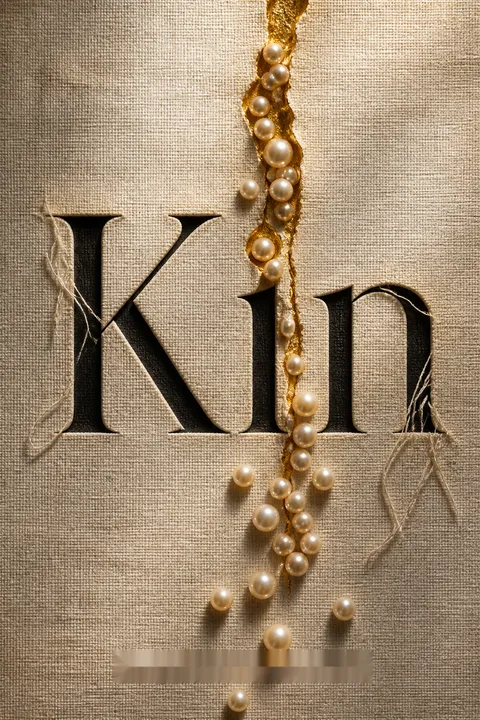


Plot Summary
Two Cradle Friends, Zero Mothers
In Honeysuckle, Louisiana, in 1941, Vernice's1 father shoots her mother Arletha dead, then fails to kill himself. Aunt Irene5 — who had fled to Ohio years earlier and returned only to nurse her dying mother — finds herself tethered to a six-month-old orphan she never wanted.
Down the road, Annie's2 mother Hattie Lee11 unhooks her infant from her breast and hands her to Granny16 before vanishing. The two motherless girls share a cradle and become inseparable. At two and a half, Vernice1 — mute since witnessing the murder — bellows her first word: Mother.
Annie,2 already a talker, goes quiet and sucks Vernice's1 thumb as though it were her own. From that morning they become each other's closest kin, filling the hollow that no guardian, however dutiful, can close.
Annie's Midnight Escape
Annie2 has Hattie Lee's11 Memphis address, courtesy of the Honeysuckle barkeep Mr. Daniel.10 On graduation eve, she climbs out her window and finds Babydoll8 — Clyde's12 other girlfriend — already pressed against him in the front seat of a stolen Packard.
Bobo,6 Clyde's12 bookish cousin, rides in the back. Stung but determined, Annie2 wedges herself in. The four of them roll north with one working headlight. She doesn't say goodbye to Vernice,1 her granny,16 or anyone. The next morning, Vernice1 races to Annie's2 house, certain her friend is dead.
With the schoolteacher Miss Jemison,13 she pushes into Annie's2 room and finds the bed carefully made, the suitcase gone, a note tacked to the mirror. The devastation of being abandoned — again — cuts deeper than any death would have.
Clean Sheets, Dirty Business
Turned away by a respectable landlady, the four runaways are directed to her twin sister Lulabelle's9 property — rows of painted shacks on former farmland, all occupied by working women. Annie2 scrubs sheets between every client while Babydoll8 cooks.
The men do handwork, paid in barter rather than cash. Clyde12 squanders their credits sleeping with the workers, sinking them deeper into debt. Lulabelle,9 a self-appointed preacher with a gold-framed tooth, has Annie2 read Genesis aloud and braids her hair, lavishing the closest thing to mother-love Annie2 has known.
When Bobo6 stumbles into a haunted shack and witnesses the ghost of Lulabelle's9 dead mother being violated by a white man, the encounter breaks him open. That trembling night, he and Annie2 become lovers — sealed by shared terror rather than desire.
Front of the Back
Boarding a bus for Spelman College, Vernice1 chooses a seat she believes is in the colored section. She's wrong by one row — the back of the front instead of the front of the back. The driver berates her with slurs, confiscates her hatbox, and throws her off.
Three pistachio-green suitcases — containing every dress she sewed and every item her community donated — speed toward Syracuse without her. At the filling station, a gasman strikes her face after pretending to be her kinfolk. A stranger drives her home to Honeysuckle.
When the midwife Mrs. Ola Mae14 and teacher Miss Jemison13 finally deliver Vernice1 to Spelman — with only donated clothes and a taped-up hatbox — Mrs. Ola Mae14 cradles her and warns: she carries a whole waterfall of grief underground, and someday it must break through.
Room 347's Hidden Love
Vernice's1 roommate is Joette Cunningham,4 a wealthy junior from a funeral-home dynasty who arrives with a maid. Joette4 calls Vernice1 Country Mouse — a nickname that sticks through every stage of their relationship. Despite opposite stations, they fall into an intense romance.
Joette4 confides that men don't appeal to her. Vernice1 discovers a passion she never imagined possible. In their slant-ceilinged room they push narrow beds together each night. Meanwhile, Joette's4 cousin Marylinda15 recruits for sit-in demonstrations at Rich's department store, but Vernice1 declines — too poor to risk expulsion.
The dorm becomes Vernice's1 first true home, yet she understands this hidden love cannot survive daylight. She lets herself feel it anyway, storing it in the chamber of her heart that no one inspects.
Chosen by the McHenrys
At a Founders Day celebration, Patty McHenry7 — wife of a prominent Atlanta attorney — pinches Vernice's1 stockings in the chapel line and sees a younger version of herself: country-raised, mannered, and starving for a better life.
She invites Vernice1 to tea in her sunroom, where tiny sandwiches and frank counsel about domesticity are served in equal measure. Her youngest son Franklin3 survived polio and the iron lung; he walks with a cane and practices law with fierce dignity.
Mrs. McHenry7 grooms Vernice1 for the match, summoning her one Sunday at a time for dinners with the family. She teaches Vernice1 to beat couch cushions, mix martinis, and accept that being chosen by the right family is its own rescue. Vernice1 finds herself wanting what's offered: a mother, a name, a home.
The Heirloom Ring
At Piedmont Park's ghost stairs — a mysterious stone staircase climbing a grassy hill for no apparent reason — Franklin3 lowers himself despite the pain in his withered leg and opens a velvet box. Three cloudy diamonds sit in braided gold, engraved 1863. His grandmother Agatha Marie, the last in the family born enslaved, received it from a dying Union soldier she sheltered.
Vernice1 accepts, then faces Joette.4 Back at the dorm, Joette4 begs her to move to Washington instead — to live openly, together. Vernice1 refuses. She wants marriage, children, a family name not stained by murder. Joette4 asks if Vernice1 is saying she doesn't love her. Vernice1 cannot bring herself to say it, or to deny it. She pushes their beds apart for the last time.
One Month Too Late
After years in Memphis spent mistaking strangers for her mother at the Elektra bar — embarrassing herself and frightening patrons — Annie2 finally musters the courage to visit Hattie Lee's address.
She and Babydoll8 approach a clapboard house where two men, Sweet and his companion Isaiah, deliver the news: Hattie Lee11 died about a month ago without money for a funeral, likely buried in a potter's field. Annie's2 body shuts down section by section, like a drugstore going dark. She faints on the pavement.
For twenty-eight days she grieves fiercely, refusing Bobo's6 touch. Then a stranger at the bar places warm hands on Annie's2 face and promises that mothers in heaven love without obstruction. The next morning, Annie2 turns back toward Bobo6 and toward living.
Isaiah's Devastating Lie
On the same weekend Clyde12 proposes to Babydoll8 at a raucous Saturday performance, Bobo6 drops to one knee and asks Annie2 to marry him. She says yes. But before dawn, Isaiah appears at their door, ashen and ruined. He confesses: Hattie Lee11 isn't dead.
He fabricated her death to protect Sweet's tender feelings — because she stole money from their coffee can and disappeared. God, he believes, has punished him by stripping his gift of interpreting tongues. He hands Annie2 a scrap of paper bearing her mother's real address.
Bobo,6 watching months of hard-won peace shatter in seconds, punches Isaiah under the chin. A brawl erupts in the small kitchen. When Annie2 refuses to destroy the paper, all three friends vote unanimously that she leave Hattie Lee11 alone.
The Other Annie Kay
On Palm Sunday, Annie2 and Vernice1 walk to the South Lauderdale address together, palm fronds in hand. A teenage girl pads out in her socks, a baby brother balanced on her hip. She introduces herself as Annie Kay and explains that her mama works nights and is sleeping. She's bright, dimpled, well-loved — everything the first Annie2 once wished to be.
Through a corner of newspaper peeled back from the window, Hattie Lee11 watches her abandoned daughter's face, so close to her own. Then she smooths the paper back into place. The door claps shut. Annie2 tells the girl to pass along that Granny16 loves Hattie Lee,11 and that nobody needs to worry about her coming back. The walk home is soundless except for two women splitting apart at the seams.
The Wedding at Danforth
Aunt Irene5 twists in her pew, spiral curls framing her face — Ohio suits her. The Louisiana refugees sit together: Clyde,12 Bobo,6 and Babydoll.8 At the altar, Franklin3 stands without his cane, flanked by his brothers.
In the bridal suite afterward, Annie2 — who spent the morning buttoning Vernice1 into his mother's yellowed-lace gown — reveals that Joette4 confided their past relationship at the reception. She urges Vernice1 to be honest with Franklin3 and give Joette4 a proper goodbye. Vernice1 deflects.
Annie2 insists that marrying atop secrets is like spraying perfume over unwashed skin. As Annie,2 Marylinda,15 and Joette4 slip out the ballroom door, Vernice1 watches from the other side — no longer Country Mouse but Mrs. Franklin McHenry, referred to now without any of the names she was born with.
Bobo's Leather Valise
Bobo6 waits until after Vernice's1 wedding to leave — a courtesy Annie2 does not appreciate. She comes home early from the Elektra, cramping and miserable, to find him seated at the table with a pencil stub behind his ear and a yellow notepad reading My dear Annie Kay. His leather valise leans by the door. His reasons are careful and rehearsed: he isn't fulfilled, he says.
He names his replacement — Regenia, a professor's daughter studying at LeMoyne-Owen College. Annie2 recognizes the type instantly: the kind of woman who makes you sniff under your arms. She uses a word she's never spoken before, the only one precise enough for this occasion. His footsteps down the corridor are louder than any sound a man that small should make.
Hattie Lee's Three Quarters
In the hollow weeks after Bobo's6 departure, Hattie Lee11 herself walks into the Elektra, orders a Coca-Cola, and confirms she is Annie's2 mother. Not everything can be fixed, she says, and leaves three quarters on the bar — the only mother-love Annie2 will ever hold in her hands.
But the encounter cannot save her. Lonely and unmoored, Annie2 falls into a brief affair with Mr. Wilson, the Elektra's married owner. She gets pregnant. When Mrs. Wilson discovers the betrayal, she attacks Babydoll8 by mistake, and both women lose their jobs.
Annie2 writes to Vernice1 in desperation. Vernice1 begs the McHenrys for a doctor's name, but they refuse — the family reputation must be protected. Only Marylinda15 tears a page from her daybook and writes an address from memory.
Cops in the Laundromat
Annie2 and Babydoll8 drive to Atlanta in the dying Packard. At the McHenry home, the in-laws are barely civil. Vernice1 borrows Franklin's3 pearl-and-black Coupe deVille and drives her friends to the address Marylinda15 gave her — a busy laundromat that covers for a back-room clinic.
They wait among women sorting clothes, watched by a counter lady in rhinestone earbobs. Then three white cops storm through the glass door. The women scatter. Annie,2 Babydoll,8 and Vernice1 flee before any procedure can happen.
Back home, every McHenry is livid. That night, Vernice1 writes Annie2 a letter with money, three pinches of yard dirt, and an instruction: take the Cadillac to Lulabelle's9 in Mississippi. She leaves the keys on the third peg. By morning, the garage is empty.
Annie Bleeds in Silence
At Lulabelle's,9 the twins help Annie2 and Babydoll8 prune the winter rose garden before a white doctor from Meridian arrives. Annie2 lists Vernice1 as her next of kin. Afterward, she phones from the property, loopy from painkillers, rambling about fruit and trees and asking Vernice1 to keep three quarters safe — coins her mother left the one time she appeared at the bar.
She and Babydoll8 drive the Cadillac back to Atlanta. Annie2 seems fine, full of questions about college and true love and whether a person only gets one. She lays her head on the guest-room pillow over those warm coins and falls asleep. Nobody told her — nobody told any of them — that a woman could bleed to death from the inside without shedding a single visible drop.
The Waterfall Breaks Through
With Annie2 dead in the guest room and scandal pressing at every door, Vernice1 goes to Cunningham and Sons funeral home and kneels on the carpet before Joette's4 desk. Joette4 agrees to help — but demands something beyond money. Tell Franklin3 the truth, she says.
Not as revenge, but because dignity is the only thing that makes living worthwhile. That night, Franklin3 asks Vernice1 to let him see her. She tells him everything — about Joette,4 about their dormitory, about the part of herself she buried to become a McHenry.
And then, for the first time since Mrs. Ola Mae14 cradled her in the back seat of a car bound for Atlanta all those years ago, the underground waterfall that had been roaring inside Vernice1 since infancy finally crashes outward. She weeps.
Epilogue
In the final moments before the procedure at Lulabelle's,9 the doctor asks Annie2 to name her next of kin. Not her mother, she insists — not Hattie Lee.11 She gives instead the full name of her cradle friend: Mrs. Vernice Irene Davis McHenry1 — born to Arletha, raised by Irene,5 married into the McHenrys.
Then she amends it, as she has done since they were two babies sharing a drawer, back when Vernice1 had too many letters for Annie's2 little mouth to hold. Just write Niecy, she whispers. I'm the one who gave her that name.
Analysis
Kin interrogates the American promise of self-reinvention by tracking two Black women whose trajectories are determined by what they were born without. Vernice1 and Annie2 are both motherless, but the distinction is surgically precise: a murdered mother confers the dignity of victimhood, while an absent one carries the hereditary stain of abandonment. Vernice's1 tragedy earns community sympathy, a Spelman education, and eventual entry into Atlanta's Black bourgeoisie. Annie's2 tragedy earns her the word 'trifling' by association — the novel's most devastating epithet, reserved for those who are indefensible but somehow still loved.
Jones constructs a searing critique of respectability politics within Black communities. The McHenry family represents upward mobility as a walled citadel: warm and generous inside, merciless at its perimeter. Mrs. McHenry7 adores Vernice1 but refuses to extend that love across class lines to Annie,2 drawing a moat between 'our people' and 'country mess.' The novel demonstrates that hard-won Black solidarity can replicate the same exclusionary logic it was built to resist. Annie2 dies not from racism but from the refusal of her own community's gatekeepers to risk their standing for a woman whose suffering lacks the correct pedigree.
The dual narrative reveals how friendship between women constitutes the most honest relationship in a world demanding performance from every other bond. Annie2 and Vernice's1 love — platonic, cradle-deep, predating memory itself — is the book's truest intimacy, eclipsing both Vernice's1 passion for Joette4 and her marriage to Franklin.3 Jones suggests that the relationships society sanctions are frequently the least authentic, while the ones it overlooks carry the actual weight of survival.
The governing metaphor of the underground waterfall reframes suppressed grief as geological force. Vernice1 spends the entire novel perfecting a silence she learned as a toddler. Only the most catastrophic loss generates pressure sufficient to breach the dam. The breakthrough is not healing — it is the body insisting on truth when the mind will not cooperate. Jones argues that the cost of belonging is often the self, and that the deepest kinship lives not in the families we marry into but in the bonds forged before we understood what belonging would cost.
Review Summary
Kin by Tayari Jones follows Vernice (Niecy) and Annie, two motherless Black girls from Honeysuckle, Louisiana, whose lives diverge dramatically after high school. Niecy attends Spelman College, while Annie searches for her birth mother. Through alternating perspectives and letters, the novel explores their enduring bond amid the Jim Crow South. Reviewers praised Jones's masterful storytelling, rich character development, and emotional depth. The book examines themes of found family, identity, racism, and female friendship. Most readers found it powerful and moving, though some noted pacing issues. Many compared it favorably to An American Marriage, calling it a potential standout of 2026.
People Also Read








Characters
Vernice (Niecy)
Orphan turned Atlanta brideVernice's first word was Mother, bellowed at two and a half after spending years in silence following her mother Arletha's murder. Raised by Aunt Irene5—dutiful but emotionally remote—she grows into a girl who craves belonging with a hunger she can barely name. Her defining psychological trait is a waterfall of grief dammed inside her: she learned as a child to cry without tears. At Spelman College she discovers forbidden love with Joette4, then trades it for the safety of marriage into the McHenry family. Her deepest drive is to become the mother she never had, to build the family stolen from her at six months old. She navigates between authenticity and respectability, carrying secrets that threaten everything she has built.
Annie (Annie Kay Henderson)
Abandoned daughter chasing homeAnnie was born talking and never stopped—except about the things that hurt most. Abandoned by Hattie Lee11 before she was weaned, she grows up with her grandmother16 in Honeysuckle, sustained by her friendship with Vernice1 and the belief that her mother will return. She is stocky, old-souled, and built for endurance rather than beauty. Her obsessive search for Hattie Lee11 drives every major decision—running to Memphis, tolerating hardship, and eventually alienating Bobo6, the one man who truly loves her. She possesses an instinct for emotional truth that cuts through pretense, even when it means confronting what others would rather ignore. Annie is loyal to the marrow—the kind of friend who delivers uncomfortable truths while buttoning your wedding dress.
Franklin McHenry
Polio-scarred attorney husbandFranklin survived polio and the iron lung as a boy, teaching himself to breathe again while watching his brothers play in the yard. He walks with a cane and practices civil rights law alongside his father. His disability gives him a perceptiveness that borders on prophecy—he senses what his eyes cannot see. He courts Vernice1 with patience and physical strength, inviting her to watch him drag his damaged leg across a parking lot in headlights so she can understand what she's choosing. His love is genuine but informed by privilege-born pragmatism: protecting the McHenry name sometimes means saying no. He senses Vernice1 harbors secrets and asks to see her fully, understanding that marriage without truth is merely furnished loneliness.
Joette Cunningham
Funeral heiress, Vernice's first loveDaughter of Atlanta's most prominent Black funeral home family, Joette arrives at Spelman with a maid and an air of calculated rebellion. She refuses stockings, flouts curfew, and harbors contempt for the respectability she was raised in. She knows she doesn't want men and says so plainly. Her love for Vernice1 is the truest expression of who she is—fierce, unsentimental, and deeply attentive. When Vernice1 chooses marriage, Joette's heartbreak curdles into bitter clarity. She takes over the family business—the daughter stepping in where a son would not—and channels her anger into quiet authority. She becomes the person Vernice1 must face when life strips away every comfortable lie.
Aunt Irene
Vernice's reluctant guardianIrene fled her father's beatings as a teenager, lived eleven free years in Ohio with a married lover, then returned to Honeysuckle to nurse her dying mother—only to inherit her murdered sister's baby. She raises Vernice1 with competence but withholds affection, unable to cross the distance between duty and tenderness. She is frank, profane, and unforgettable—a woman who admits she doesn't know how to talk to children but never stops trying.
Bobo (Carver)
Annie's piano-playing loverClyde's12 bookish cousin, christened Carver after the scientist, with an oversized vocabulary and modest stature. He wins Annie's2 heart through gentleness at Lulabelle's9 whorehouse and plays piano at Memphis jazz sessions. He works as a hotel bellman tending ducks at the Peabody. Annie's2 consuming obsession with finding Hattie Lee11 exhausts his patience and eventually his love, driving him toward a professor's daughter who represents the polished life he craves.
Mrs. McHenry (Patty)
Vernice's calculating mother-in-lawA self-made member of Atlanta's Black elite who clawed her way from Sunflower, Alabama, into the upper echelons of Southwest Atlanta society. She mentors Vernice1 in the arts of domesticity, cocktail mixing, and social navigation. Beneath her warmth lies iron pragmatism: she loves Vernice1 genuinely but refuses to risk the McHenry name to help Annie2. Her husband says she is obnoxious, and she considers this high praise.
Babydoll (Ruth)
Annie's loyal, blunt companionClyde's12 girlfriend and eventual wife—voluptuous, gum-chewing, and fiercely Catholic. Her beauty masks a brutal childhood: her mother sold her virginity for a felt hat and gloves. She speaks with the precision of a switchblade and fights with her fists when words fail. She provides Annie2 with the unvarnished companionship that keeps her grounded through every crisis, from Mississippi laundry duty to the final desperate journey.
Lulabelle
Brothel-owning surrogate motherA Mississippi brothel owner who preaches Sunday sermons behind her Jim Walter house and insists on immaculate sheets. She and her twin Lurelia were raised on the same farm she now operates. She becomes an unlikely mother figure to Annie2, offering Bible study, hair-braiding, and eventually the dangerous medical help that no respectable family will provide. She repeatedly tells Annie2 never to return—her way of expressing love.
Mr. Daniel
Honeysuckle's sardonic barkeepProprietor of The Den, a not-quite-juke-joint built in his preacher father's house. Educated, sardonic, and married to a Tuskegee woman, he gives Annie2 her first job, disabuses her of the fantasy that he's her father, and provides both a letter of reference for Memphis and the blunt counsel that searching for Hattie Lee11 is a fool's errand. He is nobody's father but functions as a reluctant uncle.
Hattie Lee
Annie's absent, trifling motherAnnie's2 mother, called trifling by all of Honeysuckle—the harshest word in the vernacular, reserved for those who are indefensible but still loved. She left Annie2 before the child was a month old and drifted through Memphis surviving on liquor and borrowed time. She appears in the narrative mostly as an absence—a wound shaping Annie's2 every decision. Her capacity for love is real but catastrophically small, measured in a brief visit and three quarters left on a bar.
Clyde
Charming, unreliable cousinMr. Daniel's10 nephew with famously crooked teeth and irresistible charm. He runs away with Annie2 but takes up with Babydoll8. Good at getting jobs, terrible at keeping them, and gifted at spending other people's barter credits.
Miss Jemison (Raynelle)
Honeysuckle's devoted teacherThe schoolteacher who returned to Honeysuckle after Spelman for the children's sake. She lives with Mrs. Ola Mae14 in a partnership everyone whispers about. She drives Vernice1 to Atlanta and warns her not to end up in any Honeysuckle, anywhere.
Mrs. Ola Mae
Midwife who sees inside peopleThe midwife who delivered Vernice1 and half of Honeysuckle. She recognizes the waterfall of suppressed grief inside Vernice1 and tries, on a car ride to Atlanta, to teach her to cry properly—a lesson that takes years to land.
Marylinda
Activist cousin, secret conductorJoette's4 nearly-white cousin whose father crossed the color line from the other direction. A civil rights organizer at Spelman, she provides the illegal clinic's address when every respectable person refuses to help Annie2.
Annie's Granny (Irvina)
Weary, scripture-quoting guardianAnnie's2 grandmother, worn down by raising six children and losing most of them to distance, death, or indifference. She feeds Annie2 stoicism and scripture, guarding Hattie Lee's11 memory with a loyalty that makes no allowance for tenderness.
Plot Devices
Hattie Lee's Memphis Address
Engine of Annie's obsessive questA scrap of paper bearing a Memphis address travels from Hattie Lee11 to Mr. Daniel10 to Granny16 to Annie2. It drives Annie2 from Honeysuckle to Memphis, sustaining her through years of false sightings and humiliating mistakes at the Elektra bar. When Isaiah lies about Hattie Lee's11 death, Annie2 briefly releases the paper's hold on her. When Isaiah confesses, the address reasserts its gravitational pull—drawing Annie2 to South Lauderdale, where she discovers not her mother's welcome but her own replacement. The paper that promised connection ultimately delivers proof that Hattie Lee11 chose a different life, a different daughter, even a different Annie Kay. It is the cruelest map ever drawn.
The Three Quarters
Physical proof of mother-loveDuring a single visit to the Elektra, Hattie Lee11 orders a Coca-Cola, confirms she is Annie's2 mother, tells her daughter that not everything can be fixed, and leaves seventy-five cents on the bar. These three quarters become Annie's2 most treasured possessions—the only tangible evidence that her mother recognized her existence. Annie2 carries them warm against her body and, in her final conscious hours, begs Vernice1 to keep them safe with an urgency suggesting the coins hold something beyond monetary value. They represent the full measure of what Hattie Lee11 was capable of offering: a brief presence, a few honest words, and the smallest possible denomination of love.
The Heirloom Ring
Belonging forged from bondageFranklin3 proposes with three cloudy diamonds set in braided gold, engraved 1863. The ring was given to his grandmother Agatha Marie—the last McHenry born into slavery—by a dying Union soldier she sheltered in her cabin. It appears in a photograph dangling from a cord around Agatha Marie's neck. The ring embodies the McHenry mythology: survival through dignity, wealth built from service to the dead, and the transformation of suffering into inheritance. For Vernice1, accepting it means joining a lineage stretching back through Emancipation. It represents everything she never had—family, continuity, a name—and quietly demands everything she must sacrifice to keep it.
The Letters
Lifeline across diverging livesThe novel's middle section unfolds substantially through correspondence between Annie2 and Vernice1. Annie's2 Memphis dispatches are vivid accounts of picaresque adventure; Vernice's1 Atlanta replies carry the measured tone of someone learning a new dialect of selfhood. The letters reveal what face-to-face conversation cannot: Annie's2 creeping desperation, Vernice's1 growing distance from her origins, the jealousy each harbors about the other's particular form of suffering. When Annie's2 handwriting turns shaky in her final plea for help—pregnant, jobless, and alone—the letter becomes a literal lifeline. These exchanges are the infrastructure of a friendship surviving distance, class divergence, and years of painful silence.
The Underground Waterfall
Metaphor for Vernice's dammed griefOn the drive to Spelman, the midwife Mrs. Ola Mae14 tells Vernice1 about Ruby Falls—a Tennessee waterfall crashing off a cliff inside a cave, invisible from the surface. She uses it to diagnose Vernice's1 condition: a lifetime of suppressed grief, visible nowhere but audible to those who know how to listen. Vernice1 learned to cry without tears as a child, coached by Aunt Irene's5 discomfort with emotion. The metaphor resurfaces throughout the novel as Vernice's1 suppression intensifies—through the loss of Joette4, the demands of the McHenrys, and ultimately a devastating loss. In the novel's final pages, the metaphor transforms from diagnosis to deliverance as the dam finally gives way.
Download PDF
Download EPUB
.epub digital book format is ideal for reading ebooks on phones, tablets, and e-readers.








































