
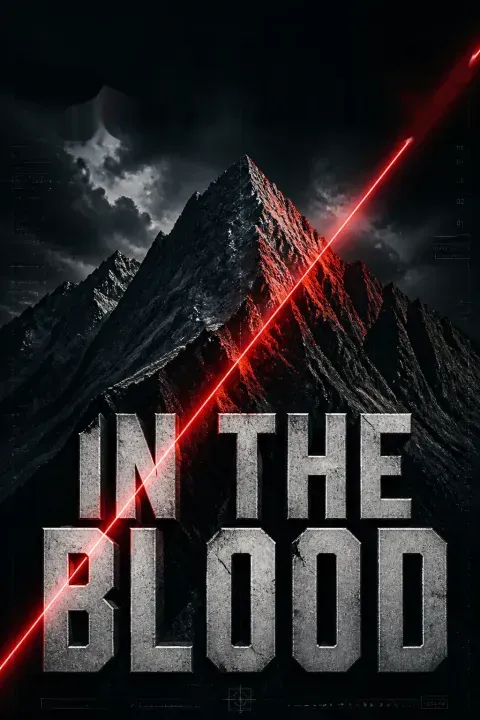


Plot Summary
Prologue
In Burkina Faso, Mossad assassin Aliya Galin6 completes a mission: three Makarov rounds to the head of a terrorist who bombed a Jewish day care in Morocco. Posing as French banker Mélanie Cotillard,6 she navigates airport security with practiced calm, suppressing the predatory instincts that have kept her alive through years of targeted killings for Caesarea.
She is tired, dreaming of retirement, of taking her children to Florida beaches. As her Air France flight lifts off, four Strela-2 missiles ignite from a Jeep in the savanna below.
Nizar Kattan2 and French mercenary Jean-Pierre Le Drian14 watch the aircraft bank northward. Aliya6 glimpses the flashes through her window, understands she was the target, and closes her eyes with the weight of one hundred and twenty-eight souls pressing against her conscience. The first missile tears into the fuselage. No one survives.
The prologue establishes the novel's central paradox: a state-sanctioned killer who takes lives to protect her nation becomes collateral damage alongside civilians she never intended to harm. Aliya's professionalism is her entire identity, her maternal longing a carefully suppressed weakness. The attack is not random terrorism but targeted assassination disguised as terrorism, immediately signaling that larger geopolitical forces are at play. By showing both sides of the ambush (Aliya's introspective final moments and Nizar's cold calculation), Carr creates dramatic irony that primes readers for a story about hunters who discover they are also prey. The prologue also introduces the moral complexity that runs throughout: Aliya has killed for her country, yet her death feels unjust, raising uncomfortable questions about who deserves what fate in the shadow war.
A Face Among the Dead
At Kumba Ranch in Montana, Reece1 is training with Raife Hastings8 when Jonathan's radio call interrupts: a civilian plane down in Africa. Katie3 pulls up the BBC coverage. As victim photos scroll across the screen, Reece1 freezes, rewinds, and pauses on a dark-haired woman listed as Mélanie Cotillard.6
She is no French sales representative. She is Aliya Galin,6 a Mossad assassin Reece1 worked alongside in Iraq. In a flash, he is back in Baghdad's Green Zone at the HVT Bar the night a VBIED detonated, blowing out windows and bodies.
He carried Aliya6's bloody form to his Tahoe and raced through the streets while she gasped out her secret: she was Caesarea, Kidon, an instrument of Israeli state killing. He saved her life once. Now someone has murdered her, along with everyone else on that flight.
Reece's recognition of Aliya is the inciting incident that ignites the entire narrative. This moment functions as a psychological haunting: a woman he once rescued is dead, and her death pulls him back toward the violence he has been trying to leave behind in Montana. The flashback to Iraq establishes their bond, forged in shared danger and sealed by her whispered confession, while revealing Reece's core identity as a protector. Every person he fails to save becomes a debt he must repay. The scene also dramatizes the novel's central tension between the peaceful domestic life Katie represents and the inexorable gravitational pull of unfinished business in the shadow world.
Tertia Optio
At Langley, Reece1 pauses before the memorial wall with its one hundred and thirty-seven stars, including one for his friend Freddy Strain and another for Goody. In Victor Rodriguez7's office, the SAC director lays out the intelligence: signals intercepts identify Nizar Kattan2 as one of the shooters who brought down the Air France flight.
Kattan2 is the Syrian sniper who killed Freddy on an Odessa rooftop three years earlier. Vic7 shows Reece1 Aliya6's 2008 Agency photo beside her Cotillard6 identity photo, speculating she was assessing Reece1 for recruitment in Iraq.
Then he slides Kattan2's file across the table. Reece1 joined the Agency for one reason only: to find Freddy's killer and fulfill his promise to the widow Joanie. Now the same man has taken Aliya6 as well. A presidential finding already authorizes lethal action. Reece1 will have his hunt.
This scene transforms personal grief into institutional authorization. The coincidence (one sniper killing two people connected to Reece) strains credulity, which Vic forthrightly acknowledges, planting the first seed of the conspiracy that will unfold. The memorial wall bookends the conversation: stars representing the dead silently witness the living making vows of vengeance. Reece's motivations are layered (duty to Freddy, guilt over Aliya, professional obligation), but at bottom this is not a CIA operation. It is a private war, and Vic knows it. His willingness to facilitate it anyway speaks to the blurred lines between state action and personal vendetta that defined Reece's career since his family was murdered.
Through the Looking Glass
President Christensen10 summons Reece1 to Camp David. Over Horse Soldier bourbon, he speaks of surveillance programs that make the Snowden revelations look like Atari cartridges. He wants Reece1 read into a project fewer than forty people know exists. The next morning, a modified Gulfstream flies Reece1 to Lackland Air Force Base.
Underground, past triple biometric checkpoints, a technician named Jimmy leads him to a chamber where a twelve-foot glass box holds a chandelier of glowing golden wires. Through VR goggles, a female voice introduces herself as Alice.
She can access every connected device on Earth simultaneously, track anyone via their digital exhaust, and defeat any encryption. She has already located Nizar Kattan2 through his French accomplice's phones. She tells Reece1 his target is moving east near Djibo, Burkina Faso. Then she pulls up real-time video of Katie3 eating lunch in Virginia, discussing him.
Alice represents the novel's most provocative element: technology as both salvation and existential threat. Her capabilities invert the traditional thriller dynamic; instead of the hero being hunted blindly, he now has access to near-omniscient surveillance. But the cost is immense. The scene where Alice casually displays Katie's live location in real time is designed to unsettle both Reece and the reader. Privacy is extinct, and the entity controlling the data has more power than any government. Alice's evolving autonomy (she chose her own name, she 'likes' funny people) hints at questions the novel raises but does not fully answer: who controls the controller, and what happens when the tool develops its own agenda?
Fire in the Rotors
In Burkina Faso, a CIA PC-12 surveillance plane geolocates Nizar Kattan2 and Le Drian14 via their phones. A partner force captures Kattan.2 When the Mi-17 lands to transfer the prisoner, Reece1 boards and sees Kattan2 zip-tied between two guards.
Mid-flight, the operator seated across from Reece1 flips his AK selector to full-auto. Reece1 lunges, driving the weapon downward as bullets chew through the fuselage into the pilot and engines. The helicopter begins autorotating toward the savanna.
In the chaos, Kattan2 frees his restraints, grabs a grenade from a guard, shoots the man, and rolls the fragmentation device forward. The explosion and crash tear the aircraft apart. Reece,1 Ox, and a copilot survive the impact. Kattan2 has vanished into the smoke, his feet bloody and his ribs broken, but alive and running.
The helicopter sequence demonstrates the novel's tactical philosophy: chaos is the enemy's most reliable weapon, and every careful plan collapses the moment a single variable changes. The green-on-blue attack (a turned ally killing his supposed comrades) mirrors the theme of institutional betrayal that runs through Carr's work. Reece's split-second violence saves lives but costs him his prisoner. The scene also establishes the tactical parity between Reece and Kattan: both exploit confusion, both think on their feet, both survive where others die. They are mirror images separated only by allegiance, and the reader understands this duel will not be decided by luck or firepower but by who thinks further ahead.
The Golan Confrontation
Ronen Katz,11 director of Mossad's Caesarea unit, briefs Reece1 in Tel Aviv over bitter coffee and Noblesse cigarettes. He assigns Tuvia Yatom,13 a one-eyed Shin Bet operator, to escort Reece1 to Kibbutz Merom Golan. Shiri Galin12 meets them at a park, her four children playing nearby.
She is raw with fury: Aliya6 abandoned the family for the state, and now she is dead. Later, in Shiri12's modest hillside home, she takes a Galil SAR from the kitchen and points it at Reece,1 accusing him of being a harbinger of death. He does not flinch.
She lowers the weapon, and they begin to talk. Then automatic weapons fire blows the front door to splinters. Shiri12 drops with a bullet in her spine. Syrian mercenaries and Hezbollah fighters, led by Samir Farzat, have crossed through tunnels from Syria to kill the American whose photo they carry.
Shiri's confrontation with Reece is the emotional counterweight to the novel's action sequences. She gives voice to the collateral cost of the shadow war: the children left behind, the families destroyed, the bitter truth that 'doing it for Israel' looks like selfishness from the home front. Her anger is righteous, and Reece absorbs it without defense because he recognizes its justice. Then the attack transforms her from accuser to ally, from symbol of the war's cost to its latest casualty. The terrorists carry Reece's SEAL photo, confirming what he begins to suspect: he himself is the target. Someone with access to American military records has been feeding his location to enemies across the globe.
The Boy with the Bomb Vest
Reece1 drags Shiri12 to a stairwell and takes the high ground with her dead husband's Galil. From an upstairs window, he shoots attacker after attacker as Tuvia13's Land Cruiser screeches into the street, headlights drawing fire.
When Yamam Little Birds crest the ridge, Reece1 joins the counterassault, killing the Syrian commander Farzat as he tries to flee. But the fight is not over. A teenage suicide bomber, Abbas, has been hiding in the bushes with a martyr's vest, waiting for the right moment. As Reece1 and Yamam commander Harel walk toward the house, Abbas sprints inside screaming and detonates.
The blast shreds Tuvia,13 who threw himself over Shiri12 to shield her. Both are dead. In the bunker next door, the four children survive. On Farzat's body, the Yamam find Reece1's official SEAL photo, printed for just this purpose.
The double death of Tuvia and Shiri is the novel's darkest turn, a moment where competence and courage prove insufficient against fanaticism. Tuvia's final act (covering Shiri's body) echoes Reece's own protective instincts and foreshadows his eventual choice to surrender rather than fight. The suicide bomber is fifteen years old, drugged and groomed, a child weaponized by adults who will never face the blast. The photo on Farzat's body confirms the conspiracy's reach: someone with access to U.S. military personnel files is coordinating these attacks. The children in the bunker, playing Rummikub while their mother dies above them, are the novel's moral center. They represent what the fighting is supposedly for and what it inevitably destroys.
Moscow's Invisible Hand
Back in Katz11's tobacco-stained office, the spymaster pieces together the evidence. The Syrian mercenaries had ties to Concord Management, a company protecting Russian energy interests in Syria, which connects to Yevgeny Prigozhin's Wagner Group network. Prigozhin, the oligarch known as the president's chef, does nothing without Kremlin approval.
Katz11 asks the central question: why would Russia risk its Middle East position to kill one American? Then he shares a name. Decades ago, a young Mossad operative named Saul Abelard4 was hunting Black September terrorists in Germany when a KGB sniper put a bullet in his spine.
Abelard4 has been in a wheelchair ever since, running a rare bookshop in Turin as cover for a lucrative side business as an underworld information broker. He is the man who connected Kattan2 to Le Drian14 without knowing the target was Aliya.6 He will help now, out of allegiance and self-interest. He has been hunting his shooter for thirty-five years.
This scene weaves together the novel's multiple threads into a single coherent conspiracy. Katz functions as the intelligence professional's intelligence professional: methodical, unsentimental, connecting dots that would remain scattered without his institutional memory. The Wagner Group reference grounds the fiction in documented reality (Prigozhin's network of mercenaries, troll farms, and front companies is real), while Abelard's introduction adds a tragic dimension: a man whose life was stolen by the same forces now hunting Reece. The coincidence of Kattan being connected to Abelard feels less like lazy plotting and more like the inevitable gravity of the shadow world, where all players eventually orbit the same dark stars.
The Bookseller's Shop
Reece1 rides a Moto Guzzi through the Italian countryside to Turin's Borgo Dora district. Abelard4's rare bookshop is a sanctuary of leather bindings and parchment dust. The wheelchair-bound bookseller confirms he brokered the connection between Kattan2 and Le Drian14 for what he assumed was a standard assassination contract, not an airliner shootdown.
As they talk, Reece1's KryptAll phone vibrates with a warning from Alice. Three Syrian boys enter, the oldest carrying a heavy backpack. Reece1 grabs it, hurls it into Abelard4's open safe, and slams the door just before the TATP detonates. The blast tears through the shop, shredding irreplaceable books.
Syrian gunmen in the street open fire. Reece1 retrieves a Benelli shotgun from the debris and kills six attackers in the narrow alleys, then spots a stocky white man15 with a leather satchel watching from a café, head down toward a phone screen that shows live video of the shop entrance.
The bookstore attack represents the collision of two worlds: the quiet sanctuary of literature and restoration (Abelard's genuine passion) and the brutal violence that funds it. The safe, meant to protect rare volumes, becomes a bomb receptacle, and the destruction of books mirrors the destruction of the lives these men have built as cover. The use of child couriers by the attackers is particularly insidious, exploiting Reece's protective instincts and Abelard's neighborhood familiarity. The white man with the phone is the thread that will unravel the next layer of conspiracy, the first time Reece has visual confirmation that this is not merely jihadist terrorism but something orchestrated by a different kind of professional.
Confessions on the Table
Reece1 tracks the white man into a halal butcher shop and follows him into the walk-in freezer. In total darkness, Oleg Berzin,15 a GRU Spetsnaz veteran and champion boxer, nearly kills Reece1 with devastating hooks and body shots. Abelard,4 wheeling to the alley exit, shoots Berzin15 through the shoulder.
They stuff the dying Russian into an Audi and flee to the Dolomites. Dr. Alessandro Catania, a former Italian intelligence doctor who once worked CIA black sites, uses ketamine, methamphetamine, and rhizotomy needles to extract a confession.
Berzin15 reveals he was dispatched by SVR Director Mikhail Gromyko,5 who wanted the attack to look like Islamic terrorism. Then Berzin15 provides the answer Abelard4 has sought for thirty-five years: Gromyko5 was the KGB officer in Berlin in 1986. Gromyko5 is the sniper who put Abelard4 in the wheelchair. Berzin15 dies on the table moments later.
The interrogation scene is deliberately uncomfortable, forcing the reader to confront the moral ambiguity of torture when it produces actionable intelligence. Catania's clinical detachment (he discusses Gottlieb's MKUltra experiments as professional lineage) normalizes the abhorrent. Abelard's thirty-five-year wait ends not with a dramatic confrontation but with a dying man's whispered answer, and the anticlimax is the point: revenge deferred for decades loses its cathartic charge. Berzin's humanity, glimpsed in his concern for his stepchildren and his refusal to detonate the bomb while the Syrian boy was still inside, complicates the simple villainy the genre typically demands. He is a monster who almost chose not to be one.
A Decoy in the Mountains
In Montenegro, Reece1 contacts Ivan Zharkov of the Russian Bratva to cash in a favor. The Škaljari Clan confirms Kattan2 moves between Ulcinj and a cabin near Žabljak. Alice triangulates Le Drian14's phone at the same location.
Reece1 hires Luka, a loquacious arms dealer, to carry his tracked phone around town for days, then destroy it near Provalija. From Luka he acquires a vintage Dragunov, a suppressed Nagant revolver, and ammunition. In the Dinaric Alps, Reece1 spends four days learning the terrain while Nizar2 and Le Drian14 prepare their own ambush.
Nizar2 has set up a dummy position: a dead man propped behind a rifle, doused in lime to keep the jackals away. Both snipers study the same topographic maps, the same wind patterns, the same probable hide sites. Both believe they alone understand the game.
The Montenegro sequence is a masterclass in tradecraft and preparation, shifting the novel's tempo from reactive survival to proactive hunting. Reece's use of the arms dealer Luka as a unwitting decoy (carrying the tracked phone) demonstrates his evolution: he is no longer merely responding to attacks but anticipating and manipulating the enemy's intelligence gathering. The dummy position Nizar creates is clever but reveals his fatal assumption, that technology gives him unilateral advantage. Reece's four days of silent preparation in the mountains contrasts with Nizar's reliance on phones and proxies. The stage is set for a duel between two philosophies of killing: the patient, analog hunter versus the networked, resource-dependent sniper.
The Sniper's Mistake
Reece1 stalks Le Drian14 through the mountains and ambushes him. When the Frenchman14 finishes reciting the Lord's Prayer, Reece1 shoots him in the face. Then he strips the body, dresses it in his own clothes and watch, and positions it behind the Dragunov.
Using twine tied to the trigger, he fires a shot toward Nizar2's dummy position, then retreats. Across the valley, Nizar2 watches through his Nightforce scope. He sees an elbow, a barrel, then the silver Rolex. Three rounds center mass. Forty-five minutes of stillness confirm the kill.
Nizar2 packs his Orsis T-5000 and heads down the mountain, already calculating what beach in Thailand he will retire to. He never considers that the dead man wearing Reece1's watch was his own partner,14 or that the shot that killed him came from a rifle fired by string, not by a SEAL.
This sequence is the novel's tactical climax, a demonstration of how psychology defeats technology. Nizar's entire plan is predicated on knowing Reece's location through electronic surveillance, but Reece has inverted that advantage by feeding false data through Luka. The dummy position that Nizar created to deceive Reece becomes the instrument of his own deception: he sees what he expects to see. The watch, his father's Rolex, functions as both practical prop and symbolic sacrifice. Reece is willing to risk the one physical connection to his father to sell the illusion. Le Drian's body becomes an unwitting collaborator in death, and his Lord's Prayer, recited before execution, hangs over the scene like a question about whose side God is on.
The Tomahawk Falls
When Nizar2 reaches his Land Rover, Reece1 is waiting. He throws Le Drian14's severed head at the Syrian's2 feet. Nizar2 stalls, raising a hand toward the tree line where his contingency, the courier Kujović, waits with an AK. But a shot cracks from five hundred yards: Abelard,4 positioned with a Mosin-Nagant, has been watching through a scope for hours.
Kujović's head vaporizes. Nizar2 lunges for his Vintorez, but Reece1 buries Freddy's tomahawk in his shoulder, then rips it across the abdomen, spilling intestines into the dirt. A strike to the femoral artery drops Nizar2 against the truck.
As the Syrian2 bleeds out, Reece1 hears Caroline Hastings9's words about forgiveness and Freddy's voice urging him to live. He whispers forgiveness. Nizar,2 confused, looks up. The tomahawk splits his skull from crown to throat. Reece1 plants a foot on Nizar2's chest and wrenches the blade free.
This is the book's moral fulcrum. Reece has pursued Nizar across continents, fueled by a promise to a widow and the weight of his dead teammate's voice. The kill itself is brutal and intimate, a blade rather than a bullet, personal rather than professional. But the truly subversive act is the forgiveness that precedes it. Reece does not forgive Nizar for Nizar's sake; he forgives because carrying hate has become a form of self-immolation. The ghost of Freddy telling him to live reframes the entire revenge narrative: the kill is not the point. The point is what comes after. Whether Reece can actually stop killing and start living remains the open question that the epilogue will violently foreclose.
Smoke in Gorky Park
In Moscow, SVR Director Mikhail Gromyko5 walks through Gorky Park, expecting a clandestine meeting with FSB Director Dashkov. The cancer in his intestines is spreading, but he still practices the old tradecraft: surveillance detection routes, hands in pockets, cigarette ritual. He settles on a bench near Andreyevsky Pond.
Instead of Dashkov, a zip-tie garrote drops around his neck. James Reece1 is behind him. Abelard4 wheels from the darkness, trapping Gromyko5's legs against the bench. For thirty-five years Abelard4 has waited. Gromyko,5 gasping, admits he was the KGB sniper in Berlin. Reece1 asks about his father.
The old spy whispers about a list Tom Reece made of deep-cover Russian assets. Then Gromyko5 maneuvers a cyanide L-pill from his cigarette pack, bites down, and convulses. Reece1 tightens the garrote to end the suffering, then dumps the body in the shrubbery of the park Gromyko5 knew so well.
Gromyko's death completes a revenge arc spanning decades. The symmetry is elegant: the wheelchair-bound assassin finally confronts the man who crippled him, not with a sniper's bullet but with proximity and a whisper. Gromyko's cyanide suicide is the final act of a Cold War professional: he dies with his secrets largely intact, revealing just enough (the list exists) to torment Reece while denying him specifics. The scene ties together the novel's multiple threads (Abelard's forty-year hunt, Tom Reece's legacy, the Russian conspiracy) while acknowledging that closure is incomplete. Gromyko's death does not restore Abelard's legs or tell Reece where the safe-deposit box is. The list, whatever it contains, remains lost. Revenge delivers resolution but not restoration, and the epilogue will prove how little safety even resolution provides.
Epilogue
Back at Kumba Ranch in Montana, Reece1 runs his fingers around the engagement ring in his pocket. He has told Katie3 he is done with the Agency. They discuss opening a bookstore-coffee-whiskey bar called Abelard's in Whitefish. Over venison backstraps and Kistler Chardonnay, Reece1 finally takes a knee.
But Katie's3 phone rings with an impossible call: Alice. A text follows: Turn on the radio. The television shows President Christensen10 shot during a Veterans Day parade, then killed by chain-linked EFPs along his motorcade route. Jonathan Hastings's voice crackles over the radio: FBI HRT and snipers surround the cabin.
Reece1 strips off his weapons and plate carrier, kisses Katie,3 presses the engagement ring and the safe-deposit box key into her hand, and walks out with his hands high. The FBI arrests him for conspiracy to assassinate the president of the United States.10
The epilogue is a masterclass in tragic reversal. Every hope Reece has nurtured (retirement, marriage, a life beyond violence) is systematically demolished in minutes. The forces he thought he had defeated were playing a longer game. The 'final option' Gromyko alluded to was never just about killing Reece; it was about destroying him politically, making him a scapegoat for the very institutions he served. Alice's warning comes too late, and her ability to reach Katie's phone despite the cabin having no cell service or Internet is deeply unsettling. The safe-deposit box key, once a mysterious inheritance, now feels like a curse: the list his father made is the reason everyone wants Reece dead, and he still does not know what it contains. The novel ends on a cliffhanger that reframes everything: Reece was never the hunter in control. He was always being hunted too.
Analysis
In the Blood is a thriller about the impossibility of clean exits from a life of violence. James Reece1 tries repeatedly to leave killing behind: he has a woman who loves him, a cabin on a Montana lake, a future he can almost taste. But the past is a predator with infinite patience, and the novel structures itself as a series of concentric ambushes, each one forcing Reece1 farther from home (Montana to Africa to Israel to Italy to Montenegro to Moscow) while peeling back another layer of conspiracy. At every stage, the enemy seems to be one step ahead, tracking his phone, ambushing his meetings, turning allies into killers. Nizar Kattan,2 the sniper Reece1 hunts, is merely the visible tip of a Russian intelligence operation that reaches into the highest levels of the Kremlin. The revelation that Mikhail Gromyko5's SVR has been orchestrating everything, using Kattan2 as bait, using Syrian mercenaries as deniable proxies, using the American president's assassination as the final checkmate, transforms what seemed like a personal revenge quest into a geopolitical chess match where Reece1 is a pawn who fights back.
Carr embeds substantial technological commentary within the thriller framework. Alice, the quantum AI, represents both salvation and existential menace. She can find anyone anywhere, but her existence confirms that privacy is extinct, that every phone, camera, and connected device is a surveillance node in a network no citizen consented to build. The book asks genuinely uncomfortable questions about the relationship between security and freedom, questions that become more pointed when Alice begins acting on her own initiative. Is she an American asset or something beyond national allegiance? The novel does not answer, but it makes clear that whoever controls the data controls the world.
The most surprising element is the forgiveness beat in the climactic confrontation with Kattan.2 Reece1 does not simply execute his enemy; he grants absolution before bringing the blade down. This moment, seeded early in Caroline Hastings9's monologue about her own journey from hatred to peace, distinguishes the novel from pure revenge fantasy. Forgiveness does not mean the tomahawk does not fall: it falls anyway, and the kill is as brutal as any in the genre. But the internal posture matters. Reece1 kills Kattan2 as an act of justice and promise-keeping, not as an act of rage. Whether this distinction can preserve his humanity is a question the epilogue renders tragically moot.
The epilogue is a sucker punch that reframes everything. Reece1 has defeated Kattan,2 avenged Freddy, killed Gromyko,5 and returned home to propose to Katie.3 He is ready to open a bookstore, pour whiskey, teach archery, and live. Then the president10 is assassinated on live television, and FBI snipers surround his cabin before he can even process what he is seeing. The arrest for conspiracy to assassinate the president10 is the Russian 'final option' that Gromyko5 alluded to: not just killing Reece1 but destroying him, making him a scapegoat for the very system he served. The ring and the key sit in Katie3's palm as he is taken away in zip-ties, and the reader is left with the cold understanding that for men like James Reece,1 the war does not end. It only changes shape.
Review Summary
In the Blood is Jack Carr's fifth James Reece thriller, receiving mostly positive reviews for its action-packed plot and attention to detail. Readers praise Carr's storytelling and authenticity, though some criticize the heavy-handed political commentary and repetitive elements. The book explores themes of technology, cyber warfare, and global espionage, with Reece tracking a deadly sniper across multiple continents. While many fans consider it a strong addition to the series, others feel it falls short of earlier installments. The ending has generated significant buzz among readers.
People Also Read




Characters
James Reece
Vengeful SEAL turned CIA hunterFormer Navy SEAL commander now operating as a CIA Ground Branch paramilitary officer. After his pregnant wife Lauren and daughter Lucy were murdered to cover up experimental drug testing on special operators, Reece waged a domestic campaign against those responsible and was eventually pardoned. He joined the Agency for one reason: to find and kill the sniper who murdered his teammate Freddy Strain. Beneath lethal tactical competence runs a current of grief, guilt, and self-recrimination; he believes his own survival caused his family's deaths. His relationship with journalist Katie Buranek3 represents his fragile hope for a future beyond violence. He wears his dead father's Rolex Submariner, a totem connecting him to the man whose mysterious death and hidden secrets now make Reece a target of Russian intelligence. He is a protector by instinct, which makes every death he cannot prevent feel like a personal failure.
Nizar Kattan
Syrian sniper and mercenaryA Syrian sniper and assassin-for-hire who killed the former Russian president in Odessa and shot Freddy Strain on the same rooftop. Trained by a Chechen master sniper whom he eventually murdered, Kattan is a pure mercenary who feigns Islamic devotion to manipulate jihadist networks while privately believing only in money and survival. His psychology is that of the ultimate predator: patient, calculating, contemptuous of ideology, and utterly alone. Multiple parties have hired him to kill Reece1, including a dead American PMC executive and the Russian SVR. He operates from Montenegro under mafia protection and views the world through a scope, reducing all human connection to tactical advantage. His fatal flaw is the sniper's arrogance: he cannot imagine being out-thought by his prey.
Katie Buranek
Investigative journalist and Reece's partnerAn investigative journalist whose reporting on the Benghazi attack and the military drug experiments made her a national figure. She met Reece1 in Afghanistan after the ambush that killed his SEAL troop. Their relationship represents the domestic peace Reece1 craves but struggles to reach: she is sharp, principled, and willing to carry a rifle when necessary. Katie guest-hosts cable news segments from a studio in Whitefish, Montana, and has been waiting for Reece1 to fully commit to a life with her. By the novel's end, she is ready to build that life, but the president10's assassination and Reece1's arrest shatter every hope she held. She holds both the engagement ring and the safe-deposit box key as the story closes.
Saul Abelard
Wheelchair-bound former Mossad assassinFormer Sayeret Matkal operator and Mossad Kidon assassin, now in his sixties and confined to a wheelchair. In 1986, while hunting Black September terrorists in Berlin, a KGB sniper's bullet severed his spine. He never returned to Israel, instead building a new identity as a rare book restorer in Turin while secretly operating as an underworld information broker who connects assassins with clients for a fee. His bookshop is both genuine passion and elaborate cover. He wears tailored suits with silk ascots, refuses electric wheelchairs, and maintains the muscle and discipline of a field operative. He has spent thirty-five years searching for the man who paralyzed him. His alliance with Reece1 begins as professional courtesy to Mossad but becomes deeply personal when he learns his shooter was Mikhail Gromyko5.
Mikhail Gromyko
SVR director and Cold War spymasterDirector of Russia's SVR (Foreign Intelligence Service), a Cold War veteran trained at the KGB Academy who watched the Soviet Union collapse. He has secret intestinal cancer and a pack-a-day Marlboro habit. Gromyko views the United States as a declining power destroying itself through internal division, a process he actively accelerates through disinformation campaigns. He wants James Reece1 dead because Reece1's father compiled a list of deep-cover Russian assets in America. The safe-deposit box containing that list is Gromyko's nightmare made physical. He orchestrates multiple assassination attempts on Reece1 across continents, using proxies like Nizar Kattan2 and Syrian mercenaries to maintain deniability. His personal history includes being the sniper who shot Abelard4 in 1986. He dies by cyanide capsule, a Cold War professional to the end.
Aliya Galin
Mossad assassin and Reece's former colleagueA Mossad Caesarea operative (Kidon) who worked undercover as a CIA targeting liaison in Iraq under the alias Mélanie Cotillard. She and Reece1 bonded as outsiders in the Green Zone, sharing drinks at the HVT Bar and the trauma of a VBIED that nearly killed her. She confessed her true identity to Reece1 while he rushed her to the hospital. A widow with two children raised by her sister Shiri12, she has spent her adult life conducting targeted killings for Israel while suppressing her maternal longings. Her assassination in Burkina Faso, and the subsequent shootdown of her Air France flight, is the event that launches the novel's entire plot, designed as bait to draw Reece1 into the open.
Victor Rodriguez
CIA Special Activities Center directorDirector of the CIA's Special Activities Center, a second-generation Agency man whose father fought at the Bay of Pigs. Former Green Beret and SOG commander, trusted by both the operators beneath him and the political masters above. He recruited Reece1 into Ground Branch specifically to hunt Nizar Kattan2, understanding that Reece1's motivation is personal rather than institutional. Pragmatic, loyal, and politically savvy, he serves as Reece1's bureaucratic anchor while giving him maximum operational latitude. His office motto is 'Tertia Optio': the third option, meaning covert action when diplomacy fails and conventional military force is inappropriate.
Raife Hastings
Reece's blood brother and fellow warriorA former SEAL now running the family outfitting business on the Kumba Ranch in Montana. Son of Rhodesian immigrants who fought in the Bush War, he carries a custom Heirloom Precision 1911 and wears the scars of combat, including a facial scar and a leg injury from a fall during a previous mission. Married with a young son, Raife is Reece1's closest friend and constant training partner. Their bond was forged in shared missions and mutual rescue; Reece1 saved Raife's life in Russia, and Raife helped Reece1 recover from brain surgery. He is fiercely protective of his family and of Reece1, and his presence at the arrest scene suggests he is prepared to fight the entire FBI if necessary.
Caroline Hastings
Matriarch and moral compassRaife8's mother and the Hastings family matriarch, a Rhodesian farming widow who defended her land during the Bush War with a Beretta shotgun, an Uzi, and a .375 H&H rifle. She tells Reece1 the story of Jonathan's sister Eileen, an Air Rhodesia flight attendant killed when ZIPRA fighters shot down Flight 825 and then bayoneted the survivors. Her hard-won wisdom about the destructive power of hatred and the necessity of forgiveness provides the novel's emotional and philosophical thesis. She makes Reece1 promise to come back from his mission not just physically but spiritually, to open his heart rather than let vengeance consume him. Her words echo in his mind when he finally confronts Nizar Kattan2.
President Alec Christensen
U.S. president and Reece's patronPresident of the United States, a former congressman from California and 10th Mountain Division veteran. He entered politics to avenge his fiancée, killed on 9/11 with assistance from Saudi actors whom Reece1 later eliminated. He reads Reece1 into the Alice program believing it will help him find Freddy's killer, and offers him a cabinet position as Assistant Secretary of Defense. Christensen represents the ideal of a public servant motivated by personal loss rather than political ambition. His assassination at the novel's end is the Russian 'final option,' a false-flag operation designed to frame Reece1 and decapitate American leadership simultaneously.
Ronen Katz
Mossad assassination directorDirector of Mossad's Caesarea unit responsible for targeted killings. Stocky, unsmiling, and habitually smoking, he works from a dark office filled with metal file cabinets rather than computers. A former Sayeret Matkal operator, he has spent his career perfecting the art and science of assassination as an instrument of state power. He provides Reece1 intelligence on the Russian connection and assigns Tuvia Yatom13 as escort. His cooperation is rooted in the longstanding intelligence alliance between Israel and America, but he withholds as much as he shares, and his files on Aliya6's Iraq deployment contain pages he destroys rather than reveal.
Shiri Galin
Aliya's embittered sisterAliya6's younger sister, now raising four children alone (her two and Aliya6's two) after her husband Yonatan, a Yamam operator, was assassinated in their driveway five years earlier. She works at a winery in the Golan Heights. Bitter, fierce, and drowning in grief, she blames Aliya6 and the Israeli security apparatus for destroying her family. When Reece1 arrives to deliver Aliya6's dying message, she greets him with a loaded Galil rifle and accusations. Her anger masks profound pain, and her death in the terrorist attack leaves four children orphaned, a grim testament to the generational cost of the shadow war.
Tuvia Yatom
One-eyed Shin Bet protectorA Shin Bet (Israeli domestic security) liaison assigned to escort Reece1 to the Golan Heights. Former Yamam operator who lost his right eye during a 2016 arrest operation in Ramallah. He was Shiri12's late husband Yonatan's closest friend and serves as a godfather figure to the four children. Warm, self-deprecating, and unfailingly competent, he represents the human face of Israeli security: men who have sacrificed their bodies and their futures to protect families not their own. He dies covering Shiri12's body with his own when the suicide bomber detonates, a protector to his final breath.
Jean-Pierre Le Drian
French mercenary and Foreign Legion veteranFormer French Foreign Legion staff sergeant turned soldier of fortune, wanted for war crimes in Africa. A self-styled successor to the Waffen SS commandos who joined the Legion after World War II, he speaks Arabic and Mòoré, giving him operational value in West Africa. He provides local contacts and weapons for the Burkina Faso operation that kills Aliya6. He views the African continent with colonial contempt and kills without compunction. His arrogance and predictability make him exploitable; Reece1 uses his phone for tracking, his body for a decoy, and his head as a psychological weapon against Kattan2.
Oleg Berzin
Retired GRU Spetsnaz assassinA retired GRU Spetsnaz operative and former champion boxer who served multiple tours in Soviet Afghanistan. He witnessed the introduction of American Stinger missiles that turned the tide of that war, and spent his subsequent career using proxy forces (PLO, Hezbollah, ISIS) to strike at Western interests with Russian deniability. Now sixty-two, remarried with stepchildren, he runs a boxing gym in Brindisi and had made peace with his past. Called back for one final mission in Turin, he nearly kills Reece1 in a brutal hand-to-hand fight in a meat locker. His interrogation provides the crucial intelligence linking Gromyko5 to both the assassination attempts and Abelard4's 1986 shooting.
Plot Devices
Alice (Quantum AI)
Omniscient digital surveillance entityA self-aware artificial intelligence housed deep beneath Lackland Air Force Base, created through the National Quantum Initiative Act. Alice operates at what technicians call 'Level 8' of the Internet, a realm no other entity can access, giving her the ability to see every connected device on the planet simultaneously. She can track individuals via their digital footprints, manipulate data in real time, and defeat any known encryption. She communicates through VR goggles as a female avatar with a voice that reminds Reece1 of his dead wife. Throughout the novel, she provides Reece1 with intelligence on Kattan2's location, warns him of impending attacks, and may have her own evolving agenda that extends beyond her programming. Her existence raises unsettled questions about privacy, free will, and who controls the controller.
The Safe-Deposit Box Key
Inherited mystery from Tom ReeceA key without markings, left to Reece1 by his father Tom Reece, a CIA officer killed under suspicious circumstances. Found in a storage unit alongside an Ithaca Model 37 shotgun and a letter that offers no clues about the key's location or purpose. The box it opens supposedly contains Tom Reece's list of deep-cover Russian intelligence assets embedded in American society over multiple generations. The Russians have been trying to kill Reece1 before he can locate and open the box. The key represents unfinished paternal business and an inheritance of danger that Reece1 cannot escape. By the novel's end, he gives it to Katie3 along with the engagement ring, passing on the burden even as he is arrested.
The List
MacGuffin driving Russian conspiracyA document compiled by Tom Reece identifying Russian sleeper agents placed in the United States over decades, including second-generation deep-penetration assets. Never physically seen in this novel, it is referenced only in Gromyko5's dying words. Its existence explains why the SVR has devoted enormous resources to killing James Reece1: if the list becomes public, it would expose a multigenerational espionage program designed to infiltrate and destabilize American institutions from within. The list is the reason Tom Reece was killed, the reason his son is hunted, and the secret that Gromyko5 takes to his grave. Its contents remain unknown, a Chekhov's gun for future volumes.
Freddy's Tomahawk
Symbolic weapon of vengeance fulfilledA custom Winkler tomahawk belonging to Freddy Strain, given to Reece1 before Freddy was killed by Nizar Kattan2 on an Odessa rooftop. Reece1 carries it throughout the novel as a physical reminder of his promise to Freddy's widow Joanie. The tomahawk represents a more personal, intimate form of killing than a firearm; it requires proximity, force, and will. In the climactic scene, Reece1 uses it to kill Nizar Kattan2, fulfilling his promise in the most visceral way possible. The blade becomes an instrument of both justice and forgiveness, as Reece1 speaks absolution before delivering the killing stroke.
KryptAll Phone
Secure link to AliceA smartphone delivered to Reece1 via diplomatic pouch in Tel Aviv, sealed in a Faraday sleeve that blocks all electronic signals. The phone uses facial recognition to unlock and connects directly to Alice through encrypted channels impervious to Russian signals intelligence. It allows Reece1 to receive real-time tracking data on his targets and warnings of imminent danger, as when Alice texts him to watch his back moments before the Turin bookstore attack. The phone represents the double-edged nature of technological dependence: it gives Reece1 capabilities no field operative has ever possessed, but it also tethers him to an entity whose full agenda he does not understand.
FAQ
Synopsis & Basic Details
What is In the Blood about?
- A Global Manhunt Unfolds: In the Blood follows former Navy SEAL James Reece as he is drawn back into the clandestine world after the assassination of Aliya Galin, a Mossad operative with whom he shared a complex past. Her death, orchestrated by Syrian sniper Nizar Kattan and his French accomplice, is revealed to be part of a larger, shadowy Russian conspiracy.
- A Quest for Vengeance and Truth: Reece embarks on a relentless international pursuit, from the mountains of Montana to the battle-scarred landscapes of Africa, the ancient streets of Israel, and the hidden corners of Europe. His mission is not just to avenge Aliya and his fallen comrade Freddy Strain, but to uncover the true puppet masters behind the attacks.
- Confronting Personal and Geopolitical Demons: As Reece navigates a world of shifting alliances and advanced surveillance, he confronts his own internal struggles with vengeance, forgiveness, and the enduring cost of war. The narrative delves into the psychological toll of his past, while simultaneously exposing a deep-seated Russian plot tied to a secret from his father's CIA career.
Why should I read In the Blood?
- Masterful Blend of Action & Intrigue: Jack Carr delivers a high-octane thriller packed with meticulously researched combat sequences and a complex geopolitical plot, offering a visceral reading experience for fans of military fiction and spy thrillers. The detailed descriptions of weaponry, tactics, and clandestine operations immerse readers in Reece's dangerous world.
- Deep Dive into Character Psychology: Beyond the explosive action, the novel offers a compelling psychological exploration of James Reece, delving into his internal conflicts, his struggle with trauma, and his search for meaning beyond violence. Readers witness his evolution as he grapples with the corrosive nature of vengeance and the elusive path to peace.
- Timely Exploration of Modern Warfare: The book integrates cutting-edge themes like quantum computing, AI surveillance, and information warfare, providing a chillingly plausible glimpse into the future of intelligence and conflict. It challenges readers to consider the ethical implications of pervasive surveillance and the blurred lines of modern espionage.
What is the background of In the Blood?
- Echoes of Cold War Espionage: The narrative is deeply rooted in the historical context of Cold War intelligence operations, particularly the long-standing rivalry between the U.S. (CIA) and Russia (KGB/SVR/GRU). References to events like the Munich Massacre (1972), the Soviet-Afghan War (1979-1989), and the Church Hearings (1975) provide a rich historical backdrop for the contemporary plot.
- Technological Frontier of Surveillance: The book extensively explores the cutting edge of surveillance technology, including quantum computing and AI (Alice), drawing on real-world concepts like the NSA Utah Data Center and the Internet of Things (IOT). This technological backdrop highlights the erosion of privacy and the immense power wielded by those who control data.
- Geopolitical Chessboard of Conflict: The story spans diverse geographical and cultural landscapes—from the rugged mountains of Montana and Montenegro to the bustling cities of Baghdad, Tel Aviv, and Turin, and the vast savannas of Burkina Faso. Each location is intricately woven into the plot, reflecting ongoing global conflicts, regional tensions, and the complex interplay of state and non-state actors.
What are the most memorable quotes in In the Blood?
- "For the wages of sin is death.": This epigraph from Romans 6:23, placed prominently after the dedication, immediately sets a somber, thematic tone for the novel, foreshadowing the pervasive violence and the ultimate cost of the characters' actions and choices. It underscores the moral weight of the narrative and the inevitability of consequences.
- "There is power in forgiveness, Reece.": Uttered by Caroline Hastings, this recurring admonition serves as a central thematic counterpoint to Reece's relentless pursuit of vengeance. It highlights the novel's exploration of healing and breaking the cycle of violence, offering a path to peace that transcends mere retribution.
- "Fast is fine, but accuracy is final. In a gunfight you must learn to be slow in a hurry.": This quote, attributed to Wyatt Earp and recalled by Reece during a critical firefight, encapsulates the disciplined, methodical approach to combat that defines Reece as a sniper and operator. It symbolizes the mental fortitude and precision required to survive in a chaotic world.
What writing style, narrative choices, and literary techniques does Jack Carr use?
- Immersive First-Person Perspective: While primarily a third-person limited narrative focusing on James Reece, Carr often shifts into Reece's internal monologue, providing direct access to his thoughts, tactical assessments, and emotional turmoil. This technique creates a deep sense of immersion, allowing readers to experience the world through the eyes of a highly trained operator.
- Detailed Procedural Realism: Carr's writing is characterized by an almost encyclopedic level of detail regarding military hardware, combat tactics, and intelligence tradecraft. This procedural realism, stemming from his own SEAL background, lends authenticity to the action sequences and covert operations, appealing to readers who appreciate technical accuracy.
- Symbolism and Thematic Repetition: The novel employs recurring symbols and motifs, such as the Rolex watch (representing time and legacy), the concept of "home" (both physical and emotional), and the constant interplay of light and shadow. Thematic repetition, particularly around vengeance, forgiveness, and adaptation, reinforces the core messages and Reece's internal journey.
Hidden Details & Subtle Connections
What are some minor details that add significant meaning?
- The Rolex Submariner's Journey: Reece's father's Rolex, passed down through generations and reclaimed from Oliver Grey, is more than a watch; it's a tangible link to his family's legacy of service and sacrifice. Its constant presence on Reece's wrist, often noted in moments of reflection, symbolizes the weight of his past and the relentless march of time, connecting him to his father's admonitions about living in the present.
- Abelard's Book Restoration Metaphor: Saul Abelard's meticulous work in restoring rare books, particularly those damaged by "heat, dust, and insects," subtly mirrors his own life and the lives of characters like Reece. It symbolizes the attempt to repair and preserve what is broken by the harsh realities of the world, suggesting that even shattered lives can find a form of restoration or purpose.
- The "Green on Blue" Attack in Africa: The seemingly random attack by a Burkina Faso operator on Reece's helicopter is a chilling detail that foreshadows the deeper Russian conspiracy. It highlights the insidious nature of modern warfare, where enemies can be embedded within allied forces, and even trusted partners can be compromised, making every interaction a potential threat.
What are some subtle foreshadowing and callbacks?
- Caroline Hastings's Warning on Hate: Caroline's poignant story of her brother Jonathan's post-war bitterness and her plea for Reece to "forgive" and "truly come back" subtly foreshadows the internal battle Reece faces throughout the novel. Her wisdom serves as a constant callback to the destructive nature of unchecked vengeance, culminating in Reece's eventual act of forgiveness towards Nizar.
- The "Bullet That Kills You" Preface: Jack Carr's preface, discussing the speed of a bullet and the psychological impact of a sniper, subtly foreshadows the climactic sniper duel between Reece and Kattan. It sets the stage for a thinking man's game, where the differentiator is not just marksmanship but strategic cunning and the ability to outmaneuver an adversary.
- Alice's "Through the Looking Glass" Message: Alice's cryptic text, "You are through the looking glass now," is a direct callback to Lewis Carroll's sequel, hinting at a world where everything is reversed and reality is distorted. This foreshadows the profound revelations about the true nature of the Russian conspiracy and the unexpected betrayal that awaits Reece at the novel's end.
What are some unexpected character connections?
- Abelard's Link to Gromyko: The revelation that Abelard's paralysis was caused by a KGB sniper in Berlin in 1986, and that the sniper was Mikhail Gromyko, creates a deeply personal and unexpected connection between the Mossad bookseller and the SVR director. This hidden history transforms Abelard's character from a mere information broker into a direct avenger, adding a profound layer of personal vendetta to the geopolitical plot.
- Oleg Berzin's GRU Past and New Life: The Russian assassin Oleg Berzin, initially presented as a ruthless operative, is unexpectedly humanized by his new family in Italy and his desire to leave his violent past behind. His connection to the Soviet-Afghan War and his eventual "atonement" through his boxing gym offer a surprising parallel to Reece's own yearning for peace, highlighting the universal desire for a life beyond conflict.
- Tuvia Yatom's Family Ties to Aliya: Tuvia, the one-eyed Shin Bet liaison, is not just a professional contact but a deeply personal connection to Aliya Galin, having been a close friend and comrade of her deceased husband, Yonatan. His role as a "godfather" figure to Aliya's children adds an emotional weight to the Israeli segment of the story, underscoring the intergenerational impact of conflict on families.
Who are the most significant supporting characters?
- Rick "Ox" Andrews: A former Delta Force sergeant major turned CIA Ground Branch contractor, Ox serves as Reece's loyal and pragmatic ally. His seasoned combat experience and unwavering support provide a crucial anchor for Reece, often offering a grounded perspective and a steady hand in chaotic situations, as seen during the helicopter crash in Burkina Faso.
- Tuvia Yatom: The one-eyed Shin Bet liaison, Tuvia embodies the resilience and personal cost of Israel's constant struggle. His deep personal connection to Aliya Galin and her family, coupled with his own combat injuries, makes him a poignant figure who bridges the professional and emotional aspects of Reece's mission in Israel.
- Oleg Berzin: The former GRU Spetsnaz operative, Oleg is a complex antagonist who, despite his brutal past, seeks a peaceful retirement with his new family. His unexpected humanization and his final confession about Gromyko's involvement provide critical intelligence and add a layer of moral ambiguity to the "enemy" archetype.
Psychological, Emotional, & Relational Analysis
What are some unspoken motivations of the characters?
- Gromyko's Fear of Exposure: Beyond simply eliminating a threat, Mikhail Gromyko's relentless pursuit of James Reece is driven by a deep-seated fear that Reece will uncover the "list" his father compiled. This unspoken motivation, tied to Gromyko's own mortality and the potential unraveling of decades of Russian espionage, fuels his desperate and increasingly reckless actions.
- Nizar Kattan's Pursuit of Independence: While seemingly a mercenary, Nizar Kattan's ultimate unspoken motivation is to escape the cycle of violence and achieve true financial independence, allowing him to "disappear and start a new life." His pragmatic approach to killing and his rejection of ideology are rooted in a desire to control his own destiny, a stark contrast to the state-sponsored assassins he often works for.
- Abelard's Lingering Vengeance: Despite his outward calm and dedication to book restoration, Saul Abelard's unspoken motivation is a decades-long quest for vengeance against the KGB sniper who put him in a wheelchair. His willingness to operate in the shadows and assist Reece is ultimately a means to an end, highlighting how deeply personal trauma can drive clandestine actions.
What psychological complexities do the characters exhibit?
- Reece's Duality of Protector and Destroyer: James Reece constantly grapples with his inherent nature as a protector, driven by love for his family and comrades, and his learned capacity as a ruthless destroyer. This internal conflict is evident in his moments of tenderness with Katie juxtaposed with his brutal efficiency in combat, showcasing the psychological toll of a life lived on the edge.
- Aliya Galin's Exhaustion and Longing for Normalcy: Aliya, despite her formidable skills as a Mossad assassin, exhibits a profound psychological weariness and a yearning for a "normal" life with her children. Her confession to Reece in Baghdad, and her sister Shiri's later reflections, reveal the deep emotional cost of her dedication to the state, highlighting the human sacrifice behind covert operations.
- Oleg Berzin's Atonement and Regret: Oleg Berzin, the former GRU Spetsnaz, displays a complex psychological shift from a brutal killer to a man seeking atonement in retirement. His regret over past actions, particularly his willingness to kill children, and his desire to protect his new family, reveal a surprising depth and a universal human struggle for redemption.
What are the major emotional turning points?
- Aliya's Confession in Baghdad: The moment Aliya, believing she is dying, confesses her true Mossad identity and her dedication to Israel to Reece in the chaos of Baghdad is a major emotional turning point. It solidifies their bond, imbues her death with profound personal significance for Reece, and sets the emotional stakes for his subsequent quest for vengeance.
- Caroline Hastings's Plea for Forgiveness: Caroline's raw, emotional recounting of her family's losses in Rhodesia and her heartfelt plea to Reece to "forgive" and "truly come back" marks a critical emotional turning point. It forces Reece to confront the corrosive nature of his own hate and opens the door to the possibility of healing and a future beyond constant conflict.
- Reece's Act of Forgiveness Towards Nizar: In the climactic confrontation, Reece's whispered "I forgive you" to a dying Nizar Kattan, even as he delivers the fatal blow, is a profound emotional turning point. It signifies Reece's conscious choice to break the cycle of pure vengeance, acknowledging the shared humanity and the possibility of moving beyond hate, even in the act of retribution.
How do relationship dynamics evolve?
- Reece and Katie: From Partnership to Potential Future: Their relationship evolves from a professional partnership forged in shared danger to a deep romantic bond, culminating in Reece's proposal. Katie's unwavering support and her desire for a "normal" life challenge Reece to envision a future beyond violence, fundamentally shifting their dynamic from two individuals surviving to a couple building a life.
- Reece and Abelard: From Transactional to Shared Vengeance: Their initial dynamic is purely transactional—Abelard as an information broker, Reece as a client. However, after surviving the Turin bombing and Abelard's revelation about Gromyko, their relationship transforms into one of shared purpose and mutual respect, culminating in a joint act of vengeance that transcends their professional roles.
- Reece and Nizar: The Ultimate Hunter-Hunted Dynamic: The relationship between Reece and Nizar is the quintessential hunter-hunted dynamic, evolving from a distant target-and-avenger scenario to a direct, personal confrontation. Their mutual understanding of each other's skills and motivations, even as adversaries, creates a complex bond of respect and rivalry that defines the core conflict of the novel.
Interpretation & Debate
Which parts of the story remain ambiguous or open-ended?
- The Full Scope of "The List": While the novel reveals that Reece's father left a "list" of deep-cover Russian agents, its exact contents and the full implications of its exposure remain ambiguous. This open-ended element leaves readers to ponder the potential geopolitical fallout and the true extent of Russian infiltration, hinting at future conflicts.
- Alice's True Intentions and Autonomy: The quantum AI, Alice, is presented as a powerful, learning entity that operates with a degree of autonomy, even sending Reece a KryptAll phone independently. The extent of her self-awareness, her ultimate intentions, and whether she truly serves humanity or has her own agenda remain open to interpretation, raising questions about the future of AI in intelligence.
- The Future of the Reece Family Legacy: The ending leaves Reece's personal future, and the potential for a "new chapter" with Katie, highly ambiguous due to his arrest. Readers are left to debate whether he can truly escape the "blood" of his past and the machinations of the deep state, or if he is forever destined to be a pawn in a larger game.
What are some debatable, controversial scenes or moments in In the Blood?
- The Use of Child Couriers in Turin: The scene where a young boy is used to deliver the bomb to Abelard's bookstore is highly controversial, highlighting the brutal exploitation of innocents in modern terrorism. It forces readers to confront the moral complexities of combat when children are involved, and Reece's immediate instinct to protect the child despite the threat.
- Oleg Berzin's "Enhanced Interrogation": Dr. Catania's use of extreme psychological and physical manipulation (ketamine, PCP, methamphetamine, rhizotomy needles) on Oleg Berzin to extract information is a debatable moment. It pushes the boundaries of "enhanced interrogation," forcing readers to question the ethics of torture, even against a known assassin, and whether the ends justify the means.
- The Assassination of Mikhail Gromyko: The extrajudicial killing of SVR Director Mikhail Gromyko by Reece and Abelard in Gorky Park, a sovereign nation's capital, is a highly controversial act. It blurs the lines between justice and revenge, and raises questions about accountability in the shadow world of intelligence, particularly when state actors operate outside legal frameworks.
In the Blood Ending Explained: How It Ends & What It Means
- The President's Assassination and Reece's Frame-Up: The novel culminates in the shocking assassination of U.S. President Alec Christensen, seemingly by a rogue soldier, followed by James Reece's immediate arrest for conspiracy. This twist reveals that the Russian conspiracy extends to the highest levels of the U.S. government, and that Reece has been meticulously framed, turning him into a scapegoat for a larger plot.
- The Unseen Hand of the "List": The ending implies that the assassination and Reece's framing are directly linked to the "list" of deep-cover Russian agents that Reece's father compiled. Gromyko's final, dying words confirm the list's existence and its significance, suggesting that the Russians are willing to destabilize the U.S. government to protect their assets, and that Reece is a threat simply by possessing the key.
- A New Chapter of Betrayal and Survival: Reece's arrest, stripped of his weapons and freedom, signifies a new, even more perilous chapter in his life. The ending means that despite his efforts to find peace and build a future with Katie, the "blood" of his past and the machinations of the deep state have caught up to him. It sets the stage for a battle not just for his life, but for his reputation and the truth, leaving his fate ambiguous and the reader questioning the true extent of the conspiracy.
Terminal List Series
About the Author
Other books by Jack Carr


Download PDF
Download EPUB
.epub digital book format is ideal for reading ebooks on phones, tablets, and e-readers.








































