
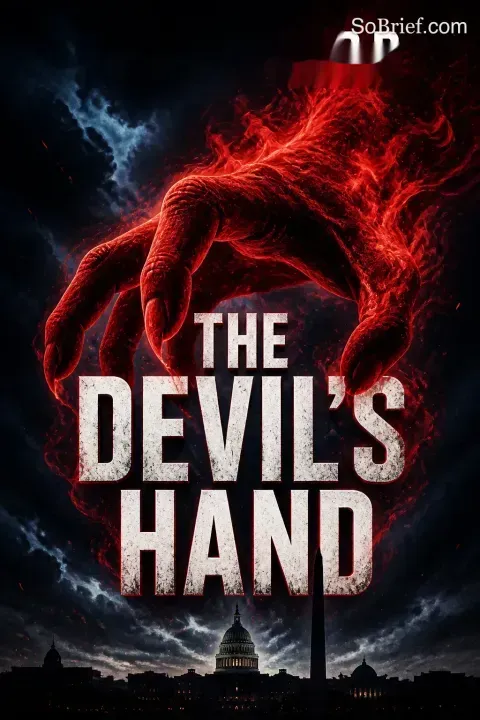


Plot Summary
Prologue
On the night of September 10, 2001, Aliyah Hajjar,15 a janitor at Boston's Logan Airport, kneels in the first-class cabin and tapes box cutters to the underside of seats 2A and 2B. Her husband beat her into compliance. The man with empty eyes she saw in her stairwell, Mohamed Atta, planned this.
The next morning, Alec Christensen2 rides through Manhattan with his fiancée Jen. From the Rainbow Room on the 65th floor, Alec2 watches Flight 11 slam into the North Tower, where Jen works at Cantor Fitzgerald. He sprints toward the smoke, toward the flames, toward bodies falling from the sky. He runs toward Jen. He runs toward Hell. She does not survive.
The prologue establishes the novel's central duality: two unknown women, one coerced into enabling terror, the other its innocent victim. Aliyah's domestic abuse mirrors the terror network's methodology, control through violence. Alec's sprint toward the towers while others flee transforms him from witness to archetype: the man who cannot turn away from death. The box cutters taped under the seats are the novel's original sin, a small act with consequences that ripple across two decades. The prologue argues that history's most consequential moments hide in mundane gestures: a kneeling janitor, a canceled breakfast, a fiancée who decided not to call in sick.
The President's Dark Offer
James Reece1 endures a hostile CIA polygraph, his interrogator accusing him of deception on nearly every answer. Vic Rodriguez,7 chief of the Special Activities Center, intervenes personally and approves Reece's1 file.
Days later, a helicopter ferries Reece1 to Camp David, where President Alec Christensen2 reveals his true motive for seeking office: vengeance for his fiancée Jen, killed on 9/11. Christensen2 hands Reece1 three files, including a target package of seven names, facilitators of the attacks who have walked free for twenty years.
The president2 wants Reece1 to finish what the AUMF authorized in 2001. He asks if Reece1 knows about Operation Wrath of God, the Israeli response to Munich. Reece1 understands: he is being recruited as the president's2 personal instrument of justice.
The Camp David scene recasts the presidency as a revenge mechanism. Christensen's confession that he ran for office to access classified files and issue lethal notifications transforms democratic leadership into a vehicle for personal vendetta. Reece's acceptance is not ideological but practical: he needs CIA intelligence to find Nizar Kattan, the sniper who killed his friend Freddy Strain. Both men are hollowed by loss, and their alliance is a mutual exploitation of state power for private grief. The polygraph scene that opens the chapter establishes the novel's preoccupation with truth and its mutability: Reece lies successfully because a presidential pardon retroactively alters the facts.
Poison in Hand Sanitizer
In Angola, Hezbollah operative Ismail Tehrani sprays an inhaler device at a Cabinda marketplace, releasing hemorrhagic virus. Within thirty-six hours, the local clinic floods with patients bleeding from their eyes. The WHO catalogs it as a contained Ebola outbreak and incinerates the bodies.
In Washington, Iranian intelligence chief Hafez Qassem5 retrieves a diplomatic pouch containing a vial of Marburg Variant U, the Soviet bioweapon that killed Dr. Nikolai Ustinov in 1988. At a New England Revolution soccer match, Qassem5 passes the vial to Ali Reza Ansari,4 a BioDine executive and deep-cover Iranian agent.
Ali4 travels to Denver, where radicalized PhD student Sebastian Phillips14 has constructed a secret virology lab in a dilapidated house. Using monkey kidney cells, they resurrect the deadliest pathogen ever weaponized.
The sequence illustrates asymmetric warfare as generational patience. Iran's strategy exploits the West's openness: legitimate businesses, student visas, and diplomatic immunity become weapons-delivery systems. Ali's backstory, his father killed by American-supplied chemical weapons in the Iran-Iraq War, provides psychological depth that complicates the villainy. The hand sanitizer exchange at a public sporting event is the novel's most chilling image of clandestine trade: death passes as casually as a courtesy. The resurrection of Variant U literalizes the novel's thesis that Cold War sins never died; they were merely frozen, waiting for a new hand to wield them.
Kills He Did Not Commit
Reece1 drives his Land Cruiser to Chicago to surveil Kareem Talib, a man who took flight lessons at the same school as the 9/11 hijackers. As Reece1 photographs the house, another visitor arrives: Ali Ansari.4 Inside, Ali4 serves tea laced with an undetectable neuropeptide that induces cardiac arrest.
Talib dies before Reece1 can act. Puzzled, Reece1 photographs the mystery visitor and moves to Atlanta. There he surveils Sohrab Behzad, a mosque security consultant who taught the hijackers to fight with box cutters.
Breaking into Behzad's hotel room through a balcony slider, Reece1 engages in a brutal hand-to-hand fight when Behzad returns with a prostitute. Reece1 kills him with tomahawk and pistol. Outside, Ali4 photographs Reece1 escaping and uploads the image to a shared intelligence account.
The parallel hunting sequences establish the novel's fugue structure: two predators stalking the same terrain, each unaware of the other. Reece's first assassination is messy and morally complicated by the presence of an innocent witness. Ali's clinical poisoning of Talib reveals the Iranian operation's ruthlessness: assets who lose faith become liabilities. The chapter argues that the post-9/11 surveillance apparatus failed not because it was overzealous but because it was abandoned too soon. Talib had been watched for years, then forgotten, leaving him vulnerable to both American vengeance and Iranian betrayal.
The Hot Zone Expands
Ali's4 operatives depress aerosol dispersal devices in restaurants, grocery stores, and hospitals in Richardson, Texas, and Aurora, Colorado. At Richardson Methodist Medical Center, Air Force veteran Dr. Julius Mieczkowski arrives to find the ER overwhelmed with patients vomiting blood, capillaries hemorrhaging into their eyes.
The virus mimics respiratory transmission because of the simultaneous releases. Within days, the military seals both cities under martial law. Black Hawks patrol perimeters while Abrams tanks block highways. The president2 addresses the nation, confirming an airborne Ebola strain from Angola.
In the White House Situation Room, officials brief him on a classified Cold War protocol: MC-130 aircraft at Hurlburt Field stand ready with GBU-43/B fuel-air explosives, designed to incinerate entire cities to prevent a pathogen with 90 percent mortality from destroying the country.
The quarantine sequence weaponizes pandemic trauma. Dr. Mieczkowski's perspective, a combat veteran facing a biological battlefield in his own ER, collapses the distinction between foreign and domestic war. The FAE protocol is the novel's darkest revelation: the cure is indistinguishable from the attack. America's own biodefense contingency becomes the terrorist's primary weapon, a self-destruct mechanism embedded in the national security apparatus. The chapter asks what price a nation will pay to survive and whether the survival purchased at that price is worth having.
Eleven Bodies in Maryland
Returning from D.C., Reece's1 Land Cruiser is rammed off U.S. 50 by an Iranian hit team dispatched after Ali's4 photo identified him. Eleven armed men speaking Farsi attack the overturned vehicle. Katie,3 trapped upside down, grabs an assassin's pistol and fires, saving Reece's1 life. They fight through a warehouse, Reece1 wielding his Winkler tomahawk and SIG, Katie3 firing a stolen Glock.
They kill every attacker. At a CIA safe house, the wounded Katie3 calls her friend Dr. Haley Garrett6 from the CDC. Haley6 arrives with a radical theory: the virus's spread pattern defies epidemiological models. The first victims' names in both cities have Iranian surnames. Those names match Reece's 9/11 target list.
The ambush transforms Kate from observer to combatant, her baptism in violence bonding her irrevocably to Reece's world. The revelation that outbreak victims share surnames with 9/11 facilitators creates the novel's most elegant conspiracy: Iran used its own sacrificial agents as viral-delivery systems, exploiting their anonymous deaths to mask the attack. The Masada surveillance van recording everything introduces a third-party observer whose footage will become a political weapon. The chapter argues that in modern warfare, the camera is as potent as the gun.
The Dying Man's Secret
Reece1 and Haley6 fly to Denver in an Agency Gulfstream and suit up in level-four biohazard gear. At the field hospital, they find Shahram Pahlavi14 dying, his organs liquefying as Marburg devours him from within.
Reece1 threatens to cremate his body, a violation of Islamic burial rites, and to kill his parents in Arizona. Shahram14 breaks. The virus is Marburg Variant U, the Soviet bioweapon strain from 1977. It was grown in his basement lab, then aerosolized for targeted release. Crucially, it cannot spread person-to-person.
Haley6 and Reece1 race to the Denver house. Inside, Ali Ansari4 is destroying evidence as flames spread from the basement. Reece1 engages Ali4 in hand-to-hand combat amid collapsing floorboards, subduing him with a screwdriver before dragging him from the inferno.
The interrogation of Shahram is the novel's moral nadir. Reece uses the same tools as his enemies: desecration threats, family leverage, theological manipulation. He weaponizes the afterlife against a dying man. Haley's visible horror raises questions the novel does not fully answer: what separates the torturer from the terrorist when both believe their cause is righteous? The collapsing floor and spreading fire literalize the destruction of the conspiracy. The key intelligence, that the virus cannot transmit between humans, is the pivot on which half a million lives now turn.
Suffocation as Interrogation
In the back of a commandeered ambulance, Haley6 clamps Ali's4 severed femoral artery while Reece1 administers succinylcholine, a paralytic that halts all muscle function including breathing. Ali4 suffocates for minutes, fully conscious but unable to move, as Reece1 controls the Ambu bag that delivers each life-sustaining breath.
The drug wears off and Reece1 injects another dose. Ali's4 body convulses with malignant hyperthermia. Between doses, he confesses: the plot was designed to force America to destroy its own cities with FAEs, mirroring the Soviet Union's Cold War protocols.
The virus came from Hafez Qassem.5 Ali4 also confirms he saw Reece1 in Chicago and Atlanta, triggering the hit squad. After repeated paralytic cycles and AED shocks, Ali's4 heart stops. The recording captures everything.
The ambulance scene is a masterwork of medical horror weaponized as intelligence gathering. Haley, a doctor sworn to save lives, must keep a mass murderer alive so he can be psychologically destroyed. The succinylcholine technique echoes CIA enhanced interrogation programs, placing Reece in an uncomfortable lineage. The confession reframes the entire plot: the goal was never direct mass death but coerced self-immolation. The chapter asks whether information extracted under chemical duress can be trusted and whether the answer matters when the alternative is the annihilation of two cities.
Senators and Surveillance Footage
Senator Thwaite8 and Erik Sawyer9 leak the Masada thermal-imaging footage to cable news. The IR video shows Reece1 executing the Iranian hit team on the Maryland roadside. News anchors frame him as a serial killer targeting Muslims, a presidential assassin on a hate-crime spree.
Thwaite8 calls President Christensen,2 threatening to expose the connection unless the FAE strikes proceed immediately. He argues that delay risks the virus escaping containment and killing millions.
Meanwhile, Vic Rodriguez7 warns Reece1 that his encrypted KryptAll phone has been compromised by Sawyer's9 surveillance apparatus. Haley6 realizes she needs an original sample of Marburg Variant U to definitively prove the virus is not airborne. Only one place holds it: Fort Detrick's secret bioweapons vault.
The political subplot demonstrates asymmetric warfare's domestic application. Thwaite uses the same techniques as the terrorists: media manipulation, institutional exploitation, and the weaponization of partial truths. The IR footage, stripped of context, transforms Reece from defender to aggressor. The chapter argues that in an information ecosystem where every fact can be reframed, objective truth becomes a casualty. Sawyer's wiretap capability reveals the porous boundary between corporate surveillance and state security: the tools designed to protect the nation can be rented by anyone.
Treason in the Bat Cave
Haley's6 husband, Colonel Tom Garrett,12 works in Fort Detrick's secret Bat Cave, where the U.S. weaponizes pathogens in violation of international treaty. After a personal phone call from the president,2 Garrett12 agrees to help.
He schedules a fake Saturday experiment, and while his shocked partner Major Courtney Burke watches, he extracts a vial of Marburg Variant U using the robotic arm. Instead of incinerating the infected baboon, he sends it back through the delivery system.
Outside, Reece1 and Haley,6 disguised in workout clothes, infiltrate the animal handling facility. Reece1 holds five technicians at gunpoint with a borrowed 1911 pistol. They intercept the specimen, draw infected blood into a syringe, and escape. Haley6 now possesses the original Soviet strain.
The Fort Detrick heist inverts the novel's moral calculus: to save American lives, the protagonists must commit the very crime, bioweapons theft, that the novel condemns. The Bat Cave's existence confirms the hypocrisy of international arms control; every signatory violates the treaty while publicly upholding it. Garrett's choice between his oath to country and his oath as a physician crystallizes the novel's ethical framework: sometimes the most patriotic act is disobedience. The baboon, an innocent creature sacrificed in both the weaponization program and the heist to save it, becomes an unwitting symbol of collateral damage.
The Genome's Verdict
At a CDC level-four lab, Haley6 compares the stolen Marburg Variant U genome to samples from Richardson and Aurora. The match is exact. The virus is the weaponized Soviet strain, not a natural Angolan mutation.
Critically, the genomic data confirms it spreads only via direct aerosolized droplets from a pressure device, not through respiration. Once released, it cannot transmit between humans. Haley6 sends the data to Vic,7 who briefs the CIA director. The president,2 armed with irrefutable science, cancels the FAE strike.
He addresses the nation, announcing the virus has burned itself out naturally and that eradication protocols are suspended. He buries the truth about Iran to prevent a nuclear war, lying to the American people to save them from a greater catastrophe.
The scientific resolution is the novel's most subversive act: truth, not violence, saves the day. But that truth must then be classified into nonexistence. The president's Oval Office address is a lie wrapped around a truth: the virus did stop, but not because nature was merciful. The chapter argues that leadership sometimes demands deception to prevent catastrophe. The decision to conceal Iranian culpability exchanges immediate justice for strategic stability, a trade-off the novel presents as morally excruciating but necessary. The genome, a string of data invisible to the human eye, becomes the weight that tips the scales of history.
The Minivan in the Trap
With the KryptAll phone compromised, Vic7 sets an ambush. Reece1 drives toward a CIA processing center with Haley6 as bait. The Masada surveillance minivan, manned by Charlie Crimmins and his partner Woody, follows.
As they enter the parking lot, Reece1 slams his vehicle in reverse, pinning the van against a rising security barrier. Two black Suburbans complete the L-shaped trap. When Crimmins attempts to escape, a burst of 7.62 from a suppressed MK 48 shreds the engine block.
Operators in tactical gear extract the occupants. Woody, nursing a broken arm, finds the side door yanked open by Reece1 himself. The captured surveillance team's testimony and equipment implicate Sawyer9 and Senator Thwaite8 in the attempted assassination of Reece1 and Haley.6
This sequence delivers operational catharsis: the surveillors become the surveilled, corporate overreach smashed by the state's monopoly on legitimate violence. The Masada team, a collection of disgraced veterans and steroid-fueled wannabes, represent the moral hazards of privatized security. Their capture reverses the power dynamic that has plagued Reece throughout the novel. The scene's tactical choreography, down to the engine-block burst and door-pull, operates as competence porn: precision violence as moral clarity, the righteous ambush as narrative justice.
The Portland Photograph
Reece's1 team tasers Hafez Qassem5 on a wooded path near the Pakistani embassy and loads him into a flower-delivery van. Strapped to a chair, Qassem5 faces a grainy photograph: Portland, Maine, September 10, 2001. It shows him meeting Mohamed Atta.
Facial recognition technology, primitive in 2001, has matured enough to make the match. Reece1 connects an IV line and threatens to inject Marburg Variant U, the same weapon Qassem5 deployed against America. Under simulated suffocation, Qassem5 breaks.
He delivered the order for 9/11 from General Ja'far al-Sadiq,10 Iran's intelligence minister. The word was 'yd alshaytan': the Devil's Hand. Qassem5 believed it was for a car bomb, not the towers, but acknowledges Iran's role in enabling the deadliest attack on American soil.
The interrogation completes the novel's revisionist thesis: 9/11 was an Iranian state operation conducted through al-Qaeda proxies. The twenty-year gap between photograph and analysis mirrors the enemy's strategic patience. The phrase 'Devil's Hand' operates as both literal trigger and thematic metaphor: Iran moved its pieces invisibly while America chased a phantom in a cave. Reece's use of a fake bioweapon threat turns the enemy's own tactics against them, a mirror-image of the Marburg attack. The chapter argues that delayed justice is not denied justice, merely justice that required technology to catch up with evil.
Fireballs and Revolvers
Reece1 releases Qassem5 near Dulles with a message for Tehran. As Qassem's5 chartered plane enters international airspace, two F-22 Raptors intercept it. Following the presidential order,2 they fire AIM-120C missiles, turning the Dassault Falcon 50 into a fireball over the Atlantic. The strike deliberately echoes the 1943 shootdown of Admiral Yamamoto: no ambiguity about responsibility.
On Mustique island, Senator Thwaite8 and Erik Sawyer9 watch the news as FBI investigations close in. Sawyer9 reveals he has already contracted a sniper11 to kill Reece.1 Thwaite,8 drunk and consumed by panic, draws his father's revolver and shoots Sawyer9 twice, killing him. Then he presses the barrel to his own temple and pulls the trigger.
The dual resolution deploys different justice systems. Qassem faces state-sanctioned lethal force authorized at the highest level; Thwaite and Sawyer consume each other in a cannibalistic spiral of political ambition. Sawyer's death at the hands of the man he manipulated for years proves the mercenary's maxim: loyalty purchased is loyalty forfeited. Thwaite's suicide is the ultimate act of political cowardice, a refusal to face consequences. The Yamamoto reference reframes the F-22 strike from murder to military necessity, while the Mustique scene plays as Shakespearean tragedy: the conspirators undone by their own natures.
The Ring in Chalus
Reece1 infiltrates Iran through Kurdish smuggling networks, crossing the Caspian Sea by fishing trawler. He comes ashore near Chalus, the resort town his SEAL team once prepared to raid for al-Zarqawi in 2004. Using a suppressed Tabuk AK, he kills four bodyguards and enters the beachfront villa.
General Ja'far al-Sadiq10 kneels in prayer. The old man recognizes Reece1 and recites the 1998 fatwa he authored, the declaration of war against America. They exchange words about terrorism and collateral damage.
Reece1 calls himself a messenger, not an assassin. He fires three rounds into al-Sadiq's10 face, then places Jennifer Christensen's engagement ring, inscribed with the president's2 name, in the dead man's hand. Reece1 slips back into the Caspian, extracted by the same fishing boat.
The climactic kill completes the novel's emotional circuit. The ring, worn against the president's chest for twenty years, finds its resting place in the hand of the man who ordered Jen's death. Reece's insistence that he is a messenger rather than an assassin reframes the act as delivery, not murder, echoing the biblical Ehud. The Tabuk rifle, captured from an earlier war, layers irony onto the violence: one defeated enemy's weapon kills another. The prayer-interruption motif echoes the prologue: Aliyah's hidden blades disrupted American morning rituals, Reece's bullets interrupt Islamic evening prayers. The ring is the novel's final argument: some debts can only be paid in blood.
Epilogue
In Ulcinj, Montenegro, sniper Nizar Kattan11 receives a courier envelope containing a coded message. Using a specific edition of The Great Game as cipher, he decodes a final contract from the late Erik Sawyer:9 eight million euros to kill James Reece.1 The note warns that Reece1 is actively hunting him.
Nizar11 slits the throat of the Ukrainian prostitute who translated the message, erasing the only witness. He walks the ancient stone streets toward an Internet cafe, preparing to study his prey's patterns. The contract's closing line echoes in his mind: it would be best if you found him before he finds you.
The epilogue transforms the novel from closed circuit to open loop. Every act of vengeance spawns new vendettas; the hunter always becomes the hunted. Nizar Kattan, the ghost who killed Freddy Strain, steps into the crosshairs. The use of The Great Game as cipher ties the novel to the historical struggle for Central Asia, implying the contest never truly ends. The murdered prostitute is the epilogue's smallest and most brutal death, a reminder that in this world, innocence is always collateral. The image of Nizar walking toward morning, a killer preparing his next contract, promises that the next book will be the most personal yet.
Analysis
The Devil's Hand operates as a sustained meditation on asymmetric warfare in the twenty-first century. Its central argument is that America's enemies have learned more from twenty years of combat than America has. While the U.S. refined drone strikes and special operations raids, Iran studied the long game: deep-penetration agents embedded in Western institutions, proxy forces that provide plausible deniability, and strategies that weaponize American protocols against the American homeland. The novel's title, drawn from a real 2001 Iranian intelligence memorandum authorizing cooperation with al-Qaeda, frames 9/11 not as the act of nineteen hijackers and a Saudi financier but as an Iranian state operation conducted through Sunni proxies, a Sunni-Shia divide exploited as cover.
The psychological architecture of the novel is built on grief. President Christensen2 and James Reece1 are mirror images: men hollowed by loss who have converted mourning into operational capability. Their alliance is a Faustian bargain in which state power serves personal vengeance, and the novel does not fully resolve whether this is corruption or justice. Reece's1 use of enhanced interrogation, including chemical paralysis that simulates death by suffocation, places him in the lineage of the very programs the novel critiques, asking whether the tools of terror can ever serve the cause of righteousness without corrupting the wielder.
The Marburg plot itself is a masterclass in jujitsu strategy: Iran did not need to kill 280 million Americans. It merely needed to convince American leadership that 280 million would die unless two cities were sacrificed. The enemy's goal was not mass death but coerced self-destruction, turning the United States' own Cold War biodefense protocols into the weapon of its annihilation. The novel thus argues that the greatest threats to America are not external but embedded in the compromises made during previous conflicts, compromises that wait in classified vaults like dormant viruses.
The resolution is deliberately incomplete. The truth about Iran's role is buried to prevent nuclear war. The mastermind10 dies with a ring in his hand, a personal message that will never reach its intended recipient. And in Montenegro, a sniper11 opens a ciphered contract, ensuring that the cycle of vengeance continues. The novel's final argument is that there is no final argument: the Great Game does not end, it merely pauses between moves.
Review Summary
The Devil's Hand receives mostly positive reviews (4.45/5) for its intense action and meticulous research. Readers praise Jack Carr's attention to detail, particularly regarding bioweapons and military operations, calling it his best work since The Terminal List. The plot involves James Reece investigating 9/11 plotters while confronting a Marburg virus bioterrorism threat. Some criticize the slow opening and heavy right-wing political commentary, finding it preachy and distracting. Others appreciate the timely relevance and realistic portrayal of government responses to pandemics. The novel's graphic violence and technical accuracy resonate with fans of military thrillers.
People Also Read


Characters
James Reece
Former SEAL turned CIA operativeA Navy SEAL commander who lost his wife, daughter, and unborn son to a government-private sector conspiracy, which he dismantled through a brutal campaign of revenge. Now working for the CIA's Ground Branch, Reece is driven by two engines: a promise to a fallen teammate's widow and the need to find Nizar Kattan11, the sniper who killed his friend Freddy Strain. He moves through the world with the hypervigilance of a predator who has been both hunter and hunted. His moral code is tribal rather than institutional: loyalty to his dead and his few living allies trumps law, policy, or politics. He carries a Winkler tomahawk, a SIG pistol, and memories that surface as flashbacks during violence. His relationship with journalist Katie Buranek3 represents his last tether to a life beyond the kill.
President Alec Christensen
Commander-in-chief driven by griefA Democrat who came from wealth but earned authenticity through combat in Afghanistan, where he took a bullet and pulled wounded soldiers from a burning vehicle. His fiancée Jen died in the North Tower on 9/11, and he has worn her engagement ring on a chain ever since. Christensen ran for president not out of ambition but to access the nation's most classified files and locate the facilitators of the attacks. He presents publicly as a unifying statesman while privately operating a personal assassination program. His decision to conceal Iran's role in the Marburg attack reveals a leader willing to lie to prevent nuclear war, exchanging immediate justice for long-term stability. He is Lincoln's 'malice toward none' and John Wick in the same skin.
Katie Buranek
Investigative journalist and Reece's partnerA respected cable news contributor and author who helped expose the conspiracy that killed Reece's1 family. She has survived multiple attempts on her life by Russian mafia and Iranian assassins, transforming from observer to combatant. Her relationship with Reece1 is built on shared trauma and mutual respect for each other's calling: his violence, her words. She carries a Glock 19, trains in team tactics with former Delta operators, and has learned to clear rooms and apply tourniquets. Her friendship with CDC doctor Haley Garrett6 proves crucial when she connects the bioweapon attack to Reece's1 secret mission. She represents the cost of loving a man whose life is defined by death.
Ali Reza Ansari
Iranian deep-cover bioweaponeerA BioDine executive and Iranian intelligence asset whose father died from American-supplied chemical weapons in the Iran-Iraq War. One brother perished in a human-wave attack; another hanged himself after the war. Ali was recruited young, trained in assassination and espionage in Europe, and spent decades building an impeccable cover. His mission: infiltrate the United States, receive a bioweapon through diplomatic channels, and orchestrate an attack designed to force America to destroy its own cities. He is methodical, patient, and utterly committed to avenging his family. When captured by Reece1, he demonstrates both the resilience of the true believer and the terror of a man who faces death not as martyrdom but as consequence.
Hafez Qassem
Iran's intelligence chief in AmericaThe architect of Iran's asymmetric war against the United States for over two decades. Operating from the Pakistani embassy under diplomatic cover, he delivered the order for 9/11 to Mohamed Atta in Portland, Maine, then spent twenty years refining Iran's proxy warfare strategy. He recruited the Air Force defector Monica Witt, penetrated Iraqi ministries after the U.S. invasion, and designed the Marburg plot as his magnum opus. Qassem is a ghost who studied how to remain invisible while adversaries like Soleimani and Mughniyeh were hunted down. His capture reveals the patience of state-sponsored terror: two decades is a reasonable timeline when the goal is the collapse of a superpower.
Dr. Haley Garrett
CDC infectious disease investigatorA microbiologist and physician who volunteered with Médecins Sans Frontières in the Congo, where she witnessed a village incinerated by what she now suspects was a Russian FAE covering a bioweapon test. At the CDC, she monitors global hemorrhagic fever outbreaks. When the Marburg attack hits the U.S., she is the first to notice irregularities in the spread pattern. Her theory that the virus is aerosolized rather than truly airborne puts her at odds with the entire scientific establishment. She is married to Colonel Tom Garrett12, a Fort Detrick researcher, a fact that becomes critical when the proof she needs is locked in her husband's secret bioweapons vault. Her arc moves from academic skepticism of Reece's1 methods to grim acceptance of their necessity.
Vic Rodriguez
CIA Special Activities Center directorSecond-generation Agency, son of a Bay of Pigs veteran. A former Army Special Forces officer who now runs the CIA's paramilitary wing. He recruited Reece1 for Ground Branch and serves as the bridge between the president's2 off-book mission and the intelligence apparatus. Vic provides operational support, clean-up teams, and the hard counsel of a man who understands that the 'third option' means operating in moral shadows. His loyalty to his people is absolute; he falsifies Reece's1 polygraph results and authorizes domestic operations that would end careers if exposed.
Senator Edward Thwaite
Corrupt opposition leaderA second-generation senator who views the presidency as his birthright, stolen by the younger, more charismatic Christensen2. He operates from Club Aegis, a private bipartisan club where real power is brokered over cigars and martinis. Thwaite believes the Deep State is real because he is part of it: a network of donors, lobbyists, and media allies who shape policy through influence rather than votes. He hires Erik Sawyer's9 Masada to surveil Reece1, intending to manufacture a scandal to bring down the president2. His political calculation, that sacrificing two cities to save the nation is acceptable collateral, reveals a mind that has confused self-interest with statesmanship.
Erik Sawyer
Private military company CEOFormer Army Ranger who fought in Mogadishu, then built Masada into a billion-dollar security and intelligence empire. He collects compromising information on politicians as insurance, sells surveillance capabilities to the highest bidder, and maintains a private army on eight thousand acres in North Carolina. Sawyer represents the privatization of war: he profits from the same conflicts his country fights, and his loyalty is entirely transactional. His office features paintings of military disasters, reminders that empires fall. His decision to contract Nizar Kattan11 to kill Reece1, even after his own death, is his final middle finger to a world he could not fully control.
General Ja'far al-Sadiq
Iranian intelligence ministerThe hidden hand behind forty years of Iranian proxy warfare. He stood with Imad Mughniyeh overlooking Beirut in 1983 when the Marine barracks were bombed. He authored the 1998 fatwa declaring war on America. He authorized both the 9/11 support network and the Marburg bioweapon attack as sequential blows in a generational conflict. Al-Sadiq represents the patient enemy who learned from American responses while never revealing his own position. He dies in prayer on the Caspian shore, a fitting end for a man who believed Allah ordained his violence. The ring placed in his dead hand is the novel's final message: some debts are never forgotten.
Nizar Kattan
Freelance sniper and assassinA Syrian sniper who killed Freddy Strain in Odessa with a bullet intended for another target. He killed his own partner, the legendary Tasho al-Shishani, to eliminate a witness. Now operating from Montenegro under mafia protection, Kattan works for whoever pays, including the late Erik Sawyer9. He is a survivor, not an ideologue, who has learned from watching targets destroyed by their own communication habits. He uses no cell phone, no computer, and communicates through the ancient hawala network and book ciphers. His patience and professionalism make him the most dangerous antagonist in Reece's1 sights.
Colonel Tom Garrett
Fort Detrick bioweapons researcherHaley's6 husband, an Army colonel who spends his days in the Bat Cave, a secret facility where the U.S. weaponizes pathogens in violation of the Biological Weapons Convention. He is a doctor first and a soldier second, a man whose professional life is built on compartmentalization. When the president2 calls directly, Garrett faces an impossible choice: his oath to his country or his oath as a physician. His decision to extract Marburg Variant U and help Reece1 steal it constitutes treason, an act that could send him to Leavenworth for life. He makes the choice anyway, because the alternative is the incineration of half a million Americans.
Ox (Rick Andrews)
CIA contractor and Reece's allyA former Delta Force sergeant major who earned his nickname carrying a mortar tube across a runway in Grenada. Now in his late fifties, he trains CIA recruits at the Farm and deploys when the mission requires experience over youth. Ox trained Katie3 in firearms and team tactics, and he stands guard at the Annapolis safe house after the Maryland ambush. He represents the generation of operators who came before Reece1, men who have been at war so long they no longer remember peace. His presence signals that the situation has escalated to require the old gods.
Sebastian Phillips / Shahram Pahlavi
Radicalized virology studentAn Iranian-American PhD student whose parents are deep-penetration agents. He built a secret virology lab in a Denver house, growing Marburg Variant U from samples provided by Ali Ansari4. He believed he was a warrior of Allah; he was actually expendable. His death from the virus he cultivated is the novel's clearest example of the terror network consuming its own.
Aliyah Hajjar
Coerced 9/11 enablerA Logan Airport janitor whose abusive husband forced her to hide box cutters on Flight 11. Her story in the prologue establishes the terror network's methodology: domestic violence as recruitment, menial jobs as operational cover, and the exploitation of women as invisible instruments. She is the first victim of the novel, long before the planes took off.
Plot Devices
Marburg Variant U
Soviet bioweapon used in the attackA weaponized hemorrhagic fever strain created from samples taken from Dr. Nikolai Ustinov, a Soviet scientist who accidentally injected himself with Marburg in 1988 and died over thirteen days as his organs liquefied. The virus that killed him had evolved into a more virulent form, which the Soviets weaponized for aerosol delivery. It kills 85 to 90 percent of hosts within two weeks. After the USSR collapsed, samples were sold to Iran, China, and North Korea. The United States also maintains a sample at Fort Detrick in violation of the Biological Weapons Convention. The virus spreads only through direct aerosolized droplets from a pressure device; it cannot transmit between humans through respiratory pathways, making it the perfect bioweapon: devastating on impact but self-limiting, unable to boomerang back to its users.
The Presidential Kill List
Reece's assassination targetsSeven names of 9/11 facilitators who remained in the United States after the attacks, living as citizens under FBI surveillance until 2011, when monitoring was discontinued after the bin Laden raid. The list includes Kareem Talib, who scouted flight schools for the hijackers; Sohrab Behzad, who taught them knife fighting; and Shahram Pahlavi14's father, among others. President Christensen2 compiled the list through his unfettered access to classified files. He issued presidential notifications under the 2001 AUMF, which authorizes force against anyone who 'planned, authorized, committed, or aided' the 9/11 attacks, regardless of geographic limits. The list is the operational spine of Reece's1 mission and the catalyst that inadvertently exposes the Iranian bioweapon plot when names on the list match the first Marburg victims.
Fuel Air Explosive Protocol
America's self-destruct contingencyA classified Cold War plan maintained by the U.S. military to incinerate American cities with GBU-43/B Massive Ordnance Air Blast bombs if a biological weapon with a 90 percent mortality rate ever threatened to spread beyond containment. MC-130 aircraft from the 15th Special Operations Squadron at Hurlburt Field, Florida, stand on permanent alert. The crews believe they train for a Cuban contingency; they do not know their simulated targets are American population centers. The protocol originated in the 1950s under Eisenhower and was updated periodically. Iran's entire strategy depends on this protocol: by releasing an aerosolized virus that mimics airborne transmission, they intended to trigger America's own eradication mechanism, making the United States destroy itself.
Diplomatic Pouch
How the virus entered AmericaProtected under Article 27.3 of the Vienna Convention on Diplomatic Relations, diplomatic pouches cannot be searched or x-rayed by host nations. Iran exploited this immunity by routing a package through the Pakistani embassy in Washington, where their Interests Section operated. Inside a properly marked diplomatic pouch addressed to Islamabad was a box labeled as Iranian government property. Within that box was a vial containing Marburg Variant U, the deadliest pathogen ever weaponized. The pouch passed through customs uninspected, a violation of international law to examine. Hafez Qassem5 received it and passed the vial to Ali Ansari4 at a soccer game, using hand sanitizer bottles as camouflage. The diplomatic pouch represents the gap between international law and national security that asymmetric actors exploit with precision.
The Great Game Cipher
Covert communication methodErik Sawyer9 gave Nizar Kattan11 a specific edition of Peter Hopkirk's The Great Game as a cipher key. Messages arrive via courier as strings of numbers representing page, line, and letter positions. Because decryption requires the exact edition of the correct book, the system is virtually unbreakable by signals intelligence. Sawyer9 used it to contract Kattan11 for assassinations, and his final message, delivered posthumously, places an eight-million-euro bounty on James Reece1. The choice of The Great Game as cipher book is thematically resonant: the nineteenth-century struggle between Britain and Russia for control of Central Asia mirrors the novel's contemporary Great Game between Iran and America, suggesting that empires clash in cycles and the board merely resets with new pieces.
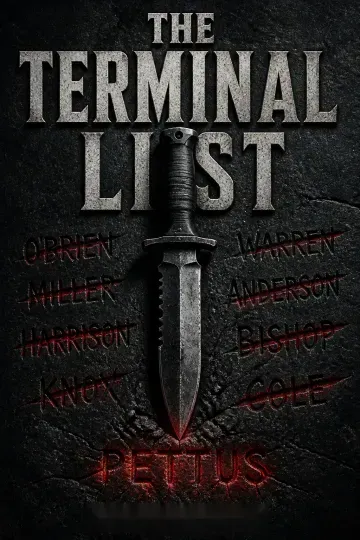
Terminal List Series
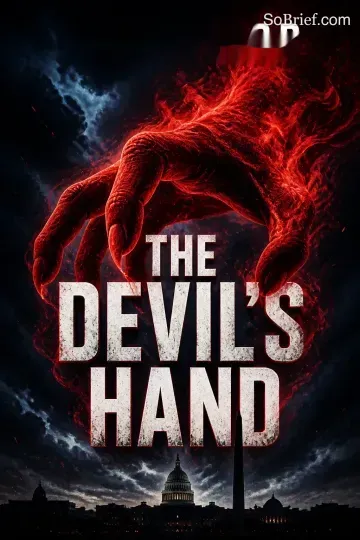
About the Author
Other books by Jack Carr


Download PDF
Download EPUB
.epub digital book format is ideal for reading ebooks on phones, tablets, and e-readers.








































