
Plot Summary
The Offer at Circle K
Abbott, a socially anxious rideshare driver, is approached at a Circle K by Ether, a frantic woman with a mysterious black box. She offers him an enormous sum to drive her and the box across the country to Washington, DC, under strict secrecy. Abbott's reluctance is overcome by Ether's persistence, the promise of life-changing money, and his own dissatisfaction with his stagnant life. The box's secrecy, Ether's odd behavior, and the urgency of the mission set the tone for a journey that will spiral into chaos, paranoia, and viral infamy. The emotional tension is palpable as Abbott, against his instincts, agrees to a trip that will upend his world.
The Reluctant Road Trip
Abbott and Ether begin their cross-country drive, navigating awkward silences, personal boundaries, and mounting anxiety. Ether's rules—no phones, no questions about the box—heighten Abbott's unease. As they travel, Ether's eccentricities and Abbott's catastrophizing clash, but a strange camaraderie forms. Abbott's internal monologue is a storm of self-doubt and fear of humiliation, while Ether's optimism and odd wisdom challenge his worldview. The journey is punctuated by small disasters, like a pharmacy stop and a near-miss with Abbott's overbearing father, foreshadowing the larger dangers ahead. The emotional arc is one of reluctant trust and the first steps toward self-discovery.
Pursued and Paranoid
As Abbott and Ether make their way east, they are shadowed by Malort, a menacing biker with ties to the box's origins. Meanwhile, retired FBI agent Joan Key and Abbott's father, Hunter, begin their own investigations, each driven by suspicion and concern. The internet, led by Abbott's online acquaintances, starts piecing together the duo's journey, fueling a viral manhunt. Paranoia mounts as Ether reveals more about her past and the box's importance, while Abbott's anxiety intensifies. The sense of being hunted—by Malort, the law, and the digital mob—creates a tense, claustrophobic atmosphere, pushing Abbott and Ether to the edge.
Internet Frenzy Ignites
The story explodes online as Reddit, Twitch, and other platforms obsess over Abbott and Ether's odyssey. Amateur detectives, conspiracy theorists, and trolls spin increasingly wild narratives: the box is a bomb, a corpse, or even an alien artifact. The internet's hive mind tracks their every move, sometimes helping, often hindering. Zeke, Abbott's disabled online friend, becomes a key figure in the digital investigation, trying to protect Abbott from both the authorities and vigilantes. The emotional impact is a mix of fear, absurdity, and the surreal experience of becoming the world's most-watched fugitives.
The Black Box's Shadow
As the journey continues, Ether's true identity as a disgraced internet celebrity is revealed, deepening Abbott's mistrust. The box's contents remain a mystery, but its symbolism grows: it is the weight of secrets, shame, and the internet's judgment. Ether's confession about her past and her reasons for taking the job force Abbott to confront his own failures and resentments. Their relationship oscillates between solidarity and conflict, mirroring the larger themes of trust and alienation. The box becomes a metaphor for the burdens we carry and the stories we tell ourselves and others.
Fathers, Fugitives, and Fallout
Hunter, Abbott's father, and Joan Key close in, each grappling with their own regrets and responsibilities. Hunter's pursuit is driven by a mix of paternal concern and frustration at Abbott's perceived failures. Key, haunted by her own career and the specter of domestic terrorism, sees the case as both a threat and a chance for redemption. The emotional core of this chapter is the confrontation between generations, the struggle to communicate, and the longing for approval and understanding. The road trip becomes a crucible for personal growth and the possibility of forgiveness.
The Nashville Catastrophe
In Nashville, a series of accidents—car chases, a mass panic, and a spectacular crash—bring the journey to a violent climax. The box is lost, found, and lost again amid the chaos. Malort's pursuit turns deadly, and the authorities finally catch up, but the truth remains elusive. The internet's role in escalating the crisis is laid bare, as misinformation and spectacle override reality. Abbott and Ether are forced to make impossible choices, risking everything for each other and for the chance to do the right thing. The emotional arc is one of desperation, courage, and the high cost of survival.
The Truth About Ether
Ether's full story comes to light: her rise and fall as a YouTube influencer, her involvement in a swatting incident, and her quest for redemption. The box's journey is revealed to be a means for Ether to make amends and help a victim of her past mistakes. Abbott, grappling with his own internet infamy and the consequences of his actions, finds unexpected kinship with Ether. Their shared vulnerability and desire for connection become the heart of the story. The emotional impact is raw and redemptive, as both characters confront their darkest moments and choose to move forward.
The Conspiracy Unravels
The true nature of the box and its origins are gradually exposed. Sokolov, a wealthy ex-biker turned tech mogul, emerges as the enigmatic employer behind the mission. Malort's pursuit is revealed to be personal, tied to grief and lost love rather than criminal intent. The internet's wild theories are debunked, but not before causing real-world harm. The story's central mystery—what's in the box—becomes a symbol of the dangers of speculation, the hunger for meaning, and the human cost of viral narratives. The emotional arc is one of disillusionment, but also of clarity and acceptance.
The Killdozer's Arrival
As the box reaches its destination, a rogue actor—Miles, a wronged techie—unleashes a homemade "Killdozer" on Sokolov's estate, seeking revenge for past slights. The resulting mayhem is both tragic and absurd, a collision of personal vendettas and public spectacle. The box is destroyed in the chaos, its contents scattered and burned. The attack, meant to be a world-changing event, is ultimately meaningless, lost in the noise of media spin and public confusion. The emotional impact is one of exhaustion, relief, and the realization that the world is both more dangerous and more ridiculous than anyone imagined.
The Box Revealed
The black box, the object of so much fear and obsession, is revealed to contain nothing more than vintage pornography and personal mementos. The supposed terror plot was a misunderstanding, fueled by paranoia, grief, and the internet's appetite for drama. The real tragedy is personal: lost love, missed connections, and the pain of being misunderstood. The emotional arc is one of anticlimax, but also of liberation—the characters are freed from the box's shadow, able to move on with their lives.
Aftermath and Reckoning
In the wake of the chaos, the characters regroup, reflect, and attempt to make amends. Ether arranges for her payment to help the victim of her past, Sokolov and Malort reconcile, and Abbott and his father reach a fragile understanding. The internet moves on, but the scars remain. The story's resolution is messy, imperfect, and deeply human. The emotional impact is bittersweet, as the characters find meaning not in spectacle or heroism, but in small acts of kindness and connection.
The Meaning of Connection
The final chapters focus on the importance of human connection in a world dominated by screens, algorithms, and spectacle. Abbott and Ether, both changed by their ordeal, choose to rebuild their lives with honesty and vulnerability. The story ends not with triumph or tragedy, but with the quiet hope that real change comes from empathy, forgiveness, and the willingness to reach out. The emotional arc is one of growth, humility, and the enduring need for community.
The World Watches On
The internet, media, and public opinion quickly move on, spinning new narratives and seeking the next spectacle. The characters' stories are distorted, forgotten, or repurposed for entertainment. The world remains chaotic, unpredictable, and hungry for meaning. Yet, amid the noise, the lessons of the journey linger: the dangers of isolation, the power of trust, and the possibility of redemption. The emotional impact is a mix of cynicism and hope, a recognition that while the world may not change, individuals can.
Analysis
"I'm Starting to Worry About This Black Box of Doom" is a razor-sharp satire of our hyperconnected, hyperparanoid era—a road trip thriller that becomes a meditation on trust, alienation, and the stories we tell ourselves. Jason Pargin uses the black box as a mirror for society's deepest anxieties: the unknown, the uncontrollable, the viral. The novel's structure—interweaving personal journeys, internet hysteria, and shifting perspectives—captures the chaos of modern life, where truth is provisional and meaning is crowdsourced. At its core, the book is about the longing for connection in a world that rewards isolation and spectacle. Abbott and Ether's journey is both a literal escape and a metaphor for the struggle to break free from the "black box" of screens, shame, and self-doubt. The anticlimactic reveal of the box's contents is a masterstroke, exposing the emptiness at the heart of our collective obsessions and the futility of seeking salvation in spectacle. Yet, the novel is not nihilistic; it finds hope in small acts of kindness, the possibility of forgiveness, and the messy, imperfect work of being human together. The lesson is clear: the real danger is not what's in the box, but what we project onto it—and the only antidote is empathy, honesty, and the courage to connect.
Review Summary
I'm Starting to Worry About This Black Box of Doom receives mixed reactions, averaging 3.95/5 stars. Readers praise the original premise, fast pacing, dark humor, and social commentary on internet culture and conspiracy theories. The story follows Abbott, a Lyft driver hired to transport a mysterious black box cross-country, sparking wild online speculation. Many appreciated the satirical examination of social media's impact. However, critics found the 400-page novel too long with excessive political commentary, an unlikable incel protagonist, and disappointing endings. Several compared it unfavorably to Pargin's John Dies at the End series, though some considered it his best work yet.
People Also Read




Characters
Abbott Coburn
Abbott is a socially awkward, anxiety-ridden rideshare driver in his mid-twenties, living under the shadow of his domineering father. Isolated and addicted to the safety of online life, Abbott is thrust into chaos when he accepts Ether's offer. His journey is one of reluctant growth: from passive observer to active participant, from self-loathing to self-acceptance. Abbott's psychological arc is defined by his fear of humiliation, his longing for connection, and his struggle to define himself outside the narratives imposed by family, society, and the internet. His relationship with Ether is transformative, forcing him to confront his own flaws and the possibility of change.
Ether (Karen Wozniak / "Butterflaps")
Ether is a complex, mercurial woman in her late twenties, hiding from her past as a disgraced YouTube celebrity. Her impulsiveness, wit, and vulnerability mask deep guilt over a swatting incident that ruined a family's life. Ether's mission to deliver the box is both a means of survival and a quest for atonement. She is fiercely intelligent, emotionally volatile, and driven by a need to make amends. Her relationship with Abbott is fraught with tension, empathy, and mutual recognition of their outsider status. Ether's arc is one of self-forgiveness, learning to trust, and reclaiming agency in a world that has defined her by her worst mistake.
Hunter Coburn
Hunter is Abbott's father, a gruff, stoic ex-Marine and successful roofer. He is emotionally distant, critical, and unable to express affection, yet his actions are motivated by a deep, if flawed, sense of responsibility. Hunter's pursuit of Abbott is driven by fear, pride, and the need to control. His arc is one of painful self-awareness, as he confronts his own limitations as a parent and the consequences of his emotional armor. The reconciliation with Abbott is hard-won, marked by mutual recognition of their shared pain and the possibility of a new, more honest relationship.
Joan Key
Key is a sharp, world-weary former FBI analyst, haunted by her inability to prevent past tragedies. Her pursuit of the "black box" case is both professional and personal—a chance to matter, to connect the dots, and to redeem herself. Key is analytical, cynical, and driven by a sense of duty, but also deeply lonely and prone to self-doubt. Her interactions with Hunter, Ether, and the internet sleuths reveal her struggle to balance skepticism with empathy. Key's arc is about letting go of control, accepting imperfection, and finding meaning in small victories.
Malort (Richard Little)
Malort is a hulking, tattooed ex-biker with a violent past and a broken heart. His pursuit of the box is motivated by grief for Sundae, his lost love, whose ashes and mementos are inside. Malort is both menacing and tragic, a man shaped by loss, rage, and the inability to adapt to a changing world. His arc is one of futile vengeance, self-destruction, and, ultimately, a kind of peace through reconciliation with Sokolov and the acceptance of his own limitations.
Gary Sokolov ("Sock")
Sokolov is a former outlaw turned tech millionaire, whose windfall from Bitcoin sets the story in motion. Charismatic, pragmatic, and morally ambiguous, Sokolov is both a symbol of the American dream and its discontents. His motivations are a mix of loyalty, guilt, and the desire to shape the world. Sokolov's relationships—with Malort, Sundae, and the others—are fraught with betrayal, regret, and the burden of power. His arc is about the limits of wealth, the cost of ambition, and the need for human connection.
Zeke Ngata
Zeke is Abbott's online friend, a wheelchair-bound artist who becomes the linchpin of the internet's investigation. Resourceful, loyal, and quietly heroic, Zeke uses his skills to protect Abbott and unravel the truth. His relationship with his sister Cammy and the online community highlights the power and pitfalls of digital connection. Zeke's arc is one of agency, belonging, and the quiet courage of those who work behind the scenes.
Cammy Ngata
Cammy is Zeke's tough, no-nonsense sister and caretaker. She is fiercely loyal, grounded, and unafraid to take action. Cammy's presence provides stability and comic relief, but also underscores the importance of family and chosen community. Her role in the story is to support Zeke, challenge the others, and embody the everyday heroism of those who care for others.
Miles O'Toole
Miles is the creator of the "Killdozer," a brilliant but embittered techie whose stolen Bitcoin fortune fuels his quest for revenge. His actions are both tragic and absurd, a commentary on the dangers of grievance, isolation, and the myth of the lone avenger. Miles's arc is a cautionary tale about the costs of obsession and the futility of seeking justice through destruction.
Sundae Greene
Sundae is the emotional heart of the backstory—a former adult star, beloved by Malort and Sokolov, whose death and legacy drive much of the plot. Though absent, her memory shapes the motivations and grief of those left behind. Sundae represents the complexity of forgiveness, the pain of loss, and the enduring need to be remembered and loved.
Plot Devices
The Black Box
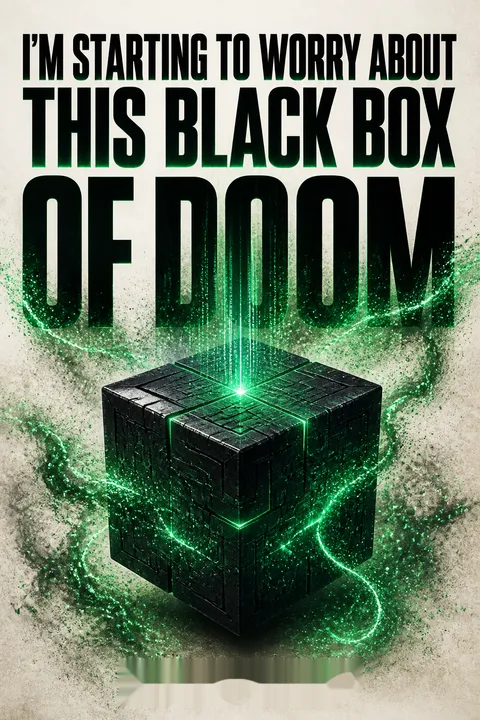
The black box is the central MacGuffin, driving the plot and embodying the anxieties of every character and the world at large. Its contents are unknown, allowing everyone—characters and internet alike—to project their fears, hopes, and conspiracies onto it. The box is a vessel for grief (Malort), redemption (Ether), and paranoia (the internet). Its secrecy fuels the narrative's tension, while its eventual anticlimactic reveal subverts expectations and critiques the culture of spectacle and misinformation.
Internet Hivemind and Viral Paranoia
The story is structured around the internet's escalating obsession with Abbott and Ether's journey. Reddit threads, Twitch chats, and viral videos serve as both plot engine and Greek chorus, amplifying rumors, distorting reality, and driving real-world consequences. The internet's collective intelligence is both powerful and dangerous, capable of solving mysteries and creating new ones. This device satirizes modern society's addiction to spectacle, outrage, and the search for meaning in chaos.
Misdirection and Red Herrings
The narrative is rife with misdirection: the box is variously believed to be a bomb, a corpse, or even an alien artifact. Characters' motives are obscured, alliances shift, and the truth is always just out of reach. Foreshadowing is used to build suspense, while unreliable narration—both from characters and the internet—keeps the reader guessing. The structure mirrors the confusion and uncertainty of the digital age, where truth is provisional and always contested.
Road Trip as Transformation
The cross-country drive is both literal and metaphorical, forcing characters out of their comfort zones and into confrontation with themselves and each other. The road trip structure allows for episodic encounters, escalating stakes, and the gradual revelation of backstory and motivation. Each stop is a crucible for growth, conflict, and the testing of trust.
Satire and Social Commentary
The novel employs satire to skewer internet culture, conspiracy theories, and the American obsession with spectacle. Meta-narrative elements—such as the afterword and the characters' awareness of their own narratives—invite the reader to question the nature of storytelling, truth, and meaning. The plot devices serve not just to entertain, but to provoke reflection on the world we inhabit.
Download PDF
Download EPUB
.epub digital book format is ideal for reading ebooks on phones, tablets, and e-readers.








































