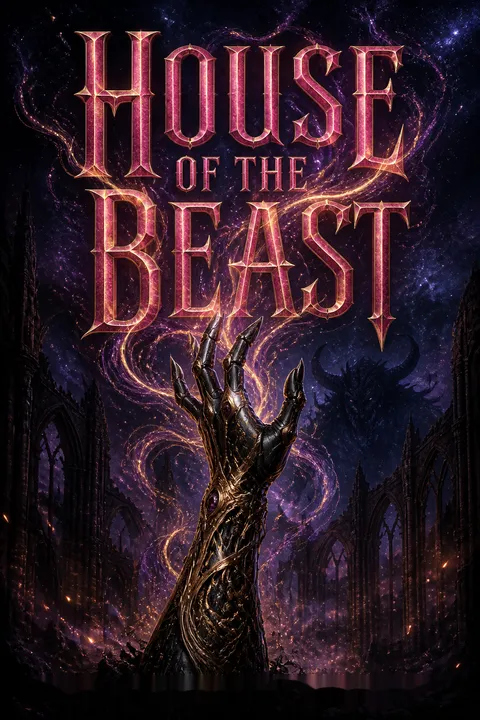

Plot Summary
Bargain of Blood and Shadow
Alma, a lonely girl from the slums of Merey, is forced to make a harrowing bargain to save her dying mother. She seeks out her estranged father, Lord Zander Avera, a powerful vessel of the Dread Beast, one of Kugara's four elder gods. In exchange for her mother's care, Alma must become a vessel herself, sacrificing her arm in a brutal ritual. The act binds her to the monstrous god and to a family that views her as an outsider and a threat. The trauma of the ritual and the coldness of her new home set the stage for a life defined by loss, resentment, and the longing for belonging.
The Monster in the Temple
Alma's initiation is not just physical but spiritual. In the temple, as her arm is severed, she glimpses a shadowy presence—her "monster"—that seems to watch her with knowing eyes. This being, at once terrifying and familiar, becomes a constant companion, haunting her dreams and waking moments. The Dread Beast's influence is immediate and profound, marking Alma as different from her kin and deepening her sense of isolation. The monster's presence is both a comfort and a curse, a reminder of the power she now hosts and the violence that simmers within her.
House of Strangers
Alma is thrust into the cold, political world of House Avera, where every relationship is fraught with suspicion and ambition. Her father is distant and demanding, his wife Euphina openly hostile, and her cousin Kaim sees her only as a rival. The household is a nest of old wounds and new resentments, with Alma's presence threatening the fragile balance of power. She is kept at arm's length, denied friendship and comfort, and forced to navigate a labyrinth of etiquette, tradition, and veiled threats. Her only solace is the monster in her shadow, who becomes her confidant and, over time, her only true friend.
The Price of Power
Alma's days are consumed by grueling training, both physical and spiritual. Her father's expectations are relentless, and her failures are met with scorn. She learns to wield a sword with her new metal arm, to commune with the Beast, and to suppress her softer instincts. The monster guides her, teaching her to sense death and to kill without hesitation. Each lesson is a step away from the girl she was and toward the weapon her father desires. Yet, beneath the surface, Alma's grief and guilt fester, and her longing for love and acceptance remains unfulfilled.
Ghosts and Grief
The death of Alma's mother shatters her last connection to warmth and safety. Alone in a hostile house, she spirals into despair, haunted by literal and figurative ghosts—memories of her mother, the boy she once hurt, and the monster who now claims her as his own. Her grief is compounded by guilt and the knowledge that her sacrifice was in vain. The monster, sensing her vulnerability, offers her a new purpose: to seize power for herself, to become the First Hand of the Beast, and to take revenge on those who have wronged her. It is a seductive promise, and Alma, with nothing left to lose, accepts.
The Boy from the Stars
The monster reveals himself as Aster, the "boy from the stars" Alma once imagined as a child. He is more than a figment—he is a being of immense power, born of both god and mortal, and he has chosen Alma as his vessel and companion. Their bond deepens into something intimate and fraught, blurring the lines between love, worship, and possession. Aster's guidance makes Alma stronger, but his motives are ambiguous. He wants her to seize power, to become the sword of Kugara, and to help him reclaim what was stolen from him centuries ago. Their pact is both a source of strength and a harbinger of tragedy.
Eight Years of Training
Years pass in relentless preparation. Alma hones her skills, mastering the sword and the art of death under Aster's tutelage. She learns to hide her true abilities, feigning weakness to avoid her father's suspicion. Her reputation as a mad, god-touched vessel grows, isolating her further but also protecting her from the machinations of her family. Aster is her constant companion, their relationship deepening into a complex mix of affection, dependence, and mutual ambition. The looming Pilgrimage—a deadly quest into the umbral plane to slay a fallen star—becomes the focus of all her efforts.
The Pilgrims' Trial
The time of the Pilgrimage arrives, and Alma must prove herself before the court and the people of Kugara. She faces a monstrous creation of House Goldmercy in a brutal trial, watched by her rivals and enemies. Against all odds, she triumphs, displaying a terrifying mastery of death that shocks and awes the onlookers. Her victory secures her place among the Pilgrims, but also marks her as a threat to her father and cousin. The political stakes rise, and Alma finds herself at the center of a web of alliances, betrayals, and ancient secrets.
The Bastard's Challenge
Refusing to be her father's pawn, Alma publicly challenges his authority and claims her right to lead. Her boldness enrages her family and the court, but also inspires fear and respect. She is no longer a victim but a contender, wielding the power of the Beast with a confidence that unsettles even her most formidable opponents. Yet, her defiance comes at a cost—she is more isolated than ever, and the line between her will and Aster's grows increasingly blurred. The path to power is littered with bodies, and Alma must decide how much of herself she is willing to sacrifice.
Lessons in Death
As the Pilgrimage begins, Alma is forced to confront the consequences of her actions. She is haunted by the lives she has taken and the pain she has caused, even as she is driven to kill again and again. Encounters with other Pilgrims—her cousin Kaim, the enigmatic Fion, and the vessels of rival Houses—test her resolve and her morality. Aster urges her to embrace her role as a destroyer, but Alma clings to the remnants of her conscience. The tension between mercy and vengeance, love and power, becomes the crucible in which her fate will be decided.
The Unforgiven Daughter
Alma's journey through the umbral plane brings her face to face with the truth about Aster, her father, and herself. She learns that Aster is not the Beast but the lost son of a god and a mortal queen, betrayed and murdered by the founders of Kugara. Her father's ambitions are revealed as monstrous—he seeks to use Alma as a sacrifice to achieve godhood and unleash chaos upon the world. Aster, driven by centuries of rage and longing, manipulates events to bring about his own awakening, even at the cost of Alma's agency and the lives of countless innocents. The bond between them, once a source of comfort, becomes a prison.
The City of Gods
With the umbral gate shattered and the boundaries between worlds dissolving, Sorrowsend descends into chaos. Aster, now fully awakened, unleashes his wrath upon the city, tearing down the institutions that betrayed him and threatening to destroy everything Alma has come to care about. Alma, wounded and alone, must confront the monster she once loved and the part of herself that yearns for destruction. The city's fate hangs in the balance, and the cost of vengeance becomes unbearably clear.
The Ceremony of Initiation
Before the final confrontation, Alma undergoes a ritual that forces her to reckon with her past and her place in the world. She is visited by the ghosts of those she has lost—her mother, her brother Ephrem, and the victims of her violence. Through their guidance, she finds the strength to forgive herself and to choose a different path. The ceremony is both a reckoning and a rebirth, marking the end of her old life and the beginning of something new.
The Heir's Betrayal
Alma faces Aster in a battle that is as much emotional as it is physical. Their love, their rage, and their shared history collide in a struggle for the soul of Kugara. Alma, refusing to be a pawn in anyone's game—not her father's, not Aster's—chooses to sacrifice herself rather than allow the cycle of violence to continue. In a moment of clarity and pain, she kills Aster and is mortally wounded herself. Their parting is tender and tragic, a testament to the complexity of their bond and the impossibility of their dreams.
The Pyres Awaken
With the death of Aster and the collapse of the umbral gate, the world is irrevocably changed. The power of the elder gods wanes, and the institutions that upheld them crumble. Alma survives, scarred and changed, and must navigate the aftermath of her choices. She is both celebrated and condemned, a hero and a monster, and must find a way to live with the consequences of her actions. The city mourns its dead and looks to an uncertain future.
The Monster's True Name
In the quiet that follows the storm, Alma is visited by the ghosts of her past and the memory of Aster. She reads her mother's final letter and finds the peace she has long sought. The cycle of violence is broken, not by victory, but by the choice to forgive and to let go. Alma's journey ends not with triumph, but with the hope of healing and the promise of a new beginning.
The End of the World
As Kugara rebuilds, Alma chooses exile over power, leaving behind the ruins of her old life to seek a new one. She is joined by Six, the boy who carries her brother's soul, and together they set out into the unknown. The world is changed, the gods are silent, and the future is unwritten. Alma's story is one of survival, resilience, and the enduring search for love and acceptance in a world that has never made room for her.
The Last Goodbye
Alma says farewell to the people and places that have defined her—her family, her friends, her ghosts, and the monster she loved. She carries with her the lessons of her journey: that power is a burden, that love is both a gift and a curse, and that forgiveness is the only path to freedom. Her story ends not with a return to innocence, but with the hard-won wisdom of one who has faced the darkness and chosen to live.
A New Dawn
In the aftermath of destruction, Alma finds a measure of peace. She is no longer defined by her wounds or her rage, but by her capacity for hope and her willingness to begin again. The world is uncertain, but for the first time, Alma believes that she can shape her own destiny. The story closes on the promise of a new beginning—a dawn that is both fragile and full of possibility.
Analysis
A modern myth of trauma, power, and the longing for homeHouse of the Beast is a searing, emotionally charged reimagining of the "Beauty and the Beast" myth, recast as a story of intergenerational trauma, the hunger for love, and the dangers of unchecked power. Michelle Wong's novel interrogates the ways in which violence is inherited, justified, and perpetuated—by families, by institutions, and by the stories we tell ourselves. At its heart is the relationship between Alma and Aster, a bond that is as much about the need for connection as it is about the fear of being consumed. The novel's greatest strength is its refusal to offer easy answers: every act of mercy is shadowed by guilt, every victory by loss. The lesson is not that power corrupts absolutely, but that the only true freedom comes from the willingness to forgive—oneself and others—and to choose a different path, even when it means letting go of what we love most. In the end, House of the Beast is a story about survival, resilience, and the hope that, even in a world built on betrayal, it is possible to begin again.
Review Summary
People Also Read

Characters
Alma
Alma is the illegitimate daughter of Lord Zander Avera, marked from childhood by loneliness, violence, and a desperate longing for love. Her journey is one of transformation—from a powerless, grieving girl to a vessel of unimaginable power and, ultimately, a woman who chooses mercy over vengeance. Alma's psyche is shaped by trauma: the loss of her mother, the cruelty of her father, and the isolation of her new life. Her relationship with Aster is both her salvation and her undoing, offering her the intimacy and purpose she craves but also binding her to a cycle of violence. Alma's greatest struggle is with herself: the tension between her capacity for compassion and the darkness she inherits. Her arc is one of hard-won self-acceptance, as she learns to forgive herself and to choose her own path, even at great cost.
Aster
Aster is the "boy from the stars," a being born of both god and mortal, betrayed and murdered by the founders of Kugara. He is at once a monster and a child, driven by centuries of rage, longing, and the need for connection. Aster's relationship with Alma is deeply psychological—he is her imaginary friend, her lover, her god, and her shadow. He offers her power and companionship, but his love is possessive and destructive, shaped by his own trauma and the injustice of his fate. Aster's arc is one of tragic inevitability: he seeks freedom and revenge, but in the end, his love for Alma leads him to self-destruction. He is both the catalyst for Alma's transformation and the embodiment of the dangers of unchecked pain and longing.
Lord Zander Avera
Alma's father is a vessel of the Dread Beast, consumed by the need to prove himself and to seize power at any cost. He is emotionally distant, manipulative, and ultimately monstrous—willing to sacrifice his own children to achieve godhood. Zander's psyche is defined by insecurity and resentment, and his relationships are transactional and cold. He is both a product and a perpetuator of the violence that defines House Avera. His arc is a cautionary tale of ambition unmoored from empathy, ending in betrayal and a death as empty as his life.
Kaim
Alma's cousin and rival, Kaim is the favored heir of House Avera, raised to be the perfect vessel and burdened by impossible expectations. His relationship with Alma is antagonistic, shaped by jealousy and the fear of being supplanted. Kaim's psyche is fractured by the demands of his lineage and the pressure to succeed. His only solace is Fion, whose love offers him a glimpse of another life. Kaim's arc is one of tragic self-destruction—he is both a victim and an agent of the violence that defines his family, and his eventual defeat is as much a liberation as it is a loss.
Fion
Fion is Kaim's aide and confidant, a boy with a mysterious past and a gift for seeing the truth behind appearances. He is both a victim of the system—bound to serve as a tool for others—and a subtle agent of change, helping Alma and Kaim break free from their prescribed roles. Fion's love for Kaim is both a source of strength and a point of vulnerability, and his willingness to sacrifice for those he cares about is a quiet act of rebellion. Fion's arc is one of self-liberation, as he claims agency over his own fate and helps others do the same.
Sevelie
Sevelie is Kaim's betrothed, a young woman who appears at first to be a model of propriety but reveals herself to be intelligent, resourceful, and deeply principled. Her relationship with Alma evolves from suspicion to genuine friendship, and she becomes a crucial ally in Alma's quest for autonomy. Sevelie's arc is one of self-assertion—she rejects the roles imposed on her by family and society, choosing instead to shape her own destiny and to support those she cares about, even at personal risk.
Euphina
Euphina, Zander's wife and Alma's stepmother, is a woman hardened by loss and betrayal. Her initial hostility toward Alma is rooted in her own pain—the loss of her son Ephrem and the collapse of her marriage. Over time, Euphina's character is revealed to be more complex: she is capable of remorse, and her eventual willingness to help Alma signals a capacity for growth and forgiveness. Euphina's arc is one of mourning and, finally, letting go.
Six / Ephrem
Six is a Tinkerer's Thing—a construct who carries within him the soul of Ephrem, Alma's half-brother. He is a symbol of the consequences of violence and the possibility of redemption. Six's journey is one of self-discovery and liberation, as he moves from being a tool of others' ambitions to a person with agency and hope. His relationship with Alma is one of mutual healing, and his presence offers a glimpse of a future unburdened by the sins of the past.
Lord Carnus Metia
The leader of House Metia and the keeper of the umbral gate, Carnus is a figure of authority and tradition. He is both a guardian of secrets and a participant in the cycle of violence that defines Kugara. His relationship with Alma is ambivalent—he recognizes her worth but is wary of her power. Carnus's arc is one of reckoning with the past and the limits of control.
The Weeping Lady
The Weeping Lady is both a god and a symbol—the embodiment of grief, healing, and the cost of power. Her role in the story is both active and passive: she is a source of comfort and a participant in the original betrayal that doomed Aster. Her presence haunts the narrative, a reminder of the ways in which even the most well-intentioned can become complicit in harm.
Plot Devices
Duality of Power and Vulnerability
The novel's structure is built on the tension between power and vulnerability—between gods and mortals, parents and children, love and violence. Alma's journey is defined by her struggle to claim agency in a world that seeks to use her, and by her simultaneous longing for connection and fear of being consumed. The plot is driven by cycles of betrayal and forgiveness, with each act of violence echoing through generations. Foreshadowing is used masterfully: the early presence of the monster, the hints of Aster's true nature, and the recurring motif of sacrifice all point toward the final revelation and confrontation. The narrative is recursive, with past traumas replaying in new forms, and the ultimate resolution comes not through victory but through the breaking of the cycle—by choosing mercy over vengeance, and self-acceptance over self-destruction.
The Unreliable Bond
The relationship between Alma and Aster is the novel's central plot device—a bond that is at once empowering and imprisoning. Their connection blurs the boundaries between self and other, reality and fantasy, love and possession. The narrative structure mirrors this ambiguity, with shifts between first-person intimacy and mythic distance. The use of the "imaginary friend" as a literal god is a brilliant device, allowing the story to explore the psychological roots of trauma, longing, and the need for belonging. The ultimate betrayal—Aster's possession of Alma and the destruction he unleashes—serves as both a climax and a catharsis, forcing Alma to confront the cost of her desires and to choose her own path.
The Cycle of Sacrifice
The plot is structured around acts of sacrifice—of flesh, of love, of innocence. Each generation repeats the sins of the past, and the institutions that claim to protect instead perpetuate harm. The use of the umbral plane as both a literal and metaphorical space of trauma is a powerful device, allowing the story to externalize internal struggles and to stage the final confrontation on a mythic scale. The breaking of the umbral gate and the merging of worlds is both an apocalypse and a liberation, forcing the characters to reckon with the consequences of their actions and to imagine new possibilities.
Download PDF
Download EPUB
.epub digital book format is ideal for reading ebooks on phones, tablets, and e-readers.








































