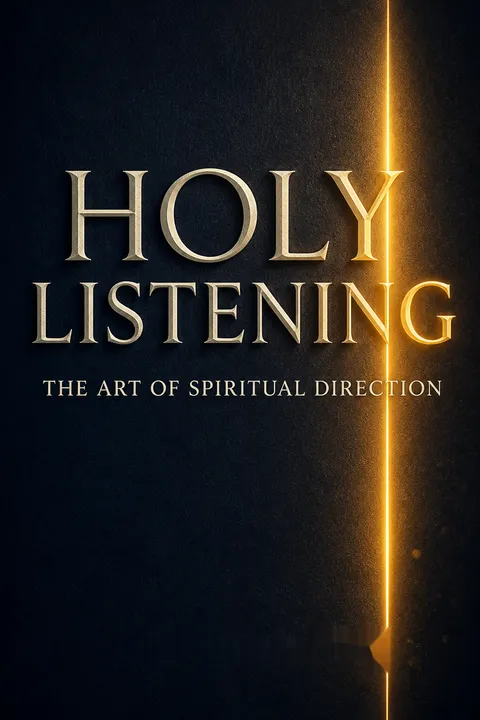

Key Takeaways
1. Spiritual Direction is Holy Hospitality: Creating a Sacred Space for Encounter
Let all guests who arrive be received like Christ, for He is going to say, “I came as a guest, and you received Me.”
A sacred welcome. Spiritual direction is fundamentally an act of hospitality, where the director acts as a "host" (Gastgeber) offering a temporary, safe, and refreshing home for the spiritual traveler. This involves preparing both an outer physical space—quiet, pleasant, and free from interruption—and an inner spiritual space, cleared of personal clutter and distractions. The director's readiness is paramount, ensuring the guest feels truly welcomed and seen.
Inner housecleaning. Just as one cleans their home for an honored guest, the director must engage in continuous "spiritual housecleaning" to maintain inner order and self-awareness. This involves having one's own spiritual director, cultivating spiritual friendships, keeping a journal, and regularly attending retreats. These practices help the director remain grounded, honest, and capable of offering disinterested, loving attention, rather than projecting their own issues onto the directee.
Gift of presence. The core of this hospitality is the gift of total, loving presence, where the director puts aside their own needs to focus entirely on the directee. This creates a sanctuary where anything can be said without fear of criticism or exposure, upholding confidentiality as inviolable. This sacred space allows the directee to feel unhurried, known, and safe enough to begin the vulnerable process of sharing their spiritual journey.
2. The Director as a Good Teacher of Discernment: Guiding Towards Inner Truth
To know in truth is to enter into the life of that which we know and to allow it to enter into ours.
Teaching discernment. The spiritual director functions as a teacher, not by imparting information or prescribing methods, but by guiding the directee in the art of discernment. This involves helping them perceive God's action in their everyday lives, make judgments about these perceptions, and identify the "next steps" in their spiritual journey. It's about uncovering the obvious, often overlooked, signs of divine presence.
Truth through relationship. True teaching in spiritual direction is rooted in a mutual commitment to truth, where both director and directee are willing to "be known." This vulnerability distinguishes spiritual direction from psychotherapy, fostering an authentic relationship where masks are gradually shed. The director, by example and encouragement, helps the directee develop and trust their own powers of discernment, even when facing uncomfortable truths.
Jesus, the model. Jesus serves as the ultimate model for the spiritual director as a teacher, demonstrating authority, varied methods (parables, questions, silence), and a profound, loving gaze. His interactions, like with the rich young man or the Samaritan woman, reveal his ability to cut through distractions, challenge assumptions, and lead individuals to deep self-knowledge and an understanding of their thirst for God. This teaching is often subversive, transforming lives by revealing hidden truths.
3. Spiritual Direction as Midwifery to the Soul: Assisting in Spiritual Birth
Tend only to the birth in you and you will find all goodness and all consolation, all delight, all being and all truth.
A sacred birth. The metaphor of the spiritual director as a midwife highlights the intimate, vulnerable, and transformative nature of the process. Just as physical birth is a painful, messy, yet ultimately joyous event, spiritual direction assists in the "birth of God in the soul," a process of being "born anew." The director, like the biblical midwives Shiphrah and Puah, acts as a tenacious and crafty guardian of new life.
With-woman/man. The midwife is "with-woman," present to another in vulnerability, working deeply and intimately. This role is not exclusive to women; both men and women can be sensitive "midwives of the soul." They offer a supportive presence, knowledgeable guidance, and loving detachment, helping the directee navigate the stages of spiritual gestation and labor, from the initial stirrings of the Spirit to the active work of bringing forth new life.
Seeing clearly. A spiritual midwife sees what the "birthgiver" cannot: the hidden signs of breakthrough during periods of desolation or confusion. They offer encouragement, interpret experiences, and know when to confront or simply be present. Ultimately, the midwife rejoices in the "baby"—the new, often small, helpless, and slightly comic, yet mysterious and holy, spiritual life that emerges from the process.
4. Embracing the "Slow Work of God": Patience and Receptivity in Growth
Waiting can be the most intense and poignant of all human experiences—the experience which, above all others, strips us of affectation and self-deception and reveals to us the reality of our needs, our values, and ourselves.
The rhythm of waiting. Spiritual growth, like physical gestation, often involves long periods of waiting and uncertainty. This "first stage" of spiritual labor is a time of rhythmic contractions, growing in intensity, demanding patience and receptivity. In our impatient, result-oriented society, waiting is often seen as wasted time, but the director helps the directee trust in the "slow work of God," recognizing that effort at this stage can be counterproductive.
Beyond fixing. The director-midwife understands that not everything can be "fixed" or hurried. They offer presence and support through all stages, especially when "nothing is happening," knowing that spiritual growth can be gradual and hidden. This requires the director to recognize and accept their own discomfort with powerlessness, resisting the urge to intervene unnecessarily or play social worker, and instead simply "be with" the directee.
Holy passivity. Embracing passivity—being the recipient rather than the initiator of action—is a challenging but crucial aspect of spiritual waiting. This is not a leaden inertia, but a holy receptivity, akin to Christ's "passion" where he became the object of action. Waiting strips away affectation and self-deception, revealing true needs and values, and is a condition for profound spiritual growth, even in the midst of pain or apparent emptiness.
5. The Power of Silence and Incisive Questions: Uncovering Deeper Realities
To love the questions is to engage them ever more deeply, to let go, and to risk.
Silence as a diagnostic tool. Spiritual direction often begins and ends in silence, which serves as a powerful diagnostic instrument, revealing fear, anxiety, hope, and yearning beneath the surface. This shared quiet time sets the session apart as prayer, allowing both director and directee to center themselves and become receptive. The director learns to trust the silence, not merely enduring it, but becoming comfortable in its creative tension.
Jesus's trenchant questions. Like Jesus, who swept away distractions with questions such as "What do you want me to do for you?" or "What do you seek?", the director uses simple, direct questions to cut to the heart of the matter. These questions are not born of curiosity but of attentive love, designed to help the directee articulate their deepest yearnings, confront their defenses, and discern the Holy Spirit's work.
Living the questions. The director encourages directees to "love the questions themselves," as Rilke advises, rather than seeking quick answers. This means embracing ambiguity and darkness, persevering in peering into seemingly "empty tombs" of experience. Questions like "What do you want?" and "Where do you hurt?" become invaluable tools for uncovering hidden truths, challenging assumptions, and fostering deeper self-knowledge and spiritual growth.
6. The Director's Self-Awareness and Vulnerability: Essential for Authentic Guidance
Thoughtful self-disclosure is one way of remaining grounded and human, although it must be intentional and judicious, else the direction session will degenerate into a cozy chat.
Grounded humanity. The spiritual director is not a guru or an infallible authority, but a fellow traveler on the spiritual path. Thoughtful and judicious self-disclosure is crucial for remaining grounded and human, fostering mutuality, and preventing the directee from placing the director on an unrealistic pedestal. This means acknowledging one's own struggles, limitations, and shared humanity, rather than presenting an image of flawless sanctity.
Intentional vulnerability. While the director's primary role is to listen, appropriate self-revelation can be an encouragement and reassurance to the directee. This might involve sharing personal difficulties in prayer, tendencies toward common human flaws, or simply acknowledging shared experiences like parenthood. The key is intentionality: asking "Will this help the directee?" and avoiding self-revelation that appropriates time or attention rightly belonging to the directee.
Beyond words. Vulnerability is also expressed through shared emotions, such as laughter and tears. Laughter can restore perspective and reduce inflated selves, while shared tears, as in the case of working with trauma survivors, can convey profound empathy and compassion when words are inadequate. This emotional honesty, while not a "device," deepens the connection and reinforces the message that the director is truly "with" the directee in their journey.
7. Women's Distinctive Spirituality and Challenges: Valuing Unique Experiences
The historical monopoly men have had of the official teaching roles in the church... has meant, among other things, that women have usually been required to understand their relationship with God and their ethical and spiritual responses in terms that do not fit the special dynamics of women’s lives.
A different voice. Women bring distinctive gifts and vulnerabilities to spiritual direction, both as directors and directees. Their spirituality, often shaped by centuries of living at the church's margins, is frequently personalized and non-ritualized. This "otherness" can make them particularly effective in ministry to the disaffected and those who distrust institutional structures, fostering a unique accessibility and understanding, especially for other women.
Maternal listening. Women are often socialized into a "listening ministry," developing a capacity for attentive, maternal conversation that seeks to understand on the other's terms. This deep listening, coupled with a willingness to ask open-ended, compassionate questions, helps directees feel truly heard and valued. However, directors must be wary of the potential for misuse, ensuring their listening stems from loving detachment rather than unconscious self-serving needs.
Undervalued experiences. Women's spiritual journeys are often shaped by experiences deemed "trivial" or "unspiritual" by traditional frameworks, such as the spiritual implications of marriage, motherhood, or housework. Their bodily experiences—menstruation, menopause, pregnancy, and even self-dislike—are often taboo for open discussion in spiritual contexts. The director's role is to help women find and trust their voice, valuing these experiences as integral to their spiritual identity and connection with God.
8. The "Eighth Deadly Sin": Self-Contempt as a Spiritual Barrier
Far from being pride, women’s distinctive sin is self-contempt.
A hidden sin. While pride is traditionally considered the gravest sin, the author argues that self-contempt is a pervasive and distinctive sin among women. This self-hatred often manifests as a deep dissatisfaction with their physical selves and an unwillingness to grow or take the risks that maturity demands. It can be disguised by over-zealousness in obligations to others, effectively avoiding inner growth and adult responsibility.
Manifestations of self-hatred. Self-contempt can appear in various forms:
- Tentativeness: Hesitating to take firm stands or express decisive language, sending a message of unworthiness.
- Absorption in triviality: A noisy silence that screens against clarity, deadening pain and avoiding deeper self-confrontation.
- Denial of authority: Leading to passivity, inertia, and potentially spiritual depression or addictions (food, sleep, consumerism).
Denial of God's love. At its core, self-contempt is a denial of God's love and the goodness of God's creation, implying that divine love applies to everyone else but not to oneself. This sin is not private; its ramifications touch others, leading to wasted gifts, an inability to receive, and fostering other sins like false humility, envy, manipulativeness, and sloth.
9. Healing the Wounds of Abuse: A Ministry of Credulous, Loving Presence
The woman’s relief is almost palpable when I place my hands on her head and say, “The Lord has put away all your sins. Go in peace.”
A delicate area. Sexual abuse is a pervasive and deeply wounding experience for many women, often leading them to spiritual direction, sometimes even before conscious memory of the abuse returns. This area requires immense sensitivity, patience, and impeccable confidentiality from the director. Survivors often struggle with profound shame, confusing their victimhood with personal guilt, and may initially present as talkative or shallow as a coping mechanism.
Beyond spiritual direction. While spiritual direction can be a vital component of healing, it is often not enough on its own. Survivors frequently require psychotherapeutic help from specially trained professionals, support groups, or twelve-step programs. The director can work in cooperation with therapists, providing a safe space for the spiritual dimensions of healing, such as exploring anger towards God or the possibility of reconciliation.
Credulous and compassionate. The director's greatest gift to abuse survivors is a loving, credulous presence. This means believing their story without question, even when it recounts unimaginable horror. The director must help the woman separate the strands of shame and guilt, affirm her worthiness of love and respect, and encourage her to "value yourself!" This ministry involves deep emotional involvement, sometimes expressed through shared tears, and a willingness to hold space for intense pain and rage, even when it challenges the director's own understanding of suffering.
10. The Holy Spirit as the True Director: Relinquishing Control to Divine Guidance
So too in the ministry of spiritual direction—when all is said and done, the Holy Spirit is the true director.
Relinquishing control. Despite the director's preparation, skills, and commitment, the ultimate authority in spiritual direction belongs to the Holy Spirit. This realization is profoundly reassuring, especially when the director feels overwhelmed by performance anxiety or the weight of responsibility. It means trusting that God is actively at work in the directee's life, even when the path is unclear or progress seems slow.
A secondary figure. The director, like Sarah baking cakes or a servant dressing a calf, is a necessary but distinctly secondary figure in the offering of spiritual hospitality. This perspective allows the director to step back, avoid imposing their will, and instead respectfully assist as the directee discerns their own path and direction. The director's role is to create the space and conditions for the Holy Spirit to act, rather than trying to "fix" or control the outcome.
Trusting the process. The director's task is to listen for the Holy Spirit's promptings, both within themselves and in the directee's narrative, and to encourage the directee to do the same. This involves embracing ambiguity, living with unanswered questions, and trusting in the "slow work of God." When the director truly relinquishes their ego and allows the Holy Spirit to lead, the space prepared becomes truly gracious and holy, facilitating genuine spiritual transformation.
People Also Read








Download PDF
Download EPUB
.epub digital book format is ideal for reading ebooks on phones, tablets, and e-readers.








































