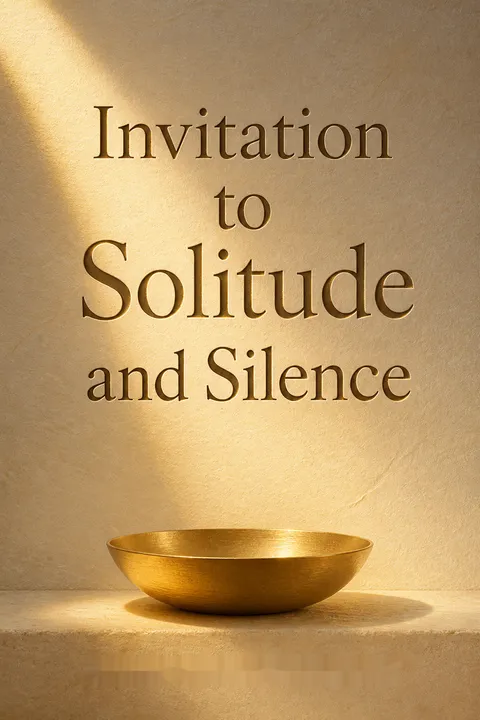

Key Takeaways
1. Desperation and Desire are the Gateway to Solitude
Truth be told, it was desperation that first propelled me into solitude and silence.
Unmet longings. The journey into solitude and silence often begins not from lofty spiritual aspirations, but from a deep, sometimes unacknowledged, desperation. This can manifest as inner chaos, unmet longings, or a sense that "there has to be more to the spiritual life than this." These feelings, though uncomfortable, serve as a powerful invitation from God to seek a deeper connection beyond superficial fixes.
Spiritual hunger. Like a jar of river water shaken up, our lives can be filled with swirling sediment of busyness, emotions, and thoughts. Desperation acts as a catalyst, making us willing to sit still long enough for this sediment to settle, allowing clarity to emerge. This profound spiritual hunger, when acknowledged, opens us to radical solutions and a quest for healing not found in familiar territories.
God's invitation. This desperation, coupled with a deep desire for God, is a gift. It lifts us out of stuck places, allowing the spiritual life to unfold at God's initiative rather than through our own pushing and forcing. Paying attention to these stirrings of the soul, rather than suppressing them, is the first step into the silent places where God's presence makes itself known beyond words.
2. Establish Sacred Space and Time for Solitude
Without solitude it is virtually impossible to live a spiritual life.... We do not take the spiritual life seriously if we do not set aside some time to be with God and listen to him.
Intentional setting. To truly engage in solitude and silence, it's crucial to establish a sacred space and time. This means designating a physical place—separate from work areas—and a specific time for undivided attention to God. Simple acts like lighting a candle or sitting on the floor can shift one's mindset from "doing" to "being" and "receiving."
Consistent rhythm. Over time, our bodies and souls respond to established rhythms, making the act of entering this set-apart time and place a natural transition into an inner sanctuary. This consistency helps us listen to our desire for God, allowing it to guide us beyond our usual information-gathering or problem-solving patterns into wordless communion.
Simple beginnings. Start with a modest goal, perhaps just ten minutes of silence daily, especially if this practice is new. The key is faithfulness to the practice, not the duration or immediate "success." Use a simple prayer phrase to anchor your desire and gently return to it when distractions arise, trusting that God will do the rest.
3. Acknowledge and Release Resistance to Solitude
In silence all of our usual patterns assault us.... That is why most people give up rather quickly.
Push-pull dynamic. Entering solitude often triggers a "push-pull phenomenon," where internal and external forces resist the quiet. Worries about responsibilities, fear of the unknown, or the discomfort of facing oneself without distractions can ambush us, making the transition feel like a "screeching halt."
Entrusting cares. It's vital to acknowledge these concerns rather than ignore them. Listing worries and symbolically entrusting them to God (e.g., writing them down and setting them aside) can help release the baggage we carry. This act of letting go is a crucial step in allowing ourselves to be fully present with God.
Facing fears. Solitude can be frightening because it strips away our defenses, forcing us to confront our inner world. Fears of boredom, panic, or hearing risky promptings from God are common. Acknowledging these fears, rather than censoring them, opens the way for God to reassure us with His presence, revealing a deeper desire for Him beneath the fear.
4. Prioritize Rest for Body, Mind, and Soul
Because we do not rest we lose our way.... Poisoned by the hypnotic belief that good things come only through unceasing determination and tireless effort, we can never truly rest.
Dangerous tiredness. Solitude often reveals a deep, chronic exhaustion—a "dangerous tired" that goes beyond normal fatigue. This state, masked by compulsive activity, leaves us numb to emotions, unable to relax, and disconnected from our true selves in God. Recognizing this tiredness is not a sign of failure, but an invitation to profound rest.
Physical care. Like Elijah, who was fed and allowed to sleep by an angel, our physical needs are foundational. Paying attention to sleep, nutrition, and even incorporating meditative physical activity (like walks) into solitude honors the body as a temple of the Holy Spirit. This physical care is a spiritual discipline that prepares us to be alert and present to God.
Mental quiet. Resting the mind is equally challenging. Our minds constantly strive to control, figure things out, and categorize, often keeping us from true union with God. Solitude invites us to "let go of our grip" on mental striving, allowing the mind to settle into the heart—the core of our being where God dwells. This shift moves us from cognitive understanding to a deeper, experiential knowing.
5. Embrace Inner Emptiness as a Path to God's Presence
Inner silence depends on a continual seeking, a continual crying in the night, a repeated bending over the abyss.... For He is found when He is sought, and when He is no longer sought, He escapes us.
Wilderness journey. Solitude is not just about rest; it's a journey into the empty places of the wilderness, a prerequisite for encountering God. We often avoid this emptiness, filling our lives with distractions, but true spiritual healing requires walking through this desert. It shatters our arrogance and reveals our dependence on God.
Painful revelation. Confronting our inner emptiness can be painful, stirring up anger, sadness, and confusion. It forces us to acknowledge what we've tried to avoid—unresolved relationships, unfulfilled desires, or physical limitations. This raw honesty, though uncomfortable, is essential for opening ourselves to God's transformative work.
Receptive space. Refusing to distract ourselves and instead sitting in this emptiness, allows a different kind of space to form within. After the initial storm of emotions, a profound quiet emerges—an emptiness that is soft, open, and receptive. This is where God's presence is most generously poured out, filling the vast spaces of the human soul.
6. Face Your True Self in Solitude's Furnace
Solitude is the furnace of transformation.... [It] is the place of the great struggle and the great encounter — the struggle against the compulsions of the false self, and the encounter with the loving God who offers himself as the substance of the new self.
God's penetrating question. In the depths of solitude, God often meets us with a penetrating question, "What are you doing here?" This invitation to radical self-awareness prompts us to lay bare the "good, the bad, and the ugly" of our lives—our zeal, our disillusionment, our hidden motives. This honest self-disclosure is central to the spiritual journey.
Inner chaos. As we confront our true selves, an elemental chaos can erupt within. False patterns of thinking, ego-driven striving, and image management begin to crumble, leaving us feeling vulnerable and disoriented. This "purgative passage" is a fierce stripping away, a dying to the only self we have ever known, preparing us for something new.
Beyond the false self. This painful seeing is a gift, leading to godly grief and repentance. It's a process of letting go of the self we've constructed in response to life's wounds, and free-falling into what seems like a void. Yet, this surrender is essential for the birth of the true self—a smaller, truer, softer, and freer self, rooted in God's unchanging love.
7. Experience God's Pure Presence in Sheer Silence
The deepest level of communication is not communication but communion. It is wordless. It is beyond words, and beyond speech, and it is beyond concept.
Silence after the storm. After enduring the inner chaos and stripping away of the false self, a profound quiet descends. This silence is qualitatively different from mere emptiness; it is pregnant with the palpable presence of God. Like Elijah, who wrapped his face in his mantle in reverence, we learn to simply stand in this Presence, letting it wash over us.
Wordless knowing. This is the realm of "communion," a knowing that transcends cognitive understanding and unites us with the Divine. It's an experiential, deep-seated awareness that God is God for us, with us, and in us. This knowing is not about words or concepts, but a full participation in the reality of God, healing our brokenness with love.
Transformation's core. This encounter with God's pure presence is the furnace of transformation. It's where God performs "deep spiritual surgery," recreating our very selves at levels we cannot reach. This process, though demanding, is full of grace, breaking distorted patterns and freeing us to live as our authentic selves, held safely in an unchangeable Love.
8. Guidance Flows from Deep Trust in God's Love
The first objective [in the discipleship process] is to bring apprentices to the point where they dearly love and constantly delight in that “heavenly Father” made real to earth in Jesus and are quite certain that there is no “catch,” no limit, to the goodness of his intentions or his power to carry them out.
Love as foundation. True guidance emerges from a deep, experiential knowing of God's unconditional love. Without this bedrock of trust, fear can distort our listening, making us wary of God's intentions. When settled in His love, the soul's waters clear, allowing us to be truly open and receptive to His will.
Authentic desires. In this clarity, we glimpse our authentic self and its unique gifts, distinct from the striving of the false self. Guidance often comes not because we demand it, but because we've become quiet enough to listen. God, like a wise parent, waits for the teachable moment when we are open to being guided.
Discerning life. Discernment involves paying attention to inner dynamics—consolation (a sense of life-giving connection) and desolation (a loss of God's presence). God's will generally leads us toward what brings life and away from what drains it. This habit of discernment, practiced in solitude, informs both daily choices and larger life decisions, aligning us with the Spirit's movement.
9. Solitude Cultivates a Fullness for Others
Let him who cannot be alone beware of community.... Let him who is not in community beware of being alone.
Giving from fullness. Initially, the intensity of solitude can feel overwhelming, raising fears of becoming self-absorbed or irrelevant. However, as our emptiness is filled by God's presence, we are eventually enabled to reengage with others from a place of fullness rather than need. This process should not be rushed, as the timing is unique for each soul.
Transformed presence. Solitude refines our presence with others. Our speech patterns become more intentional, issuing from love and wisdom rather than subconscious needs to impress or control. We become "safer" companions for others, able to be present with their struggles without being hooked by our own anxieties, because we've experienced God's compassion in our own humanity.
Rhythms of life. The practices of solitude and silence bring us full circle, back into the human community, but transformed. Success is no longer measured solely by external accomplishments, but by living within rhythms of work and rest, solitude and community, silence and word. This ensures our presence with God, people, and tasks is characterized by love, attention, and discernment, allowing God's love to pour through us to the world.
Review Summary
Readers widely praise Invitation to Solitude and Silence as transformative and practical, appreciating its chapter-end exercises and grounding in Elijah's story from 1 Kings. Many found it deepened their intimacy with God and provided actionable steps toward embracing silence. Some critics noted concerns about insufficient Biblical foundation, vague theological language, and occasional "new age" or Eastern-leaning terminology. Despite minor reservations, most reviewers consider it an essential, accessible guide to an undervalued spiritual discipline, recommending it especially to those already grounded in their faith.
People Also Read







About the Author
Other books by Ruth Haley Barton




Download PDF
Download EPUB
.epub digital book format is ideal for reading ebooks on phones, tablets, and e-readers.








































