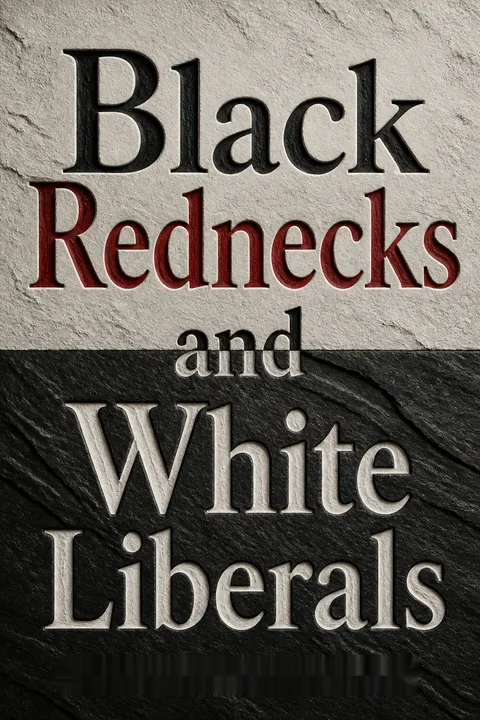

Key Takeaways
1. A Counterproductive "Redneck Culture" Originated in Britain and Persisted in the American South.
What is involved is a common subculture that goes back for centuries, which has encompassed everything from ways of talking to attitudes toward education, violence, and sex—and which originated not in the South, but in those parts of the British Isles from which white Southerners came.
Cultural origins. A distinct subculture, characterized by specific attitudes and behaviors, emerged from the turbulent northern borderlands of England, the Scottish highlands, and Ulster County, Ireland. These regions, often lawless and disordered, fostered values that prioritized immediate gratification and physical prowess over long-term planning or intellectual pursuits. This culture, often referred to as "redneck" or "cracker" in Britain, was transplanted to the American South by early immigrants.
Persistent traits. This imported culture, which eventually died out in its British places of origin, survived and flourished among white Southerners for centuries. Observers noted a consistent pattern of:
- Aversion to steady work and entrepreneurship
- Proneness to violence and touchy pride
- Neglect of education and intellectual activity
- Sexual promiscuity and improvidence
- Drunkenness and reckless searches for excitement
- Flamboyant religious and political oratory
Economic and social impact. This subculture contributed to the South's economic and social lags compared to other regions of the United States, particularly New England. For instance, despite abundant cows, the South produced significantly less butter and cheese than the North, reflecting a general carelessness and lack of industriousness in agricultural practices. This cultural pattern, rather than slavery alone, is presented as a key factor in the South's distinct development.
2. This "Redneck Culture" Was Largely Absorbed by Southern Blacks, Influencing Their Social Patterns.
Much of the cultural pattern of Southern rednecks became the cultural heritage of Southern blacks, more so than survivals of African cultures, with which they had not been in contact for centuries.
Cultural transmission. Generations of blacks living in the American South absorbed many aspects of this white redneck subculture, rather than retaining significant elements of African cultures. This cultural transfer included speech patterns (later termed "black English"), spending habits, family structures, and attitudes towards violence and education. These traits persisted among blacks even as they faded among most Southern whites.
Echoes in black communities. The characteristics observed in Southern whites were mirrored in descriptions of black communities:
- Improvident spending: W.E.B. Du Bois noted blacks' "thoughtless and unreasonable expenditure" and waste on amusements.
- Family and morals: Gunnar Myrdal described "disorganized" family life, "lax" sexual morals, and "recklessness" among lower socioeconomic blacks.
- Violence: High murder rates among blacks, often for reasons like "disrespect," echoed the "touchy pride" and "hair-trigger violence" of earlier rednecks.
- Education: Disdain for education, with conscientious black students accused of "acting white," paralleled the neglect of schooling among Southern whites.
Internal differences. Not all blacks adopted this culture. Small enclaves, often influenced by New England missionaries and institutions like Dunbar High School, fostered different values, emphasizing discipline, academic rigor, and self-improvement. West Indian immigrants also brought a distinct cultural heritage, leading to higher rates of entrepreneurship, education, and lower incarceration rates compared to American-born blacks, despite both groups having a history of slavery.
3. White Liberals Have Perpetuated Counterproductive Black Culture Through Ideological and Policy Choices.
White liberals in many roles—as intellectuals, politicians, celebrities, judges, teachers—have aided and abetted the perpetuation of a counterproductive and self-destructive lifestyle among black rednecks.
Welfare state impact. The expansion of the American welfare state, particularly since the 1960s, is argued to have economically enabled the continuation of the black redneck lifestyle, shielding individuals from the immediate, painful consequences that might otherwise have forced cultural adaptation. This "indiscriminate charity" prolonged chaotic and self-destructive behaviors in urban ghettos.
Intellectual legitimization. Intellectuals, both black and white, are accused of turning this counterproductive culture into a "sacrosanct symbol of racial identity." This involves:
- Blaming others: Attributing black problems solely to white actions ("blaming the victim"), thereby excusing internal shortcomings.
- Denying disparities: Dismissing higher black crime rates or academic struggles by questioning statistics or claiming "white logic" in tests.
- Glorifying negative traits: Condoning or celebrating "gangsta rap" barbarism as a political voice or a reflection of social conditions.
Family disintegration. The most devastating impact is seen in the disintegration of the black family, with marriage rates plummeting and unwed births skyrocketing after the 1960s. This trend, occurring a century after slavery, challenges the "legacy of slavery" explanation often used by white liberals, who are seen as prioritizing their own "moral standing and self-esteem" over the actual well-being of blacks.
4. "Middleman Minorities" Globally Face Resentment Due to Their Economic Role, Not Just Ethnicity.
Often they are generically “middleman minorities,” who can be of any racial or ethnic background, and in fact are of many.
Universal phenomenon. Across centuries and continents, certain minority groups have consistently occupied "middleman" economic roles as retailers, traders, and money-lenders. Examples include:
- Jews in Europe
- Chinese in Southeast Asia
- Armenians in the Ottoman Empire
- Ibos in Nigeria
- Lebanese in West Africa
- Indians in East Africa and Fiji
Economic function and resentment. These groups are often resented, not primarily for their race or religion, but because their economic function is widely misunderstood as parasitic. They are seen as "conjuring wealth out of thin air" by charging higher prices or interest, rather than providing valuable services like efficient distribution, credit, or market access. This resentment is exacerbated when middlemen are ethnically distinct from producers and consumers.
Social patterns and success. Middleman minorities typically start in poverty but rise through distinct cultural patterns:
- Clannishness: Maintaining strong internal ties and social distance from the majority to preserve their values and work ethic.
- Hard work and thrift: Working long hours, living abstemiously, and saving diligently.
- Family businesses: Children contributing unpaid labor and learning entrepreneurial skills from a young age.
- Education: Prioritizing education for later generations to enter professions, building on initial commercial success.
This combination of economic role and distinct social patterns often leads to both prosperity and intense hostility, regardless of the specific ethnic group involved.
5. Western Civilization Uniquely Led the Worldwide Abolition of Slavery, Often Against Global Resistance.
While slavery was common to all civilizations, as well as to peoples considered uncivilized, only one civilization developed a moral revulsion against it, very late in its history—Western civilization.
Slavery's global history. Slavery was a universal institution for thousands of years, practiced by all races and civilizations across every inhabited continent. It was not peculiar to whites or the West; Europeans enslaved other Europeans, Africans enslaved other Africans, and Asians enslaved other Asians. The word "slave" itself derives from "Slav," reflecting the widespread enslavement of Slavic peoples.
Western moral revulsion. A unique moral revulsion against slavery began to develop in 18th-century Britain, leading to a sustained, century-long global crusade to abolish it. This was a radical departure from historical norms, as slavery had never before faced serious moral attack anywhere in the world. This anti-slavery movement was driven by:
- Religious conservatives: Quakers and Evangelicals were early proponents.
- Secular intellectuals: Figures like Adam Smith and Montesquieu wrote against it.
- Public pressure: Unprecedented numbers of petitions forced Parliament to act.
Global abolition. European powers, particularly Britain, used their naval and military might to suppress the slave trade and abolish slavery worldwide, often against fierce resistance from non-Western societies (e.g., Ottoman Empire, Zanzibar, African tribes) where slavery was deeply embedded in economies and cultures. This process was protracted and costly, involving naval patrols, diplomatic pressure, and military interventions.
6. Judging Historical Figures and Societies Requires Context, Not Anachronistic Moral Standards.
Moral principles may be timeless but moral choices can be made only among the options actually available at particular times and places.
Contextual dilemmas. Historical figures like Washington, Jefferson, and Lincoln faced complex dilemmas regarding slavery, operating within severe political, legal, and social constraints. Their actions, such as Jefferson's attempts at gradual emancipation or Washington's eventual freeing of slaves in his will, must be understood in the context of their times, not judged by anachronistic 21st-century moral standards.
Fear of race war. Many, including opponents of slavery, feared that immediate, unmanaged emancipation could lead to a devastating race war, as seen in Haiti. This fear, combined with the sheer scale of the slave population in the South, made the issue far more complex than a simple moral choice. Lincoln's Emancipation Proclamation, for instance, was a calculated military and political act, not a ringing moral declaration, precisely to ensure its survival and effectiveness.
Distinction between slave trade and slavery. Many Americans, even those not ready to abolish slavery itself, recognized the evil of the slave trade. The U.S. outlawed the international slave trade and made it a capital offense decades before abolishing slavery, reflecting a practical distinction between inherited institutions and ongoing contemporary actions. This nuance is often lost when applying abstract moral principles without historical context.
7. German History Shows Nazism as a Tragic Aberration, Not an Inevitable Outcome of German Culture.
Was all of German history leading up to Hitler? Or were the Nazi years simply a tragic aberration on a monumental scale?
Challenging collective guilt. The Nazi era (1933-1945) cast a long shadow over thousands of years of German history, leading to the perception that German culture or history inherently led to Hitler and the Holocaust. This perspective is challenged by examining pre-Nazi German history and the experiences of Germans outside Germany.
Pre-Nazi German culture. Historically, Germans were known for:
- Craft skills: Pioneering in brewing, piano making, optics, printing, and mining.
- Thoroughness and organization: Traits valued in industry, agriculture, and military.
- High priority on education: Establishing schools and universities that became models for others.
- Cosmopolitanism: Often more tolerant of minorities (e.g., Jews) than other Eastern Europeans, and integrating educated individuals of diverse ancestries into German culture.
Nazism as an aberration. Hitler never received a majority vote, and initial German public reaction to anti-Jewish violence (e.g., Kristallnacht) was negative, leading the Nazis to conduct the extermination program in secrecy. Germans abroad (Volksdeutsche) often showed little loyalty to the German nation, much less Nazi ideology, unless provoked by severe discrimination. The post-WWII German government's voluntary reparations for the Holocaust further suggest that Nazi fanaticism was not a pervasive, enduring characteristic of the German people.
8. Black Educational Successes, Past and Present, Contradict Prevailing Dogmas About Disadvantaged Students.
Contrary to prevailing educational dogmas, there are schools in America today where low-income black and other minority students do in fact score well on standardized tests—both public schools and private schools, secular and religious—even as the vast majority of ghetto schools have abysmal performances on such tests.
Historical achievements. The history of black education includes remarkable successes that defy modern educational dogmas. Dunbar High School in Washington, D.C., for example, consistently outperformed white high schools on standardized tests from the late 19th century to the mid-20th century, despite serving a predominantly low-income student body. Its success was built on:
- High academic standards and rigorous curriculum (including Latin and Greek)
- Dedicated, highly qualified teachers (many with Ivy League degrees)
- Strong discipline and a culture of seriousness, not "Afrocentric" focus
Contemporary examples. Similar successes are found in modern schools like Bennett-Kew Elementary (Inglewood, CA), Wesley Elementary (Houston, TX), and KIPP Academy (Houston, TX/Bronx, NY). These schools often achieve high test scores for low-income black and Hispanic students by:
- Emphasizing "back-to-basics" curricula (e.g., phonics, memorization)
- Maintaining strict discipline and high expectations
- Extending classroom time and fostering a strong work ethic
- Prioritizing results over adherence to fashionable educational theories
Debunking myths. These examples challenge widely held beliefs:
- Income as a barrier: Many successful schools serve predominantly low-income students.
- Segregation as inherently inferior: Dunbar and St. Augustine were segregated but excelled.
- Standardized test bias: Students in these schools perform well on such tests.
- "Acting white": The idea that academic excellence is "acting white" is a counterproductive cultural handicap, not an inherent racial trait.
9. "Visions" Distort History, Suppressing Truth and Progress.
Nowhere has history been more in thrall to belief systems—visions—than in the history of racial and ethnic groups.
History as a tool. History is frequently twisted to fit contemporary ideological "visions" and political agendas, rather than serving as an objective record of the past. This often involves:
- Selective focus: Portraying the history of minority groups primarily as a chronicle of injustices suffered at the hands of majorities.
- "Warts-only" view of the West: Condemning Western civilization for evils (slavery, imperialism) common to all human societies, while ignoring or excusing similar or greater evils elsewhere.
- Suppressing inconvenient truths: Ignoring the achievements of groups that rose from poverty (e.g., Asian immigrants) because they contradict narratives of victimhood or external causation.
Neutralizing facts. An ideological vocabulary is used to neutralize discordant facts:
- Achievements are relabeled as "advantages" or "privileges."
- Failures are attributed to a lack of "access" or "opportunity."
- Adverse information about minority groups is dismissed as "stereotypes."
Lost lessons. This distortion of history sacrifices valuable knowledge about what truly leads to progress. The long, hard-won internal cultural transformations of groups like the Irish or German Jews, which led to their advancement and reduced hostility, are often ignored in favor of narratives emphasizing external "prejudice" as the sole barrier.
10. The Quest for "Cosmic Justice" Often Misdiagnoses Problems, Leading to Counterproductive Solutions.
If there is an injustice, it is an injustice which extends beyond the control of any existing government, institution, or society, because it involves the confluences of history, demography, culture, geography, and other factors, including luck.
Beyond social justice. The pervasive belief that economic disparities between groups are solely due to "injustices" committed by majorities is challenged. Many differences in "life chances" stem from complex, historical, cultural, and geographic factors that predate specific societal policies and are beyond the control of any single government or institution. This is a matter of "cosmic justice" or the vagaries of fate, not necessarily specific societal sins.
Misdiagnosing causes. Attributing all disparities to "injustice" leads to:
- Ignoring internal factors: Overlooking cultural habits, priorities, and social patterns within groups that contribute to their outcomes.
- Counterproductive policies: Focusing on external blame or redistribution rather than fostering internal development and productivity.
- "Blaming the victim" fallacy: While individuals are not to blame for their inherited culture, ignoring its counterproductive aspects hinders progress.
Dangers of groupthink. The "taking sides" approach to history and the promotion of rigid group solidarity can be detrimental:
- Suppressing dissent: Labeling internal critics as "self-hating" or "acting white."
- Protecting criminals: Automatic defense of group members, even criminals, which harms the community.
- Ignoring self-inflicted wounds: Failing to address counterproductive cultural traits that impede advancement.
Honest history, free from ideological manipulation, is essential for understanding true causation and developing effective strategies for advancement, rather than perpetuating grievances or self-defeating behaviors.
Review Summary
Black Rednecks and White Liberals by Thomas Sowell receives polarized reviews averaging 4.37/5. Supporters praise its well-researched examination of cultural origins, particularly tracing "redneck culture" from Scotland to Southern blacks, and its challenging conventional narratives about slavery, race, and discrimination. They commend Sowell's evidence-based approach and historical perspective. Critics argue the book exhibits confirmation bias, oversimplifies complex issues, contains factual errors, hand-waves important topics, and dismisses systemic racism while blaming culture and liberal policies for black communities' struggles without offering concrete solutions.
People Also Read







About the Author
Other books by Thomas Sowell






Download PDF
Download EPUB
.epub digital book format is ideal for reading ebooks on phones, tablets, and e-readers.








































