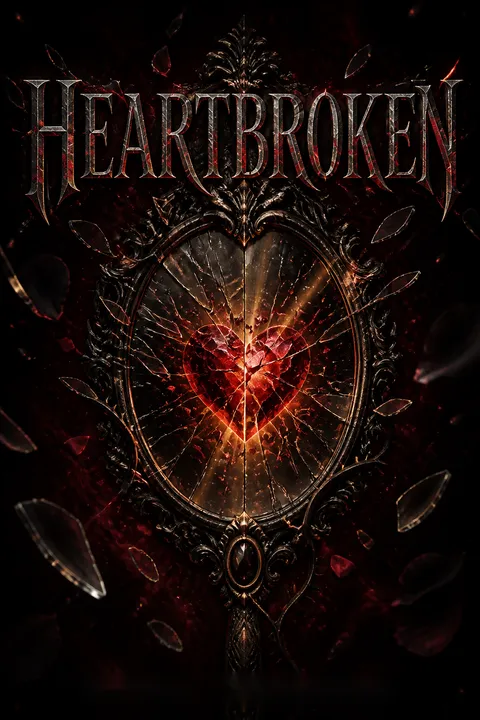

Plot Summary
Through Broken Mirrors
The Odd Sisters, now dwellers of the Underworld, narrate the emergence of Wonderland—a land born from the shattered realities stitched together by Hades' catastrophic use of magic. Wonderland is a madhouse where time and fate lose meaning, and the Queen of Hearts—once an ordinary card—awakens, tormented by anger and confusion. She is haunted by a legacy of violence transferred through broken magic, her world forever in flux, governed by chaos and boundless rage. The Sisters observe the growing magical disturbances threatening the integrity of all kingdoms, recognizing the Queen's story as a linchpin within a web of consequences. In Wonderland, everything is connected; fate has become fluid, and even the tiniest actions ripple through all realms, setting the stage for heartbreak, war, and the quest for peace.
Birth of a Queen
The Queen of Hearts awakens in Wonderland—her memories nebulous, her past erased. Though strangers proclaim her their ruler, she nurses only fragments of serenity and routines now lost. Surrounded by madness, suffering an inexplicable and relentless anger, she teeters on the edge of violence and despair. Her household cowers, and feelings of intense alienation breed fantasies of a deadly tea party. Only cake soothes her fury, but nothing, not even royal privilege or an adoring king, can mend the world she feels trapped inside. Little does she know, the anger consuming her has roots in powers much older and darker than Wonderland itself.
Labyrinthine Friendships Begin
On her baffling first day, the Queen meets the ever-courteous White Rabbit. Both are newcomers to this reality, bereft of histories and cast into roles they scarcely recognize. Despite confusion, they quickly bond—her tempestuous spirit complements his gentle, grounding manner. Together, they resolve to explore their strange world, planning grand introductions and whimsical cake deliveries for every inhabitant. But the Queen's anxiety and lack of belonging linger. The nascent friendship offers her comfort: perhaps, with the Rabbit's help, she can reclaim something lost and forge a new, if chaotic, identity as Wonderland's queen.
Wonderland's Nonsense Revealed
With cakes in hand and hope in their hearts, the Queen and Rabbit journey through Wonderland, encountering the bickering Tweedle brothers who demand etiquette and insist on ritual. Their squabbles and cryptic remarks unnerve the Queen, amplifying her sense of displacement. The cycle of irritation and confusion builds with each Wonderland resident, as rules seem simultaneously arbitrary and unbreakable. The Queen, goaded by endless rudeness and circular riddles, discovers that leading this land means enduring persistent affronts—and that her anger is both a symptom and a legacy of Wonderland's unmaking.
Dark Woods, Darker Hearts
Beyond Wonderland, in the Dead Woods, Circe and her fellow Ladies of Light tangle with the sins of magical history. Bound by blood to aid heartbroken Queen Tulip in her vengeful war, they must awaken legions of undead. Tormented by the idea that madness is hereditary, Circe fears the terrible power of unresolved grief and the resurgence of ancient rage. The story's lens widens, linking the Queen of Hearts' predicament to broader acts of violence, cycles of vengeance, and the precarious potential for redemption within families and kingdoms alike.
Madness Stirs in Tulgey
In pursuit of their missing servants, the Queen and Rabbit are drawn into the sinister marvels of Tulgey Wood. There, Wonderland's whimsy turns to intimidation: strange creatures and misleading signs offer only dead ends. Darkness falls and the forest burns; a beast—revealed as the Red Queen's Jabberwock—terrifies them. Their sense of powerlessness crescendos, and from the flames, the enigmatic Cheshire Cat emerges with more puzzles than answers. Madness in Wonderland is contagious, raising existential questions about the Queen's own role in this spreading insanity.
Odd Sisters' Meddling
The Odd Sisters, haunted by their mistakes, observe the turbulence from afar and debate how much interference will unravel or heal the worlds. They see Wonderland's Queen as a vessel for their own exiled rage—her story both a cautionary fairy tale and a ticking time bomb. They debate the ethics of undoing harm versus letting a cursed fate be. Their magical knowledge provides options—enchanted earrings, fragmented timelines, other realms—yet each action risks chaos, hinting at a moral complexity behind all acts of "help" or "punishment."
The Duchess's Chaotic Visit
Hoping for harmony, the Queen invites the Duchess to tea, expecting friendship but receiving disaster. The Duchess's rudeness, a wailing baby-turned-pig, and a pepper-obsessed cook transform a royal tea into bedlam. The Queen's patience snaps and, fueled by humiliation and unresolved anger, she makes her first fateful threat of beheading. This event further isolates the Queen from her subjects and herself, confirming how easily Wonderland's madness can tip even the most well-intentioned gatherings into chaos.
Invitations and Exclusions
The Queen, plagued by the Duchess's slander and her subject's avoidance, resolves to mend her reputation with an extravagant Wonderland Ball, meticulously planned to please all. Yet when the night arrives, no one attends; heartbreak eclipses hope. Encouraged by the Rabbit, the Queen momentarily finds resolve—if escaping acceptance is impossible, at least they can strategize an escape from Wonderland together. The pain of exclusion deepens her sense of "otherness," but also galvanizes the determination to reclaim control—even through violence, if need be.
White Queen's Predicament
The Queen and Rabbit become entangled in the absurd legalities of the White Queen, a monarch who punishes future crimes. The Queen's threats, though fueled by anguish, earn her an arrest for beheadings she has yet to commit. The Rabbit's loyalty is also questioned by Wonderland's shifting allegiances. In this environment, absurdity is law and sincerity is punished. Imprisonment and labyrinthine justice exemplify Wonderland's perverse order—one that exacerbates the Queen's growing instability.
Trials and Punishments
While the Queen languishes in dungeon isolation, the Rabbit seeks allies but finds only indifference or impotence from the King and others. Years pass in her imprisonment, compounding her feelings of abandonment and betrayal—especially by her only friend, the Rabbit. Returning home, she finds the world has not awaited her; white roses, a symbol of offense, and more insubordinate servants greet her. The Queen's reprisal is swift and bloody, her identity now wholly shaped by trauma and the ghosts of rage planted in her by the Odd Sisters' curse.
Confinement and Heartache
The Queen has become a stranger to her own life. Her rage, unmitigated by understanding or forgiveness, alienates even the Rabbit, who nonetheless clings to the hope of redeeming her with a magical cure. Patterns of disappointment, loss, bitterness, and violence play out in miniature, both in her public proclamations and private despair. The cumulative weight of years locked away without solace leaves her vulnerable, pushing her closer to the catastrophic act prophesied by the White Queen—mass beheading during a garden party, her rage now unchecked.
Paint the Roses Red
The Queen, broken and mistrustful, returns to a palace of white roses—the ultimate insult. The King's ineptitude and the servants' fear fuel her wrath; mass executions follow, solidifying her transformation into a tyrant. The Rabbit, guilt-ridden yet powerless, attempts in vain to salve the wound with enchanted earrings, hoping to avert further disaster. But events spiral as the Queen, fixated on retribution and unable to find comfort in her only friendship, prepares a party with slaughter as its centerpiece.
Final Descent to Fury
Invitations to the Queen's deadly garden party are sent out. The Rabbit, desperate, pins his hopes on a distraction, while the Queen's mind churns with violent fantasies. As Alice, the innocent outsider, arrives, the tension peaks. The Queen's threats grow increasingly literal, her sanity frays, and even the hope offered by the magical earrings seems insufficient. The Odd Sisters, watching with horror, realize too late that their delayed intervention may have doomed everyone in Wonderland to catastrophe.
Mirrors, Choices, and Forgiveness
In the Underworld, the Odd Sisters help Grimhilde at last find peace, rewriting her ending. Confronting their own guilt for the Queen of Heart's fate, they attempt to intervene through the Rabbit, offering the Queen a choice: to lose her rage but her very self, or wear enchanted earrings for only a partial cure. The Queen, however, is too far gone to listen or trust. Their efforts bring minor respite, but cannot undo years of compounded anger or the spectral inheritance of madness.
Rabbit's Impossible Choice
The White Rabbit is forced to weigh impossible options: betray his Queen's agency, or allow her to be consumed by the very anger that defines and destroys her. His loyalty becomes both a lifeline and a curse, binding him to cycles of guilt and hope. The Wonderlanders' indifference, the King's inadequacy, and the inevitability of fate all collide as the Queen's tragedy nears its denouement. Even friendship cannot save a heart encased in centuries of collective pain.
A Second First Day
In the climax, Alice distracts the Queen from genocide, and a chase leads all to the rabbit hole. Tumult and magic combine, and as the Queen follows Alice, she falls out of Wonderland and into London—where she is reduced to a mere playing card, erasing her rage and memories. The Rabbit, heartbroken, rescues her and brings her back. She awakens as she did on that original first day: bewildered but at peace, with no recollection of traumas past. The cycle, it seems, must begin anew—yet now tempered by hard-earned wisdom and the fragile hope of starting over with kindness.
All Stories Begin Again
The Queen's story closes as it opens: with amnesia, cakes, and the loyal Rabbit by her side. Yet beneath the apparent reset—amid gardens, games, and laughter—lingers the knowledge that every tale, even one of heartbreak and madness, offers the hope of reinvention. Fate, fractured again and again, can still be gently steered toward joy, if only those closest refuse to give up. The message resounds: every day can be a first day; the future, though never certain, remains—and must remain—an open book.
Analysis
A myth of trauma, agency, and hope"Heartbroken" reimagines the Queen of Hearts not as a one-note villain, but a profound study in the inheritance of pain and the longing to be understood. In Valentino's hands, Wonderland becomes a shattered purgatory—where displaced souls, stripped of past and future, must continually confront the absurdity and sorrow of their existence. The Queen's rage, a legacy of magical and emotional violence, is shown not simply as a flaw but as a wound: something both inflicted and inherited, fueled by exclusion and agitated by endless cycles of misunderstanding. Throughout, true evil is less a person than an outcome of neglect, indifference, or selfish "correction"—as personified by kings, queens, and even well-intending witches. Yet the book is not without hope: through the friendship of the Rabbit, the sacrifice of the Odd Sisters, and the Queen's own moments of tenderness, the narrative insists that new beginnings are possible—even if imperfect, even if hard-won. Ultimately, "Heartbroken" is a meditation on what it means to be remade by loss, and whether (and how) any heart, no matter how damaged, can relearn joy.
Review Summary
Heartbroken is the 12th installment in Serena Valentino's Disney Villains series, receiving a 3.77 average rating. Readers praised the unexpected friendship between the Queen of Hearts and the White Rabbit, and appreciated the creative origin story for the Queen. However, many felt the book was repetitive, underdeveloped, and functioned more as a bridge between installments than a standalone villain story. Most reviewers recommended reading the previous books first, as the overarching plot requires prior context. The secondary storyline was frequently cited as more compelling than the Queen's own arc.
People Also Read

Characters
The Queen of Hearts
The Queen of Hearts is the tragic heart of the narrative—a woman literally conjured into existence by fractured magic and exiled resentment. Though her origins lie in nothing but a deck of cards, her personality is shaped by the madness and grief imbued within her by the Odd Sisters' curse. Psychologically, she is haunted by an endless, inexplicable anger—a symptom of being unmade and remade as a tool of magical catharsis. Her longing for order, peace, and connection is foiled at every turn by Wonderland's illogic and cruelty, driving her to violence both real and imagined. Ultimately, she is an emblem of how unchecked trauma, isolation, and the absence of kindness can turn even innocence into tyranny. Yet at the core remains vulnerability, a hunger for belonging, and perhaps—if fate allows—a path back to herself.
The White Rabbit
The White Rabbit's role oscillates between loyal servant, gentle confidant, and reluctant hero. He grounds the Queen, providing emotional ballast amid chaos. His origins, too, are blank—a creature newly born to Wonderland, with no past, and defined by his choices of loyalty and kindness. He understands unspoken pain and mediates between rage and reason, often sacrificing his own well-being for the Queen's. Yet he is not perfect: his fear and guilt for his failures (especially his inability to rescue the Queen from the dungeon or save her from herself) wound him deeply. Ultimately, he represents the hope that steadfast friendship can anchor even the most storm-tossed soul, if only for a time.
The Odd Sisters (Lucinda, Ruby, Martha)
Once notorious for their interfering, the Odd Sisters take on the role of cosmic narrators, observers, and reluctant redeemers. Their psychoanalytic arc is one of realization: they see the Queen of Hearts as both their creation and their burden, a personification of their exiled anger. Guilt, love, and the desire for forgiveness drive them to balance helping and non-interference. Their powers are immense, yet the consequences of using them are unpredictable, often compounding the very suffering they wish to heal. By creating the Queen's options—annihilation, partial cure, or renewal—they confront the limits of magic, the ethics of power, and the reality that some damage cannot be undone.
Circe
Circe is the newest leader in a lineage of queens shaped by blood, sadness, and promise. As a Lady of Light, she is dedicated to turning the Dead Woods from a site of horror to a sanctuary, yet she is always haunted by past wrongs and present oaths. Circe's greatest struggle is the ethical use of her considerable power: she wants to heal all wrongs, but learns from the Odd Sisters that fate, time, and reality resist such ambitions. Her psychological landscape is one of fatigue, hope, and fierce protectiveness—a healer forced to recognize both her limits and her responsibilities.
The King of Hearts
The King of Hearts is both comic relief and a mirror to the Queen's pain. He is perpetually cheerful, distanced from the chaos swirling around him, and incapable of meaningful intervention. His devotion to the Queen lacks the insight or tenacity needed to reach her; instead, his passivity and denial only deepen her isolation. The King's blunders—especially regarding the white roses—become symbols of well-intentioned harm, and, psychologically, he represents the bystander to trauma: present, loving, but ultimately helpless.
Cheshire Cat
The Cheshire Cat is the trickster and noir commentator of Wonderland—always watching, never taking sides. His cryptic advice and taunts hint at deeper knowledge, but his true allegiance is to chaos. Psychologically, he embodies a survival strategy: persistent detachment and humor as responses to meaninglessness. He tests the Queen by holding up a mirror to her anger, reminding her and the reader that in a world where logic fractures, sometimes only madness makes sense.
The White Queen
The White Queen, queen of chess and time, metes out punishment in anticipation of crimes, not in their wake. She is both victim and perpetrator of Wonderland's madness; her brand of order is as arbitrary as the Queen of Hearts's rage. Psychologically, she is the embodiment of pre-emptive anxiety—attempting to prevent wrongs by inflicting harm, she only propagates cycles of violence and alienation.
The Duchess
The Duchess is brash, vulgar, and magnificently disruptive. Her presence magnifies the Queen's shame and isolation, and her refusal to observe boundaries turns every interaction into chaos. Psychologically, she is the superego unmoored—judging, mocking, and controlling without empathy or understanding. She catalyzes the Queen's final break from civility into open hostility.
Circe's Mothers (Lucinda, Ruby, Martha, as Odd Sisters and mothers)
As mothers to Circe and de facto mothers to worlds, the Odd Sisters in this aspect are torn between pride and shame in their creations. Their love is fierce, but their remorse sharper—every act of interference is shadowed by the unintended consequences of their power. Ultimately, their struggle is the struggle of all caretakers: trying to right wrongs without robbing others of agency, and seeking forgiveness while learning to forgive themselves.
Alice
Alice appears late but symbolically: the manifestation of outside disruption, unwitting catalyst for the Queen's final spiral. Through her, the Queen's rage is redirected and ultimately short-circuited, offering a way out that is both reset and rebirth. Alice's innocence and curiosity contrast with the Queen's pain, reminding us of what is lost and what, maybe, can be regained.
Plot Devices
Fragmented Worlds and Time Loops
Valentino constructs Wonderland as a mosaic of broken worlds—each shard carrying trauma, madness, or unfinished business from prior universes. Time folds in on itself: past, present, and future intermingle, heightening a sense of existential displacement. Recurring "first days," resets, and repetitive trauma mirror the structure of complex PTSD—healing is attempted, but cycles persist until something (or someone) chooses transformation or erasure. The Queen's story is told with an acute awareness of narrative fracturing: her anger, her violence, and her tentative hope all emerge from a cosmos built on loss.
Magical Inheritance and Agency
The Queen of Hearts is not simply a villain but a vessel—her anger is inherited, not chosen. The enchanted earrings, the dilemma of self-erasure versus partial cure, and the machinations of the Odd Sisters complicate questions of blame and forgiveness. Characters are frequently forced into impossible choices that test both their agency and their identity. Magic becomes a metaphor for trauma: pervasive, inescapable, but sometimes—if never without risk—subject to change or healing.
Omniscient Narration and Meta-Fairytale Framing
By using the Odd Sisters, and later Circe, as meta-narrators, Valentino invites the reader to question who owns a story, who gets to intervene, and what the cost of such intervention might be. The story's playful self-awareness ("all stories are connected," "time means nothing and everything") blurs fantasy and reality, echoing Wonderland's own logic and the fractured memories of its Queen.
Foreshadowing and Symbolic Motifs
Motifs—especially red versus white roses, cakes, mirrors, and the refrain of "off with their heads"—provide both literal events and symbols for deeper conflict. Cake becomes the Queen's fleeting balm; roses shift from beauty to insult; mirrors reflect brokenness and offer portals to new beginnings. Repeated warnings, prophecies, and "arrest for future crimes" foreshadow inevitable tragedy, even as the story strives to subvert its own fate.
Villains Series

About the Author
Other books by Serena Valentino
Download PDF
Download EPUB
.epub digital book format is ideal for reading ebooks on phones, tablets, and e-readers.








































