
Plot Summary
Mist and Vengeance Unleashed
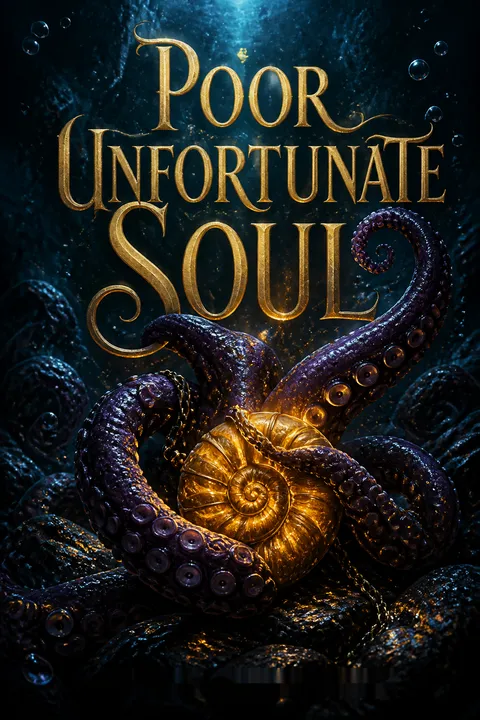
The story opens with Ursula, the sea witch, descending upon the human town of Ipswich, her magic fueled by hate and sorrow. She transforms the landscape with her dark power, summoning sirens whose song lures the townsfolk to their doom. Rather than granting them a quick death, Ursula curses the humans, transforming them into monstrous sea creatures bound to her will. Her laughter echoes with divine hatred, a force that even the most powerful witches sense and fear. This act of vengeance is rooted in deep personal loss, as Ursula's only source of love was taken from her by these very humans. Her brother, Triton, appears, urging her to return home, but Ursula's pain and anger are too great, setting the stage for a tale of revenge, betrayal, and the destructive power of hate.
Sisters of the Cliff
After her devastation of Ipswich, Ursula visits her old friends, the odd sisters—Lucinda, Ruby, and Martha—witches of legendary power and peculiar beauty. The sisters are heartbroken over the loss of their youngest, Circe, who has vanished after a family rift. They plead for Ursula's help in finding her, revealing their own vulnerability and regret. Ursula, ever the dealmaker, agrees to assist, but only in exchange for the sisters' unique magic. Their alliance is forged in mutual need and sorrow, with each party seeking to reclaim what they have lost. The sisters' grief over Circe's absence and Ursula's own pain intertwine, setting the foundation for a pact that will have far-reaching consequences for all involved.
The Bargain of Hate
Standing atop the cliffs, the odd sisters and Ursula gaze down at the blighted town, the site of Ursula's greatest act of hate. The sisters are both impressed and unsettled by the power of hate-fueled magic. Ursula reveals her true motive: she wants their help to kill her brother, King Triton. The sisters, desperate to see Circe again, agree, recognizing that true hate must be born from within. Their shared pain and anger become the fuel for a dark alliance, as they plot to ruin Triton by targeting his beloved daughter, Ariel. The sisters' willingness to destroy for love and Ursula's thirst for vengeance bind them together in a dangerous, fateful bargain.
Ursula's Human Past
In the odd sisters' home, Ursula recounts her childhood as a human girl, adopted by a loving fisherman. She describes her growing sense of otherness, the fear of her emerging powers, and the villagers' eventual betrayal. When her true nature is revealed, the townspeople attempt to burn her as a witch, and her father is killed protecting her. Fleeing to the sea, Ursula is taken in by Triton, who forces her to hide her true form, never accepting her as his sister. The pain of rejection and the loss of her father fuel Ursula's hatred, shaping her into the vengeful sea witch. Her story is one of love lost, identity denied, and the corrosive effects of being forced to hide one's true self.
Betrayal by Blood
Through magical divination, the odd sisters witness a confrontation between Ursula and Triton. Triton's cruelty is laid bare: he reveals that he abandoned Ursula as a child, foreseeing the "monster" she would become. This revelation shatters any lingering hope Ursula had for familial love. The knowledge that her own brother orchestrated her suffering cements her resolve for revenge. The sisters, too, are shaken, realizing the depth of Triton's malice. This chapter marks the point of no return for Ursula, as her hatred becomes absolute, and the sisters' alliance with her is solidified by shared outrage and pain.
The Odd Sisters' Pact
The odd sisters, torn between their longing for Circe and their commitment to Ursula, channel their hate into powerful magic. They agree to help Ursula by targeting Ariel, Triton's youngest daughter, who has fallen in love with a human. The sisters' magic is both a gift and a curse, amplifying Ursula's power but also binding them to the consequences of her actions. Their pact is fraught with tension, as doubts and fears about the morality of their choices begin to surface. The sisters' internal conflict foreshadows the tragic outcomes that will result from their meddling.
Circe's Absence
The absence of Circe, the youngest and kindest of the odd sisters, casts a shadow over all their actions. Her departure was triggered by the sisters' interference in her life and the pain they caused her beloved. Pflanze, the sisters' magical cat, observes their grief and guilt, recognizing that their obsession with finding Circe is both a source of strength and a dangerous distraction. The sisters' attempts to summon Circe fail, deepening their despair and making them more susceptible to Ursula's manipulations. Circe's absence becomes a symbol of the cost of unchecked magic and the pain of broken family bonds.
Tulip's Lost Voice
In a parallel tale, Princess Tulip Morningstar, heartbroken by a failed romance, makes a deal with Ursula to rid herself of her beauty and voice. Tulip's journey is one of self-discovery, as she learns to value her mind and independence over superficial attributes. When her beauty and voice are restored against her wishes, Tulip is beset by unwanted suitors, leading to chaos at Morningstar Castle. Her story intersects with the witches' as she becomes entangled in their magical machinations. Tulip's arc explores themes of agency, self-worth, and the dangers of making bargains with those who traffic in souls.
The Sea Witch's Deal
Ariel, Triton's youngest daughter, desperate to be with the human prince Eric, seeks out Ursula. The sea witch offers her a deal: Ariel will become human for three days, but must win Eric's love and a true love's kiss, or forfeit her soul. The price is Ariel's voice, the very essence of her identity. Ariel's decision is fraught with fear and hope, as she sacrifices her family and her voice for a chance at love. Ursula's manipulation is masterful, exploiting Ariel's vulnerability and setting in motion a chain of events that will test the limits of love, sacrifice, and the consequences of desperate choices.
Ariel's Desperate Gamble
Mute and alone, Ariel navigates the human world, trying to win Eric's heart without her voice. Ursula's minions, Flotsam and Jetsam, sabotage Ariel's efforts, ensuring she cannot secure the kiss she needs. Meanwhile, Ursula transforms herself into the beautiful Vanessa, using Ariel's stolen voice to enchant Eric and claim him for herself. Ariel's heartbreak and helplessness are palpable, as she watches her dreams slip away. The odds are stacked against her, and the true cost of her bargain becomes clear. This chapter is a meditation on longing, loss, and the perils of sacrificing one's self for love.
The Prince's Enchantment
Under Ursula's spell, Eric prepares to marry Vanessa, believing her to be the girl who saved him. Ariel, devastated, is aided by her friends who discover the truth and attempt to break the enchantment. The tension mounts as the wedding approaches, with time running out for Ariel to reclaim her voice and her future. The odd sisters, watching from afar, are torn between their pact with Ursula and their growing unease about the consequences of their actions. The stage is set for a dramatic confrontation, as love, magic, and betrayal collide.
The Dark Fairy's Warning
The odd sisters receive a warning from the Dark Fairy, Maleficent, who senses the danger of Ursula's growing power. The sisters are divided, some fearing Maleficent's interference, others questioning Ursula's trustworthiness. The warning serves as a catalyst, forcing the sisters to confront the morality of their alliance and the potential consequences of their hate-fueled magic. The presence of the Dark Fairy underscores the interconnectedness of the magical world and the far-reaching impact of the choices made by witches and mortals alike.
The Siege of Morningstar
As Tulip's unwanted suitors, driven mad by enchantment, lay siege to Morningstar Castle, Nanny and Pflanze work to protect her and summon help. Ursula intervenes, using her magic to quell the chaos, but her motives remain suspect. The odd sisters arrive, their reunion with Pflanze and Nanny fraught with tension and old grievances. The castle becomes a nexus of magical intrigue, as alliances shift and the true nature of each character is revealed. The siege serves as a metaphor for the dangers of unchecked desire and the chaos that ensues when magic is wielded without restraint.
The Sisters' Dilemma
The odd sisters, witnessing the unfolding disaster, begin to question their pact with Ursula. They are haunted by the Dark Fairy's warning and the realization that their actions may have unleashed a force they cannot control. Their internal conflict reaches a breaking point as they debate whether to continue aiding Ursula or to stop her before more harm is done. The sisters' struggle reflects the broader theme of the story: the seductive allure of power and the moral cost of pursuing vengeance at any price.
Ursula's Final Transformation
Having seized Triton's crown and trident, Ursula grows to monstrous proportions, her mind consumed by hate and the intoxicating rush of absolute power. She creates a maelstrom, threatening to destroy Ariel, Eric, and all who stand in her way. The odd sisters, realizing the extent of Ursula's betrayal—she has taken Circe's soul as leverage—turn their magic against her. The battle is both physical and metaphysical, as the forces of love, hate, and regret clash in a storm of magic and emotion. Ursula's final transformation is both her triumph and her undoing.
The Breaking of Circe
In the aftermath of Ursula's defeat, Circe is released from the sea witch's garden of lost souls. She experiences the full weight of Ursula's rage and pain, understanding at last the depth of her friend's suffering and the corrosive nature of hate. Circe's ordeal leaves her changed, burdened by the knowledge of what unchecked vengeance can do. The sisters, too, are left to reckon with the consequences of their actions, as the cost of their magic becomes painfully clear. Circe's awakening is both a liberation and a warning.
The Price of Power
As the dust settles, the survivors—Ariel, Eric, Tulip, the odd sisters, and Nanny—grapple with the aftermath of Ursula's rampage. Triton, wracked with guilt, makes amends by granting Ariel her wish to be human. The odd sisters, weakened by their efforts to reverse the hate-fueled magic, are left to mourn the loss of their friendship with Ursula and the pain they caused Circe. The story's resolution is bittersweet, as each character must confront the price of power, the pain of regret, and the hope of redemption.
Redemption and Awakening
In the final chapter, Ariel and Eric sail into a new life together, their happiness hard-won. Circe, Nanny, and Pflanze watch from the cliffs, reflecting on the lessons learned and the wounds that remain. The odd sisters, though changed by their ordeal, are reunited with Circe, and the possibility of healing emerges. The story ends with a sense of cautious optimism, as the characters look toward the future, mindful of the dangers of hate and the redemptive power of love and forgiveness.
Analysis
Serena Valentino's Poor Unfortunate Soul is a dark, emotionally charged reimagining of the classic "Little Mermaid" tale, delving into the origins and psychology of Ursula, the sea witch. The novel interrogates the nature of villainy, suggesting that monsters are not born but made—shaped by loss, rejection, and the corrosive effects of hate. Through its interwoven narratives, the book explores the consequences of bargains made in desperation, the dangers of unchecked power, and the pain of broken family bonds. The odd sisters' journey from agents of chaos to reluctant redeemers mirrors Ursula's own tragic arc, highlighting the thin line between vengeance and justice. The story's modern resonance lies in its examination of identity, agency, and the cost of denying one's true self. Ultimately, the novel warns against the seductive allure of hate and the bargains we make with our own darkness, while holding out hope for redemption, healing, and the transformative power of love and forgiveness.
Review Summary
Reviews of Poor Unfortunate Soul are mixed, with an average rating of 3.57 out of 5. Many readers found the book disappointing, citing a lack of focus on Ursula and too much emphasis on side characters. Some appreciated the backstory and complexity added to Ursula's character, while others felt the writing was poor and the plot disjointed. Fans of the Disney villain series had varying opinions, with some enjoying the interconnected storylines and others wishing for more character development of Ursula herself.
People Also Read


Characters
Ursula
Ursula is the central figure, a sea witch whose life is defined by loss, rejection, and the corrosive effects of hate. Adopted by a human father who loved her, she is ultimately betrayed by the villagers and, most painfully, by her brother Triton, who abandons her and forces her to hide her true form. Ursula's transformation into a villain is rooted in deep sorrow and a desperate need for belonging. Her relationships—with the odd sisters, with Circe, and with her own past—are complex, marked by moments of genuine affection and devastating betrayal. Ursula's arc is a cautionary tale about the dangers of internalized self-loathing and the destructive power of unchecked vengeance.
Lucinda, Ruby, and Martha (The Odd Sisters)
The odd sisters are a trio of powerful, eccentric witches whose love for their youngest, Circe, drives much of the plot. Their magic is potent but often reckless, fueled by intense emotions and a penchant for meddling. The sisters' relationship with Ursula is one of mutual respect and shared pain, but their alliance is tested by betrayal and the consequences of their actions. Psychologically, they are haunted by guilt over Circe's departure and the harm their magic has caused. Their development is marked by a gradual reckoning with the limits of their power and the need for accountability.
Circe
Circe is the youngest and most compassionate of the odd sisters, whose absence is a source of anguish for her family. Unlike her sisters, Circe values love and forgiveness, and her departure is a protest against their destructive ways. Her captivity by Ursula and subsequent liberation force her to confront the darkness within herself and others. Circe's journey is one of self-discovery, resilience, and the struggle to maintain one's integrity in the face of overwhelming pain. Her return signals the possibility of healing and redemption for her family.
Triton
King Triton is both a symbol of authority and a deeply flawed individual. His abandonment of Ursula and rigid adherence to tradition make him a tragic figure, blinded by prejudice and unable to accept difference. His relationship with Ariel is marked by love but also by control and misunderstanding. Triton's eventual regret and willingness to sacrifice for Ariel's happiness mark his growth, but his actions leave lasting scars. Psychologically, he embodies the dangers of pride, the pain of regret, and the possibility of change.
Ariel
Ariel is Triton's youngest daughter, whose longing for the human world and love for Prince Eric drive the central conflict. Her willingness to sacrifice her voice and family for love is both her strength and her vulnerability. Ariel's journey is one of self-assertion, as she learns the cost of her choices and the importance of agency. Her relationship with Ursula is fraught with manipulation, while her bond with Eric is tested by enchantment and adversity. Ariel's arc is a testament to the power of hope, resilience, and the pursuit of one's dreams.
Princess Tulip Morningstar
Tulip's story parallels Ariel's, as she grapples with the burdens of beauty, expectation, and heartbreak. Her deal with Ursula to lose her beauty and voice is an act of rebellion, leading to a journey of self-discovery. Tulip's interactions with Nanny, Circe, and her suitors reveal her growing independence and self-worth. Her arc explores themes of agency, the dangers of superficiality, and the value of inner strength.
Nanny (The One of Legends)
Nanny is Tulip's caretaker, secretly a powerful witch who has lost and regained her memories. She serves as a stabilizing force, guiding Tulip, aiding the odd sisters, and working to protect those she loves. Nanny's telepathic abilities and deep understanding of magic make her a formidable ally. Her development is marked by the recovery of her identity and the acceptance of her role as both protector and participant in the magical world.
Pflanze
Pflanze is the odd sisters' tortoiseshell cat, a creature of subtle magic and keen perception. She serves as a bridge between characters, observing, influencing, and occasionally communicating telepathically. Pflanze's loyalty to her witches and her affection for Tulip and Nanny make her a unique presence, embodying the theme of unseen connections and the quiet power of observation.
Prince Eric
Eric is the human prince who captures Ariel's heart. His role is largely reactive, as he is manipulated by Ursula and caught in the crossfire of magical schemes. Eric's genuine kindness and eventual recognition of Ariel's true identity are central to the story's resolution. He represents the ideal of love that transcends barriers, but also the vulnerability of those caught in the web of others' ambitions.
Prince Popinjay
Popinjay is one of Tulip's many suitors, distinguished by his sincerity and genuine affection. His enchanted actions during the siege of Morningstar Castle are later revealed to be the result of magic, not malice. Popinjay's heartfelt letter and respectful courtship offer Tulip a chance at real happiness, contrasting with the manipulative relationships elsewhere in the story.
Plot Devices
Hate as Magic's Fuel
The central plot device is the use of hate as a source of magical power. Ursula's devastation of Ipswich, her pact with the odd sisters, and her ultimate transformation are all driven by hate—personal, familial, and existential. The story explores how hate can be both a weapon and a curse, granting immense power but also leading to madness and self-destruction. The odd sisters' magic, too, is fueled by emotion, blurring the line between righteous anger and destructive vengeance. This device serves as both a narrative engine and a thematic warning about the costs of letting hate rule one's heart.
Deals and Bargains
The narrative is structured around deals—Ursula's bargains with the odd sisters, Tulip, and Ariel. Each bargain comes with a hidden cost, often greater than the characters anticipate. The contracts are binding, magical, and often exploit the vulnerabilities of those who make them. This device underscores the dangers of desperation and the importance of understanding the true price of one's wishes.
Interwoven Narratives
The book weaves together multiple storylines—Ursula's quest for revenge, the odd sisters' search for Circe, Tulip's journey of self-discovery, and Ariel's pursuit of love. These narratives intersect and echo each other, reinforcing themes of loss, agency, and the consequences of magic. The use of mirrors, magical communication, and shifting perspectives creates a tapestry of interconnected fates.
Foreshadowing and Warnings
The presence of the Dark Fairy's warning, the recurring sense of foreboding, and the use of magical divination all serve to foreshadow the tragic outcomes of the characters' choices. These devices heighten tension and underscore the inevitability of certain events, while also offering opportunities for redemption and change.
Transformation and Identity
Transformation—both literal and metaphorical—is a recurring device. Ursula's shifting forms, Ariel's change from mermaid to human, Tulip's loss and regaining of beauty and voice, and Circe's ordeal all explore the fluidity of identity and the struggle to be seen and accepted for one's true self. These transformations are both sources of power and sites of vulnerability.
Villains Series






About the Author
Other books by Serena Valentino
Download PDF
Download EPUB
.epub digital book format is ideal for reading ebooks on phones, tablets, and e-readers.








































