
Plot Summary
Aftermath in the Commons
The story opens with a devastating school shooting at Garvin High, leaving several students dead and many wounded. Valerie Leftman, a student, is shot in the thigh and survives, but her boyfriend, Nick Levil, is the shooter who ultimately turns the gun on himself. The community is left reeling, unsure whether Valerie is a victim, a hero, or an accomplice. The media swarms, rumors swirl, and the school is transformed into a place of trauma and suspicion. Valerie's life is upended as she becomes the focus of police investigations and public scrutiny, her every action and motive questioned.
Return to Haunted Halls
After months of recovery, Valerie is pressured to return to Garvin High. The halls are haunted by memories and suspicion. She is met with a mix of fear, hostility, and curiosity from classmates and staff. Some see her as complicit in the tragedy, others as a tragic figure. Valerie's own feelings are conflicted—she is wracked with guilt, confusion, and anger, unsure of her place in a world that has been irrevocably changed. The school's attempts at healing are awkward and insufficient, and Valerie struggles to find a way to exist in a place that no longer feels like home.
The Hate List Unveiled
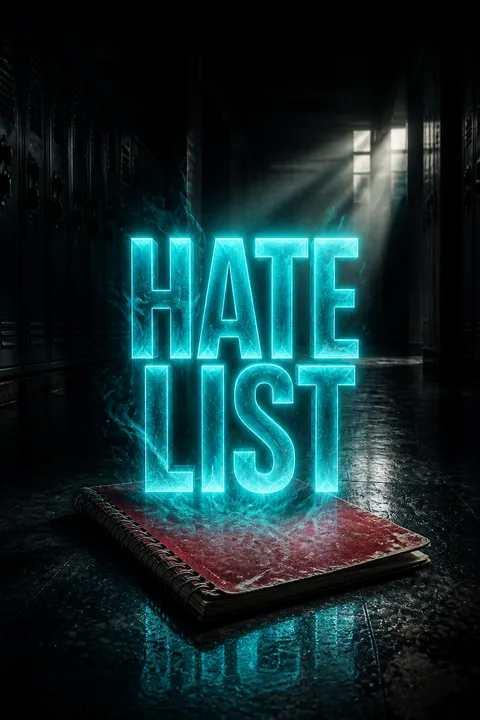
Central to the investigation is the "Hate List," a red spiral notebook Valerie and Nick created, listing people and things they hated—originally a private, cathartic joke. After the shooting, the list is seized by police and media, interpreted as a hit list. Valerie is interrogated about her role in its creation and whether she knew Nick's intentions. The notebook becomes a symbol of blame, and Valerie is forced to confront the consequences of her anger and the blurred line between fantasy and reality.
Nick and Valerie's Bond
Through flashbacks, Valerie recalls her relationship with Nick. Both outsiders, they found solace in each other, bonding over shared pain, family dysfunction, and a sense of being misunderstood. Nick's fascination with death and dark humor deepens, and Valerie, desperate for connection, is drawn into his worldview. Their relationship is intense but troubled, marked by moments of genuine happiness and growing darkness. Valerie's memories are tinged with regret and longing, as she tries to reconcile the boy she loved with the killer he became.
The Shooting Unfolds
The narrative reconstructs the day of the shooting: Nick, fueled by rage and alienation, opens fire in the Commons. Valerie, initially unaware of his intentions, is swept into the chaos. She tries to stop Nick, ultimately intervening as he targets Jessica Campbell, a popular girl and frequent tormentor. Valerie is shot in the thigh, possibly by accident, and Nick kills himself. The event is over in minutes, but its impact is lifelong. The school and community are left to pick up the pieces, and Valerie's role remains ambiguous.
Hospital and Interrogation
Valerie wakes in the hospital, physically wounded and emotionally shattered. She is interrogated by Detective Panzella, who suspects her involvement in the shooting. The Hate List and her digital correspondence with Nick are scrutinized. Valerie's family is fractured—her mother is fearful and overbearing, her father distant and judgmental. Valerie is overwhelmed by guilt, grief, and the weight of public opinion. She is sent to a psychiatric ward for observation, where she is further isolated and forced to confront her trauma.
Guilt, Blame, and Silence
Valerie's return home is fraught with tension. Friends avoid her, and her family is on edge. She is haunted by guilt—not only for the shooting, but for her inability to see the warning signs in Nick. The community's need for someone to blame falls heavily on her. Valerie's attempts to reach out—to apologize, to explain—are often rebuffed. She is caught between wanting to move on and feeling unworthy of forgiveness. Therapy becomes a lifeline, but progress is slow and painful.
The World Watches Valerie
The media's portrayal of Valerie is relentless and often cruel. She is alternately vilified and pitied, her every move dissected. Sensationalist reporting distorts the truth, and Valerie's identity is reduced to "the girl who hated everyone." The school administration is more concerned with appearances than healing, and Valerie is forced to navigate a world that sees her as a symbol rather than a person. The pressure to apologize publicly and the constant surveillance erode her sense of self.
Therapy and Self-Discovery
Valerie begins intensive therapy with Dr. Hieler, a compassionate and insightful psychologist. Through their sessions, she slowly unpacks her trauma, guilt, and anger. Dr. Hieler encourages her to rediscover her identity beyond the shooting and the Hate List. Art becomes a therapeutic outlet, allowing Valerie to process her emotions and see herself—and others—more clearly. The journey is nonlinear, marked by setbacks and breakthroughs, but Valerie gradually learns to forgive herself and imagine a future.
Shifting Friendships
Valerie's relationships with her old friends, especially Stacey, are strained and often irreparable. She is ostracized by many, but unexpected kindness comes from Jessica Campbell, the girl she saved. Jessica's overtures are awkward but sincere, and a tentative friendship develops. Through the Student Council's memorial project, Valerie finds a sense of purpose and connection. The process of working with former enemies and victims' families is fraught but ultimately healing, as Valerie learns the power of empathy and shared grief.
Jessica's Unexpected Kindness
Jessica's willingness to reach out to Valerie is a turning point. Their friendship is built on honesty, vulnerability, and the shared experience of trauma. Jessica advocates for Valerie, helping to clear her name and inviting her into new social circles. Together, they work on the memorial project, interviewing victims' families and gathering stories. The process is painful but transformative, as both girls confront their pasts and learn to see each other—and themselves—in a new light.
Facing the School Again
Valerie's return to school is a daily trial. She faces hostility from some, indifference from others, and the constant threat of being scapegoated. The administration's attempts at "solidarity" are superficial, and true healing comes only through personal connections and hard conversations. Valerie is forced to confront her own complicity in the culture of hate, as well as the limits of her responsibility. Through art, therapy, and the memorial project, she begins to reclaim her voice and agency.
Family Fractures
The shooting accelerates the breakdown of Valerie's family. Her parents' marriage dissolves, her father begins a new relationship, and her brother Frankie drifts away. Valerie is caught in the crossfire, blamed for the family's troubles and forced to navigate shifting loyalties. The loss of family stability mirrors her internal chaos, but also pushes her toward independence. She learns that healing is not just personal, but relational, and that forgiveness must extend to herself and those she loves.
Art as Healing
Art becomes Valerie's refuge and means of self-expression. Through painting and drawing, she processes her trauma and begins to see the world—and herself—more compassionately. A local artist, Bea, encourages her to embrace creativity as a form of healing. Valerie's art becomes central to the memorial project, and her drawings are ultimately included in the school's time capsule. The act of creation helps her move from victim and scapegoat to survivor and storyteller.
The Memorial Project
The Student Council's memorial project brings together students, families, and staff to honor the victims of the shooting. Valerie and Jessica lead the effort, gathering stories and mementos for a time capsule and bench. The process is emotionally taxing but unites the community in shared remembrance. At graduation, Valerie and Jessica present the memorial, reading stories of the victims and acknowledging the complexity of grief and healing. The project allows Valerie to reclaim her narrative and contribute to the school's future.
Relapse and Recovery
Valerie's journey is not linear. She faces setbacks, including threats from classmates, a traumatic encounter at a party, and renewed suspicion from her family. She is forced to confront the ongoing reality of hate and the limits of forgiveness. With support from Dr. Hieler, Jessica, and her own resilience, Valerie recommits to healing. She learns to set boundaries, seek help, and advocate for herself. The process is ongoing, but she emerges stronger and more self-aware.
Graduation and Moving Forward
At graduation, Valerie and Jessica present the memorial, honoring the victims and acknowledging the enduring impact of the shooting. Valerie's journey comes full circle as she finds acceptance, forgiveness, and a sense of purpose. She decides to take time to recover before considering college, embracing the uncertainty of the future with hope. The story ends with Valerie leaving Garvin, her past acknowledged but no longer defining her, ready to write her own story.
Analysis
A nuanced exploration of trauma, blame, and the possibility of healing, "Hate List" challenges readers to confront the roots and consequences of violence without resorting to easy answers
Jennifer Brown's novel is a powerful meditation on the aftermath of tragedy, the complexity of human relationships, and the long, difficult path to forgiveness—of others and oneself. Through Valerie's journey, the book interrogates the ways in which anger, alienation, and misunderstanding can fester into catastrophe, but also how empathy, creativity, and honest dialogue can foster recovery. The story resists simplistic narratives of villainy and victimhood, instead offering a portrait of a community—and an individual—struggling to move forward. In a world where violence and blame are all too common, "Hate List" insists on the necessity of seeing what's really there: the pain, the hope, and the enduring possibility of change.
Review Summary
Hate List is a powerful novel about the aftermath of a school shooting. Readers found it emotionally gripping, thought-provoking, and raw in its exploration of guilt, forgiveness, and healing. The protagonist, Valerie, is a complex character struggling with her role in the tragedy. While some found the book difficult to relate to at times, many praised its realistic portrayal of trauma and its impact on individuals and communities. The novel's exploration of bullying and its consequences resonated with many readers, making it a compelling and important read.
People Also Read



Characters
Valerie Leftman
Valerie is the protagonist, a high school student whose life is shattered by the school shooting perpetrated by her boyfriend, Nick. She is intelligent, creative, and deeply sensitive, but also angry and alienated. Her creation of the Hate List, intended as a private vent, becomes the focal point of blame after the tragedy. Valerie's journey is one of self-discovery, as she grapples with guilt, public judgment, and the need for forgiveness. Through therapy, art, and new friendships, she learns to accept her past and imagine a future beyond trauma.
Nick Levil
Nick is Valerie's boyfriend and the shooter. He is intelligent, sensitive, and deeply wounded by bullying and family dysfunction. His fascination with death and dark humor masks profound pain and alienation. Nick's relationship with Valerie is intense and co-dependent, offering both solace and reinforcement of negative worldviews. His actions are both shocking and, in retrospect, tragically foreshadowed. Nick's legacy is complex—he is both loved and reviled, victim and villain, and his memory haunts Valerie and the community.
Jessica Campbell
Jessica is a popular student and frequent target of Valerie and Nick's resentment. She is initially portrayed as a bully, but after the shooting—when Valerie saves her life—she undergoes significant growth. Jessica reaches out to Valerie, offering friendship and support when few others will. Her willingness to change, confront her own flaws, and advocate for Valerie is pivotal in the healing process. Jessica embodies the possibility of reconciliation and the power of empathy.
Stacey Brinks
Stacey is Valerie's childhood friend, caught between loyalty and self-preservation. After the shooting, she distances herself from Valerie, unable to reconcile their shared past with the present reality. Stacey's actions reflect the broader community's struggle to process trauma and assign blame. Her relationship with Valerie is marked by nostalgia, regret, and the painful limits of friendship in the face of tragedy.
Dr. Rex Hieler
Dr. Hieler is Valerie's psychologist, providing a safe space for her to process trauma and rebuild her identity. He is patient, insightful, and direct, challenging Valerie to confront her feelings and take responsibility for her healing. Dr. Hieler's support is instrumental in Valerie's recovery, offering both practical tools and emotional validation. He represents the importance of mental health care and the possibility of growth after trauma.
Valerie's Mother (Jenny Leftman)
Jenny is Valerie's mother, struggling to cope with the aftermath of the shooting and the dissolution of her marriage. She is protective, anxious, and often overbearing, desperate to keep Valerie safe and restore normalcy. Her relationship with Valerie is strained by mistrust and mutual misunderstanding, but ultimately grounded in love. Jenny's journey mirrors Valerie's, as she learns to let go, trust, and find hope in the future.
Valerie's Father (Ted Leftman)
Ted is Valerie's father, a successful lawyer whose emotional distance and infidelity contribute to the family's breakdown. He is quick to judge and slow to forgive, often blaming Valerie for the family's troubles. His inability to connect with Valerie reflects his own unresolved issues. Ted's arc is one of gradual, if incomplete, reconciliation, as he comes to terms with his own failures and the need for forgiveness.
Frankie Leftman
Frankie is Valerie's younger brother, caught in the crossfire of family and school trauma. He is supportive but increasingly distant, seeking stability and normalcy where he can find it. Frankie's struggles highlight the ripple effects of violence and the challenges faced by siblings of those at the center of tragedy. His eventual adaptation and resilience offer a note of hope.
Duce Barnes
Duce is Nick's close friend and part of Valerie's old social circle. He is also suspected and ostracized after the shooting, struggling with guilt and anger. Duce's relationship with Valerie is strained but ultimately reconciled, as they share the unique burden of surviving and being blamed for Nick's actions. Duce represents the complexity of grief and the need for mutual understanding among survivors.
Ginny Baker
Ginny is a student who is severely injured in the shooting and later attempts suicide. Her journey parallels Valerie's, as she struggles with physical and emotional scars, public scrutiny, and the search for meaning. Ginny's willingness to forgive and her recognition of Nick's humanity offer Valerie a path toward self-acceptance. Ginny embodies the long-term impact of trauma and the possibility of healing.
Plot Devices
Dual Timelines and Flashbacks
The novel employs a dual timeline structure, alternating between the aftermath of the shooting and flashbacks to Valerie's relationship with Nick and the events leading up to the tragedy. This structure allows readers to gradually piece together the motivations, misunderstandings, and missed warnings that culminated in the shooting. The use of flashbacks deepens character development and complicates the narrative of blame, showing how small choices and accumulated pain can lead to catastrophe.
The Hate List as Symbol
The Hate List is both a literal object and a powerful symbol. Initially a private joke and coping mechanism, it becomes evidence in the investigation and a focal point for public outrage. The list represents the dangers of unchecked anger, the blurred line between fantasy and action, and the human need to assign blame. Ultimately, Valerie's transformation of the list—through art and the memorial project—signals her journey from victim to survivor, from hate to healing.
Media and Public Perception
The novel explores the role of media in shaping public perception, often distorting the truth and reducing complex individuals to simplistic narratives. Valerie's identity is constructed and deconstructed by reporters, administrators, and classmates, highlighting the challenges of reclaiming one's story in the face of sensationalism. The tension between private pain and public spectacle is a recurring theme, underscoring the need for authentic connection and understanding.
Therapy and Self-Reflection
Valerie's sessions with Dr. Hieler provide a framework for self-reflection and growth. Therapy is depicted as a slow, nonlinear process, marked by resistance, breakthroughs, and setbacks. Art becomes an extension of therapy, offering Valerie a means to process trauma and communicate when words fail. The interplay of dialogue, memory, and creativity illustrates the multifaceted nature of healing.
Memorialization and Community Healing
The memorial project serves as a plot device for collective healing and reconciliation. By gathering stories, artifacts, and memories, Valerie and her peers honor the victims and confront the complexity of grief. The project becomes a means of reclaiming agency, rewriting the narrative of hate, and fostering empathy. The graduation ceremony, with its public acknowledgment of pain and hope, provides closure and a vision for the future.
FAQ
Synopsis & Basic Details
What is Hate List about?
- Aftermath of Tragedy: Hate List centers on Valerie Leftman, a high school student grappling with the devastating aftermath of a school shooting perpetrated by her boyfriend, Nick Levil, who then took his own life. Valerie herself was shot and survived, leaving her to navigate a world that views her with suspicion, blame, and pity.
- Journey of Healing: The novel follows Valerie's arduous journey through physical and psychological recovery, her return to the "haunted halls" of Garvin High, and her struggle to reconcile the boy she loved with the monster he became. It explores her internal conflict, guilt over the infamous "Hate List" she co-created with Nick, and her search for identity and forgiveness.
- Community's Response: Beyond Valerie's personal struggle, the story delves into how the community, school, and media react to such a profound trauma. It examines the superficial attempts at healing versus genuine reconciliation, the fracturing of families and friendships, and the complex process of memorializing victims while confronting the roots of hate.
Why should I read Hate List?
- Deep Psychological Insight: Readers should engage with Hate List for its unflinching psychological exploration of trauma, guilt, and the complex nature of adolescence. Jennifer Brown masterfully portrays Valerie's internal world, offering a nuanced look at how a young person processes unimaginable events and the blurred lines between victim, accomplice, and survivor.
- Timely & Relevant Themes: The novel tackles enduring themes of bullying, alienation, family dysfunction, and the societal pressures that can lead to violence, making it incredibly relevant in contemporary discussions about school safety and mental health. It challenges readers to consider the origins of hate and the difficult path toward empathy and forgiveness.
- Compelling Narrative & Character Arcs: Beyond its heavy subject matter, Hate List offers a compelling narrative driven by a dual timeline, rich symbolism, and deeply evolving characters. Valerie's journey, from isolation to tentative connection, and the unexpected alliances she forms (like with Jessica Campbell), provide a powerful testament to resilience and the possibility of change.
What is the background of Hate List?
- Post-Columbine Context: While not explicitly stated as a direct historical account, Hate List is deeply informed by the cultural and psychological aftermath of real-world school shootings, particularly the Columbine High School massacre. The novel reflects the societal questions and anxieties that arose from such events, including media sensationalism, the search for warning signs, and the struggle to understand perpetrators' motivations.
- Small-Town America Setting: The story is set in the fictional suburban town of Garvin, which, despite its "big houses and rich kids," harbors deep-seated social hierarchies and bullying. This setting highlights how even seemingly idyllic communities can be breeding grounds for alienation and resentment, challenging the notion that such tragedies only occur in specific environments.
- Focus on Adolescent Psychology: The book delves into the specific cultural context of high school life, including cliques, social media (e-mails and IMs are mentioned as evidence), and the intense emotional landscape of teenagers. It explores how these elements can amplify feelings of isolation and anger, making the "Hate List" a relatable, albeit extreme, coping mechanism for adolescent frustration.
What are the most memorable quotes in Hate List?
- "A fair's a place where you eat corn dogs and ride the Ferris wheel.": Dr. Hieler's blunt, yet profound, response to Valerie's lament that "Life isn't fair" (Chapter 15) cuts through her self-pity. This quote encapsulates his direct, no-nonsense therapeutic approach, reminding Valerie that life's inherent unfairness is a given, and true healing lies in accepting that reality rather than expecting justice.
- "Sometimes I forget that you were also a hero that day. All I see is the girl who wrote a list of people she wanted dead.": Valerie's mother's raw confession (Chapter 29) reveals the profound internal conflict of those closest to Valerie. This quote highlights the dual perception of Valerie—hero and villain—and the immense burden of public and personal judgment she carries, even from her own mother, underscoring the difficulty of seeing beyond the tragedy.
- "I don't know if it's possible to take hate away from people. Not even people like us, who've seen firsthand what hate can do. We're all hurting. We're all going to be hurting for a long time. And we, probably more than anyone else out there, will be searching for a new reality every day. A better one.": Valerie's graduation speech (Chapter 44) is a powerful, unvarnished statement on the enduring nature of hate and the ongoing, active choice required for healing. It rejects the simplistic "love fest" narrative, acknowledging the deep scars while still holding out hope for a "better reality" through continuous effort and self-awareness.
What writing style, narrative choices, and literary techniques does Jennifer Brown use?
- First-Person, Present-Tense Intimacy: Brown employs a first-person, present-tense narrative from Valerie's perspective, creating an immediate and deeply intimate connection with her internal struggles. This choice immerses the reader directly into Valerie's raw emotions, fragmented memories, and evolving thoughts, making her journey of self-discovery feel intensely personal and authentic.
- Fragmented Narrative & Dual Timelines: The story masterfully interweaves present-day recovery with extensive flashbacks to Valerie's relationship with Nick and the events leading up to the shooting. This non-linear structure, often triggered by sensory details or emotional cues, mirrors Valerie's own fractured memory and psychological processing, gradually revealing the complex layers of their past.
- Symbolism and Metaphor: Brown subtly uses recurring symbols and metaphors to deepen thematic resonance, such as the "Hate List" itself, the horses on Valerie's wallpaper representing escape, and the recurring motif of "seeing what's really there." These elements enrich the narrative, allowing for multiple layers of interpretation beyond the literal plot.
Hidden Details & Subtle Connections
What are some minor details that add significant meaning?
- Valerie's Wallpaper Horses: The recurring image of the horses on Valerie's wallpaper (Chapter 1, 2, 16, 35) initially symbolizes her childhood escapism, a fantasy of riding away from her unhappy home life. As she matures and faces reality, the horses become "crappy kids' wallpaper art" that "didn't take me anywhere," subtly marking her loss of innocence and the painful realization that true escape requires confronting, not fleeing, her problems.
- Mrs. Tate's Office Transformation: The gradual cleaning and organization of Mrs. Tate's office (Chapter 2, 19) from a "haphazard conglomeration of paperwork" to a more orderly space, mirrors the school's and Valerie's own attempts at healing and imposing order on chaos. The initial mess reflects the overwhelming nature of the trauma, while its later tidiness suggests a collective, albeit sometimes superficial, effort to move forward.
- The "SBRB" Acronym: The seemingly throwaway acronym "Skinny Barbie Rich Bitches" (Chapter 7) used by Nick and Valerie for their targets on the Hate List, reveals the superficiality and immaturity of their anger, even as it foreshadows the tragic consequences. This detail underscores how their shared resentment, initially a bonding mechanism, was rooted in shallow judgments that escalated into deadly intent, highlighting the dangerous power of dehumanizing language.
What are some subtle foreshadowing and callbacks?
- Nick's "Thelma and Louise" Comment: Early in their relationship, Nick casually mentions "driving off a cliff and never looking back" and asks Valerie if they could be like Romeo and Juliet (Chapter 1). This seemingly romantic or rebellious banter subtly foreshadows his suicidal and homicidal ideation, and the tragic, co-dependent end of their relationship, revealing how their shared dark fantasies were more serious for him than Valerie realized.
- Valerie's MP3 Player Incident: Christy Bruter breaking Valerie's MP3 player (Chapter 2) is a seemingly minor act of bullying that becomes a direct catalyst for Nick's first shot. Valerie's intense anger and desire for Nick to "take care of it" (Chapter 2) is a chilling callback to her complicity, showing how her own frustrations, however small, fed into Nick's violent plan, even if she didn't intend the outcome.
- Dr. Hieler's "See What's Really There" Mantra: Dr. Hieler repeatedly advises Valerie to "see what's really there" (Chapter 1, 21). This phrase serves as a constant callback to Valerie's journey of confronting uncomfortable truths—about Nick, her family, her own anger, and the superficiality of the school's healing efforts. It guides her from a state of denial and self-deception towards genuine self-awareness and a more accurate perception of reality.
What are some unexpected character connections?
- Jessica Campbell as Valerie's Savior: The most unexpected connection is between Valerie and Jessica Campbell, a former "SBRB" and target of the Hate List, whose life Valerie saves. Jessica later becomes Valerie's staunchest ally and friend (Chapter 11, 21, 23), challenging Valerie's preconceived notions about her "enemies" and demonstrating profound personal growth and forgiveness, highlighting the transformative power of shared trauma.
- Ginny Baker's Past Friendship with Nick: Ginny Baker, a severely injured victim, reveals she was once friends with Nick (Chapter 39), a detail Valerie never knew. This connection humanizes Nick beyond Valerie's perspective and complicates the narrative of who "deserved" to be on the Hate List, showing how social pressures (like Chris Summers's jealousy) forced Ginny to abandon Nick, contributing to his isolation.
- Valerie's Mother and Bea the Artist: Valerie's mother, initially skeptical and overprotective, is unexpectedly disarmed and charmed by Bea, the eccentric art studio owner (Chapter 24). This brief, positive interaction between two seemingly disparate adult figures hints at Jenny's own underlying need for connection and hope, and Bea's unique ability to foster healing and acceptance, even for those outside her direct care.
Who are the most significant supporting characters?
- Dr. Rex Hieler: Dr. Hieler is arguably the most significant supporting character, serving as Valerie's compassionate and insightful therapist. He provides a safe space for her to process trauma, challenges her self-deception, and guides her toward self-acceptance and a new identity (Chapter 9, 12, 14). His consistent presence and direct approach are crucial to Valerie's psychological recovery.
- Jessica Campbell: Jessica's transformation from a perceived bully to Valerie's unexpected friend and advocate is pivotal. Her willingness to forgive Valerie, include her in the memorial project, and confront her own friends (Chapter 21, 23, 27) demonstrates the novel's theme of reconciliation and the power of empathy to bridge divides created by hate and trauma.
- Valerie's Mother (Jenny Leftman): Jenny's evolving role, from an overbearing and blaming parent to a supportive, albeit still anxious, figure, is critical to Valerie's journey. Her struggle to protect Valerie while also grappling with her own fears and the dissolution of her marriage (Chapter 5, 17, 29) highlights the ripple effects of the tragedy on families and the complex nature of maternal love and forgiveness.
Psychological, Emotional, & Relational Analysis
What are some unspoken motivations of the characters?
- Valerie's Need for Validation: Valerie's initial participation in the Hate List and her clinging to Nick were driven by an unspoken, deep-seated need for validation and belonging, stemming from her parents' dysfunctional marriage and her own feelings of being an outcast (Chapter 2, 12). She sought in Nick a mirror for her anger and a shield against a world that made her feel "less than."
- Nick's Desire for Control: Nick's escalating obsession with the Hate List and his eventual violent actions were fueled by an unspoken, desperate desire for control over his own pain and perceived powerlessness. His "I Don't Give a Shit" attitude (Chapter 7) masked profound vulnerability, and the shooting was a tragic attempt to assert dominance and inflict the pain he felt onto those he believed had wronged him.
- Jessica's Guilt and Redemption: Jessica Campbell's unexpected kindness and persistent efforts to befriend Valerie are subtly motivated by her own guilt and a desire for redemption (Chapter 16, 21). Having been saved by Valerie, and perhaps recognizing her own past role in the bullying culture, Jessica seeks to make amends and redefine her identity beyond the popular, sometimes cruel, girl she once was.
What psychological complexities do the characters exhibit?
- Valerie's Survivor's Guilt and Identity Crisis: Valerie exhibits profound survivor's guilt, questioning her own complicity and struggling to reconcile her past self with the "Girl Who Hates Everyone" (Chapter 2, 15). Her identity is fractured, oscillating between feeling like a monster and a victim, a complexity that Dr. Hieler helps her navigate by encouraging her to "see what's really there" about herself and her motivations.
- Nick's Masked Vulnerability and Escalating Rage: Nick presents a complex psychological profile of a deeply wounded individual whose outward anger and dark humor mask extreme vulnerability and alienation (Chapter 4, 7). His fascination with death and the Hate List escalates from a coping mechanism to a dangerous obsession, revealing a mind unable to process pain constructively, ultimately leading to a tragic breakdown.
- Parental Blindness and Shifting Blame: Valerie's parents, Jenny and Ted, display psychological complexities rooted in their own marital dysfunction and inability to truly "see" their daughter's struggles (Chapter 1, 5, 17). Jenny's overprotectiveness and Ted's emotional distance contribute to Valerie's isolation, and their initial tendency to blame Valerie or external factors highlights the psychological defense mechanisms parents employ when confronted with their children's profound pain.
What are the major emotional turning points?
- Valerie's Hospital Interrogation: The interrogation by Detective Panzella in the hospital (Chapter 7), particularly when confronted with her own emails about the Hate List and the "SBRB" acronym, serves as a brutal emotional turning point. It shatters her denial, forcing her to confront the tangible evidence of her words and the horrifying reality of their consequences, initiating her journey of self-reckoning.
- Jessica's Invitation to Lunch: Jessica Campbell's unexpected invitation for Valerie to sit with her at lunch (Chapter 21), and her subsequent defense of Valerie against Mr. Angerson, marks a significant emotional shift. This act of radical empathy from a former "enemy" begins to break Valerie's isolation and challenges her deeply ingrained belief that she is universally hated, opening the door for new connections and healing.
- Valerie's Visit to Nick's Grave: Valerie's solitary visit to Nick's grave (Chapter 36) is a powerful emotional turning point, allowing her to finally mourn him and articulate her complex feelings of love and loss. Her whispered "I don't hate you" and her realization that Nick's headstone says "Beloved Son" but nothing about her, signifies a crucial step in detaching her identity from his and beginning to forge her own path.
How do relationship dynamics evolve?
- Valerie and Nick: From Co-dependence to Disillusionment: Their relationship evolves from a deep, co-dependent bond built on shared alienation and dark humor to Valerie's painful disillusionment after the shooting. Initially, Nick was Valerie's "escape" and "soul-mate" (Chapter 2), but his actions force her to confront the destructive nature of their connection and the reality that she never truly knew his full intentions.
- Valerie and Jessica: From Antagonism to Alliance: The dynamic between Valerie and Jessica undergoes a radical transformation from mutual antagonism and bullying to a powerful alliance. Jessica, initially a target on the Hate List, becomes Valerie's most unexpected and steadfast friend (Chapter 11, 21), demonstrating how shared trauma and a commitment to healing can forge profound, redemptive bonds.
- Valerie and Her Parents: From Estrangement to Fragile Understanding: Valerie's relationships with her parents are initially strained by their marital problems, her perceived "badness," and their inability to understand her pain (Chapter 1, 5). The shooting exacerbates this, leading to blame and further distance. However, through therapy and Valerie's active efforts, a fragile understanding begins to emerge, particularly with her mother, who eventually expresses trust and love (Chapter 41), hinting at a path toward reconciliation.
Interpretation & Debate
Which parts of the story remain ambiguous or open-ended?
- Valerie's True Complicity in Nick's Plan: While Valerie is cleared by the police, the extent of her psychological complicity in Nick's plan remains ambiguous. Her internal monologues reveal her own deep anger and fantasies of revenge, and her initial excitement when Nick confronts Christy (Chapter 2). The question of whether she subconsciously desired the violence, or simply enabled Nick's darker impulses, is left for the reader to ponder, highlighting the blurred lines of responsibility.
- The Future of Garvin High's "Healing": The novel leaves open whether Garvin High's proclaimed "solidarity" and "peace" (Chapter 15) are truly sustainable or merely superficial. Valerie's observations contradict Mr. Angerson's optimistic reports, and the continued presence of bullying (Troy's actions in Chapter 31) suggests that deep-seated issues persist. The story implies that true change requires more than administrative mandates; it demands ongoing, difficult personal work from each student.
- Valerie's Post-Graduation Journey: The ending sees Valerie leaving Garvin on a train, destination unknown, with a suitcase packed with symbols of her past and future (Chapter 44). This open-ended departure leaves her future uncertain, debating whether she will truly "recover" or if the trauma will continue to shape her. It suggests that healing is a lifelong process, not a definitive end, and her path forward is entirely her own to define.
What are some debatable, controversial scenes or moments in Hate List?
- The "Hate List" as a Joke vs. Blueprint: The most controversial aspect is the "Hate List" itself, and whether it was truly just a "joke" between Nick and Valerie (Chapter 7) or a literal blueprint for violence. Valerie insists it was cathartic venting, but the police and public interpret it as a premeditated hit list. This debate forces readers to confront the dangerous line between dark fantasy and real-world consequences, and the responsibility for one's words, even when not intended literally.
- Valerie's "Heroic" Act: Valerie's intervention to save Jessica Campbell (Chapter 5) is debated as either a heroic sacrifice or an accidental stumble. Valerie herself admits she "didn't mean to be a hero" and "wasn't even thinking" (Chapter 1). This challenges the simplistic narrative of heroism, forcing a discussion on the nature of bravery, the role of instinct in crisis, and whether an unintended positive outcome can still be considered heroic.
- The School's "Solidarity" Narrative: Mr. Angerson's public statements about Garvin High's "solidarity" and students "coming to an understanding" (Chapter 15) are highly debatable. Valerie's internal observations and experiences contradict this, revealing ongoing tension, bullying, and superficiality. This highlights the controversial practice of institutions controlling narratives post-tragedy, often prioritizing public image over genuine, messy healing.
Hate List Ending Explained: How It Ends & What It Means
- Graduation and Memorialization: The novel culminates at graduation, where Valerie and Jessica present the memorial project: a concrete bench and a time capsule. They share stories and mementos from the victims, including Nick's copy of Hamlet and Valerie's book of drawings (Chapter 44). This act signifies a collective effort to acknowledge the tragedy, honor the lost, and begin a process of community healing, moving beyond blame to shared remembrance.
- Valerie's Personal Transformation and Departure: Valerie delivers a powerful speech, acknowledging the enduring presence of hate but emphasizing the possibility of changing reality through empathy and listening. She recognizes her own anger and past complicity but also her growth. The ending sees her leaving Garvin on a train, destination unknown, carrying symbols of her past (Nick's photo) and future (college catalogs, Dr. Hieler's advice). This signifies her embrace of an uncertain but self-determined future, free from the immediate confines of her trauma.
- Meaning of Hope and Ongoing Healing: The ending of Hate List is not a neat resolution but a nuanced portrayal of ongoing healing. Valerie's departure symbolizes her reclaiming agency and choosing her own path, rather than being defined by the shooting. It suggests that while the scars of trauma remain, and hate may never fully disappear, individuals and communities can actively work towards a "better reality" through self-awareness, forgiveness, and the courage to confront difficult truths.
Download PDF
Download EPUB
.epub digital book format is ideal for reading ebooks on phones, tablets, and e-readers.








































