


Plot Summary
The Model Prisoner's Return
Addy Prentiss1 forces herself to watch her imprisoned ex-boyfriend, Jake Riordan,4 deliver a polished cautionary speech to high schoolers, part of a prison outreach program that has recast the boy who framed her friends and once choked her as a remorseful reformer. What frightens her most is the glint she reads in his eyes, the conviction that his only real mistake was getting caught.
A juror scandal, in which a man dubbed Juror X19 leaked confidential trial information, has handed Jake's4 lawyers grounds for a new trial. As the tight-knit Bayview Crew watch nervously beside her, the countdown Addy1 assumed would tick safely into a distant, settled future suddenly resets. Jake's4 likely freedom now looms over everyone who survived him.
McManus opens by weaponizing rehabilitation itself. Jake's performance of contrition exposes how easily privilege launders cruelty into a redemption narrative that institutions eagerly consume. Addy's compulsive viewing is a trauma loop, the survivor policing her abuser to prove she is not imagining the danger. The section establishes the trilogy's core anxiety: some people never change, yet systems reward those who perform change convincingly. By framing Jake through a screen, the book underscores mediated reality, how audiences confuse image with truth. Addy's dread is not paranoia but pattern recognition, and the reset clock becomes the engine of the whole plot, converting a settled past into an active threat.
Phoebe's Buried Secret
Phoebe Lawton,2 secretly slipping into one of Jake's4 talks, carries a corrosive secret: her thirteen-year-old brother Owen11 took over the deadly Truth or Dare game after their sister Emma12 quit, keeping it running until Brandon Weber died.
Phoebe2 and Emma12 uncovered his role through a telltale misspelling in chat transcripts and silently chose to let Emma12 absorb the suspicion, shielding Owen11 from consequences. The lie walls Phoebe2 off from everyone she loves, especially Knox Myers,8 whom she wants but keeps pushing away because she cannot date him while hiding something this enormous.
Knox8 gently dissolves their ambiguous late-night movie ritual and asks for space. Watching Jake4 feign reform, Phoebe2 obsesses over a single terrifying question: can a boy who hurts people ever truly change, or is Owen11 becoming another Jake?4
Phoebe's arc dramatizes the moral rot of protective silence. Her secret is love twisted into complicity, and McManus links it directly to Jake's mythology: the fear that Owen sits on the same trajectory. The romantic self-sabotage with Knox is textbook avoidance, intimacy foreclosed because honesty feels impossible. Her covert attendance at Jake's talk reveals a survivor's magical thinking, seeking proof of transformation elsewhere to license hope for her brother. The chapter reframes the thriller's stakes as intimate rather than external, showing how private cover-ups metastasize into isolation. Guilt here is not confession's aftermath but its avoidance, a debt accruing interest until it demands payment.
Jake Comes Home
At the country club bar where Nate Macauley3 works, Jake's4 mother, Katherine Riordan,16 gets the call she prayed for: her son is not only receiving a new trial but is released on bail, coming home under an ankle monitor. The news detonates over everyone Jake4 harmed.
Days later Phoebe's2 car gets a flat outside Cafe Contigo, and Jake,4 out with his mother,16 insists on changing it with unsettling, practiced ease. When Phoebe2 mutters that she should learn to do it herself, he holds her gaze a beat too long and tells her it only takes practice.
Addy1 secures a thorough restraining order through her brother-in-law Eli, but an ominous billboard reading Time for a New Game, Bayview has already been hacked onto a digital sign around town, its meaning unclear.
The tire scene is a masterclass in menace disguised as courtesy. Jake performs helpfulness while broadcasting control, and his word choice, practice, plants a phrase that will later blossom into horror. The chapter juxtaposes legal protection (the restraining order) against its practical impotence, echoing the first book's critique of a justice system tilted toward the affluent. Katherine's joy is genuine and monstrous at once, maternal love blind to collateral damage. The cryptic billboard introduces the season's structuring device, a public countdown authored by an unseen hand. Ordinary summer life is now shot through with dread, every kindness suspect, every sign a possible warning.
The Fourth of July Blackout
At Nate's3 Fourth of July party, Maeve6 produces a viral photo of Jake4 changing Phoebe's2 tire, and Addy,1 stung that Phoebe2 concealed the encounter and quietly attended Jake's4 event, turns icy.
Devastated and frozen out, Phoebe2 drinks heavily, drifts through the house, and stumbles into the yard where a blurred figure murmurs that she has made a big mistake before everything goes black. The next day, during the viewing party for Cooper Clay's7 gym commercial, Phoebe's2 mother calls: Phoebe2 never came home, though a text claimed she was staying at Addy's.1
The friends find her pink phone abandoned beneath a bench in Nate's3 backyard. Officer Budapest brushes off their alarm as an overreaction, but the Bayview Crew, hardened by history, understand instantly that someone has taken her.
The party stages social exile as the trigger for physical danger, a pointed thesis that shame isolates victims into vulnerability. Addy's uncharacteristic cruelty, which she later recognizes mirrors Jake's own sarcasm, indicts how trauma turns even good people reactive. The predator exploits the moment Phoebe is untethered from her group, and the fabricated text weaponizes intimacy, using her own contacts against her. McManus revives the trilogy's recurring institutional failure through Budapest's dismissiveness, positioning the teens as the only competent investigators. The abrupt blackout, narrated from inside Phoebe's dimming perception, delivers helplessness viscerally, and the abandoned phone becomes an emblem of severed connection.
The Word on Her Skin
Nate's3 newly sober father,20 doing maintenance at Bayview High, phones in a panic after finding his lost keys dangling from the equipment shed and something worse inside. Nate3 and Addy1 arrive, crossing paths with Jake4 jogging the track under a parole officer's eye, then discover Phoebe2 crumpled and unconscious in the shed.
Scrawled across her arm in bold marker is a single word: Practice. Toxicology later confirms Rohypnol in her system. Sensing her shame afterward, Cooper7 drives Phoebe2 to a junkyard and hands her a sledgehammer, letting her pulverize a scrap car until the rage drains out of her.
One hazy memory surfaces from her lost hours: green wallpaper patterned with twisting vines, a room she cannot place, the sole clue to wherever she was held captive.
The branded word transforms Phoebe from victim into message, her body conscripted as a billboard, echoing the hacked sign's public taunt. The horror lies in premeditation: she was drugged, moved, and marked with clinical purpose. Jake's proximity on the track is deliberate misdirection, seeding suspicion toward the obvious monster. Cooper's junkyard therapy is one of the novel's tenderest beats, a recognition that trauma craves physical release, and it models care without interrogation. The vine wallpaper functions as a repressed memory fragment, the mind hoarding a single image through chemical fog. McManus builds the mystery through embodied clues, letting sensation outlast conscious recall.
Chasing Ghosts to Ramona
When Bronwyn5 misses dinner and goes unreachable, Nate3 spirals into certainty that Jake4 abducted her. He, Addy,1 and Maeve6 race toward the Riordan family vacation house in Ramona, whose sunroom wallpaper resembles Phoebe's2 remembered vines.
Bronwyn5 turns up safe, having dropped her phone in a river and twisted her ankle, but the trio press on anyway. At the darkened house they find Jake's4 car and Jake4 himself, monitor still fastened to his ankle, sneering that Addy1 has violated her own restraining order.
He vows she will spend her life glancing over her shoulder, because one day he will be there and Nate3 will not. Maeve6 sneaks onto the patio and photographs the wallpaper. Phoebe2 later confirms the Ramona pattern is wrong, sending the investigation back to zero.
This sequence exploits and then subverts genre expectation, manufacturing a kidnapping scare only to reveal mundane misfortune, a deliberate false climax that both relieves and destabilizes. Nate's panic exposes his deepest wound, the terror of losing the one good thing he believes he does not deserve. Jake's driveway monologue is pure psychological warfare, converting a legal technicality into leverage and articulating the survivor's nightmare of perpetual surveillance. The wallpaper's mismatch is a crucial narrative discipline: McManus refuses the easy answer, insisting the obvious villain is a decoy. Suspicion, the book argues, is a lens that distorts as often as it clarifies.
Reggie Turns Up Dead
Nate's3 housemate Reggie Crawley,21 the unrepentant creep long ago exposed for secretly filming girls, vanishes after skipping work and a gaming tournament.
Fearing the pattern, Nate,3 Bronwyn,5 and Nate's3 father20 use his keys to search Bayview High, finding the security cameras dark and Reggie21 dead in the boys' locker room, gagged, blindfolded, and tied to a toppled chair, his skull gashed against a wall corner. Bronwyn5 deduces he likely died accidentally, thrashing to free himself.
Across his arm, in the same bold block letters used on Phoebe,2 is written: Makes. Two words now, two victims, and the arithmetic of the hacked billboard's promise begins to cohere. Someone is spelling a phrase across the bodies of people orbiting Jake,4 and the game has turned lethal.
Reggie's death escalates stakes while complicating sympathy, forcing readers to grapple with grief for an unlikeable victim. McManus resists caricature: the missing necklace and Nate's later remorse insist Reggie was a person who might have grown. The accidental cause, deduced through forensic reasoning, muddies intent, suggesting a perpetrator who terrorizes rather than premeditates murder. The disabled cameras signal technical sophistication, raising the mystery's competence ceiling. Most chilling is the serialized message, bodies as syllables, which reframes the killings as authored performance addressed to the town. The phrase's incompletion generates dread through anticipation: readers now count toward an inevitable, unspoken third word.
The Slogan Decoded
At Addy1 and Nate's3 low-key one-third birthday party, Vanessa Merriman,13 the former mean girl now awkwardly seeking forgiveness, glances at Maeve's6 search results and recognizes the phrase instantly.
Practice Makes Perfect was a famous SAT-tutoring campaign built by the agency Conrad and Olsen, the same firm that manages the hacked Clarendon billboard, and the place where Jake's4 mother, Katherine Riordan,16 once served as comanaging director. The words carved into Phoebe2 and Reggie21 abruptly point somewhere precise.
The friends realize the game is not random fallout from the old revenge forum, which Maeve6 has fruitlessly monitored through a fake profile, but something intimate and targeted, routed through Jake4 toward his family. The missing final word, Perfect, hangs unspoken over the table like a verdict waiting to be delivered.
The revelation pivots the mystery from vague menace to structured design, and its source is deliciously ironic: Vanessa, the reformed antagonist, contributes the key insight, dramatizing the book's thesis that people can genuinely change. Advertising becomes the perfect metaphor, slogans that manufacture desire and image, now repurposed as instruments of vengeance. Linking the phrase to Katherine collapses the distance between corporate polish and private violence. The unspoken Perfect operates as narrative dread by omission; everyone at the table understands the sentence completes with a person. McManus rewards close reading, turning a throwaway nostalgic jingle into the cipher unlocking the entire scheme.
The Father Who Drowned
Posing as a career-curious student, Phoebe2 interviews an executive at Conrad and Olsen and learns the agency's comanaging director, Alexander Alton, drowned six years earlier under murky circumstances, leaving three children: aspiring actor Chase, and twins Chelsea14 and Christopher.
Rumor held that Alton had been having an affair with Katherine Riordan,16 who fell apart and quit soon after his death. Maeve6 digs deeper, discovering Alton's body washed up a month after his car appeared abandoned near a beach, and that the Altons' mother later died in a drunk-driving crash, another shattered Bayview family echoing the earlier Jared Jackson tragedy.
Vanessa13 gets Katherine16 drunk and confirms the affair, that Alton had been her longed-for ticket out of a loveless marriage to controlling Scott Riordan,17 and that his drowning left her hollowed out.
The investigation excavates a hidden generational wound, revealing that the season's violence roots in a decade-old grief. McManus threads her recurring motif of ruined families producing avengers, explicitly paralleling the Altons with the Jacksons. The affair humanizes Katherine while exposing the Riordan marriage's coercive power dynamics, contextualizing how Jake was raised. Phoebe's undercover interview shows her reclaiming agency, converting her talent for concealment into detection. The suspicious drowning introduces the possibility that a supposed accident was murder, retroactively charging the past with menace. Grief here is not passive but combustible, a wound that, left unacknowledged by a forgetful town, curdles into the will to make someone pay.
The Stalker and the Escape
The battered red convertible haunting Addy's1 street proves to be driven by Marshall Whitfield,19 the disgraced Juror X, who claims he has been shadowing Jake's4 targets to protect them, hoping Addy1 will publicly clear his ruined name. She refuses and threatens to report him as a stalker.
Minutes later, Detective Mendoza delivers staggering news: Jake Riordan4 has disappeared, his ankle monitor found sliced off in his yard. Meanwhile Maeve's6 suspect list collapses.
Chase Alton is performing in a New York play, Christopher works dutifully in Ohio, and Chelsea,14 supposedly studying at Oxford, is exposed as a catfish stealing another student's photos. Someone has been fabricating an alibi, and now Jake4 is gone, presumably seized as the scheme's climactic Perfect, the third word waiting to be written.
Two mysteries resolve while the central one detonates. Marshall's self-serving heroism satirizes the guilt-ridden bystander who reframes surveillance as altruism, and Addy's flat refusal reclaims narrative power from the man who upended her life. Jake's disappearance flips him from predator to prey, forcing readers into the uncomfortable position of pitying a monster. The alibi audit is procedural elegance: by verifying three suspects, Maeve isolates the liar through negative space. The catfished Oxford account signals a mind that curates identity as camouflage. McManus accelerates here, converting slow accumulation into freefall, and the completed victim sequence renders the endgame both inevitable and unbearable.
Owen's Necklace Confession
Emma,12 finally home, searches Owen's11 backpack and finds Reggie Crawley's21 distinctive leather-cord necklace, the very one his grieving parents have been hunting. Confronted, Owen11 is genuinely bewildered, then collapses into wracking sobs when his sisters at last reveal they always knew he kept the Truth or Dare game running, that he never intended for Brandon to die.
The siblings resolve to stop shielding him and to tell their mother everything. Owen11 recalls that Nate's3 easygoing housemate Sana handled his backpack at Cafe Contigo after items spilled out, suggesting someone deliberately planted the necklace to frame him.
Sana had also been Reggie's21 roommate. Phoebe,2 mentally cataloguing who lingered at the edges of every Bayview Crew gathering and had access to Owen's11 bag, realizes she urgently needs to reach Nate.3
The necklace collapses two plot threads into one, exposing that the killer has been quietly manipulating Phoebe's family as collateral leverage. Owen's breakdown finally releases the pressurized guilt McManus has been building, and the sisters' decision to speak marks the moral turn: silence, however loving, has only compounded harm. The framing attempt reveals the perpetrator's intimate surveillance of the Crew, someone close enough to plant evidence. Phoebe's deductive leap, tracing access rather than motive, transforms her from haunted concealer into investigator. The scene argues that accountability, terrifying as it feels, is the only path out of the cycle, and that protection without honesty is merely deferred damage.
The Waitress Was Chelsea
Chasing answers, Phoebe2 visits the apartment of Evie,14 Cafe Contigo's tirelessly cheerful waitress, and freezes at the vine-patterned wallpaper from her drugged memory. Evie14 is Chelsea Alton. Chelsea14 overpowers and abducts her.
Simultaneously Nate,3 spotting his affable bartending coworker Gavin15 in a high school yearbook beside Chelsea,14 realizes Gavin15 is her longtime boyfriend and accomplice, and that he is at that very moment driving Addy1 home. Nate3 roars on his motorcycle to the abandoned Guppies candy factory lot, where Gavin15 cracks his skull with a crowbar and binds Addy1 inside the trunk.
Feigning cooperation and pretending to hate her friends, Addy1 palms Nate's3 forgotten spare phone and, wrists tied, painstakingly texts the number Bronwyn5 had drilled everyone to memorize: Nate3 hurt, Guppies lot, send help.
The double reveal executes the classic hidden-in-plain-sight twist: the villains were the invisible service workers, embodying how the privileged Bayview world overlooks those who serve it. Evie's relentless cheer, once endearing, retrospectively reads as performance, mirroring Jake's own image management. The wallpaper payoff rewards the earlier planted clue with satisfying precision. Nate, wounded yet again, embodies the recurring pattern of the working-class boy who takes the physical blows. Addy's trunk resourcefulness is characterization as survival: the girl once defined by insecurity now improvises under mortal pressure, and Bronwyn's memorized-number insistence, earlier played for comedy, becomes the lifeline. Setup and payoff lock together.
Jake's Secret and the Gunshot
Delivered to the empty Alton family home, Addy1 finds Jake4 bound and gagged, the word Perfect half-inked on his arm. Chelsea,14 eerily calm and armed, lays out the truth from a letter Simon Kelleher18 mailed to arrive after his own death: six years earlier, Scott Riordan,17 discovering Katherine's16 plan to leave him, attacked Alexander Alton in his kitchen, and when the dying man revealed that Jake4 was actually his biological son, a fourteen-year-old Jake4 pressed a towel over Alton's face to finish what Scott17 began.
Chelsea's14 Practice, Makes, and Perfect spelled out vengeance for the father Bayview erased. When Cooper7 and Luis9 storm the house, tipped by Marshall Whitfield19 and Maeve's6 address, Chelsea14 fires, killing Jake,4 then vanishes with Gavin15 before anyone can stop her.
The climax recontextualizes the entire trilogy: Jake's monstrousness predates Addy, born the day he murdered his own father to preserve a golden family illusion. Simon's reach from beyond the grave fulfills his defining trait, that secrets are power and truth always surfaces. Chelsea emerges as a tragic mirror to every Bayview avenger, articulate, methodical, and morally certain that the system will never punish the guilty. Her execution of Jake denies Addy catharsis, staging violence as answer to violence and refusing tidy justice. That Chelsea escapes withholds closure deliberately. McManus resists the fantasy that revenge cleanses, showing instead a cycle that consumes even the wronged.
Ashes on the Beach
The aftermath treats Bayview with unexpected mercy. Sympathetic coverage frames Owen11 as a misguided child who will face no charges, Scott Riordan17 comes under investigation for Alton's death, and Chelsea14 and Gavin15 escape and are never caught, their confession notes taking full blame.
Nate,3 recovering from his head wound, learns his father20 inherited valuable land and gifts him a hundred thousand dollars; steadied at last, Nate3 promises Bronwyn5 he will marry her someday. Phoebe2 and Knox8 reconcile as her family begins therapy together.
On the night before flying to Peru with Maeve,6 Addy1 burns an old photo booth strip of herself and Jake,4 wishing him peace, then opens the sealed envelope revealing her future niece's name: Iris Adelaide, chosen in her honor.
The resolution trades vengeance for release, contrasting Chelsea's fire with Addy's chosen flame, a ritual of grief rather than retribution. McManus grants her survivors futures precisely because they broke the cycle by choosing honesty and forgiveness over concealment and payback. Nate's windfall answers his season-long dread that nothing changes, offering material proof that stability is possible. That the killers remain free, and Phoebe quietly withholds a clue, complicates justice with empathy, acknowledging how easily the wronged become the wrongdoers. Iris Adelaide crystallizes the theme of generational renewal: the family names its future after resilience rather than repeating the town's inheritance of trauma.
Analysis
McManus closes her Bayview trilogy by interrogating the promise implicit in reform: can anyone truly change, and does the world let them? The book stages this question across a spectrum. Nate3 and Vanessa13 embody earned transformation, while Jake4 represents its counterfeit, a performance of contrition masking a predator formed long before his first public crime. The revelation that Jake killed his own biological father4 as a teenager reframes the entire series, suggesting monstrousness is nurtured by privilege and paternal coercion rather than born in a single betrayal. Central to the novel is the ethics of silence. Phoebe2 and Emma's12 loving concealment of Owen's11 guilt demonstrates how protection curdles into imprisonment, isolating the protector and denying the protected the accountability that might heal them. Simon's posthumous letter delivers the thesis literally: secrets are power precisely because truth refuses to stay buried, and every cover-up merely defers detonation. The recurring motif of ruined families producing avengers, the Jacksons before, the Altons now, exposes Bayview's real sickness as a cycle of revenge that a forgetful, privilege-protecting town perpetuates by never punishing the actually guilty. Chelsea14 articulates this critique with chilling lucidity, yet her execution of Jake4 denies catharsis, showing vengeance as another link in the chain rather than its severing. The novel's moral resolution belongs instead to those who choose honesty and mercy: Owen's11 family entering therapy, Addy1 burning a photograph and wishing her tormentor peace rather than pursuing retribution. McManus refuses tidy justice, letting the killers escape and letting Phoebe2 withhold a clue, acknowledging how easily the wronged become wrongdoers. The naming of Iris Adelaide crystallizes the hopeful counter-argument: renewal is possible when a family names its future after resilience instead of inheriting the town's legacy of entitlement, grief, and payback.
Review Summary
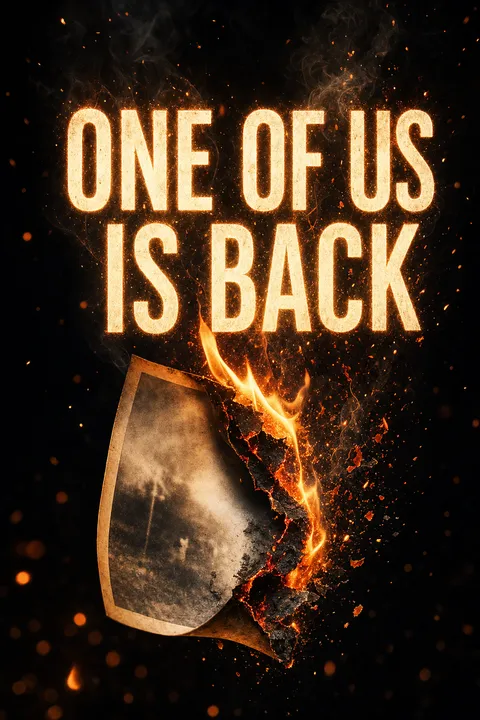
One of Us Is Back is the third book in the Bayview series, concluding the trilogy. Most reviewers found it an enjoyable and nostalgic read, praising the character development and plot twists. The story brings together characters from the previous books, exploring their relationships and past secrets. Some readers felt it was unnecessary or not as strong as the earlier installments, citing too many characters and a slow start. Overall, fans appreciated the closure provided for beloved characters, though some wished for more romantic moments between certain couples.
People Also Read




Characters
Addy Prentiss
Haunted survivor, ex-girlfriendOnce the insecure beauty-queen princess of Bayview High, Addy has rebuilt herself into a self-aware young woman planning to teach and travel, though she still battles a fight-or-flight reflex that sabotages new romances. Her defining relationship is with Jake4, the ex who framed her and nearly killed her, whose looming release forces her to prove she can keep standing. Warm, socially minded, and fiercely loyal, she organizes gatherings and gathers wounded people close, especially Nate3, whom she regards as a brother, and Knox8, a surrogate younger sibling. Her tentative feelings for Keely open a hesitant new chapter of identity. Psychologically, Addy is a woman reclaiming authorship of her own life from a man who taught her she was never enough.
Phoebe Lawton
Guilt-ridden secret-keeperA Cafe Contigo waitress and rising senior, Phoebe is drowning in a secret about her family that has severed her from everyone she trusts, most painfully Knox8, the boy she loves but refuses to let close. Sharp, self-critical, and prone to spiraling, she narrates her own missteps with brutal honesty even as she keeps lying to protect others. Her father's death years earlier still shapes her, feeding her terror that grief warps children into dangerous adults. Phoebe's arc turns on whether she can trade the corrosive isolation of concealment for the frightening relief of confession. She is a study in how loyalty, misapplied, becomes self-imprisonment, and how speaking a truth can feel more dangerous than any physical threat.
Nate Macauley
Working-class survivor, boyfriendJuggling construction by day and bartending by night, Nate is a former juvenile detainee determined to become worthy of Bronwyn5, the girlfriend he credits with saving him. Guarded and quick to expect the worst, he carries deep class resentment sharpened by watching privileged boys like Jake4 and Reggie21 escape consequences. His refrain, that some things never change, voices a fatalism he is slowly unlearning through his father's20 fragile sobriety and Bronwyn's5 steady faith. Fiercely protective, he keeps a pet bearded dragon named Stan and a soft spot beneath his prickly exterior. Nate embodies the novel's tension between cynicism and hope, a young man teaching himself to believe that effort and love might actually change a rigged game.
Jake Riordan
Charismatic predator, ex-boyfriendHandsome, athletic, and raised on Wellington Avenue privilege, Jake is the reformed-on-camera prisoner whose remorse is a performance masking undimmed rage. Once Bayview's golden boy, he conspired with Simon18 to frame his own friends and later tried to kill Addy1, crimes he reframes as pressure and misunderstanding. Beneath the polish lies a boy shaped by a controlling father17 he idolizes and a mother16 whose secrets threaten his perfect-family fantasy. Jake's entitlement runs so deep that consequences feel to him like injustices done against him. His flashback chapters reveal the frightened, image-obsessed adolescent who learned to make people see only what he wanted. He is the trilogy's enduring emblem of how charm and status can camouflage genuine menace.
Bronwyn Rojas
Principled overachiever, girlfriendHome from Yale and interning toward a legal career, Bronwyn is the group's moral compass and take-charge organizer, incapable of ignoring injustice even when it is inconvenient. Her devotion to Nate3 is unwavering, and her creature-of-habit steadiness (green-apple shampoo, memorized phone numbers) anchors the chaos. Brilliant and occasionally bossy, she channels crises into logic and lists, though beneath the composure lives real fear for the people she loves.
Maeve Rojas
Genius amateur investigatorBronwyn's5 younger sister and a childhood leukemia survivor, Maeve is the Crew's tech savant, catfishing suspects, tracking dark corners of the internet, and insisting that everyone gives themselves away online eventually. Wry and tireless, she resents bicycles and sunlight equally. Devoted to boyfriend Luis9, she pairs gallows humor with fierce competence, becoming the engine that drives the mystery forward through screens and screenshots.
Cooper Clay
Gentle baseball starAn elite pitcher fielding endorsement deals, Cooper is the kindest, most grounded member of the Crew, famous for insisting on integrity before profit. Deeply bonded to boyfriend Kris10 and his grandmother Nonny, he offers Phoebe2 wordless comfort through a junkyard sledgehammer. Calm under pressure yet capable of protective fury, he repeatedly becomes the friend who arrives when it matters most.
Knox Myers
Earnest legal intern, crushWorking at Eli's nonprofit and nursing a patient, unrequited affection for Phoebe2, Knox is thoughtful, self-deprecating, and quietly brave, once having helped save a wedding party from a bomb. His recent glow-up draws new attention he barely notices. Honest to a fault, he pushes Phoebe2 toward truth even when it costs him, embodying steady decency amid deception.
Luis Santos
Loyal cook, comic reliefMaeve's6 devoted boyfriend and a chef at his family's Cafe Contigo, Luis is easygoing warmth personified, quick with a joke and surprisingly enthusiastic about luxury cars and monster trucks. His loathing for former friend Jake4 is one of the few things that pierces his laid-back calm. He arrives, alongside Cooper7, when courage is required.
Kris Becker
Grounded older boyfriendCooper's7 slightly older, supremely supportive boyfriend, Kris pairs elegant sensibility with a sharp protective streak, unleashing rare fury at those who once wounded Cooper7. He appreciates the power of gossip and quietly stitches the group together.
Owen Lawton
Troubled younger brotherPhoebe's2 thirteen-year-old brother, once a sweet boy fascinated by wiring toasters, now sullen, tall overnight, and drawn to dark online videos. Still reeling from their father's death, he carries a heavy burden that his sisters have chosen to shoulder for him. His transformation frightens Phoebe2, who fears grief is hardening him into someone dangerous.
Emma Lawton
Estranged older sisterPhoebe's2 studious older sister, whose bright college plans collapsed under public suspicion, driving her across the country to an aunt's home. Depressed and guilt-ridden, she resists returning to Bayview. Emma shares a secret pact with Phoebe2 and struggles between self-punishment and finally doing the right thing.
Vanessa Merriman
Reformed mean girlA former high school tormentor who once sided with Jake4 and bullied Addy1 and Cooper7, Vanessa reappears aimless and lonely, haunting the country club and awkwardly seeking redemption. Aggressively social and self-aware about her past cruelty, she proves unexpectedly useful, coaxing confidences from adults. Her arc tests the novel's belief that people can genuinely change.
Evie
Cheerful cafe waitressThe relentlessly upbeat new waitress at Cafe Contigo whose positivity Phoebe2 both envies and leans on. Efficient, kind, and always covering others' shifts, she seems to bottle sunshine, an easy presence at the edges of the Crew's summer as trouble gathers around them.
Gavin
Affable bartender coworkerNate's3 friendly bartending colleague at the country club, a personable college student who claims to know half of Bayview through the trade. Generous with tips and quick to smooth over conflict, he preaches patience and karma, positioning himself as an easygoing ally to those around him.
Katherine Riordan
Jake's grieving motherJake's4 mother, a once-formidable advertising executive now adrift after leaving her career, Katherine drinks chardonnay at the country club and tips Nate3 generously, apologizing for her son's4 crimes with sincere anguish. Trapped in a marriage to the domineering Scott17, she carries private heartbreak and guilt over having enabled Jake4. She is a woman hollowed by choices and losses she cannot undo.
Scott Riordan
Domineering, entitled fatherJake's4 father, a wealthy attorney who still fancies himself king of Bayview, insisting his son4 got a raw deal while tipping poorly and ignoring the people he harmed. Controlling and image-obsessed, he shaped Jake's4 worst instincts and looms over the family's buried past.
Simon Kelleher
Dead architect of secretsThe malicious gossip-app creator whose death launched the trilogy, seen here in flashback as a bored, spiteful teen who hoarded other people's secrets as power. His conviction that hidden truths must eventually surface reaches long past his death to reshape the present.
Marshall Whitfield
Disgraced Juror XThe juror whose leaked trial texts handed Jake4 a new trial, now doxxed, jobless, and living on his cousin's couch. Self-pitying and manipulative, he lurks around Jake's4 targets claiming to help, angling for Addy1 to publicly rehabilitate his ruined name.
Patrick Macauley
Nate's recovering fatherNate's3 father, four months sober and working maintenance at Bayview High, anxiously trying to rebuild trust with the son3 he failed during years of alcoholism. Prone to foggy forgetfulness and nervous rubber-band snapping, he represents the fragile, genuine possibility of change.
Reggie Crawley
Unrepentant creep housemateNate's3 obnoxious roommate, notorious for secretly filming girls and publicly defending Jake4. Stuck in a style and personality rut at nineteen, he wears a beloved leather-cord necklace from his mother, a small detail hinting at a person who might have grown.
Plot Devices
Practice Makes Perfect
Coded serial message on victimsA phrase written in bold marker across the arms of successive victims, beginning with Practice on Phoebe2 and Makes on Reggie21, echoed by a hacked billboard promising a new game with only one rule. The mounting words function as a public countdown, forcing the Crew to decode a pattern rather than track a random attacker. Its meaning finally cracks when Vanessa13 recognizes it as an old SAT-tutoring advertising slogan created by the agency where Jake's4 mother16 worked, linking the violence to a specific buried history. The device transforms bodies into billboards, converting murder into authored performance and rewarding careful readers who count toward the unwritten final word, Perfect, that everyone dreads.
Simon's Posthumous Letter
Truth delivered from the graveA letter Simon Kelleher18 arranged to be mailed on a future date, arriving years after his death, exposing what he secretly witnessed six years earlier at the Riordan home. It supplies the motive engine for the entire plot, handing a grieving avenger the buried truth about a supposed accidental drowning. The device fulfills Simon's18 defining creed, that secrets are power and hidden truths inevitably surface, allowing him to reach out and detonate consequences long after he is gone. It also anchors the trilogy's meditation on how one manipulator's information hoard keeps poisoning the town, converting knowledge into a delayed weapon that reshapes the present.
The Hidden Burner Phone
Secret lifeline in captivityAn old, forgotten spare phone Nate3 cleaned out of his closet and Addy1 pocketed as a party prop. When Addy1 is bound in a trunk, the device becomes her only means of summoning rescue. Its earlier introduction as a throwaway curiosity sets up a satisfying payoff, and its use depends on another planted detail, Bronwyn's5 insistence that everyone memorize her phone number after she once lost hers in a river. Together these seemingly minor beats converge into a survival mechanism, illustrating McManus's careful setup-and-payoff craft and rewarding readers who noticed the offhand moments earlier in the story.
Catfishing and Fake Profiles
Identity concealment and detectionFabricated online personas operate in both directions throughout the book. Maeve6 invents Tami Lee Spencer to infiltrate a free-speech app and probe suspects, while a key suspect14 maintains a counterfeit Oxford student account by stealing another woman's photographs. The device dramatizes how digital identity is performance, easily forged and eventually exposed, and it embodies Maeve's6 maxim that everyone reveals themselves online sooner or later. The cracked alibi, discovered when the real photo owner comments on a stolen image, becomes the pivot that narrows suspicion, showing how surveillance culture cuts both ways: the same tools that hide a predator also, with patience, unmask one.
The Vine Wallpaper Memory
Fragmented clue to a locationA single sensory image, green wallpaper patterned with twisting vines, is all Phoebe2 retains from her drugged captivity. The fragment drives the investigation, first misleading the Crew toward Jake's4 Ramona vacation house, whose pattern proves wrong, then delivering the decisive recognition when Phoebe2 finally sees the true room. The device models how trauma preserves isolated details while erasing narrative, and its false lead disciplines the mystery by refusing the obvious answer. When the wallpaper reappears in an unexpected apartment, the repressed memory snaps into meaning, converting a haunting dream fragment into the concrete key that unlocks the killer's identity.
FAQ
Synopsis & Basic Details
What is One of Us Is Back about?
- Return to Bayview's Turmoil: The story revisits the characters from the previous books, the Bayview Crew, as they navigate life after high school, only for their fragile peace to be shattered by the potential release of Jake Riordan, the antagonist from the original murder mystery.
- A New, Deadly Game: Mysterious messages and unsettling events begin to target the Crew and other Bayview residents, echoing the past deadly games but with a new, unknown puppet master and rules centered around the phrase "Practice Makes Perfect."
- Unraveling Hidden Truths: As friends go missing and secrets from years past resurface, the Crew must race against time to uncover the identity and motives of the new threat, leading them to a shocking truth connected to a long-buried crime and the toxic legacy of Bayview itself.
Why should I read One of Us Is Back?
- Deep Dive into Character Trauma: The book offers a compelling exploration of how the original Bayview characters cope with and are still affected by the traumas they endured, providing satisfying emotional arcs and growth for beloved figures like Addy, Nate, and Bronwyn.
- Intricate Mystery with High Stakes: McManus weaves a complex plot filled with subtle clues, red herrings, and escalating danger, keeping readers guessing until the final confrontation and raising the stakes beyond simple reputation to life and death.
- Themes of Justice and Forgiveness: The narrative delves into the nature of revenge, accountability, and the possibility of breaking cycles of harm, prompting reflection on who deserves forgiveness and whether true justice can ever be achieved in a town defined by secrets and privilege.
What is the background of One of Us Is Back?
- Continuation of Bayview Mysteries: This novel is the third in the "One of Us Is Lying" series, building directly on the events and character histories established in "One of Us Is Lying" and "One of Us Is Next," particularly the murder of Simon Kelleher and the subsequent Truth or Dare game.
- Focus on Lingering Trauma: The story is set in Bayview, California, years after the initial events, exploring the long-term psychological impact on the teenage survivors and how their past continues to haunt their present as they transition into young adulthood.
- Exploration of Media and Public Perception: The narrative touches on themes of media sensationalism, public opinion, and the difficulty of escaping notoriety, particularly through Jake Riordan's "rehabilitation tour" and the town's reaction to the new mysteries.
What are the most memorable quotes in One of Us Is Back?
- "Some things never change.": This recurring phrase, often thought by Nate Macauley, encapsulates the initial feeling of despair and cynicism that the characters experience when past traumas and toxic patterns seem to repeat themselves in Bayview, highlighting their struggle against the town's ingrained darkness.
- "Practice makes perfect.": Initially appearing as a cryptic message written on Phoebe's arm, this phrase evolves into the chilling calling card and twisted motto of the new antagonist, symbolizing their methodical approach to revenge and their connection to a past advertising campaign.
- "I'm going to marry you, Bronwyn Rojas. Just so you know.": Nate's heartfelt declaration to Bronwyn signifies a pivotal moment of hope and commitment amidst the chaos, demonstrating his personal growth and the enduring strength of their relationship as they look towards a future beyond Bayview's influence.
What writing style, narrative choices, and literary techniques does Karen M. McManus use?
- Multiple First-Person Perspectives: The novel employs shifting first-person points of view, primarily from Addy, Nate, and Phoebe, allowing readers intimate access to their thoughts, fears, and evolving understanding of events, building suspense and highlighting individual psychological journeys.
- Suspenseful Pacing and Foreshadowing: McManus maintains a brisk pace, using short chapters and cliffhangers to propel the plot. Subtle details, recurring motifs (like the "game" or specific locations), and seemingly innocuous dialogue are strategically placed to foreshadow future reveals and mislead the reader.
- Dialogue-Driven Characterization: Characters' personalities, relationships, and emotional states are often revealed through realistic and sharp dialogue, including internal monologues that expose their unspoken anxieties and motivations beneath their outward actions.
Hidden Details & Subtle Connections
What are some minor details that add significant meaning?
- The Red Convertible's Recurring Appearance: The beat-up red convertible with tinted windows is subtly noted multiple times (outside Eli's office, near Nate's house) before its driver is revealed to be Marshall Whitfield (Juror X), initially suggesting a potential stalker or connection to Jake, but ultimately highlighting Marshall's misguided attempt at atonement and his role in witnessing Phoebe's kidnapping.
- Reggie's Missing Necklace: The detail that Reggie Crawley's signature leather-cord necklace was missing after his death and his parents were looking for it becomes a crucial clue, as Phoebe later finds it in Owen's backpack, directly linking Owen to Reggie's disappearance and revealing Sana's role in planting the evidence.
- The Guppies Candy Factory Location: The abandoned Guppies candy factory is mentioned early as a local landmark ("The sweetest treat you'll ever meet") before becoming the site of the final confrontation where Gavin attacks Nate and kidnaps Addy, turning a nostalgic detail into a chilling backdrop for violence.
What are some subtle foreshadowing and callbacks?
- Jake's "Practice" Remark to Phoebe: When Phoebe mentions needing to learn how to change a tire, Jake's seemingly innocuous reply, "It's easy, Phoebe. All you need is practice," chillingly foreshadows the word "Practice" being written on her arm after she is drugged and abandoned, directly linking him to her kidnapping in the Crew's initial theories.
- The "Some Things Never Change" Motif: Nate's internal refrain "Some things never change" is a constant callback to the perceived cycles of toxicity and injustice in Bayview, but the narrative subtly contrasts this with moments of genuine positive change and growth in characters like Nate himself, his father, and Addy, suggesting hope is possible.
- Nate's Old Burner Phone: The seemingly random detail of Nate finding his old burner phone while cleaning his closet becomes vital when Addy takes it and later uses it to send a distress signal to Bronwyn after being kidnapped by Gavin, turning a nostalgic callback into a life-saving tool.
What are some unexpected character connections?
- Vanessa Merriman and Ms. Riordan: Vanessa, previously known for bullying Addy and Cooper, is revealed to be seeking mentorship from Ms. Riordan at the country club, hoping for help with her advertising career, an unexpected connection that leads to Vanessa uncovering the crucial detail about Ms. Riordan's affair with Alexander Alton.
- Marshall Whitfield (Juror X) as a Witness: The man responsible for Jake's potential new trial, Marshall Whitfield, unexpectedly reappears not as a villain but as a paranoid witness who saw Phoebe being kidnapped and, fearing the police, went to Cooper for help, highlighting the complex and often self-serving motivations of Bayview residents.
- Gavin Barrett and Chelsea Alton's Past: The seemingly friendly barback Gavin is revealed to be Chelsea Alton's devoted boyfriend and accomplice, having moved to Bayview with her from Ohio, a hidden connection that explains his presence at the country club and his involvement in the escalating "game."
Who are the most significant supporting characters?
- Chelsea Alton (Evie): Operating under the alias "Evie," Chelsea is the primary antagonist, a seemingly cheerful coworker at Café Contigo who is secretly orchestrating the "Practice Makes Perfect" revenge campaign to expose the truth about her father's death and punish those she deems responsible, including Jake.
- Gavin Barrett: Chelsea's boyfriend and accomplice, Gavin's devotion to her leads him to participate in her dangerous plan, culminating in violence against Nate and the kidnapping of Addy, highlighting the destructive potential of blind loyalty and desperation.
- Marshall Whitfield (Juror X): The juror whose misconduct led to Jake's new trial, Marshall's reappearance as a paranoid figure trying to atone by watching the Crew inadvertently makes him a key witness to Phoebe's kidnapping, demonstrating how even flawed individuals can play unexpected roles in uncovering the truth.
Psychological, Emotional, & Relational Analysis
What are some unspoken motivations of the characters?
- Scott Riordan's Need for Control: Scott Riordan's intense focus on reputation and control is an unspoken motivation behind his likely murder of Alexander Alton; he couldn't tolerate the threat to his perfect family image and the potential loss of the son he believed was his, viewing Alexander as a rival to be eliminated.
- Ms. Riordan's Fear and Denial: Ms. Riordan's continued presence at the country club and her interactions with Nate suggest an unspoken motivation driven by fear and denial regarding her husband's actions and Jake's true nature; she seems trapped by circumstance and perhaps afraid of the consequences if she were to fully confront the truth or leave Scott.
- Phoebe's Need for Absolution: Beyond protecting Owen, Phoebe's intense guilt and isolation stem from an unspoken need for personal absolution for her role in covering up Owen's actions, driving her to seek understanding of Jake's capacity for change and later to confess to Knox, hoping to alleviate her burden.
What psychological complexities do the characters exhibit?
- Addy's Trauma Response and Growth: Addy exhibits complex trauma responses, including a tendency to push people away ("lizard brain") and a deep-seated fear of Jake, but her journey shows resilience as she actively confronts her fears, reclaims her agency, and learns to form healthier relationships, culminating in her ability to forgive her mother and embrace new connections.
- Nate's Self-Worth and Protective Instincts: Nate's psychological complexity lies in his struggle with self-worth, feeling he doesn't deserve good things like Bronwyn or his father's inheritance, which fuels his protective instincts and tendency towards self-sabotage, but his relationship with Bronwyn and his father's actions help him begin to accept his own value.
- Chelsea Alton's Grief and Vengeance: Chelsea's character is a study in the psychological impact of unresolved grief and trauma, manifesting as a calm, calculated drive for vengeance that masks deep pain and a sense of being overlooked, leading her to believe that extreme measures are necessary to achieve justice and honor her father's memory.
What are the major emotional turning points?
- Addy's Confrontation with Jake at Bayview High: Seeing Jake again at the baseball field is a major emotional turning point for Addy, forcing her to confront her deepest fears head-on and realize that she is stronger than his presence, marking a significant step in reclaiming her power over the trauma he inflicted.
- Phoebe's Confession to Knox: Phoebe's decision to finally tell Knox the truth about Owen's involvement in the Truth or Dare game is a crucial emotional turning point, breaking her self-imposed isolation and allowing her to share her burden, even as it strains their relationship and forces her to confront the potential consequences.
- Nate's Conversation with His Father: The moment Nate's father reveals the inheritance and expresses pride in Nate's accomplishments is a profound emotional turning point, challenging Nate's long-held belief that his parents were incapable of change and demonstrating that healing and connection are possible even after years of dysfunction.
How do relationship dynamics evolve?
- Addy and Her Mother's Reconciliation: The strained and often critical relationship between Addy and her mother evolves significantly as Mom expresses remorse for her past parenting mistakes and validates Addy's strength, leading to a moment of genuine connection and mutual appreciation.
- Phoebe and Emma's Shared Burden and Honesty: Phoebe and Emma's relationship, initially bonded by a shared secret and guilt over Owen, shifts towards brutal honesty and mutual support after Phoebe confronts Emma about her absence and they jointly confront Owen, laying the groundwork for healthier communication and shared healing.
- Nate and Bronwyn's Deepening Commitment: Nate and Bronwyn's relationship, already strong, deepens through shared trauma and Nate's vulnerability, culminating in his heartfelt proposal, symbolizing their unwavering commitment to each other and their future despite the chaos of their past and present.
Interpretation & Debate
Which parts of the story remain ambiguous or open-ended?
- Chelsea and Gavin's Future: The story leaves the ultimate fate and whereabouts of Chelsea Alton and Gavin Barrett ambiguous, having them escape after Jake's death, prompting debate about whether they will be caught, continue their revenge, or simply disappear, leaving their justice incomplete.
- Scott Riordan's Legal Consequences: While strongly implied to be involved in Alexander Alton's death, the extent of Scott Riordan's legal repercussions remains open-ended, dependent on the police investigation into Simon's letter and whether enough evidence can be gathered years later, reflecting the difficulty of achieving justice for old crimes.
- The Long-Term Impact on Owen: Although the narrative suggests the community is leaning towards compassion for Owen Lawton, the long-term psychological and social impact of his involvement in the Truth or Dare game and the public exposure remains uncertain, leaving his future healing and acceptance open to interpretation.
What are some debatable, controversial scenes or moments in One of Us Is Back?
- Chelsea Alton's Actions as Justified Revenge: Chelsea's decision to kidnap and kill Jake Riordan is highly debatable; while fueled by genuine grief and a desire for justice for her father and others harmed by Jake, her methods are undeniably criminal and violent, sparking controversy over whether her actions are understandable or monstrous.
- The Community's Response to Owen Lawton: The portrayal of Bayview leaning towards compassion for Owen after his role in the deadly game is revealed could be seen as controversial, raising questions about whether he is being let off too easily due to his age and the town's weariness, or if it represents a genuine attempt to break the cycle of blame.
- Marshall Whitfield's Role in Phoebe's Rescue: Marshall Whitfield's decision to go to Cooper after witnessing Phoebe's kidnapping, rather than the police, is debatable; while it leads to her rescue, it stems from his own self-preservation and paranoia, complicating his portrayal and prompting questions about his true motivations.
One of Us Is Back Ending Explained: How It Ends & What It Means
- The Climax and Resolution: The climax occurs at the Alton family's abandoned house, where Chelsea Alton, aided by Gavin, has kidnapped Jake Riordan and Phoebe Lawton. Addy and Nate track them there, but Nate is incapacitated by Gavin. Addy is also captured but manages to use Nate's old burner phone to alert Bronwyn. Chelsea reveals the truth from Simon's posthumous letter: Jake's father, Scott Riordan, killed Alexander Alton, and Jake finished the job. Chelsea then shoots and kills Jake. Cooper and Luis arrive, alerted by Marshall Whitfield and Maeve, rescuing Addy and Phoebe while Chelsea and Gavin escape.
- Aftermath and Consequences: In the aftermath, Jake's death and the truth about Alexander Alton's murder become public knowledge, largely through Chelsea's left-behind notes and media coverage. Owen Lawton's involvement in the earlier Truth or Dare game is also revealed, but the community and legal system show leniency. Nate recovers from his injury. Chelsea and Gavin remain at large.
- Meaning and Themes: The ending signifies a complex resolution to Bayview's cycles of secrets and revenge. Jake's death, while violent, is presented as Chelsea's twisted form of justice, highlighting the failure of the legal system to hold him accountable. The exposure of Scott Riordan's crime underscores the deep-seated corruption and privilege in Bayview. The leniency shown to Owen suggests a potential shift towards compassion and breaking the cycle of blaming young people. For the core Crew, the ending is about healing, acceptance, and moving forward; Addy symbolically burns a photo of Jake, embracing her future and her role as an aunt, while Nate proposes to Bronwyn, solidifying their commitment to a life together beyond Bayview's shadows. The final scenes emphasize chosen family, resilience, and the possibility of new beginnings despite past trauma.
About the Author
Other books by Karen M. McManus





Download PDF
Download EPUB
.epub digital book format is ideal for reading ebooks on phones, tablets, and e-readers.








































