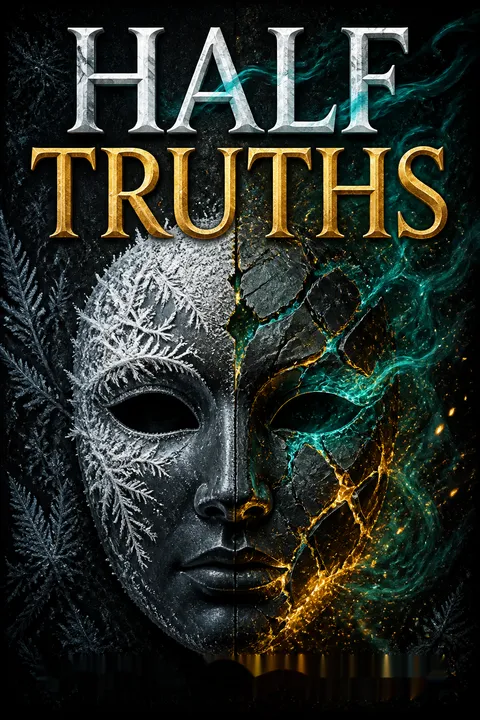

Plot Summary
Trapped in a Fain Body
Gabriel Boutin, once a powerful Black Witch with the rare Gift of transformation, is now trapped in the powerless body of a fain—a non-witch. Haunted by the murder of his beloved sister Michèle and the collapse of his family, Gabriel's sense of self is fractured. He's lost not only his magic but also the physical and emotional markers of his witch identity. Desperate to reclaim his true nature, he seeks out Mercury, a formidable Black Witch, in the hope that she can restore him. Gabriel's journey is not just about regaining power, but about rediscovering who he is without the magic that once defined him. The pain of loss, guilt, and alienation colors his every interaction, setting the stage for a story of survival, compromise, and the search for belonging.
Bargaining with Mercury
Mercury, enigmatic and chilling, agrees to help Gabriel—but only if he proves useful to her. Their negotiation is tense, with Gabriel offering a worthless amulet and Mercury demanding something far more valuable: information. She tasks Gabriel with infiltrating the Half Blood community in Geneva, led by the fair-minded Mathieu. The power dynamic is clear—Mercury holds all the cards, and Gabriel is forced to accept her terms. The exchange is transactional, but layered with psychological manipulation. Mercury's cold pragmatism and Gabriel's desperation create a fraught alliance, one that will test Gabriel's morals and loyalties. The cost of regaining his witchhood is set: betrayal and espionage.
Spying Among Half Bloods
Gabriel, under the alias "Luc," begins to integrate with the Half Bloods, a marginalized group of witches and fains. He crafts a cover story, feigning kinship and vulnerability to gain their trust. Mathieu, the leader, is cautious but welcoming, and Gabriel is drawn into their world. The act of spying weighs heavily on Gabriel, especially as he forms genuine connections. The Half Bloods, ignored by both Black and White Witches, are a community built on resilience and mutual support. Gabriel's duplicity gnaws at him, blurring the line between duty and friendship. The emotional stakes rise as he realizes that every step toward regaining his Gift is a step away from his own integrity.
Climbing and Connection
Seeking escape from the moral quagmire, Gabriel turns to climbing—a physical challenge that offers clarity and peace. Here, he meets Jon, an English climber whose open-hearted admiration and gentle humor provide a rare sense of normalcy. Their budding friendship, tinged with romantic possibility, is a respite from the world of witches and betrayal. Jon's fascination with Gabriel is immediate and sincere, and their shared moments on the cliffs are filled with unspoken longing and mutual respect. For Gabriel, Jon represents a life he could have—one grounded in the mundane, free from the burdens of magic and violence.
The Gathering's Tensions
At a Half Blood gathering, Gabriel witnesses the complex dynamics of this marginalized group. The event is both celebration and survival, a chance to feel the faint pulse of magic even in his fain body. Oscar, a divisive figure, stirs up old resentments and new suspicions. Rumors swirl about Nathan, the legendary half Black, half White Witch, whose escape from the White Witch Council has destabilized the magical world. The gathering is a microcosm of the larger conflicts—prejudice, power struggles, and the longing for acceptance. Gabriel's role as a spy becomes more precarious as he navigates shifting allegiances and the ever-present threat of exposure.
Oscar's Betrayal
Oscar, sensing Gabriel's true identity, attempts to blackmail him, threatening to reveal his secrets unless paid off. The confrontation is tense, with Gabriel forced to promise an amulet he doesn't intend to deliver. Rose, Mercury's cunning assistant, intervenes, using her Gift to manipulate Oscar and lead him into Mercury's trap. The episode exposes the dangers of divided loyalties and the ease with which trust can be weaponized. Gabriel's complicity in Oscar's downfall marks a turning point—he is no longer just a victim of circumstance, but an active participant in Mercury's ruthless games.
Rose's Dance of Deceit
Rose, with her mercurial moods and ambiguous motives, dances through Gabriel's life—sometimes ally, sometimes threat. She is both a confidante and a handler, ensuring Gabriel remains useful to Mercury. Her Gift, the ability to become a forgettable mist, mirrors her psychological slipperiness. Rose's affection for Gabriel is genuine but self-serving; she sees in him both a kindred spirit and a tool. Their interactions are a dance of intimacy and distance, trust and manipulation. Rose embodies the seductive danger of the witch world—beautiful, unpredictable, and always one step ahead.
Mercury's Ruthless Justice
When Oscar is delivered to Mercury, she enacts a chilling punishment for his theft—a magical frost that nearly kills him, leaving him maimed and broken. The scene is a stark display of Mercury's power and her utter lack of compassion. Gabriel, complicit in Oscar's fate, is left shaken and guilt-ridden. The episode crystallizes the moral cost of survival in the witch world. Mercy is a luxury, and justice is meted out with cruelty. Gabriel's revulsion at Mercury's methods deepens his internal conflict, forcing him to question whether regaining his Gift is worth the price.
Guilt and Belonging
Gabriel is tormented by guilt over Oscar's suffering and his own role in it. He feels alienated from both the Half Bloods he has betrayed and the Black Witches who use him. Rose tries to reassure him, insisting that he belongs with them, but Gabriel is unconvinced. The longing for his lost family—especially his sister Michèle—intensifies his sense of isolation. He is caught between worlds, unable to fully belong to any. The emotional toll of his choices becomes unbearable, and he begins to question whether he can ever find peace or redemption.
Jon's Hopeful Heart
Jon, oblivious to the magical conflicts swirling around Gabriel, offers him a vision of a different life—one filled with adventure, companionship, and love. Their night together is tender and transformative, a brief respite from the darkness. Jon's plans for the future include Gabriel, and for a moment, Gabriel allows himself to hope. The possibility of leaving the witch world behind and embracing a fain's life is tantalizing. But the past is not so easily escaped, and Gabriel's obligations to Mercury threaten to destroy this fragile happiness.
The Choice to Leave
Determined to reclaim agency over his life, Gabriel decides to leave Mercury and the world of witches behind. He returns to the apartment to collect his things, only to be confronted by Rose, who warns him that Mercury will not let him go so easily. The threat is implicit—loyalty is demanded, not given. Gabriel is forced to accompany Rose back to Mercury, where he is given a new, more dangerous task. The illusion of choice is shattered; Gabriel is trapped by forces more powerful and ruthless than himself.
Mercury's New Task
Mercury reveals that Nathan, the legendary half Black, half White Witch, is coming to Geneva seeking her help. She orders Gabriel to meet Nathan, gain his trust, and report back. The assignment is perilous—Nathan is both a potential ally and a threat, and the political stakes are high. Mercury's excitement is palpable; she sees in Nathan an opportunity for power and leverage. Gabriel, exhausted and disillusioned, resolves to complete the task and then disappear, hoping to finally escape the cycle of manipulation and violence.
Meeting the Mythical Nathan
At Geneva Airport, Gabriel waits anxiously for Nathan's arrival. When he finally sees him, Nathan is not the arrogant figure he expected, but a wary, haunted boy—clearly marked by trauma and desperation. Gabriel feels an immediate, inexplicable connection to Nathan, sensing the depth of his suffering and the magnitude of his power. The meeting is charged with possibility and danger; Gabriel must decide whether to follow Mercury's orders or forge a new path. The encounter marks a turning point, as Gabriel recognizes in Nathan a kindred spirit—another soul caught between worlds.
A Brief Love Lost
Gabriel returns to Jon, only to end their budding relationship. He confesses to having killed someone, a truth that silences Jon's hope and marks the end of their brief, beautiful connection. Gabriel's sense of unworthiness and the weight of his past make it impossible for him to accept love or happiness. The moment is quietly devastating—a reminder that the scars of violence and betrayal cannot be easily healed. Jon is left heartbroken, and Gabriel is once again alone, burdened by regret and longing.
The Pull of Witchhood
Back in Geneva, Gabriel watches over the sleeping Nathan, feeling an overwhelming sense of connection and responsibility. Despite his desire to leave the witch world behind, he is drawn inexorably back into its orbit. Nathan's presence awakens something in Gabriel—a sense of purpose, perhaps even hope. The possibility of redemption, of forging a new identity out of pain and loss, flickers on the horizon. Gabriel's journey is far from over; the struggle for belonging, power, and self-acceptance continues.
Nathan's Desperate Escape
In a parallel narrative, Nathan endures brutal captivity at the hands of the White Witches. Shackled, caged, and subjected to constant surveillance, he survives through cunning and resilience. Nathan's internal monologue reveals a mind sharpened by suffering, always searching for the smallest opportunity to escape. The routine of captivity is both a torment and a training ground, teaching him patience, discipline, and the art of waiting for the perfect moment. Nathan's determination to survive and reclaim his agency is unbreakable.
The Hunter's Pursuit
Nathan's escape is fraught with peril. The White Witches, relentless and sadistic, employ magical devices to keep him imprisoned. The threat of the Hunters—merciless enforcers of the Council—looms ever closer. Nathan's every move is shadowed by the risk of discovery and violent retribution. The tension is palpable, as Nathan navigates a landscape of danger, betrayal, and fleeting hope. The pursuit is both physical and psychological, a test of endurance and willpower.
Blood and Freedom
Nathan's escape culminates in a moment of violence and horror—he awakens, covered in blood, beside the corpse of a Hunter. The trauma of the act, and the uncertainty of what happened, haunt him. Yet, in this moment of terror and confusion, Nathan achieves a measure of freedom. The cost is high, and the future is uncertain, but the possibility of a new life—one defined by choice rather than captivity—emerges. The story ends on a note of ambiguity and hope, as both Gabriel and Nathan stand on the threshold of transformation.
Analysis
A meditation on identity, power, and the cost of survival"Half Truths" is a dark, emotionally charged exploration of what it means to belong in a world that punishes difference and rewards betrayal. Through Gabriel's journey, Sally Green interrogates the price of survival—how much of oneself must be sacrificed to regain lost power, and whether redemption is possible after complicity in violence. The novella's nuanced characters, moral ambiguity, and psychological depth elevate it beyond a simple fantasy tale. It is a story about the longing for connection, the trauma of loss, and the resilience required to carve out a place in a hostile world. The interplay between the magical and the mundane underscores the universality of its themes: the search for identity, the pain of exclusion, and the hope for transformation. In the end, "Half Truths" suggests that freedom is never given—it must be fought for, and its cost is always personal.
Review Summary
Half Truths receives mixed reviews, with an average rating of 3.71 out of 5. Many readers found it enjoyable but too short, wanting more depth and character development, especially for Gabriel. Some appreciated Gabriel's perspective and his first encounter with Nathan, while others felt the novella lacked substance. Fans of the series generally liked the additional insight into Gabriel's character, but several reviewers expressed disappointment with the limited new information provided. The story's brevity and abrupt ending were common criticisms, though some readers still found it entertaining.
Characters
Gabriel Boutin
Gabriel is the emotional core of the story—a Black Witch with the rare Gift of transformation, now trapped in a powerless fain body. His journey is one of profound loss: of family, identity, and magic. Gabriel's psyche is marked by guilt over his sister's death, the violence he's committed, and the betrayals he's been forced into. He is fiercely loyal to those he loves, but circumstances have made him a survivor, willing to compromise his morals for a chance at restoration. Gabriel's relationships—with Mercury, Rose, the Half Bloods, and Jon—reveal his longing for connection and belonging. His development is a painful negotiation between self-preservation and integrity, culminating in a reluctant acceptance of his own complexity and the possibility of change.
Mercury
Mercury is a formidable Black Witch whose Gift is controlling the weather—a fitting metaphor for her icy, unpredictable temperament. She is a master of psychological manipulation, using fear, reward, and punishment to control those around her. Mercury's motivations are pragmatic and self-serving; she values loyalty only insofar as it serves her interests. Her relationship with Gabriel is transactional, tinged with a cold fascination. Mercury's capacity for cruelty is matched only by her strategic brilliance. She embodies the dangers of unchecked power and the moral compromises required to survive in a world defined by violence and betrayal.
Rose
Rose, a White Witch with the Gift of becoming a forgettable mist, is Mercury's assistant and enforcer. She is both charming and dangerous, her affection for Gabriel genuine but always tinged with self-interest. Rose's psychological complexity lies in her ability to shift between roles—confidante, manipulator, seductress—depending on what the situation demands. She is deeply loyal to Mercury but also craves connection and excitement. Rose's interactions with Gabriel are a dance of intimacy and distance, revealing her own longing for belonging and her willingness to do whatever it takes to survive.
Jon
Jon is an English climber, a fain with no knowledge of the magical world. His open-heartedness, humor, and vulnerability make him a stark contrast to the witches' world of secrets and violence. Jon's attraction to Gabriel is immediate and sincere, offering a glimpse of a life defined by love and adventure rather than fear and betrayal. Psychologically, Jon represents innocence and the possibility of redemption—a life Gabriel desperately wants but feels unworthy of. His heartbreak at Gabriel's departure is quietly devastating, underscoring the emotional cost of the witch world's brutality.
Mathieu
Mathieu, half fain and half Black Witch, leads the Half Blood community in Geneva with fairness and pragmatism. He is respected for his integrity and commitment to his people, who exist on the margins of both witch and fain societies. Mathieu's relationship with Gabriel is built on cautious trust, which is ultimately betrayed. Psychologically, Mathieu embodies the struggle for dignity and belonging in a world that devalues hybridity. His disappointment in Gabriel is tempered by understanding, reflecting his capacity for empathy and forgiveness.
Oscar
Oscar, a half fain, half Black Witch, is a divisive figure among the Half Bloods—vain, selfish, and prone to troublemaking. His attempt to blackmail Gabriel and his theft from Mercury set in motion a chain of events that lead to his brutal punishment. Oscar's psychological profile is shaped by resentment and a desperate need for validation. He is both a victim of the witch world's hierarchies and an agent of his own downfall. Oscar's fate serves as a cautionary tale about the dangers of ambition and the cost of betrayal.
Nathan
Nathan, the legendary half Black, half White Witch, is both a symbol and a survivor. Hunted, imprisoned, and tortured by the White Witches, Nathan's psyche is marked by trauma, resilience, and a fierce will to live. His escape is a testament to his cunning and determination. Nathan's presence in the story destabilizes the magical world, offering the possibility of change and the threat of chaos. Psychologically, Nathan represents the struggle for agency in a world that seeks to define and control him. His connection with Gabriel hints at the transformative power of empathy and solidarity.
Michèle
Michèle, Gabriel's sister, shares his Gift of transformation and is the emotional touchstone of his life. Her murder by White Witches is the central trauma that haunts Gabriel, shaping his every decision. Michèle's memory is both a source of strength and a wound that never heals. She represents innocence lost and the enduring power of love. Psychologically, Michèle is the ideal Gabriel strives to honor, even as he is forced to compromise his values.
Nesbitt
Nesbitt, half fain and half Black Witch, is a skilled tracker and fighter, working for the enigmatic van Dal. His pursuit of Gabriel is driven by motives that are never fully revealed, adding an element of suspense and danger. Nesbitt's psychological profile is defined by loyalty, pragmatism, and a willingness to do whatever is necessary to achieve his goals. He is both a potential ally and a threat, embodying the moral ambiguity of the witch world.
The White Witch Council
The Council, led by Soul O'Brien, is the embodiment of institutional violence and prejudice. Their imprisonment and torture of Nathan, and their broader campaign against Black Witches, create the backdrop of fear and conflict that drives the narrative. Psychologically, the Council represents the dangers of dogma, the dehumanization of the Other, and the corrosive effects of power.
Plot Devices
Dual Narratives and Shifting Perspectives
The novella employs a dual narrative structure, alternating between Gabriel's first-person account and glimpses into Nathan's harrowing escape. This device allows for a rich exploration of parallel journeys—both characters are outsiders, hunted and haunted, seeking freedom and identity. The shifting perspectives create dramatic irony and emotional resonance, as the reader is privy to secrets and motivations unknown to the characters themselves. The structure also mirrors the thematic focus on hybridity, liminality, and the search for belonging.
Magical Realism and World-Building
The story is grounded in a meticulously constructed magical world, with its own rules, hierarchies, and rituals. Devices such as the "cut" (magical portal), the Giving (coming-of-age ceremony), and individual Gifts provide both narrative propulsion and symbolic depth. The interplay between the magical and the mundane—climbing, coffee shops, parties—heightens the sense of alienation and longing experienced by the characters.
Moral Ambiguity and Psychological Realism
The plot is driven by choices that are never clear-cut; every act of survival comes at a cost. Characters are forced to navigate shifting allegiances, betrayals, and compromises. The psychological realism of their internal struggles—guilt, longing, self-doubt—grounds the fantastical elements in emotional truth. Foreshadowing is used to build tension, particularly in the lead-up to Oscar's punishment and Nathan's escape.
Symbolism of Transformation and Escape
Transformation—both literal (Gabriel's Gift) and metaphorical (the quest for identity)—is a central motif. The act of climbing, the use of disguises, and the repeated attempts to escape captivity all serve as symbols of the characters' desire for freedom and self-actualization. The story's structure, moving from entrapment to the possibility of liberation, reinforces this theme.
The Half Bad Trilogy Series
About the Author
Other books by Sally Green
Download PDF
Download EPUB
.epub digital book format is ideal for reading ebooks on phones, tablets, and e-readers.








































