
Plot Summary
Birth Amidst Blood and Flowers
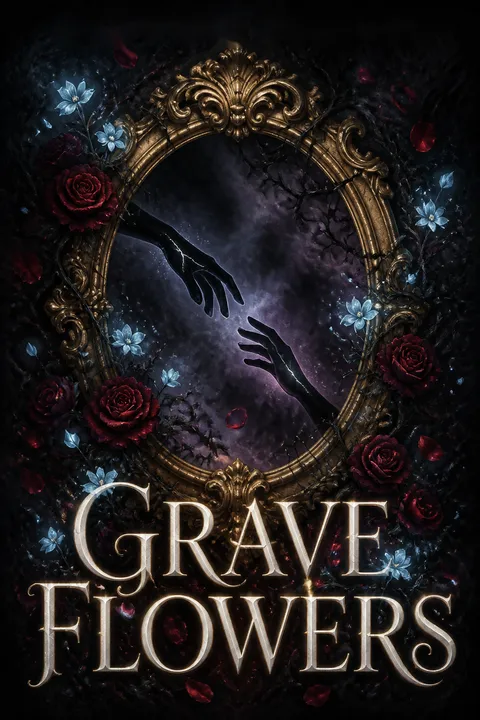
In the shadowed, decaying palace of Radix, twin girls are born to King Rychard and Queen Agathine—conjoined at the hand, female, and frail, shattering the king's hopes for a strong male heir. The king, ever ruthless, has them surgically separated and murders the physician to keep their secret. The girls, Inessa and Madalina, are marked from birth by scars and by the grave flowers that infest the palace, their lives already entwined with violence, secrecy, and the supernatural. The king's marriage to a Fely woman, a minority, has already set the family apart, and the twins' birth cements their outsider status. The grave flowers, both beautiful and deadly, become a symbol of Radix's curse and the girls' fate.
Sisters Severed, Fates Entwined
Growing up, Inessa and Madalina are raised in a court that values cunning and cruelty. Their father pits them against each other, promising the throne to the strongest. Inessa, ambitious and ruthless, embraces the role of heir, while Madalina, gentle and introspective, finds solace in the palace's dangerous grave flower garden. Their bond, once close, is eroded by competition and manipulation. The scars on their hands are a constant reminder of their shared beginning and inevitable divergence. When Inessa is chosen to marry Prince Aeric of Acus, a political move that will make Radix a vassal state, Madalina is left as the reluctant heir, her life upended by her sister's departure and the kingdom's looming loss of independence.
A Kingdom's Ruthless Bargain
King Rychard's decision to marry Inessa to Prince Aeric is met with outrage in Radix. The alliance will strip the kingdom of its autonomy, but beneath the surface, a darker plot unfolds. Inessa's true mission is to assassinate Aeric on behalf of his uncle, Prince Lambert, and mother, Queen Gertrude, who seek to seize the Acusan throne. When Inessa is suddenly found dead—poisoned during a garden tour in Acus—Madalina is thrust into her sister's place. She must pose as Inessa, marry Aeric, and complete the assassination, all while navigating a court rife with enemies, secrets, and the ever-present threat of betrayal.
Ghosts in the Garden
Madalina's world is shattered when Inessa's ghost appears, trapped in Bide—the liminal realm for souls with unfinished business. Inessa begs Madalina to avenge her murder and set her free. The grave flowers, sensitive to the supernatural, react violently to the ghost's presence. Madalina, wracked with guilt over her mother's death and her own perceived weakness, is forced to confront her family's legacy of violence. The garden becomes both sanctuary and prison, a place where the past refuses to stay buried and the future is fraught with peril.
The Poisoned Betrothal
Disguised as her sister, Madalina travels to Acus, a kingdom of sunlight and spectacle, to wed Aeric and fulfill the assassination plot. She is greeted by Queen Gertrude and Prince Lambert, her supposed allies, but quickly realizes she is a pawn in a game she barely understands. The Acusan court is dazzling but treacherous, its beauty masking rot and ambition. Madalina must navigate new customs, suspicious courtiers, and the ever-watchful eyes of her enemies, all while searching for clues to Inessa's murder and her own survival.
Masks, Mirrors, and Murder
At her first court party, Madalina is both spectacle and outsider. She dances with Yorick, the enigmatic jester, drawing attention and suspicion. Aeric, the prince she is meant to kill, is a study in contradictions—charming, reckless, and possibly more cunning than he appears. Madalina's attempts to gather information are complicated by the court's shifting allegiances and the presence of ghosts, both literal and metaphorical. The palace is a labyrinth of secrets, and every mirror reflects a different danger.
The Assassin Bride's Arrival
As Madalina settles into her new role, she is torn between duty and desire. Her growing feelings for Aeric threaten to undermine her mission, while Inessa's ghost grows more desperate. The grave flowers she brought from Radix struggle to survive in Acus, mirroring Madalina's own sense of displacement. She uncovers a network of spies, including a Radixan posing as a gardener, and realizes that Inessa's death was no accident. The lines between friend and foe blur, and Madalina must decide who she can trust—even as she questions her own resolve.
Court of Shadows and Sunlight
Madalina's investigation leads her to the Oscura, Acus's underworld, where she encounters Aeric in disguise. Their encounter is fraught with tension and unspoken truths. Back at the palace, Madalina is drawn into the king-in-council, witnessing the power struggles that threaten to consume the kingdom. Queen Gertrude and Prince Lambert maneuver for control, while Aeric's true intentions remain elusive. The play Aeric is writing becomes a focal point, its meaning and purpose shrouded in mystery. Madalina's own identity—Radixan, Fely, Sinet, sister, assassin—fractures under the weight of expectation.
The Dead Demand Vengeance
Haunted by Inessa and the jester Yorick, Madalina is forced to confront the consequences of her actions. She kills the Radixan spy in the garden, feeding his body to the starvelings, and frames Yorick to protect herself. The guilt of betrayal and the burden of her family's sins threaten to overwhelm her. Inessa's ghost grows more monstrous, her hunger and rage intensifying. Madalina's only solace is in the grave flowers, whose wildness and resilience mirror her own struggle to survive in a world that demands her destruction.
Secrets Beneath Silk and Stone
Desperate for answers, Madalina seeks out Alifair, her mother's twin brother and a Fely monasticte in holy isolation. Through him, she learns of the ancestral guide to the grave flowers, a book of lost invocations and dangerous experiments. Inessa, it turns out, has been corresponding with Alifair, seeking the means to cheat death and return from Bide. The immortalities, a rare grave flower, hold the key to resurrection—but at a terrible cost. Madalina realizes that her family's legacy is one of sacrifice, secrecy, and the relentless pursuit of power, no matter the price.
The Play's Deadly Stage
On the night of the wedding, Aeric's play becomes a weapon. Before the entire court, he exposes Prince Lambert's role in King Claudius's murder, using the grave flower mad minds to force a confession. In the chaos, Aeric kills Lambert, but is himself wounded and poisoned. Madalina's father, King Rychard, attempts to seize power, but is killed in turn—first by Madalina's hand, then by the intervention of Yorick, revealed to be her half-brother and a ghost seeking vengeance. The stage becomes a battleground, and the line between performance and reality dissolves.
Betrayal, Blood, and Bide
Inessa, resurrected through her own cunning and the power of the immortalities, reveals her ultimate plan: to switch places with Madalina and rule both Acus and Radix. She has orchestrated every death, every betrayal, to clear her path to the throne. Madalina, wounded and desperate, severs the bond between them by cutting away her scar, breaking the magic that made her Inessa's portrait. In a final struggle, Yorick's ghost intervenes, killing Inessa's body and freeing Madalina from her sister's grasp. Inessa's spirit, at last, lets go, and Madalina is left alone on the stage, surrounded by the dead.
The Roundabout Invocation
As Aeric lies dying, Madalina invokes the roundabout, a Fely spell of resurrection, using the immortalities that have grown from her own wound. The grave flowers respond, opening a portal between worlds. Inessa's spirit is drawn away, and Yorick, too, departs, his vengeance complete. Madalina, now queen of both Radix and Acus, is left to reckon with the cost of survival and the scars—visible and invisible—that will never fully heal. The grave flowers, once instruments of torture and power, become symbols of memory, loss, and the possibility of new beginnings.
Sins of the Fathers
In the aftermath, Madalina reflects on the sins of her family and the cycles of betrayal that have shaped her life. She is haunted by the ghosts of those she has lost—Inessa, Yorick, her parents—but also by the hope that she might break the pattern. Aeric, miraculously revived, offers her a chance at love and partnership, vowing to build a new world together. Madalina, scarred but unbroken, accepts her role as queen, determined to rule with compassion and to honor the memory of those who came before her, even as she forges her own path.
The Twin's Final Dance
The story ends with Madalina mourning her sister, acknowledging both the love and the pain that defined their bond. Inessa, once her rival and tormentor, is remembered with tenderness and regret. Madalina's journey—from frightened girl to assassin bride to sovereign queen—is marked by loss, but also by resilience and the capacity to choose a different future. The grave flowers, ever-present, are both grave and grace, reminders of the beauty and danger of life. Madalina, at last, lets go of the past, stepping into the light of a new day.
A Queen Alone
Now queen of Radix and consort of Acus, Madalina faces the daunting task of rebuilding her kingdoms and healing old wounds. She is surrounded by reminders of those she has lost, but also by the promise of a new beginning with Aeric. The grave flowers are returned to Radix, and Madalina vows to rule with the wisdom and compassion her family lacked. The scars on her hand are a testament to all she has endured, and to the choices she has made. Alone, but not defeated, Madalina embraces her future, determined to break the cycle of violence and to honor the memory of her sister.
Love, Loss, and Letting Go
In the final moments, Madalina reflects on the meaning of love, loss, and forgiveness. She remembers Inessa not as a rival, but as a sister—flawed, fierce, and beloved. The ghosts that haunted her are gone, but their lessons remain. Madalina's journey is one of transformation, from pawn to queen, from victim to survivor. The grave flowers, once symbols of death and vengeance, become emblems of hope and renewal. As she steps into her new life, Madalina carries with her the memory of all she has lost—and the promise of all she might yet become.
Analysis
Autumn Krause's Grave Flowers is a lush, gothic fantasy that fuses the psychological complexity of Shakespearean tragedy with the political intrigue of Tudor history. At its core, the novel is a meditation on the inheritance of trauma, the corrosive effects of power, and the possibility of redemption. Through the intertwined fates of Madalina and Inessa, Krause explores the ways in which family, history, and magic shape identity—and the cost of breaking free from their grip. The grave flowers, with their beauty and danger, are a potent metaphor for the legacy of violence and the resilience required to survive it. The story's supernatural elements—ghosts, resurrection, the liminal realm of Bide—underscore the persistence of the past and the difficulty of letting go. Yet, for all its darkness, Grave Flowers is ultimately a story of hope: Madalina's journey from pawn to queen, from victim to survivor, is a testament to the power of compassion, forgiveness, and the refusal to perpetuate cycles of harm. The novel asks whether it is possible to choose a different future, to love in the face of betrayal, and to find beauty amid the ruins. In the end, it is not the grave flowers' magic, but Madalina's humanity, that offers the promise of renewal.
Review Summary
People Also Read










Characters
Madalina Sinet
Madalina is the story's heart—a princess marked by trauma, self-doubt, and a longing for peace. Born conjoined to her twin, she is forever defined by both connection and separation. Unlike her ruthless family, Madalina is introspective, gentle, and drawn to the wild grave flowers that symbolize her own untamable spirit. Forced to impersonate her dead sister and become an assassin bride, she is torn between duty and conscience, love and vengeance. Her psychological journey is one of self-acceptance and resilience: she must confront her guilt over her mother's death, her fear of inheriting her family's cruelty, and her capacity for both violence and mercy. By the end, Madalina emerges as a queen who chooses compassion over power, breaking the cycle of betrayal that has haunted her bloodline.
Inessa Sinet
Inessa is Madalina's mirror and foil—brilliant, beautiful, and consumed by ambition. Raised to compete for the throne, she internalizes her father's ruthlessness and becomes the favored heir. Her death, and subsequent haunting, drive the plot: trapped in Bide, she manipulates Madalina to avenge her and ultimately orchestrates a plan to return to life by switching places with her sister. Inessa's psychological complexity lies in her inability to love or be loved, her hunger for power masking a profound emptiness. She is both victim and villain, her actions shaped by a sense of exclusion and a desperate need for control. In the end, her final act is one of letting go, allowing Madalina to live and rule, and finding a measure of peace in surrender.
King Rychard Sinet
King Rychard is the embodiment of Radix's brutality—a man who values strength above all, even at the cost of his children's happiness. His marriage to a Fely woman is both an act of defiance and a source of ongoing tension. He pits his daughters against each other, fostering rivalry and resentment. Rychard's psychological makeup is defined by paranoia, violence, and a need for control. He is haunted by his own failures and the fear of losing power. In the end, he is betrayed by his own children, dying as he lived—alone, unloved, and consumed by the consequences of his choices.
Aeric Capelian
Aeric is a study in contradictions: outwardly charming and reckless, inwardly haunted and strategic. Raised in a monasterium, he is an outsider in his own court, struggling to assert his authority amid plots and betrayals. His relationship with Madalina is fraught with suspicion, attraction, and the possibility of redemption. Aeric's psychological journey mirrors Madalina's: he must learn to trust, to forgive, and to choose love over vengeance. His play, a weaponized performance, becomes the means by which he claims his throne and exposes his enemies. In the end, Aeric's willingness to forgive Madalina and build a new world with her is a testament to his growth and resilience.
Queen Gertrude
Queen Gertrude is a survivor—her family executed, her children lost, her power constantly threatened. She is both victim and perpetrator, complicit in plots to seize the throne and eliminate rivals. Her psychological complexity lies in her capacity for both love and cruelty, her grief for her lost children fueling her ambition. Gertrude's death, brought about by Inessa's supernatural terror, is a turning point in the story, exposing the fragility of power and the cost of vengeance.
Prince Lambert
Prince Lambert is the classic usurper—charming, cunning, and willing to do whatever it takes to seize the throne. His alliance with Queen Gertrude and the Sinets sets the plot in motion, but his own ambitions ultimately lead to his downfall. Lambert's psychological profile is defined by insecurity and a need for validation, his actions driven by both love and resentment. His death at Aeric's hand is both justice and tragedy, a reminder of the destructive power of unchecked ambition.
Yorick
Yorick is a liminal figure—part confidant, part avenger, part lost soul. As the court jester, he observes and comments on the action, but his true significance is revealed only late in the story: he is Madalina's half-brother, the bastard son of King Rychard and a woman he abandoned. Murdered by Rychard, Yorick returns as a ghost, befriending Madalina and ultimately helping her defeat Inessa. Yorick's psychological journey is one of longing for recognition and justice, his humor masking deep wounds. His final act is one of friendship and forgiveness, allowing Madalina to live free of her father's shadow.
Alifair Tachibana
Alifair is Madalina's uncle and her mother's twin, a Fely monasticte living in holy isolation. He is the keeper of the ancestral guide to the grave flowers, a book of forbidden knowledge. Alifair's role is that of mentor and truth-teller, helping Madalina uncover the secrets of her family's past and the magic that binds them. His psychological complexity lies in his sense of duty, his grief for his lost sister, and his commitment to protecting his people. Alifair represents the possibility of reconciliation and the importance of memory.
Queen Agathine
Though dead before the story begins, Queen Agathine's presence is felt throughout. Her marriage to King Rychard is an act of courage and sacrifice, intended to protect her people and her daughters. Agathine's psychological legacy is one of endurance and quiet rebellion, her love for her children shaping their destinies even in her absence. She is the story's moral center, a reminder of the cost of survival and the power of love.
The Grave Flowers
The grave flowers are more than mere plants—they are characters in their own right, embodying the beauty and danger of Radix. Each type reflects a different aspect of the human psyche: the starvelings' hunger, the beauties' vanity, the lost souls' confusion, the immortalities' longing for life. The flowers are both weapons and witnesses, their magic shaping the story's events and the characters' fates. They are a constant reminder of the thin line between life and death, love and loss, hope and despair.
Plot Devices
Grave Flowers and Invocations
The grave flowers are the story's central plot device—a magical, sentient flora unique to Radix, each with its own deadly properties and symbolic meaning. Their invocations, lost to time and rediscovered through forbidden texts, allow characters to manipulate life, death, and memory. The flowers serve as both literal weapons (used for torture, assassination, and resurrection) and metaphors for the characters' psychological states: their hunger, beauty, confusion, and longing. The roundabout invocation, in particular, becomes the key to resurrection and the final confrontation between Madalina and Inessa. The flowers' uncontrollable nature mirrors the chaos and violence of the Sinet family, while their resilience offers hope for renewal.
Doppelgängers and Identity
The motif of twins, doubles, and mirrors runs throughout the narrative, exploring questions of identity, agency, and selfhood. Madalina and Inessa are both halves of a whole, their rivalry and bond driving the plot. The fear of being replaced—by a sister, a ghost, a political rival—haunts every character. Disguises, mistaken identities, and supernatural switching (via the immortalities and roundabout) create suspense and uncertainty. The story interrogates what it means to be oneself in a world that demands masks and performance, and whether true connection is possible amid so much deception.
Ghosts and Bide
The supernatural is ever-present: Inessa's ghost, Yorick's haunting, and the liminal realm of Bide (where souls with unfinished business are trapped) blur the line between life and death. Ghosts are both literal and psychological, representing guilt, trauma, and the inability to let go. The roundabout invocation and the resurrection magic of the immortalities allow for the return of the dead—but at a terrible price. The story uses haunting as a metaphor for the past's grip on the present, and the necessity of forgiveness and release.
The Play Within the Play
Aeric's play is a classic Shakespearean device—a performance that exposes hidden crimes and forces confessions. The play's shifting script, costumes, and staging mirror the characters' own acts of deception and self-revelation. The theater becomes a battleground, where truth and lies are performed for an audience that is both complicit and powerless. The play's climax, in which mad minds force Prince Lambert to confess, is both catharsis and tragedy, rewriting the destinies of all involved.
Poison, Betrayal, and the Cycle of Violence
Poison—literal and metaphorical—runs through the story: in the rings worn by the Sinet sisters, in the moonrain that kills kings, in the betrayals that destroy families. The cycle of violence, passed from parent to child, is both a curse and a choice. The story's structure, with its echoes of Hamlet and Tudor history, uses foreshadowing, parallelism, and dramatic irony to heighten tension and underscore the inevitability of tragedy. Yet, in the end, the possibility of breaking the cycle—through love, forgiveness, and the refusal to kill—offers a glimmer of hope.
Download PDF
Download EPUB
.epub digital book format is ideal for reading ebooks on phones, tablets, and e-readers.








































