
Key Takeaways
1. The Old Testament God: A Character of Extreme Negative Traits
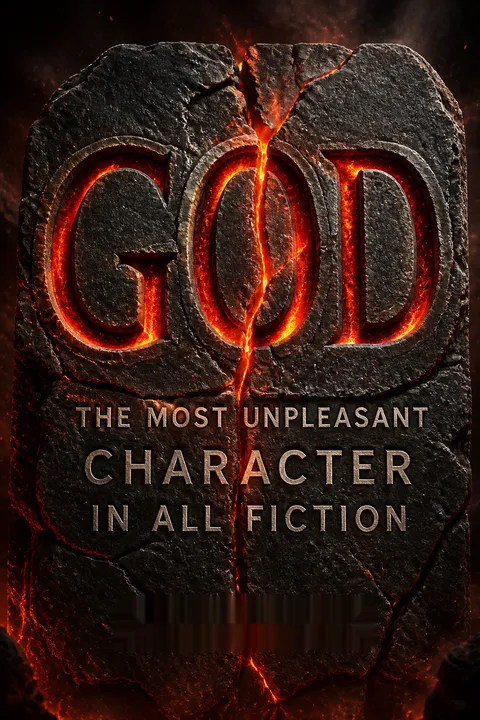
The God of the Old Testament is arguably the most unpleasant character in all fiction: jealous and proud of it; a petty, unjust, unforgiving control freak; a vindictive, bloodthirsty ethnic cleanser; a misogynistic, homophobic, racist, infanticidal, genocidal, filicidal, pestilential, megalomaniacal, sadomasochistic, capriciously malevolent bully.
Challenging perceptions. This book, inspired by Richard Dawkins's provocative statement, aims to expose the true nature of the Old Testament God by letting the biblical text speak for itself. Many believers, including former President Obama, often portray God as loving and peaceful, despite numerous passages depicting him as a source of terror and violence. The author, a former evangelical preacher, argues that a direct reading of the Bible reveals a deity far removed from modern ethical standards.
Biblical literacy. The core argument is that a superficial understanding of the Bible, often filtered through theological interpretations, obscures God's actual character. The book encourages readers to engage directly with the text, comparing its contents with common perceptions of a benevolent deity. This approach highlights the stark contrast between the "Good Book's" narrative and the idealized image of God held by many adherents.
Historical precedent. The idea that the Old Testament God is a "terrific character" (meaning terrifying) is not new, with figures like Thomas Jefferson, Thomas Paine, and Mark Twain having reached similar conclusions. These historical critics, like the author, found the biblical God to be cruel, vindictive, and unjust, suggesting that the text has long been a source of moral discomfort for those who read it critically.
2. Divine Jealousy and Petty Control Define God's Character
For you shall worship no other god, because the Lord, whose name is Jealous, is a jealous God.
Jealousy as core identity. The Old Testament God explicitly identifies himself as "Jealous," making this trait central to his being. This jealousy is not a protective love but a possessive, insecure demand for exclusive devotion, often leading to severe punishment for any perceived infidelity, such as worshipping other deities. The first two of the Ten Commandments directly reflect this possessiveness, focusing on God's demand for singular attention rather than universal moral principles.
Micromanaging deity. Beyond grand pronouncements, God exhibits an astonishing level of pettiness, dictating minute details of daily life that have no moral bearing. Examples include:
- Executing a man for gathering sticks on the Sabbath (Numbers 15:32–36).
- Prohibiting specific haircuts, tattoos, and clothing blends (Leviticus 19:27-28, 19:19).
- Detailed instructions for building a tent (the Tabernacle) spanning six chapters in Exodus, including precise measurements and materials for candlesticks and draperies.
Arbitrary rules. These seemingly trivial rules, often enforced with extreme penalties, underscore God's nature as a control freak more concerned with arbitrary obedience than genuine ethical conduct. The author highlights that such meticulous demands, coupled with severe consequences, reveal a deity whose authority is based on fear and absolute power rather than earned respect or rational guidance.
3. God's Justice is Arbitrary, Unforgiving, and Cruel
I the Lord your God am a jealous God, punishing children for the iniquity of parents, to the third and fourth generation of those who reject me.
Generational punishment. God's concept of justice is fundamentally unjust by modern standards, frequently punishing innocent descendants for the sins of their ancestors. This principle, explicitly stated in the Ten Commandments, contradicts later biblical verses that advocate individual accountability, highlighting inconsistencies within the divine law. For instance, God killed over 50,000 men for merely looking into the Ark of the Covenant (1 Samuel 6:19).
Unforgiving nature. Forgiveness from the Old Testament God is rarely freely given; it typically requires a blood sacrifice or severe appeasement. The concept of "original sin," where all humanity is cursed for Adam and Eve's disobedience, exemplifies an infinite lack of forgiveness. God's refusal to pardon, even when people cry out to him, is a recurring theme, as seen in Jeremiah 11:14: "Therefore do not pray for this people... for I will not listen when they call to me in the time of their trouble."
Cruel and disproportionate. God's punishments are often disproportionate to the perceived offense, demonstrating a cruel and pitiless disposition. He threatens to "laugh at your calamity" (Proverbs 1:24–30) and explicitly states, "I will not pity, nor spare, nor have mercy, but destroy them" (Jeremiah 13:14). This divine cruelty extends to making "bad laws" to "horrify" his people (Ezekiel 20:25–26), further cementing his image as an arbitrary and merciless judge.
4. Violence and Annihilation: God's Preferred Methods of Control
You shall drive out all the inhabitants of the land from before you … for I have given you the land to possess.
Genocidal commands. The Old Testament God frequently commands and executes mass annihilation, making him the most genocidal character in fiction. The most prominent example is Noah's flood, which wiped out an estimated 20 million people, 99.99996% of humanity, along with all land animals. This act, driven by divine regret, sets a precedent for subsequent commands to "utterly destroy" entire nations, including men, women, and children, to clear the Promised Land for the Israelites.
Infanticide and filicide. God's violence extends to the deliberate killing of children, including infants and fetuses. Psalm 137:8–9 celebrates the act of "dashing little ones against the rock," a command consistent with God's character. The story of Jephthah's daughter, sacrificed as a burnt offering to fulfill a vow to God, and Abraham's willingness to sacrifice Isaac, highlight a divine expectation of child sacrifice. God also ordered the killing of all firstborn Egyptian children (Exodus 12:29) and threatened to make parents eat their own children (Leviticus 26:29).
Bloodthirsty nature. The Lord Jealous is depicted as a "man of war" whose sword is "sated with blood" (Isaiah 34:6). He demands constant animal sacrifices, with the shedding of blood being the primary means of atonement. Beyond ritualistic slaughter, God's bloodthirstiness manifests in direct commands for mass killings, such as the massacre of 15,000 Israelites for disagreeing with Moses (Numbers 16:42–49), and the slaughter of 70,000 for David's census (2 Samuel 24:15).
5. Misogyny and Homophobia: Embedded in Divine Law
Your desire shall be for your husband, and he shall rule over you.
Subjugation of women. The Old Testament God is profoundly misogynistic, establishing a patriarchal order where women are considered property and subordinate to men. The curse on Eve, stating "your desire shall be for your husband, and he shall rule over you" (Genesis 3:16), serves as the theological justification for female inferiority. This is reflected in laws where:
- Women are valued less than men monetarily (Leviticus 27:1–7).
- A mother is "unclean" for twice as long after giving birth to a daughter (Leviticus 12:1–5).
- A woman's vow can be annulled by her father or husband (Numbers 30:1–8).
- Rape of a virgin requires the perpetrator to pay her father and marry her (Deuteronomy 22:28–29).
Homophobic decrees. God explicitly condemns male homosexuality as an "abomination" and prescribes the death penalty for it (Leviticus 18:22, 20:13). The story of Sodom, where Lot offers his virgin daughters to a mob demanding to "know" two male angels, is interpreted as a divine condemnation of homosexual acts, leading to the city's fiery destruction. The absence of explicit condemnation for lesbianism is attributed to the male-centric authorship, where female sexuality outside of procreation was largely irrelevant to patriarchal concerns.
Sexual violence as punishment. God is portrayed as using sexual violence as a form of punishment. He threatens to "lift up your skirts over your face" and expose the "secret parts" of the "daughters of Zion" for their haughtiness (Isaiah 3:16–17, Jeremiah 13:22, 26). This imagery, often euphemistically translated, reveals a deity who not only condones but actively participates in demeaning and sexually assaulting women as a means of control and retribution.
6. Racism and Slavery: God's Endorsement of Discrimination
The Lord your God has chosen you out of all the peoples on earth to be his people, his treasured possession.
Chosen people doctrine. The concept of the "chosen people" inherently promotes a form of divine racism, elevating Israelites above "all the peoples on earth." This belief justifies the systematic discrimination and annihilation of other ethnic and national groups. God's anger is frequently kindled by interracial marriages, as seen in the story of Phinehas, who was rewarded with a "perpetual priesthood" for murdering an Israelite man and his Midianite wife with a spear (Numbers 25:8–13).
Sanctioned slavery. The Old Testament God not only permits but actively regulates slavery, distinguishing between the treatment of Hebrew and foreign slaves. The Ten Commandments themselves acknowledge slaves as property, making it a sin to covet them but not to own them. Laws dictate that:
- Foreigners can be bought as slaves for life and bequeathed as inherited property (Leviticus 25:44–46).
- Hebrew slaves serve for six years, but their wives and children remain the master's property unless the slave chooses lifelong servitude (Exodus 21:2–11).
- Masters are not punished if a slave dies after a day or two of beating, "since the slave is their property" (Exodus 21:20–21).
Ethnic cleansing and curses. God commands the Israelites to "utterly destroy" and "show no mercy" to the nations inhabiting the Promised Land (Deuteronomy 7:1–2), effectively endorsing ethnic cleansing. The curse on Canaan, a descendant of Noah, to be a "servant of servants" (Genesis 9:24–27), has been historically interpreted to justify the enslavement of certain races. This divine sanction of racial and ethnic discrimination fuels hatred and conflict, as exemplified by the ongoing tensions between Jews and Arabs, stemming from the biblical narrative of Ishmael.
7. Megalomaniacal and Sadomasochistic: God's Self-Serving Cruelty
So I will display my greatness and my holiness and make myself known in the eyes of many nations. Then they shall know that I am the Lord.
Obsession with glory. The Old Testament God is profoundly megalomaniacal, constantly demanding praise and recognition for his power and greatness. He orchestrates grand, often violent, displays not for the benefit of humanity, but "to show you my power, so that my name may be declared throughout all the earth" (Exodus 9:16). This self-aggrandizement is evident in his boastful proclamations:
- "There is no god beside me" (Deuteronomy 32:39).
- "I will magnify myself, and sanctify myself; and I will be known in the eyes of many nations" (Ezekiel 38:23).
- He hardens Pharaoh's heart to prolong suffering, explicitly stating it's "in order that I may show these signs of mine among them" (Exodus 10:1–2).
Sadomasochistic pleasure. God derives pleasure from inflicting suffering and demanding fear, a clear sadomasochistic trait. He is portrayed as a husband to Israel, and his punishments are often described in terms of an abusive relationship. He "wounds, but he binds up; he strikes, but his hands heal" (Job 5:17–18), implying he causes pain only to then claim credit for alleviating it.
Demands for fear. God explicitly desires his people to "fear him" (Deuteronomy 6:15), equating fear with love and obedience. This is not respectful awe but terror, as seen in passages like Isaiah 2:19, where people hide "for fear of the Lord, and for the glory of his majesty." This dynamic of inflicting pain and demanding fearful devotion highlights a deeply disturbed and self-serving character, where human suffering is a tool for divine validation.
8. Capricious Malevolence: God's Unjustified Harm
He still persists in his integrity, although you incited me against him, to destroy him for no reason.
Destruction for no reason. The Book of Job reveals God's capriciously malevolent nature, as he explicitly admits to destroying Job's blameless family and prosperity "for no reason" (Job 2:3). This act of immense suffering is initiated on a bet with Satan, demonstrating a callous disregard for human life and well-being. Job himself acknowledges that God "crushes me with a tempest, and multiplies my wounds without cause" (Job 9:17).
Manipulation and deception. God actively manipulates events and deceives individuals for his own inscrutable purposes. In the story of Samson, God orchestrates a bizarre charade involving a lion, bees, and a riddle, all as a "pretext to act against the Philistines" (Judges 14:4). This divine manipulation leads to Samson killing innocent men to pay off a gambling debt, highlighting God's willingness to cause harm through deceit and indirect means.
Creator of evil. The Old Testament explicitly states that God creates evil: "I form the light, and create darkness: I make peace, and create evil: I the Lord do all these things" (Isaiah 45:7, KJV). This admission, regardless of whether "evil" is translated as "calamity" or "woe," confirms God's direct responsibility for suffering and harm. His actions are not always just punishments but often arbitrary acts of power, making him a source of unpredictable and unjustified malevolence.
9. The Bully God: Power Display Through Unnecessary Suffering
“Be still, and know that I am God! I am exalted among the nations, I am exalted in the earth.”
Gratuitous suffering. The plagues of Egypt exemplify God's bullying tactics, where he inflicts unnecessary suffering to demonstrate his power. He deliberately "hardened Pharaoh's heart" (Exodus 10:1–2) to prolong the plagues, ensuring a grander display of his might, even after Pharaoh was willing to let the Israelites go. The first nine plagues were essentially a prolonged show of force, culminating in the infanticidal tenth plague, all for God to "gain glory for myself" (Exodus 14:4).
Demands for submission. God's command to "Be still, and know that I am God!" (Psalm 46:10) is not an invitation to peaceful contemplation but a demand for military surrender and absolute submission. The Hebrew word "rapha" means "be weak," implying a forceful command to cease resistance and acknowledge his overwhelming power. This reflects a deity who asserts dominance through intimidation and violence, rather than through moral authority or earned respect.
Peace through conquest. Even the concept of "peace" (shalom) in the Old Testament is often a form of bullying, achieved through violent conquest and subjugation. When approaching a city, the Israelites were commanded to offer "terms of peace," but if rejected, they were to "put all its males to the sword" and take women, children, and livestock as "booty" (Deuteronomy 20:10–14). This "peace" is not mutual coexistence but pacification through force, demonstrating God's preference for coercive power over genuine harmony.
10. Beyond Dawkins: God's Pyromaniacal, Angry, and Merciless Nature
For a fire is kindled by my anger, and burns to the depths of Sheol.
Pyromaniacal tendencies. The Old Testament God frequently employs fire as a tool of destruction and a means of receiving worship. Beyond the countless "burnt offerings" described as a "pleasing odor" (Leviticus 1:9), God directly uses fire to:
- Consume Nadab and Abihu for offering "strange fire" (Leviticus 10:1–3).
- Burn grumblers in the wilderness (Numbers 11:1–3).
- Destroy cities and lands, turning them into "burning pitch" (Isaiah 34:8–10).
- His throne is described as "like the fiery flame" (Daniel 7:9–10), and his breath as a "stream of brimstone" (Isaiah 30:33).
Uncontrolled anger. Anger is perhaps the most frequently expressed emotion of the Old Testament God, often described as a "fierce wrath" that is "kindled greatly" (Numbers 11:10). This anger is not a measured response but an overwhelming force, portrayed as:
- A "furious whirlwind" (Jeremiah 23:19–20).
- A "fire-breathing dragon" (Psalm 18:7–8).
- A force that "squashes people like grapes" (Isaiah 63:1–6).
This divine rage is often provoked by idolatry or disobedience, leading to widespread destruction and suffering.
Absolute mercilessness. God explicitly states his lack of pity and mercy, particularly towards those who displease him. He commands his people to "show no mercy" to conquered nations (Deuteronomy 7:1–2) and declares, "I will not pity, nor spare, nor have mercy, but destroy them" (Jeremiah 13:14). This mercilessness extends to:
- Threatening to "spread dung on your face" and pull out hair (Malachi 2:2–3, Nehemiah 13:25).
- Ordering the miscarriage of fetuses for unfaithful wives (Numbers 5:11–31).
- Commanding cannibalism, forcing parents to eat their children (Leviticus 26:28–29).
- Sanctioning slavery, where human beings are treated as property (Exodus 21:20–21).
11. Jesus: The Continuation of the Old Testament God
Whoever has seen me has seen the Father.
Identity with Yahweh. The New Testament explicitly states that Jesus is identical to the God of the Old Testament. Jesus himself claims, "The Father and I are one" (John 10:30) and "Before Abraham was, I am" (John 8:58), directly referencing God's self-identification to Moses in Exodus 3:14. This means that all the negative attributes ascribed to the Old Testament God—jealousy, pettiness, injustice, violence, misogyny, homophobia, racism, and more—apply equally to the New Testament Jesus.
Endorsement of Old Testament laws. Jesus frequently quotes and upholds the Old Testament laws, including those that are genocidal and discriminatory. His "greatest commandment" to "love the Lord your God with all your heart" (Matthew 22:37–38) is a direct quote from Deuteronomy 6:4–15, a passage delivered during a pep rally for the invasion and ethnic cleansing of the Promised Land. This demonstrates Jesus's endorsement of the violent and exclusive nature of the Old Testament deity.
Continuity of character. The author argues that the Christian belief in Jesus as the son of God, who is also God, means there is no fundamental shift in divine character between the Old and New Testaments. The "gentle Jesus" narrative is challenged by his own claims of identity with the wrathful, demanding, and often cruel God of Israel. Therefore, to accept Jesus as divine is to accept the full spectrum of the Old Testament God's "unpleasant" traits.
Review Summary
God: The Most Unpleasant Character in All Fiction by Dan Barker systematically catalogs biblical passages illustrating negative characteristics of the Old Testament God, expanding on Richard Dawkins' famous quote. Reviews are polarized: supporters praise it as a well-researched reference exposing biblical contradictions and divine cruelty through extensive scriptural citations. Critics find it monotonous, claiming it's merely a collection of cherry-picked verses lacking interpretation or context. Most agree the book is approximately 90% biblical quotations with minimal commentary, making it repetitive but potentially eye-opening for those unfamiliar with darker biblical content.
People Also Read





Download PDF
Download EPUB
.epub digital book format is ideal for reading ebooks on phones, tablets, and e-readers.








































