
Plot Summary
Return to Human Roots
After years in the fae realm, Talia steps back into the human world, overwhelmed by its sights, sounds, and smells. She's accompanied by Corwin, her soul-twined mate, and a winter fae escort. The mission is personal: to confirm whether her younger brother Jamie, long presumed dead, is alive. The reunion is bittersweet—Jamie bears scars from the fae attack that tore their family apart, and Talia is invisible to him, forced to watch as he's bullied and isolated. The guilt of her absence and the trauma both siblings endured weigh heavily on her. Talia's longing to reconnect is complicated by her deep ties to the fae world and the realization that she can't simply reclaim her old life or rescue Jamie from his pain without upending everything.
Fae Demands and Divides
Back in the border castle, Talia faces the arch-lords of both summer and winter fae. The fae see Jamie as a potential second cure for their dual curses, eager to use him as they have Talia. Talia resists, unwilling to let her brother be torn from his life and subjected to the same exploitation she's endured. The arch-lords' cold pragmatism clashes with Talia's humanity, and even her allies struggle to balance compassion with the desperate need for a cure. The meeting exposes deep-seated prejudices and the transactional way the fae view humans, leaving Talia feeling isolated and forced to defend her brother's autonomy against overwhelming pressure.
Bloodlines and Cures
The fae devise a plan to test Jamie's blood for its potential to cure the Seelie curse, sending Whitt, Talia's Seelie lover and spymaster, to collect a sample in secret. The mission is tense—Uzziah, a winter arch-lord, tries to abduct Jamie outright, but Whitt intervenes, risking political fallout to protect Talia's wishes. The blood is brought back and administered to a group of Seelie volunteers during the full moon. The experiment fails: Jamie's blood has no effect, confirming that Talia's unique power cannot be replicated. Relief and guilt mingle in Talia—her brother is safe from fae machinations, but the fae's dependence on her alone grows ever more precarious.
The Test of Jamie
Talia, desperate to understand Jamie's life, returns to the human world with August and Kesral. She discovers Jamie has built a fragile but real sense of belonging, with friends, a girlfriend, and creative pursuits, but also carries hidden trauma from the fae attack. When Jamie is bullied at school, Talia witnesses his strength as he stands up for himself, refusing to be defined by his scars. Talia realizes Jamie doesn't need rescuing—he's found his own way to heal. She leaves him a magical bracelet as a token of connection, choosing to watch over him from afar rather than disrupt his hard-won stability.
The Gathering of Arch-Lords
The arch-lords, unsettled by Talia's growing influence and the failure to find another cure, propose sending her back to the human world permanently, extracting her healing powers as needed. Their motives are transparent: to reassert fae supremacy and limit Talia's disruptive presence. Talia is torn—her loyalty to her brother and her human roots pull her one way, while her love for her fae mates and sense of responsibility to the cursed fae pull her another. The arch-lords' offer is both a threat and a test, forcing Talia to confront the impossibility of pleasing everyone and the need to choose her own path.
A Cure's Limits
Talia's healing powers are celebrated, but the fae soon realize her cures are temporary. The Unseelie curse returns to its victims after a month, requiring Talia's tears again and again. The burden grows as more fae fall ill, and Talia's life becomes a cycle of urgent summons and emotional exhaustion. The fae's adoration turns to dependence, and Talia is elevated as a near-saintly figure, "the Heart-blessed human." Yet the endless need for her power is unsustainable, and the pressure threatens to consume her. The search for a permanent solution becomes more urgent, but the answer remains elusive.
The Weight of Choice
Torn between her fae lovers, her brother, and the humans trapped in the fae world, Talia is paralyzed by guilt and responsibility. She investigates the plight of human servants in fae domains, discovering widespread exploitation and drug-induced compliance. Her desire to champion their rights adds another layer to her burdens. The fae's expectations, the arch-lords' political games, and her own longing for a place to belong all collide. Talia's mates support her unconditionally, but only she can decide where her duty lies. The realization dawns that no choice will be free of sacrifice, and that true leadership means accepting the cost of her power.
Human Bonds, Fae Loyalties
Talia's relationships deepen as she navigates the complexities of fae society. She earns the trust of her mates—Corwin, Sylas, August, and Whitt—each offering her love, protection, and a sense of home. Together, they build a border castle as a symbol of unity between summer and winter, and Talia becomes a bridge between realms. Her advocacy for humans gains traction, inspiring some fae to reconsider old prejudices. Yet, her growing influence also breeds resentment among the arch-lords, who fear the erosion of their authority. Talia's power is both a blessing and a threat, and she must wield it wisely to avoid becoming a pawn or a tyrant.
The Heart's Blessing
As Talia's healing saves more fae, she is celebrated as the Heart's chosen, a living miracle. Fae from both realms seek her blessing, and her presence becomes a rallying point for peace and cooperation. The border castle is completed, and Talia's mates formalize their union with her in a grand ceremony, crowning her as their equal. The Heart itself seems to approve, its magic pulsing in affirmation. For a moment, Talia basks in acceptance and joy, surrounded by love and respect. Yet, the adulation is double-edged, raising expectations she fears she cannot meet and making her a target for those who resent change.
The Burden of Healing
The endless demands on Talia's healing powers take a toll, physically and emotionally. She is wounded during a Murk attack, and the fae's concern for her well-being is genuine, but their dependence is suffocating. Talia grapples with the knowledge that her power is not a true solution, and that the fae's survival should not rest on her alone. She is haunted by the possibility of failure and the fear that her compassion will be twisted into coercion. The line between selfless service and self-sacrifice blurs, and Talia must confront the limits of her endurance and the need to set boundaries.
The Human Question
Talia turns her attention to the plight of humans in the fae world, uncovering a system of exploitation and erasure. She visits domains where humans are kept as servants, drugged into docility and stripped of agency. Her outrage fuels a campaign for reform, enlisting her mates and sympathetic fae to her cause. The resistance is fierce—tradition and prejudice run deep—but Talia's influence and the example of her own power begin to shift opinions. She realizes that true change will be slow and incremental, but her determination to give voice to the voiceless becomes a central part of her identity and mission.
The Power of Influence
As more fae rally to Talia's side, her influence threatens the established order. She becomes a symbol of hope and a catalyst for rebellion, with fae willing to defy their arch-lords for her sake. The arch-lords' fear of losing control leads to open conflict, as they attempt to destroy the border castle and reassert their dominance. Talia's power is no longer just magical—it is political and social, capable of uniting or dividing the realms. She must navigate the fine line between inspiring positive change and inciting chaos, aware that her every action has far-reaching consequences.
The Threat of Destruction
The winter arch-lords, unable to tolerate Talia's prominence, demand the destruction of the border castle. Their troops surround the structure, and a magical battle looms. Talia refuses to flee, standing as a symbol of what is at stake. The fae's loyalty is tested as many refuse to fight against her, and the threat of civil war hangs in the air. The standoff is broken only when Laoni, the most implacable of the arch-lords, is struck by the curse and forced to seek Talia's healing. Talia's mercy in saving her enemy becomes a turning point, demonstrating the true strength of compassion and shifting the balance of power.
The Murk's Attack
Amidst the political turmoil, the Murk—enemies of both Seelie and Unseelie—launch a magical attack using iron and fire. Talia is wounded defending the fae, and in a moment of crisis, an unknown power erupts from her, killing her attacker with a burst of light. The event unsettles everyone, raising questions about the source and limits of Talia's abilities. The Murk's involvement hints at deeper conspiracies and the possibility that Talia's role in the fae world is part of a larger, more dangerous design. The need for answers becomes urgent as threats multiply from within and without.
The Price of Mercy
When Laoni is cursed, Talia is faced with the ultimate test of her values. She could refuse to heal her enemy, securing her own position and ending the threat to her home. Instead, Talia chooses mercy, healing Laoni despite knowing it may cost her dearly. In a private confrontation, Talia challenges Laoni to recognize her own humanity and the futility of hatred. Laoni, moved by Talia's integrity, calls off the assault on the border castle and acknowledges the need for unity. Talia's act of grace cements her status as a true leader, one who wields power with humility and compassion.
The Crowned Union
With peace restored, Talia and her mates are crowned in a grand ceremony, their union symbolizing the hope for a new era. The Heart itself blesses the event, and fae from both realms join in celebration. Talia's journey from captive to queen is complete, but she remains acutely aware of the responsibilities that come with her crown. She recommits to her mission of healing, advocacy, and bridge-building, determined to use her influence for the good of all. The future is uncertain, but for the first time, Talia feels truly at home—loved, respected, and ready to face whatever comes next.
The Enemy Revealed
As the festivities wind down, Talia is lured away by a mysterious fae and rendered unconscious. She awakens to the revelation that she is to meet the one who "made" her—the architect of her powers and perhaps the true enemy behind the Murk and the curses. The story ends on a cliffhanger, with Talia's fate and the fate of the fae world hanging in the balance. The journey is far from over, and the greatest challenges—and truths—are yet to be revealed.
Analysis
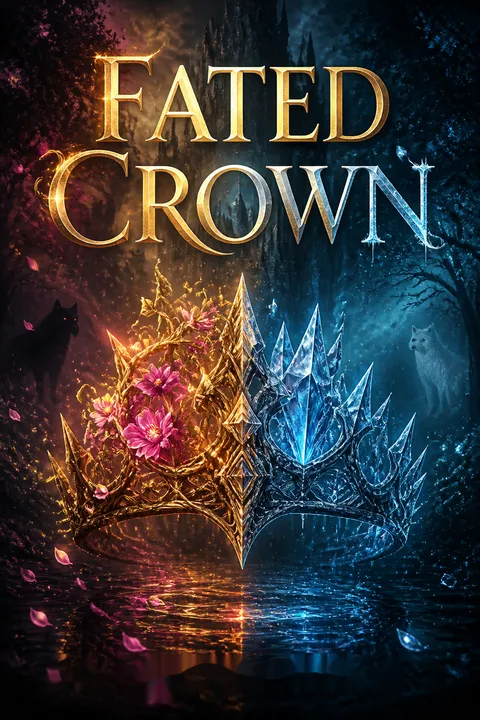
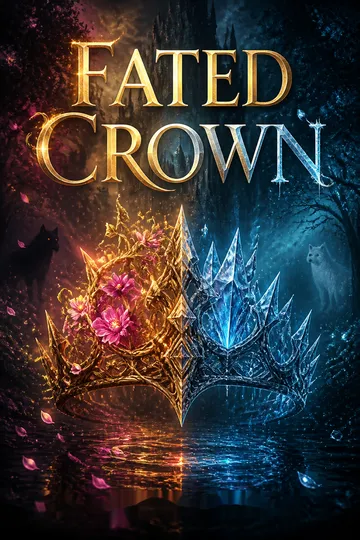
Fated Crown is a story about the struggle for agency, belonging, and justice in a world defined by rigid hierarchies and ancient wounds. Through Talia's journey from powerless captive to crowned leader, the novel explores the costs and responsibilities of power—how compassion can be both a weapon and a vulnerability, and how true change requires both mercy and courage. The reverse harem structure subverts traditional romance tropes, offering a vision of love that is plural, negotiated, and transformative. The political intrigue and magical systems serve as allegories for real-world issues of exploitation, prejudice, and the fight for human rights. At its core, the book asks what it means to be chosen—not by fate or magic, but by one's own choices and the willingness to stand for others. The lessons are clear: healing is never simple or complete, leadership demands sacrifice, and the most lasting crowns are those forged in empathy and shared struggle. As the story ends on a cliffhanger, the reader is left with the sense that the true enemy is not just external evil, but the fear and division within—and that the greatest power lies in the courage to unite, forgive, and hope.
Review Summary
Fated Crown receives mixed reviews, averaging 4.01 stars. Readers consistently praise Eva Chase's compelling cliffhanger endings and the growth of protagonist Talia's character and relationships with her mates. Common criticisms include pacing issues, particularly slow middle sections, and frustration with the arch-lords' treatment of Talia. The subplot involving Talia's brother was seen by many as underdeveloped. Steamy romantic scenes and political intrigue were highlights, while repetitive plot elements drew criticism. Most reviewers remain invested enough to continue the series.
People Also Read

Characters
Talia
Talia is the heart of the story—a human woman stolen by the fae, scarred by trauma, and transformed into a reluctant savior. Her unique blood and tears can cure the curses afflicting both Seelie and Unseelie, making her both revered and exploited. Talia's psychological journey is one of reclaiming agency, navigating guilt over her family's fate, and forging her own identity amidst competing loyalties. Her relationships with her fae mates—Corwin, Sylas, August, and Whitt—anchor her, but she is constantly pulled between personal desires and the needs of others. Talia's compassion is her greatest strength and her greatest vulnerability, as she struggles to balance mercy with self-preservation and to use her growing influence for good without becoming a pawn or a tyrant.
Corwin
Corwin is Talia's primary fae partner, bound to her by a magical soul-twined bond. As an Unseelie arch-lord, he is reserved, principled, and deeply loyal, torn between his duties to his people and his love for Talia. Corwin's internal conflict centers on vulnerability—his devotion to Talia challenges fae norms and exposes him to political risk. He evolves from a cautious leader to a passionate advocate for Talia's rights, willing to defy his peers for her sake. Corwin's journey is one of learning to trust, to share power, and to embrace change, even when it threatens the foundations of his world.
Sylas
Sylas is the summer arch-lord who first rescues Talia from captivity. He is wise, patient, and fiercely protective, with a deep sense of responsibility for his pack and for Talia. Sylas's psychoanalysis reveals a man haunted by past losses and determined to do better, even as he grapples with the limits of his power. His relationship with Talia is built on mutual respect and trust, and he is the first to treat her as an equal. Sylas's willingness to share Talia with his brothers and with Corwin marks his growth from possessiveness to true partnership, and his strategic mind is crucial in navigating the political minefield of fae society.
August
August, Sylas's brother and cadre-chosen, is both a fierce fighter and a gentle soul. He teaches Talia to use her powers and supports her emotionally, offering warmth and stability. August's own trauma—witnessing his mother's murder and enduring a harsh upbringing—makes him sensitive to suffering and fiercely loyal to those he loves. His relationship with Talia is marked by playfulness, physical affection, and a shared love of food and comfort. August's journey is one of healing, learning to trust in love, and finding purpose beyond violence.
Whitt
Whitt, another of Sylas's brothers, is the most enigmatic of Talia's mates. As spymaster, he is cunning, resourceful, and adept at navigating the shadows. Whitt's psychological complexity lies in his struggle with vulnerability—he fears intimacy and the loss of control, but Talia's trust and acceptance allow him to open up. His willingness to risk political fallout to protect Talia and Jamie demonstrates his deep loyalty. Whitt's arc is one of embracing connection, balancing secrecy with honesty, and using his skills for the greater good.
Jamie
Jamie is the living reminder of Talia's past and the cost of fae cruelty. Scarred physically and emotionally, he has built a new life in the human world, finding strength in creativity and relationships. Jamie's resilience inspires Talia and helps her let go of guilt, recognizing that healing is possible even after profound trauma. His independence and quiet courage serve as a counterpoint to Talia's own journey, and their bond—symbolized by the magical bracelet—remains a source of hope and grounding.
Laoni
Laoni embodies the rigidity and prejudice of old fae society. She is ambitious, uncompromising, and deeply wounded by personal loss. Her hostility toward Talia is rooted in fear—of change, of losing control, and of her own forbidden desires (hinted at in her relationship with Kesral). Laoni's arc is one of gradual softening, forced by Talia's mercy to confront her own humanity. Her eventual surrender marks a turning point in the story, demonstrating the power of compassion to break cycles of hatred.
Uzziah
Uzziah is a staunch defender of tradition and fae supremacy. He is pragmatic to the point of callousness, viewing humans as tools rather than people. Uzziah's antagonism drives much of the conflict, but his rigidity also makes him predictable and ultimately vulnerable to the changing tides of fae society. His interactions with Talia and her allies reveal the limits of power based on fear and exclusion.
Kesral
Kesral is a minor but poignant character, representing the fae who straddle two worlds and are rejected by both. His loyalty to Laoni, despite her cruelty, is both tragic and noble. Kesral's story highlights the costs of prejudice and the longing for acceptance. His quiet strength and dignity offer a model of resilience, and his presence challenges the fae to reconsider the boundaries of belonging.
The Heart
The Heart is both a literal source of power and a metaphor for the potential of transformation. Its blessing of Talia marks her as chosen, but its true will is mysterious and open to interpretation. The Heart's pulses and interventions serve as narrative catalysts, pushing characters toward growth, reconciliation, and the breaking of old patterns.
Plot Devices
Dual Worlds and the Border Castle
The narrative structure hinges on the contrast and connection between the human and fae worlds, embodied in the border castle. The castle's construction, destruction, and defense serve as metaphors for Talia's own journey—caught between identities, forging unity, and resisting forces that would tear her apart. The castle's fate is a barometer of political and emotional stakes, and its survival signals the possibility of lasting peace.
Magical Cures and the Limits of Power
Talia's blood and tears are literal plot devices, driving the action and shaping her relationships. The temporary nature of her cures introduces urgency and tension, while the search for a permanent solution propels the story forward. The repeated need for healing highlights the dangers of dependence and the ethical dilemmas of power—who gets to be saved, at what cost, and who bears the burden.
Political Intrigue and Fae Law
The arch-lords' councils, debates, and betrayals provide a framework for exploring themes of authority, tradition, and change. The use of ancient laws, oaths, and magical contracts creates a sense of inevitability and constraint, while also offering opportunities for subversion and reform. Foreshadowing is woven through prophecies, sage advice, and the unpredictable will of the Heart, keeping the reader guessing about the true path to salvation.
Reverse Harem and Polyamory
Talia's relationships with multiple mates challenge fae norms and serve as a microcosm of the larger struggle for acceptance and unity. The reverse harem structure allows for exploration of different facets of love—passion, friendship, loyalty, and vulnerability—and models a new kind of family built on choice and mutual respect. The emotional arc of the story is driven as much by the evolution of these bonds as by external threats.
The Murk and the Shadow of the Past
The Murk serve as antagonists from outside the established order, their attacks escalating the stakes and revealing the limits of fae power. Their connection to Talia's origins and the curses hints at deeper conspiracies and unresolved histories. The use of foreshadowing—visions, mysterious powers, and the final abduction—sets up future revelations and keeps the narrative tension high.
Bound to the Fae Series


About the Author
Download PDF
Download EPUB
.epub digital book format is ideal for reading ebooks on phones, tablets, and e-readers.








































