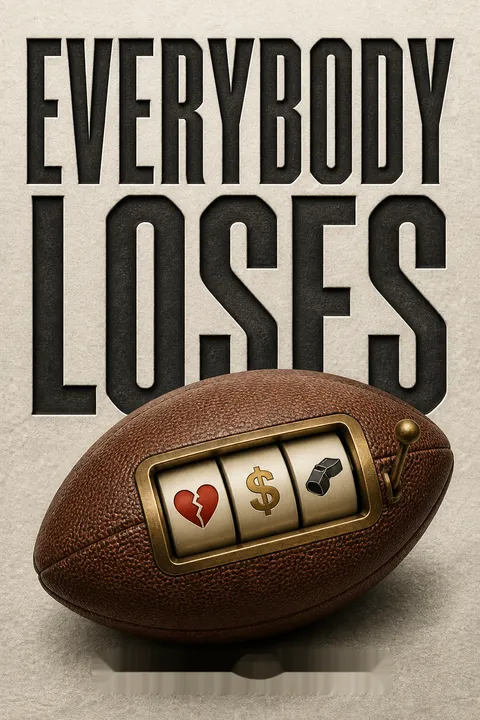

Key Takeaways
1. The Great Reversal: Sports Leagues' Shift from "Evil" to Embrace
Gambling is a part of sports; we may as well accept it.
A century of opposition. For over a hundred years, major sports leagues vehemently opposed gambling, viewing it as an "evil" that threatened the integrity of their games, citing scandals like the 1919 Black Sox World Series fix and Pete Rose's lifetime ban. Commissioners like Paul Tagliabue and David Stern warned that legalized betting would corrupt athletes, cheapen fan enjoyment, and foster cynicism, with Tagliabue famously stating, "sports gambling is evil at any age." This stance was enshrined in the 1992 Professional and Amateur Sports Protection Act (PASPA), which federally banned sports betting outside Nevada.
The turning point. The leagues' united front crumbled in 2014 when NBA Commissioner Adam Silver publicly advocated for legalizing and regulating sports betting, arguing it would bring the activity "out of the underground and into the sunlight." This shift was driven by a desire to capitalize on growing fan interest, emulate the financial success of European leagues, and protect valuable television rights. Nielsen studies, commissioned by the American Gaming Association (AGA), projected billions in annual profits for leagues from sponsorships, advertising, and increased fan engagement, with the NFL alone estimated to gain $2.3 billion annually.
Cover for a flip-flop. The 2018 Supreme Court decision to strike down PASPA, in Murphy v. NCAA, provided the perfect "cover" for leagues to reverse their long-held public positions without appearing hypocritical. Despite the ruling being about states' rights rather than the merits of gambling, commissioners like the NHL's Gary Bettman declared, "Once the Supreme Court ruled, we had to get with the program. You either evolve or you become extinct." This opened the floodgates for aggressive lobbying, leading states to rapidly legalize sports betting, often with little debate about its societal consequences.
2. Athletes Under Siege: The Human Cost of Legalized Betting
I admire Barrett’s thick skin, but that’s simply not true. It comes with being an athlete now, but pro and college players weren’t dealing with harassment, threats, and attacks from gamblers at nearly this rate until 2018, when a landmark Supreme Court decision struck down a federal ban on sportsbooks outside Nevada and states raced to cash in.
Unprecedented harassment. Legalized sports betting has unleashed a "wildfire" of harassment, threats, and attacks against athletes, coaches, and referees. Players like Purdue's Carson Barrett receive death threats and vile messages for actions as minor as scoring a meaningless 3-pointer that affects a betting spread. Clint Hangebrauck of the NCAA notes a dramatic increase in hate directed at players since 2018, including racial slurs, stalking, and even bricks thrown through parents' windows, prompting FBI investigations into credible death threats.
The "prop" problem. NCAA President Charlie Baker has campaigned to ban "prop bets" (wagers on individual player statistics) in college sports, arguing they undermine the team-first ethos and expose athletes to undue pressure. He laments, "Putting athletes in this position where you’ve got all these people screaming at them about their points and their performance as individuals—it’s exactly the wrong message to be sending." This individual focus turns players into "roulette chips," as former NBA star Bill Bradley put it, reducing them to mere data points for gamblers.
Beyond the pros. The problem extends to all levels of sports. College athletes report classmates asking them to miss shots or passes to influence bets, creating subtle social pressure. Even well-paid professional athletes like Calvin Ridley (NFL) and Tucupita Marcano (MLB) have been suspended for gambling, often citing boredom or addiction, demonstrating that wealth doesn't inoculate against temptation. The constant barrage of gambling ads and the ease of betting create a dangerous environment where players are increasingly seen as "props" rather than people.
3. The Media's Moral Compromise: Journalism Funded by Gambling
Sports journalists are journalists. They need to adhere to the same journalistic ethics and codes, and as a viewer I have to scratch my head a little bit if I see the person who’s telling me sports news also telling me to go bet on ESPN.
From reluctance to revenue. Mainstream sports media, once hesitant to even acknowledge gambling, has fully embraced it as a primary revenue stream. ESPN, which once avoided explicit betting references, now features top talent like Mike Greenberg and Stephen A. Smith in commercials for ESPN Bet, a sportsbook launched after Disney's $1.5 billion deal with Penn Entertainment. This shift raises serious ethical questions about journalistic integrity, as reporters are now tasked with promoting the very activity they might otherwise investigate.
Conflicts of interest. The intertwining of media and gambling creates profound conflicts. Journalists are incentivized to "shill for parlays" and avoid reporting anything that might "upset power brokers" or their gambling sponsors. The case of Shams Charania, an NBA reporter who also worked as a paid panelist for FanDuel, highlights the blurred lines, as his scoops could directly influence betting odds while he was on a sportsbook's payroll. This "corporate version of 'stop snitching'" makes it difficult for critical reporting on gambling's harms to emerge.
The affiliate model. Many sports news outlets, including The New York Post and Sports Illustrated, now partner with "affiliate" companies like Action Network, which earn a cut of readers' lifetime net losses when they click on sportsbook links. This "revenue share" model creates a direct incentive to encourage more gambling, especially among "problem gamblers," and prioritizes clickbait over quality content. As one former employee noted, "Any normal person would see the Action Network’s advertisements and be, like, ‘Oh, yeah, this is going to help me win money.’"
4. The House's Strategy: Limiting Winners and Pushing High-Margin Bets
I think their advertising is untruthful. They’re selling that you can win, but you can’t.
Winners not welcome. Despite advertising that suggests anyone can "win big," sportsbooks actively "limit" or "ban" winning customers, often after just a few successful bets. DraftKings CEO Jason Robins explicitly stated, "People who are doing this for profit are not the players we want," revealing that the business model is built on "losers." This practice, while often legal, contradicts the aspirational marketing and leaves profitable bettors like Beau Wagner, who won $50,000, feeling "irate" when their accounts are restricted to mere dollars.
The "honey trap" of promotions. Sportsbooks use aggressive sign-up promotions, often described as "risk-free" or "no sweat," to attract new customers. These offers, like Caesars' $3,000 deposit match, are designed to be a "honey trap," profiling customers as "sharp" or "square" based on their initial betting behavior. While seemingly generous, the fine print often reveals that "risk-free" bets can still result in customers losing all their money, leading to class-action lawsuits and regulatory fines for deceptive advertising.
Parlays and microbets: The profit engines. Sportsbooks aggressively promote parlays and microbets because they are "carnival games" with significantly higher profit margins for the house. Parlays, especially single-game parlays, hold about 25% of the wagered money, compared to 4.55% for typical single bets. Microbetting, wagering on individual plays within a game, offers "instant gratification" but also carries a higher vig and is "shaded" to exploit bettors' biases, effectively "taxing the casuals." These high-velocity, high-margin products are designed to keep customers "constantly in action," fueling addiction and maximizing revenue.
5. The Illusion of Integrity: Gambling's Threat to Fair Play
If you believe that referees and coaches and players are shaving points, all of a sudden it becomes wrestling. That’s why I’ve called gambling an existential threat.
Cynicism and corruption. The widespread availability of sports betting is eroding public faith in the integrity of games. Players like Luka Dončić and Rudy Gobert have openly accused NBA referees of manipulating outcomes for gambling purposes, reflecting a growing sentiment among fans that games are "rigged." This cynicism is a direct consequence of leagues embracing an industry that historically threatened their credibility, and it's exacerbated by the sheer volume of prop bets that make every play a potential point of contention.
The Donaghy scandal revisited. The 2007 Tim Donaghy NBA referee scandal, where he conspired with gamblers to fix games, remains a stark reminder of gambling's corrupting potential. Despite the NBA's claims that legalization would improve integrity monitoring, experts like Sean Patrick Griffin argue that a similar scheme today would likely go undetected, as crooked officials would still use offshore books or illegal channels. The NBA's continued evasiveness about the full extent of Donaghy's actions further fuels skepticism among players and fans.
Compromised monitors. "Integrity monitors" like Sportradar and Genius Sports, which partner with leagues to detect suspicious betting patterns, face conflicts of interest. These companies also sell data to sportsbooks and have ownership stakes from league executives, raising questions about their independence. While they track billions of line movements and flag thousands of "suspicious" matches annually, they concede that illegal betting, where most match-fixing occurs, remains "really tough to try to identify." This creates a system where those tasked with protecting integrity are also deeply invested in the expansion of the gambling market.
6. The Silent Epidemic: Soaring Addiction and Inadequate Support
Gambling disorder has a lifetime suicidal ideation rate of more than 50 percent, the highest of any addiction.
A surging crisis. The legalization of online sports betting has led to a dramatic increase in gambling addiction nationwide. In Connecticut, calls to problem gambling hotlines nearly doubled in the first year of legalization. New Jersey, an early adopter, saw its gambling disorder rate triple the national average, with 19% of young adults (18-24) at high risk. A horrifying 21% of New Jersey sports bettors reported wishing they were dead, and 10% had attempted suicide, far exceeding rates for other forms of gambling or the general population.
"Responsible gaming" as window dressing. Sportsbooks heavily promote "responsible gaming" initiatives, but critics argue these are often understaffed, marginalized, and primarily serve to preempt lawsuits rather than genuinely protect vulnerable customers. Teresa Fiore, former RG manager at PointsBet, revealed she was a team of one or two for hundreds of thousands of customers, facing a "fundamental misalignment" where consumer protections were only implemented if they didn't "affect the bottom line." This leads to a situation where "responsible gaming" is more about rhetoric than actual harm prevention.
Inadequate resources. States are "drastically underprepared" for the flood of gamblers seeking treatment. There's a severe shortage of trained clinicians, and many major health insurers don't cover gambling treatment. Despite the consensus that 1% of tax revenue from gambling should fund research and treatment, most states fall far short. North Carolina, for example, allocates $2 million, while experts estimate the true cost of treating just 10% of its problem gamblers would be $137.5 million. The federal government spends $0 on gambling research, a deliberate choice to avoid "exposing the real harm."
7. The Youth Gamble: Grooming a New Generation of Bettors
The problem is, you can’t see problem gambling. I can’t smell it on your breath. I can’t see it in your eyes.
Ubiquitous exposure. High school and college students are being "groomed to gamble for life" through relentless advertising and easy access to betting apps. Many underage students use parents' accounts or DFS sites like PrizePicks (legal for 18+) that offer real-money sports wagers indistinguishable from gambling. Roshan Shoukat, a high school senior, notes classmates "talk nonstop about betting" during school, often chasing long-shot parlays with the mindset that "if one hits, it pays for all the losers."
Financial nihilism. Experts like Nik Bonaddio, former FanDuel product head, observe a "remarkable level of financial nihilism" among young adults (18-25). Faced with income inequality, unaffordable housing, and existential concerns, many view high-risk parlays as "the only way for them to escape," leading to a "vicious cycle" of chasing improbable payouts. This attitude, coupled with the addictive design of betting apps, makes young people particularly vulnerable to compulsive behavior.
Cascading harms. The rise of youth gambling is creating "cascading health problems." Daniel Derevensky, a child psychologist, reports a "tremendous increase" in young people starting with sports gambling, often leading to substance abuse and mental health issues. Rob Minnick, a Georgetown graduate who developed a severe gambling addiction in college, recounts how betting consumed his life, leading to isolation, debt, and a loss of joy in sports. His story highlights how easily a seemingly innocent pastime can spiral into a devastating addiction, often unnoticed by friends and family.
8. The Economic Mirage: Who Really Profits from Legalized Betting?
If you think about it, my job was to basically slowly bleed someone dry.
A bloodbath for most. Despite Americans wagering a staggering half-trillion dollars on sports since 2018, the industry has been a "bloodbath" for most operators. Over two dozen sportsbooks, including well-known brands like WynnBET and FOX Bet, have shuttered or been sold off. Only FanDuel and DraftKings, leveraging their daily fantasy head start and massive marketing budgets, have achieved market dominance, controlling roughly three-quarters of the national market. Even they burned through billions, with DraftKings not turning a quarterly profit until 2024.
Unsustainable costs. Smaller operators like Betfred and Tipico found the costs "inordinately expensive," citing multi-million dollar licensing fees, mandated data centers, and partnership deals with brick-and-mortar casinos. Bryan Bennett of Betfred noted that "official league data" fees were "an absolute joke" designed solely to enrich the leagues. With products largely "commoditized," smaller companies couldn't compete with the "bottomless marketing budgets" and generous bonuses offered by the duopoly, leading to their demise or acquisition for "pennies on the dollar."
States' short-sighted gains. States, eager for tax revenue, often set low tax rates (e.g., Iowa at 6.75%) to encourage competition, but this failed to prevent market consolidation. New York, with its unprecedented 51% tax rate, generated nearly $2 billion in three years, raising questions about whether other states are "leaving enormous amounts of money on the table." However, this revenue comes directly from residents, and studies show a correlation between legalized sports betting and deteriorating credit scores, increased bankruptcies, and reduced household savings, particularly among young men in low-income areas.
9. Lessons Unlearned: The US Repeats Global Gambling Mistakes
The U.S. could have learned a lot about the negative aspects of sports betting. Instead, the European companies running some of the biggest U.S. sportsbooks were allowed to introduce Americans to sports betting using methods that those companies had already been forced to abandon overseas because of the damage they’d wrought.
Ignoring international precedent. The US "drastically underprepared" for the consequences of legalized sports betting, largely ignoring the "cautionary tales" from countries like the United Kingdom, which legalized online gambling in 2005. European companies, forced to abandon aggressive tactics overseas due to public backlash and stricter regulations, were allowed to reintroduce these harmful methods to the American market. This "frustrating" oversight means the US is repeating blunders that British regulators are now desperately trying to "claw back."
The UK's struggle. A 2024 UK study revealed that up to eight times more adults struggle with gambling problems than previously thought, with over 10% of young men considering suicide. Proposed reforms, though stringent by US standards, are criticized as insufficient, with experts arguing that thresholds for "affordability checks" are too high and "responsible gambling" messaging is "damaging and industry-friendly." The proliferation of betting parlors, like those in London's Leicester Square, demonstrates how gambling can cannibalize local economies by diverting disposable income from other businesses.
A call for federal intervention. Critics like Senator Richard Blumenthal and Representative Paul Tonko are pushing for federal legislation (the SAFE Bet Act) to impose national standards, including bans on credit card deposits, daily deposit limits, affordability checks, and restrictions on advertising. They argue that "state regulation is faint-hearted and half-baked" and that the industry is "absolutely overt and unashamed" in its opposition to reforms. Without federal action, the US risks a future where gambling is further normalized, leading to more addiction, financial ruin, and a compromised sports culture, as seen in other countries.
People Also Read






Download PDF
Download EPUB
.epub digital book format is ideal for reading ebooks on phones, tablets, and e-readers.








































