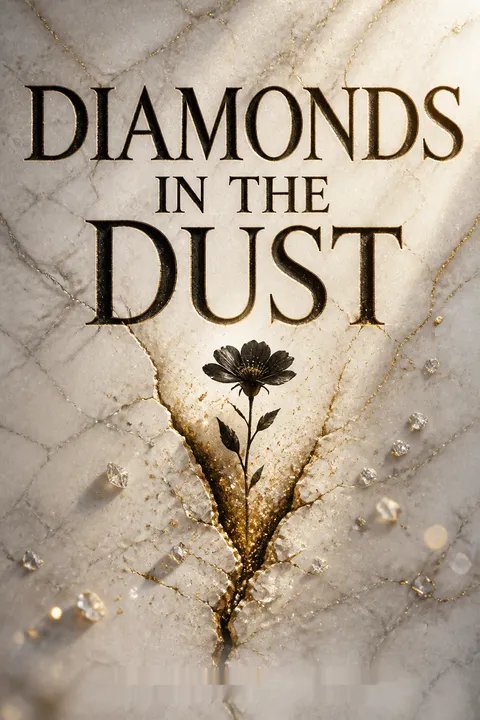

Plot Summary
Childhood Shadows and Promises
Young Zoe lives in a violent home, escaping her parents' cruelty by daydreaming about fairytales and a mysterious prince who could save her. Her only stability is Damian, her gentle, wise brother, who protects her against the world's harshness—but warns her to rely on herself, not dreams. This fractured love, blended with poverty and trauma, ingrain in Zoe both toughness and a desire for rescue. Childhood wounds shape her, sharpening her yearning for something beautiful and safe—a longing that is never satisfied. The seeds of both resilience and vulnerability are sown.
The Daylight Trap
Now grown, Zoe is an underpaid seamstress in Johannesburg, scraping by in squalor. Her dull routine is violently interrupted when Maxime, a French stranger, kidnaps her with meticulous preparation. His power is chillingly evident; Zoe is overpowered, interrogated, and used as leverage to extract information about her imprisoned brother, Damian. Her poverty, her loneliness, and her pride are exposed to his cold assessment. She realizes, with terror and anger, that her life isn't her own and that bargains are being struck above her head.
First Lessons in Power
Zoe's neighbor is viciously beaten in front of her as Maxime demonstrates his willingness to hurt innocents to coerce her. She is forced to betray personal secrets, to watch her dreams and dignity trampled. Maxime's tactics are at once intimate and brutal. Zoe's efforts at resistance are punished, but her fire intrigues Maxime; he alternates between gentleness and cruelty, promising that life can be "easy or difficult"—the choice being illusory. She begins to grasp the game: compliance is survival, but at what cost?
Night of Choices
Maxime parades Zoe through a world of wealth—intimidating restaurants, luxury cars, elegant manners. Everything is strange, and every gesture is a display of power cloaked as courtship. Zoe is forced into his rhythm, eating when told, speaking carefully, learning that any show of will is met with the threat of violence, not against herself, but her beloved brother. Zoe's old hopes—escape, fairness, love—are rapidly replaced with fear and calculation.
Wildflower in Veneer
Drugged and transported overseas, Zoe awakens in Venice. Her entire life is vanished behind her: her job, her apartment, her meager possessions—erased by Maxime, who ensures no one will look for her and that every trace supports the narrative that she's gone for love. Venice is a taunt—her dreams, now a cage. Maxime forces her to write lying letters to Damian, posing as a runaway bride in a fairytale. The dream has become a prison.
Cold Bargains
Maxime shows Zoe her fates: obedience as his mistress, or being handed to his sadistic brother and other men who will brutalize her. The choice to be Maxime's lover is not a choice at all. She is caged in a golden, freezing cell beneath Venice. Rats, cold, and despair chip away her last defiance. In the end, facing the certain knowledge of what awaits otherwise, she capitulates—her body in exchange for protection, her soul in jeopardy.
Finding No Safety
Zoe tries to make herself adapt: to eat, to dress, to play the good captive. Maxime oscillates between predatory desire and something like nurture, administering medicine, feeding her, indulging small comforts. Zoe is cautious but starved for kindness—she finds herself sickened by her need for Maxime's approval, and more so by the power her captor derives from her submission. Her mind analyzes each interaction, searching for ways to survive with her core intact.
The Offer, The Cage
As Zoe settles into her role in Maxime's world, the psychological abuse intensifies. Small freedoms—clothes, letters, books—are carefully monitored and weaponized. Maxime makes it clear: her happiness, even her orgasm, is at his discretion. His family, particularly his brother Alexis, thrum in the background, menacing with threats of worse fates. The seductive machinery of Maxime's control is revealed: he is both jailer and the only avenue of relief from deeper horrors.
Paper and Lies
Zoe exploits a secret code with Damian—hidden in casual talk of "apple pie"—to warn him, in every censored letter, that she is not free and that betrayal lurks. She tries to outsmart Maxime, but he has intercepted her past letters and cuts off her attempts. Still, her stubbornness is a quiet rebellion, the only ember of agency left—every scrap of hope pinned on the chance that Damian will read between the lines and rescue them both.
Defiance and Discovery
Zoe is confronted by Maxime's ex-lover, then endures a ritual of sexual submission and punishment after daring to defy him. Their war is both sexual and existential—Zoe struggles to retain autonomy, with every boundary blurring: hate and attraction, pain and pleasure. The two circle each other—she, desperate not to lose herself; he, seeking not just her surrender but her genuine affection. Each assault, each act of tenderness, further entwines her into the web.
Ownership and Surrender
Zoe comes to realize that everything is a lesson in control: every time she complies, she is rewarded with care; every time she defies, she is punished. Her environment is refined, but the dynamic is brutal. Physical pleasure becomes both release and tool. Maxime insists she "trust him"—but only on his terms, and only to make her dependent. Both are transformed—she, gradually, by the Stockholm syndrome of extreme captivity; he, by the intoxicating effect of her vulnerability and fire.
Drowning in Touch
As Zoe's world closes entirely to Maxime's house, their interactions deepen into a sick imitation of domesticity and partnership. She alternates between numbness and confusing desire, seeking solace in books, sex, or sleep—all forms of escape. Maxime, for all his own emotional wounds, basks in the effect he has on her, but also finds himself more deeply enmeshed than he expected. Their pleasure and pain are intertwined; both become each other's punishment and cure.
The Family's Game
Zoe is thrust into the hostile world of Maxime's family: his mother's icy disapproval, his brother's predatory interest, the cousins' cold clannishness. Her foreignness and her status as mistress—not wife—mark her as both outsider and target. Despite brief glimmers of connection, she learns that in this world, women like her are prey and pawns. Every interaction is calculated, every slight a warning.
A Mistress Among Monsters
Maxime's family background is revealed as a web of criminality and sociopathy. The stakes of his business—diamond smuggling, territory wars—drive every choice. Mistresses are commodities; women are displayed, traded, and disposed of. Violence is commonplace. Maxime is both a product and engine of this world, and Zoe is forced to bear witness—to the privileges, the hypocrisy, and the ever-present threat of becoming the next victim.
Control, Punishment, Need
Maxime oscillates between possessiveness, tenderness, and brutality. When Zoe attempts anger or pride, he enacts sexual punishments that both humiliate and awaken her. Pain and pleasure are disorientingly fused. He needs her submission, and she, despite herself, craves his care. The lines between protection, ownership, and love are irrevocably tangled. Though she despises him, she cannot disentangle her body's response from her heart's confusion.
Broken Mirrors
Zoe's ability to discern reality erodes. Is she slave or lover, safe or in danger, complicit or coerced? Maxime gives her gifts, teaches her to be kind to him—yet orchestrates her pain. In a moment of cruel lesson, he treats her as a whore in public, then physically in private, proving to her and himself the depths of his power. The emotional whiplash breaks her further, even as he seems—paradoxically—to demand and offer the possibility of love.
The Auction of Love
In a charity ball, Zoe is auctioned off—Maxime outbids all, publicly displaying his possession and, in a twisted way, his affection. The danger is not just humiliation but the ever-present threat of other predatory men. Later, punishing her reluctance to trust him, Maxime forces her through an ordeal of sexual violence. Zoe survives, shattered but inwardly more resolved, her perspective shifting irrevocably.
Cruel Lessons
Zoe discovers Alexis's true nature: a sadist who tortures prostitutes for pleasure. Maxime's intervention saves a life, but the horror cements for Zoe that her "choice" of Maxime was never a free one. The system is so rotten that even his protection comes laced with horror. Maxime takes brutal measures to punish his brother, drawing a sharp line between monsters—but for Zoe, trauma is everywhere.
Darkness at the Core
Shaken and exhausted, Zoe confronts Maxime: why was she really taken, and what does he want from Damian? He refuses to answer, insisting on trust, even as he admits to darkness within himself. Zoe is left with only her inner turmoil—dependent on her captor, despising her own need, and unable to break free from the web of violence and manipulation that has become her life.
The Cliff's Edge
At the breaking point, Zoe stands at the edge of the cliff above the sea, considering escape not just from Maxime but from herself. Maxime offers a hand, but his love is indistinguishable from control. In an ultimate act of ambiguous agency—or self-destruction—Zoe leaps, leaving her fate uncertain. Her story ends not with salvation or healing, but with a step into the unknown, the last vestiges of her hope and identity in the balance.
Analysis
Diamonds in the Dust is a harrowing meditation on captivity, trauma, and the manipulation of love in the shadow of power. Pauls crafts a world where even beauty is weaponized, where fairy tales morph into nightmares, and where survival demands a surrender that is never freely chosen. By centering Zoe's perspective, the novel probes the dark psychology of both victim and perpetrator, refusing easy answers or redemptions. Its critique is sharp: every act of possession or intimacy is shown as tainted by the system that enables it—whether familial, criminal, or romanticized. Zoe's journey encapsulates the horror of being erased and remade for a man's needs, while retaining (and sometimes weaponizing) slivers of agency in code, in rebellion, in the refusal to fully love her captor. Pauls refuses to let her heroine off easy: the lines between consent, survival, and complicity are thin, highlighting the cost exacted on those trapped in structures of abuse. The emotional rollercoaster—alternating warmth and terror, longing and resistance—mirrors the experience of many trauma survivors, while the ending's ambiguity refuses the false comfort of rescue or neat resolution. Diamonds in the Dust is a dark romance that interrogates the very nature of power, showing that some cages are made not of bars, but of need—and that, sometimes, breaking free requires leaping into the unknown.
Review Summary
Diamonds in the Dust receives mostly positive reviews, averaging 4.07/5 stars. Readers praise the tension-filled dynamic between the ruthless anti-hero Maxime and the resilient, dreamy heroine Zoe. Many highlight the dark, addictive storytelling, complex character development, and the shocking cliffhanger ending. Critics note excessive sex scenes overshadowing plot progression, underdeveloped characters, and concerns around consent. The captive-captor trope, mafia setting, and fairy tale undertones resonate strongly with fans of dark romance, though sensitive readers are warned of triggering content.
People Also Read



Characters
Zoe Hart
Zoe is both a fierce survivor and a woman shaped by relentless trauma. Scarred by childhood violence but fueled by hope, she swings between fierce defiance and aching longing for rescue. Her relationships—especially with Damian—are the foundation of her resilience, her need for meaning and justice. Psychologically, she embodies both the romantic idealist (clinging to dreams and love) and the battered realist (doing whatever it takes to survive). Her arc is one of reluctant adaptation: from innocence to survivalist, from victim to a woman who owns her pain and her small, bitter victories. Her loves, hates, and needs are desperate, conflicting, and keenly felt—teaching readers about both the possibility and cost of the human spirit's endurance.
Maxime Belshaw
Maxime is a product of generational crime and violence. His psyche is a battleground: ruthless, strategic, and detached in business and manipulation—but starved for genuine connection. He is haunted by his own traumas, including physical scars and emotional deadness. Zoe's resistance awakens both his sadism and his yearning for something real. Every act of cruelty is layered with care: he feeds and protects Zoe with the same hands that punish and own her. His arc is one of gradual emotional thaw, touched by Zoe's pain, yet always translating love as possession. He is never less than formidable, often monstrous, but not invulnerable—his greatest weakness is his need for Zoe's surrender and, perhaps, love.
Damian Hart
Damian, Zoe's brother, is her emotional anchor—her childhood protector, the one who teaches hard truth, yet radiates gentleness in a world of brutality. Though in prison, his quiet wisdom and unbreakable bond with Zoe drive the plot's stakes. His coded letters represent hope and resistance. Damian's psychological depth comes from his willingness to endure injustice and to teach Zoe to survive—he is, even in absence, a model of love as fierce loyalty.
Alexis Belshaw
Alexis is Maxime's foil: handsome, charming on the surface, but monstrous in actions. His brutality toward women makes Maxime appear, by contrast, as a twisted savior. He is a warning—proof that Maxime's protection is not benevolence, but part of a greater pattern of violence. Alexis's presence keeps the threat of further dehumanization alive, illustrating the commodification of bodies and souls in their world.
Cecile Belshaw
Maxime's mother is the face of judgment and gatekeeping within the family. Cold, dismissive, and obsessed with reputation, she reinforces Zoe's outsider status and the standards female newcomers must confront. Cecile's demeanor illustrates the social and emotional violence that underpins the family's public veneer.
Francine
Francine, as an employee and former lover, embodies the replaceability of women in the Belshaw world. Her resentment toward Zoe is both personal and symptomatic of the wider system—where loyalty means silence and complicity, and kindness is transactional.
Leonardo Zanetti
Representing the external threats and the seductive allure of the criminal world, Leonardo serves as both business competitor and sexual contender for Zoe. His presence sharpens Maxime's possessiveness, illustrating the perpetual risk of being viewed as nothing more than property.
Jerome Belshaw
Jerome is the voice of reason within the family's mad system. He warns Maxime of the dangers of showing attachment, understanding that love is a liability in their world. Jerome's presence gives a glimpse of a different path—a man shaped by the same world but less enthralled by its extremes.
Sylvie and Noelle
These female cousins represent the closed circle of privilege and status within the Belshaw clan. Even with their freedom, they recognize Zoe's pain and outsider status, watching her warily while regretting their own inherited cages.
Dr. Olivier
The family's doctor cares for the physical consequences of their violence, performing medical services that shore up reputations and enable further harm. He is an emblem of the complicity required to keep the family's system intact.
Plot Devices
Survival as Performance
The story relentlessly uses the false dichotomy of choices—Maxime's "easy or hard" life, Zoe's selection between him and Alexis—as its engine. All options are monstrous, and agency is performative. Compliance, even in sex, is rewarded—defiance is punished. This dynamic creates a slow erosion of self and an inescapable loop of reward and threat.
Letters and Codes
Letters between Zoe and Damian serve as a motif of hope and covert agency. Through coded language, Zoe tries to alert her brother to danger, reminding us of the power of the written word to resist oppression, even in tiny, ambiguous acts of rebellion.
Doubling and Mirrors
The family structure serves as a twisted mirror, with Maxime and Alexis as binary reflections: both dangerous, but only one offering a slightly less destructive "protection." Zoe's wants—to be loved and safe—are mirrored only as abuse, each pleasure inseparable from her punishment.
Settings as Traps
The luxurious settings—Venice, the French countryside, balls and galas—are consistently traps, their beauty made monstrous by the violence lurking beneath. Even Zoe's fairytale desires are used to snare her, the fulfillment of her dreams always attached to a fresh betrayal.
Psychological Warfare
Gaslighting, "lessons," and alternating kindness and cruelty are constants. Sexuality becomes the ultimate weapon: Maxime wields gentleness and brutality to warp Zoe's desire and reconfigure her loyalties, making her complicit in her own captivity.
Diamond Magnate Series


About the Author
Other books by Charmaine Pauls
Download PDF
Download EPUB
.epub digital book format is ideal for reading ebooks on phones, tablets, and e-readers.








































