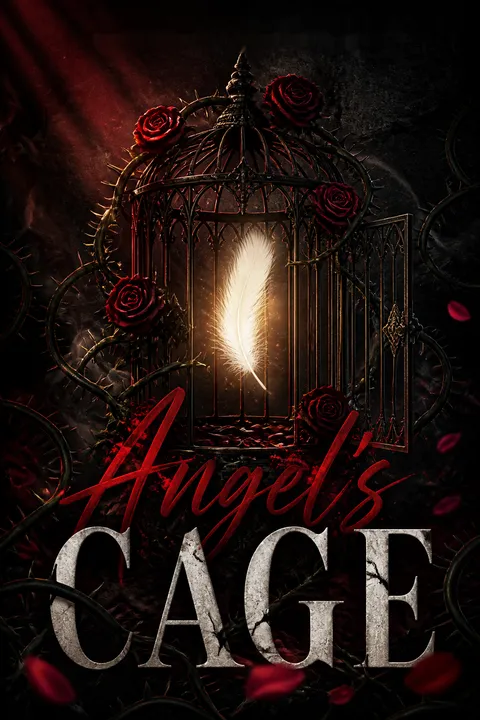

Plot Summary
Return to the Devil's Lair
Chloe is brought back to Nikolai Molotov's isolated mountain mansion after a harrowing escape and a near-fatal encounter with assassins. She's physically injured, emotionally raw, and acutely aware that she's now a prisoner in the home of a man who is both her savior and her captor. Nikolai's presence is overwhelming—he is at once gentle and terrifying, his care for her laced with possessiveness and a dark, magnetic intensity. As Chloe is tended to by a medical team, she's caught between gratitude for her rescue and dread at the realization that she is not free. The house, once a place of employment and tentative hope, is now a gilded cage, and Chloe's fate is inextricably bound to the man who holds her there.
Secrets, Sins, and Survival
Nikolai's world is one of secrets and violence, and Chloe is thrust into its heart. As she recovers, she learns more about the Molotov family's shadowy past and the dangerous enemies that circle them. Nikolai's sister, Alina, is wracked with guilt for her role in Chloe's escape, and the siblings' relationship is strained by old wounds and new betrayals. Meanwhile, Nikolai's obsession with Chloe deepens, and he struggles to balance his need to protect her with the darkness that defines him. The threat from outside—assassins sent by a powerful political figure—forces Nikolai to prepare for war, even as he tries to shield Chloe from the full extent of his ruthlessness.
The Monster's Tenderness
Chloe is both repelled and drawn to Nikolai, unable to reconcile the brutal killer with the man who cares for her so tenderly. Their interactions are charged with tension, desire, and fear. Nikolai's possessiveness is suffocating, yet his gentleness in her moments of vulnerability is disarming. Chloe's internal conflict intensifies as she witnesses his capacity for violence and his capacity for love, especially in his role as a father to Slava. The lines between captor and protector blur, and Chloe is forced to confront her own feelings for the man who holds her captive.
Bloodlines and Betrayal
The truth about Chloe's past shatters her world: her biological father is Tom Bransford, a charismatic presidential candidate who raped her mother as a teenager and is now trying to erase all evidence of his crime—including Chloe herself. The revelation is devastating, leaving Chloe reeling with horror, shame, and a sense of tainted identity. Nikolai's investigation uncovers the extent of Bransford's guilt, and Chloe is forced to grapple with the knowledge that her very existence is a threat to a powerful man's ambitions. The betrayal runs deep, and Chloe's sense of self is forever altered.
War on the Horizon
With the enemy identified, Nikolai mobilizes his resources for an all-out war. He calls in favors, arms his compound, and brings in trusted allies to fortify their defenses. The threat from Bransford is immediate and lethal, and Nikolai's determination to protect Chloe is absolute. Yet the preparations for battle are also preparations for a siege—Chloe's captivity becomes more pronounced, and the house transforms into a fortress. The looming conflict forces everyone to confront their loyalties, fears, and the lengths they are willing to go for survival.
Captive Hearts, Fractured Minds
As Chloe heals physically, her psychological wounds fester. She is acutely aware of her status as a prisoner, yet she cannot deny the comfort and safety she feels in Nikolai's care. Their relationship becomes increasingly complex, marked by moments of genuine connection and flashes of violence. Chloe's longing for freedom is matched only by her growing attachment to Nikolai and Slava. The boundaries between love and captivity blur, and Chloe is forced to question her own desires and the nature of her dependence on the man who both imprisons and cherishes her.
The Devil's Obsession
Nikolai's obsession with Chloe reaches new heights. He watches her constantly, both in person and through hidden cameras, unable to bear the thought of losing her. His need for control is both a source of comfort and a source of terror for Chloe, who recognizes the danger in his all-consuming love. The intensity of their physical relationship mirrors the intensity of their emotional entanglement, and Chloe finds herself both resisting and surrendering to the force of Nikolai's will. The line between protection and possession becomes increasingly thin.
Family Ties and Fractures
The Molotov family is a study in contrasts: loyalty and betrayal, love and violence, tradition and rebellion. Alina's struggles with addiction and trauma mirror Chloe's own battles, and the two women form a tentative alliance. Nikolai's relationship with his siblings is fraught with old resentments and new challenges, as the family's dark history comes to light. The arrival of outside threats forces the family to close ranks, but the fractures within are never far from the surface. The bonds of blood are both a source of strength and a source of pain.
The Enemy's Shadow
The danger from Bransford intensifies as his reach extends into the Molotovs' sanctuary. Assassins, political machinations, and the specter of exposure threaten to destroy everything Nikolai has built. Chloe's existence is a ticking time bomb, and the pressure mounts as the enemy draws closer. The family's defenses are tested, and the cost of survival becomes ever higher. In the shadows, alliances shift and betrayals are revealed, setting the stage for a final confrontation.
The Prisoner's Bargain
Desperate to reclaim some agency, Chloe strikes a bargain with Nikolai: she will marry him if he promises not to kill her father, Bransford, but instead expose him. The negotiation is fraught with emotion, power, and the ever-present threat of violence. Nikolai's willingness to compromise is both a victory and a defeat for Chloe, who realizes that her freedom will always be conditional. The wedding is both a celebration and a surrender, marking the beginning of a new chapter in their captivity and their love.
The Proposal and the Cage
Nikolai's proposal is less a question than a command, and Chloe's acceptance is both a choice and a capitulation. The wedding is a lavish affair, orchestrated with military precision and suffused with the tension of unspoken fears. Chloe becomes Nikolai's wife, and the house becomes both a fortress and a home. Their honeymoon is a period of intense intimacy and fragile peace, but the specter of the past—and the threat of the future—hangs over them. The marriage is a cage, but it is also a sanctuary from the world outside.
Wedding in White and Red
The wedding is a study in contrasts: beauty and violence, love and fear, hope and despair. Chloe is transformed into a bride, adorned in white and surrounded by luxury, yet the ceremony is shadowed by the knowledge of what has been lost and what is at stake. The family gathers, old wounds are reopened, and new alliances are forged. The celebration is both a triumph and a tragedy, marking the end of one life and the beginning of another. Chloe's vows are both a promise and a surrender, binding her to Nikolai in ways she cannot yet comprehend.
The Honeymoon Fortress
The days following the wedding are a surreal blend of domestic bliss and ever-present danger. Chloe and Nikolai's relationship deepens, their physical and emotional connection growing stronger even as the walls of their fortress grow higher. The outside world recedes, and the house becomes a universe unto itself—a place of safety, passion, and confinement. Chloe's role as wife, stepmother, and prisoner becomes more defined, and she must navigate the complexities of her new life while grappling with the trauma of her past.
The Truth About Monsters
Chloe demands the truth about Nikolai's past, and he confesses to the murder of his father—a crime born of violence, betrayal, and a legacy of pain. The revelation is both horrifying and cathartic, forcing Chloe to confront the reality of the man she loves. Nikolai's guilt and self-loathing are laid bare, and Chloe must decide whether she can accept the darkness within him. Their love is tested by the weight of their secrets, and the possibility of redemption hangs in the balance.
The Leonov Reckoning
The Molotovs' enemies strike, breaching the compound and threatening everything Nikolai holds dear. The attack is brutal and relentless, forcing the family to fight for their lives. In the chaos, old alliances are tested and new sacrifices are made. Alina's past comes back to claim her, and Chloe is forced to confront the reality of violence and loss. The battle is both a reckoning and a crucible, forging new bonds and shattering old illusions.
The Price of Protection
In the wake of the attack, the cost of survival becomes clear. The family mourns their losses, fortifies their defenses, and grapples with the trauma of what they have endured. Chloe and Nikolai's relationship is both strengthened and strained by the ordeal, as they struggle to find a new equilibrium. The threat from Bransford is finally neutralized, but the scars of violence and betrayal linger. The price of protection is high, and the future remains uncertain.
The Sister's Sacrifice
Alina's decision to sacrifice herself to save her family is both heartbreaking and heroic. Her departure leaves a void in the family, and her absence is keenly felt by all. Chloe and Nikolai are forced to confront the limits of their power and the depth of their love for those they cannot save. The bonds of family are tested, and the meaning of loyalty and sacrifice is redefined. Alina's fate is a reminder that even in a world of violence and power, love can demand the ultimate price.
The End of the Hunt
With their enemies vanquished and their secrets laid bare, Chloe and Nikolai find themselves at the threshold of a new life. The house, once a prison, becomes a home—a place of healing, hope, and possibility. The wounds of the past are not easily forgotten, but the promise of the future is real. Chloe embraces her role as wife, mother, and survivor, and Nikolai learns to accept the love and forgiveness he never believed he deserved. Together, they face the world, no longer as captor and captive, but as partners in a hard-won peace.
Analysis
Angel's Cage is a dark, psychological romance that interrogates the boundaries between love and captivity, protection and possession, trauma and healing. At its core, the novel is a meditation on the legacy of violence—how the sins of the past shape the present, and how individuals can either perpetuate or break the cycles of pain that define their families. Through the complex, often disturbing relationship between Chloe and Nikolai, the story explores the ways in which love can be both redemptive and destructive, a force that binds as much as it liberates. The narrative refuses to offer easy moral resolutions, instead embracing the ambiguity and messiness of real human emotion. In a modern context, Angel's Cage can be read as a critique of power dynamics in relationships, the seductive allure of the "dark protector," and the psychological costs of survival in a world where safety is never guaranteed. Ultimately, the novel suggests that healing is possible—not through denial or escape, but through the courageous confrontation of one's own darkness and the willingness to choose love, even when it comes at the highest price.
Review Summary
Angel's Cage by Anna Zaires receives mixed reviews, averaging 3.93/5 stars. Readers praise the romance, Nikolai's character development, and his adorable relationship with his son Slava. Many appreciate the intense chemistry and possessive hero. However, critics cite a bland heroine (Chloe), slow pacing, lack of darkness expected from this author, and anticlimactic plot resolution. Several reviewers note insta-love and insufficient character development. The duet is considered tamer than Zaires' typical work. Most exciting for readers: hints at future books featuring side characters Alina and Alexei.
Characters
Chloe Emmons
Chloe is a young woman marked by trauma, resilience, and a longing for belonging. Orphaned by violence and hunted for her bloodline, she is thrust into a world of power, danger, and obsession. Her relationship with Nikolai is a crucible—she is both his prisoner and his partner, torn between fear and desire. Chloe's journey is one of self-discovery and transformation: she confronts the darkness within herself as well as in those around her, ultimately choosing to embrace love even when it comes in the guise of captivity. Her psychological arc is defined by her struggle for agency, her capacity for forgiveness, and her ability to find hope in the most unlikely of places.
Nikolai Molotov
Nikolai is the embodiment of the dark antihero: powerful, violent, and deeply wounded. Raised in a family where love and brutality are intertwined, he is both a product and a victim of his lineage. His obsession with Chloe is both his salvation and his curse—he is driven to protect her at all costs, even as his possessiveness threatens to destroy them both. Nikolai's psychological complexity is rooted in his guilt over his past, his fear of becoming his father, and his desperate need for redemption. His development is a journey from self-loathing to acceptance, from control to vulnerability, and from isolation to connection.
Alina Molotov
Alina is a study in contrasts: beautiful and broken, loyal and rebellious, strong and fragile. Haunted by trauma and addiction, she is both a victim and a survivor. Her relationship with Chloe is one of wary alliance and growing affection, and her bond with Nikolai is fraught with old wounds and unspoken love. Alina's ultimate sacrifice—offering herself to the family's enemies to save those she loves—reveals the depth of her courage and the complexity of her character. She is a reminder that even in a world of violence, compassion and selflessness endure.
Slava Molotov
Slava is Nikolai's young son, a child caught in the crossfire of family feuds and generational trauma. His presence humanizes Nikolai, softens Chloe, and becomes the emotional center of the household. Slava's innocence and resilience are a source of hope in a world defined by darkness. His relationship with Chloe evolves from wary dependence to genuine affection, and his bond with Nikolai is a mirror of the father's own journey toward love and redemption.
Tom Bransford
Bransford is the shadow that looms over Chloe's life—a man whose public persona masks a history of violence, rape, and murder. His pursuit of power is matched only by his willingness to destroy anyone who threatens his ambitions, including his own daughter. Bransford's role as both biological father and mortal enemy is a source of profound psychological conflict for Chloe, forcing her to confront the legacy of trauma and the meaning of justice.
Pavel
Pavel is Nikolai's right-hand man, a figure of strength, loyalty, and quiet wisdom. He is both a protector and a mentor, guiding Nikolai through the moral quagmires of their world. Pavel's relationship with Chloe is one of cautious respect, and his bond with Alina is marked by deep affection and concern. He serves as a stabilizing force in the chaos of the Molotov household, embodying the possibility of honor and decency even in a world of violence.
Lyudmila
Lyudmila is the housekeeper and maternal figure in the Molotov household, a woman whose quiet presence belies her strength and resilience. She cares for Slava and Chloe with unwavering devotion, and her loyalty to the family is absolute. Lyudmila's role is often in the background, but her influence is profound—she is a source of comfort, stability, and unspoken wisdom.
Konstantin Molotov
Konstantin is Nikolai's older brother, a brilliant and enigmatic figure who operates in the shadows. His skills in technology and espionage are crucial to the family's survival, and his relationship with Nikolai is marked by both rivalry and loyalty. Konstantin's emotional distance is a defense against the pain of their shared past, and his role as a fixer and strategist is essential to the unfolding drama.
Valery Molotov
Valery is the youngest Molotov brother, a man whose intelligence and ambition are matched only by his emotional detachment. He is a master of manipulation, collecting "assets" and orchestrating events from behind the scenes. Valery's relationship with his siblings is complex, and his motivations are often inscrutable. He represents the dangers of power untempered by empathy.
Alexei Leonov
Alexei is the head of the Leonov family, the Molotovs' greatest enemy and a man as ruthless as Nikolai himself. His pursuit of Slava and Alina is driven by both personal vendetta and a twisted sense of honor. Alexei is a dark mirror for Nikolai, embodying the path that the Molotov patriarch might have taken. His presence is a constant threat, forcing the family to confront the limits of their power and the cost of their survival.
Plot Devices
Duality of Captivity and Protection
The central plot device is the intertwining of captivity and protection—Chloe is both a prisoner and a beloved, her safety ensured only by her loss of freedom. This duality is mirrored in the narrative structure, which alternates between moments of tenderness and moments of violence, forcing the reader to question the nature of love, agency, and power. The house itself is both a sanctuary and a cage, and the shifting boundaries between captor and protector drive the emotional arc of the story.
Generational Trauma and Inherited Violence
The legacy of violence, betrayal, and obsession is a recurring motif, shaping the characters' actions and relationships. The narrative uses foreshadowing and flashbacks to reveal the impact of past traumas on the present, particularly in the Molotov family. The parallels between Chloe's and Nikolai's histories—both children of monstrous men, both marked by violence—create a sense of inevitability and fate, while also offering the possibility of breaking the cycle.
Psychological Intimacy and Power Dynamics
The story is driven by the psychological interplay between Chloe and Nikolai, whose relationship is defined by shifting power dynamics, mutual obsession, and the constant negotiation of boundaries. The use of close third-person and alternating perspectives allows the reader to inhabit both characters' minds, experiencing their fears, desires, and rationalizations. The narrative structure heightens the tension by juxtaposing moments of vulnerability with moments of dominance, creating a sense of emotional whiplash.
The Threat from Within and Without
The plot is propelled by threats from both outside (assassins, political enemies, rival families) and inside (trauma, guilt, obsession). The use of foreshadowing—ominous warnings, hidden cameras, unexplained absences—builds suspense and keeps the reader on edge. The narrative structure mirrors the siege mentality of the characters, with the house under constant threat and the characters forced to confront their own demons as well as their enemies.
Bargains, Sacrifices, and Moral Ambiguity
The story is structured around a series of bargains and sacrifices—Chloe's deal with Nikolai, Alina's surrender to the Leonovs, Nikolai's willingness to kill for love. The narrative explores the moral ambiguity of these choices, refusing to offer easy answers or clear heroes and villains. The use of parallel plotlines (Chloe's negotiation for her life, Alina's sacrifice, Nikolai's confession) creates a sense of interconnectedness and inevitability, while also highlighting the cost of survival in a world defined by violence.
About the Author
Other books by Anna Zaires




Download PDF
Download EPUB
.epub digital book format is ideal for reading ebooks on phones, tablets, and e-readers.








































