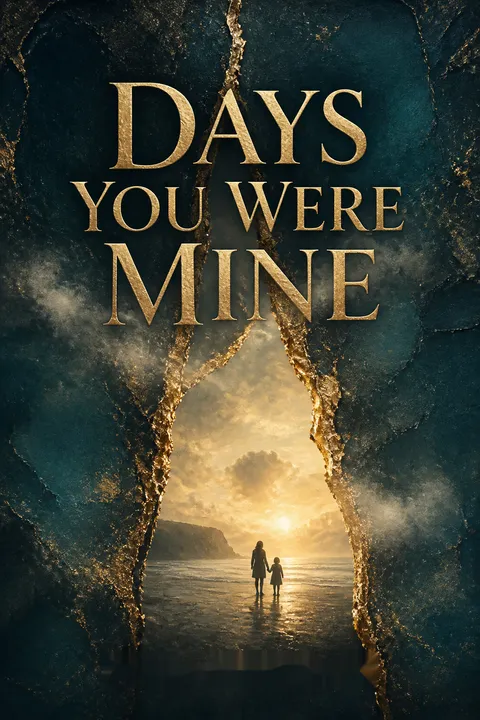

Plot Summary
Reunion at the Table
Luke, now a father himself, sits across from Alice, the woman who gave him up for adoption, in a London restaurant. Their meeting is charged with awkwardness, longing, and the unspoken pain of years apart. Luke's new fatherhood has stirred questions about his own origins, and Alice's presence is both a balm and a wound. They navigate the first steps of reconnection, sharing photos and stories, each trying to bridge the chasm of lost years. The emotional tension is palpable—Luke's skepticism and Alice's regret swirl beneath polite conversation. Both are haunted by what might have been, and the lunch becomes a tentative truce, a fragile beginning to a relationship neither knows how to define.
Art School Beginnings
In 1970s London, Alice is a talented but insecure art student at the Slade, struggling under the critical gaze of her tutors and the shadow of her own self-doubt. Her world is transformed when she meets Jacob Earl, a magnetic singer whose band, Disciples, is on the cusp of fame. Their connection is immediate and electric, igniting Alice's creativity and desire. The art school's bohemian chaos, the intoxicating music scene, and the thrill of first love converge, setting the stage for choices that will reverberate for decades. Alice's friendship with Rick, a gifted and supportive fellow student, becomes a lifeline as she navigates the pressures of ambition, love, and the search for identity.
The Man With Two Mothers
As Luke juggles his roles as son, partner, and new father, he is caught between two maternal figures: Christina, who raised him with care but emotional distance, and Alice, whose absence has shaped his sense of self. The arrival of his own child, Samuel, intensifies Luke's longing for connection and understanding. Family gatherings are fraught with unspoken resentments and the ache of not quite belonging. Luke's relationship with his partner, Hannah, is a source of comfort, but also a mirror for his unresolved questions. The tension between gratitude and loss, between the family he has and the one he imagines, becomes the central struggle of his adult life.
A Love Like Fire
Alice's relationship with Jacob is a whirlwind of artistic inspiration, sexual awakening, and emotional vulnerability. Their love is intense, creative, and at times destructive, fueled by the heady energy of youth and the promise of artistic greatness. Jacob's charisma masks a deep-seated sadness, and Alice is both drawn to and frightened by his darkness. Their connection is a refuge from the disappointments of family and the pressures of the outside world. As Alice's art flourishes, so does her dependence on Jacob, setting the stage for both ecstasy and heartbreak. Their love story is the crucible in which Alice's future—and Luke's—will be forged.
Family Tensions Unveiled
The narrative shifts between past and present, revealing the generational conflicts that shape both Alice and Luke. Alice's domineering father and passive mother cast long shadows over her choices, while Luke's adoptive mother's well-meaning but stifling love leaves him yearning for authenticity. The birth of Samuel brings these tensions to the surface, as parenting philosophies clash and old wounds are reopened. The struggle to define family—by blood, by choice, by circumstance—becomes a battleground for love, guilt, and the desire for belonging. Both Alice and Luke are forced to confront the legacies of their upbringings and the ways in which they have internalized their parents' fears and hopes.
The Artist and the Singer
Alice's artistic journey is inextricably linked to her relationship with Jacob and her friendship with Rick. Together, they form a makeshift family, united by creativity and mutual support. The bohemian world of 1970s London is both liberating and precarious, offering opportunities for self-expression but also exposing the fragility of dreams. As Alice's art gains recognition, and Jacob's band rises to fame, the pressures of success and the realities of mental illness begin to take their toll. The trio's bond is tested by jealousy, ambition, and the demands of adulthood, foreshadowing the losses to come.
The Weight of Absence
Luke's narrative is haunted by the psychological wounds of adoption: the sense of being unwanted, the fear of abandonment, and the struggle to form a coherent identity. Therapy sessions and self-reflection reveal the depth of his pain, as well as the societal taboos that keep it hidden. Alice, too, is marked by loss—her decision to give up her child is both a sacrifice and a source of lifelong torment. The novel explores the ways in which absence shapes character, relationships, and the capacity for love. The longing for what is missing becomes a driving force, propelling both mother and son toward confrontation and, ultimately, understanding.
A New Motherhood
In a twist of fate, Alice becomes the nanny for Samuel, her biological grandson. The arrangement is fraught with emotional complexity: Alice pours her love into Samuel, finding in him a second chance at the motherhood she lost. Luke and Hannah are grateful for her care, but uneasy about the intensity of her attachment. The boundaries between past and present, between mother and grandmother, begin to blur. Alice's devotion to Samuel becomes both a healing force and a source of tension, as old traumas resurface and the risk of history repeating itself looms ever larger.
Obsession and Boundaries
As Alice's bond with Samuel deepens, her grip on reality begins to slip. She dresses him in Luke's old clothes, calls him by the name she once gave her son, and is seen by others as his mother. Luke, increasingly unsettled, starts to surveil Alice, his own anxieties about belonging and loss fueling his suspicions. The family's fragile equilibrium is threatened as Alice's unresolved grief and longing for her lost child manifest in unhealthy ways. The question of what constitutes appropriate love, and where the line between care and obsession lies, becomes urgent and dangerous.
The Past Repeats
The narrative reaches a crisis point as Alice, overwhelmed by her need to reclaim what she lost, takes Samuel and disappears. The act is both a desperate attempt to heal her own wounds and a reenactment of the original trauma of separation. Luke and Hannah are plunged into panic and grief, forced to confront the full weight of their fears. The search for Samuel becomes a reckoning with the past, as secrets are revealed and the true cost of silence and denial is laid bare. The cycle of loss and longing threatens to consume another generation.
The Truth Unraveled
In the aftermath of Samuel's disappearance, long-buried truths come to light. Luke learns the real identity of his biological father, Jacob, and the circumstances of his birth. Alice's letter, filled with confession and sorrow, offers Luke the answers he has sought—and the pain he has avoided. The revelation is both shattering and liberating, forcing Luke to reexamine his sense of self and his relationships with both his mothers. The process of uncovering the truth is messy, painful, and necessary, marking a turning point in the journey toward healing.
The Child Taken
The search for Samuel leads Luke and Rick to Southwold, the site of Alice's happiest and most tragic memories. On the beach, they find Alice and Samuel, caught in a moment suspended between past and present. The confrontation is charged with emotion—anger, fear, compassion, and the possibility of forgiveness. Luke's recognition of Alice's pain, and his own, allows for a moment of connection that transcends blame. The return of Samuel is both a rescue and a symbolic reunion, offering a chance to break the cycle of loss.
The Beach of Goodbyes
On the windswept shore, Alice is forced to relinquish Samuel, just as she once gave up Luke. The act is both a repetition and a release, a moment of profound sorrow and tentative hope. Luke's empathy for his mother's suffering, and his willingness to see her as more than the sum of her mistakes, opens the door to reconciliation. The beach becomes a place of endings and beginnings, where the past is acknowledged and the future can be imagined anew. The pain of goodbye is tempered by the possibility of healing.
Healing and Forgiveness
In the aftermath, Luke seeks help for his own psychological wounds, confronting the legacy of adoption and the trauma of separation. Therapy sessions provide insight into the patterns that have shaped his life, and the importance of breaking the silence that surrounds adoption. Christina, his adoptive mother, steps forward with compassion and support, helping to mend the rifts that have divided the family. Alice, too, begins to heal, finding solace in art and the tentative restoration of her relationship with Luke. Forgiveness, though imperfect, becomes possible.
The Circle Restored
With time, the family finds a new equilibrium. Hannah leaves her job to care for Samuel, Christina becomes a more present grandmother, and Alice is welcomed back into their lives with clear boundaries. The experience of loss and recovery has changed them all, deepening their understanding of love, responsibility, and the limits of control. The family is no longer defined by secrecy or shame, but by the willingness to face pain and to choose connection. The circle, though scarred, is made whole again.
The Guilt That Remains
Despite the progress made, the characters are left with the enduring ache of guilt and regret. Alice mourns the life she might have had with Jacob and Luke, while Luke grapples with the knowledge that he can never fully reclaim what was lost. The scars of adoption and abandonment do not disappear, but are integrated into the fabric of their lives. The novel refuses easy resolutions, acknowledging that some wounds never fully heal. Yet, in the acceptance of imperfection, there is a measure of peace.
The Power of Memory
Memory, both individual and collective, is a central force in the story. Alice's paintings, Rick's music, and the family's shared rituals become vessels for remembrance and meaning. The act of creating and sharing art is both a tribute to the past and a way of forging new connections. The characters learn to honor their memories without being imprisoned by them, finding ways to carry their losses forward with grace. The persistence of love, even in the face of absence, becomes the novel's quiet affirmation.
A Painting of Beginnings
In the final chapter, the family gathers to celebrate Samuel's first birthday. Hannah and Luke present Alice with the painting she made of herself and Jacob, a symbol of the love and loss that began their story. The gesture is both an act of restitution and a recognition of the tangled bonds that unite them. Alice, changed by her journey, chooses to leave the painting with Luke, entrusting him with the legacy of their shared past. The novel ends on a note of tentative hope, as the family looks toward the future, carrying with them the lessons of pain, forgiveness, and the enduring power of love.
Analysis
Days You Were Mine is a profound meditation on the enduring impact of adoption, the complexities of motherhood, and the intergenerational transmission of trauma. Clare Leslie Hall crafts a narrative that is both intimate and sweeping, using the dual perspectives of Luke and Alice to explore the ways in which absence, longing, and secrecy shape identity. The novel refuses easy answers, acknowledging the pain and ambiguity inherent in choices made under duress. Through its nuanced portrayal of psychological wounds, the story challenges the myth of adoption as a simple act of rescue, instead revealing the lifelong consequences for both parent and child. The healing that occurs is hard-won, requiring honesty, vulnerability, and the willingness to confront uncomfortable truths. Ultimately, the novel affirms the possibility of forgiveness and the redemptive power of love, while honoring the scars that remain. In a world where family is often defined by blood or legality, Days You Were Mine insists on the importance of chosen bonds, the courage to face the past, and the grace to begin again.
Review Summary
Days You Were Mine explores the complex reunion between adopted adult Luke and his birth mother Alice, told through alternating timelines. Set between 1972 and 2000, the novel follows Alice's passionate past with musician Jake and Luke's present-day struggle with identity and belonging. When Alice begins caring for Luke's son Samuel, tensions arise as their bond deepens. Reviewers praise the emotional depth, beautiful writing, and authentic portrayal of adoption's psychological impacts, though some found the pacing slow. Most consider it a deeply moving family drama rather than a thriller, with many readers emotionally devastated by its heartbreaking conclusion.
People Also Read






Characters
Luke
Luke is the emotional center of the novel, a man shaped by the absence of his birth parents and the complexities of adoption. Raised by Christina in a loving but emotionally reserved home, he grows up with a persistent sense of not belonging, haunted by questions of origin and worth. His relationship with Hannah and the birth of his son, Samuel, trigger a crisis of identity, compelling him to seek out Alice, his birth mother. Luke's psychological journey is marked by longing, anger, and the struggle to reconcile gratitude with loss. His development is a painful but ultimately redemptive process of confronting the truth, accepting imperfection, and forging new bonds with both his mothers. Luke's arc is a testament to the enduring impact of early trauma and the possibility of healing through honesty and connection.
Alice
Alice is a gifted artist whose life is defined by the twin traumas of losing her lover, Jacob, to suicide and giving up her son, Luke, for adoption. Her early years are marked by creative ambition, passionate love, and the oppressive influence of her family. The loss of Jacob and the forced adoption of her child leave her emotionally scarred, oscillating between numbness and obsession. Alice's later role as Samuel's nanny is both a second chance and a dangerous reenactment of her original loss, blurring the boundaries between past and present. Her psychological complexity lies in her capacity for love, her inability to let go, and her struggle to forgive herself. Alice's journey is one of gradual self-acceptance, the reclamation of her artistic voice, and the painful work of making peace with her choices.
Christina
Christina is Luke's adoptive mother, a woman whose own grief over a stillborn child shapes her relationship with her son. She is loving, practical, and well-intentioned, but her emotional reserve and insistence on gratitude create a subtle barrier between her and Luke. Christina's struggle is one of displacement and insecurity, fearing that the arrival of Alice will render her irrelevant. Her development is marked by moments of grace and generosity, particularly in the aftermath of crisis, when she steps forward to support both Luke and Hannah. Christina's arc is a quiet but powerful exploration of the complexities of motherhood, the pain of infertility, and the courage required to let go.
Hannah
Hannah is Luke's girlfriend and the mother of Samuel, a journalist with a strong sense of self and a deep capacity for empathy. She is both a catalyst and a stabilizer, encouraging Luke to seek out his birth mother and supporting him through the turbulence that follows. Hannah's own family background, marked by warmth and openness, contrasts with Luke's experience and offers a model of unconditional love. Her struggle to balance career and motherhood, and her eventual decision to prioritize her child, reflect the novel's broader themes of sacrifice and self-discovery. Hannah's role is that of a bridge between worlds, helping to mediate conflict and foster healing.
Jacob Earl
Jacob is Alice's first love and Luke's biological father, a talented musician whose brilliance is matched by his vulnerability. His relationship with Alice is passionate and transformative, but his battle with depression and the legacy of an abusive childhood ultimately lead to his suicide. Jacob's absence is a defining force in the lives of both Alice and Luke, shaping their sense of loss and longing. He is remembered through stories, music, and art, his presence lingering as both inspiration and wound. Jacob's character embodies the novel's exploration of the interplay between creativity, mental illness, and the search for meaning.
Rick (Richard Fields)
Rick is Alice's closest friend from art school, a talented artist in his own right, and a steadying presence in her life. He steps in as a surrogate father to Luke in the aftermath of Jacob's death, offering support, companionship, and practical help. Rick's own struggles with identity and sexuality add depth to his character, as does his unrequited love for Alice. His loyalty is unwavering, even as he sacrifices his own ambitions for the sake of Alice and her child. Rick's role is that of a guardian and truth-teller, helping to guide both Alice and Luke through their darkest moments.
Samuel
Samuel is the infant son of Luke and Hannah, a symbol of hope, renewal, and the possibility of breaking the cycle of loss. His presence brings joy and vulnerability to the family, serving as a mirror for the adults' unresolved traumas. Samuel becomes the focus of Alice's longing and the trigger for the novel's central crisis. Though too young to have agency, his role is pivotal, embodying the stakes of love, attachment, and the need for boundaries.
Ben
Ben is Luke's oldest friend, a fellow artist who provides comic relief, perspective, and unwavering support. His outsider's view of Luke's family drama offers both insight and grounding, helping to defuse tension and encourage self-reflection. Ben's own artistic ambitions and personal struggles serve as a counterpoint to Luke's journey, highlighting the importance of friendship and chosen family.
Elizabeth
Elizabeth, Ben's partner, is a child psychologist whose professional insights help to frame the novel's exploration of adoption, attachment, and trauma. Her gentle persistence and empathy make her a valuable sounding board for Luke and Hannah, offering guidance and challenging assumptions. Elizabeth's presence underscores the importance of seeking help and the value of understanding psychological wounds.
Joel Harris
Joel is the therapist who helps Luke make sense of his adoption-related trauma, providing both clinical insight and compassionate support. His role is to articulate the psychological theories that underpin the novel's themes, offering a framework for healing and self-acceptance. Joel's sessions with Luke are pivotal in moving the narrative from crisis to resolution, emphasizing the necessity of confronting pain in order to move forward.
Plot Devices
Dual Timeline Structure
The novel alternates between Luke's present-day perspective and Alice's recollections of the 1970s, creating a layered narrative that gradually reveals the origins of their pain. This structure allows the reader to experience the emotional impact of choices made decades earlier, and to understand how the past continues to shape the present. The dual timeline also builds suspense, as secrets are withheld and then revealed at key moments, heightening the emotional stakes.
Epistolary Confession
Alice's letter to Luke, in which she finally reveals the identity of his father and the circumstances of his birth, serves as a crucial plot device. The act of writing allows Alice to confront her own guilt and to offer Luke the answers he needs. The letter functions as both a narrative turning point and a symbol of the power of honesty to heal old wounds.
Symbolic Objects
Throughout the novel, objects such as Alice's paintings, Jacob's music, and the childhood bear serve as tangible links to the past. These items carry emotional weight, triggering memories and facilitating connection across generations. The final gift of Alice's painting to Luke encapsulates the novel's themes of loss, legacy, and the possibility of new beginnings.
Psychological Realism
The novel foregrounds the psychological impact of adoption, trauma, and loss, using therapy sessions and internal monologue to explore the characters' inner lives. This focus on psychological realism deepens the reader's understanding of motivation and conflict, and underscores the importance of self-awareness and professional help in the healing process.
Foreshadowing and Repetition
The narrative is rich with moments of foreshadowing, as patterns of behavior repeat across generations. Alice's abduction of Samuel mirrors her earlier loss of Luke, while Luke's anxieties about fatherhood echo his own childhood fears. These repetitions serve to highlight the cyclical nature of trauma and the difficulty of breaking free from inherited pain.
Download PDF
Download EPUB
.epub digital book format is ideal for reading ebooks on phones, tablets, and e-readers.








































