
Plot Summary
Mountain's Shadow, Lion's Hide
Danae, a fisherman's daughter on Naxos, is haunted by the disappearance of her sister Alea during a sacred festival. The trauma fractures her family and her sense of belonging. When Alea returns, changed and pregnant, Danae's world is upended. The island's superstitions and the gods' indifference drive Danae to question everything. After a series of betrayals and a supernatural earthquake, Danae is forced to flee, disguised in the impenetrable lion hide of Heracles. She leaves behind her family, her home, and the only life she's known, setting out alone into a world ruled by gods, monsters, and fate.
Blood on the Altar
The annual Thesmophoria festival, meant to honor Demeter, turns from celebration to horror as the goddess demands a human sacrifice. The villagers' fear and desperation are palpable, and Danae witnesses the cruelty of divine will firsthand. The Maenads, wild women devoted to Dionysus, disrupt the ritual, sowing chaos and further angering the gods. In the aftermath, Alea vanishes, and the village is left reeling. The gods' demands for blood and the villagers' willingness to comply reveal the dark underbelly of faith and tradition, setting Danae on a path of rebellion against the divine order.
The Missing and the Maenads
Alea is found, traumatized and pregnant, her memory fractured. The village turns on her, branding her a whore and outcast. Danae's attempts to protect her sister only deepen their isolation. The Maenads, once feared, become a source of forbidden knowledge, revealing to Danae the existence of "shades"—monstrous, unseen entities responsible for the disappearances known as the Missing. The sisters' bond is tested as Alea claims her child is the son of Zeus, blurring the line between victimhood and divine favor. The family fractures under the weight of shame, secrets, and the gods' indifference.
A Shade in the Night
Danae's world is invaded by the supernatural: she sees red-eyed shades stalking her family, and her nephew Arius is born under a cloud of dread. The shades' presence intensifies, culminating in Arius's abduction. The villagers' cruelty and the gods' silence leave Danae's family broken. Alea, consumed by grief, takes her own life, and Danae's mother, driven mad by loss, accuses Danae of witchcraft. Forced to flee, Danae is branded a kakodaimon—a monster. Her only hope lies in seeking the Oracle at Delphi, desperate for answers about her powers and the fate of her loved ones.
Ripe Fruit, Bitter Truth
Danae escapes Naxos with her father's help, stowing away on a merchant ship bound for Athens. She is thrust into a world of poverty, slavery, and corruption, quickly learning that mortals are as cruel as the gods. Betrayed and sold into slavery, Danae's resilience is tested. She befriends fellow captives, including the enigmatic Autolycus and a Spartan soldier, and witnesses the brutality of the flesh market. Her journey is marked by loss, violence, and the constant threat of divine retribution, but also by the flicker of hope that she might one day find her place in the world.
Daughter of Thunder
In Athens, Danae navigates a city rife with intrigue and danger. She witnesses the downfall of Queen Phaedra and the machinations of King Theseus. Disguised as a novice priestess, she joins a caravan to Delphi, where she hopes to find answers. Along the way, she encounters the Children of Prometheus, a secret society dedicated to resisting the gods. Danae learns of a prophecy: when the prophet falls and gold that grows bears no fruit, the last daughter will come to end the reign of thunder. The weight of destiny settles on her shoulders as she approaches Delphi.
The Lotus and the Island
Shipwrecked on Lemnos, Danae and the Argonauts are ensnared by the island's women, who drug them with lotus flowers and erase their memories. The island is a matriarchal utopia built on the bones of murdered men. Danae, lulled into complacency, nearly loses herself, but the prophecy stone—a shard of the original oracle—restores her mind. She discovers the truth: the Lemnians are not victims but predators, and the Argonauts are next. Danae leads a desperate revolt, unleashing her powers to save her companions, but the cost is blood, fire, and the loss of innocence.
The Prophecy Stone
Danae's connection to the prophecy stone deepens, granting her visions of the tapestry of life and the golden apple tree—a symbol of forbidden knowledge and the cycle of creation and destruction. Each use of the stone drains her life-force, and she learns that prophecy is a double-edged gift. Guided by the Children of Prometheus, Danae uncovers the truth about the gods' origins and the nature of her own powers. She is not a demigod, but something older and more dangerous: a Titan reborn, destined to challenge the gods themselves.
The Reckoning at Delphi
At Delphi, Danae's powers spiral out of control. She destroys the oracle, breaking the gods' hold on prophecy and unleashing chaos. Apollo's wrath is swift and merciless: the city is razed, and Danae becomes the most wanted fugitive in Greece. The Children of Prometheus are decimated, and Danae is forced to flee with Manto, her only ally. Manto sacrifices themselves to save Danae from the harpies—agents of Zeus—leaving her more alone than ever. The prophecy is now in motion, and Danae's destiny is sealed.
Chains, Slaves, and Seers
Danae joins the Argonauts, a band of heroes led by Jason, Heracles, Atalanta, and others, on their quest for the Golden Fleece. She conceals her true nature, posing as a seer and claiming divine parentage. The voyage is fraught with danger: pirates, monsters, and the ever-present interference of the gods. Danae's powers grow, but so does the suspicion of her companions. Her bond with Heracles deepens, and she finds kinship with Atalanta and Hylas. The journey east is a crucible, forging Danae into a leader and a weapon.
The Argonauts Gather
The Argonauts face trials that test their loyalty, courage, and humanity. On Lemnos, they are seduced and nearly destroyed by the island's women. In the land of the Doliones, a supernatural mist sows confusion, leading to tragedy and betrayal. The gods' games grow more deadly, and Danae's powers become both a blessing and a curse. Heracles's true nature is revealed: he is not a demigod, but a mortal made strong by divine elixir. Danae's own identity is called into question, and she must choose between love, loyalty, and destiny.
Lemnos: The Island of Women
On Lemnos, the Argonauts are lulled into a false paradise, their memories and wills eroded by the lotus. Danae, with the help of the prophecy stone, breaks free and leads a bloody revolt. The island's matriarchy is revealed as a prison, and the cost of freedom is high. Danae's powers are unleashed in full, and she becomes both savior and destroyer. The survivors flee, haunted by what they have done and what they have become.
The Earthborn and the Mist
The Argonauts face the Earthborn, monstrous six-armed creatures, and are nearly destroyed by a supernatural mist conjured by Athena. Danae's powers are tested to their limits as she battles both monsters and gods. The cost is high: Hylas is lost, and the crew is fractured by grief and suspicion. Danae's secret is revealed, and she is forced to claim divine parentage to survive. The journey becomes a test of faith, will, and the meaning of heroism.
The Black Sea's Fury
As the Argo sails the Black Sea, Danae's powers grow, but so does the danger. The gods' attacks become more direct, and the truth about Heracles is revealed: his strength is not his own, but the result of Zeus's manipulation. Danae is betrayed by Dolos, who tries to kill her to protect Heracles's secret. In self-defense, Danae kills Dolos and is forced to abandon Heracles, realizing that her destiny is hers alone. The journey becomes a solitary quest, and Danae is transformed by loss, guilt, and the burden of power.
The Last Daughter
Danae climbs the Caucasus Mountains to find Prometheus, the last Titan. He reveals the ultimate truth: the gods are not divine, but mortals who seized power and rewrote history. Danae is not a demigod, but a Titan reborn, destined to end the reign of the Twelve. Hera, Queen of Heaven, attacks, and Danae barely survives. Prometheus dies, and Danae is left with more questions than answers. The cycle of creation and destruction is revealed, and Danae's role as the last daughter—the reckoning—becomes clear.
The Mountain at the End
Danae's journey culminates on the mountain's peak, where she faces Hera and the truth of her own nature. The gods' power is revealed as a lie, sustained by fear, manipulation, and the theft of life-force. Danae's powers are both a gift and a curse, and she must choose whether to become the destroyer or the liberator. The cost of freedom is high, and the future is uncertain. Danae's final act is to seek her sister's soul in the Underworld, determined to find peace before fulfilling her destiny.
The Queen of Heaven
On Olympus, Hera returns, wounded and afraid. The gods are shaken by Danae's power and the prophecy of their downfall. Zeus, King of the Gods, vows never to underestimate the last daughter again. The gods' unity fractures, and the stage is set for a final reckoning. The cycle of creation and destruction is poised to begin anew, and Danae's journey is far from over.
The Truth of Titans
Danae's journey has shattered the old order. The gods are revealed as mortals who seized power, the Titans as the true originators of prophecy and life-force. The omphalos stone, the golden apple tree, and the tapestry of life are symbols of knowledge, rebellion, and the cycle of history. Danae, the last daughter, stands at the threshold of a new age, her destiny entwined with the fate of gods and mortals alike. The reckoning has begun, and the world will never be the same.
Analysis
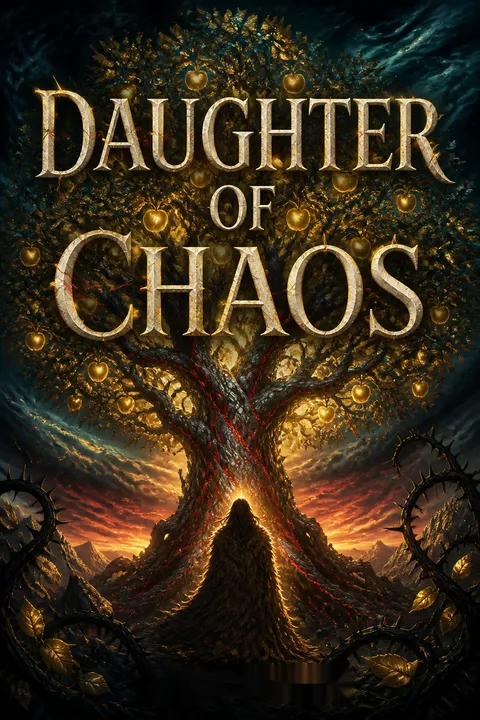
Daughter of Chaos is a radical reimagining of Greek myth, blending epic fantasy with psychological realism and feminist critique. At its core, the novel interrogates the nature of power—divine, mortal, and personal—and the stories we tell to justify suffering and maintain control. Danae's journey from outcast to revolutionary is both a personal and collective reckoning: she is the last daughter, the inheritor of trauma, and the agent of change. The gods are revealed as mortals who seized power, their divinity a carefully maintained illusion. The motifs of prophecy, the golden apple tree, and the manipulation of life-force invite readers to question the origins of authority, the cost of knowledge, and the possibility of liberation. The novel's cyclical structure, use of unreliable narration, and focus on psychological depth make it a powerful meditation on grief, agency, and the hope of a new world. In a modern context, Daughter of Chaos speaks to the need for resistance against oppressive systems, the importance of reclaiming narrative, and the enduring power of love, memory, and rebellion.
Review Summary
Daughter of Chaos receives mixed reviews averaging 3.65/5 stars. Readers praise the fresh take on Greek mythology, fast-paced action, engaging secondary characters like Heracles and Atalanta, and excellent audiobook narration. However, criticisms include inconsistent pacing, weak protagonist development, minimal romance, and significant mythology inaccuracies that frustrated knowledgeable readers. Several reviewers note excessive "telling versus showing" and feel the main character lacks depth. The book ends on a cliffhanger, leaving readers divided—some eagerly await book two, while others found fundamental flaws too distracting to continue the series.
People Also Read

Characters
Danae
Danae is a fisherman's daughter from Naxos, marked by trauma, loss, and a fierce love for her family. Her journey from outcast to revolutionary is driven by grief, anger, and the search for meaning in a world ruled by indifferent gods. Gifted (or cursed) with the power to manipulate life-force, Danae is both savior and destroyer, haunted by the prophecy that she will end the reign of the Twelve. Her relationships—with her sister Alea, with Heracles, with the Children of Prometheus—shape her evolution from victim to agent of change. Danae's psychological arc is one of self-discovery, as she learns that her power is not divine but Titan in origin, and that her destiny is to shatter the old order and forge a new path for mortals.
Alea
Alea is Danae's beloved sister, whose disappearance and return set the story in motion. Traumatized and pregnant, Alea clings to the belief that her child is the son of Zeus, transforming her victimhood into a narrative of divine favor. Her psychological fragility and longing for meaning mirror Danae's own struggles. Alea's fate—her suicide and the loss of her child—haunt Danae throughout her journey, symbolizing the cost of faith, the cruelty of the gods, and the enduring power of love and grief.
Heracles
Heracles is the legendary hero, son of Zeus, whose strength and fame mask deep wounds. His heroism is revealed as a construct, the result of divine manipulation and a secret elixir. Haunted by the murder of his family (committed under Hera's curse), Heracles is both a symbol of mortal suffering and a critique of the heroic ideal. His relationship with Danae is complex—partnership, romance, and mutual recognition of pain. Heracles's arc is one of disillusionment, as he learns the truth of his origins and the limits of his power. His ultimate fate is to be left behind, a casualty of the gods' games and Danae's destiny.
Jason
Jason is the captain of the Argonauts, driven by prophecy, ambition, and a desperate need for validation. His charisma masks insecurity and ruthlessness. Jason's willingness to sacrifice others for his quest, his manipulation of omens, and his eventual unraveling reveal the dangers of unchecked ambition and the hollowness of divine favor. He is both ally and antagonist, a mirror for Danae's own struggles with power and destiny.
Atalanta
Atalanta is a fierce, independent warrior, shaped by trauma and the betrayal of the gods. Her loyalty to Heracles and her gradual trust in Danae provide a counterpoint to the story's themes of faith and doubt. Atalanta's arc is one of guarded vulnerability, as she learns to trust, love, and fight for something beyond survival. Her presence challenges the patriarchal order and offers a vision of female strength and solidarity.
Hylas
Hylas is the heart of the Argonauts, a farm boy turned adventurer whose kindness and optimism anchor Danae. His love for her is unspoken but deeply felt, and his loss is a turning point in Danae's journey. Hylas represents the possibility of happiness, the pain of sacrifice, and the cost of destiny. His death, unburied and unmourned, is a searing indictment of the gods' cruelty and the world's indifference.
Dolos
Dolos is Heracles's loyal companion and healer, secretly in league with Zeus. His role as the provider of Heracles's strength elixir is a devastating revelation, exposing the lies at the heart of the heroic myth. Dolos's love for Heracles, his guilt, and his ultimate betrayal of Danae add layers of psychological complexity. His death at Danae's hands is both a tragedy and a necessity, marking the point of no return in her transformation.
Manto
Manto is a member of the Children of Prometheus, tasked with guiding Danae and preserving the prophecy. Their sacrifice to save Danae from the harpies is a moment of profound loss and loyalty. Manto's gender fluidity, wit, and courage make them a memorable companion, and their death is a catalyst for Danae's resolve to fulfill her destiny.
Phineus
Phineus is a blind seer, exiled and tormented by the gods, who becomes Danae's mentor in the ways of prophecy and the truth of the Titans. His grief for Manto, his wisdom, and his willingness to sacrifice himself for the cause of mortal freedom make him a tragic yet inspiring figure. Phineus embodies the cost of knowledge and the hope of resistance.
Zeus, Hera, and the Twelve
The Olympian gods are revealed as mortals who seized power, rewriting history and sustaining their rule through fear, manipulation, and the theft of life-force. Zeus is the ultimate tyrant, Hera the wounded queen, and the rest of the Twelve are pawns in a cosmic game. Their psychological complexity is rooted in insecurity, ambition, and the terror of losing control. The gods' unraveling mirrors the collapse of old certainties and the dawn of a new age.
Plot Devices
Prophecy and the Omphalos Stone
The prophecy—when the prophet falls and gold that grows bears no fruit, the last daughter will come—drives the narrative, shaping Danae's journey and the actions of gods and mortals alike. The omphalos stone, a shard of the original oracle, is both a source of visions and a drain on Danae's life-force, symbolizing the cost of knowledge and the double-edged nature of destiny. The stone's visions are cryptic, requiring interpretation and often foreshadowing future events. The motif of the golden apple tree recurs as a symbol of forbidden knowledge, rebellion, and the cycle of creation and destruction.
Life-Threads and Power
Danae's ability to manipulate life-threads—absorbing energy from living beings and the elements—serves as both her greatest strength and her deepest vulnerability. Each use of her power comes at a cost, blurring the line between savior and destroyer. The gods' own powers are revealed to be rooted in the same life-force, exposing the lie of their divinity. The tension between using power for liberation or domination is a central theme, explored through Danae's choices and the consequences of her actions.
Foreshadowing and Cyclical Structure
The narrative is structured around cycles: the annual festivals, the rise and fall of heroes, the repetition of trauma and loss. Foreshadowing is woven through dreams, visions, and the recurrence of symbols (the apple tree, the lion hide, the shades). The story's structure mirrors the prophecy's promise of an ending that is also a beginning, inviting readers to question the nature of fate, agency, and the possibility of change.
Psychological Realism and Unreliable Narration
Danae's journey is marked by memory loss, unreliable visions, and the distortion of reality by trauma and magic. The use of drugs (lotus, phármakon), supernatural manipulation, and the gods' rewriting of history create a sense of uncertainty and instability. The reader is invited to question what is real, what is myth, and what is propaganda. The psychological depth of the characters—especially Danae, Heracles, and Alea—grounds the epic in human emotion and moral ambiguity.
Download PDF
Download EPUB
.epub digital book format is ideal for reading ebooks on phones, tablets, and e-readers.








































