
Plot Summary
City and Self Entwined
The story opens with the mythic founding of Nivela, a city born from violence, survival, and legend. The city's origin is mirrored in the protagonist's own sense of self—her identity is bound to the city's fate, its myths, and its wounds. The narrative blurs the line between person and place, suggesting that to understand one is to understand the other. This entwining sets the tone for a tale where history, memory, and personal destiny are inextricably linked, and where the city's scars are reflected in the lives of its people. The emotional resonance is one of longing, loss, and the search for meaning in the ruins of both city and self.
Siblings and Sacred Curses
In the village of Wall's End, siblings Kirby and Balain grow up in the shadow of a ruined city and a vanished goddess, Iona. Balain's discovery of an ancient sword ignites his belief in a heroic destiny to restore their lost god and lift the curse—the Wither—that has left their people barren. Kirby, practical and loyal, is both inspired and frightened by her brother's dreams. Their bond is tested by secrets, the weight of expectation, and the slow, devastating realization that some wounds—personal and communal—cannot be healed by faith alone. The chapter is suffused with hope, envy, and the ache of growing apart.
The Birth of Idolfire
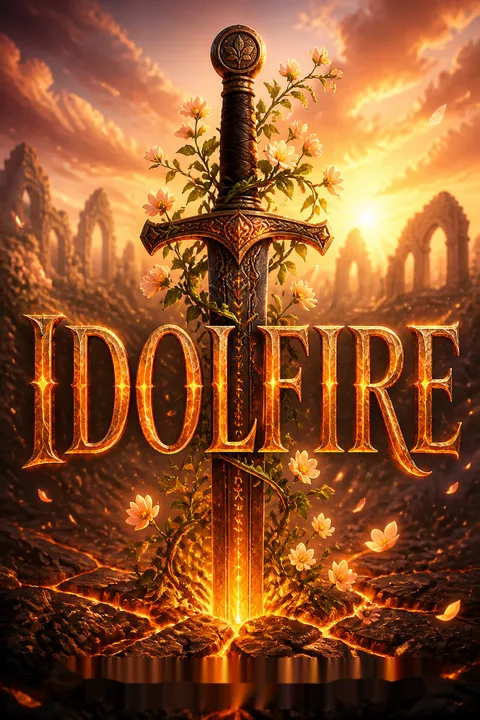
In the distant city of Ash, Aleya, a royal outcast, undergoes a brutal rite to access Idolfire—magic born from the burning of sacred idols and the channeling of collective belief. Her journey is marked by pain, ambition, and the need to prove herself in a city that both reveres and resents her. The narrative explores the cost of power, the trauma of inheritance, and the ways in which faith can be both a weapon and a wound. Aleya's struggle is not just for acceptance, but for agency in a world where the gods themselves are commodities to be stolen, traded, and consumed.
Trials of Blood and Faith
Aleya faces a rigged combat trial, judged by her scheming uncle, and emerges victorious through wit and ferocity. Yet her triumph is hollow—her city's love remains elusive, and her Calling, the rite of passage for Ashalite royalty, is indefinitely postponed. Meanwhile, Kirby's world is upended by the revelation of her own infertility, the Wither's curse made personal. Both women are cast adrift by forces beyond their control, forced to confront the limits of tradition, the cruelty of fate, and the loneliness of being marked as different. The emotional arc is one of defiance, shame, and the desperate need for connection.
The Wither's Quiet Grief
As Wall's End faces extinction, Kirby and her community grieve not just for lost children, but for the slow erasure of their way of life. Balain's death and the collapse of the old temple mark the end of an era. The village's attempts to carry on—marriages, births, rituals—are haunted by the knowledge that they are the last of their line. Kirby's discovery of the sword Cursebreaker is both a legacy and a burden, a symbol of all that has been lost and all that might still be reclaimed. The mood is elegiac, suffused with the pain of endings and the faint glimmer of stubborn resilience.
Callings and Exiles
Both Aleya and Kirby are driven from home—Aleya by royal command, Kirby by the need to do something, anything, to break the curse. Their departures are marked by fraught farewells, unspoken apologies, and the weight of impossible expectations. Each sets out on a road that is as much internal as external, carrying with them the hopes and failures of their people. The world beyond is vast, strange, and often hostile, but it is also alive with possibility. The emotional core is one of fear, determination, and the bittersweet freedom of leaving everything behind.
Roads of Ruin and Hope
The old Nivelan highway becomes a character in itself—a path through abandoned villages, haunted forests, and the memories of empire. Kirby's journey is marked by loneliness, peril, and fleeting moments of kindness. She encounters both the best and worst of humanity, from mad old women to predatory men, and learns to survive by wit and caution. The road is a place of transformation, where the past is never truly dead and every step forward is a negotiation with ghosts. The emotional tone is one of exhaustion, wonder, and the slow forging of self-reliance.
Encounters in Wild Lands
Aleya and Kirby's paths converge in the far west, in a parody of Nivela ruled by deluded cultists. Their escape—by magic, luck, and mutual trust—marks the beginning of a partnership that is at once uneasy and essential. Together, they navigate the wilds of Bern, the perils of Gleatland, and the complexities of their own histories. Along the way, they are joined by Nylophon, a disgraced Carthic soldier whose own journey is one of shame, longing, and the search for redemption. The trio's dynamic is fraught with tension, humor, and the slow, painful work of learning to trust.
The Witch and the Warrior
In Gleatland, Aleya and Kirby are drawn into local conflicts—monsters in the woods, prophetic children, and the politics of survival. Aleya's magic is both a blessing and a curse, capable of saving lives but also of unleashing uncontrollable destruction. The trio's bonds are tested by danger, misunderstanding, and the ever-present threat of violence. Through battles, feasts, and stories shared by firelight, they begin to see each other not just as allies, but as something closer to family. The emotional arc is one of vulnerability, courage, and the tentative blooming of love.
Gleatland's Living God
The confrontation with Krull, the living war-god of the Gleats, is a turning point. Aleya's use of Idolfire to subdue the rampaging statue is both a miracle and a desecration, a reminder that the power to save is also the power to destroy. The aftermath is one of celebration and mourning, as the trio is honored and then sent on their way, changed by what they have witnessed. The encounter with living divinity forces each to reckon with the limits of faith, the dangers of unchecked power, and the meaning of sacrifice. The mood is awe-struck, haunted, and quietly triumphant.
The City at the Center
The journey eastward brings the trio to the heart of the old world—a desert littered with the bones of forgotten cities, haunted by the ghosts of ambition and loss. In the ruins, they encounter moving wall-tablets, living memories, and the inescapable weight of history. The approach to Nivela, the City at the Centre of the World, is both a culmination and a reckoning. The city is a marvel and a mausoleum, a place where the past is preserved at the cost of the future. The emotional tone is one of awe, dread, and the sense that something vast and final is about to unfold.
The Worldlord's Bargain
Within Nivela, the trio is separated and tested. Kirby is lured by the Worldlord Scoria, who offers her a place in a paradise built on stolen gods and endless sacrifice. Aleya faces her own ancestor, the traitor who sold out Ash, in a battle that is as much spiritual as physical. Nylophon, at last, finds a cause worth dying for. The city itself is alive, hungry, and on the verge of collapse. The bargains offered are seductive, but the cost is annihilation—of self, of memory, of the world beyond the walls. The emotional arc is one of temptation, resistance, and the courage to choose impermanence over false eternity.
The Collapse of Empires
As the city falls, the trio must fight their way out—physically, emotionally, and metaphysically. Nylophon's sacrifice buys Aleya and Kirby the time to confront Iona, the goddess at the heart of the curse. The destruction of Nivela is both literal and symbolic: the end of empire, the breaking of old patterns, and the release of all that has been held in stasis. The survivors emerge into a world that is wounded but open, where the future is uncertain but possible. The mood is one of exhaustion, relief, and the bittersweet knowledge that all things must end.
The Goddess and the Girl
In the ruined grove, Aleya and Kirby face Iona—not as a distant deity, but as a woman broken by grief, longing for spring after endless winter. Their act of compassion, of seeing the goddess as human, breaks the cycle of violence and allows for the possibility of renewal. The curse is not lifted by force, but by understanding and empathy. The emotional resonance is one of catharsis, forgiveness, and the tentative hope that even the deepest wounds can heal.
Sacrifice and Survival
The survivors part ways—Kirby returns to Wall's End, Aleya to Ash. Their reunion is tender, painful, and marked by the knowledge that some distances cannot be bridged, at least not yet. Nylophon's grave stands as a testament to the cost of courage and the possibility of redemption. The world is changed, but not saved; the work of healing is ongoing, and the scars of empire linger. The emotional arc is one of grief, gratitude, and the quiet strength to carry on.
The Return of Spring
In Wall's End, Iona is restored—not as a weapon, but as a source of life and community. The curse is broken, not by magic, but by the slow, patient work of rebuilding, of welcoming strangers, of telling new stories. In Ash, Aleya's reign is marked by reform, resistance, and the knowledge that true change is always unfinished. The world is not healed, but it is alive, and the promise of spring endures. The emotional tone is one of bittersweet joy, humility, and the acceptance of impermanence.
Endings, Beginnings, and Memory
The narrative closes with reflections on history, myth, and the power of storytelling. The true origin of Nivela is revealed to be humble, forgotten, and endlessly reimagined. The survivors live on, changed by their journey, carrying with them the lessons of loss, love, and the necessity of letting go. The final reunion between Kirby and Aleya is quiet, tender, and suffused with the knowledge that every ending is also a beginning. The emotional resonance is one of peace, fulfillment, and the enduring power of memory.
Analysis
Idolfire is a sweeping, emotionally resonant fantasy that interrogates the nature of power, faith, and the stories we tell about ourselves and our worlds. At its heart, the novel is about the cost of survival—personal, communal, and civilizational—and the ways in which trauma, ambition, and longing shape both individuals and societies. Through its intertwined narratives, the book explores the dangers of idolizing the past, the seductions and perils of empire, and the necessity of compassion in the face of suffering. The magic system—Idolfire—serves as a potent metaphor for the commodification of belief and the violence inherent in the pursuit of paradise. Yet the novel resists cynicism: its ultimate message is one of humility, forgiveness, and the quiet, stubborn hope that even in the ruins of history, new life can take root. In a world obsessed with legacy and greatness, Idolfire reminds us that true healing comes not from conquest, but from the courage to let go, to love, and to begin again.
Review Summary
Idolfire by Grace Curtis receives mixed reviews with an overall rating of 3.61/5. Readers praise the worldbuilding, character development, and unique take on a post-empire fantasy inspired by Rome's fall. The sapphic romance between Kirby and Aleya is described as slow-burn, with many appreciating the journey-focused narrative. However, criticisms include slow pacing, disconnection from characters, confusing second-person POV chapters, and a divisive ending where the protagonists part ways rather than achieving a traditional happy ending. Some found the adventure lacking stakes, while others loved the philosophical, realistic conclusion.
People Also Read


Characters
Kirby
Kirby is the heart of the story—a young woman from Wall's End, marked by the Wither's curse and the loss of her brother. Her journey is one of reluctant heroism: she sets out not to save the world, but to do what little she can for her dying community. Kirby's strength lies in her resilience, her empathy, and her refusal to give up even when hope seems lost. Her relationship with Aleya is transformative, teaching her to value herself and to seek joy as well as duty. Psychologically, Kirby is shaped by grief, guilt, and the longing for connection, but she grows into a figure of quiet, steadfast courage.
Aleya
Aleya is a royal exile from Ash, driven by the need to prove herself in a city that both reveres and resents her. Her mastery of Idolfire is both a gift and a curse, marking her as powerful but also as an outsider. Aleya's journey is one of self-discovery, as she learns to balance ambition with compassion, and to accept love and vulnerability. Her relationship with Kirby is a source of healing and growth, allowing her to move beyond the traumas of her past. Psychologically, Aleya is marked by pride, insecurity, and the hunger for belonging, but she ultimately chooses integrity over power.
Nylophon
Nylophon is a Carthic soldier, haunted by failure and the loss of his beloved Nachi. His journey is one of atonement: he seeks meaning in battle, in companionship, and finally in sacrifice. Nylophon's bravado masks deep wounds—he is both a product and a victim of a violent, patriarchal culture. Through his friendship with Kirby and Aleya, he learns humility, loyalty, and the possibility of change. His final act is one of selfless courage, breaking the cycle of violence that has defined his life. Psychologically, Nylophon is driven by shame, longing, and the desperate need to matter.
Scoria (The Worldlord)
Scoria is the architect of Nivela's empire—a woman who conquers the world through violence, cunning, and the theft of gods. Her vision is both grand and monstrous: she seeks to create paradise, but at the cost of countless lives and the destruction of meaning. Scoria is both a villain and a warning—a figure who embodies the dangers of unchecked ambition, the seductions of power, and the loneliness of those who would rule. Psychologically, she is marked by bitterness, pride, and the inability to accept her own mortality. Her downfall is both inevitable and deeply sad.
Balain
Balain is Kirby's older brother, whose dreams of heroism and restoration drive much of the early narrative. His faith in destiny and the power of the past is both inspiring and tragic—he is unable to accept the limits of his world, and his quest ends in death. Balain's legacy is both a burden and a gift to Kirby, shaping her journey and her understanding of what it means to be a hero. Psychologically, he is marked by hope, naivety, and the inability to let go.
Iona
Iona is the lost goddess of spring, stolen from Balt and used as a tool of empire. Her presence is both literal and metaphorical—she is a figure of longing, loss, and the possibility of renewal. Iona's true nature is revealed to be deeply human: she is a mother broken by grief, longing for spring after endless winter. Her healing is not achieved by force, but by compassion and understanding. Psychologically, Iona represents the wounds of history, the dangers of idolization, and the necessity of forgiveness.
Eshmer
Eshmer is Aleya's uncle and political rival, a figure of both threat and support. His actions are driven by a complex mix of love, fear, and the desire to preserve the city's stability. Eshmer's relationship with Aleya is fraught with misunderstanding, but ultimately marked by a grudging respect and the recognition of her worth. Psychologically, he is shaped by duty, caution, and the fear of change.
Ina
Ina is Aleya's ex-girlfriend, a figure of stability, longing, and regret. Her presence in the story highlights Aleya's growth and the costs of ambition. Ina's love is steadfast but ultimately unable to keep Aleya from her chosen path. Psychologically, she is marked by loyalty, vulnerability, and the pain of letting go.
Ermen
Ermen is a Gleatish hunter who aids the trio in the wilds. She is practical, humorous, and fiercely protective of her people. Ermen's presence grounds the narrative in the realities of survival, community, and the importance of small acts of kindness. Psychologically, she is shaped by loss, pride, and the determination to endure.
Lundi
Lundi is a Gleatish girl with the gift of sight, whose prophecies guide and unsettle the protagonists. She represents the wisdom of children, the power of belief, and the dangers of being seen as different. Psychologically, Lundi is marked by curiosity, loneliness, and the burden of knowledge.
Plot Devices
Intertwined Narratives and Mythic Structure
The novel weaves together the stories of Kirby, Aleya, and Nylophon, using alternating perspectives and interludes addressed to "You"—the city, the reader, the mythic self. This structure allows for deep exploration of theme: the ways in which personal and collective histories shape identity, the cyclical nature of violence and renewal, and the power of storytelling to create and destroy worlds. The use of mythic retellings, unreliable narrators, and embedded legends blurs the line between history and fiction, inviting the reader to question what is real and what is constructed.
Idolfire as Metaphor and Mechanism
Idolfire—the burning of gods to create power—is both a literal magic system and a metaphor for the ways in which belief, trauma, and memory are weaponized by individuals and empires. The theft and abuse of idols mirrors the theft and abuse of people, cultures, and histories. The narrative uses Idolfire to explore questions of agency, complicity, and the cost of survival. The magic is not a solution, but a problem—one that can only be resolved by compassion, understanding, and the willingness to let go.
Foreshadowing, Repetition, and the Weight of History
The novel is rich in foreshadowing—myths retold, dreams that become reality, and the constant presence of ruins and ghosts. Repetition is used to highlight the cyclical nature of trauma and the difficulty of breaking free from inherited patterns. The narrative structure itself is recursive, with stories within stories and endings that are also beginnings. The ultimate resolution is not a triumph over history, but a reconciliation with it—a recognition that healing is ongoing, and that the future is always built on the bones of the past.
Download PDF
Download EPUB
.epub digital book format is ideal for reading ebooks on phones, tablets, and e-readers.








































