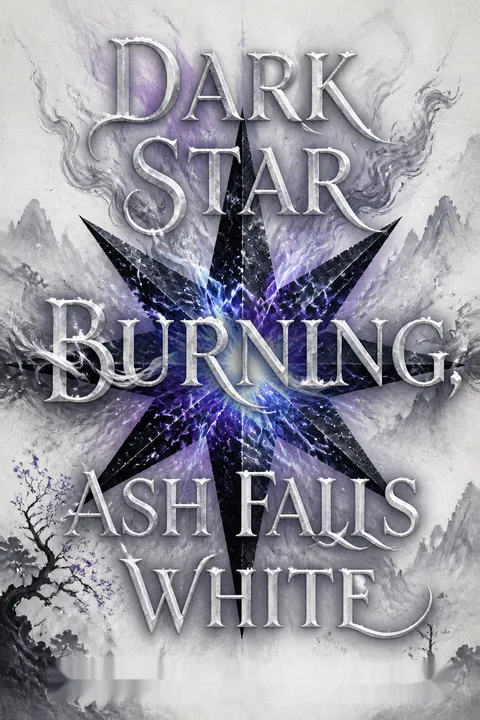

Plot Summary
Shadows Over Fallen Kingdom
The Last Kingdom lies in ruins, its people subjugated by the foreign Elantian Empire. The conquerors wield metal magic, crushing the native Hin practitioners and hunting the legendary Demon Gods—beings of immense power bound to mortals through dangerous bargains. Amidst the ashes, two survivors emerge: Lan, a girl with the Silver Dragon Demon God sealed within her, and Zen, heir to the Mansorian clan, who has bound the Black Tortoise to himself. Both are haunted by loss and driven by the need to reclaim their homeland, but their paths are already diverging. The land is a tapestry of grief, rebellion, and the lingering hope that the cycle of conquest can be broken.
Bargains and Betrayals
Zen's desperate pact with the Black Tortoise grants him power but at a terrible cost: each use of the Demon God's strength cedes more of his body, mind, and soul. Lan, too, is bound by a bargain—her mother's soul is trapped within the Silver Dragon, and Lan's own soul is forfeit if she ever calls upon its full power. Their love, once a source of comfort, is fractured by Zen's choices and the betrayals that follow. As they each gather allies and pursue their own missions, the shadow of their bargains looms, threatening to consume them and all they care for.
The Demon Gods Awaken
The Elantian invaders seek the four Demon Gods—Black Tortoise, Silver Dragon, Azure Tiger, and Crimson Phoenix—believing that binding them will secure their rule. Zen and Lan, each with a Demon God, are hunted relentlessly. The Demon Gods themselves are not mere tools; they are sentient, ancient beings corrupted by centuries of human ambition and war. Their awakening brings chaos, as the boundaries between gods and demons blur, and the fate of the world hangs on the choices of their mortal binders.
Exiles and Survivors
Zen, now a fugitive, finds the ruins of his ancestral palace and gathers the scattered disciples of the School of the White Pines. He seeks the legendary Deathriders—an army of demonic practitioners entombed beneath the palace. Meanwhile, Lan flees across the desert with her companions, Dilaya and Tai, evading Elantian patrols and sand demons. Each survivor carries the scars of loss and the burden of impossible choices, forging new bonds in the crucible of exile.
The Palace of Lost Ancestors
In the depths of the Mansorian palace, Zen confronts the legacy of his great-grandfather, Xan Tolürigin, who once led the Deathriders and fell to madness. With the Black Tortoise's help, Zen unlocks ancient Seals and discovers the Classic of Gods and Demons—a tome containing the secrets to summoning the Deathriders and the origins of the Demon Gods. The past is not dead; it waits, demanding reckoning from those who would wield its power.
The Art of Song and War
Lan's unique Art of Song allows her to channel qì through her ocarina, conjuring Seals and star maps that reveal the locations of the Demon Gods. Her journey is a dance between creation and destruction, as she must decide when to use her forbidden power. The companions face sand demons and Elantian magicians, forced to choose between hiding and fighting, between the safety of the few and the salvation of the many. The line between art and war blurs, and every note carries the weight of destiny.
The Sands Sing of Death
Crossing the Emaran Desert, Lan and her friends are beset by supernatural storms and a monstrous sand demon. In the heat of battle, the Silver Dragon's power erupts to save them, breaking Lan's vow never to use it. The cost of survival is trust—Dilaya and Tai fear the dangers of demonic power, even as it becomes clear that only such power can stand against the Elantians. The desert is both grave and crucible, forging the survivors into something new.
The City of Immortals
In Nakkar, the City of Immortals, Lan seeks the legendary Temple of Truths, hoping to find the path to Shaklahira and the Godslayer—a weapon capable of destroying the Demon Gods. Guided by the ghostly Yuè clan, she learns that the truth is not simple: the Godslayer is not a blade, but a Seal, and its power depends on understanding the duality of gods and demons, creation and destruction. The city is a crossroads of past and future, where the living and the dead mingle.
The Seeds of Clarity
Zen, desperate to maintain control over the Black Tortoise, seeks the Seeds of Clarity—magical lotus seeds that strengthen the soul but at the cost of consuming another's. The price of power is blood, and Zen is forced to confront the darkness within himself. The Seeds are both salvation and damnation, a mirror of the bargains that bind all who seek power. The cycle of sacrifice continues, and Zen's humanity hangs by a thread.
The Crimson Phoenix's Secret
In the hidden city of Shaklahira, Lan and her companions meet Prince Hóng'yì, the last imperial heir, who has secretly bound the Crimson Phoenix. His court is a gilded cage, sustained by the souls of the dead and the power of the Demon God. Hóng'yì's charm masks ambition and corruption; he seeks to bind Lan and her Demon God to himself, offering alliance and love as tools of control. The truth of the imperial family's bargains is revealed: power is always borrowed, and the debt must be paid.
The Forgotten City Revealed
Guided by riddles and ancient Seals, Lan and her friends uncover the entrance to Shaklahira and the location of the Godslayer. The city is a place of illusions and ghosts, where the past is preserved and the future is uncertain. The Godslayer's Seal is hidden in memory, accessible only through the Art of the Mind—a dangerous merging of thoughts and souls. The cost of knowledge is vulnerability, and the line between ally and enemy grows thin.
The Godslayer's Truth
The Classic of Gods and Demons reveals the true history: the Demon Gods were once gods, corrupted by human ambition and war. Power is meant to be borrowed and returned, created and destroyed in balance. The Godslayer is not a weapon of annihilation, but a Seal of release—meant to return the Demon Gods to the world's qì and end the cycle of bloodshed. Understanding this truth is the key to salvation, but wielding it demands the ultimate sacrifice.
The Army of Deathriders
Zen summons the Deathriders, binding their souls to his will. The army of demonic practitioners sweeps through the capital, turning the tide against the Elantian occupiers. But the cost is immense: the Deathriders are barely controllable, and Zen teeters on the edge of losing himself to the Black Tortoise. The city becomes a battlefield of gods and men, the fate of the kingdom hanging on a knife's edge.
The Surrender of Power
Dilaya leads the surviving practitioners in a daring assault on the palace, forcing the Elantian governor to surrender. The people of the Last Kingdom reclaim their home, but victory is bittersweet. The cost of power—demonic bargains, lost souls, and broken hearts—cannot be undone. The survivors must decide what kind of world they will build from the ashes, and who will pay the final price.
The Last Bargain
Zen and Lan, reunited on a snowy mountaintop, face the final choice. Zen, now binder of both the Black Tortoise and the Silver Dragon, offers himself as the vessel for the Godslayer's power. Lan, understanding at last the true purpose of the Seal, must release the Demon Gods and end the cycle—even if it means losing Zen forever. Their love, forged in suffering and hope, becomes the fulcrum on which the fate of the world turns.
The End and the Beginning
The Godslayer's song unwinds the Demon Gods, returning their power to the world and freeing the souls bound within. The cycle of conquest and bloodshed is broken, but at the cost of Zen's life. Lan, left to mourn and remember, carries forward the legacy of those lost. The world is changed, but the promise of reunion—across lifetimes and worlds—remains. The end is also a beginning.
The Kingdom of Ten Thousand Flowers
Years later, the Last Kingdom is reborn as the Kingdom of Ten Thousand Flowers, a land where the clans and their arts flourish in peace. Lan, now a master and mother, teaches the next generation the lessons of balance, sacrifice, and hope. The memory of Zen and all who were lost endures, woven into the fabric of a world finally at peace. The story ends as it began: with love, loss, and the promise that the cycle will not repeat.
Analysis
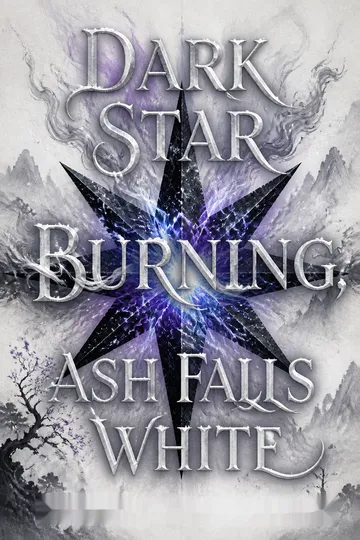
A modern epic of power, trauma, and healingDark Star Burning, Ash Falls White is a sweeping fantasy that interrogates the nature of power, the cycles of violence, and the possibility of redemption. At its core, the novel is about the cost of ambition and the necessity of balance—between creation and destruction, love and duty, self and other. The Demon Gods, once divine, are corrupted by human desire, mirroring the ways in which systems of power become monstrous when unchecked. The story's psychological depth lies in its characters' struggles with trauma, guilt, and the longing for connection. The use of bargains as a metaphor for agency and sacrifice is particularly resonant in a world where survival often demands impossible choices. Ultimately, the novel offers a vision of hope: that cycles can be broken, that the past need not dictate the future, and that love—however fleeting—can leave a legacy that endures. The Kingdom of Ten Thousand Flowers is not a utopia, but a hard-won peace, built on the lessons of history and the courage to choose differently.
Review Summary
Dark Star Burning, Ash Falls White received mixed reviews, with an average rating of 3.86 out of 5. Many readers praised the beautiful writing, rich world-building, and emotional character arcs. The romance between Lan and Zen was a highlight for some, though others felt it lacked development. Some critics found the pacing uneven and the plot overcomplicated. The ending was divisive, with some finding it heartbreaking and others unsatisfying. Overall, fans of Chinese-inspired fantasy and the first book generally enjoyed this conclusion to the duology.
People Also Read
Characters
Sòng Lián (Lan)
Lan is the emotional heart of the story—a girl marked by loss, carrying the Silver Dragon Demon God and the soul of her mother within her. Her journey is one of self-discovery, as she learns to wield the forbidden Art of Song and confronts the cost of power. Lan's relationships—with Zen, her friends, and her own past—are fraught with betrayal and longing. She is driven by a fierce sense of justice and the belief that power must serve the powerless. Her psychological arc is one of moving from victimhood to agency, from fear to acceptance of sacrifice. In the end, Lan becomes the instrument of release, breaking the cycle of violence and forging a new path for her people.
Xan Temurezen (Zen)
Zen is a study in contradictions: the last scion of a destroyed clan, a boy who binds the Black Tortoise Demon God to avenge his people, and a lover torn between duty and desire. His psychological struggle is with the darkness within—each use of his Demon God's power brings him closer to losing himself. Zen's relationship with Lan is both his salvation and his undoing; their love is tested by betrayal, guilt, and the demands of fate. Ultimately, Zen chooses sacrifice, offering himself as the vessel for the Godslayer and the release of the Demon Gods. His arc is one of tragic heroism, finding meaning in loss and hope in the promise of reunion.
Yeshin Noro Dilaya
Dilaya is the matriarch of the Jorshen Steel clan, a survivor of massacre and a master of the sword. Her relationship with Lan evolves from rivalry to deep respect, forged in the crucible of shared loss and battle. Dilaya's psychological wounds—her mother's death, her clan's destruction—drive her to seek justice and protect the vulnerable. She is pragmatic, stubborn, and unafraid to challenge authority, but her loyalty is unwavering. Dilaya's arc is one of healing, as she learns to trust, forgive, and lead her people into a new era.
Chó Tài (Tai)
Tai is a Spirit Summoner, able to commune with ghosts and sense the qì of souls. His sensitivity and humor mask deep grief and longing, especially for Shàn'jūn, the boy he loves. Tai's role is often that of mediator and healer, providing emotional support to the group. His arc is one of finding belonging and purpose, as he helps guide the living and the dead toward peace. Tai's connection to the supernatural underscores the story's themes of memory, loss, and the persistence of love.
Prince Zhào Hóng'yì
Hóng'yì is the last imperial heir, a man who binds the Crimson Phoenix and sustains his power through the souls of the dead. His court is a gilded prison, and his love for Lan is twisted by ambition and the corrupting influence of his Demon God. Hóng'yì's psychological complexity lies in his self-justification—he believes power is his birthright and that any means are justified. His arc is a cautionary tale of unchecked ambition, the dangers of bargains made in desperation, and the ultimate futility of seeking immortality through domination.
Erascius
Erascius is the Elantian Royal Magician who leads the conquest of the Last Kingdom. He is driven by a belief in his own superiority and the divine right of his people to rule. Erascius's pursuit of the Demon Gods is both personal and political, a quest for ultimate power. His psychological profile is one of cold calculation, cruelty, and a willingness to sacrifice anything for victory. He serves as a mirror to the story's other power-seekers, showing the emptiness at the heart of conquest.
Shàn'jūn
Shàn'jūn is a disciple of Medicine, unable to wield combat Seals but skilled in healing and empathy. His love for Tai and his friendship with Zen ground the story in moments of tenderness and humanity. Shàn'jūn's arc is one of quiet resilience, offering forgiveness and support even in the face of betrayal. He represents the possibility of healing and the importance of small acts of kindness in a world torn by war.
Elanruya (Xuě'ér)
Elanruya is the last of the Yuè clan, guardians of immortality and the secrets of the Godslayer. Her blindness is both literal and symbolic—she sees the truth others cannot, guiding Lan toward understanding the duality of gods and demons. Elanruya's arc is one of liberation, as she breaks free from the control of the imperial family and helps restore balance to the world.
The Black Tortoise
The Black Tortoise is both a source of power and a corrupting influence, whispering to Zen and seeking to claim his soul. Its psychological presence is that of a cunning manipulator, offering strength at the price of selfhood. The Tortoise's arc is intertwined with Zen's, representing the dangers of unchecked ambition and the necessity of release.
The Silver Dragon
The Silver Dragon is both protector and potential destroyer, bound to Lan through her mother's sacrifice. Its presence is more enigmatic than the Tortoise, offering guidance but demanding understanding. The Dragon's arc is one of return—once a god, now a demon, it seeks release from the cycle of corruption.
Plot Devices
Duality and Cycles
The narrative is structured around cycles—of power, conquest, and rebirth. The duality of yīn and yáng, gods and demons, is mirrored in the characters' journeys and the structure of the world. The Godslayer itself is a plot device that embodies this duality: it is not a weapon of annihilation, but a Seal of release, meant to restore balance. The story uses foreshadowing through ancient texts, songs, and proverbs, hinting at the true nature of the Demon Gods and the necessity of ending the cycle. The intertwining of personal and political stakes—love, betrayal, sacrifice—ensures that the fate of the world is always intimately connected to the choices of individuals.
Bargains and Sacrifice
The central plot device is the demonic bargain: mortals bind Demon Gods for power, but each use brings them closer to destruction. This device is used to explore themes of agency, responsibility, and the cost of ambition. The bargains are not merely magical contracts, but psychological crucibles, forcing characters to confront their deepest desires and fears. The breaking of bargains—through mutual agreement or the Godslayer—serves as the climax, resolving both the personal and cosmic conflicts.
The Art of Song and Memory
Lan's Art of Song is both a literal and metaphorical device, allowing her to access hidden knowledge, conjure Seals, and ultimately wield the Godslayer. The merging of music and magic underscores the importance of creativity, tradition, and the transmission of memory. The use of the Art of the Mind—entering memories to access Seals—blurs the line between past and present, self and other, reinforcing the story's themes of interconnectedness and the persistence of history.
The Classic of Gods and Demons
The Classic of Gods and Demons is both a MacGuffin and a narrative frame, containing the secrets to the Deathriders, the Godslayer, and the true history of the Demon Gods. Its dual-language structure and hidden Seals symbolize the fragmentation and eventual reunification of the kingdom's past. The book's revelations drive the plot toward its resolution, ensuring that knowledge—rather than brute force—is the ultimate source of power.
Song of the Last Kingdom Series
About the Author
Other books by Amélie Wen Zhao
Download PDF
Download EPUB
.epub digital book format is ideal for reading ebooks on phones, tablets, and e-readers.








































