
Key Takeaways
1. Cuba's Strategic Geography Fueled Centuries of External Ambition
For the statesmen of the early nineteenth century, there was no room for doubt: to guarantee the success and permanence of the young American republic, the acquisition of Cuba was, as Adams had said, “indispensable.”
Geographic Destiny. From Christopher Columbus's initial misidentification of Cuba as Cipangu (Japan) to John Quincy Adams's "political gravitation" metaphor, Cuba's location at the crossroads of the Atlantic and the Gulf of Mexico made it a coveted prize for European powers and later the United States. Havana, in particular, became the "Key to the New World" due to the Gulf Stream, which funneled Spanish treasure fleets past its shores, making it a vital, yet vulnerable, hub. This strategic importance meant Cuba's fate was rarely its own.
Early Entanglements. Even during the American Revolution, Cuba played a role, with Cubans raising funds for Washington's army and Havana's silver currency helping finance the new nation's first central bank. This early connection foreshadowed centuries of intertwined destinies, where US leaders like Thomas Jefferson openly fantasized about Cuba's annexation, viewing it as a natural appendage to their expanding republic. The acquisition of Florida in 1821 only intensified these expansionist dreams.
A Constant Object. The Monroe Doctrine, while ostensibly protecting Latin America from European colonization, implicitly reserved Cuba for future US acquisition. This policy, driven by the belief that whoever controlled Cuba could cripple American commerce flowing through the Gulf, ensured that Cuba remained a constant object of US strategic interest. The island's destiny, as perceived by American statesmen, was to inevitably fall into the embrace of its powerful northern neighbor.
2. Slavery and US Expansionism Defined Early Cuban-American Ties
Propertied southerners—and even some northerners—looked to Cuba as a potential new slave state or two, as a way to buttress the power of slavery and its economy.
Slavery's Economic Engine. The British occupation of Havana in 1762 dramatically boosted Cuba's sugar industry and, consequently, the transatlantic slave trade. This set the stage for Cuba to become the world's largest sugar producer, a transformation heavily reliant on enslaved African labor. US capital, from New England merchants like James DeWolf to Southern planters, became deeply implicated in this system, with American-built ships dominating the illegal slave trade to Cuba even after it was outlawed.
Annexation as Preservation. For wealthy Cuban slaveholders, the prospect of annexation to the United States offered a bulwark against British abolitionist pressures and the specter of slave rebellions, particularly after the Haitian Revolution. They saw US statehood as the surest guarantee for the future of slavery on the island. This convergence of interests fueled annexationist movements in both Cuba and the US, with figures like Senator John C. Calhoun advocating for Cuba's acquisition as one or more slave states.
A "Vast Southern Empire." The US drive to acquire Cuba was not merely about strategic location; it was fundamentally about expanding and preserving the "vast Southern Empire" of slavery. Filibustering expeditions, like those led by Narciso López, and political maneuvers, such as the Ostend Manifesto, explicitly aimed to secure Cuba as slave territory. This period revealed that Jefferson's vision of an "empire for liberty" was, in practice, an empire for slavery, deeply entwined with Cuba's economic and social fabric.
3. Cuban Independence Was Born Under the Shadow of US Intervention
The Cuban War of Independence—the third war in thirty years—seemed suddenly irrelevant, supplanted (like the Black officers suddenly demoted in favor of newcomers) by the Spanish-American War.
A Multiracial Struggle. Cuba's long and brutal struggle for independence from Spain, spanning decades and culminating in the Ten Years' War (1868-1878) and the War of Independence (1895-1898), was a profoundly multiracial effort. Leaders like Carlos Manuel de Céspedes freed their slaves to launch the rebellion, and figures like Antonio Maceo, an Afro-Cuban general, rose through the ranks, embodying a vision of a racially harmonious republic. José Martí, the intellectual architect of the final war, passionately articulated this ideal of a "republic for all," free from both Spanish colonialism and US imperial designs.
US Intervention Redefines the Conflict. Despite the Cubans being on the verge of victory in 1898, the United States intervened, declaring war on Spain after the USS Maine exploded in Havana harbor. This intervention, framed as the Spanish-American War, effectively sidelined the Cuban Liberation Army. Cuban forces were forbidden from entering Santiago after its capture, and no Cuban representatives were allowed at the Treaty of Paris negotiations that formally ended Spanish rule.
A Compromised Sovereignty. The outcome was a profound sense of betrayal for many Cubans. The Spanish flag was replaced not by a Cuban one, but by the American flag, signaling a new form of foreign control. The US military occupation that followed, and the subsequent imposition of the Platt Amendment, ensured that Cuba's hard-won independence was immediately compromised, transforming a struggle for self-determination into a new chapter of American dominance.
4. The Early Republic Grappled with Corruption and Unfulfilled Promises
“There is, of course, little or no real independence left Cuba under the Platt Amendment.”
The Platt Amendment's Grip. The US military occupation (1899-1902) culminated in the imposition of the Platt Amendment, which granted the United States the right to intervene militarily in Cuba to preserve order and protect property. This amendment, incorporated into Cuba's 1901 Constitution, effectively made Cuba a protectorate, severely limiting its sovereignty. US officials, like Governor Leonard Wood, openly acknowledged that Cuba retained "little or no real independence" under its provisions.
Economic Americanization. Beyond political control, US policies during and after the occupation facilitated the Americanization of Cuba's economy. The 1903 Reciprocity Treaty, while granting Cuban sugar preferential access to the US market, also reduced tariffs on American goods, stifling nascent Cuban industries. US companies acquired vast tracts of land, particularly in eastern Cuba, transforming them into massive sugar centrales that became "foreign kingdoms" within the island, with profits overwhelmingly accruing to American investors.
Corruption and Disillusionment. The early Cuban Republic (1902-1933) was plagued by deep-seated corruption, with political figures often serving as "junior partners" to American capital. Racial tensions, exacerbated by the 1912 "Race War" and the brutal repression of Afro-Cuban political movements, undermined Martí's vision of racial harmony. This period of economic dependence, political interference, and internal strife fueled a growing nationalist awakening, with student activists like Julio Antonio Mella challenging both "Yankee imperialism" and corrupt Cuban governments.
5. Fidel Castro's Revolution: A Radical Break from the Past
“The Revolution begins now!” he shouted. But it would not be like before.
A New Beginning. Fidel Castro's revolution, launched with the audacious Moncada barracks attack in 1953, promised a decisive break from Cuba's past of foreign domination, corruption, and unfulfilled promises. His "History Will Absolve Me" speech, delivered during his trial, articulated a progressive program rooted in the 1940 Constitution's ideals of social justice and national sovereignty. This vision resonated deeply with a populace weary of Batista's dictatorship and decades of political malpractice.
Guerrilla Warfare and Propaganda. After a period of imprisonment and exile in Mexico, Castro returned to Cuba aboard the Granma in 1956, initiating a guerrilla war in the Sierra Maestra mountains. His strategic use of propaganda, particularly through interviews with US journalists like Herbert Matthews, transformed him into a romantic hero on the international stage, countering Batista's attempts to dismiss the rebels. This media savvy, combined with the urban underground's activism, built widespread support.
Rapid Transformation. Upon Batista's flight on January 1, 1959, Castro's triumphant entry into Havana signaled a rapid and radical transformation. The new government swiftly enacted sweeping reforms:
- Urban Reform Law (cutting rents)
- Wage increases and utility rate reductions
- Agrarian Reform Law (expropriating large landholdings)
These measures, often driven by popular demands, created a profound stake in the revolution for hundreds of thousands of Cubans, setting the stage for an inevitable clash with US interests.
6. Cold War Confrontations Solidified Cuba's Socialist Path
“This is a socialist revolution,” he said for the first time. And for that, he continued, the United States will never forgive us. They will never forgive “that we are here right under their noses and that we have made a socialist revolution right under the very noses of the United States!”
The Bay of Pigs Debacle. The US-backed Bay of Pigs invasion in April 1961, a "perfect failure" orchestrated by the CIA, aimed to overthrow Castro but instead solidified his power and the revolution's socialist trajectory. The invasion's defeat, coupled with Castro's public declaration of the revolution's socialist character, greatly strengthened his hand, both domestically and internationally. It also served to purge many of his moderate opponents, further radicalizing the government.
Missile Crisis Brinkmanship. The Cuban Missile Crisis in October 1962 brought the world to the brink of nuclear war, as the Soviet Union secretly deployed nuclear missiles in Cuba. This dramatic confrontation, triggered by Cuba's desire for defense against perceived US invasion threats and the Soviet Union's strategic calculations, underscored Cuba's pivotal role in the Cold War. Despite being excluded from the final US-Soviet negotiations, Cuba's defiance and the eventual withdrawal of missiles under a US non-invasion pledge (though never fully trusted by Castro) cemented its alliance with the Soviet Union.
Unremitting Radicalization. The period following these confrontations saw an "unremitting radicalization" of the Cuban Revolution. US hostility, including the economic embargo and covert operations, provided Castro with a powerful justification for increasingly radical measures and the suppression of dissent. This dynamic, where each side's actions fueled the other's extremism, transformed Cuba into a one-party socialist state, deeply dependent on the Soviet Union and committed to an anti-imperialist stance.
7. The Revolution's Ambition to Forge a "New People" Faced Deep-Seated Realities
“The new society in formation,” he wrote, “has to compete fiercely with the past.”
Social Engineering. Inspired by Che Guevara's vision of the "new man," the Cuban Revolution embarked on an ambitious project of social engineering, aiming to transform individuals and society. This included:
- Education: Nationalization of schools, the Literacy Campaign (1961) mobilizing hundreds of thousands of young teachers, and boarding schools combining academics with agricultural labor.
- Gender Roles: The Federation of Cuban Women promoted female labor force participation, and the 1975 Family Code legally mandated equal sharing of household duties between spouses.
- Racial Equality: Race-blind policies aimed to eliminate discrimination in public life and employment, though public discussion of racism was often suppressed after 1961.
Resistance and Contradictions. Despite these efforts, the "past" proved resilient. Parents resisted state intervention in child-rearing, and men often balked at sharing domestic labor. The government's attempt to create "new men" also led to dark chapters, such as the UMAP camps (1965-1967) for the "rehabilitation" of gay men and other "antisocial" individuals through forced labor.
The 10 Million Ton Harvest. The monumental failure of the 1970 Ten Million Ton Sugar Harvest, a massive mobilization of voluntary labor, forced a re-evaluation of moral incentives. This economic setback, coupled with the realization that "the really new man... is still relatively far off," led to a shift towards more material incentives and deeper economic integration with the Soviet bloc, highlighting the limits of revolutionary idealism against entrenched human nature and economic realities.
8. Cuba's Global Reach Challenged Apartheid and US Hegemony
“Those who once sent enslaved Africans to America,” referring to the Americas as a whole, “perhaps never imagined that one of those places that received the slaves would send soldiers to fight for the liberation of black Africa.”
Exporting Revolution. From its early days, the Cuban Revolution sought to inspire and support like-minded movements globally, particularly in Latin America, Africa, and Asia. This internationalist foreign policy, often at odds with Soviet calls for peaceful coexistence, was a direct challenge to US interests and a means to assert Cuba's newfound sovereignty and prestige on the world stage. The Tricontinental Conference in Havana (1966) formalized these ambitions.
Operation Carlota. Cuba's most significant military intervention was in Angola (1975-1991), where it deployed almost half a million troops to support the Marxist MPLA government against US-backed and apartheid South African forces. Named Operation Carlota after a Cuban slave rebel, this intervention carried profound symbolic weight, with descendants of African slaves returning to fight for liberation in their ancestors' homeland.
Defeating Apartheid. The Cuban victory at the Battle of Cuito Cuanavale (1987-1988) was a decisive turning point, forcing South Africa's withdrawal and leading to Namibia's independence. Nelson Mandela later credited Cuba's role in Angola with destroying "the myth of the invincibility of the white oppressor" and accelerating the dismantling of apartheid in South Africa. This intervention, undertaken without Soviet consultation and against US opposition, cemented Cuba's image as a powerful Third World leader.
9. The "Special Period" Forced Pragmatic Reforms and Triggered Mass Exodus
“The Revolution has only three problems,” went a popular joke at the time: “breakfast, lunch, and dinner.”
Soviet Collapse and Economic Catastrophe. The dissolution of the Soviet Union in 1991 plunged Cuba into an unprecedented economic crisis, dubbed the "Special Period in Times of Peace." The loss of 85% of its trade with the Soviet bloc led to:
- A 70% drop in state buying power.
- Severe shortages of food, fuel, and consumer goods.
- Daily calorie consumption dropping by a third.
- Widespread blackouts and transportation breakdowns.
This period of extreme austerity forced Cubans to "inventar" (invent) and "resolver" (resolve) daily challenges, leading to a pervasive sense of hardship.
Pragmatic Economic Reforms. To survive, the government implemented a series of market-oriented reforms, a selective return to prerevolutionary economic practices:
- Legalization of the US dollar (1993).
- Expansion of self-employment (cuentapropistas).
- Legalization of small private businesses (paladares, casas particulares).
- Promotion of international tourism and foreign investment.
These measures, while generating much-needed revenue and jobs, also created new inequalities and social tensions, as access to dollars became paramount.
Waves of Migration. The economic crisis fueled new waves of migration to the United States, notably the 1994 Rafter Crisis, where tens of thousands fled on makeshift vessels. The US responded with the "wet foot/dry foot" policy, leading to the detention of rafters at Guantánamo. This exodus, coupled with earlier waves (golden exiles, Freedom Flights, Mariel boatlift), transformed Miami into a vibrant Cuban American city, creating a complex diaspora deeply intertwined with the island's fate.
10. The Enduring US-Cuba Cold War Resisted Normalization
“The cold war between these two American republics was never only about the Cold War, never only about communism. It was also—indeed, primarily—about something that long preceded the existence of the Cold War or even, for that matter, the Soviet Union.”
Post-Soviet Persistence. Despite the end of the global Cold War and the collapse of the Soviet Union, the US-Cuba conflict persisted, even intensifying with legislation like the Helms-Burton Act (1996) that tightened the embargo. Fidel Castro, in turn, used US aggression to rally domestic support and justify repressive measures against dissidents, framing the struggle as one for national dignity and sovereignty against "Yankee imperialism."
Obama's Rapprochement. A historic shift occurred under President Barack Obama, who, recognizing the failure of decades of hostile policy, initiated a process of normalization with Cuba (17-D, 2014). This included:
- Restoration of diplomatic relations and embassies.
- Easing of travel, information, and money flow restrictions.
- Obama's historic visit to Havana (2016), where he acknowledged shared history and criticized the US embargo.
This rapprochement was met with widespread enthusiasm in Cuba and much of the world, offering hope for a new era.
Trump's Reversal and Renewed Hardship. However, this thaw was short-lived. The Trump administration reversed Obama's policies, reimposing and strengthening sanctions, severely impacting the Cuban economy and the daily lives of its citizens. This demonstrated the deep-seated nature of the US-Cuba cold war, which, as the author argues, is fundamentally a struggle over American power and Cuban sovereignty, transcending specific ideologies or historical periods. The conflict continues to shape both nations, reflecting a complex, often contradictory, shared history.
Review Summary
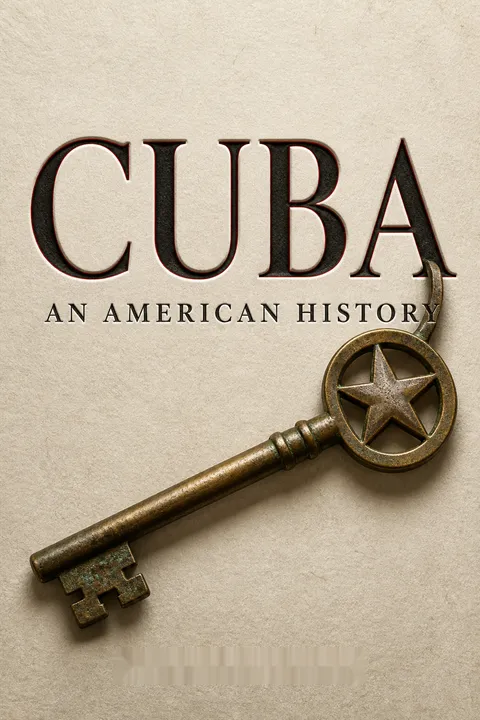
Cuba: An American History by Ada Ferrer receives mostly positive reviews, averaging 4.46/5 stars. Readers praise its comprehensive scope from 1511 to present, exploring Cuba's intertwined relationship with the United States. Many appreciate Ferrer's engaging writing style, personal narratives, and balanced perspective on complex topics including slavery, colonialism, and revolution. The book's treatment of Castro and communism generates mixed reactions—some find it objective while others detect bias. Several reviewers note it fills gaps in their historical knowledge. Common criticisms include war-heavy sections, perceived political slant, and occasional dryness, though most recommend it as essential reading.
People Also Read








Download PDF
Download EPUB
.epub digital book format is ideal for reading ebooks on phones, tablets, and e-readers.








































