
Plot Summary
Fairy Council's Reluctant Summons
When Queen Cinderella writes of her stepsisters' dire straits, the Fairy Godmother hesitates, unwilling to help those she deems villains. Nanny, her sister, urges compassion, reminding her their charge demands fair judgement. The Fairy Council convenes, torn between tradition and the growing evidence that their strict separation of "princesses" and "villains" obscures the full truth. Nanny presses to intervene, but old rivalries and guilt—especially over past failures like Circe and the Odd Sisters—reverberate. The fairies' inflexible rules about who deserves aid will have grave consequences, setting the tragic wheels in motion for all the Tremaines.
Lady Tremaine's London Longing
Lady Tremaine, raised in comfort and dignity, is left bereft after her husband's death. Devoted to her two daughters, she finds fleeting joy in their exuberance, but feels the ache for companionship and security. The bustle of her London townhouse, her complicated relationship with servants, and even the vivid rivalry and affection between Drizella and Anastasia paint a household teetering between gentility and chaos. The empty space beside her grows too sharp to bear, and when the prospect of a new suitor emerges, Lady Tremaine lets herself hope love and stability might be found again.
Unexpected Marriage Proposal
At a country house party, Lady Tremaine encounters Sir Richard, a devastatingly handsome stranger from the Many Kingdoms. Their courtship is practical and quick, marked more by the safety and mutual advantage than wild passion. Lady Tremaine, flattered and lonely, is swept up in dreams of a new life for herself and her daughters. Despite warnings from her trusted Mrs. Bramble and the sense of things moving too swiftly, she accepts Richard's proposal, imagining herself—and possibly her daughters—rescued from the uncertain position of aging widowhood in a world where women are commodities.
Warnings from the Past
Mrs. Bramble, the loyal but increasingly anxious lady's maid, brings tales of curses and the dangers awaiting widows who become stepmothers in the Many Kingdoms. Gifting Tremaine a brooch with a mysterious provenance, she warns of stories about witches and predestined ruin. Lady Tremaine shrugs off the omens, comforted by her memories of love and gentility—a defense mechanism against the dangers she secretly suspects are real. The chapter pulses with growing dread, as supernatural hints mingle with very real anxieties about social mobility, male power, and inheritance.
Bewitching Beginnings and Brooches
Lady Tremaine and her daughters are whisked to the Many Kingdoms, where nothing is as expected. Upon arrival, she finds herself hurried into marriage, denied the dignity of proper welcomes or traditions. The brooch—the "gift" from her first marriage—becomes an unlikely source of comfort and strength, even as its origin and power remain unclear. The family home is crumbling, the servants are gone, and Lady Tremaine is forced to confront her powerlessness as she faces her new role: not as a loved wife, but as Cinderella's stepmother and a resented, isolated outsider.
A Dream Becomes Captivity
Everyday life in the Many Kingdoms devolves into a litany of injustices. Richard's attentions vanish; he lavishes affection only on Cinderella. Lady Tremaine finds herself stripped of decision-making and dignity. Her finances are controlled, her daughters consigned to drudgery. She becomes both servant and scapegoat, haunted by the sense that she's living out someone else's story. The bitterness—stoked by isolation, exhaustion, and magic that feels more like a curse than a gift—builds. Her only constants are the brooch and the mounting resentment toward Cinderella's passive but potent role in her misery.
The Many Kingdoms' Startling Realities
The fairy-tale expectations of the Many Kingdoms rapidly shatter; traditions about stepmothers and inheritance trap Lady Tremaine. She discovers her new husband has married her for money and status, not love. Social rules mean her former wealth is now his. Cinderella's privileged position becomes clear: the girl is cherished, protected, and destined for a royal future, while the stepsisters are relegated to labor. The magical, cyclical logic of the Many Kingdoms feels rigged—reality and myth merging into a system that chooses its victims and winners with chilling indifference.
Home Without Welcome
Lady Tremaine tries to build a life in her new home, facing inert furnishings, absent servants, and the cold politeness of Cinderella. The "family" never gels; attempts at harmony are sabotaged by tradition and difference. Cinderella's refusal to accept Tremaine as "Mama" and Richard's constant absences drive sharper wedges. The girls' adolescent energy turns sour, as the household becomes a crucible for bitterness, misunderstanding, and mounting competition for affection, status, and control. Jealousy is inflamed by the invisible gaze of Cinderella's dead mother, always present through memory and portrait.
Reversal of Fortunes
With Richard's debts settled using Tremaine's fortune, the household is left impoverished and hollow. Lady Tremaine—once a lady of leisure—labors endlessly. Her only solace, the brooch, now feels less protective and more like a link in her chain. Cinderella's insistent innocence, the girls' growing frustration, and the increasingly cold, controlling patriarch leave Tremaine fragile and embittered. Attempts to reach out for help—through letters or old friends—are thwarted mysteriously or by the laws of the Many Kingdoms, sealing her and her daughters in a domestic prison.
The Spiral into Madness
Years erode hope. Trapped, resourced depleted, Lady Tremaine's despair curdles into near-madness. The house, infested with cats and grievances, mirrors her state of mind. Her fixation on the brooch grows; its coldness and solidity are a bitter stand-in for lost status. The rivalry with "the dead mother" and the impossible ideal of Cinderella gnaw relentlessly. As the social and magical machinery of the Many Kingdoms pushes her into the villain's role, she loses her humanity and the ability to recognize her daughters' needs—unable to give or receive true love.
Cinderella's Quiet Rebellion
Cinderella, forced into a servant's life by Lady Tremaine, never surrenders her inner hope or goodness. Her spirit, expressed in song, kindness to animals, and perseverance, endures even as she becomes the object of her stepmother's resentment. To Tremaine's dismay, Cinderella's passive endurance is interpreted by the world as virtue, further sealing Tremaine's fate as villain. The household's unspoken contest for attention, love, and escape grows—every small act, every mouse, every kindness or slight, echoing with the weight of the tale unfolding as if predestined.
The Witching Hour Conspiracy
When three bizarre witches, the Odd Sisters, arrive, they offer Lady Tremaine a way out: a vial of poison and the chance to kill Richard. At the same time, fairy magic swirls—Nanny's warnings about the brooch, Rebecca's identity as Circe revealed, and the mysterious thwarting of letters to Lady Hackle. Tremaine, desperate but not entirely lost, is caught in a web of supernatural interference, manipulation, and "destiny." The battle between fairy and witch magic, between so-called help and subtle sabotage, pushes her towards choices with irreversible consequences.
The Ball and Beyond
The royal ball holds promise—Tremaine's last hope to secure safety via her daughters' marriages. But Cinderella's arrival, transformed by impossible magic, steals the prince's heart. Everything Tremaine has schemed to preserve vanishes in an instant. Her bitterness crystallizes: the world is engineered for Cinderella's triumph, her family's suffering. Her rage sourly cements her role as antagonist even as prophecy, magic, and social architecture make her actions a near-certainty. Betrayed by story and tradition alike, she slips closer to archetype than individual.
Fairy Godmother's Harsh Decree
As Lady Tremaine, destabilized by loss and betrayal, is confronted by the Fairy Godmother herself, the arbitrary system is made explicit: fairies help only princesses, not villains, even when "villains" are victims of circumstance or manipulation. In a flash of magic and cold justice, the Fairy Godmother ensures the tale unfolds as prescribed. She erases memory, re-casts the sisters into misery, and blocks all possibility of escape. Justice, as handed down by the powerful, is retributive, not redemptive, cementing Lady Tremaine's fall.
Sisters in Peril
Anastasia and Drizella, shaped by years of deprivation and their mother's obsession, finally recognize the patterns of their story. As Lady Tremaine's sanity slips, her affection becomes abuse—wedding dresses never come off; punishments escalate. The girls, no longer able to protect themselves or each other, are isolated as thoroughly as their mother. Outside help finally stirs, and the Fairy Godmother, belatedly guilty, resolves to intervene, questioning old rules about redemption and worth.
Redemption and Reunion
With magical intervention, Anastasia and Drizella are restored, freed, and given the choice of their futures. They are welcomed by Cinderella—now queen—who has no malice, only understanding and forgiveness. While their mother is beyond help, the stepsisters at last break away from their assigned story, finding the beginnings of healing and agency. Their reconciliation with Cinderella is marked not by fairy-tale triumphalism, but by mutual recognition of suffering and harm, hinting at the possibility of a new story where the past is neither denied nor repeated.
A Step Too Far
Lady Tremaine, by now consumed by bitterness and rage, lashes out at her daughters for expressing remorse towards Cinderella. Her mental breakdown is complete—her pain, real but unmanageable, transmuted fully into harm against those she once strove to protect. The intervention of magic at this stage is no longer about rescue, but about containment and consequence. She has gone so far that redemption, even magically, seems impossible.
Statues in the Attic
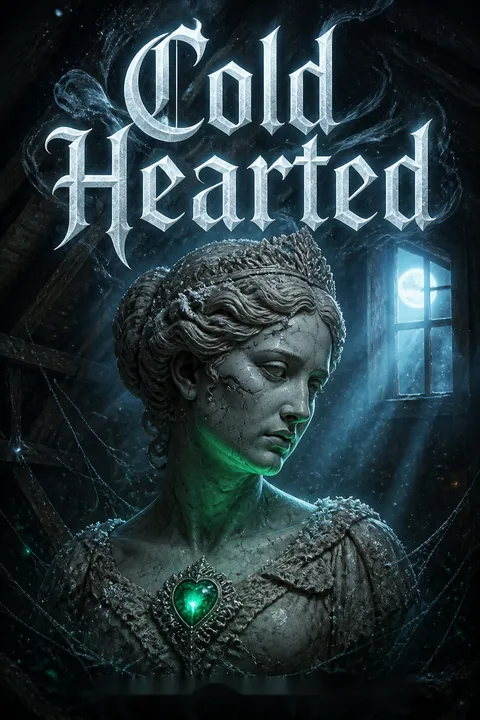
In the story's denouement, Lady Tremaine becomes literally what she has longed to be metaphorically: cold, unmoving, and impervious. Transformed into a statue—her brooch pinned and Lucifer at her feet—she is confined forever in the attic, watched over by mice, a silent emblem of pain, powerlessness, and the costs of clinging to bitterness. The daughters, finally free, look toward futures that, for the first time, are not defined by someone else's prophecy or script.
Analysis
Serena Valentino's Cold Hearted reinvents the "evil stepmother" archetype by probing the intersections of fate, systemic injustice, and the collateral damage of fairy-tale tradition. The book's greatest achievement is its refusal to let Lady Tremaine be a flat villain; it carefully exposes how trauma, misogyny, and the inflexible machinery of magical destiny transform victims into perpetrators. The narrative's use of magical systems—books of prophecy, restrictive fairy intervention, and meddling witches—serves as a meta-commentary on how stories, when uncritically accepted, perpetuate suffering across generations. The daughters, Anastasia and Drizella, represent both the pain of growing up in a toxic legacy and the hope of breaking from it. Ultimately, the story's message is unsettling: justice without mercy breeds only more pain, and societies (magical or otherwise) that divide the world into "princesses" and "villains" will keep manufacturing both. True healing, the book hints, only begins when even the most despised are seen in full, not as characters, but as deeply wounded human beings.
Review Summary
Cold Hearted receives mostly positive reviews, averaging 4.03/5. Readers appreciate the fresh perspective on Lady Tremaine's backstory, humanizing her as a victim of circumstance rather than a born villain. Many enjoy the connected Disney universe and how Sir Richard emerges as the true antagonist. Common criticisms include pacing issues, an unsatisfying ending, underdeveloped characters, and repetitive writing. Several reviewers note it works as a standalone but recommend reading the series in order for full context.
People Also Read



Characters
Lady Tremaine
Once a proud, loving mother and widow, Lady Tremaine is shaped by personal loss, financial necessity, and social vulnerability. She adores her daughters and desires their security. Her marriage to Richard, however, exposes her to exploitation, erasure, and magical interference. Hurt and powerless, she internalizes blame and narratives of evil; over years of isolation, malice grows. Psychologically, Tremaine is a study in how trauma and hostile systems can create "villainy." Her gradual transformation reflects the archetype of the "evil stepmother"—but with nuance: her rage is both monstrous and understandable, a response to being re-written as a secondary character in her own life.
Cinderella
Cinderella is compassionate, quietly rebellious, and endlessly kind despite maltreatment. She embodies fairy-tale virtue, but her passivity and naive hope often make her inscrutable and frustrating to those around her. She is the intended beneficiary of the magical system, which privileges her dreams and resilience over others' suffering. Cinderella's ability to forgive—particularly her stepsisters—hints at a deeper wisdom and resilience, though her role is always defined externally, by others' interventions and expectations.
Drizella Tremaine
Drizella is awkward, sensitive, and desperate for love and approval. Psychologically, she struggles under her mother's volatile affection and society's beauty standards, often turning spiteful toward Cinderella out of desperation. Her later remorse and longing for reconciliation signal the damage done by both familial toxicity and restrictive fairy-tale roles. In the end, Drizella's path is one of painful self-awareness and striving toward agency.
Anastasia Tremaine
Anastasia is fiery and open-hearted, but quick to jealousy and competition. Her affection for her mother warps into complicity, yet she is also easily hurt by Cinderella's enduring virtue. As she matures, her ability to feel guilt and desire for forgiveness lays the groundwork for her own redemption and distinguishes her character from her mother's fate.
The Fairy Godmother
She embodies both magical omnipotence and institutional callousness. Fiercely protective of her "charges" (like Cinderella), she refuses mercy to those labeled "villains," enforcing a binary morality that ultimately perpetuates suffering. Her interventions are both salvation and curse, reinforcing structural inequalities in the magical and social realms. Her eventual guilt and willingness to intervene for Tremaine's daughters suggest a slow, systemic shift towards a more compassionate model.
Nanny
Nanny is the sister of the Fairy Godmother and advocates tirelessly for compassion toward the disenfranchised, especially Lady Tremaine and her daughters. She provides gentle support, practical wisdom, and occasionally covert magic, and carries the guilt of enforced inaction. Her restoration and active rescue of the girls are authorial signals that change and complexity are possible even within the oldest institutions.
The Odd Sisters (Lucinda, Ruby, Martha)
These witches serve as both temptations and catalysts, delighting in twisting stories and pushing characters toward their worst or most desperate choices. They epitomize the unpredictable, amoral aspects of magic, offering help with heavy, hidden costs. Their desire to break the "script" collides with—and sometimes reinforces—the rigid systems of fairies and destiny. Their presence makes clear how much of the suffering is orchestrated, rather than accidental.
Sir Richard
He is the catalyst for Tremaine's destruction, marrying for money, not love, swiftly withdrawing affection after the deal is done. His relationship with his daughter, Cinderella, is idealized; his relationships with everyone else are transactional or cruel. He stands as a critique of patriarchy, both mundane and magical, and the ways in which women are trapped in cycles of dependency and exploitation.
Rebecca/Circe
Originally trusted as a maid, Rebecca's true identity as Circe, one of the Odd Sisters, is a major device for narrative intervention—and manipulation. While she claims to help Tremaine through the brooch and behind-the-scenes action, her powers are limited by "the book" and her loyalty to her sisters. She is emblematic of the blurry line between benevolent interference and dangerous meddling.
Mrs. Bramble
The devoted lady's maid, haunted by stories of magical doom, desperately tries to shield Tremaine from destiny's malice. Her warnings—and eventual mental decline—embody the futility of resistance in a world ruled by story, magic, and the cruelties of inheritance and tradition.
Plot Devices
Prophecy-as-Storybook
The magical book of fairy tales both foreshadows and scripts major events; the Odd Sisters and the Fairy Godmother argue about its power to predict or determine the arc of each life. This device highlights the tension between agency and destiny—the sense that everyone, especially "villains" like Tremaine, are forced to play roles preordained by genres, archetypes, and magical laws. Crucially, it blurs the line between prophecy and self-fulfilling expectation, exploring how narratives, once believed widely enough, come true.
Magical Artifacts and Curses
The brooch's ambiguous power (comfort, courage, but also connection to dark magic) and the potion offered by the Odd Sisters exemplify the ways physical objects embody fate's grip. These plot devices confront the protagonists with impossible choices—escape through evil, or submission to unjust suffering—and always with the threat of terrible consequence.
Role of Mirrors and Letters
Letters are intercepted and lost, isolating the Tremaines. Mirrors are used for supernatural surveillance and summoning. Both devices literalize the themes of misunderstanding, the impossibility of authentic self-expression, and the way outside forces manipulate and observe (a nod to both magic and the prying eyes of society).
Narrative Framing and Memory Manipulation
Memory wipes by fairy magic, self-deception, and re-narration by authorities shape the history and selfhood of every character. By the end, even Tremaine's own story is obscured, her villainy not simply a product of bad choices but of having her agency and truth systematically denied by repeated re-telling.
Villains Series






About the Author
Other books by Serena Valentino
Download PDF
Download EPUB
.epub digital book format is ideal for reading ebooks on phones, tablets, and e-readers.








































