
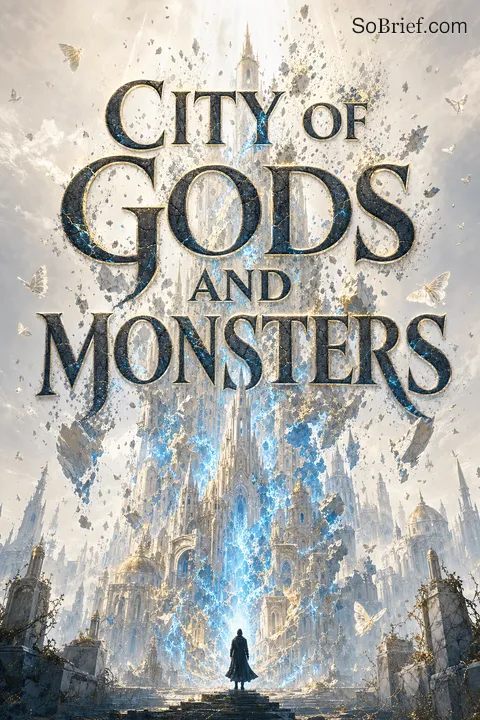


Plot Summary
Beer, Beasts, and a Snatched Friend
A humiliating nightclub incident sends Loren,1 her witch sister Dallas,3 and half-witch Sabrine4 walking Angelthene's demon-haunted streets after curfew. A dark sedan stops. Two men, a copper-haired warlock and a blond hellseher marked with an unfamiliar phoenix-head tattoo, attack.
Dallas3 and Sabrine4 hurl spells, but the hellseher shrugs them off. As police sirens close in, the men press a gun to Sabrine's4 temple and demand that Loren,1 a mere human, get in the car. When the officers arrive, they seize Sabrine4 instead and speed away.
Loren1 sprints uselessly after the taillights, screaming, watching her friend's broken face disappear. No one at the holding center believes a Darkslayer would pay a fortune to hunt a worthless human. But Loren1 knows: they wanted her.
The opening weaponizes Angelthene's caste logic against its heroine. In a city that prizes immortals, Loren's humanity is treated as proof of her irrelevance, which is precisely why the authorities dismiss her testimony. The abduction inverts survivor's guilt: Loren lives because she was the target, and Sabrine suffers as collateral. Edwards establishes the central engine of self-loathing that will drive Loren, the conviction that the wrong girl was taken. The phoenix tattoo, matching no known circle, plants the mystery's seed. Prejudice here is not backdrop but mechanism; being underestimated is both Loren's curse and, eventually, her camouflage.
The Devil's Nameless Contract
Darien Cassel,2 leader of the feared Seven Devils, drains his rage in an underground fighting pit, ripping the throat from a captured demon. Afterward, a masked messenger approaches with an unusual job: track a target with no name and no photograph, using only bone powder taken from an ancestor buried near the Temple of the Scarlet Star.
The client, offering two million gold mynet, wants the target alive and unharmed. Darien2 haggles up to three million and takes the vial. Tracking a person purely by aura will take him days, beginning at the temple where the orphaned target's aura first bloomed. He accepts without curiosity, because Darkslayers do not ask why. It is simply the richest, strangest contract of his violent career.
Darien is introduced as appetite incarnate: violence as anesthetic, money as the only creed. The Pit scene establishes his dissociation, the way he consumes brutality to outrun grief he refuses to name. The nameless contract is a structural elegance, tethering hunter and prey before either understands the other. Crucially, Darien's professional apathy (never asking why) foreshadows the moral reckoning to come. The bone powder introduces the novel's obsession with lineage and inherited essence. Edwards frames Darien as a man who has monetized his soul, setting up a redemption arc that hinges on his rediscovery of the very curiosity his trade forbids.
Cornered on the Scarlet Star
Darien2 trails the aura to Angelthene Academy, then to the apothecary where Loren1 works weekends. On the crowded Avenue of the Scarlet Star, he corners her in a dead-end alley with a gun to her jaw, only to realize four other phoenix-marked hunters are converging on the same girl.
Baffled that anyone would pay millions for a human with nothing but lip gloss in her bag, he orders her against the wall and opens fire, dropping all four rivals without taking a hit. Loren,1 spared and stunned, does the reckless thing: she asks the Devil2 to sit down for lunch. Over pumpkin soup she extracts his identity and his bewilderment, and he offers her the one currency she cannot buy: his protection, and his trust.
The alley scene detonates genre expectations. The apex predator becomes protector the instant his quarry proves inexplicable, and Loren's survival instinct manifests not as flight but as audacious conversation. Her refusal to scream, later revealed to spring from fear of endangering bystanders, marks her defining virtue: a selflessness the immortal world reads as weakness. The lunch is a courtship disguised as interrogation, two guarded people testing whether trust is survivable. Edwards uses their mutual disbelief (he cannot fathom her value, she cannot fathom his mercy) as the friction that generates attraction. The mystery deepens: value untethered from visible power implies a secret worth killing for.
Sanctuary in a House of Devils
Darien2 brings Loren1 to Hell's Gate, the Devils' fortified manor, the safest warded ground in the city. She meets his crew: the towering Maximus,6 blade-loving Travis, and the openly venomous Lace,7 who drives a kitchen knife into the counter and warns Loren1 she is unwelcome half-life filth.
Darien2 returns to defend her, threatening to throw any Devil who frightens her onto the curb. He buys Loren1 a three-hundred-thousand-mynet Avertera talisman to cloak her aura from other trackers, then confronts his own cruelty when he wrongly assumes she was raised rich, learning instead that she is a foster child unloved by her guardian, Taega Bright.9 Slowly, the manor of assassins, and its ice-eating house-spirit Mortifer,16 begins to feel like something Loren1 never had: a home.
Hell's Gate literalizes the found-family trope while interrogating it. The Devils are a chosen kinship forged by shared damage, and Loren's admission threatens their closed ecosystem, hence Lace's territorial violence. Darien's class-based misjudgment reveals his own wound: resentment toward inherited privilege, since his wealth is blood-money. Their mutual orphanhood becomes the bridge. The talisman functions as both plot armor and love language, protection he pays for while insisting she owes nothing. Edwards contrasts two kinds of family: Taega's cold biological guardianship versus the Devils' profane but genuine loyalty, arguing that belonging is built, not born, a thesis that mirrors Loren's own uncertain origins.
Graverobbers and the Master Scroll
Seeking who dug up Loren's1 ancestor, Darien2 takes her to Benjamin,14 a graverobber whose barrow-wights nearly drain them before he calls them off. Benjamin14 confesses he too was hired to find Loren,1 a nameless bounty worth four million whispered about at the Devil's Advocate, but swears off the hunt once he learns she is human, becoming their informant.
Later, Loren's1 solar amulet, worn since infancy, unlocks a rune-sealed door in the Academy's forbidden Old Hall. Below waits the Dominus Volumen, half of an ancient scroll describing the Arcanum Well, an artifact the outcast Phoenix Head Society built to grant mortals immortal life.
The riddled text warns the Well cannot be destroyed or replicated, only remade. Loren1 realizes her abduction ties to something far larger than ransom.
The Old Hall descent is a mythic threshold, the amulet-key confirming Loren as chosen by bloodline before she comprehends her inheritance. Edwards braids the Phoenix Head Society's history of persecuted outcasts seeking transcendence into Loren's own arc; the marginalized building a machine to escape mortality mirrors the novel's obsession with who deserves to endure. Benjamin's conversion (refusing to hunt once he sees her humanity) models the ethical awakening the story rewards. The scroll's untranslatable riddles dramatize knowledge as labor, foreshadowing that the Well's true nature resists external decoding. Immortality is reframed as both salvation and curse, the phoenix a symbol of rebirth purchased through fire.
The Storm Behind His Eyes
As Loren1 watches Darien2 fail to remotely track Sabrine,4 his aura-reading magic strokes her mind, exposing an electric attraction neither expected. He confides how his abusive father10 taught the Sight through ice baths and saunas, while his gentle mother reframed auras as colors of feeling, blue as peace, before dying of depression when he was fifteen.
Loren1 discovers Darien2 suffers Surges, panic-like magical overloads he quells only through fighting or killing. When a hospital visit triggers an attack, he pushes her away in shame. Later, at Witching Hour, she kneels before him, takes his trembling hands, and sings him through an imagined ocean until the blackness leaves his eyes. For the first time, someone reaches Darien2 without violence.
This is the emotional hinge that converts a bodyguard arrangement into intimacy. Darien's Surges externalize inherited trauma, his father's cruelty literally rewired his nervous system, and his coping (violence, casual sex) is self-medication. Loren's intervention reverses the story's power dynamic: the human cannot fight, yet she alone soothes the unstoppable killer, foreshadowing her latent, unrecognized power. The color-synesthesia his mother taught becomes the novel's tender lexicon, love as the ability to see another's inner weather. Edwards frames healing not as fixing but as accompaniment; Loren does not erase his darkness, she sits inside it with him, which is precisely the mercy Randal denied.
Cain's Broken Fingers
Chasing leads, Darien2 and the Devils drive into the warzone slum of Stone's End to confront the gangster Cain Nash, though Loren1 and Dallas3 foolishly follow on a dead scooter and get swept along. Inside Cain's squalid house, Darien2 pins the man's hand and works pliers until he talks: two rogue half-vampires called the Demon Twins were offered four million, the target is wanted for something called the Initiation, possibly a sacrifice, and Sabrine's4 captors have announced a ransom.
If Loren1 turns herself in, they will free Sabrine.4 Darien2 realizes with dread that if Loren1 hears this, she will rip off her talisman and walk into their hands. He keeps the deadliest fact from her, choosing her safety over her trust.
The Cain interrogation showcases Darien's monstrous efficiency while complicating his morality; he tortures a mall-bomber without remorse yet withholds truth to shield Loren, a paternalism that will backfire. The ransom weaponizes Loren's defining trait, her self-sacrificial love, turning her virtue into a lever her enemies can pull. Edwards sharpens the central tension between protection and autonomy: Darien decides what Loren can bear, replicating the controlling instinct he loathes in others. The Initiation rumor escalates the mystery from kidnapping to ritual, hinting that Loren's body, not her knowledge, is the prize. Stone's End's lawlessness mirrors the moral gray zone the protagonists increasingly inhabit.
The Tattoo Parlor Ambush
A tip about phoenix-head tattoos draws Darien2 and Loren1 to Diablo parlor, where they find the artist murdered: a trap sprung by the Demon Twins to expose Loren's1 protectors. A wild chase erupts through the sky as the winged twin Koray snatches Loren1 through the sunroof of Darien's2 speeding car. Darien2 leaps after her, and both crash through a skyscraper window before he stakes Koray through the heart with silver.
Loren,1 shredded by glass, is carried home while the Devils capture the surviving twin, Xander, alive. In Hell's Gate's basement, Darien2 painstakingly picks glass from her wounds and stitches her, and afterward, unable to speak comfort, he simply holds her, unwilling to let go even as his family interrupts.
The ambush marks the antagonists' shift from hunters to strategists; they now bait Loren's defenders, proving the enemy adapts. The aerial abduction and skyscraper crash externalize the vertigo of their romance, falling together, surviving together. But the section's true weight is the aftermath: the killer who mutilates enemies becomes a caretaker tweezing glass from a girl's skin, and the wordless embrace signals Darien's terrifying new vulnerability. Edwards juxtaposes lethal competence with tender helplessness, arguing intimacy is scarier than combat for a man trained to feel nothing. Loren's insistence that only Darien tend her wounds is trust made physical, a body offered in faith.
Sabrine Returns, Forever Altered
The captured twin reveals under torture that a cursed replica of the Arcanum Well is transforming abducted girls into flesh-hungry demons. Then werewolf alpha Logan Sands12 calls: he has found Sabrine4 alive near the docks, but to save her from fatal wounds he changed her into a wolf, shattering the age-old pact that forbids creating new vampires or werewolves.
The reunion is joyous and grim; Sabrine4 lives but is hunted by law and by vengeful vampires. Soon the vampire queen Calanthe Croft11 arrives and, citing a shared enemy in the phoenix cult, offers the Devils and wolves an alliance to recover the Well and catch whoever is abducting mortal girls. Wary but outmatched, Darien2 accepts, keeping Loren's1 secret buried.
Sabrine's transformation resolves one wound while opening another: survival at the cost of identity, echoing the novel's anxiety about what one becomes to endure. The broken pact injects political stakes, threatening species war and dragging Calanthe onstage as an ambiguous power. Edwards seeds distrust masterfully; the alliance feels like relief but reads, in retrospect, as infiltration. The revelation that demons are the missing girls transmutes the city's pest problem into atrocity, collapsing the boundary between monster and victim. This is the book's moral core: the creatures society exterminates are its own stolen daughters, an indictment of a world that discards the vulnerable and then fears what they become.
Demons Wear Missing Faces
When a demon breaches the impossibly warded Avenue of the Scarlet Star and nearly kills Loren,1 she seizes the impossible truth: the wards admit the creatures because their DNA still registers as citizens. The demons are the missing students, mutated by the failed Well replica.
Calanthe's11 people confirm it, and the allies begin hunting demons across Angelthene, corralling them into cells at the House of the Blood Rose rather than killing them, hoping an antidote can restore them.
Doctor Atlas struggles to synthesize a cure. Meanwhile Loren1 and Darien's2 bond deepens through gunfire lessons, hospital hand-holding, and quiet nights, even as jealousy flares over his past lovers and the looming certainty that once she is safe, their worlds must part.
Loren's deduction reframes her as more than a damsel; her botanist's mind cracks a puzzle the immortals missed, quietly building the case for her hidden worth. The wards recognizing citizen DNA is a chilling metaphor: bureaucratic systems that count the transformed as still-belonging even as society hunts them. The shift from killing demons to caging them for cure marks the allies' moral maturation, treating monstrousness as illness rather than evil. Romantically, the section threads dread through tenderness: their love blooms under an expiration date, mortality versus immortality rendered as a countdown. Edwards keeps hope and grief in the same breath, the antidote a fragile promise against an accelerating catastrophe.
Seduction at the Devil's Advocate
To witness a Blood Potion deal, the Devils stage Loren1 as bait to seduce the club manager Baylor into the back rooms so she can disable the security wards. On Darien's2 lap in the packed nightclub, their pretend performance dissolves into real, breathless desire before she must go. Loren1 drugs Baylor and cuts the power, letting the Devils slip inside, but the deal's buyers escape.
Then Darien's2 clingy ex, the Warg Valary, corners him and reveals she has stolen Loren's1 talisman. Drugged by tainted drink and stripped of her cloak, Loren1 is nearly dragged off by predators until Darien2 starts a club-wide brawl, tears her free, and carries her home, promising through her delirium that he will never leave her.
The Advocate sequence fuses eroticism and endangerment, staging desire as performance that becomes uncontainably real, a metaphor for the pretense both lovers maintain about their doomed future. The plan's collapse punishes their momentary self-absorption; passion literally lowers Loren's guard as her stolen talisman exposes her. Valary's sabotage weaponizes romantic jealousy into lethal threat, underscoring how Darien's promiscuous past now imperils the woman he loves. Edwards uses the drug-blurred rescue to strip Darien's bravado to raw devotion; his repeated vow, uttered to a barely conscious Loren, is the confession he cannot yet make sober. The filthiest venue midwifes the purest admission.
The Kingpin in the Sewers
Summoned underground, Darien2 brings Loren1 before Randal Slade,10 the crime lord who commands every Darkslaying circle, and the man Loren1 realizes with horror is Darien's2 own dying father,10 whose steel-blue eyes and abusive legacy shaped the Devil.2 Randal10 drags Ivyana5 in by the hair, then lifts Loren1 telekinetically and crushes her throat until Darien2 lies that the Well can cure the Tricking killing Randal.10
Satisfied, Randal10 forces Darien2 into a Blood Covenant, an unbreakable oath sworn on his own blood to find the Arcanum Well and surrender it to Randal10 alone. The mark spreads up Darien's2 arm like ash. As they leave, Randal10 eyes Loren1 and smiles, marking her as the leverage that will one day make his son2 obey.
The paternal reveal recontextualizes Darien entirely; his violence, his Surges, his self-hatred all trace to this monster, and his refusal to kill Randal (fearing reprisal against his family) is both love and paralysis. The Blood Covenant literalizes bondage to inherited evil, an oath sworn in the very blood that made him. Randal's telekinetic torture of Loren echoes his psychological torture of Emberley, Darien's mother, suggesting cycles of abuse that the son must break to be free. Edwards positions Randal as the true devil against whom Darien's title is mere reputation. The threat is explicit: love is a vulnerability tyrants exploit, and Loren has become Darien's exposed heart.
A Dog Dies, a Name Surfaces
After a demon pack corners Loren1 in an alley, her beloved dog Singer17 dies defending her, expiring in her arms as she sings him a lullaby. Shattered, she seeks the Widow,19 a monstrous spider at a Crossroads, to bargain for his life. The Widow19 refuses her meager offerings but reveals a devastating truth: Loren's1 real name is Liliana Sophronia, daughter of Erasmus Sophronia, the human who created the Arcanum Well nearly a thousand years ago.
She warns that using Loren's1 own magic will kill her. Unable to save Singer17 herself, Loren1 returns home broken, until Darien2 secretly visits the same Widow19 and trades years off his own life to resurrect Singer17 as a Familiar Spirit, bound to Loren1 forever.
Singer's death is the story's most intimate grief, a friendship uncomplicated by hierarchy, and its intrusion of ordinary loss into cosmic stakes gives the melodrama a beating heart. The Widow's revelation reframes Loren from orphan-nobody to demigod-heir, the created child of the Well's maker, collapsing the mystery of her value. Darien's counter-bargain is the novel's grandest love-act yet: he pays with his own lifespan to restore a dog, translating grief into selfless sacrifice and quietly foreshadowing the larger sacrifice ahead. Edwards uses the Crossroads economy (life traded for life) to dramatize love's true cost. Identity and devotion converge: Loren learns what she is even as Darien proves what he will give.
Stars, a Kiss, a Retreat
Darien2 takes Loren1 beyond the city's forcefield to watch impossibly colored stars, engineering what he finally admits is a date. Under that galaxy they kiss at last, unguarded and consuming, until Darien2 abruptly pulls back and declares it wrong. On the drive home he explains: his life of violence would make her a permanent target, that anyone close to him becomes a weapon against him, that she deserves the safe, ordinary family a Devil can never give.
Wounded and furious, Loren1 accuses him of deciding her fate without her consent. He drops her at the Academy, and she slams the door on him. For days they orbit each other in agony, exchanging voicemails neither can answer, both certain they have ruined everything.
The push-pull crystallizes Darien's core flaw: he mistakes control for love, denying Loren agency to protect her, unwittingly echoing every man who decided a woman's life for her. His self-abnegation is genuine but arrogant, and Loren's fury is the novel's feminist correction, insisting that consent to risk is hers to give. The starlit setting, beauty glimpsed only outside the safe dome, mirrors their love: radiant but exposed to danger. Edwards uses the rupture to test whether intimacy can survive Darien's fatalism. The unanswered voicemails render longing as silence, the ache of two people too proud and too frightened to claim the happiness sitting inches away.
Taega's Damning Signature
Suspicion falls on Loren's1 cold guardian, Taega Bright,9 after she is seen buying aura-hiding Nacht Essentia and Arthur13 discovers her signature on the Well replica's blueprints at Lucent Enterprises. Dallas,3 snooping at Fleet Headquarters, finds proof but is beaten nearly to death by unknown attackers.
Breaking into the penthouse, the group confronts Taega,9 who reveals she has been undercover with law enforcement, framed to look guilty. She unveils the buried history: Erasmus Sophronia created Loren1 herself from the Well using a piece of his own aura, and the entire hellseher race, Darien2 included, descends from the Well's experiments. Loren1 is the Well's living child. As police storm in to arrest the framed Taega,9 she shoves them out the window to safety.
The section performs a triple reversal: the suspected villain is an ally, the framing implies a hidden mastermind, and Loren's very existence is revealed as manufactured. The revelation that hellsehers descend from the Well retroactively binds Darien to Loren by origin, they are both children of the same impossible fire, deepening the romance into cosmic kinship. Loren's crisis, learning she was made, not born, weaponizes her lifelong not-belonging into existential vertigo. Edwards interrogates authenticity: does being created from aura make Loren less real? Taega's sacrifice reframes the frigid guardian as a protector who hid love beneath cruelty, complicating the story's judgments about who truly cares.
The Queen's Grand Deception
At the hospital, Loren1 stumbles into the truth: Calanthe Croft11 orchestrated everything. The vampire queen,11 serving the shadowy Imperator, staged the alliance to stay close to Loren,1 engineered Sabrine's4 rescue as bait, framed Taega,9 and ran the Well experiments to build a world purged of humans and half-breeds, farming mortals for blood and forcing immortality on the unwilling.
With Randal's10 help she forced the Blood Covenant to make Loren1 want to find the Well. Now Randal10 seizes Loren,1 drags her to his lair, and hurls her into the Arcanum Well replica, pouring his magic into her to force her aura out and operate the machine. Loren1 convulses in agony, screaming, until Darien2 walks in alone, and everything hangs on his next move.
Calanthe's exposure recasts the entire middle of the novel as manipulation, the alliance a Trojan horse, rewarding attentive readers and punishing the heroes' desperation-born trust. Her ideology, equality-through-extermination, is a chilling satire of utopian purity: a perfect world requires eliminating the imperfect, the humans and half-lives the book has spent chapters humanizing. The Imperator's specter enlarges the conflict beyond one city. Loren's forced submersion literalizes violation, her body seized as instrument, her consent again stolen, echoing the novel's throughline about autonomy. Edwards stages the darkest hour with Darien arriving powerless against his father's superior magic, ensuring the climax turns on sacrifice rather than force.
The Manor That Devours
To free Loren,1 Darien2 fakes surrender, letting Randal10 force a numbing drug on him while a false breakup call to Darien2 convinces the villains he has abandoned her. Using his last burst of power, Darien2 flings Loren1 into the river to escape, then guides Randal10 and his men to Blackgate Manor, claiming the scroll's other half hides there. The Devils, following against orders, nearly die inside.
But Darien2 knows the truth: an ancient, eternally starving death-god dwells in the manor's shadows, and it feasts on Randal10 and his cronies while Darien2 stands unafraid, greeting the demon like an old friend. His father10 devoured, the Blood Covenant mark vanishes from his arm. Then he collapses on the lawn and screams, finally free and utterly hollow.
Patricide by proxy resolves the novel's oldest wound; Darien does not kill Randal so much as return him to the monster that made men like them, and the Covenant's disappearance is liberation written on skin. His fearlessness before the death-god literalizes the book's thesis that terror is what feeds predators, courage its only starvation. The fake breakup, though tactical, wounds Loren identically to the earlier rejection, showing how protection and betrayal blur. Darien's post-victory breakdown, hidden behind a magic sound-barrier, reveals that freedom from an abuser brings not triumph but grief for the childhood stolen. Edwards refuses catharsis-as-joy; survival costs the survivor everything but the will to keep loving.
The City Burns for Her
Randal's10 assault triggered the Well replica into a self-destructing bomb powered by the earth's core, and freed demons flood the Kalendae festival, infecting thousands instantly. Loren1 discovers hellseher blood, revealed when Darien's2 blood revived a dying plant, holds the antidote.
Doctor Atlas brews it while the allies tranquilize demons across the city. Loren1 scales the Control Tower, kills the traitor Calanthe11 with a silver stake mid-flight, and plugs the antidote into the forcefield projection to heal the whole city at once.
But the Well cannot be stopped. As it detonates, Darien2 reaches Loren1 atop the tower, slips his indestructible armor ring onto her finger to save her, kisses her one last time, and the explosion levels Angelthene, killing him and everyone in it.
The climax escalates personal stakes to apocalyptic scale while keeping the emotional logic intimate: the cure is literally in the blood of the Well's descendants, mercy encoded in the very race born from the machine. Loren's tower ascent completes her transformation from protected to protector, dispatching the mastermind herself. Calanthe's death via silver stake is poetic, the manipulator undone by the girl she underestimated. Darien's ring-swap is the ultimate reversal of his controlling love; he finally gives Loren the one choice that matters, survival, by sacrificing his own. Edwards pushes to total annihilation, betting that only apparent absolute loss can unlock the story's final, hidden power.
She Is the Well
Waking amid a graveyard city, Loren1 finds Darien2 dead and refuses it. Remembering the Widow's19 clues, she understands: her father hid the Arcanum Well by binding it into his own aura, and she inherited it. She is the Well. Pouring her aura into Darien,2 she resurrects him.
Then, using the wish her father purchased and sealed in her amulet, she calls on Tempus the Liar, god of time, at his sundial and reverses the catastrophe entirely, healing the ruined city and restoring the slaughtered thousands. Darien,2 alive, confesses at last that he loves her more than anything, and they finally consummate their bond. Loren,1 once dismissed as a worthless human, has become the miracle that saved a world, and chosen love as her home.
The resolution completes the novel's central inversion: the girl the immortal world called a half-life contains creation itself, worth made literal. That the Well lives inside her means she was never seeking an object but accepting herself, self-belief as the key that eluded her precisely because she doubted her value. Resurrection through her aura reframes love as the animating force the machine could never replicate. The time-reversal wish, bought by her father in foresight, closes the lineage loop with paternal love reaching across a millennium. Edwards lands the thesis: the disposable are the divine, and salvation belongs to those the powerful refuse to see.
Epilogue
Days after saving the city, Loren1 is summoned to a dock at Jade Beach by the same rabbit-masked messenger who first hired Darien2 to hunt her. Waiting at the water's edge is a man with ocean-blue eyes and silver-streaked golden hair: Erasmus Sophronia, her father, who defeated death long ago yet made himself mortal again to reunite with the daughter he created and gave away to keep safe.
Darien2 watches from his car as father and daughter embrace for the first time. The messenger raises a hand in thanks. The strange nameless contract that began the story was, all along, a father's arrangement to find his only child. Waves rise and fall in rhythm with the ticking of Darien's2 watch.
The epilogue reframes the entire narrative as a father's love letter disguised as a bounty. The nameless contract that opened the book, so cold and transactional, is revealed as Erasmus's tender machination, collapsing the distance between mercenary hunt and paternal devotion. Loren, the abandoned orphan, receives the origin she always craved: proof she was given up not from rejection but from protection. Darien's watching-from-afar posture signals his evolved restraint, love that grants space rather than seizing control. The closing image, ocean waves synced to a ticking watch, fuses the novel's motifs of water-as-peace and time-as-force, hinting that the story's larger machinery (the Imperator, the sequel's threats) still turns beneath the reunion's calm.
Analysis
City of Gods and Monsters weaponizes urban-fantasy hierarchy to interrogate human worth. Angelthene's caste system, where immortals dismiss mortals as disposable half-lives, mirrors real structures that render the vulnerable invisible, and Loren1 embodies the disposable made divine. Her arc argues that self-worth cannot be granted from outside; the Well she seeks lives within her precisely because she refuses to believe in her own value, making the treasure hunt an externalized crisis of self-belief. Edwards repeatedly stages the powerful underestimating the powerless, then punishes that arrogance, from the dismissive police to the manipulative vampire queen11 felled by the girl she scorned. The novel's most subversive move is its treatment of monstrousness: the city's flesh-eating demons are its own stolen daughters, transformed victims that society hunts rather than mourns, an indictment of systems that discard people and then fear what despair makes of them. Romantically, the book examines love as autonomy versus control. Darien's2 protective instinct, admirable in origin, becomes a form of the domination he loathes in his abusive father,10 and Loren's1 repeated demand to choose her own risks functions as the story's ethical spine. Their union works only when he finally grants her agency, sacrificing himself to give her the choice to live. Cyclical trauma threads throughout: Randal's10 cruelty made Darien2 a killer, and breaking free requires confronting rather than replicating that inheritance. The recurring color-synesthesia (blue as peace) and the sacrificial economy of the Crossroads reinforce a thesis that meaning is made through cost and care, not power. Ultimately the book celebrates the fleeting intensity of mortal life over hollow immortality, insisting, through a human girl who becomes a world's salvation, that being seen, chosen, and loved is the only immortality worth having, and that the discarded may yet prove divine.
Review Summary
City of Gods and Monsters received mixed reviews, with many praising its urban fantasy world-building, slow-burn romance, and complex characters. Readers enjoyed the chemistry between Loren and Darien, the found family trope, and the action-packed plot. However, some criticized the pacing, character development, and similarities to other popular fantasy series. The book's length and writing style were divisive points. Despite criticisms, many readers found it engaging and looked forward to continuing the series.
People Also Read


Characters
Loren Calla
Hunted human orphanA nineteen-year-old human foster child in a city that treats mortals as disposable half-lives, Loren works at a plant apothecary and studies botany, craving only safety and ordinariness. She suffers a mysterious condition that drops her blood sugar and triggers fainting, marked by a glowing medical tattoo. Anxious, self-deprecating, and convinced of her own worthlessness, she nonetheless possesses fierce loyalty, refusing to endanger strangers even to save herself. Her defining trait is selfless love, especially for her adoptive sister Dallas3, missing friend Sabrine4, and her dog Singer17. Beneath her timidity runs a stubborn, sardonic wit that surfaces as armor. Loren's journey is one of discovering that the very humanity society scorns, and a hidden inheritance she fears, make her extraordinary.
Darien Cassel
Feared Devil leaderLeader of the Seven Devils, Angelthene's most feared circle of hellseher bounty hunters, Darien is a beautiful, tattooed killer who channels rage through underground fighting and casual violence. Gifted with the Sight, he tracks targets by aura and dispatches them without remorse or question. Beneath the cold, arrogant exterior lies a man shattered by an abusive father10 and the death of his beloved mother, whose gentle teaching gave him the only peace he knows. He suffers Surges, magical panic attacks he quells through bloodshed. Darien wears cruelty as a mask; his true nature is protective, tender, and starved for connection. Taking Loren1 under his wing reawakens a curiosity and capacity for love he had buried, forcing him to confront whether he can be more than the weapon he was raised to be.
Dallas Bright
Fierce witch sisterLoren's1 adoptive sister, a pure-blooded venefica and daughter of the Fleet's commander9. Bold, brash, and boy-crazed, Dallas defends Loren1 with her Focus and winged tiger Familiar, Ghost. Her bravado masks a fear of abandonment and buried pain from her own cold mother9. Fiercely loyal, she dreams of joining the Aerial Fleet and struggles to accept the changes love brings to her friendships.
Sabrine Van Arsdell
Abducted bookish friendLoren's1 half-witch best friend, studious and kind, whose abduction sets the plot in motion. Daughter of an abusive alcoholic father and a dead mother, she is quietly resilient. Her fate becomes entangled with werewolf alpha Logan Sands12, and her transformation forces the story's questions about survival, identity, and what one becomes to keep living.
Ivyana Cassel
Darien's loyal twinDarien's2 twin sister and fellow Devil, willowy and beautiful yet lethal. The rational, warm counterpart to her brother's2 brooding, she alone can talk him down. Married to Jack20, she carries the same scars from their father's10 abuse and their mother's death, and she quietly urges Darien2 toward happiness he believes he does not deserve.
Maximus Reacher
Darien's towering secondAn enormous, deadly Devil and Darien's2 most trusted friend, Maximus balances menace with unexpected gentleness. He becomes tongue-tied around Dallas3, sparking a romance. Steady and loyal, he often serves as the crew's conscience and Loren's1 reassuring presence when Darien2 cannot be.
Lace Rivera
Hostile blonde DevilA knife-loving Devil and Darien's2 ex, Lace initially loathes Loren1, threatening her with a blade. Sharp-tongued and territorial, she fears losing the family that is all she has. Over time her hostility softens into grudging usefulness, revealing loyalty beneath the venom.
Tanner Atlas
Unmatched Devil hackerThe Devils' brilliant, bespectacled hacker who breaches protection spells and traces auras through software. Serious and reserved, he prefers home to hunting. His skills prove essential to nearly every mission, and his mother is the doctor racing to synthesize the antidote.
Taega Bright
Cold Fleet commanderLoren's1 frigid guardian and Dallas's3 mother, commander of Angelthene's Aerial Fleet. Contemptuous and distant, she seems the embodiment of the cruelty humans face. Her true loyalties and buried connections to Loren's1 origins prove far more complicated than her icy surface suggests, hiding old loves and hard sacrifices.
Randal Slade
Dying crime kingpinThe ruthless godfather of Angelthene's underworld, commanding every Darkslaying circle and answering only to the Imperator. Frozen physically in his thirties but dying of the magic-wasting Tricking, he is a sadist who welcomes violence for sport. Cold, calculating, and utterly without mercy, he treats those bound to him as tools and threats alike. His shared steel-blue eyes and his history of domestic cruelty haunt Darien2, and his obsession with escaping death makes him a relentless, terrifying force whose hunger for the Arcanum Well drives him to unspeakable ends.
Calanthe Croft
Ancient vampire queenLeader of all vampire covens in Angelthene, four centuries old, graceful and imperious. Calanthe presents herself as a reluctant ally against a shared enemy, citing threats to her people and her missing Second. Beneath the diplomacy lies a mind of cold calculation and grand ambition, serving a vision of the future that few would call mercy. Her true motives and allegiances remain a shifting puzzle, and her willingness to sacrifice anyone for her ends makes her one of the story's most dangerous players.
Logan Sands
Grieving werewolf alphaAlpha of the Silverwood District's wolf packs, brawny and honorable, searching desperately for his own missing sister Chrysantha. His messy home and messier choices reveal a man buckling under leadership he inherited through tragedy. A desperate act of mercy toward Sabrine4 puts his entire species at risk.
Arthur J. Kind
Aging weapons technicianA seventy-year-old human weapons technician at Lucent Enterprises and one of Darien's2 dearest friends, a father figure who was close to Darien's2 late mother. Warm, wise, and stubborn, he decodes riddles, removes bullets, and digs into restricted files, repeatedly risking himself for the cause despite his mortality.
Benjamin
Graverobbing informantA shaggy-haired graverobber who commands barrow-wights and knows every disturbed grave in the city. Initially tempted to hunt Loren1 himself, he becomes a loyal informant once he learns she is human, providing the Devils eyes across Angelthene.
Casen Martel (The Butcher)
Blood Potion kingpinA seven-foot warlock who dominates the illegal Blood Potions trade, notorious for dismembering those who cross him. Crude and shrewd, he supplies the Devils with crucial tips about chemical buyers and hosts a brutal fighting arena, becoming an uneasy but valuable ally in tracking the conspiracy.
Mortifer
Ice-eating house spiritThe Hob who keeps Hell's Gate clean, warded, and hidden, a shadowy creature with glowing red eyes and a fondness for ice chips. Rescued by Darien2 rather than purchased, he communicates through mischief and forms a quiet bond with Loren1.
Singer
Loren's beloved dogA brown-and-black shepherd Loren1 rescued as a puppy and her truest confidant. Kept at the apothecary and increasingly at Hell's Gate, Singer represents the uncomplicated love and loyalty Loren1 rarely receives from the immortal world around her. His devotion runs deeper than any spell.
Christa Copenspire
Darien's old flameA stunning raven-haired woman from Darien's2 past who now works for Randal10, wanting the relationship he never offered. Her sudden reappearances stir Loren's1 jealousy, and her true role in the unfolding conspiracy proves more consequential than a mere romantic rival.
The Widow (Araneae)
Wish-dealing Crossroads spiderAn ancient, monstrous spider dwelling in a wishing fountain, one of the Nameless bound by the Law of Names. Gorged on secrets she is magically forbidden to share, she trades in life, years, and knowledge, dispensing riddling truths to those desperate enough to bleed for her audience.
Jack Steele
Gambling charmer DevilA Devil with a gambling addiction and a talent for winning fortunes, married to Ivyana5. Cocky and quick with a joke, he provides levity and occasional friction, his loose tongue landing him in trouble with the family he loves.
Plot Devices
Aura-tracking Sight
Hunts prey by soul-colorExclusive to hellsehers, the Sight turns the eyes fully black and reveals every living being's aura, a colored field of energy invisible to others. It lets Darkslayers track targets remotely, see through wards, and read whether someone lies. Aided by illegal Stygian salts and, for nameless targets, ancestral bone powder, the Sight makes the Devils unstoppable hunters. The novel repeatedly tests its limits: enemies learn to cloak auras with Nacht Essentia or even fake them, rendering Darien2 blind for the first time. Aura colors also form the emotional lexicon Darien's2 mother taught him, with blue as peace, making the Sight both weapon and window into the soul.
Avertera talisman
Cloaks a target's auraA rare, expensive pendant engraved with a closed eye that hides its wearer's aura and location from Darkslayers, blocking the Sight until its magic runs dry, at which point it vanishes. Darien2 buys one for Loren1 at enormous cost, and its slow depletion becomes a recurring source of tension, since losing it exposes her to every hunter in the city. The talisman functions as both literal protection and a symbol of Darien's2 care, something he pays for while insisting she owes nothing. Its theft at the Devil's Advocate directly imperils Loren1, and its unreliability keeps the threat of discovery constantly alive throughout the narrative.
The Arcanum Well
Grants immortality, cannot be destroyedAn ancient artifact built by the outcast Phoenix Head Society using the prima materia, the formless base-matter of creation obtained from a Nameless being. The Well can make mortals immortal, heal any disease, regenerate limbs, and reverse the Tricking, but it demands sacrifice and cannot be destroyed or replicated, only remade. Its half-scroll of instructions, the Dominus Volumen, drives the treasure hunt, while a cursed replica spits out flesh-hungry demons. Everyone from crime lords to vampire queens covets it as a path to power or a purge of the imperfect. Its deepest secret, tied to Loren's1 very existence, transforms it from a MacGuffin into the story's central revelation.
The Blood Covenant
Unbreakable magically-sworn oathA binding oath sworn on one's own blood, sealed by clasped hands, that spreads an ashen, symbol-marked stain up the taker's arm. It cannot be broken by any means except fulfilling the vow or the death of one of the covenant's takers, and the longer it goes unfulfilled the more pain it inflicts. Randal10 forces Darien2 into such a covenant to hand over the Arcanum Well, chaining the son2 to the father's10 dying greed. The device externalizes Darien's2 bondage to inherited evil and raises the grim stakes of the family conflict, since the only escapes are obedience or a death that would free him at last.
The Crossroads Nameless
Wish-granters demanding steep paymentAncient, unholy beings dwelling at Crossroads like the Wishing Fountain and the Chalk Door, summoned through offerings of blood and silver. Bound by the Law of Names, they trade in secrets, years of life, beauty, and knowledge, granting wishes only when the price is worthy. The Widow19 reveals Loren's1 true identity; Darien2 trades years off his life to resurrect Singer17 as a Familiar; and Tempus the Liar, god of time, holds the ultimate wish Loren's1 father purchased and sealed within her amulet for a moment of dire need. The Nameless embody the novel's economy of sacrifice, where every miracle costs something irreplaceable, culminating in the story's climactic salvation.
FAQ
Synopsis & Basic Details
What is City of Gods and Monsters about?
- Humanity in a Monster's World: City of Gods and Monsters introduces Loren Calla, a human orphan navigating Angelthene, a sprawling metropolis dominated by powerful immortal beings like witches, warlocks, and hellsehers. Her existence is precarious, constantly reminded of her fragility in a society that views humans as prey.
- A Dangerous Alliance Forms: After her friend Sabrine is abducted by mysterious Darkslayers who were actually targeting Loren, she is thrust into the dangerous underworld. She forms an unlikely alliance with Darien Cassel, the feared leader of the Seven Devils, who offers her protection while seeking answers about why she is being hunted.
- Unraveling Ancient Secrets: The narrative follows Loren and Darien as they uncover a deep-seated conspiracy involving an ancient cult, the Phoenix Head Society, and a legendary artifact called the Arcanum Well, which promises immortality but unleashes monstrous consequences. Their quest for truth forces them to confront betrayal, sacrifice, and the true nature of power and humanity.
Why should I read City of Gods and Monsters?
- Deep Emotional Resonance: The novel delves into profound themes of trauma, belonging, and the search for identity, particularly through Loren's struggle as an outsider and Darien's journey of healing from a dark past. Readers seeking a story with significant psychological depth will find it compelling.
- Intricate World-Building: Kayla Edwards crafts a vibrant yet brutal urban fantasy setting, Angelthene, where magic is woven into the city's infrastructure and social hierarchy. The detailed descriptions of its districts, magical systems, and diverse immortal races create an immersive and unique reading experience.
- Complex Character Dynamics: Beyond the thrilling plot, the book excels in its character relationships, especially the evolving bond between Loren and Darien. Their dynamic, marked by initial distrust, growing attraction, and mutual vulnerability, offers a rich exploration of love and partnership amidst chaos.
What is the background of City of Gods and Monsters?
- A City of Hierarchies: Angelthene is structured with a clear power dynamic where immortals reign supreme, and humans are at the bottom, often exploited or ignored. This societal backdrop fuels much of Loren's initial vulnerability and the systemic indifference she faces from authorities.
- Magic and its Perils: The world of Terra features diverse magical abilities, but also inherent dangers like the Tricking, a debilitating disease caused by magic abuse. This context explains the importance of Focus staves for witches/warlocks and the desperate search for a cure, driving the cult's motivations.
- Ancient History and Hidden Lore: The story is steeped in a forgotten history involving the Phoenix Head Society, the Arcanum Well, and powerful Nameless entities. This ancient lore, gradually revealed through riddles and unearthed documents, provides the foundation for the central conflict and Loren's mysterious lineage.
What are the most memorable quotes in City of Gods and Monsters?
- "Monsters are only what you make of them." (Chapter 54): This quote, spoken by Darien after surviving Blackgate Manor, encapsulates a core theme of the novel: the subjective nature of fear and the idea that true monstrosity often lies not in appearance, but in actions and intentions. It reflects his own journey of confronting his inner "devil" and choosing to be a protector.
- "You are the kindest thing that has ever happened to me. You are…you are my home. And I think it's safe to say that my life would be a whole lot darker without you in it. You light up my life, Loren Calla." (Chapter 47): This raw confession from Darien to Loren reveals the profound impact she has had on his hardened soul. It highlights the transformative power of love and connection, positioning Loren as his emotional anchor and sanctuary amidst his violent existence.
- "I believe everything happens for a reason… And I believe that all the years that I spent killing and fighting—if all of it was just to lead me to you, then I am grateful for it." (Chapter 61): This powerful statement from Darien in the epilogue reflects a shift from his earlier self-loathing and fatalism. It speaks to the idea of destiny and finding purpose in past suffering, suggesting that even the darkest paths can lead to profound and redemptive connections.
What writing style, narrative choices, and literary techniques does Kayla Edwards use?
- Dual Perspective & Intimate Tone: Edwards employs a dual narrative, alternating between Loren's and Darien's first-person perspectives. This choice allows for deep psychological insight into both protagonists, revealing their inner thoughts, fears, and desires, and fostering a strong emotional connection with the reader.
- Sensory-Rich and Visceral Prose: The author's writing is highly descriptive, immersing the reader through vivid sensory details, particularly scents (e.g., "oily reek of its hairless, mottled skin," "intoxicating blend of juicy peaches and just-rained-on honeysuckle"). This visceral language enhances the dark urban fantasy atmosphere and the intensity of action sequences.
- Foreshadowing and Symbolic Imagery: Edwards subtly weaves in foreshadowing through seemingly minor details, like the magpies' warnings or recurring symbols like the phoenix. This technique builds suspense and adds layers of meaning, inviting readers to re-examine earlier scenes for hidden clues and thematic resonance.
Hidden Details & Subtle Connections
What are some minor details that add significant meaning?
- Loren's Medical Tattoo: The serpent-entwined rod on Loren's forearm, initially presented as a simple medical alert for her blood sugar, gains profound symbolic weight. It subtly foreshadows her connection to the Arcanum Well's healing properties and her unique physiology, hinting that her "condition" is not a weakness but a dormant power linked to her lineage.
- Darien's Watch and its Hidden Functionality: Darien's watch, initially appearing as a mere accessory, is revealed to be a sophisticated communication device for the Devils, capable of wireless interconnection and audio recording. This detail highlights the advanced technology within the magical world and becomes a crucial plot device for gathering intelligence and exposing betrayals.
- Mr. Crispy's Revival: The wilting plant, Mr. Crispy, which Loren diligently tries to revive, serves as a subtle, recurring motif for hope and resilience. Its miraculous recovery after Darien's blood drips into its soil foreshadows the healing properties of hellseher blood and provides a crucial clue for developing the antidote for the demon-transformed victims.
What are some subtle foreshadowing and callbacks?
- Magpies as Omens: The recurring appearance of magpies, particularly the "seven magpies screeching so loudly" before Sabrine's abduction (Chapter 5), subtly foreshadows impending danger and the involvement of the Seven Devils. This callback to the nursery rhyme "One for sorrow, Two for mirth..." adds a layer of folkloric dread to the narrative.
- Darien's "Fucking" Teasing: Darien's repeated teasing of Loren about her "prude" reactions to the word "fucking" (Chapter 15) is a subtle foreshadowing of their eventual intimacy. It highlights his perception of her hidden desires and builds sexual tension, culminating in their explicit encounters later in the story.
- The Old Hall's "Secret": The seemingly abandoned Old Hall at Angelthene Academy, initially dismissed as a mere storage building, is heavily protected by a magical barrier. This detail subtly hints at its true significance as the former meeting place of the Phoenix Head Society and the potential location of crucial information, drawing Loren's curiosity and driving her investigation.
What are some unexpected character connections?
- Arthur Kind's Past as a Doctor: Arthur J. Kind, initially introduced as a weapons technician for Lucent Enterprises, is unexpectedly revealed to be a former doctor (Chapter 37). This background explains his medical expertise and his ability to assist with Loren's injuries and later, the DNA analysis, making him a more integral and multi-faceted ally than initially perceived.
- Taega Bright's Undercover Role: Dallas's seemingly cold and dismissive adoptive mother, Taega Bright, is unexpectedly revealed to be working undercover for the Magical Protections Unit (MPU) (Chapter 50). Her harsh demeanor and apparent involvement with the Arcanum Well replica are a carefully constructed facade, adding a layer of complexity to her character and subverting initial reader assumptions.
- Headmaster Langdon's Complicity: Headmaster Ivador Langdon, initially presented as a compassionate figure who defends humans, is shockingly revealed to be complicit in Calanthe and Randal's plans, driven by a desperate hope to cure his paralyzed daughter (Chapter 51). This unexpected connection highlights the moral compromises even seemingly good characters make when faced with overwhelming personal tragedy.
Who are the most significant supporting characters?
- Arthur J. Kind: The Unsung Mentor: Beyond his role as a scientist, Arthur serves as a crucial human mentor figure for Darien, offering not just technical expertise (DNA tests, blueprints) but also emotional guidance and a moral compass. His willingness to risk his career and safety for Loren and Darien underscores the theme of chosen family and the quiet heroism of ordinary individuals in an extraordinary world.
- Christa Copenspire: The Reluctant Informant: Initially introduced as Darien's "fuckbuddy" and later a member of Randal's inner circle, Christa becomes a pivotal informant. Her unexpected decision to warn the Devils about the Well's self-destructive magic (Chapter 55) is a turning point, highlighting the internal conflicts within the antagonist's ranks and providing crucial intelligence that saves the city.
- Logan Sands: The Unlikely Ally: Logan, the werewolf alpha, is significant not just for rescuing Sabrine, but for his complex moral dilemma after transforming her. His alliance with Darien and Calanthe, despite deep-seated species animosity, underscores the novel's theme of uniting against a common, greater threat, and his personal grief over Chrysantha drives a parallel investigation.
Psychological, Emotional, & Relational Analysis
What are some unspoken motivations of the characters?
- Darien's Self-Punishment: Darien's relentless pursuit of violence in the Pit and his initial attempts to push Loren away are driven by an unspoken, deep-seated self-loathing and a belief that he is inherently "broken" due to his abusive past and his father's influence. He subconsciously seeks punishment and believes he doesn't deserve happiness or a "normal" life with Loren.
- Loren's Need for Control: Loren's initial stubbornness and refusal of help, particularly regarding her medical condition and her desire to investigate Sabrine's disappearance alone, stem from an unspoken need for control in a life where she has always felt powerless and vulnerable as a human in a world of immortals. This is a coping mechanism for her deep-seated anxieties.
- Dallas's Fear of Change: Dallas's initial jealousy and harsh reaction to Loren's growing relationship with Darien and her desire to stay at Hell's Gate are rooted in an unspoken fear of losing her closest bond. Having already experienced the trauma of Sabrine's abduction and her strained relationship with Taega, Dallas clings to the familiar and fears Loren choosing a path that might distance them.
What psychological complexities do the characters exhibit?
- Darien's Trauma and Vulnerability: Despite his outward persona as a ruthless Darkslayer, Darien exhibits profound psychological complexity rooted in childhood trauma. His "Surges" are not just magical outbursts but panic attacks triggered by emotional distress, revealing a deep vulnerability beneath his hardened exterior. His struggle to reconcile his violent nature with his growing love for Loren is a central psychological conflict.
- Loren's Identity Crisis and Resilience: Loren grapples with a complex identity crisis, initially defined by her humanity and perceived insignificance. The revelation of her true lineage as Liliana Sophronia and her connection to the Arcanum Well forces her to confront her unique power and purpose. Her resilience is shown in her ability to adapt, fight back, and maintain her compassion despite repeated trauma and betrayal.
- Taega Bright's Moral Ambiguity: Taega is a psychologically complex character, initially appearing as a cold, unloving adoptive mother and later as a villain. Her true motivation—working undercover to protect the city and her family from the Imperator's plans—reveals a hidden depth and a willingness to make difficult, morally ambiguous choices for a perceived greater good, blurring the lines between antagonist and anti-hero.
What are the major emotional turning points?
- Sabrine's Abduction and Loren's Guilt: The kidnapping of Sabrine is a major emotional turning point for Loren, shifting her from a passive survivor to an active participant in the dangerous underworld. Her overwhelming guilt ("Sabrine was gone. Sabrine was missing, and it was all her fault.") fuels her determination to find answers and drives her initial, desperate alliance with Darien.
- Darien's Confession of Love and Vulnerability: The moment Darien confesses his love for Loren and reveals his deepest fears and insecurities (Chapter 47, 61), particularly his fear of hurting her and his past trauma, marks a significant emotional turning point for both characters. It shatters his carefully constructed emotional barriers and allows for a deeper, more authentic connection between them.
- Singer's Death and Loren's Rage: The brutal death of Singer, Loren's beloved dog, is a devastating emotional turning point. It pushes Loren to a breaking point, unleashing a raw, protective rage she didn't know she possessed ("Don't. You. Touch. Him." Chapter 43). This loss, while tragic, galvanizes her resolve and foreshadows her willingness to wield her power for those she loves.
How do relationship dynamics evolve?
- Loren and Darien: From Uneasy Alliance to Deep Love: Their relationship evolves from a transactional "Devil's protection" to a profound, mutually supportive love. Initially, Loren views Darien with fear and distrust, while Darien sees her as a "job." Over time, shared trauma, vulnerability, and unexpected tenderness (e.g., Darien tending her wounds, Loren calming his Surges) forge an unbreakable bond, culminating in their explicit confessions of love and commitment.
- Dallas and Loren: From Codependency to Independent Support: Their sisterly bond shifts from a somewhat codependent dynamic, where Dallas often acts as Loren's protector and Loren relies heavily on her, to a more mature, supportive friendship. Dallas's initial jealousy gives way to understanding as Loren asserts her independence and makes her own choices, demonstrating growth in both characters' ability to navigate individual paths while maintaining their deep connection.
- Darien and Randal: The Cycle of Abuse and Breaking Free: The father-son dynamic between Darien and Randal is a central exploration of generational trauma. Darien's deep-seated hatred and fear of becoming his father drive many of his actions. His ultimate act of leading Randal to his death (Chapter 54) is a symbolic breaking of the cycle of abuse, allowing Darien to finally begin healing and embrace a different future.
Interpretation & Debate
Which parts of the story remain ambiguous or open-ended?
- The Imperator's Full Scope of Influence: While the Imperator is revealed as the ultimate mastermind behind the Phoenix Head Society and Calanthe's actions, the full extent of his power, motivations, and future plans remain largely ambiguous. His pardon of Taega and his continued pursuit of the Arcanum Well suggest a larger, ongoing threat that extends beyond the immediate narrative.
- The Nature of Loren's Powers Post-Wish: After using her wish to reverse time and save the city, Loren's connection to the Arcanum Well and her magical abilities become ambiguous. She notes a "strange and heavy emptiness" (Chapter 62) when trying to access her power, leaving it open to interpretation whether her abilities are permanently gone, dormant, or simply changed.
- Calanthe Croft's Fate: While Loren defeats Calanthe on the Control Tower, the time reversal means her death is undone. Her ultimate fate and whether she retains memories of the original timeline's events remain unclear. This ambiguity leaves open the possibility of her return as a future antagonist, adding ongoing tension to the world.
What are some debatable, controversial scenes or moments in City of Gods and Monsters?
- Darien's Use of Mind Manipulation: Darien's use of his Sight to mentally torture Dennis Boyd (Chapter 28) and later to manipulate Baylor's memories (Chapter 37) is a controversial aspect of his character. While presented as necessary for information or protection, it raises ethical questions about consent and the morality of using powerful abilities to control others, even antagonists.
- The "Human Farm" Rumors: The brief mention of "rumors of a human farm below the streets, the subterranean blood plant hidden from the law enforcement with magic" (Chapter 29) is a disturbing and controversial detail. While not explicitly confirmed, it highlights the extreme vulnerability of humans in Angelthene and the dark underbelly of immortal society, prompting readers to question the true extent of exploitation.
- The Justification of Randal's Death: Darien's decision to lead his father, Randal, to his death in Blackgate Manor (Chapter 54) is highly debatable. While Randal is an abusive, villainous figure, the act of a son intentionally orchestrating his father's demise, even for the city's salvation, challenges traditional moral boundaries and forces readers to confront the complexities of justice and revenge.
City of Gods and Monsters Ending Explained: How It Ends & What It Means
- The Cataclysm and Loren's Sacrifice: The novel culminates in the Arcanum Well replica exploding, obliterating Angelthene. Loren, protected by Darien's armor, is the sole survivor of the immediate blast. In a desperate act of love and selflessness, she uses her inherited wish from Tempus the Liar, bought by her father, to reverse time. This act restores the city and its inhabitants, including Darien, but at the cost of her own magical abilities and the wish itself.
- Rebirth and Lingering Scars: The time reversal effectively "resets" the city, healing the demon-transformed victims and bringing back those who died in the explosion. However, those who died before the blast (like Randal) remain dead, suggesting a selective restoration. The ending signifies a rebirth for Angelthene and its people, but the emotional and psychological scars of the ordeal, particularly for Loren and Darien, remain, emphasizing that even miraculous interventions cannot erase all pain.
- A New Beginning, Not an End: The epilogue establishes a new normal for Loren and Darien, who embrace their love and a future together. Loren, now fully mortal, finds peace in her humanity, while Darien, freed from his father's influence, begins to heal. The final scene, with Loren entering a limousine for an unknown meeting with her father, Erasmus Sophronia, and the ominous statement "Death was only the beginning," signals that while this chapter closes, the larger narrative of the "City of Gods and Monsters" and its evolving power dynamics is far from over, setting the stage for future conflicts and explorations of identity and power.
House of Devils Series
About the Author
Other books by Kayla Edwards


Download PDF
Download EPUB
.epub digital book format is ideal for reading ebooks on phones, tablets, and e-readers.








































