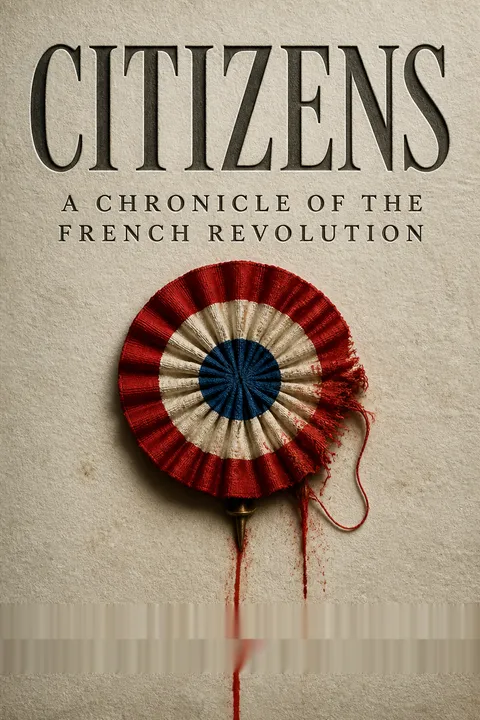

Key Takeaways
1. The "Old Regime" was a dynamic, modernizing society, not a stagnant relic.
"Relieved of the revolutionary coinage 'old regime,' with its heavy semantic freight of obsolescence, it may be possible to see French culture and society in the reign of Louis XVI as troubled more by its addiction to change than by resistance to it."
A vibrant society. Far from being a moribund, archaic system, late 18th-century France under Louis XVI was a society undergoing significant modernization. This era saw:
- Scientific advancements: Academies of science and medicine flourished, applying new data to practical purposes like military technology and industrial chemistry.
- Infrastructure growth: Roads, canals, and postal services (like the "Turgotines") expanded, cutting travel times and fostering national markets.
- Industrial dynamism: Sectors like cotton manufacturing, coal mining, and metallurgy experienced impressive growth rates, often surpassing Britain's in specific areas.
Elite-driven change. Much of this dynamism was driven by the elite, including the nobility, who were deeply involved in finance, commerce, and innovative industries. They were less obsessed with tradition and more with novelty and science, challenging the stereotype of a stagnant aristocracy. This period also saw:
- Social mobility: A significant portion of the nobility (two-thirds in the 17th-18th centuries) was newly ennobled, often through merit or wealth, blurring traditional class lines.
- Government reforms: Ministers like Turgot and Calonne introduced ambitious plans for economic liberalization, tax reform, and administrative decentralization, though often met with political resistance.
Contradictions of progress. This era of change, however, also generated new tensions. While some embraced modernization, others, like Louis-Sébastien Mercier, viewed it with foreboding, seeing the rise of commercialism and urban centers as sources of moral decay and social inequality. This duality of progress and discontent would profoundly shape the coming revolution.
2. A new "Patriotic" culture, led by a liberal aristocracy, challenged royal authority.
"Important to its argument is the claim that a patriotic culture of citizenship was created in the decades after the Seven Years’ War, and that it was thus a cause rather than a product of the French Revolution."
Birth of patriotism. A powerful sense of French patriotism, distinct from loyalty to the monarch, emerged in the decades before 1789. This was fueled by:
- American influence: The American Revolution provided a model for "Liberty" and a chance for France to avenge its defeat in the Seven Years' War.
- Hero cults: Figures like Lafayette, celebrated as a "Hero of Two Worlds," and Benjamin Franklin, the "Electrical Ambassador," embodied new ideals of citizen-soldiers and enlightened virtue.
- Neoclassical art: David's paintings, like The Oath of the Horatii, promoted austere Roman republican virtues, emphasizing patriotism, self-sacrifice, and fraternity over courtly frivolity.
Aristocratic leadership. Paradoxically, this nascent patriotic culture was largely cultivated by a liberal segment of the aristocracy. These "citizen-nobles" embraced Enlightenment ideals and sought to redefine their status through public service and merit, rather than inherited privilege. They were:
- Advocates for reform: Many, like Malesherbes, championed freedom of the press, legal reform, and limitations on arbitrary power.
- Critics of absolutism: They used their positions in the Parlements to challenge royal decrees, arguing for a more "constitutional" monarchy.
Seeds of division. While this elite-led patriotism initially united diverse groups against perceived "despotism," it contained inherent contradictions. The very "liberties" championed by the aristocracy often clashed with the economic realities and traditional protections desired by commoners, setting the stage for future conflicts over the true meaning of "citizenship."
3. The monarchy's financial crisis was a political, not merely structural, problem.
"More than any inequity in a society based on privilege, or the violent cycles of famine that visited France in the 1780s, the Revolution was occasioned by these decisions of state."
Debt's heavy toll. The French monarchy's terminal crisis was primarily a financial one, exacerbated by costly wars, particularly the American Revolution, which added 1.3 billion livres to the national debt. This debt was not inherently worse than other European powers, but its management was crippled by political resistance.
- Loan dependency: 91% of American war funding came from loans, increasing reliance on domestic and foreign creditors.
- Tax resistance: Attempts to impose new, universal direct taxes were met with fierce opposition from privileged groups, who framed their exemptions as "liberties."
Ministerial merry-go-round. Successive finance ministers (Turgot, Necker, Calonne, Brienne) struggled to implement consistent fiscal policies. Each attempted reforms, but faced:
- Court opposition: Powerful factions, including the Queen and royal brothers, resisted austerity measures and continued lavish spending.
- Parlementary obstruction: The sovereign courts, posing as defenders of the "nation," blocked tax reforms that threatened aristocratic privileges.
The "Necker myth." Jacques Necker, a Swiss Protestant banker, gained immense popularity by promising to fund the American war through loans without new taxes. His Compte Rendu, though criticized as disingenuous, fostered public confidence in a transparent, accountable government. His eventual dismissal, however, highlighted the monarchy's inability to embrace genuine financial and political reform, leading to a crisis of credit that ultimately forced the calling of the Estates-General.
4. Popular grievances, especially hunger, fueled revolutionary violence and anti-elite sentiment.
"What point was there 'preaching peace and liberty to men dying of hunger? What use would a wise constitution be to a people of skeletons?'"
The winter of discontent. The severe winter of 1788-89, following mediocre harvests, plunged much of France into a subsistence crisis. Bread prices soared, consuming up to 80% of a laborer's wage, leading to widespread destitution and hunger.
- Rural suffering: Landless laborers lost work, smallholders faced debt and eviction, swelling the ranks of the poor.
- Urban unemployment: Industrial depression and British competition led to mass layoffs in cities like Lyon and Amiens.
The "famine plot." Popular belief in a deliberate "famine plot" by speculators, hoarders, and aristocratic conspirators intensified anger. This fueled demands for:
- Price controls: Regulation of grain and other basic commodities.
- Punitive justice: Death penalties for "hoarders" and "speculators."
Politicization of distress. The King's call for cahiers de doléances (grievance petitions) transformed economic hardship into political demands. Peasants, often led by local curates or lawyers, articulated a desire for:
- Paternalistic state: A benevolent monarch who would protect them from exploitation.
- Communal rights: Restoration of traditional rights over common lands and forests, often against modernizing landlords.
- Anti-modern sentiment: Opposition to mechanization, unregulated trade, and the perceived excesses of urban capitalism.
This fusion of hunger and anger, combined with the belief that the King sanctioned their actions, transformed local grievances into a powerful, often violent, force for revolutionary change, setting the stage for the Réveillon riots and the storming of the Bastille.
5. The Estates-General became a crucible for national sovereignty, but also for deep divisions.
"The Third Estate is not an order, it is the nation itself."
The Notables' defiance. Calonne's Assembly of Notables (1787), intended to rubber-stamp tax reforms, instead became a forum for aristocratic opposition. They accepted fiscal equality but demanded representation, inadvertently paving the way for the Estates-General.
- Shift in rhetoric: "Privilege" became synonymous with "liberties" in the fight against "ministerial despotism."
- Demand for Estates-General: The Parlements, particularly, insisted that only a national assembly could consent to new taxes.
The "doubling of the Third." Necker's decision to grant the Third Estate double representation, without specifying voting by head, created a critical impasse. This fueled a pamphlet war, notably Sieyès's Qu'est-ce que le Tiers-Etat?, which argued:
- The Third Estate, representing the productive elements, was the nation.
- Privileged orders were parasitic and should be abolished.
The Tennis Court Oath. The King's attempt to annul the Third Estate's self-proclaimed National Assembly led to the iconic Tennis Court Oath (June 20, 1789). This act:
- Asserted national sovereignty: The Assembly vowed not to disperse until a constitution was established.
- Symbolized unity: Deputies, including many liberal nobles and clergy, embraced a shared identity as "citizens."
- Challenged royal authority: It marked a decisive break from the old order, transforming a consultative body into a constituent power.
This period saw the rapid politicization of France, as the debate over representation exposed deep cleavages within the elite and mobilized popular support for a radically redefined national identity.
6. The fall of the Bastille and the October Days cemented popular power through symbolic violence.
"Bloodshed was not the unfortunate by-product of revolution, it was the source of its energy."
The Bastille's mythic power. The storming of the Bastille on July 14, 1789, was less a strategic military victory and more a symbolic triumph over "despotism." The fortress, though nearly empty, represented arbitrary royal power and secrecy.
- Popular mobilization: Fueled by fear of military repression, high bread prices, and conspiracy theories (e.g., the "famine plot"), Parisian crowds, including many artisans and former soldiers, sought arms and gunpowder.
- Military defection: Crucially, units of the gardes françaises sided with the people, refusing to fire on them, signaling the collapse of royal authority in the capital.
- Punitive justice: The brutal murders of Governor de Launay and prévôt des marchands de Flesselles, with their heads paraded on pikes, established a pattern of symbolic, retributive violence.
The October Days. The march of Parisian women to Versailles (October 5-6, 1789) further demonstrated the power of popular action. Driven by hunger and suspicion of royalist plots (exacerbated by the "Orgy of the Guard"), the poissardes (market women) demanded:
- Bread: Direct intervention to secure food supplies.
- Royal return to Paris: To bring the King closer to the people and under their surveillance.
Lafayette's role. Lafayette, as commander of the National Guard, reluctantly led his troops to Versailles, ultimately securing the royal family's return to the Tuileries. This event, though framed as a "reunion," effectively made the King a prisoner of the Parisian populace, further eroding royal mystique and cementing the capital's influence over the National Assembly.
7. The Civil Constitution of the Clergy ignited a holy war, dividing the nation.
"The Civil Constitution was not simply another piece of institutional legislation. It was the beginning of a holy war."
Church as national property. Talleyrand's proposal in October 1789 to place Church property "at the disposal of the Nation" was a pragmatic solution to the financial crisis. It aimed to:
- Liquidate debt: Use vast ecclesiastical estates as collateral for new loans and assignats.
- Integrate clergy: Transform priests into salaried "moral functionaries" of the state, loyal to the nation.
Clerical resistance. This radical measure, followed by the Civil Constitution of the Clergy (July 1790), which reorganized dioceses and mandated elected bishops and priests, provoked widespread resistance.
- Papal condemnation: Pope Pius VI's denunciation of the Constitution and threat of excommunication for "juring" (oath-taking) priests deepened the schism.
- Rural defiance: Many country curates, often from peasant backgrounds and deeply embedded in local communities, refused the oath, becoming "refractory" priests.
- Popular backlash: In regions like the Vendée, the enforcement of anti-clerical laws was seen as an invasion, leading to widespread harassment of "intruder" (juring) priests and the rise of Catholic-royalist sentiment.
A new divide. The religious question became a profound fault line, dividing France into "Patriots" and "fanatics." It demonstrated that the Revolution's universalist ideals clashed violently with deeply held traditional loyalties, setting the stage for civil war and the brutal repression of religious dissent.
8. War with Europe, driven by messianic zeal and strategic interests, radicalized the Revolution.
"The French have become the foremost people of the universe... are they to be timid and feeble now that they are free?"
The "crusade for liberty." The declaration of war against Austria in April 1792, and later against Britain and the Dutch Republic, was a pivotal moment. It was driven by:
- Brissotin ideology: Jacques-Pierre Brissot and the Girondins advocated a "crusade for universal liberty," believing war would expose royalist traitors and spread revolutionary ideals across Europe.
- Strategic interests: The desire to secure "natural frontiers" (Rhine, Alps, Pyrenees) and exploit conquered territories (e.g., Belgium, Rhineland) for resources.
- Conspiracy fears: Belief that European monarchs, particularly Austria and Prussia (as in the Pillnitz Declaration), were actively plotting with émigrés to crush the Revolution.
Military setbacks and paranoia. Initial French military campaigns were disastrous, marked by desertions and defeats (e.g., Tournai, Neerwinden). These failures fueled paranoia about internal treason and led to:
- Purges: Calls for the removal of "aristocratic" generals and "unpatriotic" officials.
- Economic crisis: War expenses, coupled with the depreciation of the assignat, exacerbated food shortages and inflation, leading to renewed popular unrest.
The "Marseillaise." Rouget de Lisle's "Chant de Guerre de l'Armée du Rhin," later known as "La Marseillaise," became the anthem of this patriotic fervor. Its lyrics, invoking family, blood, and soil, captured the blend of defensive defiance and messianic aggression that characterized the revolutionary wars. The war, initially seen as a means to secure the Revolution, instead became its primary engine of radicalization and violence.
9. The Terror was a brutal, centralized attempt to enforce a "Republic of Virtue" and state control.
"It is impossible for revolutionary laws to be executed unless the government itself is truly revolutionary."
The rise of the Committee of Public Safety. Facing military defeats, federalist revolts (e.g., Lyon, Bordeaux), and economic crisis, the Convention, in March-April 1793, created powerful, centralized institutions:
- Revolutionary Tribunal: To swiftly try "enemies of the people."
- Committee of Public Safety (CPS): A nine-member executive body with sweeping powers to coordinate defense and internal security.
- Representatives on Mission: Deputies dispatched to departments as direct agents of central authority.
Economic Terror. To address popular demands and fund the war, the CPS implemented radical economic controls:
- Maximum: Price ceilings on essential goods, enforced by the armées révolutionnaires.
- Requisitions: Compulsory seizure of food and resources from the countryside.
- Forced loans: Levies on the wealthy to subsidize the poor and war efforts.
The "Republic of Virtue." Robespierre, Saint-Just, and Couthon, dominating the CPS, envisioned a moralized republic where virtue and terror were inseparable. This involved:
- Dechristianization: A campaign to eradicate religious symbols and practices, replacing them with a civic cult of Reason and the Supreme Being.
- Cultural engineering: The creation of a revolutionary calendar, public festivals, and art to inculcate republican values and erase the "impure" past.
- Purges: Systematic elimination of perceived enemies, including Girondins, Hébertistes, and "Indulgents" (like Danton and Desmoulins), to achieve political purity.
The Terror, though geographically selective, was a brutal and unprecedented exercise in state power, demonstrating the Revolution's capacity for self-destruction in its pursuit of an idealized, unified nation.
10. The Revolution's enduring legacy was a militarized state and a perpetually challenging political culture.
"Militarized nationalism was not, in some accidental way, the unintended consequence of the French Revolution: it was its heart and soul."
A new kind of state. The Revolution, particularly under the Terror, forged a powerful, centralized, and militarized state. The levée en masse created a conscript army of unprecedented scale, transforming France into a formidable military power.
- Technocratic governance: Engineers, scientists, and bureaucrats, many from the old regime, managed war production and logistics, foreshadowing Napoleonic administration.
- Economic control: The state's intervention in the economy, though often chaotic, demonstrated its capacity to mobilize resources for national objectives.
Unresolved contradictions. Despite its accomplishments, the Revolution failed to reconcile its core ideals. The promise of universal liberty and popular sovereignty often clashed with the realities of state power and the demands of war.
- Political instability: The cycle of violence, purges, and coups (e.g., Thermidor) demonstrated the difficulty of establishing stable representative institutions.
- Enduring grievances: The rural poor gained little, and economic modernization continued to create social inequalities, fueling persistent discontent.
A challenging political culture. The Revolution unleashed an unprecedented explosion of political discourse—in print, speech, and symbols—that permanently altered French society. This culture, however, was often characterized by:
- Paranoia and denunciation: A constant search for "Uncitizens" and "traitors" to blame for societal ills.
- Rhetorical violence: The use of extreme language and symbolic acts of punishment as integral to political action.
- Unfulfilled expectations: The gap between utopian promises and harsh realities created a perpetual challenge to any governing authority, ensuring that the question of "who truly represents the people" would remain a central, often violent, theme in French politics for generations.
Review Summary
Citizens receives mixed reviews, averaging 4.03/5. Praised for its rich narrative, vivid character portraits, and revisionist argument that violence was central—not incidental—to the French Revolution, many readers appreciate Schama's immersive storytelling and debunking of myths. However, critics note the book's excessive length, scattered chronology, and assumption of prior knowledge makes it challenging for beginners. Some find his conservative bias problematic, arguing he over-emphasizes brutality while undervaluing the Revolution's lasting contributions to liberty, democracy, and the concept of citizenship.
People Also Read




About the Author
Other books by Simon Schama

Download PDF
Download EPUB
.epub digital book format is ideal for reading ebooks on phones, tablets, and e-readers.








































