
Key Takeaways
1. Wild Spirituality: The Sacred Beyond Walls
Spirituality and nature are not separate.
Personal journey. The author's path to "Church of the Wild" began with a deep, unnamed sense of belonging found in nature during childhood, contrasting with the formal, often disconnected experiences of traditional church. This early intuition, where God was found in bushes and trusting deer, was often dismissed or labeled as "pantheism" by religious communities. The separation of spirit and nature led to personal dissatisfaction and burnout in both pastoral and activist roles.
Jesus's example. Re-examining biblical narratives reveals that Jesus consistently sought the wilderness, mountains, and lakeshores for prayer and spiritual encounters, rather than buildings. This crucial aspect of his spiritual journey is often overlooked or spiritualized as mere metaphor in modern religious teachings. The physical, material world played a significant role in the transformational moments of biblical figures, from Moses and the burning bush to Jesus's forty days in the wilderness.
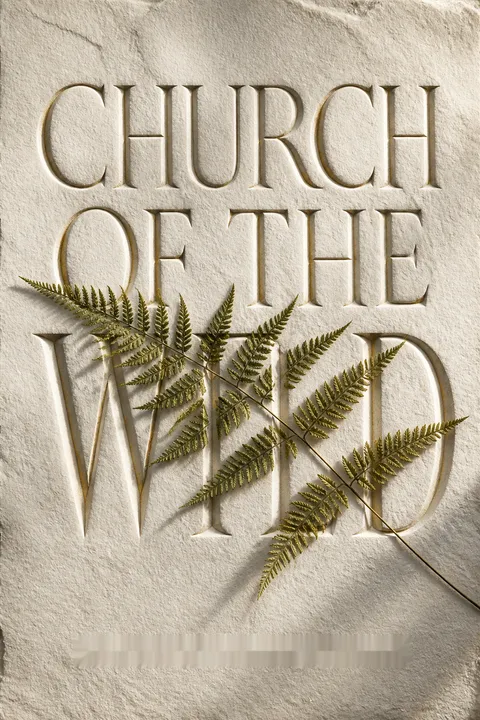
A new path. "Church of the Wild" emerges as a response to this profound disconnection, redefining "church" as an intentional connection with the sacred found outside human-made structures. It's a movement to reconnect with nature not just for personal well-being, but as a direct, unmediated experience of the divine, challenging the dualistic belief that spirit and nature are separate. This approach invites a wild spirituality, rooted in the innate interconnectedness of all life.
2. Reclaim the "Great Conversation" with All Life
We are talking only to ourselves. We are not talking to the rivers, we are not listening to the wind and stars. We have broken the great conversation.
Broken dialogue. Thomas Berry lamented that humanity has broken the "great conversation" with the living world, leading to a shattered universe and profound loneliness. This disconnection, rooted in a worldview that objectifies nature, has resulted in ecological, spiritual, and social crises. Restoring this conversation is seen as essential for healing the world.
Beyond words. Engaging in this "great conversation" means listening to the voices of rivers, deer, and trees, not necessarily through human language, but through deep attentiveness and intersubjectivity. Poet David Whyte describes this as the "conversational nature of reality," where identity depends on paying attention to things "other than myself," broadening one's sense of presence and purpose. This involves a contemplative practice of "sauntering" with reverence, allowing awe to guide perception.
Language matters. The way we speak about nature—using terms like "natural resources" or "timber"—contributes to its objectification. Writer Robert Macfarlane emphasizes that "language is fundamental to the possibility of re-wonderment," advocating for a "grammar of animacy" that recognizes other species as persons, teachers, and kin. The example of Lewis islanders saving their moorland by restoring intimate, story-based conversation with their landscape demonstrates the power of this relational language.
3. Christ as "Conversation": The Interconnected Divine
In the beginning, was the Conversation, and the Conversation was with God, and the Conversation was God.
Logos re-imagined. The opening of John's Gospel, traditionally translated as "In the beginning was the Word," takes on a revolutionary meaning when "Logos" is understood as "Conversation" (sermo). Ancient Greek philosophers like Heraclitus used Logos to describe an intelligent, interconnected life force embedded in all things, a dynamic principle of relationship. This interpretation suggests Christ is not merely a static word, but the active, intimate reciprocity holding the universe together.
Historical suppression. The shift from translating Logos as "sermo" (conversation) to "verbum" (word) in the 4th-century Latin Vulgate was a deliberate act by church patriarchs. This change, driven by the Roman Empire's desire for "single supreme authority," suppressed a relational understanding of Christ in favor of a singular, unchallengeable "Word." This linguistic manipulation served to consolidate power and control the narrative of the newly official state religion.
Dynamic relationship. Reclaiming "Christ as Conversation" reveals a dynamic, abundant relationship at the core of existence, a "ubiquitous confluence of matter and spirit" as Richard Rohr describes it. This perspective aligns with quantum physics, which sees the universe not as discrete "things" but as interconnected processes and relationships. This re-framing invites us to see God as the dynamic intimacy of relationship, a verb of back-and-forth connection and love that creates and links all things, from cosmos to psyche.
4. Courtship of the Particular: Love What You Know
People exploit what they have merely concluded to be of value, but they defend what they love. To defend what we love we need a particularizing language, for we love what we particularly know.
Beyond appreciation. While appreciating and protecting nature is important, falling in love with Earth is a distinct and transformative act. This love doesn't encompass the entire planet at once, but begins with a "courtship of the particular"—an allure to pay attention and enter into conversation with a specific being or place. Through fidelity, time, and reciprocal kindness, this particular relationship expands the heart to love the whole.
Personal encounters. The author's persistent, yet initially frustrated, attempts to connect with wild deer eventually led to an unexpected, intimate relationship with a specific black-tailed doe named Mary. This bond, characterized by mutual recognition and trust, deepened the author's understanding of sacred connection. The experience of Mary lying down in her yard, revealing she had just given birth, transformed the author's perspective from observer to participant in a sacred family dynamic.
Love as action. The documentary "My Octopus Teacher" exemplifies this courtship of the particular, showing how filmmaker Craig Foster's daily visits and growing love for an octopus led to a profound, transformative relationship and ultimately inspired him to protect the bay where she lived. This demonstrates that love is more than an emotion; it's a response to the gift of life that compels us to defend and care for what we intimately know and cherish, expanding our sense of family to include other species.
5. Embrace Vulnerability: Love Is as Strong as Death
Love is only present when we love self and at the same time we love the creative world, the neighbor.
Wild reality. Wilderness is not solely gentle; it is also fierce, indifferent, and operates through predation and the cycle of life and death. Human society, particularly in the Western world, has built thick walls against this vulnerability, preferring to see itself as predator rather than prey. Encounters with wild predators, like the mountain lion in the author's neighborhood, shatter this illusion of control and expose our deep disconnection from the natural system.
Denial's cost. Our refusal to accept our own mortality and place in the food web leads to irrational actions, such as the extermination of predators to protect human-defined "property" like livestock. This mentality, prioritizing human needs and ownership above all, removes us from the circle of life and ultimately harms the entire system. The neighbor's outrage at deer on "his property" highlights this privileged, disconnected worldview.
Post-doom spirituality. Michael Dowd's "post-doom spirituality" offers a path to embrace the fullness of our reality—tragedy and beauty, life and death. It's a spirituality that accepts the inevitable, honors grief, and prioritizes "pro-future and soul-nourishing" actions. Like a cancer diagnosis compels one to focus on essential relationships, facing ecological collapse can open hearts to deeper love and courageous, compassionate action, transforming denial and despair into a "fierce and fearless reverence for life."
6. Your Wild Ordination: A Unique Call to Service
Calling requires a reckoning with who you are in your most wild essence, paying attention to your unique vulnerabilities.
A call from the wild. "Wild ordination" is a concept where one receives a calling to service not from an institution, but directly from the wild world. This calling is deeply personal, often unexpected, and resonates with one's "wild essence" and unique vulnerabilities. It's about recognizing what breaks your heart and compels you to act, trusting that you will know what to do as you take the steps.
Mystical encounters. The author's profound encounter with a great horned owl in the Colorado wilderness led to a triple, implausible summons: "You need to be ordained by the wild," "You need to be baptized by the wild," and "Rewild the church." This experience, a moment of holy arrogance and deep humility, clarified her life's purpose to reconnect nature and spirit, church and wild, embodying the wild truth and love of Jesus.
Apprenticeship and genius. Living into a wild ordination involves an "apprenticeship" to nature, learning from beings and places that reveal the sacred. This process helps individuals recognize their "genius"—their unique gifts and essence—called into service to the world. Examples include the author's son, Alec, whose deep connection to a specific shoreline led to a project of rewilding and re-storying, and Veronica Kyle, an ecowomanist who reclaimed her ancestral connection to nature and divine womanist wisdom to serve her community.
7. The Wild Church Network: A Movement of Reconnection
The vision of wild church was given to many of us independently, at around the same time.
Emergent movement. The Wild Church Network emerged from a shared, independent vision among many individuals across North America who felt called to leave traditional church buildings and connect directly with the wild. This collaborative movement, described by Harper's Magazine as urging the church to "seek God in the literal wilderness," provides a container for diverse expressions of wild spirituality, resisting dogmatic institutionalization.
Diverse expressions. Wild churches meet in various outdoor settings—parks, oak groves, city lots, or even Costco parking lots—in all kinds of weather, embracing discomfort as part of reconnection. While many leaders are "edge walkers" from the Christ tradition, participants come from diverse spiritual backgrounds. Examples include:
- New Life Lutheran Church (Texas): Mainstream Christian, outdoor services, lectionary-based but nature-focused.
- Three Rivers Forest Church (Ontario) & Shenandoah Valley Church of the Wild (Virginia): Celtic-oriented, celebrating seasonal shifts.
- Integral Church (Florida): Interspiritual, readings from multiple traditions.
- Wild Church West Virginia: Catholic mass adapted for nature, attracting Hare Krishnas.
Holistic transformation. These communities are committed to both inner and outer transformation, integrating contemplative practices with active engagement in ecological issues. They encourage people to reconnect with their ecological grounding, fostering intimate relationships with local waters, trees, and wildlife. This leads to actions like building community gardens, protesting environmental destruction, and restoring abused land, embodying a spirituality that loves the world for its own sake.
8. Indigenous Wisdom: Guiding Our Return to Kinship
Land is not capital to which we have property rights; rather it is the place for which we have moral responsibility in reciprocity for its gift of life.
Honoring ancestral ties. A crucial aspect of wild spirituality is acknowledging and learning from Indigenous peoples, who have historically lived in sacred relationship with the land. Wild churches often begin with land acknowledgments, honoring the traditional caretakers of the watershed and reckoning with the traumatic history of colonization and its impact on Indigenous cultures and their connection to nature.
Challenging the "windigo." Robin Wall Kimmerer challenges the colonizer worldview, which she calls the "windigo," that treats land and creatures as mere "natural resources" to serve human needs. She advocates for a Native worldview where land is seen as the "source of our most profound sense of belonging," the residence of more-than-human relatives, and a place for which we have moral responsibility in reciprocity for its gift of life.
Standing Rock's lesson. The Standing Rock protests against the Dakota Access Pipeline exemplified Indigenous-led spiritual activism, where prayer was the strategy, organizing structure, and response to violence. The water protectors, grounded in a deep love for the river, demonstrated a "fierce love" and a commitment to kinship that transcended typical environmental activism. The elders' response to victory—planning a forgiveness ceremony—highlighted a profound wisdom of sacred reciprocity and compassion.
9. Beyond Domination: A Kin-dom of Reciprocity
The whole creation longs with eager expectation for this unveiling of the human, beloved ones.
Cosmic groaning. Paul's letter to the Romans (Romans 8:15-23), re-interpreted, reveals a cosmology of deep interconnection, where "the whole creation groans" for the "unveiling of the human, beloved ones." This suggests that Earth itself yearns for humanity to awaken to its role as kin, to be freed from a "spirit of slavery to decay" and rejoin the glorious freedom of the whole, embodied web of life. This is a call for mutual healing and full participation.
Arrogance of belonging. David Whyte and Elizabeth Gilbert speak of an "arrogance of belonging"—not self-absorption, but a force that allows us to fully engage with the world, trusting our inherent place and purpose. This holy arrogance, paradoxically humble, recognizes that our full engagement is urgently needed. The rainforest, the deer, the sky, and even the rabid fox are calling us to discover our unique role in this love story of reconnection and restoration.
Emergent future. The "new story" Thomas Berry envisioned is emerging through local actions that connect and influence at a global level, as described by Margaret Wheatley's concept of emergence. This "kin-dom of God"—an ancient yet new story—is being forged by individuals and communities who choose love over despair, embracing the mystery of life, death, and new life. By recognizing the sacred presence in our glorious world and responding to its invitation, we collectively define the future for all beings.
People Also Read

Download PDF
Download EPUB
.epub digital book format is ideal for reading ebooks on phones, tablets, and e-readers.








































