
Key Takeaways
1. The Gospels are Interpretive Narratives, Not Pure History
But the first thing I learned in graduate school is that exploring these themes would be far more difficult than we expected.
Anonymous authors. The narratives now called "gospels" were written anonymously, some forty to sixty years after Jesus's death, not during his lifetime. Their authors' names were added about a hundred years later by admirers seeking to lend them credence. These writers were primarily motivated to spread their faith in Jesus and publicize his "good news," rather than to document history in a modern biographical sense.
Contradictory sources. Early sources mentioning Jesus are not neutral; while devoted followers wrote gospels, Roman elites penned scathing attacks, often despising his followers as ignorant and superstitious. Even within the gospels, there are significant discrepancies, such as the wildly different accounts of Jesus's birth in Matthew and Luke, or the varying portrayals of his identity and teachings. These inconsistencies highlight that the gospels are less factual reports and more theological interpretations.
Spiritual quest. For many, including scholars, investigating these ancient texts is not merely a historical inquiry but also a spiritual quest. The goal is not to find a simple, straightforward historical account, but to understand how these powerful stories resonated deeply with early believers and continue to do so today, shaping faith and culture across millennia.
2. The Virgin Birth: A Theological Response to Illegitimacy Rumors
As we shall see, many respected scholars regard the birth stories primarily as legends woven from Biblical stories in order to deflect that embarrassing question.
Divergent narratives. Matthew and Luke offer vastly different accounts of Jesus's birth, agreeing only on his royal lineage, Bethlehem as his birthplace, and a miraculous conception. Matthew describes magi, a guiding star, and Herod's massacre of infants, while Luke portrays a humble birth in a manger, heralded by angels to local herdsmen. These discrepancies suggest literary adaptation rather than historical reporting.
Addressing scandal. The elaborate birth narratives likely served to counter widespread rumors ridiculing Jesus as a bastard, a charge hinted at in Mark's earlier gospel where Jesus is called "son of Mary" without mention of a father. Both Matthew and Luke revise Mark's account to include a recognizable father figure (Joseph) and emphasize a miraculous, divine conception to legitimize Jesus's origins.
Literary precedents. The gospel writers drew heavily on Hebrew Bible stories and ancient tropes of miraculous births to glorify heroes. Matthew, for instance, weaves in the scandalous sexual histories of four women (Tamar, Rahab, Ruth, Bathsheba) into Jesus's genealogy, preparing the reader for Mary's own "irregular" pregnancy, which is then reinterpreted as a divine miracle, fulfilling prophecy.
3. Jesus's Shifting Identity: Messiah, Son of God, Son of Man
Who is this man, both sought after and threatening?
Traditional titles. Mark's gospel introduces Jesus with the titles "Messiah, Son of God," which, for a devout Jew, were traditional designations for Israel's king, anointed by God's spirit to rule. However, Mark's narrative quickly complicates this, showing that Jesus's identity is a mystery, even to his closest disciples.
Ambiguous self-identification. Jesus most often refers to himself as "Son of Man," a term that is ambiguous. It can simply mean "a human being," but it also alludes to a figure in Daniel's prophecy—a human or supernatural being appointed by God to rule the world after suffering and death. This dual identity allows Jesus to maintain secrecy about his messianic role while hinting at his future glory.
Messianic secret. Jesus frequently commands secrecy about his divine identity, especially from demons who recognize him. This "Messianic Secret" in Mark's gospel suggests that his true nature could only be fully understood after his suffering, death, and resurrection. Peter's partial recognition of Jesus as Messiah is immediately qualified by Jesus's prediction of his own suffering, indicating that the path to messianic rule is through sacrifice, not immediate triumph.
4. The "Kingdom of God": A Multivalent Message of Imminent Transformation
Whatever it means, Jesus insists that he expects it to come within his own disciples’ lifetime; Matthew and Luke hint that it has arrived.
Central message. Jesus's core message, "The kingdom of God is coming soon!", electrified his followers, prompting them to abandon their lives and join him. However, the precise meaning of this "kingdom" is ambiguous across the gospels, leading to diverse interpretations.
Apocalyptic expectations. Many of Jesus's Jewish contemporaries, and even his early followers like Paul, understood the "kingdom" in apocalyptic terms: a cataclysmic event where God would destroy foreign invaders, restore Israel's glory, and usher in a new age. Jesus's warnings of war, famine, and cosmic catastrophe in Mark's gospel align with these apocalyptic expectations, suggesting an imminent end to the current world order.
Evolving interpretations. As generations passed and the kingdom did not arrive as expected, gospel writers like Matthew and Luke began to reinterpret Jesus's prophecy. Matthew emphasized vigilance and compassion as criteria for entry into a future, transcendent kingdom, while Luke hinted at the kingdom's partial presence on earth, even "within you." The Gospel of Thomas further radicalized this, portraying the kingdom as a present state of spiritual awareness, not a future event.
5. Miracles as Symbolic "Signs" of Divine Power
For, as he intends to show, when God’s spirit descends upon Jesus, the spirit inspires him to speak in prophecy, and to perform acts of power.
Validation of authority. In the gospels, Jesus's power to heal and exorcise demons is intimately linked to his teachings, serving as a demonstration and validation of his claim to speak for God. These miracles are not just historical events but "signs" that reveal the hidden dynamics of a cosmic conflict between God's spirit and evil forces.
Cultural context. In ancient Palestine, where medical care was scarce and expensive, powerful healers were in high demand. Jesus's miracles, including curing diseases, casting out demons, and even raising the dead, would have been understood within a cultural context that accepted the reality of invisible spirits causing illness and suffering. Some of his methods, like using spittle or specific Aramaic words, resembled practices found in ancient magical traditions.
Metaphorical meaning. Beyond literal interpretations, Jesus's miracles often function as parables, conveying deeper spiritual or political meanings. For example, the exorcism of demons into a herd of pigs that drowns in the sea can be read as a symbolic prophecy of God driving out the despised Roman "legion" (soldiers) from Israel, echoing the Exodus story of the Egyptian army drowning in the Red Sea.
6. The Crucifixion: From Shameful Defeat to Divine Sacrifice
Ironic though it be, the most certain thing known about Jesus of Nazareth is that he was crucified by the Romans as a rebel against their government in Judea.
Historical reality vs. gospel narrative. While Jesus's crucifixion by the Romans as a rebel is historically certain, the gospel accounts work diligently to obscure this embarrassing fact. Crucifixion was a brutal Roman punishment for treason, and his followers faced immense pressure to explain how their "Messiah" could suffer such a humiliating death.
Shifting blame. The gospel writers, especially Matthew and Luke, systematically shift blame for Jesus's death from the Roman governor Pilate to Jewish leaders and crowds. Pilate is portrayed as a reluctant, justice-seeking figure, repeatedly declaring Jesus innocent, while "the Jews" are depicted as fiercely demanding his execution. This narrative strategy aimed to exonerate Christians in the eyes of Roman authorities and attract Gentile converts.
Prophetic reinterpretation. To transform this apparent defeat into a meaningful event, Jesus's followers reinterpreted his death through the lens of Hebrew Bible prophecies and psalms. Passages describing a righteous king's suffering and God's deliverance were seen as foretelling Jesus's passion. Paul, writing earliest, explicitly states that Jesus "died for our sins, according to the Scriptures," framing it as a voluntary sacrifice, a "Passover lamb" for the world's sin.
7. Resurrection: Diverse Experiences, Enduring Hope
That Jesus’ followers…had resurrection experiences is, in my judgement, a fact. What the reality was that gave rise to the experiences I do not know.
Conflicting accounts. Reports of Jesus's resurrection are brief and often conflicting, ranging from visionary experiences to bodily appearances. The gospels agree on an empty tomb and women being the first witnesses, though their testimony is initially dismissed by male disciples as "idle tales."
Paul's pivotal vision. Paul, a fierce persecutor of Jesus's followers, experienced a transformative vision of the risen Jesus as a dazzling, divine being. This encounter, which he describes as "God revealed his son in me," became the cornerstone of his conviction and missionary work, even though he had never met Jesus during his lifetime. Paul emphasizes a "spiritual body" in resurrection, distinct from the perishable "physical body."
Catalyst for the movement. Regardless of the precise nature of these experiences, the conviction that Jesus was alive again, resurrected, breathed new life into his faltering movement. This belief, offering hope for new life and victory over death, became the "mightiest power" through which Christianity spread, promising "eternal life" not just to elites but to everyone, including the marginalized.
8. Jesus's Divinity: A Developing Theological Concept
Only some twenty years after the crucifixion, when the views of various groups of Jesus’s followers were shaped by their different leaders’ perspectives, Paul complains that though some say, “I am from Paul’s group,” others insist that they are “from Peter’s.”
Early interpretations. While Paul, shortly after Jesus's death, already preached Jesus as a divine being "equal to God," he did not necessarily equate this with compromising monotheism, seeing Jesus as manifesting God's glory. However, the explicit declaration of Jesus as "God incarnate" is most pronounced in John's gospel, written later than the others.
John's radical revision. John's gospel uniquely focuses on Jesus himself as the message, rather than the "kingdom of God." Through "I am" sayings, Jesus claims divine attributes and even the divine name, asserting "The Father and I are one." This radical escalation of Jesus's status to "God's only begotten Son" became immensely influential in shaping later Christian doctrine.
Creedal consolidation. The question of Jesus's divinity became a central point of contention among early Christian groups. Emperor Constantine, seeking to unify the empire, convened the Council of Nicaea in 325 C.E., where bishops codified the belief that Jesus is "God from God, light from true light, true God from true God, begotten, not created, of one being with the Father" in the Nicene Creed. This decision, heavily influenced by John's gospel, solidified the doctrine of Jesus's full divinity within orthodox Christianity.
9. The Dynamic Evolution of Christian Scripture and Doctrine
From Eusebius’s tentative lists, how did certain texts—John’s gospel foremost among them—come to be revered as the canon of gospel truth?
Canon formation. The process of selecting which writings would become "Scriptures" (the New Testament canon) was complex and contested, not a simple, divinely ordained event. Early leaders like Irenaeus advocated for a "four-formed gospel" (Mark, Matthew, Luke, John) to counter diverse interpretations and "heretical" texts.
Controversial councils. Church councils, such as Nicaea, were often tumultuous, with bishops debating philosophical terms and sometimes resorting to physical altercations. These councils, influenced by imperial power, made crucial decisions about doctrine and which texts were "orthodox," leading to the exclusion and suppression of other writings, like the Gospel of Thomas or the Gospel of Mary Magdalene, which were deemed "heretical."
Ongoing reinterpretation. Despite efforts to consolidate doctrine and canon, Christianity has always been characterized by diverse interpretations and denominations. The ambiguity and multivalence within the accepted gospels themselves have allowed for continuous re-imagination and adaptation of Jesus's message across different cultures and historical periods, ensuring its survival and relevance.
10. Jesus's Enduring Power: A Source of Hope, Justice, and Personal Transformation
His radical, unprecedented reading of Genesis still resonates through our social and political life as indictment—and inspiration.
Universal compassion. Jesus's teachings, particularly his radical call to love enemies and extend compassion to all in need—the sick, the imprisoned, the hungry, even disgraced individuals—transcended the social norms of his time. This message of universal sacred value, rooted in the Genesis idea that humanity is created in God's image, continues to resonate as a powerful call for justice and mercy.
Transformative experience. For new converts and long-time believers alike, Jesus remains a powerful presence, offering personal transformation and a sense of deep connection. Whether through intimate personal relationships, shared suffering, intellectual engagement, or the pursuit of social justice, people find in Jesus a source of meaning that helps them navigate life's challenges and transcend feelings of isolation.
Outburst of hope. The gospel stories, despite their historical complexities and often dark narratives of oppression and suffering, consistently shift into a key of hope. They depict miraculous reversals, from healing the sick and raising the dead to Jesus's own resurrection from a humiliating death to glorious new life. This pattern of transforming adversity into joy, of "making a way out of no way," is a primary reason for Jesus's enduring appeal and the astonishing success of the movement he inspired.
Review Summary
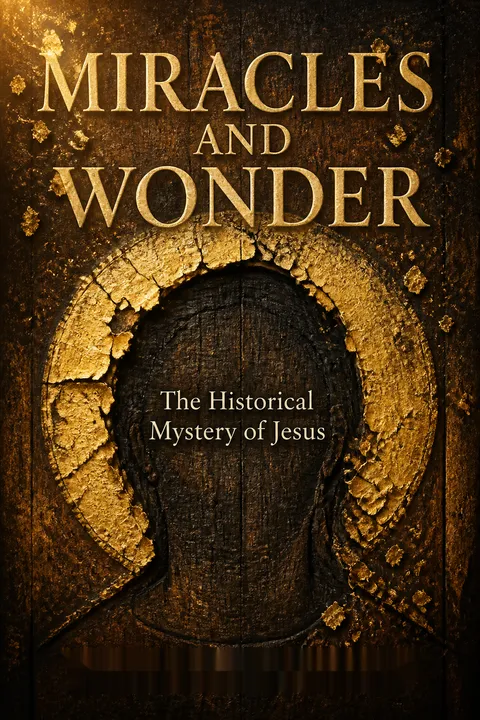
Miracles and Wonder by Elaine Pagels examines the historical Jesus through canonical and non-canonical gospels. Reviewers praise Pagels' accessible scholarship exploring birth narratives, miracles, crucifixion, and resurrection, noting how gospel writers adapted stories for their audiences decades after Jesus' death. Many appreciate her balanced approach between historical analysis and spiritual respect, examining contradictions without dismissing faith. The book traces Christianity's evolution through Constantine and Nicaea, concluding with modern interpretations across cultures. While some found repetition or desired more historical facts, most valued her exploration of why Jesus remains relevant after 2,000 years, offering hope and meaning through metaphor rather than literal truth.
People Also Read






Download PDF
Download EPUB
.epub digital book format is ideal for reading ebooks on phones, tablets, and e-readers.








































