
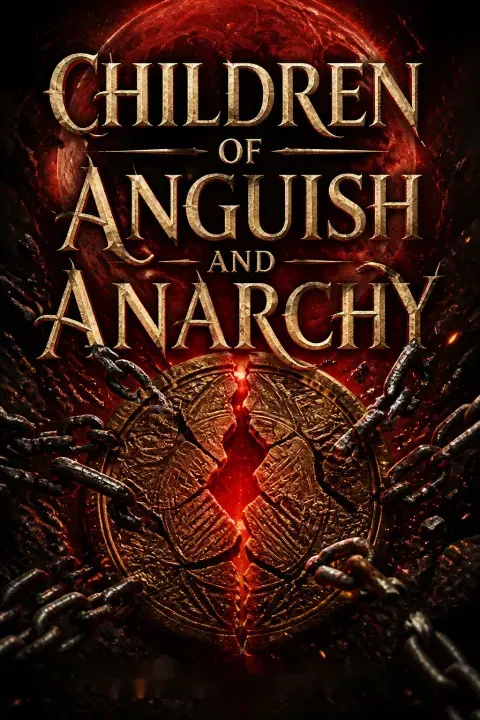


Plot Summary
Prologue
Zélie1 remembers before: before the scroll and the stone, before the war against the monarchy, before the Skulls descended on Lagos and dragged her people onto their ships.
She remembers the Silver Skull pressing a twisted majacite crown into her temple while two warriors held her down, the hot shears taking her white mane, the separation from her brother Tzain.3 A full moon has passed in this hanging cage below deck. Every night the Skulls inject liquid majacite into her throat to keep her magic dead.
The stench of the dead churns in the air. She prays to Oya, goddess of storms, clinging to the memory of her mother teaching her not to fear the thunder on a mountaintop in Ibadan. But no magic answers. Only the screams of other captured maji echo through the hold.
The prologue establishes a state of total abjection. Every marker of Zélie's identity has been stripped: her hair, her magic, her family, her homeland. The majacite crown functions as an anti-coronation, a brutal parody of the power she once wielded. Her prayer to Oya is an act of desperate faith against the void of captivity, and the memory of her mother on the mountaintop is the sole remaining tether to her former self. The prologue positions the entire novel as a journey from this zero point of degradation back toward agency, magic, and home.
Inan Returns in Chains
Zélie1 huddles in her hanging cage when the Skulls throw a new prisoner into the hold below deck. The boy thrashes against them, breaking fingers in the cage door despite the bag over his head. When the Skulls retreat and he pulls the canvas free, Zélie's1 blood runs cold.
It is Inan,2 the prince she left for dead in the palace cellars, the boy who dissolved his own monarchy and offered her his life. He is gaunt now, nearly feral, his cinnamon skin pale from weeks at sea. He tells her what he has learned working on the deck: the Skulls sail under King Baldyr5 and they are not just raiding for maji.
They are searching specifically for her, a girl with the blood of the sun. Before they can plan, heavy boots thunder down the stairs. The Silver Skull captain arrives with torchlight and drags Zélie1 from her cage.
This reunion forces Zélie into an impossible emotional calculus. Inan is simultaneously the betrayer who shattered her trust and the only ally she has in the dark. Their connection transcends their history because survival demands it. The revelation that she is specifically hunted transforms her captivity from random atrocity into targeted extraction, raising the stakes from personal survival to something cosmically significant. The canvas bag over Inan's head visually echoes Zélie's own stripping of identity.
The Medallion's Burning
The Silver Skull marches Zélie1 to the captain's quarters, where a young maji girl lies dead on the marble floor, a hole where her heart used to be. King Baldyr5 enters: barely twenty-three years old, chestnut hair in a messy bun, a wolf pelt over his bare shoulders, rectangular runes carved down his fair skin.
He speaks Orïshan through a bloodmetal translation rune strapped to his palm. He calls her Merle, blackbird. From an ornate chest he removes three golden medallions.
He explains that her blood carries the power of the gods and he needs her heart. Zélie1 fights, stabbing his cheek with a chicken bone and beating him with a brass candleholder. But he overpowers her and drives the medallion into her breastbone. Lightning cracks the sky as she seizes on the floor.
The medallion implantation is a scene of bodily violation that echoes colonial extraction: Baldyr mines Zélie's body for its divine resource. His youth and his command of her language make him more terrifying, not less. The dead maji girl prefigures what Zélie might become, a husk emptied of its sacred essence. Her fierce resistance, though futile, preserves her agency. The lightning that answers the implantation suggests the power within her recognizes what is happening and protests.
Tzain's Bloody Revolt
After Zélie's1 distraction in the hall, Tzain3 rallies the male prisoners. Using stolen sulfur pouches and bits of metal, the maji weaken their locks with corrosive tar. When a Skull kills Udo as punishment for the rebellion, Tzain3 orders the charge.
His cage flies open on the final ram. The maji spill into the hall as the Skulls descend. A warrior transforms using his bloodmetal hammer, swelling with monstrous strength, but six maji swarm him. Tzain3 grabs a fallen dagger and kills the Skull who wounded his arm.
The dead Skull's crimson axe calls to him. When Tzain3 grips the hilt, foreign chants fill his head and the blade glows red. He cuts through the remaining Skulls, freeing every cage. Kenyon,11 elder of the Burners, orders them to take the deck.
Tzain's transformation from protective brother to warrior is catalyzed by the bloodmetal's seductive power. The axe does not simply kill; it possesses. The foreign chants in his head suggest the weapon carries its own ideology, its own hunger for violence. This moment inverts the power dynamic of the entire story: the colonized seize the colonizer's weapons and discover they work just as well. The cost, however, is the self. The axe's whisper is the beginning of an addiction.
Lightning Beneath the Waves
Zélie1 wakes on the captain's floor, the medallion fused to her skin. Through it, she experiences King Baldyr's5 memories: his harsh childhood, the creation of bloodmetal from a volcanic well, his unification of the six tribes through relentless conquest.
When the Silver Skull returns, she garrottes him with her chains and finishes him with her staff. She takes his bronze compass and flees as the maji revolt reaches the deck. The ship sinks, torn apart by a colossal storm.
Underwater, the medallion pulses golden light that heals her wounds, restores her shaved white hair to its full length, and sends waves of energy pushing Tzain3 and Amari4 toward an island chain. An ancient voice commands her through the glowing sea: find the girl with diamond eyes6 before it is too late.
The medallion's power is radically ambivalent. It marks Zélie as Baldyr's property while simultaneously saving her life and granting her a new form of magic. The absorption of Baldyr's memories is an intimate violation that also provides crucial strategic intelligence. The ancient voice introduces a counter-narrative to Baldyr's plan, suggesting the medallion connects Zélie to something older and possibly adversarial to the Skulls' king. Her body becomes a contested site between two cosmic forces.
The Compass Points South
On the island, survivors build a camp from banana leaves and gathered moss. Tzain3 waits desperately for Zélie1 while fighting off Kenyon's11 pressure to sail for home. When Zélie1 and Inan2 arrive, her touch reawakens the maji's magic. Nâo12 controls the tides with teal light. Kenyon11 summons fire. Khani13 weeps as her healing glow returns.
Zélie1 explains the medallion and her vision of a girl with diamond eyes.6 She opens the Silver Skull's compass, which points to her own heart but can be redirected. The maji face a choice. Inan2 argues Orïsha must be warned and unified. Zélie,1 Tzain,3 and Amari4 must find the other girl6 before King Baldyr5 does. They will split into two groups, separating again after everything they endured to reunite.
The reawakening of magic through touch transforms Zélie from passive victim to active wellspring of power. Her violated body now restores what was stolen from her people. The decision to split forces is a gamble on trust: the maji must believe that Inan and Amari, former enemies of the revolution, are now genuine allies. The compass, a tool of the Skulls, becomes a symbol of reclaimed agency and a promise of reunification across unknown waters.
Orïsha's Fractured Homeland
Inan2 sails into Lagos's ruined port to find the city still divided. Kâmarū, the Grounder elder, cages him in earth and nearly kills him before Nâo12 intervenes. The maji control the city while tîtáns and soldiers huddle in a fortified iron dome outside the walls.
Inan2 seeks out his mother, Queen Nehanda,10 who survived the palace attack. She is bandaged, bitter, and wants him dead for dissolving the monarchy. He forces his magic into her mind, showing her the Skulls' ship, the cages, the blood. She falls to her knees.
Days later, at a tense clearing in the forest, Inan2 projects a hallucination of the Skulls slaughtering everyone present. Maji, tîtáns, and soldiers all see their own deaths. Queen Nehanda10 steps forward, bringing the tîtáns into a unified force against the common enemy.
Inan's use of forced mental projection is ethically fraught but strategically necessary. He weaponizes his Connector magic not to manipulate but to reveal, turning his mother's hatred against a greater threat. The armistice is not forgiveness; it is realpolitik born of existential terror. The hallucinated massacre dramatizes the novel's central thesis: only a common enemy can dissolve centuries of internecine hatred, and even then the hatred remains, dormant and dangerous beneath the surface of necessity.
Captured by Vines
Following the compass south for twelve days, Zélie,1 Tzain,3 and Amari4 reach an island of black crescent-shaped sands. Vines shoot from the earth like spears, attacking them. Women vineweavers swing through the trees, and men riding black tigenaires surround them.
Their leader, Köa,9 pulls a cleaver from his tattooed skin and prepares to execute them. Zélie1 falls to her knees and speaks their tongue through the medallion, begging for mercy. Köa9 stays his blade and orders them taken in.
They are brought through a hidden civilization floating on a mountain lake, its canals lined with thousands of citizens who have never seen outsiders. At the imperial palace, Emperor Jörah8 emerges and orders them killed. A girl runs down the emerald steps and grabs Köa's9 blade with her bare hands: Mae'e,6 the girl from Zélie's1 visions.
New Gaīa represents a civilization that has survived by remaining hidden, making the trio's arrival an existential threat. The vineweavers' immediate hostility is entirely rational from their perspective; every previous outsider has brought only destruction. Zélie's use of the medallion to speak their language demonstrates her growing mastery over Baldyr's technology, repurposing it for diplomacy rather than extraction. Mae'e's intervention, stopping the blade with her own flesh, marks her as someone who acts on vision rather than fear.
Yéva's Prophecy Unfolds
After Mae'e's6 intervention, the New Gaīans hold a trial in their town circle. The ancient hierophant Yéva,7 nearly two hundred years old, enters with shrouded faces reaching from her emerald cloak. She gestures and the vines binding Zélie1 fall away. Yéva7 pricks Mae'e's6 palm over a crystal bath, and the mystic7 is seized by a force that speaks through her in multiple voices.
The prophecy erupts: a daughter of the storms, a daughter of the forge, and a father formed from blood will unite on the Old Stone. Under the Blood Moon, their bodies shall be sacrificed, the skies will open, and a new god will be born. Storm clouds spiral above Zélie,1 and golden lightning cracks from her hands. Yéva7 collapses. The crowd erupts in panic.
The prophecy gives narrative shape to chaos, transforming random violence into cosmic design. Yéva's channeling suggests a spiritual ecosystem that predates and transcends both Orïsha's gods and Baldyr's bloodmetal. The three figures map onto Zélie (storms), Mae'e (forge and lava), and Baldyr (blood). The prophecy is deliberately ambiguous: it promises a new god but does not specify who. This ambiguity is the story's central dramatic question, one that will be answered only in the climax.
Training for the End
On Mount Gaīa's summit, Yéva7 forces Zélie1 to feel the storm power King Baldyr's5 medallion has awakened. She shows Zélie1 a vision of Orïsha annihilated, its temples and villages reduced to ash, then teaches her to draw the golden lightning from within by pressing two fingers below her diaphragm and commanding her to breathe.
Meanwhile, Inan,2 Nâo,12 and Dakarai scout a chain of islands where the Skulls have a trading port. Dakarai's Seer magic reveals that King Baldyr's5 ship will dock under the full moon. Inan2 returns to New Gaīa and presents maps to Emperor Jörah,8 arguing for a preemptive strike. Emperor Jörah8 agrees to send a small team of his best Lâminas, with Zélie1 to identify King Baldyr.5 Zélie1 agrees despite Tzain's3 protests.
The training sequence serves a dual function. Zélie learns to wield the power forced upon her, transforming from victim to agent through disciplined practice. Yéva's method of teaching through apocalyptic vision is brutal but effective; she knows that fear of failure must be replaced by fear of inaction. Inan's reconnaissance provides the strategic intelligence that makes the attack possible, transforming him from failed king to effective wartime strategist. The decision to send Zélie is a calculated risk.
The Trading Port Ambush
The Lâminas move through the island's forest like ghosts, killing Skulls in silence. Zélie1 confirms King Baldyr's5 golden mask in a cave. Emperor Jörah8 and his warriors attack, cutting through the Skulls with devastating precision. But when Zélie1 faces King Baldyr,5 he speaks the blood oath: Blóðseiðr.
The medallion sears her skin, and red light erupts from her fingertips, reanimating the fallen Skulls. Her own Reaper magic, commanded by him, slaughters the Lâminas. King Baldyr5 drags her toward his ship as Tzain3 battles through the risen dead with his axe, nearly losing himself to its bloodlust.
Zélie1 summons golden lightning from her throat, blasting King Baldyr5 backward and igniting the blast oil Inan2 spilled below deck. The ship explodes. Inan2 rescues Zélie1 from the shallows. They flee, but King Baldyr5 survives, burned and enraged.
This battle demonstrates the limits of martial prowess against magical enslavement. The Lâminas are peerless warriors, but Baldyr's blood oath turns Zélie's body into a weapon he controls. Her successful summoning of the golden lightning represents a breakthrough: she can resist, if not defeat, his command. The partial victory mirrors the larger pattern of the war: every gain is temporary, every escape is followed by pursuit. Tzain's near-loss of control with his axe foreshadows a deeper crisis of identity.
The Fleet Attack Becomes a Ritual
Following their escape, the allies plan a larger assault on King Baldyr's5 fleet of one hundred ships. Tzain,3 now a tattooed Lâmina with a bone axe pulled from his own rib by Köa,9 leads teams to spread blast oil across the vessels. But aboard one ship, he finds a galdrasmiðr painting runes with maji blood.
Dozens of sacrificed captives lie on the floor. Across the bay, red torches ignite on every ship. The galdrasmiðar chant in unison as flaming arrows launch from the shore. The fleet explodes. The combined blood of sacrificed maji, New Gaīans, and galdrasmiðar swirls into a crimson circle in the bay.
The moon bleeds red. King Baldyr's5 carriers, powered by the Blood Moon, emerge and split into two forces: one for Orïsha, one for New Gaīa. Zélie1 and Mae'e,6 defying orders to retreat, attack King Baldyr5 on the shore. He captures both.
This is the story's great reversal: the allies' cleverest plan was always Baldyr's trap. He sacrificed his own fleet and his own magicworkers to complete the ritual's blood requirement. The galdrasmiðar's willing self-destruction reveals the depth of ideological commitment Baldyr commands. Tzain's discovery of the maji corpses crystallizes the horror: Baldyr treats all blood as fuel, whether enemy or ally. The Blood Moon is not a natural phenomenon but a manufactured apocalypse, summoned through mass murder.
Bound on the Old Stone
The galdrasmiðar strip Zélie1 and Mae'e,6 carve rectangular runes into their skin with whittled bones, and dress them in tattered silk robes and golden bone masks. On the mountaintop altar of the Old Stone, they tie both girls to painted stakes.
King Baldyr,5 his body covered in fresh runes, places the remaining medallions: one into Mae'e's6 sternum, the last into his own heart. The ritual ignites. Mae'e's6 lava magic and Zélie's1 storm power twist from their bodies in visible threads, weaving into King Baldyr's5 mutating flesh. His golden mask fuses to his face. Bloodmetal crawls over his skeleton.
He levitates above the altar, transforming into something beyond human. Zélie,1 seeing Tzain3 arrive on the mountain's edge, raises the whittled bone she hid in her hair. She drives it through her own heart. The blast of golden lightning strikes King Baldyr,5 interrupting his transformation.
Zélie's self-sacrifice is the ultimate act of agency: she chooses death over becoming Baldyr's weapon. The bone, a tool of her own violation used to carve the runes, becomes the instrument of her liberation. The ritual's interruption leaves Baldyr suspended between godhood and mortality, a liminal monster neither fully divine nor merely human. The scene inverts the earlier medallion implantation: where Baldyr once forced power into Zélie, she now forces his ritual to fail by removing the power source, herself, from the equation.
Inan's Final Promise
Tzain3 carries Zélie's1 body back to New Gaīa as Mount Gaīa erupts. The Green Maidens submerge her and Mae'e6 in the sacred spring beneath the mountain. Mae'e6 revives, but Zélie1 remains dead. Mae'e6 tells Inan2 about her visions: his connection to Zélie1 through their shared dreamscape can save her.
Inan2 climbs the erupting mountain with Zélie1 in his arms, dodging lava and falling rock. At the summit, he offers her body to the storm and begs Mama Gaīa to take his life for hers. White light consumes them.
Zélie1 wakes in the dreamscape, where Inan2 waits in white silk. His body fades as hers solidifies. He breaks the majacite crown from her temple, restoring her Reaper magic. They kiss. He tells her he loves her and disappears as she returns to life.
Inan's sacrifice completes his long arc from antagonist to redeemed hero. The dreamscape, once a space of forbidden love between enemies, becomes the site of final absolution. His gift is not just his life but the restoration of her full identity: the majacite crown's removal symbolizes freedom from all the violations she has endured. Their love, always impossible in the material world, finds its consummation in the liminal space between life and death. He keeps his promise to protect her, but the cost is everything.
She Becomes the Storm
Zélie1 emerges from Mount Gaīa's eruption wreathed in lightning. She flies across the ocean on shadows of death, chanting the Reaper incantation. Below her, Tzain3 and the unified Orïshan forces battle the Skulls' carriers in Lagos.
Tiders raise kilometer-high waves that smash the bloodmetal vessels. Burners launch fire from specialized cannons. Grounders impale carriers on stone spikes. The carved mountain faces of New Gaīa come alive under Mae'e's6 command, crushing the invaders.
Zélie1 reaches King Baldyr's5 carrier and calls forth the dead: thousands of animations claw from the sea, silver hands reaching through the waves. They swarm his vessel. She rises on a mountain of spirits and summons a thousand bolts of lightning. They strike King Baldyr5 simultaneously, ending him.
This climax represents the full actualization of Zélie's power, no longer borrowed or controlled but completely her own. The animations are not just soldiers but a collective resurrection of all the dead the Skulls have made, a spiritual reckoning. The thousand lightning bolts suggest divine judgment, as if Oya herself acts through Zélie. Baldyr's death is not just a military victory but a theological one: the god he tried to become is destroyed by the goddess who always dwelled within Zélie. The parallel battles in Orïsha and New Gaīa show that victory requires collective action, not just individual heroism.
Epilogue
Zélie1 returns to Orïsha's shores at dawn. The port is wrecked, the city scarred, but maji, tîtáns, and soldiers work side by side clearing rubble. Tzain3 waits on the dock, his bone axe tattoo gleaming under the sun. She leaps into his arms. The maji elders surround her: Kenyon,11 Nâo,12 Khani.13 Mári, her little Reaper, runs forward and Zélie1 buries her face in the girl's curls.
Even Queen Nehanda10 takes Amari's4 hand. Zélie1 reaches into her pack and pulls out King Baldyr's5 golden skull mask, holding it high. The crowd cheers, not for a victory over the Skulls alone, but for the impossible unity that victory has forged. Orïsha is battered but whole. For the first time in centuries, its people face the future together.
The epilogue refuses the easy catharsis of total restoration. Orïsha is damaged, its buildings shattered, its population decimated. But the image of maji, tîtáns, and soldiers working together signals a structural transformation that no magical victory could have achieved alone. Baldyr's mask, once a symbol of terror, becomes a trophy of collective survival and a warning. The story ends not with triumph but with the fragile, determined work of rebuilding, suggesting that the real victory is not the death of the enemy but the birth of a new political order from the ashes of the old.
Analysis
Children of Anguish and Anarchy is ultimately about the alchemy of violation into power. Every major character is broken by the story's events: Zélie1 is carved open and filled with foreign metal; Tzain3 is possessed by the enemy's weapon; Amari4 is exiled from her own conscience; Inan2 is unmade by his father's legacy. The novel argues that these wounds are not weaknesses but potential sources of strength, provided they are claimed rather than merely suffered. Zélie's1 self-stabbing with the whittled bone is the story's central metaphor: the tool of her torture becomes the instrument of her liberation, but only when she wields it herself.
The colonial allegory is explicit. King Baldyr's5 extraction of magical power from Orïshan and New Gaīan bodies mirrors historical resource extraction from colonized lands. The Skulls' masks made from human bones literalize the way empires consume the people they conquer. But the novel complicates this allegory by giving the colonized access to the colonizer's weapons and showing that those weapons are spiritually corrosive. Tzain3 nearly loses his soul to the bloodmetal axe; Zélie1 is nearly turned into a puppet by the medallion. True victory requires finding power indigenous to the self.
The romance between Zélie1 and Inan2 functions as a second allegory: the possibility of love across the deepest historical wounds. Their connection is literally magical, a bond forged in the dreamscape that persists through betrayal, war, and death. Inan's2 final sacrifice suggests that love in the context of systemic violence must be acts performed, not merely feelings felt. He cannot undo what his family did, but he can give his life so Zélie1 might live.
The novel's conclusion is hopeful but not triumphalist. Orïsha is saved, but it is in ruins. The unity forged against the Skulls is fragile, born of necessity rather than genuine reconciliation. The epilogue's image of maji, tîtáns, and soldiers clearing rubble together is a beginning, not an ending. The real work, the novel implies, is not defeating the monster but building something from the wreckage it leaves behind.
Review Summary
Children of Anguish and Anarchy received mixed reviews, with many readers expressing disappointment. Critics felt the book was disconnected from the previous installments, introducing new enemies and plot elements while neglecting established characters and storylines. The pacing was considered rushed, with underdeveloped relationships and an abrupt ending. Some praised the worldbuilding and diverse representation but found the overall narrative unsatisfying. Many longtime fans of the series were let down by what they perceived as a lackluster conclusion to the trilogy.
People Also Read





Characters
Zélie
Reaper maji with the blood of the sunA maji of life and death with white hair and silver eyes, raised in the floating village of Ilorin. Zélie restored magic to Orïsha and led the maji revolution against the monarchy. Her defining trait is ferocious resilience: every time she is broken, she finds a way to weaponize her wounds. The medallion King Baldyr5 forces into her chest transforms her magic, awakening an alien storm power while suppressing her native Reaper abilities. Her relationship with Inan2 is the emotional core of her arc: she loves someone she should hate, and that impossible love becomes the source of her ultimate salvation. She is driven by a fierce protectiveness toward her brother Tzain3 and her people, willing to sacrifice everything to keep them safe.
Inan
Former prince turned ally and Connector majiThe son of King Saran, inheritor of a genocidal legacy he spent his life trying to escape. Inan has amber eyes and a white streak in his hair from the moment his magic first connected with Zélie's1. As a Connector, he can enter and manipulate minds, a power he uses both to harm and to heal. He dissolved the monarchy in an attempt to end his family's reign of terror, but guilt over his past betrayals of Zélie1 consumes him. His arc is toward self-erasure: he gives up his crown, then his life, finding meaning only in what he can give to others. His love for Zélie1 is the one authentic thing in a life built on performance and duty.
Tzain
Zélie's protective older brother, a warrior without magicA kosidán (non-magical) fisherman's son who became a fierce fighter through necessity rather than choice. Tzain watched his mother die during the Raid and has spent his life trying to be strong enough to protect what remains of his family. His defining struggle is with powerlessness. The Skull's bloodmetal axe offers him strength at the cost of his humanity, nearly consuming him with bloodlust. Through brutal training with the Lâminas of New Gaīa and the ritual extraction of his own rib to forge a bone axe, he learns that true strength comes from within, from the very bones of his suffering. His relationship with Amari4 fractures under the weight of her betrayal at Ibadan, but the war against the Skulls forces them into an uneasy alliance.
Amari
Former princess seeking redemption, Connector majiInan's2 sister and daughter of Queen Nehanda10. Amari began as a sheltered princess who stole the sacred scroll that allowed magic to return, then became a revolutionary who made catastrophic mistakes. Her decision to sacrifice an entire village to defeat her mother10 haunts her every waking moment. She is driven by guilt and the desperate need to atone. Her relationship with Tzain3, once romantic, is shattered by her betrayal. Her growing connection with Mae'e6, the hierophant of New Gaīa, represents a new possibility: love unburdened by history, desire that asks only to be felt in the present. Her Connector magic allows her to enter and manipulate minds, a power she uses with increasing precision and ethical care.
King Baldyr
The Skull king who hunts Zélie's heartYoung, charismatic, and utterly convinced of his divine destiny. Baldyr united the six warring tribes of Baldeírik through bloodshed and the creation of bloodmetal from a volcanic well. He wears a golden skull mask and commands legions of warriors whose weapons feed on their own blood to grant monstrous strength. His quest to harvest the power of the girl with the blood of the sun1 is not mere ambition but religious conviction: he believes he is destined to become a god. His ability to speak Orïshan and his strange gentleness in certain moments make him more unsettling than a simple brute. He is what Inan2 might have become if he had never questioned his father's ideology.
Mae'e
Future hierophant of New Gaīa, diamond-eyed mysticThe girl Zélie1 sees in her vision, with sparkling diamond-like eyes, russet-brown skin, and jewel-studded scarves woven through her night-black hair. As the designated successor to the ancient hierophant Yéva7, Mae'e carries the spiritual continuity of an entire civilization on her slender shoulders. She is connected to the Mother Root, the divine source from which all of New Gaīa's vines, warriors, and magic spring. Her people see her as sacred, but she is young and untested. Her attraction to Amari4 is her first experience of romantic desire outside duty, and she pursues it with surprising boldness. When King Baldyr5 places a medallion in her chest, her connection to lava and forge awakens, transforming her into a weapon of molten fury.
Yéva
Ancient hierophant who speaks the prophecyNearly two hundred years old, Yéva is the living connection between New Gaīa and Mama Gaīa, the Mother Root. Her silver hair flows to the small of her back, and shrouded faces reach out from the emerald cloak that adorns her frail shoulders. She channels the Great Mother directly, speaking prophecies in multiple voices at once. Her power is immense but finite; channeling the prophecy about the Blood Moon drains her nearly to death, and she ultimately gives the last of her life force to revive Zélie1 from the sacred spring. Her role is that of the sacrificial mentor whose death catalyzes the younger generation's transformation.
Emperor Jörah
Ruler of New Gaīa, stern but honorableA powerfully built man with russet-brown skin, a low bun of dark hair, and a gold chest plate decorated with sun rays. His skin is tattooed with an armory of weapons he can pull forth at will, like all Lâminas. Jörah initially orders Zélie1 and her companions executed, viewing all outsiders as existential threats to his hidden civilization. His evolution from xenophobic hostility to trusting alliance is slow and earned. After the failed attack on the trading port and the loss of his best warriors, he becomes a committed partner in the war against King Baldyr5, leading his people into battle personally.
Köa
Leader of the Lâminas, Tzain's brutal mentorA warrior built like a tree trunk, Köa leads Emperor Jörah's8 personal guard. His skin is inked with weapons he can materialize at will, his primary being an ivory cleaver. He treats Tzain3 with contempt at first, throwing him from windows and beating him in training squares to prove that the Skull's axe makes him weak, not strong. His philosophy is that true power must be forged from within, from the very bones of suffering. Through his harsh tutelage, Tzain3 earns a place among the Lâminas as a brother of bone. Köa fights with devastating ferocity in every battle.
Queen Nehanda
Inan and Amari's mother, tîtán leaderThe former queen of Orïsha, now a battle-scarred tîtán with earth-manipulating powers and a bandage covering one eye. When Inan2 finds her leading the tîtán resistance from a fortified dome outside Lagos, she wants him dead for dissolving the monarchy and sedating her. Her transformation from vengeful enemy to reluctant ally is driven by Inan's2 forced vision of the Skulls' atrocities. She is pragmatic above all: if the Skulls threaten her people, she will fight alongside former enemies to destroy them. Her arc mirrors the larger unification theme, demonstrating that even the most entrenched hatreds can be redirected against a common threat.
Kenyon
Elder of the Burner clan, pragmatic commanderA maji of fire with distinctive white locs and tattoos covering both arms. Kenyon helps lead the revolt aboard the Skull ship and later commands the Burner forces in the defense of Lagos. He is pragmatic and battle-tested, willing to fight alongside former enemies when survival demands it. His relationship with Nâo12 carries the quiet intimacy of two people who have endured the same horrors.
Nâo
Elder of the Tider clan, master of the seasA water maji with cropped white coils and teal-glowing tattoos. Nâo is one of the most powerful fighters among the captured elders. She leads the Tiders in manipulating ocean currents for travel and combat, and her grief over the maji lost to the Skulls fuels a relentless desire for vengeance. She serves as a bridge between the returning maji and the forces that remained in Orïsha.
Khani
Healer elder, survivor of twin lossAn elder of the Healer clan whose twin sister Imani was killed by the Skulls, her heart ripped out by a failed medallion implantation. Despite her grief, Khani devotes herself to caring for every wounded maji she can reach. Her quiet resilience in the face of devastating loss embodies the novel's theme of continuing to heal even when one is broken.
Nailah
Zélie's loyal lionaire and battle companionA massive golden lionaire, one of the great ryders of Orïsha. Nailah was captured alongside the maji and locked in the Skull ship's animal pen, her mane shaved and her body covered in gashes. Zélie1 frees her during the revolt. Nailah fights alongside the group in every subsequent battle, carrying riders into combat and serving as a living reminder of the home they are fighting to reclaim.
Plot Devices
The Golden Medallions
Transform blood to prepare power for harvestThree ancient bloodmetal medallions carved with a triple arrowhead symbol. When driven into a person's sternum, the medallion fuses to their skeleton and begins transforming their blood, causing golden veins to spread across their skin. The transformation prepares the host's unique magic for harvesting by the wearer of the third medallion under the Blood Moon. One medallion is placed in Zélie1 (the daughter of storms), one in Mae'e6 (the daughter of the forge), and the third King Baldyr5 keeps for himself. The medallions create a psychic and physical connection between the three bearers, allowing King Baldyr5 to command the others' magic through a blood oath. They also grant new powers: Zélie1 gains storm manipulation, Mae'e6 gains lava control.
Bloodmetal
Sacred metal that feeds on blood for powerA crimson alloy created by King Baldyr5 when he poured his blood into a volcanic well of molten metal. Bloodmetal absorbs the lifeforce of whoever bleeds upon it, granting temporary superhuman strength and size to the wielder. The Skulls' weapons (axes, hammers, poleaxes) are all forged from bloodmetal, as are their masks and the medallions. When a warrior's blood feeds into the runes carved on the weapon's hilt, rectangular runes also carve themselves into the warrior's chest, and their body swells with monstrous power. However, the effect fades when the bleeding stops. Tzain's3 ability to wield a bloodmetal axe without burning himself marks him as having a unique connection to the metal, one that nearly consumes him.
The Silver Skull's Compass
Hexagon device that points to medallion bearersA bronze compass shaped like a hexagon, with a thick red dial and a triple arrowhead painted in blood on its glass face. The Silver Skull captain used it to identify which captured maji carried the blood of the sun. After Zélie1 kills the captain, she takes the compass and discovers it points to her own heart. By focusing on the connection the medallion creates, she can redirect the dial to point toward the other medallion bearers, allowing her to track Mae'e6 across the ocean to New Gaīa. The compass becomes the group's navigation tool, leading them to the hidden civilization and later helping coordinate the attacks on King Baldyr's5 forces.
The Blood Oath
Words that let Baldyr command the medallion bearersThe word Blóðseiðr, spoken by King Baldyr5, activates the medallions' obedience function. When he utters the blood oath, the medallion in Zélie's1 chest sears her skin, and her magic erupts from her body against her will. Red light spills from her fingertips, reanimating the dead or unleashing uncontrolled lightning. The oath turns her into a puppet, her own power weaponized against her allies. This device represents the fundamental imbalance built into the medallion system: King Baldyr5 designed it to ensure that the power he grants can always be reclaimed. Zélie's1 training with Yéva7 focuses on learning to resist the oath's compulsion and summon her power independently.
The Dreamscape
Shared mental plane for Connectors and their bondedA liminal space suspended between conscious and unconscious states, accessible to Connector maji and those with whom they share a deep bond. Inan2 and Zélie1 first entered the dreamscape when their eyes met in Lagos's marketplace, a shock like lightning creating a permanent connection between their spirits. In the dreamscape, they can build worlds together: forests, waterfalls, fields of blue flowers. The space operates outside normal time and serves as a refuge from the horrors of the material world. Amari4 later creates a dreamscape for Mae'e6, filling it with galaxies and nebulae. In the climax, the dreamscape becomes the site of Inan's2 final sacrifice, where he transfers his remaining lifeforce to Zélie1 and says goodbye.
FAQ
Synopsis & Basic Details
What is Children of Anguish and Anarchy about?
- Maji Struggle for Freedom: The story follows Zélie and other maji who are captured by the Skulls, a brutal group seeking to exploit their powers. They are taken from their homeland of Orïsha and must fight for survival and freedom.
- Prophecy and Power: The Skulls are searching for a maji with the "blood of the sun," a power Zélie unknowingly possesses, which is tied to a prophecy about a new god rising under the Blood Moon. This sets the stage for a conflict over power and destiny.
- Themes of Unity and Sacrifice: The narrative explores themes of unity, sacrifice, and redemption as Zélie, Inan, and others must overcome their past conflicts to fight against a common enemy and protect their world.
Why should I read Children of Anguish and Anarchy?
- High-Stakes Fantasy: The book offers a high-stakes fantasy adventure with intense action sequences, magical battles, and a looming threat that keeps readers engaged.
- Complex Characters: The characters are complex and flawed, each grappling with their past mistakes and seeking redemption. Their emotional journeys add depth to the story.
- Exploration of Power and Oppression: The novel delves into themes of power, oppression, and the fight for freedom, making it relevant and thought-provoking.
What is the background of Children of Anguish and Anarchy?
- Fantasy World of Orïsha: The story is set in the fictional world of Orïsha, a land with a rich history and culture inspired by West African mythology and traditions. The maji clans, each with unique powers, are central to the world's magic system.
- Political and Social Conflict: The book builds upon the existing conflict between the maji and the monarchy, adding a new layer of threat with the arrival of the Skulls, a foreign group seeking to exploit Orïsha's resources and magic.
- Cultural and Mythological Influences: The story draws heavily from West African mythology, religion, and culture, incorporating deities, rituals, and spiritual beliefs into the narrative.
What are the most memorable quotes in Children of Anguish and Anarchy?
- "Oya doesn't just visit us in death... We can feel her presence in the storms and the racing winds.": This quote, spoken by Zélie's mother, highlights the connection between the maji and their gods, emphasizing the spiritual and natural elements of their power.
- "If the two of us can bring down a kingdom, we have to be capable of bringing down a single ship.": Inan's quote to Zélie shows his determination and belief in their combined strength, despite their past conflicts. It underscores the theme of unity.
- "Death doesn't destroy you, Zélie... It frees you. It answers your call.": Inan's final words to Zélie before his sacrifice emphasize the cyclical nature of life and death, and the power of choice in the face of despair.
What writing style, narrative choices, and literary techniques does Tomi Adeyemi use?
- Vivid and Immersive Prose: Adeyemi employs vivid and descriptive language to create an immersive reading experience, bringing the world of Orïsha and its characters to life.
- Multiple Perspectives: The story is told from multiple points of view, primarily Zélie, Inan, and Tzain, allowing readers to understand the characters' motivations and experiences.
- Foreshadowing and Symbolism: Adeyemi uses foreshadowing and symbolism to create tension and add layers of meaning to the narrative, with recurring motifs like the Blood Moon and the majacite crown.
Hidden Details & Subtle Connections
What are some minor details that add significant meaning?
- The Skulls' Masks: The masks worn by the Skulls, made from crushed bones, symbolize their brutality and the dehumanization of their enemies. The specific materials (bronze, silver, gold) also denote rank and power within their hierarchy.
- The Bloodmetal: The Skulls' weapons, made from bloodmetal, are not just tools of war but also extensions of their power, fueled by their own blood and the essence of their victims. This detail highlights the corrupting nature of power.
- The Color Red: The color red is used throughout the book to symbolize danger, violence, and the Blood Moon, creating a sense of foreboding and highlighting the impending doom.
What are some subtle foreshadowing and callbacks?
- Mama Agba's Teachings: Mama Agba's lessons to Zélie about being a warrior, not a gardener, foreshadow Zélie's transformation into a powerful leader and her ability to fight against oppression.
- The Dreamscape: The dreamscape shared by Zélie and Inan, initially a place of connection, foreshadows their complex relationship and the sacrifices they will make for each other.
- The Sunstone: The sunstone that shattered when Zélie brought magic back foreshadows her connection to the "blood of the sun" and the power that King Baldyr seeks to exploit.
What are some unexpected character connections?
- Amari and Mae'e: The connection between Amari and Mae'e, though brief, highlights the potential for understanding and alliance between different cultures and backgrounds. Their shared experiences of loss and responsibility create a bond.
- Tzain and Köa: The relationship between Tzain and Köa, initially antagonistic, evolves into a grudging respect and understanding, showing the potential for unity even among former enemies.
- Zélie and Baldyr: The connection between Zélie and Baldyr, though adversarial, is deeply intertwined through the medallion and the shared power they wield, highlighting the complex nature of their conflict.
Who are the most significant supporting characters?
- Nâo: As an elder of the Tider clan, Nâo's strength and leadership are crucial in rallying the maji and guiding them through the chaos. Her resilience and determination make her a vital ally.
- Kenyon: The elder of the Burner clan, Kenyon's fiery spirit and loyalty to his people make him a powerful force in the fight against the Skulls. His willingness to fight alongside others highlights the importance of unity.
- Dakarai: The elder of the Seers, Dakarai's ability to see the future and his knowledge of the Skulls' plans are essential for the maji's survival. His visions provide crucial information and guidance.
Psychological, Emotional, & Relational Analysis
What are some unspoken motivations of the characters?
- Zélie's Fear of Failure: Beneath her fierce exterior, Zélie is driven by a deep fear of failing her people and her family. This fear fuels her determination but also makes her vulnerable.
- Inan's Need for Forgiveness: Inan's actions are motivated by a deep-seated need for forgiveness and redemption. He seeks to atone for his past mistakes and prove his worth.
- Tzain's Fear of Loss: Tzain's protective nature stems from a deep fear of losing his loved ones, particularly Zélie. This fear drives his actions and his willingness to sacrifice himself.
What psychological complexities do the characters exhibit?
- Zélie's Internal Conflict: Zélie struggles with the burden of her power and the responsibility of leadership. She grapples with her own doubts and fears, making her a relatable and complex character.
- Inan's Self-Destructive Tendencies: Inan's guilt and self-loathing often lead him to make self-destructive choices, highlighting his internal struggle with his past actions.
- Amari's Identity Crisis: Amari grapples with her identity as both a princess and a warrior, torn between her loyalty to her family and her desire to protect the maji.
What are the major emotional turning points?
- Zélie's Loss of Magic: The moment Zélie loses her magic on the ship is a major emotional turning point, forcing her to confront her vulnerability and find new ways to fight.
- Inan's Sacrifice: Inan's sacrifice for Zélie is a major emotional turning point, highlighting his redemption and the depth of his love for her.
- Tzain's Acceptance of the Axe: Tzain's decision to wield the Skull's axe, despite his fear of its power, marks a turning point in his character development, showing his willingness to do whatever it takes to protect his sister.
How do relationship dynamics evolve?
- Zélie and Inan's Relationship: The relationship between Zélie and Inan evolves from animosity to a deep bond of love and trust, highlighting the power of forgiveness and redemption.
- Zélie and Tzain's Sibling Bond: The bond between Zélie and Tzain is tested by their separation and the challenges they face, but their love and loyalty remain a constant source of strength.
- Amari and Inan's Relationship: The relationship between Amari and Inan evolves from a strained alliance to a deep understanding and mutual respect, highlighting the potential for healing and forgiveness.
Interpretation & Debate
Which parts of the story remain ambiguous or open-ended?
- The Nature of the Gods: The true nature of the gods and their influence on Orïsha remains somewhat ambiguous, leaving room for interpretation and debate about their role in the world.
- The Extent of Baldyr's Power: The full extent of Baldyr's power and the long-term consequences of his actions are left somewhat open-ended, leaving room for speculation about the future of Orïsha.
- The Future of Orïsha: While the book ends with a sense of hope, the long-term future of Orïsha and the challenges it will face in rebuilding remain open-ended, leaving room for further exploration.
What are some debatable, controversial scenes or moments in Children of Anguish and Anarchy?
- Inan's Actions: Inan's past actions, particularly his role in dissolving the monarchy and his betrayals of Zélie, are a source of debate among readers, with some questioning whether he truly deserves redemption.
- Amari's Choices: Amari's choices during the war, particularly her attack on Ibadan, are controversial, with some questioning whether she can be fully forgiven for her actions.
- The Use of Violence: The book's graphic depictions of violence and torture are a source of debate, with some questioning whether they are necessary or gratuitous.
Children of Anguish and Anarchy Ending Explained: How It Ends & What It Means
- Zélie's Sacrifice and Rebirth: Zélie's sacrifice and subsequent rebirth highlight the cyclical nature of life and death, and the power of choice in the face of despair. Her transformation into a powerful force of nature symbolizes her ultimate triumph over Baldyr.
- The Legacy of Unity: The ending emphasizes the importance of unity and the potential for a better future when people from different backgrounds come together to fight for a common cause. The new Orïsha is built on the foundation of shared sacrifice and mutual respect.
- The Cycle of Power: The ending also suggests that the struggle for power is an ongoing cycle, with the potential for new threats to emerge. The characters' journey highlights the need for constant vigilance and the importance of learning from the past.
Legacy of Orïsha Series
About the Author
Other books by Tomi Adeyemi
Download PDF
Download EPUB
.epub digital book format is ideal for reading ebooks on phones, tablets, and e-readers.








































