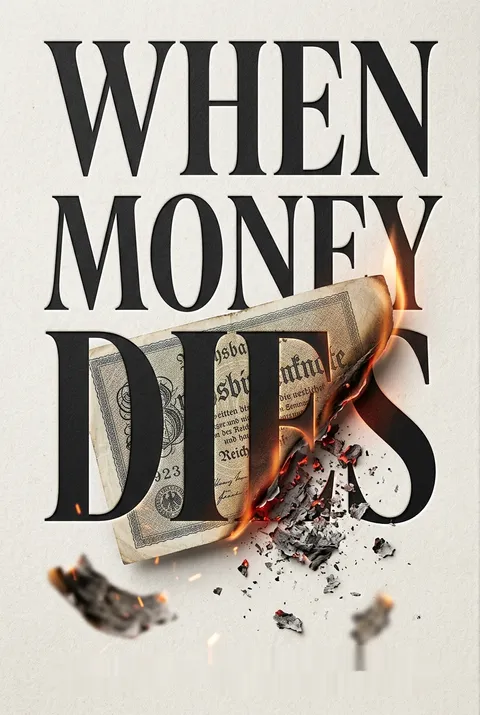

Key Takeaways
1. War Financing Sowed the Seeds of Disaster
Germany tried to meet the colossal costs of the war by an appeal to the self-sacrificing spirit of the people.
Borrowing, not taxing. Before and during World War I, Germany chose to finance its massive war expenditure primarily through borrowing and printing money, rather than through direct taxation. This approach, championed by figures like Karl Helfferich, State Secretary for Finance, was based on the misguided hope of a quick victory and eventual war indemnities from the defeated Entente powers. This policy fundamentally undermined the nation's financial stability.
Monetary policy flaws. Key decisions in August 1914 critically weakened the mark. The redemption of Reichsbank notes in gold was suspended, and loan banks were established to issue credits by simply printing money. Most ominously, the Reichsbank was permitted to include three-month Treasury bills in its note coverage, allowing for unlimited rediscounting against banknotes.
- Gold convertibility suspended.
- Loan banks printed money for credit.
- Treasury bills backed banknotes.
Fiction of "Mark gleich Mark." By 1917, money in circulation had increased fivefold since 1913, while essential supplies grew scarcer. The concept of "Mark gleich Mark" (a mark is a mark, whether paper or gold) became a dangerous fiction, masking the mark's declining purchasing power. This wartime financial mismanagement created a precarious legacy for the post-war Weimar Republic, setting the stage for future economic disaster.
2. Reparations and Political Weakness Fueled Early Inflation
Undoubtedly, though, inflation aggravated every evil, ruined every chance of national revival or individual success, and eventually produced precisely the conditions in which extremists of Right and Left could raise the mob against the State, set class against class, race against race, family against family, husband against wife, trade against trade, town against country.
Post-war instability. Following military defeat and political revolution in 1918-1919, the new Weimar Republic inherited a devastating financial and fiscal legacy. The harsh Treaty of Versailles, signed in June 1919, imposed colossal war reparations and territorial losses, further crippling Germany's economy. This created a fertile ground for political agitation and economic despair.
The "stab-in-the-back" myth. The Supreme Command, having shifted blame for the war's loss onto civilian authorities, cultivated the "Dolchstoss" (stab-in-the-back) myth. This poisoned democratic evolution and fueled right-wing discontent, exemplified by the Kapp Putsch in March 1920. The government, weak and inexperienced, struggled to impose effective taxation or control spending.
Mark's accelerating fall. The mark's value plummeted from 20 to the pound sterling in 1913 to 185 by December 1919. Allied reparation demands, coupled with Germany's internal financial mismanagement (e.g., railway deficits, insufficient tax collection), led to a continuous increase in money printing. This cycle of depreciation, social unrest, and political instability became a self-reinforcing spiral.
3. The "Delirium of Milliards" Decimated the Middle Class
The agony of inflation, however prolonged, is perhaps somewhat similar to acute pain - totally absorbing, demanding complete attention while it lasts; forgotten or ignorable when it has gone, whatever mental or physical scars it may leave behind.
Unfathomable figures. As inflation accelerated in 1921, the sheer scale of monetary figures became incomprehensible, a "delirium of milliards" as Walther Rathenau termed it. The mark's value plunged from 261 to the pound in June to over 1,000 by November 1921. This rapid depreciation made traditional financial planning impossible and fueled widespread panic.
Erosion of savings. The middle class, particularly those on fixed incomes, pensioners, and holders of war bonds, were utterly devastated. Their life savings, insurance policies, and pensions became worthless. A 1 million mark war loan, once worth £45,000, plummeted to £1,000 sterling, and its internal purchasing power was rapidly disappearing.
- War bonds lost 98% of value.
- Pensions became negligible.
- Insurance policies were worthless.
Flight to real assets. People frantically converted their rapidly depreciating paper marks into anything of "real" value: foreign currency, land, machinery, antiques, or even basic goods. This fueled speculation and hoarding, further destabilizing prices and creating a stark contrast between the impoverished middle class and the new rich who profited from the chaos. This period saw a profound shift in wealth distribution, breeding resentment and social division.
4. Reichsbank's Blindness Exacerbated the Crisis
The Reichsbank’s own demented inspirations give stabilisation no chance.
Stubborn denial. Dr. Rudolf Havenstein, President of the Reichsbank since 1908, held a dangerously misguided belief that money supply was unconnected to price levels or exchange rates. He saw his duty as supplying the "medium of exchange" for which his countrymen cried out, believing the mark's depreciation was due to external factors like reparation payments and speculation, not the torrent of notes from his presses.
Autonomy backfired. In May 1922, the Reichsbank was declared autonomous, ostensibly to divorce money supply from political expediency. However, this decision, ironically, gave Havenstein unchecked power to print money. He famously brought in strike-breakers when printers refused to work, ensuring the presses continued to churn out billions of marks daily, oblivious to the catastrophic consequences.
Fueling the fire. The Reichsbank's policies actively fueled inflation by offering commercial enterprises credit at extremely low discount rates, even as the mark plummeted. This encouraged industrialists to borrow heavily, convert paper marks into real assets or foreign currency, and repay loans with vastly depreciated money. This cycle of profligacy, driven by the central bank's "demented inspirations," ensured the mark's inevitable collapse.
5. The Ruhr Occupation Triggered Hyperinflation
The Ruhr struggle was between French pressure and subversion on the one hand - it took many forms, economic, diplomatic, military, political - and the German printing press on the other.
French "productive pledges." In January 1923, France and Belgium occupied the Ruhr industrial region, citing Germany's default on coal and timber deliveries. Ostensibly to secure "productive pledges," this act was widely seen as an attempt to cripple Germany or establish a Rhineland confederation. Germany, lacking a military response, retaliated with a policy of passive resistance.
Financing passive resistance. The German government committed to subsidizing the 2 million workers and 6 million inhabitants of the Ruhr who refused to work for the occupiers. This open-ended general strike was financed almost entirely by printing money, as the Exchequer lost all normal tax revenue from the region and its vital exports. This decision pushed Germany's already severe inflation into hyperinflation.
Economic paralysis. The Ruhrkampf brought Germany's industrial heart to a standstill. Coal, coke, iron, and steel production plummeted, while the country was forced to import these at rising world prices. The mark's value, already at 35,000 to the pound at Christmas 1922, crashed to 227,500 by the end of January 1923. The government's only weapon, the printing press, became a self-destructive force.
6. Social Chaos and Extremism Flourished
Inflation is the ally of political extremism, the antithesis of order.
Breakdown of order. As hyperinflation spiraled, daily life became a struggle for survival. Food shortages were rampant, with farmers refusing to sell produce for worthless paper marks. Barter became common, and commodities like coal or brass served as currency. Petty crime, pilfering, and even large-scale commercial theft flourished, eroding social norms and trust.
Fueling radicalization. The economic chaos created a desperate populace, ripe for political extremism. Hitler's Nazi Party and Communist agitators exploited the widespread misery, blaming the Republic, Jews, and foreign powers. The "stab-in-the-back" myth gained traction, and calls for strong, authoritarian leadership grew louder.
- Anti-Semitism surged.
- Communist agitation increased.
- Calls for dictatorship.
Unbearable conditions. By August 1923, a tram fare in Berlin cost 50,000 marks, a cup of coffee 5,000 marks (rising to 8,000 by the time it was drunk). Wages, though adjusted daily or weekly, constantly lagged behind soaring prices. The middle and working classes faced unprecedented hunger, cold, and despair, leading to widespread riots, looting, and violent clashes with authorities across the country.
7. The Rentenmark: A "Confidence Trick" for Stabilization
The ‘miracle of the Rentenmark’ was that from November 20 onwards the price of the paper mark remained steady while the number in circulation did not stop growing.
A desperate measure. By November 1923, Germany faced total collapse. The government was unable to pay its army, police, or officials. Dr. Hjalmar Schacht was appointed Commissioner for National Currency, tasked with an almost impossible mission. The Rentenmark Ordinance, published on October 15, created a new currency, the Rentenmark, backed not by gold (which was depleted) but by mortgages on agricultural land and industrial bonds.
The "roof-first" house. The Rentenmark was a "confidence trick," as its backing was largely illusory. However, its psychological impact was profound. On November 15, the Reichsbank finally halted the discounting of Treasury bills, effectively stopping the printing presses for government finance. The paper mark, now worth one-million-millionth of its pre-war gold value, was stabilized at this absurd rate.
- Backed by land and industry mortgages.
- Maximum issue of 2.4 billion Rentenmarks.
- Reichsbank stopped discounting government bills.
Restored confidence. The "miracle" was that people believed in the Rentenmark. Its new name, distinct from the discredited paper mark, was enough to restore public confidence. The velocity of money circulation, which had been a frantic gallop, slowed to a walk. This allowed food to flow back into cities and provided a basis for balancing the national budget, even as the physical volume of currency continued to increase to meet the desperate shortage of cash.
8. Stabilization Brought a New Wave of Hardship
After a long devaluation, stability can only be regained at the cost of a severe crisis.
The painful cure. While the Rentenmark brought monetary stability, it ushered in a new period of severe economic hardship. The inflation boom, which had masked underlying structural problems, was liquidated. Businesses that had thrived on cheap credit and depreciating currency now faced real interest rates, high taxes, and a sudden shortage of capital.
Mass unemployment. The most immediate and devastating consequence was mass unemployment. Factories closed, and industries like coal, iron, and steel, which had over-expanded during inflation, contracted sharply. By December 1923, registered unemployment in unoccupied Germany doubled to over 1.5 million, with the real figure likely much higher.
- Factories closed.
- Industries contracted.
- Unemployment soared.
Middle class's final blow. The stabilization officially wiped out the remaining value of war loans, mortgages, and savings, cementing the pauperization of the middle classes. While some industrialists who had resisted over-expansion survived, many speculators and "vertical" combines (like the Stinnes empire) collapsed. This period, though necessary for recovery, inflicted immense suffering and further eroded social cohesion.
9. Inflation's Enduring Scars on German Society
The greatest loss which Germany suffered was the ruin of her middle classes.
Moral decay. The hyperinflation experience left deep and lasting psychological and moral scars on the German nation. The old virtues of thrift, honesty, and hard work lost their appeal as people witnessed speculation yielding far greater rewards than labor. Corruption, bribery, and fraud became widespread, infecting public and private life.
Distrust in democracy. The association of the Weimar Republic with financial chaos, social disorder, and political weakness fostered a profound distrust in democratic institutions. Many yearned for strong, authoritarian leadership, a sentiment that would later be exploited by extremist movements. The "moral wounds" of inflation contributed to a strengthening of the nation's disciplinarian character.
Paving the way for Hitler. While inflation did not directly cause Hitler's rise, it created the conditions that made him possible. The widespread misery, the decimation of the middle class, and the erosion of faith in the existing order provided fertile ground for his demagoguery. The economic depression of the early 1930s, a delayed consequence of the inflationary excesses, would ultimately give the Nazis the votes they needed to seize power.
People Also Read








Download PDF
Download EPUB
.epub digital book format is ideal for reading ebooks on phones, tablets, and e-readers.








































