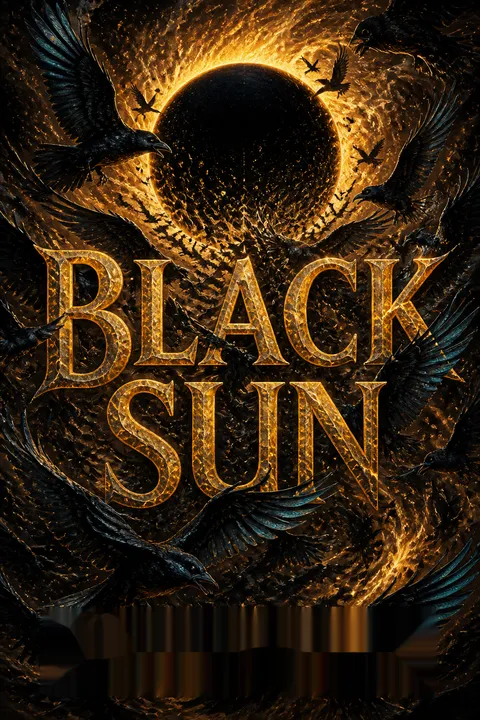

Plot Summary
Blood and Shadow Initiation
In the cold Obregi mountains, young Serapio is prepared by his mother for a destiny he cannot yet fathom. She carves the sacred haahan into his flesh, stains his teeth red, and blinds him in a ritual meant to make him a vessel for the crow god. The pain is excruciating, but Serapio endures, driven by his mother's fierce love and the promise that he will one day return to Tova and become a god. When the ritual is complete, his mother leaps to her death, leaving Serapio alone, stitched eyes closed, with only a pouch of star pollen and a secret name whispered in his ear. The trauma and abandonment shape him, setting him on a path of vengeance and transformation.
Teek Captain's Bargain
Xiala, a Teek captain with a troubled past, wakes in a Cuecolan jail after a night of drunken chaos. She's rescued by Lord Balam, a merchant lord who offers her a ship and a lucrative commission: ferry a mysterious, blinded Obregi man to Tova before the solstice. Desperate for work and freedom, Xiala negotiates her terms and accepts, despite her misgivings about the cargo and the dangerous, storm-ridden route. She assembles a crew, many of whom distrust her Teek heritage, and sets sail, unaware that her passenger, Serapio, is far more than he appears. The bargain binds her fate to his, and to the storm gathering across the Crescent Sea.
Sun Priest's Ascent
Naranpa, once a child of Tova's poorest district, rises through the ranks of the priesthood to become Sun Priest. Haunted by memories of her family's struggles and her own outsider status, she is determined to reform the Watchers and reconnect them to the people. Her idealism is met with resistance from the other priests, especially the ambitious Abah and the enigmatic Iktan. Naranpa's faith in the city and her role is tested by political intrigue and assassination attempts, and the ever-present tension between the Sky Made clans and the priesthood. Her journey is one of faith, loneliness, and the burden of leadership.
Procession Through Divided City
Naranpa leads the priesthood in a public procession through Tova, hoping to restore trust and unity. The city's divisions are stark: Carrion Crow's Odo district is cold and resentful, still mourning the Night of Knives, while other clans greet the priests with celebration or suspicion. The procession is marred by an assassination attempt, saved only by Iktan's quick action. The event exposes the deep fractures within Tova—between clans, between the Watchers and the people, and within the priesthood itself. Naranpa's reforms are met with skepticism, and her own past as a Maw outsider is used against her.
Assassins and Old Wounds
As Naranpa reels from the attempt on her life, she learns that the assassin bore the marks of Carrion Crow, but Iktan suspects a deeper plot. The priesthood is divided: Abah and Haisan question Naranpa's fitness to lead, while Iktan's loyalty is complicated by old intimacy and secrets. Meanwhile, Serapio's journey across the sea is fraught with tension as Xiala's crew mutinies, fearing her Teek magic and Serapio's ominous presence. Both Naranpa and Serapio are shaped by the violence and betrayals of their childhoods, and the city's old wounds threaten to erupt anew.
Mutiny on the Crescent Sea
A deadly storm strikes Xiala's ship, and her Teek powers save some but not all. The crew, superstitious and desperate, mutinies—locking Xiala and Serapio away, debating whether to kill them. Serapio's true nature emerges as he calls crows to slaughter the mutineers, saving Xiala but revealing the monstrous power within him. The trauma bonds them, but also sets them apart. Xiala, shaken by her own transformation during the storm, must confront what it means to be Teek and to love someone touched by gods and violence.
Crow God's Awakening
Serapio's years in isolation are marked by brutal training from three tutors—Paadeh, Eedi, and Powageh—each teaching him pain, combat, and the secrets of shadow magic. Their methods are cruel, shaping him into a vessel for vengeance. Serapio learns to endure suffering, to fight blind, and to wield the darkness within. The crows become his only friends, and his sense of self blurs with the god he is meant to embody. The tutors' own motives are tangled in old grievances against the Watchers, and Serapio's destiny is revealed as both weapon and sacrifice.
Childhoods of Pain
Naranpa's memories of the Maw and her family's poverty haunt her rise to power. Her brothers are lost—one dead, one a criminal—and her parents' fates are unknown. The city's rigid hierarchies and the priesthood's insularity mirror the divisions that shaped her childhood. Serapio, too, is marked by abandonment and pain, his mother's love inseparable from the violence she inflicted. Both protagonists are driven by longing for belonging and the scars of survival, their personal histories echoing the city's collective trauma.
Power Struggles in Tova
The death of Carrion Crow's matron throws Tova into turmoil. Naranpa must navigate the politics of succession, the threat of cultist violence, and the ambitions of her rivals. Abah and Eche maneuver to undermine her, while Iktan's loyalty is tested. The priesthood's decision to retaliate against Carrion Crow threatens to reignite old wars. Naranpa's authority is stripped, and she is confined, betrayed by those she trusted. The city teeters on the brink, and the storm foretold by prophecy gathers.
Funeral and Succession
Okoa, son of the slain matron, returns from Hokaia to mourn and assume leadership of Carrion Crow's Shield. The funeral is a display of clan pride and simmering resentment. The Odohaa cultists approach Okoa, seeking his support for rebellion, but he is wary of their fanaticism. Naranpa's attempts to broker peace are thwarted by political machinations and her own loss of power. The city's fragile balance is threatened by grief, ambition, and the specter of another Night of Knives.
Storms and Transformations
Xiala and Serapio's journey upriver is marked by intimacy and revelation. Xiala, exiled from her Teek homeland, finds solace and desire in Serapio, even as she fears his destiny. Serapio confides his purpose: to confront and kill the Sun Priest at the Convergence, fulfilling the Odohaa prophecy. Their love is bittersweet, shadowed by the knowledge that Serapio's fate is to die as a vessel for the crow god. The city's unrest mirrors the storm within them, and the river carries them inexorably toward the eclipse.
Betrayal in the Tower
Naranpa, stripped of her title and confined by her rivals, seeks help from her estranged brother Denaochi in the Maw. He warns her of the true threat: the priesthood's own betrayal and the ambitions of Golden Eagle. With the help of a witch, Zataya, Naranpa prepares for the worst. Abah and her conspirators abduct Naranpa, planning to frame Carrion Crow for her murder. Naranpa escapes into the river, calling on Zataya's magic for aid. The city's power struggles reach a breaking point as the solstice approaches.
Odohaa's Rising
The Odohaa cultists, emboldened by prophecy and the death of their matron, prepare for uprising. Okoa is drawn into their plans, torn between loyalty to his clan and fear of the chaos they might unleash. The city's tensions escalate as the Convergence nears, and the boundaries between faith, vengeance, and survival blur. The cultists see Serapio as their prophesied god, while others fear him as a harbinger of destruction. The storm is no longer metaphorical—it is upon them.
Lovers and Prophecies
On the eve of the Convergence, Xiala and Serapio share a night of tenderness and sorrow. Their love is a brief respite from the violence and fate that await. Serapio, shaped by prophecy and sacrifice, prepares to fulfill his role as Odo Sedoh, the crow god reborn. Xiala, powerless to save him, must choose between running from pain or bearing witness to the end. Their stories, entwined by love and loss, echo the city's own longing for redemption and change.
The Day of Convergence
As the solstice dawns, Tova gathers on Sun Rock for the ceremony. The clans, the priesthood, and the city's people are present, unaware of the doom approaching. Serapio, guided by crows and shadow, takes his place above the amphitheater. Naranpa, rescued from the river by Zataya's magic, struggles to survive and reclaim her agency. Okoa, riding Benundah, races to Sun Rock, desperate to prevent catastrophe. The eclipse begins, and the city holds its breath as prophecy and vengeance converge.
Eclipse and Massacre
Under the black sun, Serapio unleashes the crow god's power, slaughtering the priesthood and the Watchers in a storm of shadow and blood. The clans flee in terror, and the city descends into chaos. Okoa arrives too late, finding only devastation and the dying god. Xiala, caught in the panicked crowds, tries to reach Serapio but is swept away by the tide of fear and violence. The eclipse halts, time itself suspended as the old order is destroyed. The prophecy is fulfilled, but at a terrible cost.
Aftermath and New Dawn
In the massacre's wake, Okoa finds Serapio's body, surrounded by dead crows, and carries him away on Benundah's back. Naranpa, revived by Zataya's magic, emerges from the river, changed but alive. Xiala, lost and grieving, wanders the city, haunted by love and loss. The city of Tova is forever altered—its priesthood shattered, its gods awakened, its people left to reckon with the consequences of vengeance and the possibility of renewal. The story ends with the survivors facing an uncertain dawn, the promise of new stories yet to be told.
Analysis
Black Sun is a sweeping epic that reimagines the fantasy genre through the lens of pre-Columbian American cultures, centering marginalized voices and mythologies. At its core, the novel is a meditation on power—who wields it, who suffers under it, and how it is transformed by love, pain, and belief. The characters are shaped by trauma and longing: Serapio's journey from abused child to god-weapon is both a tragedy and a critique of the ways societies create monsters in pursuit of justice; Xiala's exile and magic embody the costs and possibilities of difference; Naranpa's rise and fall expose the fragility of institutions and the dangers of idealism in a world resistant to change. The narrative's structure—braiding city and sea, past and present—mirrors the convergence of personal and political destinies, culminating in an eclipse that is both apocalypse and rebirth. Roanhorse's world is rich with symbolism: crows as memory and vengeance, the sun as order and oppression, the eclipse as the moment when old wounds are exposed and new possibilities emerge. The novel interrogates the meaning of prophecy, the limits of faith, and the necessity of adaptation. Ultimately, Black Sun is a story about survival—of people, cultures, and hope—in the face of overwhelming darkness. Its lessons are urgent: that justice without compassion becomes vengeance, that power without love destroys, and that the stories we tell—about gods, about ourselves—shape the world we inherit and the future we dare to imagine.
Review Summary
Black Sun is an epic fantasy inspired by pre-Columbian American civilizations, following four protagonists—Serapio, Xiala, Naranpa, and Okoa—converging on the holy city of Tova during a rare solar eclipse. Most reviewers praised the rich world-building, diverse and queer representation, and compelling characters, particularly Serapio and Xiala. The accessible prose and fresh non-Eurocentric setting were frequently highlighted as standout strengths. Some critics noted pacing issues, underdeveloped characters, and an abrupt ending, but the majority found it an immersive, thrilling series debut.
People Also Read
Characters
Serapio
Serapio is the tragic heart of the novel—a boy shaped by ritual, pain, and abandonment into a living weapon. Blinded and scarred by his mother to become the crow god's vessel, he endures brutal training from tutors who teach him pain, combat, and shadow magic. His only solace is the companionship of crows, who become his eyes and friends. Serapio's psyche is a battleground between the remnants of his humanity—longing for love, belonging, and tenderness—and the godlike purpose imposed upon him. His relationship with Xiala awakens desire and regret, but his fate is sealed by prophecy and the machinations of those who made him. In the end, Serapio's transformation into Odo Sedoh is both apotheosis and annihilation—a sacrifice that devastates Tova and himself.
Xiala
Xiala is a Teek captain, exiled from her matriarchal island for reasons she cannot fully escape. Her Teek heritage grants her magical Song, able to calm or command the sea, but also marks her as an outsider and a target of superstition. Xiala is fiercely independent, sensual, and haunted by guilt and longing for home. Her journey with Serapio is both a literal and emotional voyage—she becomes his protector, confidante, and lover, even as she fears the darkness within him. Xiala's arc is one of self-acceptance and the courage to love despite inevitable loss. Her resilience and compassion offer a counterpoint to the violence and vengeance that drive the novel's tragedy.
Naranpa
Naranpa rises from the Maw's poverty to become Sun Priest, driven by faith and a desire to reform the Watchers. Her intelligence and empathy are matched by insecurity and loneliness, as she is never fully accepted by the Sky Made elite. Naranpa's leadership is challenged by political intrigue, assassination attempts, and the city's deep divisions. Betrayed by her own priesthood and stripped of power, she is forced to confront the limits of faith and the cost of survival. Her journey is one of disillusionment and resilience, culminating in her symbolic death and rebirth—a survivor who may yet shape Tova's future.
Iktan
Iktan, the Priest of Knives, is Naranpa's oldest friend and sometimes lover, a master of subterfuge and violence. Xir loyalty is complex—rooted in affection for Naranpa but also in a pragmatic understanding of power. Iktan is emotionally guarded, skilled at compartmentalizing duty and desire. Xir role as protector is both literal and symbolic, but Iktan's willingness to kill for the priesthood ultimately cannot save Naranpa from betrayal. Xir arc is one of conflicted loyalty, and xir fate is entwined with the city's own descent into chaos.
Abah
Abah, the youngest priest, is ambitious and cunning, aligning herself with Golden Eagle and orchestrating Naranpa's downfall. Her outward compassion masks a ruthless drive for power. Abah's betrayal is personal and political, reflecting the priesthood's rot and the dangers of unchecked ambition. She is both a product and an agent of the city's divisions, and her actions catalyze the final catastrophe.
Okoa
Okoa, son of the slain Carrion Crow matron, returns from Hokaia to lead his clan's Shield. He is loyal, honorable, and caught between the demands of family, clan, and city. Okoa's encounters with the Odohaa cultists and the aftermath of the massacre force him to confront the limits of vengeance and the possibility of renewal. His relationship with Serapio is one of kinship and sorrow, and his actions in the aftermath suggest a new path for Carrion Crow.
Denaochi
Denaochi, Naranpa's surviving brother, is a product of the Maw's brutality—a crime boss shaped by abandonment and survival. His relationship with Naranpa is fraught with resentment and longing, and his knowledge of the city's underbelly provides crucial insight. Denaochi's pragmatism and loyalty to family contrast with the priesthood's idealism, and his alliance with Naranpa is uneasy but vital.
Powageh
Powageh, Serapio's third tutor, is a former Watcher turned enemy of the priesthood. Xir teachings blend magic, philosophy, and bitterness, shaping Serapio into a weapon for the crow god. Powageh's motivations are tangled in old wounds and a desire for justice—or vengeance—against the Watchers. Xir relationship with Serapio is both parental and exploitative, and xir guilt over the consequences of their actions is palpable.
Lord Balam
Balam is the Cuecolan merchant who sets Xiala and Serapio's journey in motion. Charming, enigmatic, and driven by old obligations, Balam's true motives are hidden beneath layers of politeness and power. He is a facilitator of fate, his bargains binding others to destinies they cannot escape.
Zataya
Zataya, a Dry Earth witch allied with Denaochi, represents the city's marginalized magic and the possibility of alternative power. Her intervention saves Naranpa from death, and her blood magic is a reminder of the old ways that persist beneath the city's surface. Zataya's pragmatism and loyalty to her people offer a counterpoint to the priesthood's dogma.
Plot Devices
Dual Narrative Structure
The novel employs a braided narrative, alternating between Serapio's journey from the Obregi mountains and across the Crescent Sea, Xiala's perspective as his reluctant protector and lover, and Naranpa's rise and fall within Tova's priesthood. This structure allows the reader to experience the convergence of personal and political destinies, building tension as the characters' paths draw inexorably together. The shifting viewpoints highlight the city's divisions and the universality of longing, pain, and hope.
Prophecy and Foreshadowing
Prophecy is both a literal and psychological force—Serapio is shaped from birth to fulfill the Odohaa's vision of vengeance, while Naranpa is haunted by the expectations and betrayals of her rise. The recurring motif of the Convergence—the rare eclipse—serves as a ticking clock, foreshadowing catastrophe. The use of children's rhymes, sacred texts, and the observations of Saaya provide layers of foreshadowing and thematic resonance, linking personal trauma to collective fate.
Magic as Metaphor and Catalyst
Magic in Black Sun is both literal—Teek Song, crow magic, blood rituals—and metaphorical, representing the transformative power of pain, love, and belief. The characters' magical abilities are inseparable from their identities and traumas: Serapio's blindness and scars, Xiala's exile and Song, Naranpa's faith and vulnerability. Magic catalyzes both healing and destruction, blurring the line between god and human, victim and perpetrator.
Political Intrigue and Betrayal
The priesthood's internal politics, the ambitions of the Sky Made clans, and the machinations of the Odohaa cultists create a web of intrigue that mirrors the characters' psychological struggles. Betrayal—by family, lovers, and institutions—is a recurring device, driving the plot toward its tragic climax. The use of false accusations, assassination attempts, and shifting alliances keeps the reader off-balance and heightens the sense of impending doom.
Symbolism and Motif
Crows symbolize memory, vengeance, and kinship, their presence marking both Serapio's power and the city's wounds. The sun and eclipse represent cycles of order and chaos, faith and doubt. The recurring imagery of blood, scars, and blindness underscores the cost of survival and the price of transformation. The city of Tova itself is a living symbol—divided, wounded, and yearning for renewal.
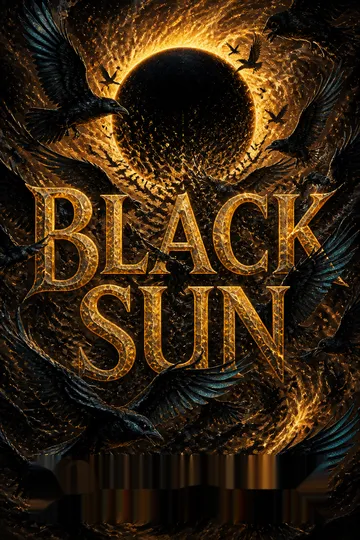
Between Earth and Sky Series
Download PDF
Download EPUB
.epub digital book format is ideal for reading ebooks on phones, tablets, and e-readers.








































