
Plot Summary
Grief Among the Tombstones
Saoirse White stands at her husband Jonathan's funeral, surrounded by mourners and suffocating in her own grief and anxiety. The cold beauty of the cemetery is no comfort; she feels isolated, haunted by the expectations of others and the secrets of her marriage. Jonathan's mother's veiled accusations and his best friend Aidan's insistence on discussing Jonathan's last night only deepen her unease. Saoirse's mother is her anchor, but even that comfort is fragile. As Saoirse flees the cemetery, she is stalked by memories, guilt, and the sense that something is unfinished. She decides to leave New Jersey for Providence, Rhode Island, seeking distance from her past and the hope of a new beginning, but the shadows of her old life threaten to follow.
The House of Voices
Arriving at 88 Benefit Street, Saoirse is greeted by the scent of beeswax and bergamot, and the grandeur of a historic house overlooking a cemetery. The house is beautiful but unsettling, filled with echoes and unfamiliar noises. As she unpacks, she is drawn to the rose garden and the view of the gravestones, feeling both awe and dread. The house's history is palpable, and Saoirse's exhaustion is tinged with fear. When she hears voices from the basement, she discovers a trio of strangers—Lucretia, Mia, and Roberto—conducting a séance to commune with the spirit of poet Sarah Helen Whitman. They claim the house belongs to Sarah, not Saoirse, and invite her into their strange, artistic circle, blurring the line between trespass and welcome.
Uninvited Guests Below
Saoirse confronts the intruders, demanding answers. The trio—artists and spiritualists—explain their obsession with Sarah Helen Whitman and their weekly séances, which blend transcendentalist philosophy, literary ambition, and a longing for connection with the past. Despite her initial anger, Saoirse is drawn to their eccentric warmth and the promise of community. Over tea, they share their creative struggles and invite her to join their group. Saoirse reveals her own history as a writer, admitting her long-standing block and grief. The group senses a kinship, and Mia suggests that Sarah's spirit only wants another writer in her house. Saoirse is left unsettled but intrigued, caught between skepticism and the lure of belonging.
The Poet's Shadow
The next morning, Saoirse tries to convince herself the previous night was a dream, but the evidence of her guests remains. She explores Providence, haunted by memories of Jonathan and their time at Brown University. At the Athenæum library, she is drawn to an exhibit on Poe and Whitman, and meets Leila, a librarian who shares the tragic story of Poe and Sarah's doomed romance. Saoirse is unsettled by the intensity of the past, the sense of being watched, and a mysterious man who resembles both Jonathan and Poe. The city's history and her own grief intertwine, leaving her feeling both inspired and hunted by ghosts—real and imagined.
Ghosts of Providence
Saoirse struggles with depression and inertia, but the pull of the past and the encouragement of Lucretia draw her out. She agrees to meet Lucretia for coffee, seeking connection but wary of vulnerability. Their conversation is raw and honest, touching on grief, writing, and the possibility of healing. Lucretia's enthusiasm is infectious, and Saoirse finds herself considering adopting a cat—an act of hope. Yet, the city's legends and the sense of being trapped by fate linger, as does the presence of the mysterious man who watches her from the shadows, blurring the line between coincidence and destiny.
The Séance Circle
Saoirse invites the trio back for another séance, craving distraction and camaraderie. The ritual is elaborate, blending poetry, candles, and occult objects. As they chant and meditate, Saoirse is overcome by visions—her dead husband, Poe, and the stranger from the library, their faces flickering and merging in a terrifying display. The séance becomes a confrontation with her deepest fears and grief, culminating in a supernatural event: a phone rings, a daguerreotype cracks, and Saoirse collapses. When she awakens, she is changed—her writer's block broken, but her sense of reality shaken. The group is supportive, but Saoirse is left with more questions than answers.
Haunted by the Past
Saoirse is flooded with creative energy, writing poetry for the first time in years. Yet, the house feels more haunted than ever, and the past refuses to stay buried. A mysterious flyer leads her to a career fair at Brown, where she literally collides with Emmit Powell, the enigmatic man who has been shadowing her. Their encounter is charged with suspicion and attraction, each accusing the other of stalking. Emmit is a celebrated writer and professor, and their conversation is a dance of confessions, literary theory, and mutual fascination. Saoirse is both drawn to and wary of him, sensing that their meeting is no accident.
The Writer's Block
Emmit and Saoirse's relationship intensifies, fueled by shared trauma and creative longing. Emmit confesses his own writer's block and the premonition that meeting Saoirse would change everything. Their connection is electric, but Saoirse is haunted by doubts—about Emmit's intentions, his identity, and the uncanny parallels between their lives and the tragic romance of Poe and Whitman. As they grow closer, Saoirse's friends warn her to be careful, and rumors surface about Emmit's past. The line between inspiration and exploitation blurs, and Saoirse is forced to confront the possibility that she is being used as a muse in a story not her own.
The Man in Black
Emmit's behavior grows erratic and possessive, his charm giving way to jealousy and manipulation. He pressures Saoirse for creative and emotional support, and their relationship becomes a battleground of wills. Meanwhile, Aidan, Jonathan's friend, resurfaces, desperate to confront Saoirse about Jonathan's death and a mysterious text message. The past and present collide, and Saoirse is caught between the threat of exposure and the escalating danger posed by Emmit. The house, once a refuge, becomes a prison, and the ghosts of Poe, Whitman, and Jonathan seem to conspire with the living to entrap her.
The Fountain's Curse
Saoirse is drawn deeper into the city's myths—the magical fountain that binds drinkers to Providence, the haunted houses, the echoes of Poe and Whitman's doomed love. As she navigates her relationships with her friends, her mother, and Emmit, the boundaries between past and present, reality and hallucination, grow thin. The city's history becomes a mirror for her own struggles, and the sense of being watched, pursued, and fated intensifies. The fountain's curse is both literal and metaphorical: Saoirse cannot escape the cycles of grief, love, and danger that define her life in Providence.
Coffee and Confessions
Saoirse's friendships deepen, but so do the secrets and suspicions. Mia reveals troubling rumors about Emmit's identity, suggesting he is not who he claims to be and may have a history of harming women. Saoirse is forced to confront her own complicity in Jonathan's death and the lies she has told to protect herself. The group's rituals become both a source of strength and a reminder of the dangers of obsession. As Emmit's demands grow more intense, Saoirse must decide whom to trust and how much of herself she is willing to sacrifice for love, art, and survival.
The Return of Inspiration
Saoirse's writing flourishes, but her life unravels. Emmit's obsession with her as a muse becomes suffocating, and his behavior turns violent. The house's secrets are revealed—hidden passages, trapdoors, and a network of catacombs beneath Providence. Emmit's true nature is exposed: he is not only a plagiarist and manipulator but a predator, determined to possess Saoirse at any cost. The rituals, séances, and creative breakthroughs have all been leading to this moment—a confrontation in the darkness below the poet's house, where the boundaries between life and death, art and violence, are finally erased.
The Cat and the Poet
Saoirse adopts a black cat, Pluto, symbolizing both her desire for comfort and the ever-present threat of the uncanny. The cat becomes a silent witness to her struggles, a link to Poe's own haunted menagerie, and a reminder of the thin line between domesticity and horror. As Saoirse tries to rebuild her life, the cat's presence is both soothing and ominous, a living metaphor for the unresolved mysteries that surround her. The house, the city, and her own mind remain battlegrounds between past and present, hope and despair.
The Unraveling
Emmit's true intentions are revealed in a series of escalating confrontations. He gaslights Saoirse, isolates her from her friends, and ultimately kidnaps her, imprisoning her in the catacombs beneath Providence. The rituals and séances have awakened not only the ghosts of the past but the violence of the present. Saoirse is forced to confront the darkest truths about herself, her marriage, and the men who have tried to possess her. The boundaries between victim and survivor, muse and creator, blur as she fights for her life in the darkness below the poet's house.
The Seduction of History
Trapped underground, Saoirse is haunted by visions of Poe, Whitman, Jonathan, and Emmit, their faces merging in a nightmare of possession and erasure. The catacombs become a literal and metaphorical grave, a place where the stories of the dead threaten to consume the living. Saoirse's only hope lies in her own creativity, resilience, and the secret she has kept even from herself. The city's history, the rituals of the séance circle, and the power of poetry become weapons in her struggle to escape the cycle of violence and reclaim her story.
The Séance's Price
Saoirse's friends, guided by ritual and intuition, search for her in the tunnels beneath Providence. The séances, once a game, become a lifeline, connecting the living and the dead in a desperate bid for rescue. Saoirse, weakened by injury and deprivation, draws on her last reserves of strength and cunning. She uses the tools of her captivity—a pendant, a syringe, her own words—to turn the tables on Emmit. The price of survival is high, and the cost of truth is measured in blood, betrayal, and the breaking of old patterns.
The Truth in the Basement
In a final confrontation, Saoirse faces Emmit in the catacombs. She reveals the truth about Jonathan's death—that she let him die, refusing to save a man who had abused and violated her. Emmit, exposed as a fraud and a monster, is defeated not by violence but by the power of Saoirse's story and her refusal to be anyone's muse or victim. She escapes the catacombs, aided by her friends, and emerges into the light, forever changed but finally free.
The Trapdoor Opens
Saoirse's escape is both physical and symbolic—a rebirth from the darkness of the catacombs into the uncertain light of a new life. She is reunited with her friends, who have risked everything to find her. The secrets of the house, the city, and her own past are brought into the open. The rituals and séances are revealed as both dangerous and redemptive, tools for survival as much as for summoning ghosts. Saoirse must reckon with the consequences of her choices, the limits of forgiveness, and the possibility of healing.
The Catacombs Beneath
The aftermath of Saoirse's ordeal ripples through her life and the lives of those around her. The catacombs beneath Providence are exposed, their secrets brought to light. The house on Benefit Street is both haunted and hallowed, a place of memory and possibility. Saoirse's relationships—with her mother, her friends, and herself—are transformed by the ordeal. The city's history is rewritten, not as a story of male genius and female suffering, but as a testament to survival, creativity, and the power of women's voices.
The Final Escape
Saoirse begins to rebuild her life, embracing her identity as a writer, survivor, and friend. The ghosts of the past are acknowledged but no longer rule her. She finds solace in her community, her art, and the rituals that once threatened to consume her. The house on Benefit Street becomes a place of gathering and healing, its history reclaimed and reimagined. Saoirse's story is her own, no longer dictated by the men who sought to possess her or the ghosts who haunted her dreams.
The Light Above Ground
In the aftermath, Saoirse reflects on the journey from grief and captivity to freedom and self-acceptance. She reconnects with her mother, her friends, and her own creative spirit. The rituals of the séance circle continue, but now as celebrations of life and resilience. The house, the city, and the cat become symbols of survival and hope. Saoirse's story is not one of victimhood but of transformation—a testament to the power of art, friendship, and the refusal to be silenced. The poet's house is no longer a tomb, but a home.
Analysis
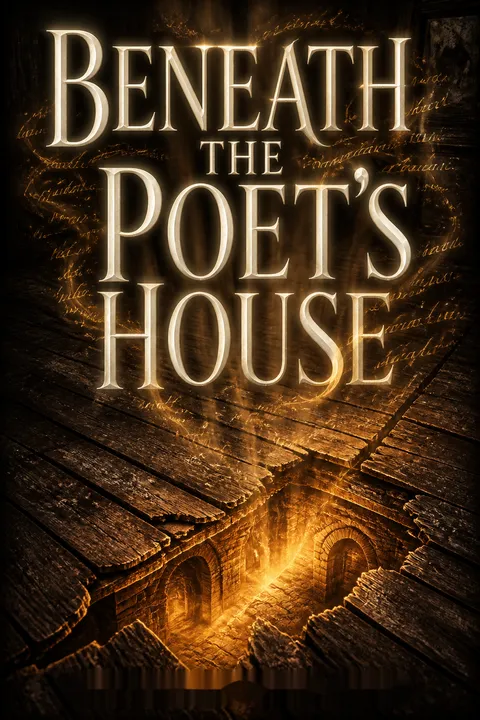
Beneath the Poet's House is a modern gothic novel that interrogates the legacy of patriarchal genius, the dangers of romanticizing the past, and the power of women's voices to reclaim their own stories. Christa Carmen weaves together history, horror, and psychological suspense to create a narrative that is both a homage to and a critique of the gothic tradition. The novel explores how trauma, creativity, and obsession are inherited and reenacted, often at the expense of women's autonomy. Through Saoirse's journey—from haunted widow to survivor, from muse to creator—the book challenges the myth of the male genius and the erasure of female agency. The rituals, séances, and haunted spaces are not just sources of fear but tools for transformation, allowing the protagonist to confront her ghosts and write her own ending. In a world where the past is always present, Beneath the Poet's House insists that survival is an act of creation, and that the most poetical topic is not the death of a beautiful woman, but her refusal to be silenced.
Review Summary
Beneath the Poet's House by Christa Carmen receives a 3.78/5 rating with mixed responses. Readers praise its atmospheric gothic vibes, Providence setting, and Edgar Allan Poe connections. Many appreciate Carmen's lyrical prose and the dark, suspenseful second half. Common criticisms include slow pacing in the first half, frustrating protagonist decisions, and underdeveloped characters. The book blends historical elements about Sarah Helen Whitman and Poe with psychological thriller elements. Fans of gothic fiction and Poe enthusiasts generally enjoyed it, while some found it predictable or overly drawn out.
People Also Read




Characters
Saoirse White
Saoirse is a woman marked by grief, trauma, and a longing for escape. The death of her husband Jonathan, a controlling and abusive man, leaves her unmoored and guilt-ridden. Her move to Providence is both flight and search for renewal. Saoirse is intelligent, creative, and deeply sensitive, but her self-worth has been eroded by years of emotional manipulation. Her journey is one of reclaiming agency—first through tentative friendships, then through the rekindling of her writing, and finally through a harrowing confrontation with violence and the ghosts of her past. Saoirse's psychological arc is from victim to survivor, from muse to creator, as she learns to trust herself, confront her complicity, and write her own story.
Emmit Powell
Emmit is a celebrated writer and professor, outwardly charming and brilliant, but inwardly manipulative, obsessive, and dangerous. He is drawn to Saoirse as both muse and victim, seeing in her the raw material for his own creative resurrection. Emmit's identity is a shifting performance—he mirrors Poe, Jonathan, and the archetype of the tormented male genius, but beneath the surface is a hollow need for control and validation. His psychological unraveling is marked by jealousy, violence, and a willingness to destroy what he cannot possess. Emmit's ultimate defeat comes not from external punishment but from Saoirse's refusal to be his muse or victim, exposing the emptiness at his core.
Jonathan White
Jonathan is both a memory and a haunting presence in Saoirse's life. In life, he was controlling, emotionally abusive, and obsessed with legacy and fatherhood. In death, he becomes a voice in Saoirse's head, a symbol of the internalized oppression and guilt she carries. Jonathan's psychological hold over Saoirse is profound—he represents the dangers of love warped by power, the insidiousness of gaslighting, and the difficulty of escaping cycles of abuse. His spectral presence is both literal and metaphorical, a reminder that the past must be confronted, not buried.
Lucretia
Lucretia is a tattooed, exuberant, and slightly chaotic member of the séance circle. She is deeply invested in transcendentalism, the occult, and the legacy of Sarah Helen Whitman. Lucretia's enthusiasm masks her own grief and longing for connection. She is impulsive—sometimes dangerously so, as when she doses the group with LSD—but her loyalty and warmth are genuine. Lucretia's arc is one of learning boundaries and responsibility, as well as the power of friendship and collective ritual.
Mia
Mia is the most reserved and intense of the trio, a poet with a history of abuse and a deep wariness of new people. She is fiercely intelligent, principled, and protective of her friends. Mia's skepticism about Emmit and her insistence on caution are rooted in her own experiences with manipulation and violence. She is the group's moral compass, often pushing Saoirse to confront uncomfortable truths. Mia's development is toward trust and vulnerability, as she learns to balance self-protection with openness.
Roberto
Roberto is the oldest and most grounded member of the group, a writer of "literary horror" and a lover of Providence's history. He is both a skeptic and a believer, using humor to defuse tension and provide perspective. Roberto's relationship with Saoirse is brotherly, offering support and encouragement without judgment. He is the group's practical problem-solver, and his arc is one of deepening empathy and commitment to his friends.
Aidan Vesper
Aidan is a doctor and Jonathan's former confidant, burdened by knowledge of Jonathan's abuse and the circumstances of his death. He is persistent, sometimes to the point of intrusion, in seeking answers from Saoirse. Aidan's role is both threat and ally—he represents the danger of exposure but also the possibility of justice and understanding. His psychological struggle is with guilt, loyalty, and the limits of intervention.
Sarah Helen Whitman
Sarah is both a historical figure and a spectral presence in the novel. Her legacy as a poet, spiritualist, and unconventional woman haunts the house and the lives of the characters. She is invoked in séances, rituals, and the creative struggles of the group. Sarah represents the possibility of female genius, the dangers of being reduced to a muse, and the power of reclaiming one's story. Her presence is both protective and challenging, urging Saoirse to confront the past and embrace her own voice.
Pluto
Pluto is Saoirse's adopted cat, a companion and comfort in her darkest moments. Named for Poe's own feline, Pluto is both a link to the uncanny and a symbol of resilience. The cat's presence grounds Saoirse, offering solace and a reminder of the ordinary joys of life. Pluto is also a witness to the unfolding drama, a living metaphor for the thin line between domesticity and horror.
Ann Norman
Ann is Saoirse's anchor, the one person who offers unconditional love and support. She is practical, nurturing, and fiercely protective of her daughter. Ann's relationship with Saoirse is complicated by secrets and guilt, but her presence is a source of strength and healing. She represents the possibility of forgiveness, the importance of family, and the enduring power of maternal love.
Plot Devices
Haunted House as Psychological Mirror
88 Benefit Street is more than a setting; it is a living character, a repository of history, trauma, and possibility. The house's architecture, secret passages, and proximity to the cemetery mirror Saoirse's psychological state—her sense of being trapped, haunted, and on the threshold between life and death. The house's history as the home of Sarah Helen Whitman and the site of séances and rituals blurs the line between past and present, reality and imagination. The house is both prison and sanctuary, a place where the protagonist must confront her ghosts to find freedom.
Séance and Ritual as Narrative Catalyst
The séances conducted by Lucretia, Mia, and Roberto are central to the novel's structure. They serve as both literal and metaphorical devices, summoning the spirits of the past and forcing the characters to confront their own secrets and desires. The rituals are sites of transformation—breaking Saoirse's writer's block, revealing hidden dangers, and connecting the living and the dead. The séances also function as a commentary on the power and danger of collective belief, the thin line between inspiration and possession, and the role of women's voices in history.
Doppelgänger and Identity
The motif of the doppelgänger—Emmit as Poe, Jonathan as Emmit, Saoirse as Sarah—runs throughout the novel. Characters are haunted by their own doubles, by the fear of being replaced, possessed, or erased. Emmit's appropriation of Poe's biography and his obsession with Saoirse as muse highlight the dangers of living in another's story. The blurring of identities is both a source of horror and a path to self-discovery, forcing the protagonist to reclaim her own narrative.
Foreshadowing and Recurrence
The novel is rich in foreshadowing—flies as omens, the fountain's curse, the recurring presence of the man in black. Events and symbols repeat, creating a sense of inevitability and entrapment. The past is never past; it recurs in new forms, demanding to be acknowledged and resolved. The use of literary allusions, historical echoes, and supernatural motifs reinforces the theme that history, trauma, and creativity are cyclical, and that escape requires breaking the pattern.
Unreliable Perception and Psychological Horror
Saoirse's perspective is shaped by trauma, medication, and supernatural suggestion. The boundaries between reality and hallucination, past and present, are constantly shifting. The reader is kept off-balance, unsure what is real and what is imagined. This instability heightens the psychological horror, making the threats both external and internal. The novel uses this device to explore the nature of memory, guilt, and the struggle for agency in the face of overwhelming forces.

Download PDF
Download EPUB
.epub digital book format is ideal for reading ebooks on phones, tablets, and e-readers.








































