
Plot Summary
Haunted Homecoming
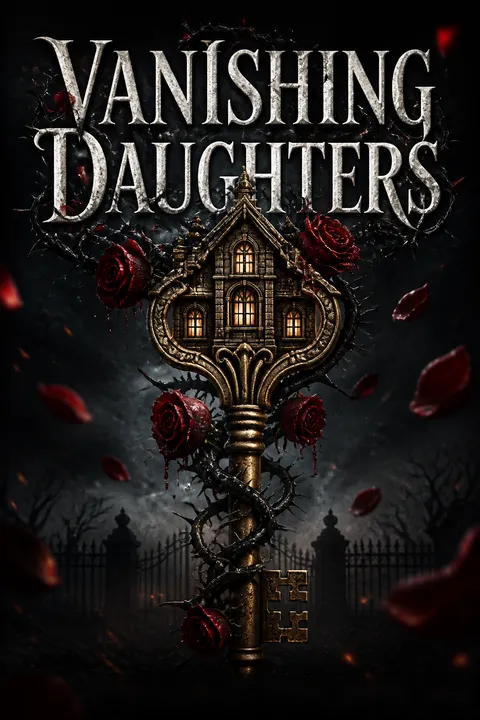
Briar Rose Thorne, reeling from her mother's recent death, returns to her ancestral Chicago home—a grand, decaying greystone called Rose House. The house is heavy with memories, its rooms echoing with her mother's voice and the scent of roses. Briar's grief is raw, manifesting in sleepless nights, panic attacks, and a sense of being unmoored from time. The house itself seems to pulse with a strange energy, blurring the lines between memory, dream, and reality. As Briar tries to settle in, she's haunted by nightmares and a recurring phrase from her mother: "Keys and gates and locks and thorns." The house, once a place of comfort, now feels alive, watching and waiting, as if holding secrets just out of reach.
Keys, Gates, and Thorns
Briar's days and nights blur as she obsesses over her mother's final words. The phrase "keys and gates and locks and thorns" becomes a mantra, echoing through her dreams and waking hours. She's plagued by visions of a girl in a white dress, a black car on a dark road, and a sense that something is trying to communicate with her through the house's creaks and whispers. The house's history, filled with generations of women and mysterious objects, weighs on her. Briar's grief warps her perception, making her question what is real and what is a symptom of loss. The phrase becomes a key itself, hinting at a pattern of tragedy and a curse that may stretch back through her family's lineage.
The House That Dreams
The house becomes a character in its own right, communicating with Briar through music, scents, and shifting shadows. Radios play songs from the past, and the wallpaper seems to move. Briar's best friend Emily and her loyal dog Prairie offer comfort, but only Briar and Prairie seem attuned to the house's supernatural signals. The house is filled with relics—antique radios, a spinning spindle, and a mysterious locked trunk. Briar's insomnia deepens, and she begins to experience waking dreams and time slips. The boundaries between her grief, the house's history, and something darker lurking in the city begin to dissolve, as if the house is trying to guide her toward a hidden truth.
The Man in the Gray Car
A mysterious man in a gray car repeatedly parks outside Rose House, watching but never approaching. Briar's mother dismissed him as harmless, but his presence now feels ominous. At the same time, Briar is plagued by another stranger—a man who stares at her from across the street, and a sense that she is being followed. The city itself feels haunted, with news of murdered women and unsolved crimes echoing Briar's nightmares. The house responds to her fear with more intense phenomena—music, voices, and the sense of being watched from within and without. Briar's reality fractures further, and she begins to suspect that the house, the watcher, and her dreams are all connected.
Nightmares and Waking Ghosts
Briar's nightmares intensify, featuring a girl in a white dress begging to be taken home, and a predatory presence that feels both ancient and personal. She experiences sleep paralysis, haunted by a monstrous hag pressing on her chest. The house's radios play songs that seem to comment on her state of mind, and objects move on their own. Briar's research into Chicago's history and her mother's notes reveal a pattern of vanishing women, unsolved murders, and the legend of Resurrection Mary—a ghostly hitchhiker doomed to wander Archer Avenue. Briar begins to suspect that her family, her house, and the city's tragedies are all part of a repeating pattern, and that she is being drawn into its center.
The Spinning Spindle
The spinning spindle, a strange gift from Briar's absent father, becomes a symbol of the curse haunting her family. Like the fairy tale of Sleeping Beauty, the spindle represents a wound that puts women to sleep—forever. Briar discovers that her family's history is intertwined with Chicago's legends, and that her ancestors made a bargain with a fairy that doomed a "daughter's daughter" to a tragic fate. The locked trunk in the attic, the spindle, and the recurring dreams all point to a secret that must be uncovered to break the cycle. Briar realizes that her insomnia and visions are not just symptoms of grief, but warnings—and that she must find the key, literal or metaphorical, to unlock the truth.
The Pattern of Vanishing
The narrative shifts to the perspective of a killer—Mal—who sees himself as a mythmaker, collecting "sleeping beauties" and trapping them in a nighttime world. Mal's killings echo the city's history of violence against women, from the Grimes sisters to the present-day "Forgotten 51." He is obsessed with Briar, seeing her as the culmination of a fairy-tale bloodline. The killer's voice is chillingly rational, blending folklore, true crime, and a sense of supernatural destiny. Briar's research and dreams reveal that the pattern of vanishing daughters is not random, but the work of a being who feeds on suffering and perpetuates the curse. The city's legends, the house's hauntings, and Briar's nightmares converge on the realization that the killer is both human and something more.
The Thin Place
Briar and Emily embark on a journey down Archer Avenue, visiting haunted sites and thin places where the boundary between life and death is fragile. They encounter strange figures, unsettling coincidences, and the lingering presence of the murdered and missing. The landscape is charged with energy—limestone, water, and the buried nuclear reactor at Red Gate Woods all contribute to the area's reputation for the supernatural. Briar learns about the legend of Resurrection Mary, the vanishing hitchhiker, and the idea that some places are magnets for tragedy and hauntings. The journey is both a ghost tour and a quest for understanding, as Briar seeks to break the pattern and bring peace to the restless dead.
The Vanishing Daughters
Briar's research uncovers the stories of Chicago's murdered women, the "Forgotten 51," and the city's obsession with true crime and hauntings. She realizes that the legends are not just stories, but warnings—echoes of real suffering and unresolved violence. The house's music, the radios, and the dreams all point to a collective memory of loss and injustice. Briar's own family history is revealed to be part of this tapestry, with ancestors who made bargains with fairies and suffered the consequences. The vanishing daughters are not just victims, but symbols of a curse that can only be broken by confronting the truth and honoring their stories.
The Good Fairy, The Bad
Briar meets Isaac, a mysterious and comforting figure who guides her through meditation and the exploration of consciousness. Isaac introduces her to the Gateway Project, a method of expanding awareness and communicating with the dead. He claims to be a "good fairy," a counterbalance to the evil that stalks the city. Meanwhile, Mal, the killer, is revealed to be a "bad fairy," an eternal being who feeds on the suffering of women and perpetuates the cycle of violence. The battle between good and evil, light and darkness, plays out in both the physical and spiritual realms. Briar must learn to trust her intuition, her allies, and the power of her own mind to resist the curse.
The Gateway Project
Guided by Isaac and her mother's teachings, Briar begins to use the Gateway Project—a meditation technique that allows her to enter altered states of consciousness. Through these journeys, she communicates with the dead, relives the final moments of the vanished women, and uncovers the truth about her family's curse. The Gateway becomes a thin place within herself, a way to access memories, spirits, and the collective pain of the city. Briar learns that breaking the pattern requires not just knowledge, but action—she must bring the lost home, confront the killer, and rewrite the story that has trapped so many in eternal sleep.
Resurrection Mary's Secret
Briar discovers that the girl in her dreams, the woman in the white dress, is Mary—the real Resurrection Mary. Through visions, research, and the contents of the locked trunk, Briar pieces together Mary's story: a young woman murdered on Archer Avenue, transformed into a ghostly legend, and trapped by Mal's curse. Mary's spirit begs to be brought home, to be freed from the endless loop of suffering. Briar realizes that her family's curse, the city's hauntings, and the pattern of vanishing daughters all converge on Mary's unresolved death. To break the curse, Briar must help Mary find peace and expose the truth behind the myth.
Breaking the Curse
Armed with Mary's dress, shoes, and letter, Briar returns to Archer Avenue to perform a ritual of remembrance and release. Mal, the killer, confronts her, shifting between monstrous and human forms, threatening to continue the cycle of violence. Briar, empowered by her mother's love, Isaac's guidance, and her own determination, resists Mal's power. She brings Mary's spirit home, reads her the letter from her lost love, and breaks the pattern that has trapped so many. The confrontation is both physical and spiritual, a battle of wills and stories. In the end, Briar wounds Mal, frees Mary, and brings peace to the house and the city's restless dead.
The Final Dance
With the curse broken, Briar's house is filled with light and life once more. Daniel moves in, Emily finds love, and the house becomes a place of community and joy. Briar continues to honor the stories of the lost, writing about Resurrection Mary and the vanishing daughters, ensuring they are remembered. In dreams, she visits Isaac and Mary, finding comfort in their presence and the knowledge that the pattern has been broken. The house, once haunted by grief and tragedy, is now a sanctuary—a testament to the power of memory, love, and the courage to face the darkness. Briar's journey ends with hope, as she embraces the future and the possibility of peace for herself and the city she loves.
Analysis
A modern fairy tale of trauma, memory, and resistanceVanishing Daughters is a haunting, genre-blending novel that uses the structure of fairy tales and urban legends to explore the enduring realities of grief, generational trauma, and violence against women. By weaving together the personal story of Briar's mourning with the collective memory of Chicago's unsolved murders and ghost stories, the novel asks what it means to remember, to bear witness, and to break cycles of suffering. The supernatural elements—sentient houses, curses, meditation as a portal—are not escapist, but tools for confronting the darkness that lingers in both families and cities. The novel's central lesson is that healing requires both remembrance and action: to honor the lost, to confront the forces that perpetuate harm, and to reclaim agency through love, community, and the courage to face the unknown. In a world where women's stories are too often silenced or mythologized, Vanishing Daughters insists on the power of naming, remembering, and bringing the lost home.
Review Summary
People Also Read
Characters
Briar Rose Thorne
Briar is a young woman devastated by her mother's death, forced to return to her ancestral home and confront a legacy of grief, trauma, and supernatural mystery. Her relationship with her mother is central—filled with love, secrets, and a shared fascination with fairy tales and the occult. Briar is introspective, sensitive, and plagued by insomnia, nightmares, and a sense of being unmoored from reality. Her psychological journey is one of transformation: from passive victim of grief and circumstance to active seeker of truth and breaker of generational curses. Briar's empathy, intuition, and willingness to face her fears allow her to connect with the dead, unravel the city's mysteries, and ultimately bring peace to herself and others.
Aurora Thorne (Mother)
Aurora is both a memory and a presence, her death the catalyst for Briar's journey. In life, she was a restorer of funerary art, a believer in magic, and a storyteller who wove fairy tales into the fabric of her daughter's world. Aurora's cryptic warnings, spiritual wisdom, and enduring love guide Briar through her darkest moments. Psychologically, Aurora represents the nurturing, intuitive, and creative aspects of the feminine, as well as the burden of inherited trauma. Her legacy is both a blessing and a curse, and her spirit remains a source of strength and comfort as Briar confronts the family's haunted past.
Emily
Emily is Briar's best friend and roommate, a paramedic hardened by exposure to death and violence. She is practical, loyal, and fiercely protective, providing a grounding influence amid Briar's spiraling grief and supernatural experiences. Emily's own struggles with trauma and loss mirror Briar's, and their friendship is a source of mutual support and healing. Emily's skepticism and humor balance Briar's sensitivity, and her presence is a reminder of the importance of community and connection in the face of darkness.
Daniel
Daniel is Briar's boyfriend, a paramedic who understands the realities of death and suffering. He is patient, loving, and committed, offering Briar unconditional support as she navigates her grief and the mysteries of the house. Daniel's own experiences with trauma and loss create a deep bond with Briar, and his willingness to move in and build a life with her represents the possibility of healing and new beginnings. Psychologically, Daniel embodies stability, compassion, and the power of love to counteract despair.
Prairie
Prairie, Briar's rescue pit bull, is more than a pet—she is a sensitive, protective presence attuned to the house's supernatural energies. Prairie's reactions often signal the presence of spirits or danger, and her loyalty provides comfort and grounding for Briar. As a symbol, Prairie represents the healing power of animal companionship and the importance of unconditional love in the face of trauma.
Mal (The Killer / Bad Fairy)
Mal is both a human serial killer and a supernatural force—a "bad fairy" who perpetuates the cycle of violence against women. He sees himself as a collector of legends, trapping his victims in a nighttime world of suffering. Mal's psychology is chillingly rational, blending narcissism, sadism, and a sense of destiny. He is obsessed with Briar, viewing her as the culmination of a cursed bloodline. Mal's presence is both physical and metaphysical, representing the enduring threat of misogynistic violence and the power of evil to shape stories and destinies.
Isaac
Isaac is a comforting, enigmatic figure who appears to Briar in the park and in dreams. He introduces her to meditation, the Gateway Project, and the possibility of communicating with the dead. Isaac claims to be a "good fairy," a counterbalance to Mal's evil, and his guidance helps Briar access altered states of consciousness and uncover hidden truths. Psychologically, Isaac represents intuition, hope, and the possibility of redemption. His true nature is ambiguous—part human, part supernatural—but his influence is always benevolent.
Mary (Resurrection Mary)
Mary is the spirit at the heart of Chicago's most famous urban legend—a young woman murdered on Archer Avenue, doomed to wander as a ghostly hitchhiker. In Briar's dreams and visions, Mary is both a victim and a guide, begging to be brought home and freed from her endless loop of suffering. Mary's story is a microcosm of the city's history of violence against women, and her liberation becomes the key to breaking the curse. Psychologically, Mary represents the silenced, forgotten, and mythologized victims whose stories demand to be heard.
Jerry Poulos
Jerry is Mary's sweetheart, a man haunted by guilt for failing to protect her. His presence is felt through letters, memories, and the lingering sense of what might have been. Jerry's grief mirrors Briar's, and his story underscores the ripple effects of violence and loss. Psychologically, Jerry represents the enduring power of love, the pain of unfinished stories, and the hope for reunion beyond death.
The House (Rose House)
Rose House is more than a setting—it is a living entity, shaped by generations of women, tragedies, and secrets. The house communicates through music, scents, and supernatural phenomena, guiding Briar toward the truth. Psychologically, the house represents the unconscious, the repository of family trauma, and the possibility of healing through confrontation and remembrance. Its transformation from a place of grief to a sanctuary of life mirrors Briar's own journey.
Plot Devices
Generational Curse and Fairy Tale Structure
The novel weaves together the structure of classic fairy tales—especially Sleeping Beauty—with the realities of generational trauma, violence against women, and urban legend. The curse placed on Briar's family by a fairy, the recurring motif of "keys and gates and locks and thorns," and the presence of enchanted objects (spindle, trunk, dress) create a mythic framework that echoes through the city's history. The use of fairy tale logic allows the story to explore the cyclical nature of trauma and the possibility of breaking free through courage, love, and remembrance.
Dual Perspectives and Unreliable Reality
The narrative alternates between Briar's first-person experience and the chilling voice of Mal, the killer. This duality creates tension and ambiguity, as the reader is never sure what is real, what is dream, and what is supernatural. The house itself acts as an unreliable narrator, communicating through music, visions, and time slips. The use of sleep paralysis, meditation, and altered states of consciousness further destabilizes reality, forcing both Briar and the reader to question the nature of truth and perception.
Urban Legend and Collective Memory
The novel draws on Chicago's rich tradition of urban legends—Resurrection Mary, the vanishing hitchhiker, the Grimes sisters—to explore the ways in which stories shape collective memory and perpetuate cycles of violence. The legends are not just background, but active forces in the narrative, demanding to be heard and resolved. The use of real historical events, unsolved crimes, and folklore grounds the supernatural elements in a context of social injustice and the silencing of women's voices.
The Gateway Project and Altered Consciousness
The Gateway Project, a real-life meditation technique investigated by the CIA, becomes a central plot device, allowing Briar to access hidden memories, communicate with the dead, and confront the killer on both physical and metaphysical planes. The use of meditation, binaural beats, and the concept of thin places blurs the line between science and magic, offering a path to healing and revelation. The Gateway serves as both a literal and symbolic bridge between worlds, enabling Briar to break the curse and bring peace to the restless dead.
Symbolic Objects and Ritual
The novel is filled with symbolic objects—the spinning spindle, the locked trunk, Mary's dress and shoes, the radios—that serve as keys to unlocking the family's secrets and breaking the curse. The act of bringing Mary's spirit home, reading her letter, and confronting Mal is both a ritual of remembrance and an act of resistance. The use of objects and ritual underscores the importance of action, agency, and the power of storytelling to transform trauma into healing.
Download PDF
Download EPUB
.epub digital book format is ideal for reading ebooks on phones, tablets, and e-readers.








































