
Plot Summary
Diamond Dealings and Deceptions
Damian Hart returns to Johannesburg armed with a singular focus: vengeance against Harold Dalton, the man who stole his diamond mine and sent him to prison for six years. Now exonerated but hardened by corruption and violence, Damian is ready to claim not only what was taken from him, but more. As he confronts Dalton, he leverages proof of his innocence to secure Dalton's biggest 'asset'—his daughter, Lina. But Lina is not the prize by her own will; she is the cost of Dalton's dealmaking and Damian's desire to wield power over those who crushed him. Lina harbors scars—literal and emotional; she is declared mentally unfit, her wealth managed by others. As Damian's plan unfolds, the web of lies, trauma, and clandestine motives binds their fates tighter than any contract.
The Captive and the Broken
Forced into marriage, Lina and Damian become opposing sides of a scarred coin. Lina, fragile and haunted by a tortured past marked by grief, self-harm, and isolation, is blackmailed into this union. Damian, meanwhile, is enthralled not only by his plot for retribution but by Lina's allure—her resilience, her vulnerability, her own brokenness. Their relationship is marred by dominance, suspicion, and unspoken wounds. Yet as they perform a semblance of wedlock in the public eye, the bitterness between them flares even as an undeniable, dangerous chemistry ignites. Together, they careen toward a battle for survival, each trying to gain the upper hand—both as captor and captive, victim and victor.
Boundaries, Bargains, and Bruises
Damian's house becomes a battlefield of will as boundaries are tested. Lina is surveilled, chained, and stripped of autonomy, enduring humiliations, panic, and pain at the hands of both Damian and his housekeeper Zane. Unable to claim even the smallest freedoms, she's forced to adapt and bargain for her own well-being, finding small triumphs in eating, learning the rules, and surviving each night. Damian is torn between his role as jailer and his contradictory tenderness and desire for Lina. These cycles of power, defiance, and uneasy care define their days. Each small act—bandaging her wounds, denying her comfort, or offering a small kindness—heightens the erotic and psychological stakes between them.
Vows of Vengeance
Damian's marriage to Lina is both spectacle and statement—an act of vengeance against Dalton, a public reclamation of his stolen power, and a private ordeal for Lina. Forced to walk down the aisle in black, Lina publicly subverts Damian's dominance, yet only strengthens his determination to remake her as his own. Their wedding night is a contest of submission and resistance—Lina offering challenge, Damian returning with discipline, and both caught in a storm of pain and forbidden arousal. Punishment becomes proof of possession; passion and pain intermingle. Neither wins: they are both prisoners of the game they play and the pasts that haunt them.
The Unraveling of Trust
As tension mounts, trust erodes. Lina, ever the survivor, plots to escape and search for evidence that can free her from Damian's grip and Harold's legacy. Zane, driven by jealousy and his own hidden desire for Damian, becomes both jailer and saboteur. Betrayals fester—Lina meets with her father, Zane abuses his authority, and the boundaries between care and cruelty are blurred. Old wounds—both physical and emotional—are reopened as Damian's lust, guilt, and obsession with control deepen. The household becomes a crucible: every act of feeding, watching, or punishing is loaded with threat, longing, or a desperate plea for connection.
Hunger, Submission, Survival
Lina's acclimation to her status as Damian's ward is marked by deprivation—of food, agency, and affection. Her disordered eating, fueled by her history of starvation and psychological torment, becomes a battlefield: hidden bread rolls, secret hunger, all a pattern of survival. Simultaneously, her spirit persists, grasping small freedoms where she can. Damian, at once fascinated and horrified, alternates between feeding her and using her needs as further tools of control. The rituals of eating, gifting, serving—seemingly mundane—become fraught with erotic tension and the deeper hunger for recognition, safety, and even love.
Pain's Paradox and Power
Damian and Lina's relationship grows increasingly complex as torment and tenderness intermingle. Lina is forced into new acts of submission—her body and psyche flexed to their limits, each new punishment or humiliation exposing deeper desires and wounds. Yet inside the pain, pleasure emerges: Lina's body begins to crave what once terrified her. Damian, too, is surprised by his own conflicting instincts—for violence and kindness. Their exchanges blur the division between captor and captive, sadist and masochist, culminating in moments where suffering delivers unexpected ecstasy, and brokenness becomes a strange source of power and intimacy.
Scars, Struggles, and Submission
The scars Lina wears—her own and those inflicted by Damian—are laid bare, both publicly and privately. Forced to reveal her self-inflicted wounds at a lavish reception, Lina is devastated by shame and judgment, but the public unmasking paradoxically frees her from the threat of exposure. Damian's struggle with guilt, shame, and desire for absolute possession is deepened; he attempts to atone for violence with care, even as he reaffirms her status as his property. In the aftermath, small acts of trust are forged alongside new traumas. They both crave healing but are addicted to the pain their union brings.
Past Sins Unveiled
The deeper truths behind Lina's and Damian's trauma are revealed. Damian's own history emerges—a childhood of poverty, abuse, and ambition, scarred by betrayal and the loss of family. Lina's inheritance is exposed as a poisoned gift: she is the product of her mother's affair, unloved by the man who raised her, traded like currency for power. Both are tormented by dead lovers, lost children, and the weight of past violence—Jack's abuse, Lina's desperate act, Harold's endless appetites. Each revelation complicates their bond, as both must reckon with the ghosts who haunt their present.
Betrayal's Heavy Price
As hidden allegiances come to light, violence escalates. Lina is kidnapped multiple times—once by Zane and Anne in a bid for money and power, again by Harold in a final act of revenge. Each kidnapping is a trial: Lina must survive betrayals from friend and foe, endure new abuses, and witness more deaths. Damian, increasingly desperate, leverages all his influence and resources to bring her back, sacrificing everything—even the mine—for her safety. The bonds of trust between them, already fragile, are tested by each betrayal, act of violence, or lingering lie.
Torn Between Freedom and Fate
Finally free—both by law and by Damian's reluctant grace—Lina must choose: independence or the return to the only man who has matched both her darkness and her longing. Battered by trauma and haunted by the ghosts of past and future, she tentatively builds a new life—a home, a job, and hope for her son. Yet freedom proves only a cold comfort. The ache for Damian persists, as does his for her. Their reunion is marked by years of baggage, but also the hard-won realization that their brand of love—messy, violent, and healing—is their only possible redemption.
Redemption in Ruin
With secrets at last revealed, including the truth of Lina's lost child, the final maelstrom clears: betrayals are punished, abusers brought to justice—even if that justice is brutal and extralegal. Together, Damian and Lina commit to building something out of the wreckage—not a fairy tale, but an honest life filled with scars, compromise, and fierce devotion. Their love is not the reward for their suffering but its hard-won redemption. They come together not despite their brokenness, but because of it—a new, holistically wounded family finding solace and even joy as they accept what cannot be changed.
Love's Final Surrender
Acceptance settles: Lina and Damian, no longer captor and captive, find a way to coexist as partners. The war for dominance gives way to a fragile peace: rules are negotiated, space is granted, and love replaces violence as their anchor. Each remains bruised by history, but together, they choose hope. The story closes on a note of bittersweet tranquility; theirs is not a perfect love, but a real one, forged in darkness and now consummated in the hard light of truth. The beautiful fractured pieces of their past become the mosaic of their future—a future chosen, not forced.
Analysis
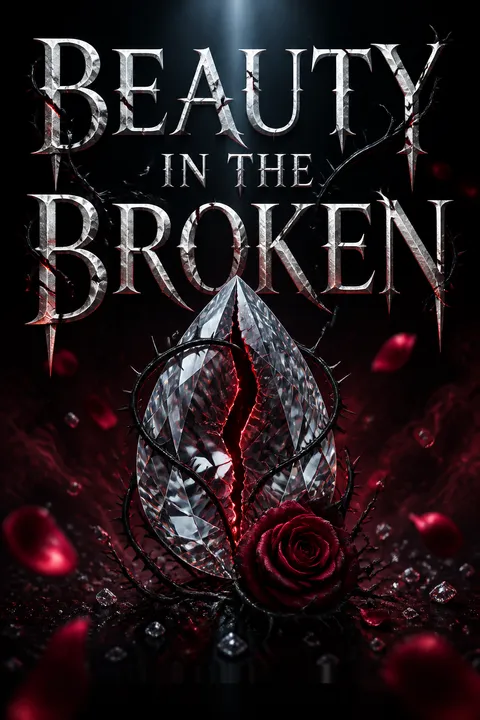
At its core, Beauty in the Broken is a raw and unflinching exploration of trauma, recovery, and love forged in darkness. Through carefully crafted reversals—captive becomes captain, punishment gives way to redemption, scars transform from stigma to strength—the novel interrogates whether two mortally wounded people can ever forge something whole. Pauls unapologetically leans into the darkness: violence, obsession, and perversion are not simply obstacles but ingredients of healing. The narrative critiques the weaponization of legal and financial systems against women, illuminates the generational legacy of abuse, and subverts the fairy tale of rescue, showing that true agency is never given, only seized and chosen—sometimes at great cost. The lesson, ultimately, is not that love is pain, but that healing can only occur when the broken pieces are acknowledged, owned, and shared. In the beauty found within the broken, we recognize our own woundedness, and the risk it takes to love—and live—fully.
Review Summary
Reviews for Beauty in the Broken are polarizing, averaging 4.06/5 stars. Many readers praise the dark, emotionally compelling romance between revenge-driven Damian and resilient Lina, set in South Africa's diamond world. Fans highlight the complex character development, gripping atmosphere, and powerful writing. However, critics argue the book crosses into glorifying abuse, citing Damian's extreme punishments, control, and humiliation of Lina. Trigger warnings include BDSM, non-consent, violence, and abuse. Whether beloved or despised, most agree the story is intense, unforgettable, and not for sensitive readers.
People Also Read



Characters
Damian Hart
Damian is driven by a relentless need for justice after being framed and imprisoned. Hardened by years among criminals, he returns a different man: wealthy, strategic, capable of both tenderness and cruelty. Psychoanalysis reveals his compulsion for control stems from childhood neglect and betrayal; his sadism masks deep vulnerability and longing for connection, especially with Lina, whom he regards as both punishment and salvation. His love is toxic, possessive, but also redemptive—as the narrative unfolds, his capacity for remorse, growth, and compromise emerges. Damian's arc is one of hard-won self-awareness: moving from vengeance and domination to acceptance of love, and ultimately, to self-forgiveness.
Lina (Angelina) Dalton-Clarke (Hart)
Lina is shaped by trauma: unloved in childhood, subjected to marriage as a business transaction, tortured by her late husband, scapegoated as insane, and used as currency in men's power games. Her self-harm and eating disorders are defenses against a world that consumes her. Yet she repeatedly adapts, finding tiny victories in meager freedoms, food, and care. Her psychoanalysis reveals a profound will to live, a survivor's ability to compartmentalize, and a stubborn hope. Her development is from submissive victim to courageous seeker—of the truth of her past, the fate of her child, and her own independence. Choosing Damian is her final act of agency; loving him is no longer a surrender, but the reclamation of her power.
Harold Dalton
Harold is the architect of suffering for both Lina and Damian—motivated by greed, pride, and a callous disregard for others. He frames Damian, controls Lina through her legal incompetence, and treats his daughter as an asset to be spent. His psychoanalysis reveals suppressed envy and hatred, perhaps driven by Lina's origins as the child of an affair. As Dalton's empire crumbles, his final acts of violence are desperation—a last attempt to seize control before facing the consequences of his own destruction. His demise is poetic justice: undone by the very machinery of power and retribution he set in motion.
Jack Clarke
Jack's legacy is one of harm: marrying Lina only to brutalize and isolate her, ultimately causing the loss of her child and her descent into mental health crises. Jack serves as the embodiment of violence and coercion in the narrative, his abuse of Lina marking both her flesh and her soul. Psychoanalytically, he is the classic abuser—masking depravity beneath respectability, using isolation, hunger, and humiliation to destroy. Lina's eventual killing of Jack, while an act of desperation, becomes a turning point toward reclaiming her agency—even as the crime ties her further into Harold and Damian's machinations.
Zane
Zane is Damian's old cellmate, brought out by loyalty but undone by his own envy and adoration for Damian. He is the resentful, spurned confidant; his hostility toward Lina is a projection of his heartbreak and sense of displacement. His actions move from petty cruelty to outright betrayal, as he aids in Lina's kidnapping. Zane's trajectory is deeply tragic—unwilling to let go, willing to do harm to get what he wants, and ultimately destroyed by crossing a line Damian cannot forgive. His character demonstrates the peril of love curdled into obsession and the dangers of a lack of self-acceptance.
Anne
Anne, Zane's sister, is initially presented as a houseguest but soon reveals herself as a calculated interloper, attempting to seduce Damian for status and security. Her willingness to manipulate, betray, and even coordinate kidnapping underscores her lack of principle. Her psychoanalysis suggests a deep insecurity masked as confidence; her interest in Damian is both sexual and mercenary. Anne's arc concludes in violence—a warning about the lethal price of self-serving opportunism in a world ruled by wounded and dangerous people.
Russell
Russell is Damian's loyal bodyguard, a silent observer to much of the drama. His disengagement is at times a shield to cope with the ugly realities he must witness, but he is unwavering in his protective role. Russell's steady presence serves as an understated anchor: when he finally intervenes on Lina's behalf, it is out of a true sense of moral duty. He becomes a second chance at safety for Lina, and ultimately, a bridge between her old and new life—someone who recognizes boundaries and honors her choices.
Reyno
Reyno is both healer and facilitator—prescribing necessary medication, providing clandestine employment to Lina, and shielding her confidences. Psychoanalytically intriguing, he is a moral gray area, willing to bend rules and use his position to both help and enable. He recognizes the depth of Lina's trauma and works to restore her sanity and legal competence, understanding the nuances of her power struggles and needs.
Dora Riley
As the housekeeper in Jack Clarke's household, Dora is both bystander and enabler of violence. Her silence is bought by her husband's medical bills, a chilling reminder of the costs of complicity. Yet, her decision to ultimately provide Lina the key—and her own suicide—symbolize incomplete redemption. Psychoanalytically, she represents the "silent majority"—those who, gripped by their own entrapment, fail to act until the opportunity or conscience comes too late.
Josh / Lina's Son
Josh is both the symbol of what was stolen from Lina and an unexpected hope for the future. His existence is at first denied, then revealed as the true prize at the bottom of the ruin. His introduction offers Lina—and Damian—the chance to break the cycle of loss and violence, and to choose again, this time in the light and with open hearts.
Plot Devices
Revenge as Relationship Foundation
The entire narrative is built on the engine of revenge: Damian seeks retribution for his wrongful imprisonment and the theft of his fortune; Harold attempts to maintain his power and hide his shames; Lina seeks escape from her own traumas. Marriage is used both as weapon and as a metaphor for loss of power; both Damian and Lina are trapped by vows wrought in violence. This plot device repeatedly foregrounds the dangers of equating justice with destruction, and the way love—particularly dark, obsessive love—can arise from the ashes of violence.
Power Struggles and Submission
Physical, psychological, and legal power are in constant contest: who holds the money, the property, the evidence, the right to decide? Scenes of submission—sexually and otherwise—are used not simply for titillation, but as crucibles for both character defiance and growth. These moments invert traditional gender and agency expectations, highlighting the ways in which victimhood and mastery are not clear-cut, but perpetually negotiated.
Motif of Scars and Hunger
Lina's scars, Damian's obsessions, and repeated references to hunger (literal and emotional) demonstrate how trauma is both surface and depth—manifesting as physical evidence and repeated psychological resistance. Scar-revealing scenes, forced stripteases, and public judgments all function as both shaming and liberating acts, emblematic of the story's central paradox: exposing brokeness is both wound and cure.
Secrets, Revelations, and Lies
Much of the tension is driven by secrets—about Jack's abuse and murder, about the lost child, about legal competence, about Zane's intentions, about plans for escape. Identity and safety hinge on who knows what, and when. As secrets are revealed, instead of bringing immediate resolution, they often create new, more complex dangers. The final revelations—of Lina's child, of her ability to choose love—serve as the book's emotional climax and path to redemption.
Iterative Kidnapping and Imprisonment
Lina's repeated captures—by Damian, by Zane, by Harold—literalize her state of powerlessness, while each "escape" inching her closer to either self-destruction or self-mastering. This device not only foregrounds the high external stakes but mirrors the characters' interior journeys: breaking free is never only about doors or chains but about claiming narrative authority over their own stories.
Shifting Perspectives and Symbolic Settings
Settings are emotionally loaded: the mine, the house, the church, the hospital, the tower—all serve as stages where identity is shattered and rebuilt. The narrative moves from closed, stifling interiors toward the possibilities of open riverbanks and homes Gloria can choose; physical space thus mirrors psychological liberation. The interplay of public and private rituals (weddings, parties, interviews) functions as narrative foreshadowing, always forcing the characters to perform the roles that bind or mend them.
Diamond Magnate Series


About the Author
Other books by Charmaine Pauls
Download PDF
Download EPUB
.epub digital book format is ideal for reading ebooks on phones, tablets, and e-readers.








































