
Plot Summary
Drowned Girl Awakens
In the early morning Vienna, painter Gustav Klimt discovers a pale, lifeless young woman in the Danube Canal. Instead of calling the authorities, he sketches her, captivated by her otherworldly appearance. To his shock, she revives, coughing up water and speaking only a single word. Klimt, with the help of a streetwise newsboy and his loyal model Wally, brings the girl to his studio. She is mute, confused, and seems to have no memory of who she is or how she ended up in the water. Klimt, both artist and caretaker, is drawn to her strangeness, sensing she is more than just another lost soul. The girl's presence disrupts the bohemian household, setting in motion a chain of events that will unravel the boundaries between art, myth, and reality.
Letters from the Ice
Through a series of letters from Captain Robert Walton, we learn of Victor Frankenstein's tragic quest. Frankenstein, obsessed with conquering death, creates a monstrous being from corpses, only to be horrified by his own work. The creature, Adam, demands a mate, and when denied, unleashes vengeance. Frankenstein's pursuit of Adam leads him to the Arctic, where he is rescued by Walton's ship. The narrative blurs the line between myth and memory, as the story of the "bride"—a woman created to be Adam's companion—emerges. She is not merely a victim, but a being caught between life and death, her fate intertwined with the ambitions and failures of men who would play god.
Artists and Outcasts
Egon Schiele, Klimt's protégé, is expelled from his family home for his scandalous art and relationships. He joins Klimt's circle, where the drowned girl—now called Judith—becomes a muse for both men. Wally, ever resourceful, cares for Judith, who remains mute and childlike, yet displays flashes of uncanny strength and knowledge. The studio becomes a haven for outcasts: models, artists, and strays, all drawn to Judith's enigmatic presence. As Judith slowly recovers, her odd behaviors—communicating with cats, building nests, and speaking in riddles—hint at a fractured mind and a deeper, hidden history.
The Unnamed Muse
Klimt and Schiele are fascinated by Judith, whose beauty and strangeness inspire their art. Yet she cannot recall her name or past, and her language shifts unpredictably. A false policeman arrives, searching for a missing Dutch woman, raising suspicions about Judith's origins. Wally and Schiele become her protectors, even as Vienna's dangers close in. Judith's presence unsettles the household, and her interactions with animals and people alike suggest she is both innocent and dangerous. The question of who she is—and what she might be capable of—haunts everyone around her.
Monsters and Memory
Judith's story is gradually revealed through therapy and hypnosis. She recalls being created as a mate for Adam, Frankenstein's monster, and suffering unspeakable abuse at his hands. Her memories are fractured, blending myth, trauma, and reality. She speaks of dying multiple times, of living on the ice, and of being cared for by a dwarf named Waggis. The boundaries between her own identity and the archetypes of myth—Raven, Sedna, Akhlut—begin to blur. Judith's struggle to reclaim her humanity is mirrored by the artists' attempts to capture her essence in their work.
The Wolf Returns
A large, wolf-like dog named Geoff appears at the studio, instantly recognized by Judith. Geoff is more than a pet; he is Akhlut, a being from the Underworld, capable of shifting between forms. His arrival coincides with increased threats: a Dutch detective is found dead, and a sinister fixer named Van Beek begins stalking Judith. Geoff's loyalty and power become crucial as Judith's enemies close in. The dog's presence also triggers deeper memories in Judith, connecting her to the world of spirits and the mythic past she carries within her.
Freud's Couch, Raven's Voice
Klimt brings Judith to Dr. Freud, hoping to recover her lost memories. Under Freud's and later Jung's guidance, Judith undergoes hypnosis and free association. She recalls her creation, her abuse by Adam, and her time in the Underworld, where she meets Raven and Sedna. These sessions reveal that Judith is not merely traumatized—she is a vessel for ancient archetypes, a bridge between worlds. Her story becomes a tapestry of myth, trauma, and survival, challenging the limits of psychoanalytic understanding and the very nature of identity.
Surrealist Friendships
Judith becomes the center of a vibrant, chaotic circle of artists and models. Wally, her steadfast friend, navigates love and heartbreak with Schiele, while Emilie Flöge, Klimt's companion, offers mentorship and opportunity. The group's adventures—posing, painting, escaping danger, and sharing pastries—are both comic and poignant. Judith's presence inspires new art and new ways of seeing, even as her past continues to cast a shadow. The bohemian life is both a refuge and a crucible, forging bonds that will endure even as the world changes.
The Prodigal Monster
The legacy of Frankenstein and Adam resurfaces as agents from Zurich arrive, seeking to reclaim Judith for their own purposes. Van Beek, the fixer, and the immortal Captain Walton, both pursue her, each with their own agenda. Judith's supernatural abilities—her strength, her connection to Akhlut, her capacity for violence—are tested as she fights for autonomy. The lines between victim and monster blur, and Judith must confront the consequences of her own power, as well as the desires of those who would possess her.
Underworld Revelations
Through further sessions with Jung and her own recollections, Judith recounts her time in the Underworld. She learns from Raven and Sedna, gains the ability to speak all languages, and discovers the true nature of her immortality. Her story becomes one of transformation: from victim to survivor, from puppet to agent, from human to something more. The Underworld is both a place of healing and a source of power, and Judith's return to the living world marks a new chapter in her quest for identity and belonging.
Vienna's Dangerous Waltz
As Judith's fame as a model grows, so do the dangers around her. She is kidnapped, rescued, and hunted by those who seek her blood or her power. The bohemian circle is fractured by scandal, betrayal, and the approach of war. Klimt, Schiele, and their companions struggle to protect Judith, even as their own lives unravel. The city itself becomes a stage for a deadly dance, where art, love, and violence are inextricably linked.
The Trickster's Game
Judith's connection to the trickster god Raven becomes more pronounced. She learns to harness her supernatural abilities, to shift forms, and to navigate the boundaries between worlds. Raven's stories and Sedna's wisdom guide her, but also challenge her sense of self. Judith must decide whether to embrace her mythic nature or to reclaim her humanity. The trickster's game is one of survival, transformation, and the constant negotiation of power and vulnerability.
Becoming Judith
With the help of Waggis, the loyal dwarf who once cared for her, Judith finally learns her true name: Elspeth Lindsey. She confronts her past, her creators, and her would-be captors, asserting her autonomy at last. The revelation of her identity is both liberating and bittersweet, as it comes at the cost of leaving behind the life she has built in Vienna. Judith chooses her own path, refusing to be anyone's puppet or possession, and sets out to create a future on her own terms.
The Hunt for Identity
Judith's journey takes her to Switzerland, where she seeks further understanding with Jung. She grapples with the implications of her immortality, her capacity for violence, and her longing for connection. The past cannot be undone, but it can be integrated. Judith's story becomes one of acceptance: of her trauma, her power, and her place in the world. She is no longer merely a muse or a monster, but a person—complex, flawed, and free.
Sedna's Daughter
Judith's bond with Sedna, the sea goddess, deepens. She learns to channel Sedna's nurturing and vengeful aspects, to feed and protect those she loves, and to exact justice when necessary. The lessons of the Underworld become tools for survival in the living world. Judith's story is no longer just her own, but part of a larger mythic cycle, connecting her to the ancestors, the spirits, and the eternal dance of creation and destruction.
The Enduring Bond
Wally, Judith's closest friend, faces heartbreak and loss, but their bond endures beyond the grave. Through magic and sacrifice, Judith ensures that Wally will return, transformed but still connected. The story becomes one of chosen family, of loyalty and resilience in the face of suffering. Even as the world changes—war, plague, and death sweeping through Vienna—the ties forged in the studio and on the ice remain unbroken.
The Squirrel Painter
After his death, Klimt is greeted in the Underworld by Judith, now fully herself. She grants him a unique afterlife: to retain his identity and become a Squirrel Person, able to see the world with a painter's eye and a new perspective. The afterlife is not an end, but a continuation of the creative journey. The bonds of friendship, art, and love persist, even beyond death, in the ever-shifting landscape of myth and memory.
Immortality's Price
Judith, Waggis, and others who have tasted immortality must reckon with its consequences. The world moves on—wars are fought, friends are lost, and new lives begin. Judith, no longer a puppet or a victim, chooses her own destiny, embracing both her humanity and her mythic power. The story ends not with closure, but with the promise of new adventures, as Judith, the once-drowned girl, rises again and again, forever changed and forever changing.
Analysis
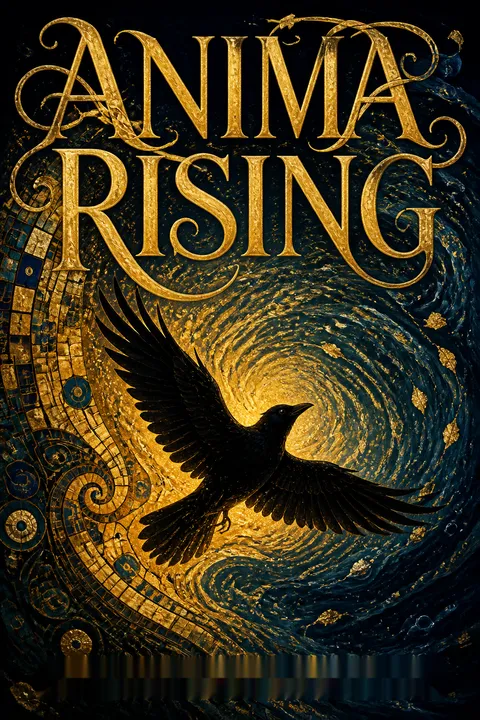
Anima Rising is a dazzling, darkly comic meditation on trauma, identity, and the power of myth to both wound and heal. Christopher Moore reimagines the Frankenstein myth through the lens of early twentieth-century Vienna, blending historical fact, literary homage, and supernatural invention. At its core, the novel is about the struggle to reclaim one's story from those who would define, possess, or erase it. Judith's journey—from nameless victim to self-possessed agent, from puppet to trickster, from human to myth—mirrors the challenges faced by women, artists, and outsiders in every era. The novel interrogates the ethics of creation, the responsibilities of genius, and the costs of immortality. Through its playful structure, vivid characters, and rich symbolism, Anima Rising invites readers to question the boundaries between art and life, trauma and transformation, myth and memory. Ultimately, it is a celebration of resilience, friendship, and the enduring human capacity to rise—again and again—from the depths.
Review Summary
Anima Rising by Christopher Moore is a darkly humorous historical fantasy set in 1911 Vienna where Gustav Klimt discovers the Bride of Frankenstein in a canal. The novel blends real figures like Freud, Jung, and Klimt with Shelley's Frankenstein characters and Inuit mythology. Reviews praise Moore's creativity, wit, and complex protagonist Judith, along with memorable demon dog Geoff. However, many note graphic content warnings for sexual violence and misogyny are necessary. The humor divides readers—some find it brilliant, others feel it falls flat against dark themes. Pacing issues and repetitive jokes are common criticisms, though the afterword explaining historical research is widely appreciated.
People Also Read







Characters
Judith / Elspeth Lindsey
Judith, once Elspeth Lindsey, is the heart of the novel—a woman created as a mate for Frankenstein's monster, murdered, resurrected, and cast adrift through time. Her psyche is fractured by trauma, but she is also a vessel for mythic archetypes: Raven, Sedna, and Akhlut. Judith's journey is one of survival, transformation, and the relentless pursuit of identity. She is both victim and agent, capable of great violence and great compassion. Her relationships—with Klimt, Wally, Schiele, and others—anchor her to the world, even as she navigates the boundaries between life and death, myth and reality. Judith's development is a testament to resilience, the power of friendship, and the possibility of reclaiming one's story from those who would define it.
Gustav Klimt
Klimt is Vienna's most celebrated painter, a man both revered and reviled for his sensual, boundary-pushing art. He is drawn to Judith's strangeness, seeing in her both muse and mystery. Klimt's relationships—with his models, his companion Emilie, and his protégé Schiele—reveal a man both generous and self-absorbed, capable of great kindness and great blindness. He is haunted by questions of beauty, mortality, and the ethics of creation. Klimt's journey is one of learning to see beyond surfaces, to recognize the humanity in those he paints, and to accept the limits of his own power.
Wally Neuzil
Wally is Klimt's model and Schiele's lover, but above all, she is Judith's steadfast friend. Resourceful, witty, and fiercely protective, Wally navigates the dangers of Vienna with humor and grit. Her own struggles—with poverty, love, and betrayal—mirror Judith's, and their bond becomes a lifeline for both. Wally's development is marked by resilience and adaptability; she pursues love, work, and meaning on her own terms, ultimately choosing a path of service and compassion as a nurse. Her friendship with Judith endures beyond death, a testament to the power of chosen family.
Egon Schiele
Schiele is Klimt's protégé, a brilliant but troubled painter whose art and life are marked by scandal and excess. His relationships—with Wally, his sister Gertie, and his models—are fraught with desire, jealousy, and self-loathing. Schiele is both fascinated and unsettled by Judith, seeing in her a reflection of his own obsessions. His journey is one of artistic ambition and personal failure, as he grapples with the consequences of his choices and the limits of his own genius.
Emilie Flöge
Emilie is Klimt's lifelong companion and a pioneering fashion designer. She offers guidance and opportunity to the women in Klimt's circle, providing both material support and emotional wisdom. Emilie's relationship with Klimt is complex—marked by love, partnership, and mutual respect, but also by boundaries and unspoken agreements. She represents a model of female autonomy and creativity, challenging the limitations imposed by society and by the men around her.
Akhlut / Geoff
Geoff, the wolf-dog, is more than an animal—he is Akhlut, a being from the Underworld capable of shifting between forms. He is Judith's guardian and guide, embodying both the savagery and the loyalty of the animal world. Akhlut's presence connects Judith to her mythic past and provides both protection and danger. His relationship with Judith is one of mutual recognition and shared destiny, a reminder that the boundaries between human and animal, mortal and immortal, are porous.
Raven
Raven is both a figure in Judith's mind and a real presence in the Underworld. He is the archetype of the trickster: clever, mischievous, and unpredictable. Raven guides Judith through her transformations, offering both wisdom and provocation. His stories and interventions shape the narrative, challenging Judith to embrace change and to question the stories she tells about herself. Raven represents the power of myth to disrupt, to heal, and to create new possibilities.
Sedna
Sedna is the mother of the sea, a figure from Inuit mythology who becomes Judith's protector and teacher in the Underworld. She embodies both care and wrath, teaching Judith to feed and protect, but also to demand respect and justice. Sedna's influence helps Judith integrate her trauma and her power, offering a model of feminine strength that is both nurturing and uncompromising.
Victor Frankenstein
Frankenstein is the origin of Judith's suffering—a man who, in his quest to conquer death, creates both Adam and Judith, only to abandon them. His actions set in motion the cycle of violence and trauma that defines Judith's early existence. Frankenstein's presence lingers as both a warning and a challenge: the dangers of unchecked ambition, the responsibilities of creation, and the consequences of failing to care for what one has made.
Waggis
Waggis, the dwarf assistant, is the unsung hero of Judith's story. He cares for her in her catatonic state, revives her with kindness and ingenuity, and ultimately helps her reclaim her identity. Waggis's love is steadfast and selfless, offering Judith a model of friendship that is not based on possession or desire. His own immortality, gained through Judith's blood, is both a blessing and a burden, tying his fate to hers across centuries.
Plot Devices
Epistolary Framing and Shifting Perspectives
The novel employs letters, diary entries, and therapy transcripts to layer perspectives and blur the boundaries between fact and fiction. Walton's letters from the Arctic, Freud's and Jung's case notes, and Judith's own fragmented memories create a mosaic of voices. This structure allows the reader to experience the uncertainty and multiplicity of Judith's identity, as well as the unreliability of memory and narrative. The shifting perspectives also highlight the interplay between personal trauma and collective myth, inviting the reader to question what is real and what is constructed.
Mythic Archetypes and Supernatural Realism
The story weaves together elements of myth, folklore, and supernatural realism. Judith is not just a traumatized woman, but a vessel for ancient archetypes—Raven, Sedna, Akhlut—who manifest both in her psyche and in the world. These figures guide, challenge, and sometimes endanger her, blurring the line between psychological healing and magical transformation. The use of mythic archetypes allows the novel to explore themes of identity, power, and survival on both a personal and cosmic scale.
Foreshadowing and Recurring Motifs
The novel is rich in foreshadowing: the recurring image of drowning, the motif of resurrection, the presence of animals as guides and omens. These motifs signal to the reader that Judith's story is not linear, but cyclical and layered. The repetition of certain phrases ("I died four times"), the appearance of the wolf-dog, and the use of art as both creation and destruction all serve to build tension and deepen the mystery of Judith's identity.
Blending Historical and Fictional Characters
The novel places historical figures—Klimt, Schiele, Freud, Jung, Alma Mahler—alongside fictional and mythic characters. Their interactions are both plausible and fantastical, creating a world that is at once grounded in history and open to the supernatural. This blending allows the novel to comment on the nature of genius, the role of women in art and society, and the enduring power of myth to shape lives.
Trauma, Memory, and Healing
The central plot device is Judith's journey through trauma, memory, and healing. Her sessions with Freud and Jung serve as both narrative exposition and psychological exploration. The process of recovering lost memories, integrating mythic experiences, and reclaiming agency is mirrored in the structure of the novel itself. Healing is not presented as a return to normalcy, but as an ongoing negotiation between past and present, self and other, human and myth.
Download PDF
Download EPUB
.epub digital book format is ideal for reading ebooks on phones, tablets, and e-readers.








































