

Key Takeaways
Knowing facts about God is nothing next to being known by Him
The Western trap is knowledge. Curt Thompson, a psychiatrist and Christian, argues that our culture prizes knowing (accumulating facts, being right, staying in control) over being known (letting another person truly see, feel, and understand us). Julie, a rising Capitol Hill policy adviser, could recite theology flawlessly yet fell apart with anxiety because no one, including God, had ever entered her inner world. She fled therapy rather than risk being seen.
Being known is terrifying and transformative. To be known means surrendering control, exposing shame, and granting others power to affect you. Thompson insists this vulnerability, not correct belief, is what actually produces love, forgiveness, and change. Jeremy, a depressed attorney, only began healing when someone validated his buried dream of teaching.
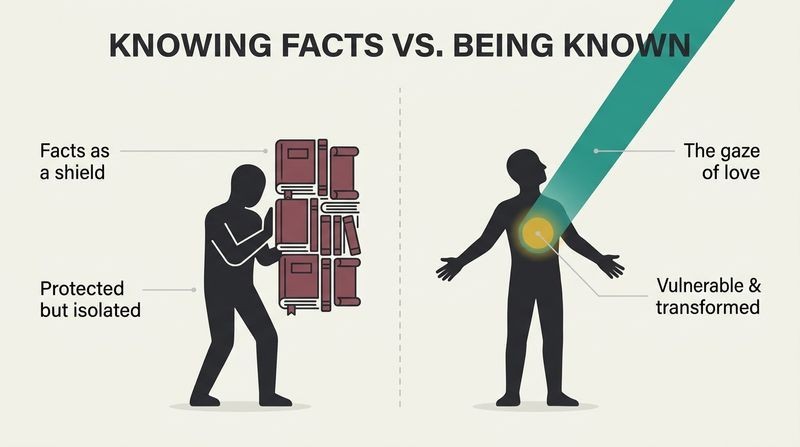
The distinction echoes philosopher Martin Buber's I-Thou versus I-It: relating to persons as subjects rather than objects. It also resonates with contemporary shame researcher Brene Brown, whose work shows vulnerability precedes belonging. Thompson's contribution is neurological grounding: being known changes brain circuitry, not just feelings. One caution worth noting is that the knowing/being-known binary can be overdrawn. Accurate knowledge and intimate relationship are not truly opposed; a good marriage requires both facts and felt connection. Still, the corrective lands for a religious culture that often mistakes doctrinal precision for spiritual health, and for a digital age drowning in information yet starved of intimacy.
Your mind is not solo; it forms between brains, not just within one
No such thing as a self-made mind. Borrowing Daniel Siegel's field of interpersonal neurobiology, Thompson defines the mind as an embodied, relational process that regulates the flow of energy and information. Translation: your mind lives in your body (you know you are anxious partly by your pounding heart) and is shaped continuously by other minds. From birth, a parent's tone, glance, and touch physically wire an infant's neural networks.
Interconnection is built in. A single neuron deprived of input from other neurons dies. Likewise a mind starved of other minds grows anxious, then depressed, then hopeless. Even private daydreams involve imagined interactions with others. This is why Thompson claims we are known, healed, and made whole only in relationship, never in isolation.
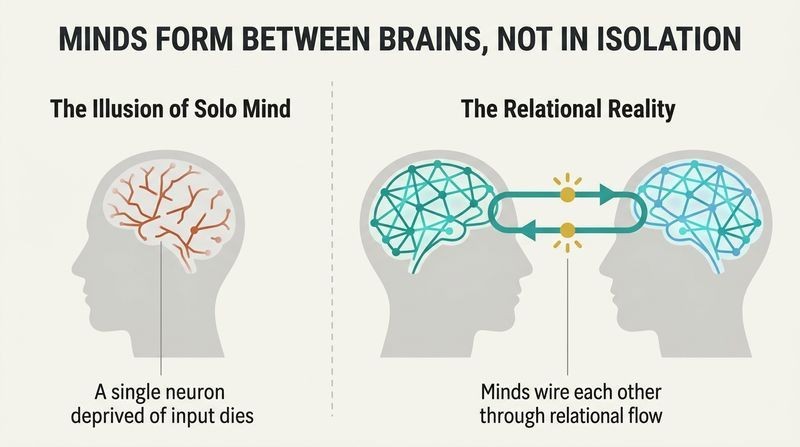
This directly challenges the Enlightenment ideal of the autonomous rational individual. Modern attachment neuroscience supports Thompson: infant brain development literally depends on caregiver attunement, as Romanian orphanage studies tragically demonstrated, where neglected children showed measurably underdeveloped brains. The embodiment claim also aligns with Antonio Damasio's somatic marker hypothesis, that emotion and bodily states are inseparable from reasoning. A skeptic might ask whether Thompson overstates relational determinism at the expense of individual agency and temperament. Yet the core insight, that cognition is fundamentally social and bodily rather than a disembodied computation, is now mainstream in cognitive science and a useful rebuke to hyper-individualist self-help.
Ask yourself: how well am I paying attention to what I'm attending to?
Attention is the ignition key. Most of life runs on autopilot, driven by lower brain regions we never consciously notice. Thompson's central diagnostic question is recursive: not just what are you attending to, but how well are you paying attention to what you pay attention to, especially your own feelings, bodily sensations, and memories.
Inattention has generational stakes. George, a dot-com millionaire, obsessed over his daughter Kristin's drinking while ignoring his own buried sadness, guilt, and the harsh nonverbal cues he broadcast. His anxiety, not her behavior, was the real problem. Moses noticed a bush that burned without being consumed, and only because he turned aside to look did God speak. Thompson reads these as parallel: what we attend to, within and without, literally reshapes our brains and our relationship with God.
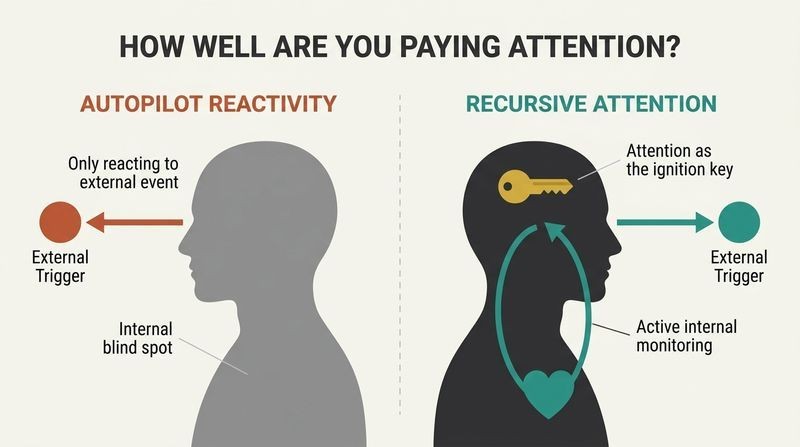
Thompson anticipates the mindfulness wave now backed by substantial research: metacognition, or thinking about one's own mental states, is trainable and correlates with emotional regulation via prefrontal activation. His framing overlaps with Jon Kabat-Zinn's secular mindfulness and with Buddhist vipassana practice, though Thompson roots it in Christian contemplative tradition. The George example is clinically astute: projection, focusing anxiously on another's flaws to avoid one's own interior, is a well-documented defense. One tension is that Scripture's dramatic theophanies (burning bushes, voices) get reframed as attention phenomena, which some readers may find reductive. Thompson explicitly denies reductionism, but the interpretive move deserves the caveat he gives it.
You cannot change the past, but you can rewire how you remember it
Memory is not a safe-deposit box. Every time you recall an event, you subtly rewrite it, because remembering fires and reshapes neural networks in the present. Thompson distinguishes implicit memory (unconscious, bodily, present from before birth, expressed as reactions without any sense of recalling) from explicit memory (conscious facts and autobiography, requiring the hippocampus that matures around 18 to 24 months).
Implicit memory hijacks the present. Brad fled the house during every fight with his wife, ignoring her frantic calls. He had no idea he was replaying childhood escapes from his alcoholic father's rage on his bicycle, then in his car. Research suggests roughly 80% of a couple's emotional conflict predates the relationship. Naming implicit memories and telling your story to an empathic listener changes the memory itself, and thereby your anticipated future.
This tracks precisely with the neuroscience of memory reconsolidation: retrieving a memory renders it labile and rewritable, a mechanism now leveraged in trauma therapies like EMDR. Thompson's implicit/explicit framing maps onto the distinction between procedural/emotional memory (amygdala, basal ganglia) and declarative memory (hippocampus). The clinical takeaway, that present overreactions are often ancient recordings, is the engine of psychodynamic therapy going back to Freud, but Thompson grounds it in modern circuitry. The 80% figure should be treated as a clinical heuristic rather than hard data. The transformative claim, that you rewrite memory by narrating it to someone who truly listens, is both hopeful and empirically defensible.
Emotion is God's native language; ignore it and you ignore Him
Feelings are not obstacles to faith. Thompson argues emotion is the energy around which the brain organizes itself, and the primary medium through which God addresses us. He distinguishes primary emotion (rapid, pre-conscious bodily shifts of orientation, appraisal, and arousal) from categorical emotion (the named states like joy, shame, fear we consciously recognize). The word emotion itself points to e-motion, preparing for movement.
Feeling felt heals. Erin, depressed and emotionally numb, could not say what she felt until Thompson asked where in her body she felt it. As she described tightness in her chest, he felt it too, and she sensed him sensing her. This experience, which Siegel calls feeling felt, relaxed her whole posture. Thompson notes David repented to Nathan not from logic but from emotion, writing Psalm 51 as poetry that integrates both brain hemispheres.
The claim that emotion drives reasoning, not the reverse, is vindicated by Damasio's patients with damaged emotional centers who became paralyzed decision-makers despite intact IQ. Thompson's most provocative theological move is asserting that God has emotions we genuinely affect, a position (sometimes called relational or open theism) contested by classical theologians who hold God is impassible and unchanging. Readers in that tradition will push back. Setting the metaphysics aside, the practical insight is robust: emotional attunement, being felt by another, is the active ingredient in effective psychotherapy across modalities, and alexithymia (the inability to name feelings) predicts poorer mental health outcomes.
How your parents soothed you as a baby scripts how you relate to God
Four attachment patterns follow you for life. Drawing on Bowlby, Ainsworth, and Main, Thompson explains that a caregiver's response to a child's emotional states forges an attachment style that persists into adulthood with about 80% predictability, and shapes how you experience God:
1. Secure (about 65%): attuned parenting yields trust and resilience.
2. Avoidant: emotionally absent parents produce adults who dismiss feelings and overuse logic.
3. Ambivalent/anxious: inconsistent, anxious parents produce preoccupied, easily flooded adults.
4. Disorganized: frightening or abusive parents produce adults with unresolved trauma.
Roger's buried grief. A brilliant surgeon inexplicably harsh with his toddler, Roger had no memory of witnessing his two-year-old brother die until a body-scan exercise surfaced it. His son turning two had triggered the implicit wound. Naming your attachment pattern reveals why God can feel distant, intrusive, or enraged regardless of your theology.
Attachment theory is among the most empirically replicated frameworks in developmental psychology, and the intergenerational transmission Thompson cites (parental Adult Attachment Interview status predicting a child's pattern before birth) is a genuinely striking finding from Mary Main's Berkeley research. The theological extension, that attachment style colors one's felt sense of God, is supported by a growing correspondence hypothesis literature in the psychology of religion. The nuance worth flagging: attachment percentages vary across cultures and studies, and styles are relationship-specific rather than fixed traits. Thompson honors this by stressing patterns can change, which prevents the framework from becoming deterministic fatalism.
Insecure attachment can be rewritten through one relationship that truly sees you
Earned secure attachment. Thompson's most hopeful claim: no matter how broken your early bonds, you can develop what researchers call earned secure attachment, becoming able to tell your life story coherently and connect with confidence. It never happens through willpower or new facts alone. It requires either a significant relationship or a dramatic change in circumstances.
The mechanism is coherent storytelling. A neglected boy with a teacher who gets him, an anxious teen with an attuned coach, a cancer patient embraced by a support group: each is known for the first time. Ed, a distant grandfather terrified of repeating his violent father, transformed through therapy and Scripture meditation, then reconnected with his son Calvin and grandson Eric. Telling your story to an empathic listener integrates the brain's left and right hemispheres, literally forging new neural networks.
Earned security is a validated construct: longitudinal studies show adults with difficult childhoods who nonetheless narrate their histories coherently raise securely attached children themselves. This is arguably the most therapeutically important idea in the book because it refutes determinism. The finding that narrative coherence, not the absence of trauma, predicts healthy parenting, is profound and echoes narrative therapy (White and Epston) and expressive writing research (Pennebaker), where writing about adversity measurably improves health. Thompson frames Scripture as one such transforming relationship. The bridge between a psychological mechanism (a healing human relationship) and a theological claim (relationship with God) is asserted more than demonstrated, but experientially it rings true for many.
When you lose your temper, your prefrontal cortex has literally gone offline
The brain's Grand Central Station. The prefrontal cortex (PFC) integrates attention, memory, emotion, and attachment, and enables nine functions including body regulation, empathy, response flexibility, fear modulation, and morality. Thompson confesses screaming at his three-year-old daughter Rachel for playing music too loud, a moment he calls a mental train wreck: his PFC disconnected and his lower fight-or-flight brain took over.
Low road versus high road. On the low road, we lose our tempers, give silent treatments, or numb out with food, alcohol, or work. Thompson maps the descent: a trigger, rising physical tension, feeling out of control, then hurt hardening into anger, resentment, and contempt (the single strongest predictor of divorce). Getting back to the high road requires centering: change your body position, breathe, ask who/what/where/when/how questions, and notably avoid why.
The neuroscience of amygdala hijack that Thompson describes was popularized by Daniel Goleman and is broadly accurate: under acute threat, blood flow and processing prioritize subcortical survival circuits over the reflective PFC. His practical advice to shift posture and breathe activates the parasympathetic nervous system via the vagus nerve, a well-supported down-regulation technique. The Gottman research on contempt predicting divorce is real and robust. The intriguing counsel to avoid why questions is clinically shrewd: why often functions as disguised accusation or as a demand for validation of overwhelming feeling, whereas concrete interrogatives keep the reflective brain engaged. This is genuinely usable in any heated conversation.
Sin is the mind dis-integrating; the fall began with fear, not fruit
Sin reframed as disconnection. Thompson defines sin, in neuroscience terms, as dis-integration: the disconnection of the mind within itself and from God and others. He rereads Eden as a neurological drama. The serpent first evokes doubt (activating the left brain's right-versus-wrong analysis), then fear (firing the brain stem and amygdala), then shame, the acute sense that something is wrong with me.
Shame drives the whole machine. Eve, drowning in shame and left alone by the serpent, replaces relationship with God with a controllable object, a piece of fruit. Adam and Eve then hide, first from each other with fig leaves, then from God. Thompson calls hiding the first behavioral outcome of sin. God's response is not accusation but a question, Where are you, an invitation to be known and repaired.
Thompson's move to read shame (rather than pride or disobedience) as the engine of the fall aligns with a significant strand of pastoral psychology that distinguishes shame (I am bad) from guilt (I did something bad), a distinction empirically linked to different outcomes, with chronic shame predicting depression and aggression while guilt often prompts repair. The reading is imaginative and admittedly speculative as exegesis; conservative interpreters may resist recasting a theological category as a brain state. Thompson is careful to say he correlates rather than reduces. The pastoral payoff is considerable: treating sin as relational rupture rooted in fear and shame reframes redemption as reconnection rather than mere rule-keeping.
Every rupture invites repair; confession opens a room forgiveness already fills
Rupture and repair. Relationships inevitably fracture. Thompson, following Siegel, sorts ruptures into benign (ordinary comings and goings), limit-setting (necessary boundaries), and toxic (overwhelming, shaming breaks). Even attuned parents miss their children's cues roughly half the time; what matters is repair. When Eugene exploded at his son Will over Nerf guns, then later knelt, apologized, and revisited the moment twice, he activated new neural networks in Will that buffer future shame.
Confession precedes, not earns, forgiveness. Thompson stresses that in 1 John, forgiveness is not a second step we beg for; it already fills the room, and confession simply opens our hearts to receive it. He proposes a group exercise: confess every offense, however small, to the person wronged, who must always forgive, complete with warm nonverbal cues. Jesus questioned Peter three times by a charcoal fire, deliberately evoking Peter's denial to heal it.
The rupture-and-repair model is empirically central to attachment research: Ed Tronick's still-face experiments show that relational health depends not on perfect attunement but on the repair of inevitable mismatches. This is liberating for perfectionist parents. Thompson's insistence that repair be embodied, with tone, touch, and facial warmth, reflects the reality that the right hemisphere reads nonverbal signals far more than words. The Peter narrative reading (charcoal fire as sensory trigger for implicit memory) is a clever integration of Gospel detail with memory science. The group confession exercise is bold and could be powerful, though it presumes a rare level of psychological safety and could misfire in groups lacking it.
A healthy community, like a healthy mind, balances connection and autonomy
Complex systems seek balance. Thompson likens minds and communities to Saturn's rings: individually unpredictable rocks that collectively form stable, adaptive structures. Systems thrive at the balance point between rigid sameness and chaos, oscillating between deep connection and healthy separation. Too much closeness suffocates; too much distance isolates.
Paul's body as an integrated brain. Reading 1 Corinthians 12 and 13, Thompson sees the church described exactly like a well-functioning brain: differentiated parts (the eye, the hand) integrated into one body, where the stronger protect the weaker, just as neuroscience now shows healthy brain regions can take over functions of damaged ones after a stroke. Love, Paul's most excellent way, is not an abstraction but action, and it doubles back to require the very community it builds. Laura, a chronically depressed woman, recovered as she was finally known within a confessional community.
The complex-systems framing draws on genuine dynamical-systems science, where healthy biological systems (heart rate variability, neural activity) show maximal complexity, neither rigidly ordered nor randomly chaotic, and reduced complexity marks disease. Applying this to community differentiation and integration echoes Murray Bowen's family systems theory, where the healthiest families balance togetherness and individuality. Thompson's parallel between neural plasticity (stronger regions compensating for damaged ones) and Paul's stronger members protecting weaker ones is an elegant, if analogical, bridge. The claim that love is action rather than feeling is both Aristotelian (virtue as habituated practice) and neurologically apt, since the brain has no free-floating love module, only loving behaviors that wire in over time.
Analysis
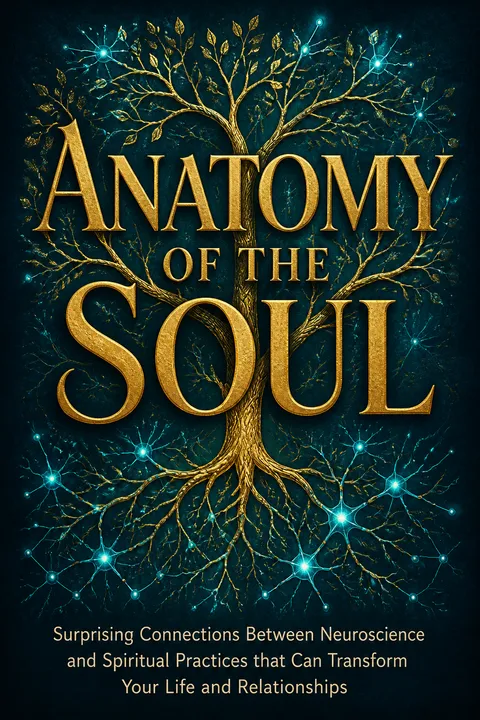
Anatomy of the Soul is an integrative work of pastoral psychiatry that translates Daniel Siegel's interpersonal neurobiology into a Christian spiritual idiom. Its structure follows the architecture of the mind itself: attention, memory, emotion, attachment, the prefrontal cortex, then sin, redemption, and community. This is both its genius and its vulnerability. The genius is a genuinely novel synthesis: Thompson shows that mechanisms secular science has verified (neural plasticity, memory reconsolidation, attachment transmission, amygdala hijack, the healing power of feeling felt) map remarkably onto ancient spiritual practices and biblical narratives. The book's most durable contribution is its reframe of transformation as relational and embodied rather than merely cognitive. You do not think your way into being a different person; you are known into it.
The method is analogical, and readers should hold that lightly. Thompson repeatedly and honestly disclaims that he is not proving Christianity from neuroscience nor reducing faith to neurons. Yet the correspondences he draws (sin as dis-integration, Eden as a shame cascade, the church as an integrated cortex) are interpretive overlays, evocative rather than demonstrative. A cognitive scientist could accept every neurological claim while rejecting the theology; a systematic theologian could affirm the theology while questioning whether God has a right hemisphere. The claim that God is genuinely affected by us collides with classical divine impassibility, and Thompson sides, without much argument, with relational theism.
What makes the book valuable beyond its faith audience is clinical: the recursive attention question, the distinction between knowing and being known, the rupture-repair cycle, earned secure attachment, and the discipline of narrating your story coherently to an empathic listener are all sound, actionable, and evidence-aligned. Thompson writes as a practitioner who has watched composite patients like Cara, Jeremy, Roger, and Laura actually change. The through-line is hope grounded in plasticity: your past is not destiny because the brain that recorded it can be rewired, and the primary tool for rewiring is love expressed as being fully, unhurriedly known.
Review Summary
Anatomy of the Soul receives mixed reviews, with praise for its integration of neuroscience and spirituality. Readers appreciate Thompson's insights on attachment theory, emotions, and brain functioning. Some find the book transformative, while others critique its theological interpretations and outdated science. The book is commended for its approachable explanations of complex concepts and practical applications. However, some readers caution about potential biases and oversimplifications. Overall, it's viewed as a thought-provoking exploration of the connection between brain science and Christian faith.
People Also Read










Glossary
Being known
Intimacy of being truly seenThompson's central concept, contrasted with mere knowing (accumulating facts and being right). Being known means allowing another person, or God, to perceive, feel, and understand your inner life so completely that you become vulnerable to their response. Thompson argues this relational experience, not correct belief, is what produces love, forgiveness, and genuine transformation, and it literally changes brain circuitry.
Interpersonal neurobiology
Mind formed between and within brainsAn integrative framework developed by Daniel Siegel that synthesizes neuroscience, attachment research, and psychology. It defines the mind as an embodied and relational process, emerging within and between brains, that regulates the flow of energy and information. Its core premise is that relationships and the brain continuously shape each other, so there is no such thing as a truly independent, isolated mind.
Dis-integration
Disconnection within and between mindsThompson's term (deliberately hyphenated) for the opposite of neural and relational integration, not decay but disconnection between parts of the brain and between people. He uses it as a neuroscientific correlate for the biblical concept of sin, describing a mind cut off from its own emotion and memory, from other people, and from God.
Implicit memory
Unconscious bodily emotional recallA form of memory present from before birth that operates without conscious awareness, involving lower brain regions and the right hemisphere. It surfaces as automatic perceptions, emotions, bodily sensations, and behaviors, often mental models formed early in life, without any felt sense of remembering. It frequently drives present overreactions that actually originate in past experiences.
Earned secure attachment
Insecure attachment healed through relationshipA research-based state in which someone who had insecure early attachments develops the security, resilience, and coherent life narrative characteristic of secure attachment. It cannot be achieved by willpower or new information alone; it requires a significant transforming relationship or major change in circumstances, typically involving being empathically listened to while telling one's own story.
Feeling felt
Sensing another sense your emotionA phrase from Daniel Siegel describing the experience of having another person genuinely sense and resonate with your emotional state, so that you feel them feeling what you feel. Thompson presents it as a core healing mechanism: it relaxes the body, integrates the brain, and is the active ingredient that changes long-held associations like the link between sadness and shame.
Rupture and repair
Relational break then reconnectionA model of relational disconnection (rupture) and its healing (repair). Ruptures come in three forms: benign (ordinary shifts in closeness), limit-setting (necessary boundaries), and toxic (overwhelming, shaming breaks). Repair is a collaborative reconnection. Thompson stresses that even attuned parents mismatch cues about half the time, so consistent repair, not perfect attunement, builds secure attachment and healthy brains.
The neuroplastic triad
Three activities that grow neuronsThree practices Thompson identifies as enhancing the brain's capacity to form new connections (what Siegel calls SNAG, stimulating neuronal activation and growth): aerobic exercise (about 45 minutes, five days a week), focused attention exercises such as contemplative prayer or meditation, and novel learning experiences that stretch creativity, like learning an instrument or a language.
FACES
Marks of an integrated mindDaniel Siegel's acronym, adopted by Thompson, for the qualities of a well-integrated prefrontal cortex and healthy life: Flexible, Adaptive, Coherent, Energized, and Stable. Thompson uses it as a target for personal growth and as a description of both individual minds and communities that balance differentiation with integration.
Low road and high road
Reactive versus reflective brain statesSiegel's terms for two modes of functioning. On the low road, the integrating prefrontal cortex disconnects and lower fight-or-flight and implicit-memory circuits take over, producing tempers, silent treatments, and numbing. The high road is reflective, integrated functioning. Returning to the high road requires centering practices: shifting body position, deep breathing, and asking concrete who/what/where/when/how questions.
FAQ
What's Anatomy of the Soul about?
- Integration of Science and Faith: Anatomy of the Soul by Curt Thompson explores the connections between neuroscience and spiritual practices, showing how they can transform lives and relationships.
- Interpersonal Neurobiology: The book introduces interpersonal neurobiology, emphasizing how relationships shape our brains and vice versa, highlighting the importance of being known for emotional and spiritual health.
- Practical Applications: Thompson provides practical insights and exercises, making the book accessible to both religious and secular audiences, encouraging the application of neuroscience principles to spiritual lives.
Why should I read Anatomy of the Soul?
- Transformative Insights: Readers gain a deeper understanding of their minds, leading to personal transformation through the integration of neuroscience and spirituality.
- Accessible for All: Written in an engaging manner, the book makes complex scientific concepts easy to understand, applicable to various life situations.
- Healing Through Connection: Emphasizes the healing power of relationships and being known, resonating with readers seeking deeper connections in an increasingly isolated world.
What are the key takeaways of Anatomy of the Soul?
- Being Known is Essential: Central theme is that being known by others and God is crucial for emotional and spiritual health, impacting well-being.
- Attention Shapes Experience: Highlights the importance of paying attention to thoughts and feelings, leading to significant life changes.
- Integration of Mind and Body: Discusses the connection between emotional states and physical bodies, aiding in navigating emotional experiences effectively.
How does Curt Thompson connect neuroscience with spirituality in Anatomy of the Soul?
- Interpersonal Neurobiology Framework: Introduces a framework to understand how brains are shaped by relationships, overlapping scientific findings with spiritual teachings.
- Emotional and Spiritual Integration: Discusses how emotional experiences tie to spiritual lives, enhancing relationships with God.
- Practical Exercises: Provides exercises to apply neuroscience principles to spiritual practices, bridging the gap between theory and practice.
What is the significance of attachment in Anatomy of the Soul?
- Foundation of Relationships: Emphasizes attachment as crucial for forming healthy relationships, influencing emotional responses and future connections.
- Impact on Spirituality: Discusses how attachment styles affect relationships with God, with secure attachments leading to more trusting connections.
- Healing Through Connection: Understanding attachment patterns can lead to healing and transformation, working towards healthier connections with others and God.
How does Curt Thompson address the concept of shame in Anatomy of the Soul?
- Shame as a Barrier: Discusses how shame hinders connection with God and others, leading to dis-integration and isolation.
- Healing Through Vulnerability: Emphasizes acknowledging and sharing shame in safe environments for healing and deeper connections.
- God’s Response to Shame: Illustrates that God invites us to bring our shame to Him, offering forgiveness and transformation opportunities.
What role does memory play in Anatomy of the Soul?
- Memory Shapes Identity: Discusses how memories influence self-perception and relationships, affecting interactions and self-view.
- Implicit vs. Explicit Memory: Distinguishes between unconscious and conscious memory, impacting emotional responses and navigation of feelings.
- Transforming Memories: Encourages reflection on memories to reshape narratives, altering future experiences and relationships.
How can I apply the concepts from Anatomy of the Soul in my life?
- Practice Being Known: Engage in open, vulnerable relationships, seeking safe spaces for sharing stories and being heard for emotional healing.
- Pay Attention to Emotions: Notice emotional responses, reflecting on connections to past experiences and current relationships.
- Integrate Spiritual Practices: Incorporate prayer, meditation, and journaling to deepen connection with God, exploring emotions and spiritual journey.
What methods does Curt Thompson suggest for achieving earned secure attachment in Anatomy of the Soul?
- Engaging in Relationships: Actively engage in relationships promoting trust and emotional safety, crucial for developing secure attachments.
- Mindful Reflection: Encourages meditation and storytelling to process experiences and emotions, fostering self-awareness.
- Seeking Support: Emphasizes seeking support from trusted friends or mentors for guidance and validation during the healing process.
How does Anatomy of the Soul redefine the understanding of sin and redemption?
- Sin as Disconnection: Redefines sin as disconnection from God and others, emphasizing relational aspects over moralistic views.
- Redemption Through Integration: Suggests redemption involves integrating emotional and spiritual lives, reconnecting with God and others for healing.
- Hope for Change: Offers a hopeful message that understanding minds and emotions can lead to renewed relationships with God and fulfilling lives.
What role does the prefrontal cortex play in the concepts presented in Anatomy of the Soul?
- Integration of Functions: Described as the hub for integrating emotion, memory, and cognition, allowing coherent thought and behavior.
- Mindfulness and Regulation: Highlights importance in regulating emotions and responses, essential for healthy relationships.
- Path to Transformation: Suggests nurturing prefrontal cortex functions leads to emotional balance and resilience, fostering transformation.
What is the overall message of Anatomy of the Soul?
- Invitation to Connection: Invites readers to explore minds and hearts, emphasizing transformation through being known and loved by God and others.
- Holistic Understanding: Presents a holistic view, integrating neuroscience and spirituality for comprehensive personal growth and healing.
- Hope for Transformation: Conveys hope, illustrating that understanding and integrating experiences can cultivate deeper relationships and connection with God.
About the Author


Download PDF
Download EPUB
.epub digital book format is ideal for reading ebooks on phones, tablets, and e-readers.








































