
Plot Summary
Library's Living Heartbeat
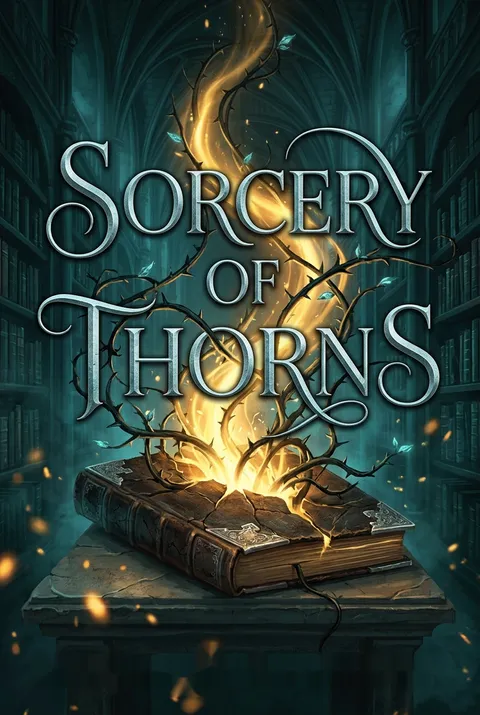
In the Great Library of Summershall, apprentice Elisabeth Scrivener feels the pulse of living magic in every book. Raised among sentient grimoires, she reveres their power and danger, dreaming of becoming a warden. When she helps the formidable Director secure a deadly grimoire, Elisabeth's affinity for the books is revealed. The library is not just a place of learning but a living entity, its secrets and dangers shaping Elisabeth's sense of belonging and purpose. The Director's trust and the library's acceptance become the foundation of Elisabeth's identity, setting her on a path where her fate and the fate of the libraries are inextricably linked.
Orphan Among Grimoires
As an orphan raised within the library's walls, Elisabeth is both cherished and isolated. Her only true friend is Katrien, a fellow apprentice with a scientific mind. Elisabeth's unusual upbringing leaves her naive about the outside world and vulnerable to the suspicions of others. She is haunted by the knowledge that her place in the library is precarious, dependent on the Director's favor. Her deep connection to the grimoires, seen as unnatural by some, becomes both her strength and her curse. The library is her family, but she is always aware of how easily she could be cast out.
Sorcerer in the Stacks
When a young, enigmatic sorcerer named Nathaniel Thorn visits the library, Elisabeth's world is upended. Tasked with spying on him, she is both fascinated and terrified by his power. Their meeting is charged with tension, humor, and mutual suspicion. Nathaniel's magic is beautiful and dangerous, challenging Elisabeth's black-and-white beliefs about sorcerers. This encounter plants the seeds of doubt in her mind about the nature of evil and the rigid rules she's been taught. The library's living books, Nathaniel's sardonic wit, and Elisabeth's impulsive bravery set the stage for a relationship that will defy every expectation.
Night of Ash and Ink
Elisabeth is awakened by the stench of sorcery and the chaos of a grimoire transformed into a monstrous Malefict. The Director is murdered, and Elisabeth is forced to battle the creature alone, wielding the legendary sword Demonslayer. Though she saves the town, the cost is immense: the library's most dangerous grimoire is destroyed, and Elisabeth is accused of the crime. The night is a crucible of terror, loss, and courage, marking the end of Elisabeth's innocence and the beginning of her journey as an outcast. The library's trust is shattered, and Elisabeth's future is thrown into darkness.
Accused and Imprisoned
Imprisoned and accused of murder and sabotage, Elisabeth faces the cruelty of Warden Finch and the indifference of those she once trusted. Her only hope lies in her memories of the Director's faith and her friendship with Katrien. The world she loved has turned against her, and she is forced to confront her own powerlessness. Yet, even in despair, Elisabeth's resolve hardens. She vows to prove her innocence and uncover the true saboteur, clinging to the belief that the library's living heart still beats in her favor.
Demon's Bargain Revealed
Elisabeth is handed over to the Magisterium, escorted by Nathaniel and his mysterious servant, Silas. The journey reveals Silas's true identity as a highborn demon, bound to Nathaniel by a deadly bargain. Elisabeth's fear and fascination grow as she witnesses the complex, almost familial bond between master and demon. Silas's beauty and otherworldliness unsettle her, but his actions are often unexpectedly gentle. The lines between good and evil blur further, and Elisabeth begins to question the stories she's been told about sorcery, demons, and the nature of power.
Escape and Unlikely Allies
After a harrowing escape from an assassination attempt involving fiends in the city, Elisabeth and Nathaniel are forced into an uneasy alliance. Elisabeth's resourcefulness and Nathaniel's reluctant heroism draw them together, while Silas's enigmatic loyalty complicates everything. As they flee from both the Magisterium and the true saboteur, Elisabeth's worldview is challenged at every turn. The trio's banter, mutual suspicion, and growing trust create a bond forged in adversity. Together, they begin to unravel a conspiracy that threatens not just the libraries, but the entire kingdom.
Journey to the Capital
In Brassbridge, Elisabeth navigates a world of political intrigue, magical artifacts, and social hierarchies. She discovers the existence of the Codex Daemonicus, a grimoire holding the key to the saboteur's plan. With Katrien's help, she infiltrates the Royal Library as a servant, risking everything to steal the Codex. The city's glittering façade hides rot and danger, and Elisabeth's growing feelings for Nathaniel complicate her mission. The trio's friendship deepens, and Elisabeth's resilience and compassion shine as she faces betrayal, prejudice, and the lure of forbidden magic.
Fiends in the Streets
When fiends are unleashed in the city, Elisabeth and Nathaniel fight side by side to protect innocent lives. Their heroism is witnessed by the public, shifting suspicion away from Elisabeth and casting doubt on the official narrative. The battle is both thrilling and harrowing, testing their courage and the limits of their power. Silas's true strength is revealed as he dispatches demons with terrifying efficiency. The trio's actions earn them new allies, but also make them targets for the saboteur's next move. The city's fate hangs in the balance as the conspiracy deepens.
The Chancellor's Trap
Chancellor Ashcroft, the kingdom's most powerful sorcerer, reveals his true colors as the mastermind behind the sabotage. Elisabeth is lured into his manor, where she is drugged, glamoured, and gaslit, her sanity and memories nearly destroyed. Ashcroft's demon, Lorelei, is as beautiful as she is deadly, and the manor is filled with lesser demons disguised as servants. Elisabeth's resilience and cunning allow her to survive, but she is left traumatized and desperate. The true scale of Ashcroft's plan becomes clear: he seeks to unleash an ancient power that could end the world.
Madness Behind Gilded Doors
Declared mad and sent to a nightmarish asylum, Elisabeth escapes with the help of a kind servant, Mercy. The world outside is indifferent and dangerous, and Elisabeth is forced to confront the reality that truth alone is not enough to save her. She reunites with Nathaniel and Silas, but the scars of her ordeal linger. Together, they piece together Ashcroft's ritual: the destruction of the Great Libraries is part of a summoning circle meant to bring forth the Archon, a being of unimaginable power. The race to stop him begins.
The Codex's Secret
With the stolen Codex Daemonicus, Elisabeth enters a dreamlike dimension to confront the spirit of Aldous Prendergast, the grimoire's creator. Prendergast reveals the truth: the Great Libraries form a pentagram, a summoning circle for the Archon. Ashcroft's plan is centuries in the making, and only the destruction of the final library stands between the world and annihilation. The Codex's secret is a name—the Archon's true name—hidden for generations. Elisabeth's courage and compassion win Prendergast's trust, but the cost of knowledge is high, and time is running out.
Summoning Circle Unveiled
At Harrows, the most secure Great Library, Elisabeth and Nathaniel are imprisoned by a Director under Ashcroft's control. Ashcroft uses the Book of Eyes to possess the Directors, forcing them to sabotage their own libraries. The final ritual begins as the Chronicles of the Dead, a necromantic grimoire, is unleashed as a Malefict. The siege of Harrows is a battle of magic, will, and sacrifice. Nathaniel faces the darkness in his blood, and Elisabeth must choose between the rules she's lived by and the people she loves. The fate of the world hangs by a thread.
The Great Library Siege
As the Archon's summoning tears open rifts between worlds, demons pour into the Royal Library. Elisabeth, Nathaniel, and Silas rally the living grimoires, unleashing their power in a desperate stand. The library itself comes alive, fighting to defend its own existence. The battle is a symphony of magic, courage, and loss, as books and people alike make the ultimate sacrifice. Elisabeth's unique bond with the library becomes the key to turning the tide. The cost is immense, and the line between victory and defeat blurs in the smoke and ash.
Sacrifice and Salvation
With the Archon unleashed and the world on the brink, Elisabeth frees Silas from his bonds, allowing him to face the Archon as his true self. Silas's sacrifice saves Nathaniel and Elisabeth, but at the cost of his own existence. Nathaniel is left powerless, wounded, and grieving, but Elisabeth's love and resilience anchor him. The aftermath is bittersweet: Ashcroft is defeated, but the libraries are forever changed. The world is saved not by power, but by compassion, sacrifice, and the courage to choose a different path.
A New Dawn Beckons
In the aftermath, Elisabeth and Nathaniel find themselves changed by loss and love. The Collegium offers Elisabeth a place, but she questions what it means to belong and what her future should be. Katrien's friendship and Mercy's loyalty provide comfort and grounding. The libraries begin to rebuild, and the world slowly heals. Elisabeth's bond with the living books endures, and the memory of Silas lingers as both wound and blessing. As snow falls on a city reborn, Elisabeth and Nathaniel look to the future—together, uncertain, but unafraid.
Analysis
Margaret Rogerson's Sorcery of Thorns is a love letter to the power of books, the complexity of good and evil, and the courage it takes to choose one's own path. At its heart, the novel is about breaking free from the stories we are told—about ourselves, about others, about the world—and daring to write new ones. Elisabeth's journey from orphaned apprentice to world-saving heroine is both a thrilling adventure and a meditation on the cost of knowledge, the dangers of dogma, and the redemptive power of compassion. The living libraries, sentient grimoires, and demon bargains are more than fantasy trappings; they are metaphors for the ways in which power, love, and identity are negotiated in every human life. The novel's ultimate message is one of hope: that even in a world built on lies and violence, it is possible to choose kindness, to build new families, and to fight for a future where knowledge is not a weapon, but a gift.
Review Summary
People Also Read








Characters
Elisabeth Scrivener
Elisabeth is a foundling raised in the Great Library of Summershall, shaped by the living magic of grimoires and the stern love of the Director. Her longing for belonging and her deep affinity for magical books set her apart, making her both a target of suspicion and a force of nature. Elisabeth's journey is one of transformation: from naive apprentice to accused traitor, fugitive, and ultimately, a breaker of chains. Her courage is matched by her empathy, and her willingness to question the rules she's been taught allows her to see the humanity in sorcerers and demons alike. Her love for Nathaniel and her friendship with Katrien anchor her, while her bond with the libraries becomes her true source of strength.
Nathaniel Thorn
Nathaniel is the last heir of a powerful sorcerous family, burdened by a legacy of necromancy and tragedy. His sardonic wit and self-deprecating humor mask deep wounds: the loss of his family, the darkness in his blood, and the knowledge that his life is bound to a demon. Nathaniel's relationship with Silas is complex—part servitude, part family, part friendship—and his growing love for Elisabeth challenges his cynicism and fear of intimacy. He is both powerful and vulnerable, capable of great magic and great tenderness. Nathaniel's arc is one of self-acceptance, sacrifice, and the courage to choose love over fear.
Silas (Silariathas)
Silas is a demon bound to Nathaniel by a deadly bargain, his true nature hidden behind impeccable manners and ethereal beauty. He is both ancient and childlike, capable of terrifying violence and unexpected gentleness. Silas's relationship with Nathaniel is the emotional heart of the story: he is caretaker, teacher, and, ultimately, family. His hunger for life is both literal and metaphorical, and his struggle between duty and love culminates in a final, redemptive sacrifice. Silas's arc explores the possibility of change, the meaning of loyalty, and the cost of freedom.
Katrien Quillworthy
Katrien is Elisabeth's first and truest friend, a fellow apprentice with a passion for knowledge and a talent for subterfuge. Her quick wit, resourcefulness, and unwavering support provide Elisabeth with both practical help and emotional grounding. Katrien's skepticism and curiosity balance Elisabeth's impulsiveness, and her own arc is one of finding her place in a world that undervalues intellect and independence. Her friendship is a lifeline for Elisabeth, and her courage in the face of danger is quietly heroic.
Chancellor Oberon Ashcroft
Ashcroft is the kingdom's most powerful sorcerer and the architect of the conspiracy to summon the Archon. His charm, intelligence, and apparent benevolence mask a ruthless ambition and a willingness to sacrifice anything for his vision of progress. Ashcroft's belief in his own righteousness blinds him to the suffering he causes, and his manipulation of others—through magic, glamour, and gaslighting—is chilling. His downfall is both satisfying and tragic, a warning about the dangers of unchecked power and the seduction of grand ideals.
Director Irena
The Director of Summershall is Elisabeth's guardian and role model, a warden of immense strength and integrity. Her faith in Elisabeth shapes the girl's sense of self, and her murder is the catalyst for the story's central conflict. Even in death, Irena's influence endures, her memory guiding Elisabeth through doubt and despair. She represents the best of the library's ideals: duty, sacrifice, and the belief that knowledge is worth protecting.
Warden Finch
Finch is a warden whose cruelty and resentment toward Elisabeth drive much of her early suffering. His rigid adherence to rules and his personal vendetta against Elisabeth make him a symbol of the system's failures. Finch's willingness to betray the library for personal gain is a cautionary tale about the dangers of unchecked authority and the ease with which good intentions can curdle into malice.
Lorelei
Lorelei is Ashcroft's highborn demon, as beautiful as she is deadly. Her glamour and cruelty are a foil to Silas's gentleness, and her loyalty to Ashcroft is transactional and predatory. Lorelei's presence in Ashcroft Manor is a constant threat to Elisabeth, and her eventual defeat is a turning point in the battle against Ashcroft. She embodies the seductive danger of unchecked power and the emptiness of relationships built on domination.
Mercy
Mercy is a servant at Leadgate Hospital who helps Elisabeth escape, risking her own safety. Her compassion and practicality provide a lifeline for Elisabeth at her lowest point. Mercy's later employment in Nathaniel's household is a testament to the power of kindness and the importance of second chances. She represents the ordinary people whose lives are shaped by the actions of the powerful, and whose quiet heroism is often overlooked.
Aldous Prendergast
Prendergast is the creator of the Codex Daemonicus, his spirit trapped in a dreamlike dimension within the grimoire. His paranoia, bitterness, and brilliance are the result of centuries of isolation and betrayal. Prendergast's secret—the Archon's true name—is the key to Ashcroft's plan and the world's salvation. His arc is one of reluctant trust, redemption, and the hope that knowledge, even when dangerous, can be used for good.
Plot Devices
Living Grimoires and Maleficts
The libraries' grimoires are not mere objects but living entities, capable of speech, emotion, and transformation. Their classification system, the threat of Maleficts, and the rituals of wardenhood create a unique magical ecosystem. The grimoires' agency is central to the plot: they are both the source of danger and the means of salvation. Their sacrifice in the final battle is a powerful metaphor for the cost of knowledge and the value of community.
Demon Bargains and Servitude
The binding of demons to sorcerers is a central plot device, exploring themes of power, agency, and the price of ambition. The bargains are literal contracts, with years of life as currency. Silas's servitude, Lorelei's predation, and the threat of the Archon all hinge on the dynamics of control and freedom. The breaking of Silas's bonds is both a personal and cosmic act, symbolizing the possibility of change and redemption.
Possession and Identity
The Book of Eyes allows Ashcroft to possess and control others, blurring the lines between victim and perpetrator. Elisabeth's resistance to magic, her unique bond with the libraries, and her struggle to define herself outside of imposed identities are mirrored in the larger conflict. The theme of possession—by magic, by rules, by the past—runs throughout, culminating in the choice to break free and forge a new path.
Summoning Circle and Ritual Structure
The Great Libraries' arrangement as a pentagram is both a literal and symbolic structure, foreshadowed throughout the narrative. The destruction of each library is a step in a ritual, and the final battle is both a magical and narrative climax. The use of ciphers, hidden names, and secret passageways reinforces the theme of knowledge as both danger and salvation.
Found Family and Chosen Bonds
Elisabeth's journey is shaped by the people she chooses to trust and love: Katrien, Nathaniel, Silas, and Mercy. The found family trope is subverted and deepened by the presence of demons, the breaking of bargains, and the willingness to sacrifice for others. The story's emotional arc is driven by the tension between duty and love, rules and compassion, and the belief that belonging is something to be claimed, not given.
Sorcery of Thorns Series
About the Author
Other books by Margaret Rogerson
Download PDF
Download EPUB
.epub digital book format is ideal for reading ebooks on phones, tablets, and e-readers.








































