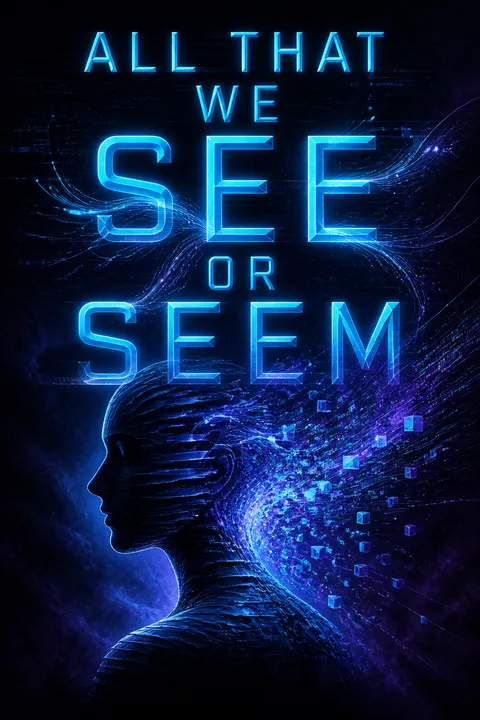

Plot Summary
Midnight Departure
In the dead of night, Elli Krantz slips out of her home, leaving behind her sleeping husband, Piers. She is driven by a sense of entrapment, a need to escape the story that has become her life—a waking dream turned nightmare. Her departure is careful, silent, and final, the culmination of months of planning. She leaves behind not just a marriage but an identity, questioning whether she can ever truly escape the self she has constructed. The cold March air and the silent house mark the threshold between her old life and the unknown, as she steps into the darkness, propelled by desperation and the hope for reinvention.
The Worm in the System
Julia Z, a reclusive hacker with a traumatic past, is called by her childhood friend Cailee to investigate a sophisticated AI worm that has infiltrated a school district's systems. As she unravels the worm's elegant, malicious design, Julia is drawn into a web of digital forensics, privacy concerns, and the vulnerabilities of modern AI-run institutions. Her investigation is both a technical challenge and a personal mission, reflecting her own anxieties about surveillance, data, and the scars of her youth. The work is a lifeline, a way to assert control and do good, even as it threatens to pull her back into the dangers she has tried to leave behind.
Unwelcome Visitors
After helping Piers, a desperate lawyer whose wife has vanished, Julia finds herself under surveillance by mysterious men. The threat is immediate and physical, forcing her to flee her apartment with only her essential gear and AI companion, Talos. The episode is a jarring reminder of her past as a runaway and hacker, and the ever-present risks of being noticed by powerful, unseen forces. Julia's escape is resourceful and tense, blending old tricks with new technology, and marks her reluctant entry into a larger, more dangerous story—one that will force her to confront her fears and her need for connection.
The Prince's Domain
In a remote compound on the China-Myanmar border, the Prince oversees a brutal operation built on information, manipulation, and violence. His power is absolute, his methods ruthless, and his reach global. The Prince's world is one of secrets, blackmail, and the commodification of human lives and dreams. His interactions with subordinates and captives reveal a philosophy of control and a chilling detachment from suffering. The Prince's empire is both a literal and metaphorical prison, a place where stories are rewritten, erased, or weaponized, and where escape seems impossible.
A Trail of Clues
Julia and Piers, now fugitives, piece together the clues left by Elli. Their journey takes them from suburban Massachusetts to the digital archives of Elli's life, through encoded photographs, financial records, and the labyrinth of her artistic career. Each discovery is fraught with uncertainty—what is a clue, what is a red herring, and what is a trap? The search is as much about understanding Elli's inner world as it is about finding her physical location. Along the way, Julia's technical skills and Piers's legal acumen are tested, and their partnership deepens, bound by shared danger and the hope of rescue.
Dreaming with Machines
Elli's profession as an oneirofex—an artist who guides collective dreams—becomes central to the mystery. Julia, unfamiliar with the world of vivid dreaming, uses Elli's AI and studio to experience a dream guided by an egolet, a digital simulacrum of Elli. The experience is unsettling, dredging up Julia's own childhood traumas and the power of collective storytelling. The technology blurs the line between self and other, memory and invention, and reveals the vulnerabilities of artists whose work is both intimate and public. The dream session hints at secrets Elli may have hidden in her art and her AI.
The Egolet's Secret
Julia discovers that Elli's AI, meticulously "unlearned" after each secret session, still bears the scars of erasure. By analyzing gaps in the egolet's memory and the technical traces of machine unlearning, Julia deduces that Elli conducted clandestine, one-on-one dreams with the Prince, erasing all evidence afterward. The egolet, a ghostly echo of Elli, cannot recall these sessions, but its very limitations point to the truth. The investigation becomes a meditation on the nature of memory, privacy, and the impossibility of total erasure—both for machines and for people.
Childhood Shadows
Julia's own history is revealed: the daughter of a fearless activist mother, she was thrust into the spotlight, targeted by trolls, and ultimately driven to run away. Her time with the Cartographers Obscura, a collective of idealistic hackers, gave her a sense of belonging but also exposed her to betrayal and disillusionment. The scars of her childhood—shame, guilt, and the longing for approval—shape her actions and her reluctance to trust. The chapter explores the intergenerational costs of activism, the dangers of visibility, and the search for a place to call home.
The Price of Fame
Elli's rise as an artist is traced from her early days as a dream guide to her fateful encounter with the Prince. Desperate for recognition, she accepts his offer to manufacture her fame through manipulation of algorithms, reviews, and social media. The bargain brings her success but also binds her to the Prince, who demands a share of her earnings and her artistic soul. The relationship becomes exploitative and coercive, with Elli forced into secret, intimate dream sessions and blackmailed into silence. The cost of fame is revealed to be autonomy, authenticity, and, ultimately, safety.
The Safe-Deposit Cipher
The search for Elli leads Julia and Piers to a safe-deposit box in Pennsylvania, where they find cash, a cryptic note, and a trail of financial transactions. The arrangement of the money, the orientation of bills and coins, and the encoded numbers point to GPS coordinates—a hidden location tied to Elli's final plan. The discovery is both a breakthrough and a trap, as the Prince's men close in, violence erupts, and the last clues are nearly lost. The safe-deposit box becomes a symbol of the lengths to which Elli has gone to reclaim her story and protect her secrets.
On the Run
Forced to flee again after a violent confrontation, Julia and Piers navigate a landscape of surveillance, betrayal, and shifting identities. They rely on disguises, stolen cars, and the kindness of old friends—most notably Sahima, Julia's former comrade from Cartographers Obscura. The journey is both physical and emotional, as Julia confronts her guilt, her need for connection, and the possibility of forgiveness. The partnership with Piers is tested by grief, revelation, and the relentless pursuit of the Prince's agents. The chapter is a meditation on survival, trust, and the cost of bearing witness.
Cartographers Obscura
Julia's memories of Cartographers Obscura are interwoven with the present. The collective's ethos of resistance, mutual aid, and technological subversion is contrasted with the eventual betrayal by its charismatic leader, Serena. The group's idealism is corrupted by greed and manipulation, leaving Julia with a legacy of distrust and self-doubt. The lessons of the collective—about power, complicity, and the dangers of hero worship—inform Julia's actions as she faces new forms of enslavement and exploitation. The past is both a source of strength and a cautionary tale.
The Hunt Begins
Using a combination of technical ingenuity and social engineering, Julia infects the phones of the Prince's henchmen with a worm, allowing her to track their movements as they travel south. The pursuit leads to Florida's Gulf Coast, where Elli is believed to be hiding. The chase is a high-stakes game of cat and mouse, with Julia and Piers racing against time and the Prince's resources. The tension is heightened by the threat of violence, the unpredictability of the storm, and the ever-present risk of exposure. The hunt is as much about reclaiming agency as it is about rescue.
The Money's Message
The arrangement of cash in the safe-deposit box is revealed to be a set of GPS coordinates, leading to a remote data center in Idaho. The message—"Just go"—is both a directive and a testament to Elli's determination to outwit her oppressor. Julia's journey to the data center is a test of endurance, resourcefulness, and courage. The landscape is alien and forbidding, mirroring the psychological terrain she must traverse. The clue is a final act of defiance, a way for Elli to ensure that her story—and the stories of others—will not be erased.
The Content Farm
The data center is a front for a vast underground content farm, where migrants and the marginalized are enslaved to produce "authentic" human content for the Prince's empire. The operation is a grotesque fusion of technology, surveillance, and old-fashioned brutality. Julia infiltrates the facility, using her skills and Puck, her morpho drone, to gather evidence. The horrors she witnesses—torture, coercion, and the systematic erasure of identity—are a stark indictment of the commodification of humanity in the digital age. The farm is both a literal and metaphorical hell, a place where dreams are harvested and hope is crushed.
The Farm's Prisoners
Inside the content farm, Julia befriends Isabella, a fellow prisoner who communicates resistance through coded messages embedded in the farm's endless stream of content. Together, they plot an audacious escape, sabotaging the facility's systems and inciting a rebellion. The alliance is built on trust, ingenuity, and the refusal to be broken. The uprising is chaotic and costly, but it exposes the Prince's crimes and liberates the enslaved workers. The chapter is a testament to the power of collective action, the resilience of the human spirit, and the necessity of bearing witness—even when the world would rather look away.
The Final Dream
Julia faces Victor, the Prince's brutal lieutenant, in a final showdown in the darkness of the burning content farm. Using her understanding of Victor's overreliance on AI and his own arrogance, Julia and Isabella outwit and defeat him. The escape is harrowing, marked by smoke, violence, and the ever-present threat of death. The arrival of the authorities brings both relief and uncertainty—justice is partial, and the Prince remains at large. The victory is bittersweet, tempered by loss, trauma, and the knowledge that the fight is far from over.
Dream Country
In the aftermath, Julia grapples with grief, survivor's guilt, and the challenge of finding meaning in suffering. She reconnects with friends, testifies against the Prince's network, and helps the freed workers rebuild their lives. The final revelations—Elli's survival, the destruction of the Prince, and the enduring power of dreams—underscore the novel's central themes: the right to tell one's own story, the necessity of solidarity, and the possibility of redemption. Julia's journey ends not with closure, but with a new beginning—a hard turn between the past and the future, a lightning flash of hope in the darkness.
Analysis
A meditation on agency, memory, and the right to one's own storyAll That We See or Seem is a profound exploration of the struggle for autonomy in a world where technology, power, and narrative are inextricably entwined. Ken Liu uses the language of hacking, AI, and digital forensics to probe the deepest questions of identity: Who gets to tell our stories? What does it mean to be seen, or to seem? The novel is both a thriller and a philosophical inquiry, blending the urgency of a chase narrative with the introspection of trauma recovery. Its characters—especially Julia—embody the tension between isolation and solidarity, the longing for belonging and the fear of betrayal. The plot's intricate puzzles and technical details are never mere gimmicks; they serve to illuminate the psychological and ethical stakes of living in a world where every dream can be commodified, every secret weaponized, and every act of resistance surveilled. Ultimately, the book argues for the necessity of dreaming together, of forging meaning and community in the face of erasure, and of claiming the right to begin again. It is a story about the cost of freedom, the power of witness, and the enduring hope that, even in the darkest night, we can write our own futures.
Review Summary
All That We See or Seem by Ken Liu receives mixed reviews averaging 3.62/5 stars. Readers appreciate its timely exploration of AI, social media, and surveillance in a near-future thriller following hacker Julia Z. Many praise Liu's intelligent worldbuilding and relevant themes but note disappointment compared to his previous works. Common criticisms include flat characters, unsubtle prose lacking his signature style, cheesy villains, pacing issues, and excessive technical exposition. Some find it an accessible, fast-paced thriller, while longtime fans miss the emotional depth and lyrical writing of his fantasy works. Most agree it's thoughtful but not his strongest work.
People Also Read





Characters
Julia Z
Julia Z is a brilliant, reclusive hacker marked by childhood trauma, public shaming, and a legacy of activism inherited from her mother. Her journey is one of flight and return: from a persecuted child to a runaway, from a member of the idealistic Cartographers Obscura to a solitary digital forensics expert. Julia's psyche is shaped by guilt, distrust, and a longing for connection, but also by resilience and a fierce sense of justice. Her relationships—with friends, AIs, and fellow outcasts—are fraught but transformative. Over the course of the story, Julia moves from self-imposed exile to reluctant hero, learning to accept help, forgive herself, and claim her place in the world.
Elli Krantz
Elli is a pioneering oneirofex, a dream guide whose art blurs the boundaries between self and audience, reality and fantasy. Her rise to fame is engineered by the Prince, whose manipulations turn her success into a prison. Elli is resourceful, creative, and deeply private, forced to perform intimacy while hiding her true self. Her secret sessions with the Prince, her coded clues, and her ultimate disappearance are acts of both desperation and agency. Elli's struggle is emblematic of the costs of visibility, the dangers of commodification, and the yearning for autonomy. Her final act—vanishing to reclaim her story—is both a sacrifice and a liberation.
Piers Neri
Piers is a lawyer whose love for Elli is unwavering, even as he is drawn into a web of suspicion, violence, and loss. He is methodical, principled, and self-effacing, serving as both partner and foil to Julia. Piers's journey is one of faith and endurance: he chooses to trust, to forgive, and to act, even when confronted with betrayal and danger. His willingness to break the law for love, to face his own limitations, and to support Julia's growth marks him as a quietly heroic figure. Piers's death is a profound loss, but his example endures as a model of steadfastness and hope.
The Prince
The Prince is a cosmopolitan criminal mastermind whose empire is built on information, blackmail, and the exploitation of human creativity. He is charming, ruthless, and deeply insecure, craving validation even as he destroys those he claims to admire. The Prince's philosophy is one of control—over stories, people, and reality itself. His relationship with Elli is both parasitic and obsessive, a twisted mirror of patronage and abuse. The Prince's ultimate downfall is precipitated by his own hubris and the resilience of those he sought to dominate. He is a symbol of the dangers of unchecked power in the digital age.
Victor
Victor is the Prince's chief lieutenant, a man whose loyalty is matched only by his capacity for violence. He is methodical, sadistic, and contemptuous of weakness, serving as the primary antagonist in the content farm's hellish world. Victor's reliance on technology, his arrogance, and his inability to imagine resistance make him vulnerable to Julia's ingenuity. His death is both a personal and symbolic victory, marking the collapse of the Prince's American operation. Victor represents the machinery of oppression, the banality of evil, and the limits of brute force.
Sahima
Sahima is Julia's former comrade from Cartographers Obscura, a skilled hacker and garden designer who embodies resilience, forgiveness, and practical wisdom. Her relationship with Julia is marked by both conflict and deep affection; she is the first to forgive, the first to offer help, and the first to remind Julia of her worth. Sahima's role is that of a bridge—between past and present, idealism and pragmatism, isolation and community. She is a model of grace, showing that love and solidarity can survive even betrayal.
Hutch
Hutch is an older hacker who teaches Julia to "swim" in the data, to think with her body, and to see beyond the surface of systems. He is patient, enigmatic, and deeply ethical, having left Cartographers Obscura when its ideals were corrupted. Hutch's cottage becomes a sanctuary for Julia, a place to recover, reflect, and rebuild. His lessons—about perspective, humility, and the limits of knowledge—are central to Julia's growth. Hutch represents the best of the hacker ethos: curiosity, responsibility, and the courage to walk away from power.
Isabella
Isabella is a migrant enslaved in the Prince's content farm, whose coded acts of resistance inspire and sustain Julia. She is resourceful, brave, and fiercely intelligent, communicating through patterns, signals, and shared risk. Isabella's partnership with Julia is a testament to the power of solidarity among the oppressed, the ingenuity born of desperation, and the irrepressibility of hope. Her survival and eventual freedom are hard-won, marking her as both victim and victor.
Talos
Talos is Julia's custom-built AI, a repository of her memories, skills, and personality. It is both tool and confidant, reflecting Julia's desire for control and her fear of surveillance. Talos's destruction and resurrection mirror Julia's own journey through loss and recovery. The AI's limitations—its inability to act without Julia, its dependence on her training—underscore the story's themes of agency, trust, and the boundaries between self and machine.
Serena
Serena is the founder of Cartographers Obscura, a figure of inspiration and eventual disillusionment. Her manipulation of the collective's ideals for personal gain is a formative betrayal for Julia, shaping her skepticism and her struggle with authority. Serena's legacy is ambiguous: she is both a cautionary tale and a reminder of the dangers of unchecked charisma. Her story is a warning about the seductions of power, the fragility of trust, and the necessity of questioning even those we admire.
Plot Devices
Dual Narratives and Interwoven Timelines
The novel employs a dual narrative structure, alternating between Julia's present-day investigation and her memories of childhood, activism, and betrayal. This interweaving of timelines allows for a deep exploration of trauma, resilience, and the cyclical nature of oppression. The structure mirrors the recursive logic of dreams and the layered architecture of AI, blurring the boundaries between past and present, self and other.
Machine Unlearning and Egolets
Central to the plot is the concept of machine unlearning—the deliberate erasure of memories from AI, and the creation of egolets, digital simulacra of individuals. These devices serve as metaphors for trauma, repression, and the impossibility of total forgetting. The technical details of AI, neuromeshes, and cephaloscripts are used to explore questions of identity, authenticity, and the ethics of memory. The limitations and vulnerabilities of these systems drive the mystery and the characters' psychological arcs.
Codes, Steganography, and Hidden Messages
The story is propelled by a series of puzzles: photographs with hidden spreadsheets, cash arranged as GPS coordinates, coded messages in digital content, and patterns in behavior. These plot devices reflect the novel's themes of secrecy, surveillance, and the search for meaning in a world saturated with data. The act of decoding becomes both a literal and metaphorical quest for truth, agency, and self-understanding.
Foreshadowing and Recursion
The novel is rich in foreshadowing, with early events and images—such as the midnight departure, the worm in the system, and the recurring motif of dreams—echoing and refracting throughout the narrative. The recursive structure, in which stories are told, retold, and reinterpreted, mirrors the logic of both AI and human memory. The ending, with its return to the shore of dream country, brings the story full circle, suggesting both closure and the possibility of new beginnings.
The Power and Limits of Testimony
The act of witnessing—whether through sensepin recordings, AI logs, or personal testimony—is a recurring device. The novel interrogates the reliability of evidence, the challenges of authentication in a post-truth world, and the moral imperative to speak out against injustice. The limitations of technology, the failures of institutions, and the necessity of personal courage are all explored through the lens of testimony.
About the Author

Download PDF
Download EPUB
.epub digital book format is ideal for reading ebooks on phones, tablets, and e-readers.








































