
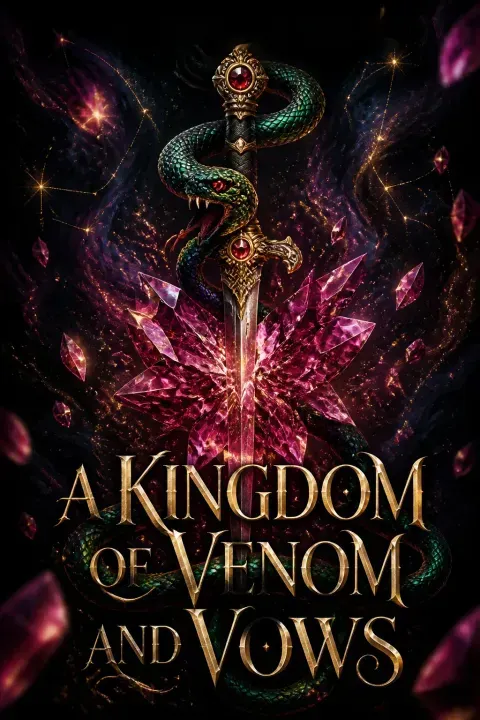


Plot Summary
Prologue
Gavril3 descends into the dungeon where his mate Leda7 is imprisoned, cowering in her cell. Despite her terror, he kneels before her, apologizing as he slices her wrist and feeds from her blood. He drains her to the brink of death to absorb her power, knowing this cycle must continue until he can fully claim the death magic he craves.
The power stirs within him, foreign and potent, as he kisses her gently and promises to make it easy. He leaves her near death, aware that only by eventually killing her can he gain the ultimate power needed to defeat his brother Evren2 and claim Adara, the Starblessed,1 as his queen.
This prologue establishes Gavril as a villain who has internalized cruelty as necessity. His tenderness toward Leda, the kisses and whispered apologies, reveals a fractured psyche: he can still perform intimacy while committing atrocity. The death magic system is introduced as parasitic, requiring the slow consumption of one's mate, a horrifying inversion of the sacred bond. Gavril's power is built on sustained betrayal of his most fated relationship. The scene also foreshadows his ultimate undoing: he cannot bring himself to kill Leda outright, and this hesitation leaves him in a limbo of incomplete power, a weakness Adara will later exploit. His obsession with Adara is contextualized as part of a larger hunger for dominance, rooted in maternal manipulation and fraternal rivalry.
Evren's Mate Stolen
Evren2 stands paralyzed, Adara's1 power slithering under his skin after she thrust every ounce of her magic into him and took Gavril's3 hand. Gavril3 used death magic to transport them out of the Blood kingdom, leaving Evren2 collapsed against the wall, gasping through the rage and terror of watching his mate1 sacrifice herself.
His friends Thalia4 and Sorin5 find him, and despite his impulse to storm the fae kingdom immediately, Thalia4 insists on a plan. They retreat to the library to research death magic, knowing that Gavril3 killed his mate7 to gain such power.
Evren's2 fury wars with cold strategy, but every moment without Adara1 feels like suffocation. The bond between them strains, a taut wire of agony, and her alien magic inside him claws for its origin. He promises to tear the fae kingdom apart to retrieve her.
This turning point dramatizes the collision of Adara's agency and Evren's protective fury. Her decision to give him her magic is an act of love that also renders her powerless, an inversion of the typical rescue dynamic. Evren is forced into passivity, his physical strength useless against death magic. The scene introduces the central tension: logic versus rage. Thalia functions as the voice of reason, recognizing that Gavril's new power makes a frontal assault suicidal. The chapter also establishes the research quest that will drive the next act, transforming their helplessness into the slow accumulation of knowledge. Evren's guilt, already heavy from his past betrayal of Adara's father, now compounds with the failure to protect her, setting up his later recklessness.
Captive in Citlali
Gavril3 transports Adara1 to the fae kingdom, where soldiers prepare for war. He locks her in a room beside his own, assigning the maid Eletta12 to attend her. The queen9 demands Adara's1 presence, and Gavril3 forces a kiss on her, threatening to break her spirit.
In the throne room, Adara1 refuses to bow, and Gavril3 slices her thigh with a dagger, drinking her blood as guards hold her down. But her magic is gone, transferred to Evren,2 and Gavril's3 rage erupts when he tastes nothing.
He drags her to a ball meant to celebrate her return, parading her in a white dress while she sways, dizzy from blood loss. Queen Kaida9 threatens to destroy Evren2 if Adara1 does not recover her power. Adara1 is deposited in Gavril's3 bed, hollow and exhausted, but refusing to break.
Adara's captivity tests her identity: stripped of magic and mate, she must find defiance in pure will. Gavril's abuse is methodical, blending physical extraction with psychological manipulation. The ball scene is particularly potent, using public spectacle to enforce her role as future queen while she internally dissociates. The reveal that her magic is absent introduces a tactical advantage hidden within her vulnerability: Gavril cannot access the power he needs, making her both prize and liability. Eletta's complicity, born of fear, illustrates how tyranny corrupts everyone in its orbit. Adara's survival strategy hinges on performing obedience while clinging to the memory of Evren, a form of internal resistance that preserves her sense of self.
The Dungeon's Secret
After a fae soldier attacks the Blood kingdom, killing ninety-four people, Evren2 interrogates a captured soldier. The man reveals that Gavril3 has enchanted the kingdom's border and feeds from his mate7 to grow his power.
Later, Adara's1 father Dareen,8 still frail from years of imprisonment, tells Evren2 about Leda,7 the girl in the adjacent cell. Gavril3 would visit her, whisper apologies, and drain her until she neared death, then nurse her back for the next feeding. He has not yet killed her, meaning his death magic remains incomplete, his soul caught in limbo.
Evren2 realizes that Gavril's3 power, though formidable, has a fatal flaw: his inability to fully sacrifice his mate.7 This knowledge reshapes their strategy, but also deepens Evren's2 horror at what his brother3 has become.
This section transforms the conflict from reactive to strategic. The soldier's interrogation and Dareen's testimony provide the crucial intelligence that death magic requires full mate-killing to reach its apex. Gavril's hesitation is both a moral remnant and a tactical weakness, a crack in his armor. The chapter also deepens the thematic exploration of mateship: while Evren's bond with Adara empowers him, Gavril's bond with Leda has been weaponized into a perverse engine of self-destruction. Dareen's role shifts from victim to informant, completing his arc from powerless prisoner to active contributor. The ninety-four dead Blood citizens raise the stakes, making the war not just personal but communal, and fueling Evren's determination to end Gavril's reign.
Wedding Dress and Desperation
Days pass in Gavril's3 room. Eletta12 brings a shimmering white wedding gown, and Adara1 realizes the ceremony is imminent. Gavril3 feeds from her again before the event, leaving her so weak she can barely stand. When she pleads with Eletta12 to help her escape, the maid refuses, paralyzed by fear. Guards sneer about the massacre in the Blood kingdom, and Adara's1 dormant magic stirs with fury.
As she walks into the garden ceremony, her power suddenly floods back, black smoke engulfing her bouquet. She realizes Evren2 must be near, having returned her magic as promised. Her eyes lock onto Gavril3 at the altar, and her first question is about the attack on her people. He confirms it, and she unleashes her power, blasting him to the ground.
Adara's lowest moment, the brink of forced marriage, becomes the catalyst for her resurrection. The return of her magic is structured as a reunion not just with Evren but with her own agency. Her body, weakened by blood loss, becomes a conduit for righteous fury. The visual of the dark smoke consuming the white flowers inverts the wedding imagery, marking her claim that she will not be Gavril's bride. The scene also mirrors Evren's earlier helplessness: now Adara is the one who must act while Evren physically arrives. The guard's taunts about the Blood massacre galvanize her anger from personal to political, aligning her vengeance with her emerging role as protector of her people.
Queen Kaida's Blood
Evren2 bursts through the garden doors with Sorin5 and Thalia,4 blood-soaked sword in hand, having used the wedding invitation to bypass the barrier. Adara,1 already unleashing her magic, grabs Gavril's3 dagger and strides to Queen Kaida.9
The queen9 taunts her, calling Thalia4 a Blood whore, and Adara1 slams the dagger into Kaida's9 chest. The queen crumples, blood pooling on the white dress. Gavril3 and the king vanish, escaping through hidden passages while their guards scramble. Leda's7 cell is found empty, taken with them.
Thalia's4 blue magic creates a shield as they flee through the palace, Sorin5 cutting down guards. Evren2 pulls Adara1 onto his horse and they ride hard through the Onyx Forest, stopping only briefly to rest, his arms never loosening their hold.
This is the first major payoff: Evren's arrival transforms the wedding from a ceremony of subjugation into an execution. Adara's killing of Queen Kaida is not just revenge but a political assassination that destabilizes the fae kingdom's power structure. The queen's death is symbolic, a severing of the matriarchal tyranny that orchestrated decades of suffering for Adara's family, Thalia, and countless others. That Evren uses the invitation, a tool of Gavril's arrogance, against him underscores the theme of turning the enemy's weapons back on them. The escape, though successful, is shadowed by the knowledge that Gavril and the king fled, and Leda remains a captive. This incomplete victory sets the stage for the final confrontation.
Healing at Home
Back in the Blood kingdom, Evren2 carries Adara1 to his chambers. He draws a bath and undresses her, finding the scars on her thigh and wrist where Gavril3 fed. His rage ignites, but he channels it into healing, pushing his magic into the wounds until they become his marks, erasing Gavril's.3 He joins her in the water, washing every trace of the fae kingdom from her skin, then carries her to bed.
In the bath, they make love slowly, Adara's1 body remembering only him. Later, he presses her against the courtyard wall, sinking his teeth into her neck to re-mark her, reclaiming every inch. The intensity borders on feral, but Adara1 meets it, needing the obliteration of Gavril's3 presence as much as he does.
This extended intimacy scene serves as a ritual of reclamation. Evren's need to leave his mark, to overwrite Gavril's violence with his own touch, is a psychologically astute portrayal of trauma recovery through consensual re-enactment. Adara's willingness to be marked again, to experience pain that she controls, restores her sense of bodily autonomy. The bathing sequence carries baptismal weight: washing away the old kingdom, the forced wedding, the queen's blood. The balance between Evren's possessive fury and his careful attention to her boundaries models a healthy navigation of post-trauma sexuality. Their union here is not just physical but spiritual, a reaffirmation of the bond that Gavril tried to sever.
The Creek Wedding
Adara1 asks Evren2 to marry her that very day, unwilling to wait. With Thalia's4 help, she finds a simple white dress, and the creek near the palace is decorated with candles and wildflowers. Her father, Dareen,8 walks her down the aisle, his frail arm steadying her. The priest binds them, and Evren2 slips a gold band onto her finger.
He places a crown of stars and moons upon her head, declaring her princess of the Blood kingdom. The gathered townspeople, including the children she'd later entertain, cheer. That night, Evren2 worships her body, calling her wife, telling her she was made for him. Their pleasure mingles with the weight of the coming war, a defiant celebration of love in the shadow of death.
The creek wedding counters Gavril's forced spectacle with an intimate, authentic ceremony. By initiating the proposal herself, Adara reclaims the institution of marriage from a tool of captivity to a freely chosen bond. Dareen's presence closes a loop of paternal absence, offering his blessing not just to Evren but to his daughter's happiness. The crown of stars formalizes Adara's role as future queen, no longer the captive Starblessed but a ruler by choice. The juxtaposition with the war preparations highlights the series' core theme: love is not a distraction from the fight but its very motivation. Their wedding night, with its mixture of tenderness and intensity, solidifies the emotional foundation they'll need for battle.
A Mother's Body
Three days after the wedding, Sorin5 finds Adara's1 mother's body on the palace steps, a parchment staked into her stomach: 'A mother for a mother.' Gavril3 has infiltrated the kingdom's defenses without detection.
Adara1 collapses when she sees the body, guilt crashing over her despite years of maternal neglect. Evren2 holds her as she sobs, then reveals his own childhood as a pawn between warring parents, forging a deeper intimacy through shared trauma. Her father Dareen8 stands frozen, staring at the woman he once loved.
The body is burned, her ashes scattered on Blood kingdom soil, and Adara's1 grief hardens into resolve. The violation of their home, the cruelty of the message, eliminates any remaining hesitation: Gavril3 will bring war, and they must be ready.
Gavril's use of Adara's mother as a psychological weapon demonstrates his understanding that war is waged on emotional terrain as well as physical. The note's symmetry, an eye for an eye, forces Adara to confront the moral complexity of her own violence: she killed Kaida, and Gavril retaliated in kind. Her guilt, though Evren absolves it, humanizes her, preventing her from becoming a mere avenger. The scene also deepens the fathers' roles: Dareen's silent grief for the woman who sold their daughter, and Evren's confession of his own split loyalties, build a bridge between the two men. The burning of the body on Blood kingdom land is a symbolic claiming: this conflict is now officially on their soil, their terms.
War Council and Allies
Evren2 convenes a war council. King Drystan,11 ruler of the old fae from across the sea, arrives with his three brothers, all marked with ancient symbols. Drystan11 agrees to fight alongside the Blood kingdom, positioning his soldiers at the kingdom's boundary.
Inside the palace, children and vulnerable citizens are sheltered. Adara1 spends hours entertaining frightened children, playing monsters and hide-and-seek, while Evren2 coordinates defenses. Scouts report that the fae army marches, but neither the king nor Gavril3 is spotted with them.
The cowardice infuriates Evren,2 but Drystan's11 calm presence steadies the room. Thalia's4 power, newly revealed as flame-controlling, is noted as a potential asset. The night before battle, Evren2 and Adara1 cling to each other, knowing the dawn may separate them forever.
The war council formalizes the novel's thematic alliances: the old fae, representing a purer, pre-corruption version of fae power, align with the Blood kingdom against Citlali's decadent tyranny. Adara's role with the children humanizes the war's stakes, reminding the reader (and the characters) that these are not abstract battles but fights for specific, vulnerable lives. The missing Gavril and king create suspense, a question that will be answered in the worst way. The council also highlights the series' ensemble cast: Sorin's tactical mind, Thalia's burgeoning power, Jorah's quiet loyalty. The foreshadowing of loss is heavy, particularly in Jorah's final moments of levity during the card game, making his death later more poignant.
Flames and Invasion
At dawn, the sky cracks with a deafening sound as fae soldiers magically transport into the kingdom. Evren2 and Sorin5 are separated from Adara1 and Thalia4 by a wall of attackers. The palace catches fire, flames licking up the stone walls.
Adara,1 inside with the children, carries a burned boy through smoke-filled halls until Evren2 finds her. Outside, they see Gavril's3 red smoke on the horizon, his soldiers fighting with a dead-eyed, red-tinged look, puppeted by his death magic.
Thalia4 unleashes her blue magic to control the flames, saving the palace from total destruction. But the cost is high: Jorah6 falls, cut down while protecting fleeing citizens. Evren2 charges toward Gavril,3 leaving Adara1 with Thalia,4 and the two forces clash in brutal melee.
This chaotic battle sequence marks the shift from preparation to execution. The fire imagery, Thalia's elemental control, and the zombielike soldiers create an apocalyptic atmosphere. The separation of Evren and Adara echoes the novel's central fear: that the bond can be physically severed. Jorah's death, abrupt and unglamorous, underscores the randomness of war and serves as the emotional gut-punch that will drive the surviving characters' grief arcs. Gavril's use of death magic to animate his soldiers raises the stakes to supernatural horror, blurring the line between living and dead. The sequence also validates Thalia as a warrior in her own right, her power finally manifesting as more than just shield magic.
The Final Duel
Gavril3 confronts Evren2 on the battlefield, pinning him with red smoke and cracking his ribs with gleeful cruelty. He taunts Evren2 about training Adara1 as a whore, promising to make her forget him. Evren's2 world goes dark. Adara1 feels the bond sever and screams, charging through soldiers. She sees Leda,7 Gavril's3 frail mate, surrounded by guards.
Leda7 mouths 'kill me,' and Adara1 reaches her, but Leda7 seizes Adara's1 dagger and slits her own throat. Gavril's3 power falters as his mate7 dies, the incomplete death magic recoiling. Thalia4 slips behind him and wraps her blade across his throat, forcing him to his knees. His blood pours thick and dark, and Thalia4 hisses into his ear that he will never take from anyone again. Gavril3 collapses, dead.
The climax triangulates three women as instruments of Gavril's destruction: Leda's suicide, Adara's attempted rescue, and Thalia's execution. Leda's death, the ultimate reclamation of agency after years of torture, is the tragic heart of the scene. Her final act is not just escape but sabotage, robbing Gavril of the full power he never dared to claim. Thalia's killing blow is cathartic, completing her arc from victim of the fae kingdom's cruelty to its executioner. The moment she forces Gavril to look at Adara, ensuring his last sight is the woman he could not possess, is psychologically devastating. Evren's near-death, and the severing of the bond, provides the necessary terror before the miracle of his revival.
Back from the Brink
Adara1 drops to her knees beside Evren's2 lifeless body. His chest is caved in, blood seeps from his mouth, and no breath stirs. She slices her wrist and presses it to his lips, begging him to drink. Nothing. Thalia4 and Sorin5 add their hands, channeling their magic through Adara1 into Evren's2 still heart.
She calls on every ounce of her starblessed power, the marks on her skin blazing, and pours it all into him in one desperate deluge. For agonizing seconds, nothing changes. Then Evren's2 chest heaves. He seizes her wrist and drinks three long pulls of her blood, his dark eyes opening and finding her face. The bond snaps back into place, and Adara1 sobs with relief. The war is over, but Jorah6 is dead.
This resurrection scene is the emotional climax, using the established magic system's logic (blood-sharing as life-transfer) to earn its miracle. The collaborative effort, Thalia and Sorin lending their power, reinforces the series' found-family theme: Evren is saved not by one hero but by community. The near-loss of the bond, and its sudden restoration, gives the reader the full catharsis of grief averted. However, the simultaneous acknowledgment of Jorah's death prevents the ending from feeling cheap. Adara's willingness to give everything, even at the cost of her own life, completes her arc from the girl who gave up her power to the woman who wields it to save her mate. The image of Evren drinking her blood, the ultimate intimate act, mirrors their first meeting and seals their interdependence.
Mourning and Renewal
In the aftermath, Evren2 oversees the recovery efforts, personally helping clear rubble and console grieving families. Jorah's6 body is prepared for a hero's rite. Adara1 finds Thalia4 hollow-eyed, and a forced night out at The Olde Vine, with wine and dancing, slowly cracks Thalia's4 shell. Evren's mother10 confesses that she will abdicate, believing the kingdom needs him and Adara1 as its rulers.
Evren2 is hesitant, but he brings the news to Adara,1 who accepts the weight of the crown. They visit the creek where they wed, a quiet moment in the devastation. Sorin5 remains steadfast at Thalia's4 side, his love unspoken but evident. The fae army has retreated, but whispers of Evren's2 father's survival leave an undercurrent of unfinished business.
The denouement balances grief with forward motion. Jorah's death is given proper ritual weight, essential for a series that treats its supporting cast with respect. Thalia's grief is portrayed realistically: not a quick recovery but a gradual thawing, with humor and alcohol as imperfect balms. Queen Veda's abdication completes her own arc from distant schemer to humble servant of her people, passing the crown to the generation that earned it. The creek visit echoes the wedding, a quiet reminder that joy persists amid ruin. The unresolved threat of the father, Gavril's ultimate master, provides the necessary sequel hook without undermining the completeness of this book's victory. The emphasis on rebuilding, not just celebrating, grounds the fantasy in practical consequence.
The Stars' Chosen
That night, Evren2 holds Adara1 and whispers that the stars chose her, that it was always her. She traces the scars on his body, now markers of survival rather than shame. They have faced death and returned, bound tighter than before. The kingdom sleeps, wounded but not broken, and Evren2 knows that whatever threat his father poses, they will meet it together.
Adara,1 once the Starblessed promised to save a kingdom, has become a princess, a wife, a warrior. The prophecy that damned her fate now feels like a blessing, because it led her to him. They fall asleep in each other's arms, the future uncertain but their bond unshakable.
This closing scene recontextualizes the prophecy from a curse to a destiny fulfilled. Adara's journey from reluctant Starblessed to willing partner in rule mirrors her internal integration: she no longer resents her marks or her power but accepts them as part of her identity. Evren's whispered affirmation is a secular prayer, replacing divine decree with personal devotion. The scars-as-markers motif, threaded throughout, culminates here: wounds have become stories, evidence of survival rather than victimhood. The ambiguous future, with the father still at large, acknowledges that peace is fragile, but the couple's steadiness suggests they have earned the right to rest. The series' romantic arc, which began with coercion and secrets, ends in mutual, unshakeable trust.
Epilogue
Months later, Evren's mother10 formally announces her abdication in favor of Evren2 and Adara.1 That evening, Adara1 convinces Thalia4 to join her and Evren2 for drinks at The Olde Vine, hoping to coax a smile from her grieving friend.4
The pub is filled with townspeople who greet their new princess1 warmly. Evren2 and Adara1 dance, exchanging playful words about her 'arrogant, handsome, filthy' husband.2 Across the floor, Sorin5 pulls Thalia4 into his arms, and for the first time since Jorah's6 death, she laughs, spinning under his careful lead.
Evren2 watches his best friend5 fall in love, and feels the weight of the crown settle on his head as a shared burden. The night ends with the four of them walking home under starlight, the kingdom quiet and whole.
The epilogue delivers domesticity after cataclysm, a necessary exhale. The pub, site of earlier revelry and tension, becomes a space of communal healing. Thalia's laugh marks the first sign of her recovery, a hard-won moment that feels earned rather than rushed. Sorin's patience, his silent devotion now returned with a single smile, completes his arc from flirtatious rogue to steadfast lover. The crown's weight on Evren is no longer a burden but a mantle shared with Adara, who has transformed from prophecy-bound girl to willing co-ruler. The starlight walk home, with friends as family, encapsulates the series' thesis: power is meaningless without love, and kingdoms are built not on bloodlines but on bonds. The war is not forgotten, but it no longer defines them.
Analysis
A Kingdom of Venom and Vows operates as a study in the weaponization and reclamation of intimate bonds. The central thematic engine is the contrast between two fated mate relationships: Evren2 and Adara's,1 which grows through mutual sacrifice and consent, and Gavril3 and Leda's,7 which has been perverted into a parasitic extraction system. The novel argues that love is not inherently redemptive; it can be twisted into the most intimate form of violence, as Gavril's3 nightly visits to Leda's7 cell demonstrate. His inability to kill her, framed as a remnant of conscience, is actually the ultimate act of cruelty: he preserves her life only to consume it slowly. When Leda7 finally seizes the dagger and ends her own existence, it is both tragedy and triumph, the only escape from a bond that should have been sacred.
Adara's1 arc traces the journey from passive vessel of prophecy to active agent of destiny. Her power is literally given away, then returned; her body is marked, then remarked; her autonomy is stripped, then reclaimed through chosen marriage and battle. The novel uses the language of marking, scarring, and healing to map trauma recovery, refusing to let Adara's1 violation define her. Evren's2 parallel journey through guilt, rage, and self-recrimination completes the emotional dyad. He cannot save her from everything, and his acceptance of that limitation is his maturation.
The supporting cast enriches the thematic texture. Thalia4 embodies the long-term cost of abuse and the slow, nonlinear nature of healing. Her laugh at the end is a more significant victory than any battle. Sorin's5 patience models a love that waits without demanding, a counterpoint to Jorah's6 unspoken devotion. The political landscape, with the old fae arriving to aid the Blood kingdom, gestures toward a fantasy world that can heal its historical fractures through alliance rather than domination.
The epilogue offers a tentative peace, but the unresolved threat of Evren's2 father, the king who escaped, leaves the door open for future conflict. This structural choice acknowledges that trauma's aftermath does not mean the absence of danger, only the readiness to face it together. The crown, symbol of burden throughout the series, becomes a shared weight, and the novel ends not with a coronation but with a quiet walk home under stars that once prophesied doom and now simply illuminate the way.
Review Summary
People Also Read

Characters
Adara Achlys
Starblessed Princess, Warrior MateAdara begins this book as a captive, having sacrificed her magic to save Evren2. Stripped of power, she endures Gavril's3 psychological and physical abuse with a core of defiance that refuses to shatter. Her identity as Starblessed, once a burden she resented, becomes a weapon she wields when her magic returns. She evolves from a girl desperate to survive into a woman who kills a queen9, saves her mate from death, and willingly accepts a crown. Her love for Evren2 is fierce and unconditional, but she is no damsel; she negotiates her own rescue, asserts her boundaries in intimacy, and demands marriage on her terms. Her relationship with her father Dareen8, newly freed from decades of torture, is tentative but tender. Her friendship with Thalia4 deepens through shared trauma, and she becomes the emotional anchor of the found family.
Evren
Blood Prince, Devoted MateEvren is the crown prince of the Blood kingdom, half-fae, half-Blood, and mate to Adara1. His entire arc in this book is defined by his desperate need to retrieve and protect her. He carries immense guilt for his past role in delivering her father to the fae queen9 and for failing to stop Gavril3 from taking her. His rage is volcanic, but he learns to channel it through strategy and sacrifice. His love for Adara1 is possessive without being controlling; he marks her to overwrite Gavril's3 violence, but only with her consent. He reveals his own childhood trauma, bridging the gap between them. By the end, he is willing to die for her and, in fact, nearly does. His acceptance of the crown, with Adara1 at his side, signals his maturation from warrior prince to king.
Gavril
Usurping Prince, Death Magic WielderGavril is Evren's2 half-brother, the crowned prince of Citlali, and the primary antagonist. He wields death magic gained by torturing his mate Leda7, though he cannot bring himself to kill her completely. His obsession with Adara1 is a toxic blend of prophecy-driven entitlement and sexual jealousy toward Evren2. He is charming and cruel in equal measure, able to kiss Adara1 gently while slicing her thigh. Under his mother's9 influence, he has become a monster, but traces of the brother Evren2 once loved remain, making him tragic as well as villainous. His inability to fully sacrifice Leda7 proves his undoing: when she kills herself, his power falters, allowing Thalia4 to slit his throat. His death is a culmination of sustained cruelty meeting delayed consequence.
Thalia
Scarred Warrior, Loyal FriendThalia is a survivor of the fae kingdom's abuses, marked by scars both physical and emotional. She is Adara's1 closest friend and Evren's2 trusted ally. Her arc involves confronting the kingdom that tortured her, and she does so by returning to Citlali to help rescue Adara1. Her power over fire and shields grows, and she uses it to save the palace from destruction. Her love life is complex: she has a deep, unresolved bond with Sorin5, complicated by Jorah's6 unrequited affection. Jorah's6 death shatters her, but the epilogue shows the first flicker of recovery as she laughs in Sorin's5 arms. Thalia's journey is one of reclaiming her body and her desires after years of violation.
Sorin
Captain, Steadfast Second-in-CommandSorin is Evren's2 captain and best friend, a warrior of deep loyalty and hidden tenderness. He has loved Thalia4 for years without pressing his suit, respecting her boundaries even as he aches. During the war, he fights ferociously and nearly dies by Gavril's3 hand. He is the one who finds Adara's1 mother's body and breaks the news. His role is that of the reliable anchor, the man who will carry Thalia4 home when she's too drunk to walk, who will hold her after she's cried herself out, and who will wait for her to be ready. His arc is subtle but significant: from teasing rogue to the steady heart of the group.
Jorah
Loyal Friend, Tragic SacrificeJorah is Evren's2 friend and a member of the inner circle. He has long been in love with Thalia4, a quiet, unrequited affection that he never forces. He fights bravely during the battle, protecting fleeing citizens, and is cut down. His death is the emotional cost of the war, driving Thalia's4 grief and deepening the survivors' resolve. He represents the ordinary heroism of soldiers who will never see the victory they bought with their lives. His absence in the epilogue is palpable, a ghost at the celebratory table.
Leda
Gavril's Imprisoned MateLeda is Gavril's3 fated mate, imprisoned in the dungeons of Citlali for years while he feeds on her to sustain his death magic. She is frail, hollowed out, and desperate for release. In the final battle, she mouths the words 'kill me' to Adara1, then seizes Adara's1 dagger and takes her own life. Her suicide is an act of supreme agency, the only escape available to her, and it critically weakens Gavril's3 power. She is a tragic figure whose suffering underscores the series' darkest themes: the weaponization of sacred bonds and the cost of one man's ambition.
Dareen
Adara's Father, Freed PrisonerDareen is Adara's1 father, imprisoned and tortured by Queen Kaida9 for two decades for refusing to promise his infant daughter to Gavril3. Weak and frail, he is freed after Kaida's9 death and reunited with Adara1. He walks her down the aisle at her wedding, offering his blessing to Evren2 despite knowing Evren2 was the one who originally delivered him to the fae. His quiet dignity and lack of bitterness are remarkable, and his presence heals a wound Adara1 has carried her entire life. He represents the long-term cost of tyranny and the possibility of rebuilding family after ruin.
Queen Kaida
Tyrannical Queen of CitlaliQueen Kaida is Gavril's3 mother and the true power behind the fae throne. She is ruthless, manipulative, and driven by a vision of her son as sole ruler of all kingdoms. She orchestrated the imprisonment of Adara's1 father, the torture of Thalia4, and the decades-long scheme to claim the Starblessed1. She is killed by Adara1 at the wedding, a knife through her chest in front of her kingdom. Her death is a symbolic severing of the old order's head, though her legacy of cruelty lives on in Gavril3. She is a classic evil queen, made more chilling by her maternal affection twisted into possessiveness.
Queen Veda
Evren's Mother, Abdicating QueenQueen Veda rules the Blood kingdom with a cooler, more distant love than Adara1 expects. She has kept secrets and used the prophecy for political ends, but she genuinely cares for her people and her son. After the war, she recognizes that Evren2 and Adara1 have earned the people's love and trust more than she, and she voluntarily steps down. Her abdication completes her arc from a somewhat antagonistic figure in earlier books to a wise elder passing the torch.
King Drystan
Old Fae King, Battle AllyKing Drystan rules the old fae across the sea and answers Evren's2 call for aid without hesitation. He and his three brothers, marked with ancient ink, bring their army to defend the Blood kingdom. Drystan is a man of few words and decisive action, fighting with brutal efficiency. His presence signals a broader political realignment and hints at future alliances. He is honorable, weary of war but unwavering in his commitments.
Eletta
Adara's Maid, Fearful ServantEletta is the handmaiden assigned to Adara1 in Gavril's3 palace. She is kind but paralyzed by fear, unable to help Adara1 escape despite her sympathy. She brings food, draws baths, and bandages wounds, but her loyalty to the crown overrides her conscience. She represents the moral compromises of living under tyranny, and Adara's1 frustration with her eventually hardens into a hollow disappointment. She fades from the narrative after the escape.
Osiris
Forest Nymph GuideOsiris is a nymph of the Onyx Forest who first appeared in the earlier book. She speaks in cryptic truths, telling Evren2 that Adara's1 power is the key to defeating Gavril3 and that he must return her magic. In the final battle, she arrives with an army of forest creatures, pledging allegiance to 'our queen.' Her presence mythologizes Adara's1 role, linking her to the ancient, wild magic of the land, and her aid turns the tide of the war.
Plot Devices
Death Magic
Forbidden power from mate sacrificeDeath magic is a rare, forbidden power obtained by killing one's fated mate or draining them repeatedly to the brink of death. Gavril3 uses this magic throughout the book. It grants him the ability to transport across distances, create protective barriers around his kingdom, animate soldiers with a dead-eyed obedience, and unleash destructive red smoke. However, because he cannot bring himself to fully kill his mate Leda7, his power remains incomplete, a state of limbo that ultimately causes his downfall when Leda's7 suicide disrupts his magic. The device raises the stakes significantly, forcing Evren2 and Adara1 to seek unconventional strategies to defeat him.
The Starblessed Prophecy
Fated savior of the kingdomThe prophecy foretells that Adara1, marked by the stars, will determine the fate of the kingdoms. She is the key to whichever brother possesses her, making her both a prize and a weapon. Throughout the book, the prophecy drives Gavril's3 obsession with capturing her and Evren's2 determination to protect her. By the end, the prophecy is reinterpreted not as a predetermined outcome but as a potentiality that Adara1 herself shapes through her choices. Her star marks are the physical manifestation of this power, glowing and burning when she channels her magic, and they ultimately enable her to pour enough energy into Evren2 to revive him from the brink of death.
The Mating Bond
Soul connection between fated pairsThe mating bond is a fated, unbreakable connection between two souls, felt as a physical presence in the chest. Evren2 and Adara1 share this bond, which allows them to sense each other's location, emotions, and even life force. When Gavril's3 power severs the bond near the end, Adara1 feels a hollow emptiness that drives her to desperation. The bond's restoration, triggered by Evren2 drinking her blood, becomes a literal resurrection. The concept is also inverted tragically through Gavril3 and Leda7: where Evren2 and Adara's1 bond is a source of mutual strength, Gavril3 weaponizes his bond into a parasitic engine of self-destruction. The contrast highlights the series' moral core about what love should be.
Adara's Transferred Magic
Power given and returned across distanceAt the book's start, Adara1 forces all her magic into Evren2 to save his life before going with Gavril3. This leaves her powerless for much of her captivity, making her vulnerable but also useless to Gavril3. The magic remains dormant inside Evren2 until he nears the fae kingdom and releases it, allowing it to seek Adara1. The return of her power at the wedding ceremony signals Evren's2 proximity and turns Adara1 from victim to avenger in a single moment. This device creates a compelling structure where both partners must rely on each other in absentia, and the magic itself becomes a token of their bond, a part of her that stays with him until it can be reunited with its source.
The Nymph's Prophecy
Cryptic guidance from ancient beingsThe nymph Osiris13 appears at key moments to offer cryptic guidance. She tells Evren2 that he must return Adara's1 power and that Adara1 is the one who can defeat Gavril3. In the final battle, she arrives with an army of forest creatures, declaring Adara1 as 'our queen.' This device expands the worldbuilding beyond the human/fae conflict, suggesting an older, wilder magic that recognizes Adara's1 authority. It also provides a deus ex machina that feels earned because of earlier setup, and it mythologizes Adara's1 role beyond the political machinations of the courts.
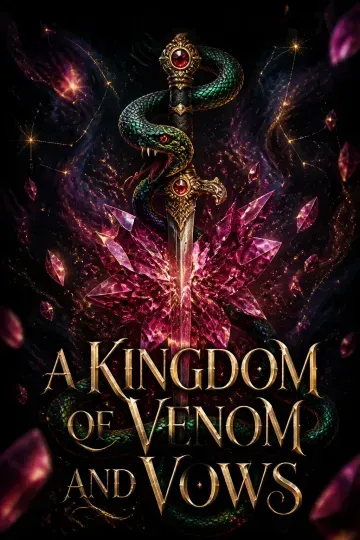
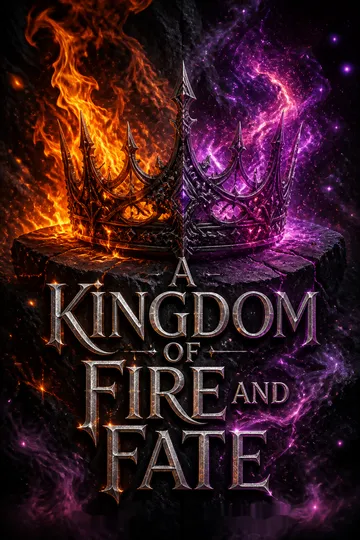
Stars and Shadows Series
About the Author

Download PDF
Download EPUB
.epub digital book format is ideal for reading ebooks on phones, tablets, and e-readers.








































