
Plot Summary
Return to the Haunted House
Merry Barrett, now an adult, returns to her family's old house with Rachel Neville, a writer seeking to tell the true story of what happened to the Barretts. The house is decayed, haunted by memories and the weight of its infamous past. Merry is both comforted and unsettled by the familiarity, feeling the ghosts of her childhood and her sister Marjorie's presence everywhere. Rachel's probing questions and the act of revisiting the house force Merry to confront the blurred lines between memory, trauma, and the stories that have been told about her family. The house itself becomes a character, a stage for the tragedy that unfolded, and Merry's ambivalence sets the tone for a narrative where truth is elusive and the past is never truly gone.
Stories, Secrets, and Sisters
Merry and Marjorie's relationship is defined by their imaginative storytelling, a private world of cardboard houses, children's books, and invented adventures. Marjorie, the older sister, is Merry's idol and protector, but also a source of fear and confusion as her behavior grows erratic. Their stories, once whimsical and comforting, begin to take on darker tones—floods, disasters, and creeping vines. Marjorie's tales blur the line between fiction and reality, foreshadowing the chaos to come. Merry's longing for her sister's approval and her willingness to believe in Marjorie's stories make her both a confidante and an unwitting accomplice. The sisters' bond is both a refuge and a source of vulnerability, as secrets multiply and the boundaries between play and peril dissolve.
The Growing Things
Marjorie's stories become increasingly disturbing, filled with images of unstoppable growth, suffocation, and entrapment. The "growing things" she describes—vines that overtake homes and families—mirror the uncontrollable forces invading the Barrett household: mental illness, financial ruin, and religious fanaticism. Merry is both frightened and fascinated, caught between wanting to help her sister and fearing what Marjorie might do. The stories serve as coded warnings, desperate attempts by Marjorie to communicate her inner turmoil and the dangers lurking within their family. As the tales grow darker, Merry's sense of safety erodes, and the house itself seems to transform, echoing the chaos within.
Family Fractures
The Barrett family is under siege from multiple fronts. John, the father, is unemployed and increasingly desperate, turning to religion for answers. Sarah, the mother, is exhausted, skeptical, and isolated, forced to bear the family's financial and emotional burdens. Their marriage is strained, and their approaches to Marjorie's illness diverge—John seeks spiritual solutions, while Sarah clings to medical explanations. Arguments erupt over dinner, and the children are caught in the crossfire. The family's middle-class stability crumbles, and the house becomes a pressure cooker of secrets, resentments, and unspoken fears. The fractures widen as Marjorie's condition worsens and outside forces—doctors, priests, and eventually television producers—begin to intrude.
The Possession Begins
Marjorie's mental state deteriorates rapidly: she hears voices, rearranges her room in bizarre ways, and terrifies Merry with threats and strange nocturnal visits. The family is unsure whether she is suffering from a psychiatric disorder or something more sinister. John becomes convinced that Marjorie is possessed, while Sarah resists the idea, clinging to rational explanations. The tension escalates as Marjorie's outbursts become more violent and unpredictable, culminating in a terrifying episode where she appears to defy gravity and logic. The boundaries between illness, performance, and the supernatural blur, and the family's ability to cope is stretched to the breaking point.
Reality TV Invasion
Desperate for money and answers, the Barretts agree to let a reality TV crew document Marjorie's supposed possession and the family's struggle. The house is transformed into a set, with cameras in every room and reenactment actors playing the family for dramatic effect. The show, "The Possession," exploits the family's pain for entertainment, blending fact and fiction until even the participants are unsure what is real. Merry, only eight years old, is both a subject and a witness, her confessional videos and interviews shaping the narrative. The presence of the cameras amplifies the family's dysfunction, and the lines between performance and reality become dangerously thin.
Marjorie's Descent
As filming continues, Marjorie's behavior becomes more extreme and theatrical. She mimics voices, speaks in tongues, and reenacts scenes from classic horror films. The show's producers and the priests interpret her actions as evidence of demonic possession, while others suspect she is faking or suffering from untreated mental illness. Merry is manipulated by both her sister and the adults around her, pressured to play her part in the unfolding drama. The family's isolation deepens as they become pariahs in their community, and the show's narrative takes on a life of its own, feeding on Marjorie's suffering and the family's collapse.
Faith, Doubt, and Desperation
The Barretts are torn between competing explanations for Marjorie's condition. John, emboldened by Father Wanderly, pushes for an exorcism, convinced that only faith can save his daughter. Sarah, increasingly marginalized, clings to medical science and her own doubts, but is worn down by exhaustion and fear. The priests, doctors, and TV crew each have their own agendas, and Merry is caught in the middle, unsure whom to trust. The family's desperation leads them to accept ever more extreme interventions, culminating in the decision to perform a televised exorcism. The stage is set for tragedy, as belief and skepticism become weapons rather than sources of comfort.
The Exorcism Showdown
The exorcism is a spectacle, orchestrated for maximum drama by the TV crew and the priests. Marjorie is tied to her bed, doused in holy water, and subjected to prayers and rituals. She alternates between pleading for help and performing the role of the possessed, her suffering both real and staged. The temperature drops, objects move inexplicably, and violence erupts—Marjorie bites a priest, chaos ensues, and the boundaries between victim and perpetrator blur. Merry, forced to witness the ordeal, is traumatized and powerless. The exorcism fails to provide answers or healing; instead, it leaves the family shattered and the truth more elusive than ever.
Aftermath and Poison
In the wake of the exorcism, the Barretts are left broken and isolated. Marjorie is hospitalized, the TV crew departs, and the family's notoriety grows. Tensions simmer until, in a final act of desperation and confusion, Merry is manipulated into poisoning her family's dinner with a mysterious white powder. The plan, concocted by Marjorie, is meant to save them from their father's supposed intentions, but it ends in death for Marjorie, John, and Sarah. Merry survives, traumatized and alone, her memories fragmented and unreliable. The true nature of what happened—murder, suicide, or accident—remains ambiguous, and the ghosts of the past linger.
The Last Final Girl
As an adult, Merry reinvents herself as "Karen Brissette," a horror blogger who analyzes the TV show that made her infamous. She dissects the narrative, the cultural references, and the ways in which her family's tragedy was consumed as entertainment. Merry's voice is sharp, self-aware, and haunted by the impossibility of ever knowing the full truth. She grapples with her role as both victim and participant, survivor and storyteller, and the ways in which her identity has been shaped by trauma, media, and the stories she tells herself. The line between fact and fiction is never fully resolved.
Truths, Memories, and Ghosts
Merry's interviews with Rachel force her to revisit the events of her childhood, sifting through memories, police reports, and the competing narratives that have grown up around her family. She struggles with guilt, uncertainty, and the knowledge that her own actions—however manipulated—played a role in the tragedy. The truth remains elusive: was Marjorie possessed, mentally ill, or performing for an audience? Was Merry a victim, an accomplice, or both? The ghosts in Merry's head are not just memories, but the stories that refuse to be silenced, the unresolved questions that haunt her adulthood.
Interview with the Past
In a final, emotionally charged interview, Rachel and Merry confront the limits of storytelling and the impossibility of definitive answers. Rachel's research uncovers new details—emails, police reports, and evidence that complicate the official narrative. Merry confesses her role in the poisoning, her uncertainty about what really happened, and her struggle to live with the consequences. The interview becomes a reckoning, not just with the past, but with the ways in which trauma is mediated, commodified, and retold. Both women are left changed, but the story remains unfinished, its meaning forever contested.
The End of Innocence
The final days of the Barrett family are recounted in harrowing detail: the failed attempts at normalcy, the breakdown of trust, and the fatal dinner that ends in death and silence. Merry's innocence is irrevocably lost, replaced by a lifetime of questions and regrets. The house, once a place of safety and imagination, becomes a tomb, and Merry's survival is both a blessing and a curse. The story ends not with closure, but with the recognition that some wounds never heal, and some stories can never be fully told.
The House as Labyrinth
Throughout the narrative, the Barrett house is more than a setting—it is a labyrinth, a maze of closed doors, hidden rooms, and shifting geography. The house mirrors the family's psychological state: disorienting, claustrophobic, and haunted by secrets. The reality TV show exploits this, turning the house into a stage for horror, but the true terror lies in its unknowability. The house becomes a metaphor for the mind, for trauma, and for the impossibility of ever fully mapping the past.
The Power of Stories
From childhood games to televised spectacle, stories are both a refuge and a weapon in the Barrett family. Marjorie's tales are attempts to make sense of chaos, to warn and protect, but they also become tools of manipulation and confusion. The TV show distorts the family's reality, turning suffering into entertainment. Merry's adult life is shaped by the stories she tells and the ones told about her. The power of narrative is both redemptive and destructive, offering meaning but never certainty.
The Unreliable Witness
Merry's account is marked by uncertainty, gaps, and contradictions. She is an unreliable narrator, shaped by trauma, media, and the passage of time. The truth of what happened to the Barretts is always just out of reach, refracted through layers of storytelling, performance, and self-deception. The novel refuses easy answers, insisting on the complexity of memory and the impossibility of objective truth. The reader is left to navigate the labyrinth alongside Merry, haunted by the same ghosts.
What Really Happened
In the end, the story of the Barrett family resists resolution. Was Marjorie possessed, mentally ill, or performing for survival? Was Merry a victim, a perpetrator, or both? Did John intend harm, or was he himself lost to forces beyond his control? The novel's final chapters confront the reader with the limits of knowledge, the dangers of certainty, and the enduring power of stories to both illuminate and obscure. The ghosts in Merry's head are the ghosts of all families, all traumas, all stories that refuse to be laid to rest.
Analysis
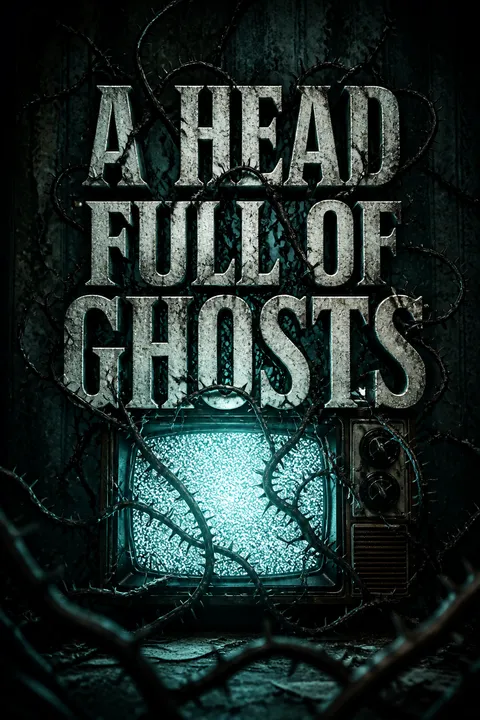
Paul Tremblay's A Head Full of Ghosts is a masterful exploration of the intersection between horror, trauma, and the stories we tell to survive. By weaving together unreliable narration, metafictional commentary, and a relentless interrogation of truth, the novel challenges readers to confront the limits of knowledge and the dangers of certainty. The Barrett family's tragedy is both deeply personal and culturally resonant, reflecting anxieties about mental illness, the collapse of the middle class, and the commodification of suffering in the age of reality television. The novel's refusal to provide easy answers—Was Marjorie possessed, mentally ill, or performing for survival? Was Merry a victim, an accomplice, or both?—is both its greatest strength and its most unsettling feature. In a world saturated with competing narratives and mediated realities, A Head Full of Ghosts insists on the complexity of memory, the power of stories to both heal and harm, and the enduring presence of ghosts—personal, cultural, and psychological—that haunt us all. The novel is a chilling, compassionate, and deeply intelligent meditation on the horror of not knowing, and the necessity of living with ambiguity.
Review Summary
People Also Read




Characters
Merry Barrett
Merry is the younger daughter of the Barrett family, eight years old during the events and twenty-three in the framing narrative. Her role is both witness and participant, shaped by her adoration for her older sister Marjorie and her longing for family stability. Merry's psychological development is marked by trauma, guilt, and the struggle to make sense of conflicting narratives—her own memories, the TV show's version, and the stories told by others. As an adult, she reinvents herself as a horror blogger, dissecting her own past with irony and detachment, yet haunted by unresolved questions. Merry's relationships—with Marjorie, her parents, and later Rachel—are defined by love, betrayal, and the search for truth. Her unreliability as a narrator is both a defense mechanism and a reflection of the novel's central theme: the impossibility of ever fully knowing the past.
Marjorie Barrett
Marjorie is fourteen, intelligent, creative, and increasingly unstable. Her descent into apparent possession is the catalyst for the family's unraveling. Marjorie's relationship with Merry is complex—protective, manipulative, loving, and sometimes cruel. She is both a victim of mental illness and a performer, adapting her behavior to the expectations of her family, the priests, and the TV crew. Marjorie's stories are attempts to communicate her pain and warn Merry, but they also become tools of control and confusion. Her fate—whether as a casualty of illness, possession, or family dysfunction—remains ambiguous, and her presence haunts Merry long after her death.
John Barrett
John is the family's patriarch, rendered powerless by unemployment and the collapse of his middle-class identity. His turn to religion is both a search for meaning and a desperate attempt to regain control. John's relationship with his wife and daughters is marked by frustration, anger, and a need to assert authority. He is easily manipulated by Father Wanderly and the TV producers, and his actions—culminating in the family's destruction—are both tragic and terrifying. John embodies the dangers of certainty, the fragility of masculinity, and the destructive potential of faith when wielded as a weapon.
Sarah Barrett
Sarah is the family's anchor, struggling to hold everything together as her husband unravels and her daughter descends into crisis. She is skeptical of religious explanations, clinging to medical science and her own instincts, but is ultimately overwhelmed by exhaustion and isolation. Sarah's relationship with her daughters is loving but strained, and her marriage is marked by conflict and disappointment. She is both a victim of circumstance and a participant in the family's downfall, her agency eroded by the pressures of caregiving, poverty, and public scrutiny.
Father David Wanderly
Father Wanderly is the charismatic priest who convinces John that Marjorie is possessed and orchestrates the exorcism. He is both sincere in his beliefs and opportunistic, using the Barretts' suffering to advance his own agenda. Wanderly's relationship with the family is complex—he offers hope and structure, but also sows division and exploits their vulnerability. His presence accelerates the family's collapse, and his role in the tragedy is both direct and indirect, a symbol of the dangers of religious certainty.
Rachel Neville
Rachel is the author interviewing Merry in the present-day framing narrative. She is both a seeker of truth and a stand-in for the reader, probing the gaps and contradictions in Merry's story. Rachel's relationship with Merry is professional but becomes personal, as she is drawn into the emotional complexities of the case. She serves as a catalyst for Merry's reckoning with the past, but is herself changed by the encounter, forced to confront the limits of storytelling and the ethics of bearing witness.
Ken Fletcher
Ken is the main writer for the reality show "The Possession." He befriends Merry, offering her a camera and notebook, and becomes a surrogate adult in the chaos of the Barrett household. Ken's role is ambiguous—he is both a sympathetic listener and a participant in the exploitation of the family's suffering. His relationship with Merry is marked by genuine affection but also by the power dynamics of adult and child, observer and subject. Ken's presence highlights the ways in which media shapes and distorts reality.
The TV Crew (Barry, Tony, Jenn)
The producers and crew of "The Possession" are both background figures and active shapers of the narrative. They transform the Barrett home into a set, direct the family's actions, and edit their suffering into entertainment. Their motivations are primarily commercial, but they also become entangled in the family's drama, alternately exploiting and sympathizing with their subjects. The crew's presence amplifies the family's dysfunction and raises questions about the ethics of reality television.
Dr. Hamilton and Dr. Navidson
The psychiatrists involved in Marjorie's case represent the medical establishment's attempts to diagnose and treat her condition. Dr. Hamilton is largely ineffectual, unable to bridge the gap between science and the family's beliefs. Dr. Navidson, brought in by the church, is both a man of science and faith, but ultimately fails to provide answers. Their presence underscores the limits of expertise and the ways in which authority can be co-opted by competing narratives.
The House
The Barrett house is more than a setting—it is a character in its own right, a labyrinth of closed doors, hidden rooms, and shifting geography. The house mirrors the family's psychological state: disorienting, claustrophobic, and haunted by secrets. It is both a refuge and a prison, a stage for horror and a repository of memory. The house's transformation into a TV set amplifies its symbolic power, turning private suffering into public spectacle.
Plot Devices
Unreliable Narration and Fragmented Memory
The novel is structured around Merry's recollections, interviews, and blog posts, all of which are marked by uncertainty, contradiction, and self-doubt. The use of an unreliable narrator forces the reader to question every account, every motive, and every conclusion. The narrative is further fragmented by the inclusion of blog posts, police reports, and interviews, creating a collage of perspectives that resist synthesis. This device mirrors the psychological fragmentation of trauma and the impossibility of definitive truth.
Metafiction and Media Critique
The presence of the reality show "The Possession" is both a plot device and a commentary on the commodification of suffering. The show's reenactments, editing, and manipulation of events highlight the ways in which media shapes and distorts reality. The novel's inclusion of blog posts analyzing the show adds another layer of self-reflexivity, inviting the reader to question the ethics of storytelling and the boundaries between entertainment and exploitation.
Horror Tropes and Intertextuality
The novel is saturated with references to horror films, literature, and cultural touchstones—from The Exorcist to The Yellow Wallpaper. These allusions serve both as homage and critique, situating the Barretts' story within a larger tradition of possession narratives while also questioning their assumptions. The use of horror tropes—possession, exorcism, haunted houses—becomes a way to explore deeper psychological and social anxieties.
The House as Symbol and Structure
The Barrett house is both a literal and metaphorical labyrinth, its confusing layout and shifting geography reflecting the family's disorientation and the fragmentation of memory. The house's transformation into a TV set further blurs the boundaries between private and public, reality and performance. The house becomes a stage for trauma, a character in its own right, and a symbol of the impossibility of escape.
Foreshadowing and Circular Structure
The novel's structure is circular, with the present-day interviews and blog posts framing the retelling of past events. Marjorie's stories, filled with warnings and coded messages, foreshadow the family's fate. The repetition of motifs—growing things, closed doors, haunted rooms—creates a sense of inevitability and entrapment. The narrative's refusal to resolve its ambiguities leaves the reader, like Merry, trapped in a labyrinth of memory and meaning.








































