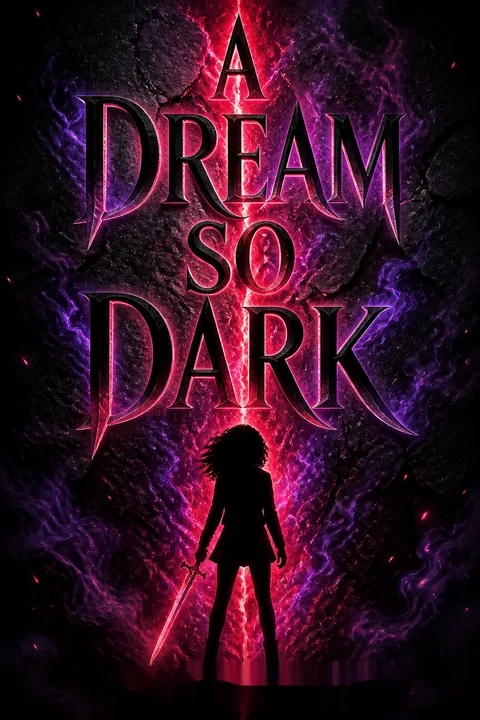

Plot Summary
Grief and Guilt Unleashed
After the traumatic loss of her friend Chess, Alice is consumed by guilt and sorrow, unable to confide in her mother or find solace. Her mother's attempts to reach her only deepen Alice's sense of isolation, as she struggles with the burden of secrets and the trauma of fighting Nightmares. The emotional weight of her father's death and her role as a Dreamwalker compound her pain, leaving her feeling responsible for the chaos around her. This chapter sets the emotional stakes, showing Alice's vulnerability and the cost of heroism, as she is forced to confront her own limits and the consequences of her choices.
Chess Returns, Maddi Taken
News arrives that Chess, thought dead, is alive but changed—and has kidnapped Maddi. Alice and her best friend Courtney are swept into confusion and hope, only to find the pub in chaos and their allies injured. The joy of Chess's return is quickly replaced by dread, as it becomes clear he is not himself, possibly controlled by dark forces. The group's unity is tested as they scramble to understand what has happened, and Alice's guilt is reignited by the realization that her actions may have set these events in motion. The stakes are raised as the threat becomes personal and immediate.
Pub in Ruins
The Looking Glass Pub, once a sanctuary, is left in shambles after Chess's violent escape with Maddi. The Tweedles and the Duchess are injured, and Hatta is left reeling, both physically and emotionally. The group tries to piece together what happened, learning that Chess is infused with Slithe, a toxic Nightmare substance. The pub's destruction mirrors the group's fractured trust and the growing danger. Alice's desperation to help her friends is complicated by her strained relationship with her mother, who is increasingly suspicious of her absences and secrets.
Secrets and Sacrifice
Alice's struggle to balance her Dreamwalker duties with her family life comes to a head. Her mother's concern and anger force Alice to confront the impossibility of keeping her two worlds separate. Meanwhile, Alice's grandmother's declining health adds another layer of emotional strain. The theme of sacrifice is foregrounded, as Alice realizes that protecting those she loves may require painful honesty and the loss of her own innocence. The cost of secrecy becomes clear, and Alice is forced to consider what she is willing to risk for the greater good.
Family Ties Frayed
A visit to her grandmother's care home brings Alice face-to-face with the fragility of memory and the pain of loss. Her grandmother's confusion and moments of lucidity highlight the importance of family, even as Alice feels increasingly alienated from her own. The tension between duty and love is palpable, as Alice grapples with the fear of losing more people she cares about. The chapter underscores the theme of intergenerational strength and the ways in which family history shapes identity and resilience.
Nightmares and Revelations
The boundaries between Wonderland and reality blur as Nightmares begin to appear in Atlanta, threatening Alice's loved ones. The Black Knight's attacks become more direct, culminating in a violent confrontation in Alice's home that exposes her secret life to her mother. Forced to reveal the truth, Alice must navigate her mother's fear and anger, while reaffirming her commitment to the fight against darkness. The revelation is both a relief and a new source of tension, as Alice's world is forever changed.
The In-Between Veil
After a harrowing encounter with a Nightmare, Alice is pulled into the In-Between, a liminal space between Wonderland and reality. Here, she confronts visions of her past, her fears, and her own reflection—her "Muchness." Guided by cryptic allies, she learns that the key to survival lies in embracing her true self and trusting her instincts. The surreal landscape reflects Alice's internal struggle, as she battles both external threats and her own doubts. This chapter marks a turning point, as Alice begins to reclaim her agency and power.
Allies and Gateways
Alice is rescued by Haruka, the Dreamwalker of the Eastern Gateway, and taken to Tokyo. There, she meets Romi, the enigmatic Gatekeeper, and learns more about the interconnectedness of the Dreamwalkers. The journey to return home is complicated by the need for magical and mundane travel, and by the growing threat of the Black Knight and the Bloody Lady. The chapter explores themes of cross-cultural friendship, the importance of trust, and the challenges of navigating unfamiliar worlds. Alice's circle of allies expands, but so do the dangers they face.
Fury Keepers' Village
Alice and her new companions travel to a village of Fury Keepers, caretakers of dragon-like creatures. The village is attacked by Nightmares, revealing the escalating threat posed by the Bloody Lady's experiments. The battle tests Alice's skills and resolve, and she witnesses the devastating consequences of failure. The chapter highlights the diversity and wonder of Wonderland, as well as the ever-present danger. The Fury Keepers' resilience and the bond between humans and magical creatures underscore the themes of community and interdependence.
The Black Knight's Doubt
The perspective shifts to the Black Knight, who is increasingly troubled by doubts about his loyalty and identity. Haunted by fragmented memories and the manipulations of the Bloody Lady, he begins to resist her control. The internal conflict between duty and conscience is foregrounded, as the Black Knight's humanity struggles to reassert itself. His interactions with Chess and Maddi reveal the complexity of his character and the possibility of redemption. The chapter deepens the psychological stakes and sets the stage for future betrayals and alliances.
The Bloody Lady's Game
The Bloody Lady, a mysterious and powerful figure, manipulates events from the shadows, using Chess and the Black Knight as pawns in her quest for the Eye and the Heart—artifacts of immense power. Her experiments with Slithe create new, unpurgeable Nightmares, threatening both Wonderland and the human world. The group's efforts to stop her are complicated by her cunning and the divided loyalties of their own members. The chapter explores themes of power, corruption, and the seductive nature of vengeance.
Betrayal and Memory
As the group converges on Findest, the Red Queen's palace, secrets are revealed and old wounds reopened. The Black Knight is unmasked as Humphrey, the long-lost Red Knight and Addison's former lover. The revelation forces Addison to confront his own guilt and the consequences of his past choices. The theme of memory—its loss, recovery, and manipulation—runs throughout, as characters struggle to reconcile who they were with who they have become. Betrayal and forgiveness are central, as the group must decide whom to trust in the final confrontation.
The Heart's Trap
The group's quest for the Heart leads them into a carefully laid trap by the Bloody Lady, who now possesses both the Eye and the Heart. The ensuing battle is chaotic and costly, with allies captured, injured, or forced to make impossible choices. The Bloody Lady's power is revealed to be both magical and psychological, as she exploits the group's fears and weaknesses. The chapter is a crucible, testing the characters' resolve and unity, and setting the stage for the ultimate showdown.
Battle at Findest
In the throne room of Findest, the group faces the Bloody Lady and her army of corrupted Nightmares. Odabeth, the princess, unleashes the power of the Eye, but is overpowered. Alice, Addison, and Humphrey must work together, overcoming their personal demons and mistrust, to challenge the Bloody Lady. The battle is both physical and metaphysical, as Alice confronts her own Muchness and the true nature of fear. Sacrifice, courage, and the power of love are central, as the fate of both worlds hangs in the balance.
Muchness Awakened
Trapped in a magical darkness, Alice is forced to confront her deepest fears and memories, especially those of her father. Guided by her reflection—her Muchness—she learns that true strength comes from accepting fear, not denying it. The mantra "I am Alice Kingston, and I am afraid, but fear cannot stop me" becomes her rallying cry. This inner awakening allows her to break free of the Bloody Lady's control and wield the Vorpal Blade with unprecedented power. The chapter is a triumphant affirmation of selfhood and resilience.
Fear Cannot Stop Me
Empowered by her Muchness and the support of her friends, Alice confronts the Bloody Lady in a final, desperate battle. Despite overwhelming odds, she uses both light and darkness—her unique blend of powers—to shatter the villain's hold on Wonderland. The Bloody Lady is consumed by her own creations, and the threat of unpurgeable Nightmares is ended. The cost is high, as Addison nearly dies from the effects of his exile, but is saved by Odabeth's pardon. The chapter is a cathartic release of tension and a celebration of hard-won victory.
The Aftermath of Darkness
In the aftermath, the group tends to their wounds—physical, emotional, and relational. Addison and Alice reaffirm their bond, while Humphrey begins the slow process of reclaiming his identity. Chess, freed from the Bloody Lady's control, struggles with guilt but is supported by his friends. The group prepares to return to their respective worlds, changed but hopeful. The themes of forgiveness, the importance of chosen family, and the ongoing struggle against darkness are underscored. The story ends with Alice embracing her role as a Dreamwalker, ready to face whatever comes next.
Analysis
A Dream So Dark is a vibrant, emotionally charged reimagining of the Alice in Wonderland mythos, blending urban fantasy with themes of grief, identity, and resilience. At its core, the novel is about the cost of heroism—the sacrifices required, the weight of secrets, and the necessity of confronting one's own fears. L.L. McKinney uses the dual worlds of Atlanta and Wonderland to explore the permeability of boundaries, both literal and psychological, and to foreground the experiences of a Black girl hero whose struggles are both fantastical and deeply real. The narrative's focus on memory, trauma, and the possibility of redemption resonates with contemporary readers, offering a nuanced portrayal of healing and forgiveness. The story's ultimate message—that fear cannot stop us, and that true strength lies in embracing our Muchness—serves as both a rallying cry and a balm for those navigating their own darkness. In a world increasingly defined by uncertainty and division, A Dream So Dark reminds us of the power of community, the importance of chosen family, and the enduring hope that even in the face of overwhelming odds, we can choose light.
People Also Read


Characters
Alice Kingston
Alice is a Black teenage girl from Atlanta who serves as a Dreamwalker, fighting Nightmares that threaten both Wonderland and the real world. Haunted by the death of her father and the apparent loss of her friend Chess, Alice is driven by guilt, loyalty, and a fierce sense of responsibility. Her journey is one of self-acceptance, as she learns to embrace her fears and her Muchness—the unique strength that sets her apart. Alice's relationships with her mother, grandmother, and friends ground her, even as she is forced to make impossible choices. Her arc is one of growth from self-doubt to empowered agency, symbolizing resilience in the face of trauma.
Addison Hatta
Addison is the enigmatic, centuries-old Dreamwalker who trains Alice and serves as the guardian of the Western Gateway. Once the Black Knight and a key figure in Wonderland's wars, he is exiled for his role in past betrayals. Addison is tormented by guilt over his actions and the loss of his lover, Humphrey. His relationship with Alice is complex—part mentor, part romantic interest, part fellow survivor. Addison's arc is one of seeking redemption, learning to forgive himself, and ultimately risking everything to save those he loves. His struggle with the exile Verse and his willingness to sacrifice himself highlight the cost of leadership and the possibility of atonement.
Chess (Chester Dumpsky)
Chess is Alice's best friend, whose death and resurrection drive much of the plot's emotional tension. Revived and controlled by the Bloody Lady through Slithe, Chess becomes both victim and threat, forced to act against his will. His struggle to reclaim his agency and atone for actions committed under compulsion is central to the story's exploration of trauma and forgiveness. Chess's arc is one of survival, guilt, and the slow process of healing, supported by the unwavering loyalty of Alice and Courtney.
Courtney
Courtney is Alice's best friend and confidante, providing both levity and steadfast support. Though initially an outsider to the Dreamwalker world, she is drawn into the conflict and proves her courage and loyalty. Courtney's presence grounds Alice, reminding her of the importance of ordinary joys and the strength found in friendship. Her willingness to risk herself for her friends and her ability to adapt to extraordinary circumstances make her a vital member of the group.
The Black Knight / Humphrey
Once the Red Knight and Addison's lover, Humphrey is transformed into the Black Knight by the Bloody Lady's manipulations. Stripped of his memories and agency, he becomes both antagonist and tragic figure, torn between loyalty and conscience. His gradual awakening and resistance to the Bloody Lady's control mirror the story's themes of memory, identity, and redemption. Humphrey's arc is one of painful self-discovery, as he seeks to reclaim his past and forge a new future.
The Bloody Lady
The Bloody Lady is the primary antagonist, a mysterious figure who seeks to resurrect the power of the Black Queen by acquiring the Eye and the Heart. Her experiments with Slithe create new, unpurgeable Nightmares, and her psychological manipulation of Chess and Humphrey reveals her cunning and cruelty. She represents the dangers of unchecked grief and the seductive nature of vengeance. Her ultimate defeat is both a physical and symbolic victory over the darkness within and without.
Maddi
Maddi is the group's Poet and alchemist, whose skills are essential in healing and purging Nightmares. Kidnapped by Chess under the Bloody Lady's control, Maddi is forced to aid in dark experiments but resists as best she can. Her resilience and compassion provide hope for the group, and her eventual rescue is a turning point in the battle against the Bloody Lady. Maddi's arc is one of endurance and the quiet strength found in kindness.
Haruka
Haruka is the Dreamwalker of the Eastern Gateway, a Japanese girl who becomes one of Alice's closest allies. Skilled, resourceful, and quietly courageous, Haruka helps Alice navigate both Wonderland and the complexities of cross-cultural friendship. Her own trauma and motivations mirror Alice's, and their bond is one of mutual respect and support. Haruka's presence expands the story's scope and underscores the global nature of the Dreamwalker struggle.
The Duchess (Anastasia)
The Duchess is a seasoned Dreamwalker and former member of Wonderland's Royal Guard. Stern but caring, she provides guidance and protection to the group, especially in moments of crisis. Her history with Addison and Humphrey adds depth to the story's exploration of loyalty, betrayal, and forgiveness. The Duchess's resilience and strategic mind are crucial in the fight against the Bloody Lady.
Odabeth
Odabeth is the princess of Wonderland, burdened by the legacy of her family and the responsibility of wielding the Eye. Her journey is one of stepping into leadership, making difficult choices, and learning to trust herself and her allies. Odabeth's arc is one of growth from sheltered royalty to active participant in the struggle for Wonderland's future.
Plot Devices
Dual Worlds and Liminal Spaces
The narrative structure alternates between Atlanta and Wonderland, with the In-Between serving as a liminal space that reflects Alice's internal struggles. This device allows for exploration of identity, trauma, and the permeability of boundaries—both literal and metaphorical. The use of gateways and magical travel underscores the interconnectedness of worlds and the consequences of actions in one realm affecting the other.
Artifacts of Power: The Eye and the Heart
The Eye and the Heart, remnants of the Black Queen's power, serve as both MacGuffins and symbols of grief, vengeance, and the potential for healing or destruction. Their pursuit by both heroes and villains creates tension, while their use and misuse highlight the dangers of unchecked emotion and the importance of responsibility.
Memory, Identity, and Redemption
The manipulation and loss of memory—especially in the cases of Chess and Humphrey—serve as metaphors for trauma and the struggle to reclaim agency. The gradual return of memories enables characters to seek redemption, confront past mistakes, and choose new paths. This device deepens the psychological complexity of the narrative and foregrounds the theme of forgiveness.
Foreshadowing and Prophecy
The use of poetic prophecy, cryptic verses, and dreamlike visions foreshadows key events and reveals hidden truths. Alice's encounters with her reflection—her Muchness—prepare her for the final confrontation and reinforce the message that true strength comes from within. These devices create suspense and a sense of inevitability, while also empowering the characters to shape their own destinies.
Found Family and Intergenerational Wisdom
The relationships between Alice, her mother, grandmother, and friends provide emotional grounding and resilience. Intergenerational wisdom—especially from her grandmother and the memory of her father—guides Alice through moments of doubt and fear. The theme of found family is reinforced by the diverse group of Dreamwalkers, whose unity is essential in overcoming darkness.
The Nightmare-Verse Series

Download PDF
Download EPUB
.epub digital book format is ideal for reading ebooks on phones, tablets, and e-readers.








































