
核心要点
1. 在逆境中锤炼出的韧性
「那时候没有辅导人员,」黄仁勋说,「没人会听你诉苦,你只能坚强起来,继续前进。」
早年生活的挑战。 黄仁勋的童年充满艰难。十岁时被送往肯塔基州乡村,遭遇欺凌和种族歧视,寄宿学校实际上是个感化院。他与一位十七岁、文盲且满身刀疤的室友同住,学会了教他识字和做俯卧撑,锻造出坚韧的性格,这种坚韧成为他职业生涯的基石。这段经历让他养成了自立自强的品质,为日后在动荡的科技行业中立足奠定了基础。
适应新环境。 尽管环境艰苦,黄仁勋在学业和社交上都表现出色。他迅速适应美国文化,学会英语,发现了对计算机科学和乒乓球的热情。他在陌生且充满挑战的环境中茁壮成长,无论是穿越破旧的桥去上学,还是应对科技行业的复杂局面,这种能力成为他的标志。早期经历教会他坚持不懈的价值,以及在最不利的情况下寻找机会的能力。
在困境中寻找力量。 黄仁勋对这段经历的看法极为务实,他不将其视为创伤,而是认为这是塑造他勤奋和自给自足精神的关键。他学会了在无人可依赖时依靠自己,这一教训在他日后做出重大决策时发挥了重要作用。将困境视为力量源泉的能力,是他持久动力的核心。
2. 掌握硅基技术的基础
「他有能力让1+1=3,」霍茨曼说。「我的意思是,我们不仅为客户做出他们想要的东西,还把这些订单转化为工具,再把这些工具变成一套标准的操作方法。」
扎实的工程技能。 黄仁勋的职业生涯始于AMD和LSI Logic,在那里他磨炼了电气工程和芯片设计的技能。借助SPICE等工具,他学会了从根本上操控电路,推动性能突破极限。对硅芯片工作原理的深刻理解,成为他职业生涯中的重要优势。
超越预期。 在LSI Logic,黄仁勋不仅满足客户需求,更能超额完成,将定制项目转化为标准化方法。这种从个别任务中提炼最大价值、打造可复用工具的能力,体现了他早期的战略眼光。他的同事们称赞他能在工程上实现“1+1=3”的奇迹。
持续学习与适应。 尽管起步时依赖纸质设计和彩色玻璃纸,黄仁勋积极拥抱VLSI设计工具等新技术。他一边全职工作,一边在斯坦福攻读硕士学位,不断更新知识,确保自己始终站在芯片设计的前沿。
3. 将失败视为催化剂
「我们错过了一切,」黄仁勋谈及创业初期时说,「我们做的每一个决定都是错的。」
NV1的惨败。 Nvidia的首款产品NV1图形芯片商业失败。尽管最初与世嘉达成合作,但其采用的非标准渲染方法(四次纹理)被市场拒绝,尤其是在微软推出支持三角形的DirectX标准后。结果导致大量退货,几近破产,并痛苦裁员大部分员工。
从错误中学习。 黄仁勋没有被失败击倒,而是将NV1的失败视为宝贵的学习机会。他无情地分析错误,得出结论:他们犯了所有可能的错误。由此进行彻底转变,放弃专有架构,转向微软标准,专注于速度和成本效益。
“三十天生死存亡”信条。 NV1失败的濒临破产经历成为Nvidia文化核心,黄仁勋的座右铭是:“我们距离倒闭只有三十天。”这一时刻的紧迫感培养了韧性和敢于冒险的精神,确保公司即使在巨大成功时也不自满。
4. 大胆押注并行计算
「硅谷到处都是平行计算平台公司的尸体,」他说,「除了我们,没有一家公司成功采用平行计算,前人的成功率是零。」
发现隐藏机遇。 在为《雷神之锤》等游戏开发图形芯片时,Nvidia工程师意识到其芯片架构天生适合并行计算,能同时处理大量像素。这与传统CPU的顺序处理形成鲜明对比。尽管并行计算商业上屡遭失败,黄仁勋看到了其潜力。
挑战传统观念。 黄仁勋决定大力投资使GPU可编程以支持通用并行计算(GPGPU),此举极具颠覆性。市场规模小,编程复杂,英特尔等巨头专注于基于摩尔定律提升顺序CPU性能。华尔街视其为资源浪费,称之为“CUDA税”。
GPU的强大威力。 GPU能同时执行数千个简单计算,远超CPU在可并行任务上的表现。虽然最初用于图形渲染,黄仁勋预见其在科学计算、模拟乃至人工智能中的应用。这一大胆押注在市场尚未形成时奠定了Nvidia未来的主导地位。
5. 围绕CUDA构建生态系统
「从此以后,你再也不想离开了,」阿尔茨说,「这就是供应商锁定。把你绑得死死的,无法走出去。」
CUDA平台。 认识到并行硬件编程的难度,Nvidia大力开发CUDA软件平台,简化开发者访问GPU并行计算能力。2006年推出时,CUDA遭遇怀疑和低采纳率。
培育“零亿美元市场”。 黄仁勋战略性地将CUDA推广至学术研究和小众科学领域,称之为“零亿美元市场”。通过免费软件工具和支持,吸引气候建模、医学成像等领域科学家,建立忠实用户群。此举牺牲短期利润,着眼长期市场培育。
软件锁定效应。 CUDA的真正智慧在于构筑了强大的软件护城河。竞争对手虽能复制芯片设计,却难以追赶十余年积累的全面、易用软件生态。这形成强大供应商锁定,使研究机构和企业难以转向竞争硬件。
6. 把握AI拐点
「他立刻看出潜力,比所有人都早一步,」柯克说,「他领先群伦,看清AI可能的发展。他真的是第一人。」
AlexNet突破。 2012年,多伦多大学研究者利用两块现成Nvidia GPU和CUDA平台,在图像识别领域取得突破,证明深度学习在并行计算支持下能实现前所未有的成果。
黄仁勋迅速转向AI。 AI研究界最初未完全意识到AlexNet的意义,黄仁勋却立刻认定这是Nvidia并行计算架构的杀手级应用,迅速将公司重心转向深度学习,几乎一夜之间宣布Nvidia为“AI公司”。这一果断转变至关重要。
对算力的无尽需求。 黄仁勋明白,训练和运行大型神经网络需要指数级增长的计算能力,只有Nvidia的GPU及其并行架构和CUDA软件能高效满足。他预见AI对算力的需求将远超图形或科学模拟,创造庞大持久的市场。
7. 用Transformer扩展智能
「我们看到,随着规模越来越大,它显然也越来越聪明!」萨泽尔说,「我们以前写的程序可不是这样。」
Transformer架构。 2017年,谷歌研究者开发了Transformer架构,这种新型神经网络设计革新了自然语言处理。与以往的循环神经网络不同,Transformer能并行处理整段文本,极大提升了GPU上的效率,催生了更大规模的语言模型。
大型语言模型(LLM)的出现。 Transformer架构、海量数据集和强大Nvidia GPU的结合,催生了OpenAI GPT系列等大型语言模型。这些模型随着规模扩大展现出“涌现”能力,能完成未明确训练的任务,如编写代码、通过考试。
语言的AI工厂。 训练和运行这些庞大LLM需前所未有的计算资源,巩固了Nvidia作为AI基础设施核心供应商的地位。OpenAI、谷歌等公司成为Nvidia最大客户,建设“AI工厂”——配备数万块Nvidia GPU的数据中心,推动语言革命。
8. 黄仁勋的矛盾领导力
「你觉得自己不能让他失望,」克雷说,「你就是不能。」
苛求且激励人心。 黄仁勋以严苛、苛求甚至情绪化的领导风格著称。他公开批评犯错员工,营造出既恐惧又忠诚的文化。员工感受到巨大的压力,不敢让他失望,激励他们完成看似不可能的目标。
忠诚与关怀。 尽管严厉,黄仁勋赢得员工深厚忠诚。他记得员工生活细节,支持他们度过个人危机,极少因绩效问题解雇员工,倾向用公开批评作为教学手段。这种苛求与关怀并存,营造出高压却支持的独特氛围。
远见与细节兼备。 黄仁勋兼具长远眼光与对细节的执着关注。他能描绘计算未来的革命性蓝图,同时关注饮水机位置或卡通人物裤子缝线。这种从战略到操作的双重能力,是Nvidia快速执行的关键。
9. AI工厂与基础设施的主导地位
「一个新产业正在兴起:由AI数据中心处理大量原始数据,提炼为数字智慧,」他说,「就像上一次工业革命的交流电厂;Nvidia的AI超级计算机基本上就是这次工业革命中的AI生产工厂。」
构建AI基础设施。 黄仁勋认识到AI需要全新计算基础设施,领导开发专为AI工作负载设计的软硬件解决方案,包括将多块GPU集成的DGX系统,以及收购Mellanox以提供高速网络。
“AI工厂”理念。 黄仁勋将现代数据中心比作“AI工厂”,将原始数据转化为智能。这一比喻凸显了设施的工业规模和变革性产出,将Nvidia GPU定位为这场新工业革命的核心机械,犹如上次工业革命中的发电厂。
软件护城河。 除硬件外,Nvidia庞大的软件生态,包括CUDA及数百个领域专用库,是其主导地位的关键。该软件栈极大简化了AI应用开发与部署,构筑强大竞争壁垒,确保对Nvidia芯片的持续需求。
10. 地缘政治与硅盾效应
「一旦台湾和台积电出事,影响之大,就像让我回答加州掉进海里怎么办一样,」黛博拉·萧奎斯特说。
对台积电的依赖。 Nvidia的商业模式高度依赖台湾台积电制造先进芯片。台积电无与伦比的精度和规模,是Nvidia生产尖端GPU的关键。这种依赖使Nvidia的命运与台湾地缘政治稳定紧密相连。
台湾的“硅盾”。 台湾尤其是台积电在先进半导体制造的集中,催生了“硅盾”概念,认为全球对台湾芯片的依赖能威慑潜在侵略。黄仁勋虽有台湾血统,却公开淡化风险,专注于合作关系的稳固。
全球竞争与供应链转移。 美中地缘政治紧张推动在美国、欧洲、日本等地建设半导体制造能力。尽管多元化旨在减少对台湾依赖,但复制台积电最先进工艺的规模和复杂性巨大,确保台湾在可预见未来仍具关键地位。
11. 前所未有的财富与未来挑战
「我拥有的钱比我想象的多太多了,」他说。
爆炸性财务增长。 自AI热潮以来,Nvidia股价飞涨,使黄仁勋及众多老员工成为亿万富翁和千万富翁,创造了企业史上罕见的财富规模。公司市值飙升,跻身全球最有价值企业之列。
市场主导与审视。 Nvidia几近垄断AI芯片市场,带来巨额利润和高利润率。这种主导地位既赢得赞誉,也引发质疑,面临价格操纵指控和权力集中担忧。竞争者积极挑战Nvidia,但其生态系统的强大使挑战异常艰难。
未来的不确定性。 尽管当前成功,Nvidia面临诸多挑战。AI热潮的可持续性、AI工厂的巨大能耗、与台湾及中国相关的地缘政治风险,以及日益激烈的竞争,都构成潜在威胁。公司价值高度依赖未来预期,迫使其在快速变化的环境中持续创新和交付。
读者评价
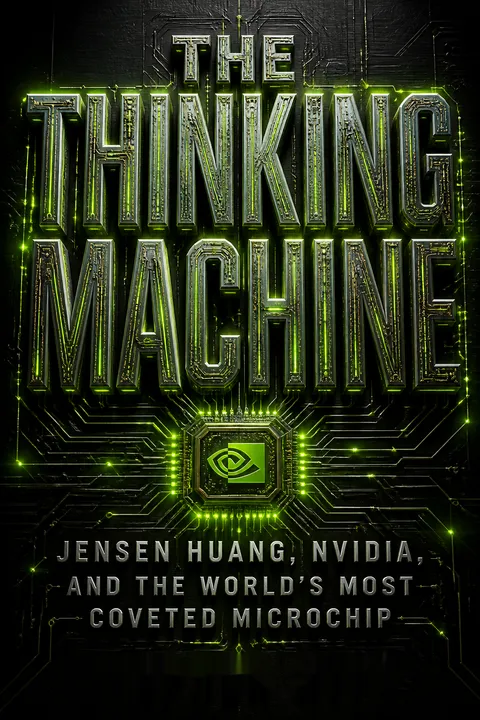
《思考机器》获得了大多数积极评价,读者称赞其对英伟达发展历程和黄仁勋领导力的深刻剖析。该书通过连贯的时间线串联起多个技术话题,展现了人工智能演进的平衡视角。读者欣赏其详实的调研内容、生动的写作风格以及契合时代的主题。一些批评则指出部分内容浅尝辄止,后半部分存在重复现象。总体而言,评论者认为本书信息丰富、启发性强,是关注科技与人工智能未来人士的必读之作。
其他人还在读






常见问题
1. What’s "The Thinking Machine: Jensen Huang, Nvidia, and the World's Most Coveted Microchip" by Stephen Witt about?
- Biography and Business Epic: The book is a biography of Jensen Huang, the founder and CEO of Nvidia, tracing his journey from a Taiwanese immigrant to the leader of the world’s most valuable semiconductor company.
- Nvidia’s Rise: It details how Nvidia evolved from a small gaming hardware startup into the dominant force in AI hardware, powering the current artificial intelligence revolution.
- Tech and Society: The narrative explores the intersection of technology, business strategy, and global geopolitics, especially the role of Taiwan and TSMC in the semiconductor supply chain.
- AI Revolution: The book also explains how Nvidia’s chips became the backbone of modern AI, and the implications of this for the future of humanity, industry, and global power.
2. Why should I read "The Thinking Machine" by Stephen Witt?
- Insider Tech History: The book offers a rare, detailed look at the inner workings of Nvidia and the semiconductor industry, revealing how technological innovation shapes the modern world.
- Leadership Lessons: Readers gain insights into Jensen Huang’s unique leadership style, decision-making, and resilience through adversity, which are applicable to business and personal growth.
- Understanding AI’s Backbone: It demystifies the hardware and software foundations of the AI boom, making complex concepts accessible to non-experts.
- Global Relevance: The book connects the dots between technology, economics, and geopolitics, showing why chips and AI are at the heart of 21st-century power struggles.
3. What are the key takeaways from "The Thinking Machine" by Stephen Witt?
- Vision and Persistence Matter: Jensen Huang’s relentless focus, willingness to take risks, and ability to adapt were crucial to Nvidia’s survival and dominance.
- Innovation from the Margins: Nvidia succeeded by targeting overlooked markets (like gaming GPUs) and later pivoting to AI, showing the power of disruptive innovation.
- Hardware-Software Synergy: The book highlights how Nvidia’s success came from not just hardware, but building a software ecosystem (CUDA) that locked in developers and customers.
- AI’s Double-Edged Sword: The narrative explores both the promise and the existential risks of AI, as well as the ethical and societal questions it raises.
4. How did Jensen Huang’s background and personality shape Nvidia’s culture and success?
- Immigrant Resilience: Huang’s early experiences as an immigrant, facing adversity and bullying, instilled a drive to prove himself and a willingness to take risks.
- Work Ethic and Perfectionism: He is known for his intense work ethic, attention to detail, and high standards, which set the tone for Nvidia’s culture.
- Direct and Demanding Leadership: Huang’s management style is famously direct, sometimes harsh, but also deeply loyal to those who meet his standards.
- Continuous Reinvention: His ability to learn, adapt, and pivot—whether in technology, business models, or personal branding—was key to Nvidia’s long-term survival.
5. What is Nvidia’s CUDA platform, and why is it so important according to "The Thinking Machine"?
- Software for Parallel Computing: CUDA is Nvidia’s proprietary software platform that allows developers to harness the parallel processing power of GPUs for tasks beyond graphics, especially scientific and AI workloads.
- Ecosystem Lock-In: By making CUDA the standard for AI and scientific computing, Nvidia created a “walled garden” that made it hard for customers to switch to competitors.
- Accelerating AI Development: CUDA enabled breakthroughs in deep learning by making it feasible to train large neural networks quickly and efficiently.
- Strategic Gamble: Investing in CUDA was a risky, long-term bet that paid off massively, transforming Nvidia from a hardware company into a platform company.
6. How did Nvidia transition from a gaming hardware company to the leader in AI hardware?
- Gaming Roots: Nvidia initially focused on graphics cards for PC gaming, which required high-performance parallel processing.
- Pivot to AI: The company recognized that the same GPU architecture could accelerate scientific and AI computations, especially deep learning.
- Early AI Adoption: Nvidia invested in supporting AI researchers, providing hardware and software tools that became industry standards.
- Market Domination: As AI exploded, Nvidia’s head start and ecosystem made it the default choice for data centers, cloud providers, and AI startups.
7. What are the most important concepts and technologies explained in "The Thinking Machine"?
- Parallel Computing: The book explains how GPUs differ from CPUs, and why parallelism is crucial for modern AI workloads.
- Deep Learning and Neural Networks: It covers the basics of neural networks, backpropagation, and why large-scale data and computation are game-changers.
- Moore’s Law and Its Limits: The narrative discusses the slowing of Moore’s Law and how Nvidia’s approach provided a new path for performance gains.
- Vendor Lock-In and Ecosystems: The importance of software ecosystems (like CUDA) in creating lasting competitive advantages is a recurring theme.
8. How does "The Thinking Machine" address the risks and ethical concerns of AI?
- AI Existential Risk: The book presents the debate among leading AI researchers about the potential for AI to surpass human intelligence and pose existential threats.
- Divergent Views: It contrasts the optimism of business leaders like Jensen Huang with the caution and fear of AI pioneers like Geoffrey Hinton and Yoshua Bengio.
- Regulation and Alignment: The narrative discusses proposed regulations, the “alignment problem,” and the challenges of ensuring AI systems act in humanity’s best interests.
- Societal Impact: It explores the impact of AI on jobs, creativity, and the potential for misuse, such as deepfakes and autonomous weapons.
9. What role do Taiwan and TSMC play in Nvidia’s and the global semiconductor industry’s story?
- TSMC as a Linchpin: Taiwan Semiconductor Manufacturing Company (TSMC) is the world’s leading chip foundry, manufacturing the most advanced chips for Nvidia and others.
- Geopolitical Importance: The book highlights how Taiwan’s dominance in chip manufacturing makes it a focal point in US-China tensions and global supply chain risks.
- Personal Connection: Jensen Huang’s Taiwanese heritage and relationship with TSMC’s founder, Morris Chang, are woven into Nvidia’s history and success.
- Supply Chain Fragility: The narrative underscores how much of the world’s technology depends on a few factories in Taiwan, raising concerns about potential disruptions.
10. How does "The Thinking Machine" portray the competition between Nvidia and its rivals (AMD, Intel, etc.)?
- Fierce Rivalries: The book details Nvidia’s battles with companies like 3dfx, ATI/AMD, and Intel, often resulting in dramatic industry shakeups.
- Strategic Differentiation: Nvidia’s focus on software, rapid product cycles, and willingness to take risks set it apart from more conservative competitors.
- Acquisitions and Failures: The narrative covers failed mergers, hostile takeovers, and how Nvidia outmaneuvered rivals through both innovation and aggressive business tactics.
- Current Landscape: Despite attempts by AMD and Intel to catch up, Nvidia’s ecosystem and first-mover advantage in AI hardware keep it ahead.
11. What are the best quotes from "The Thinking Machine" and what do they mean?
- “運氣,但有遠見作為基礎。” (“Luck, but with vision as the foundation.”) – Jensen Huang’s summary of Nvidia’s success, emphasizing the interplay of foresight and serendipity.
- “我們公司再三十天就要倒閉了。” (“Our company will go bankrupt in 30 days.”) – A mantra Huang used to keep Nvidia hungry and focused, even during times of success.
- “有時不聽客戶的意見是對的。” (“Sometimes not listening to customers is right.”) – Reflects the Innovator’s Dilemma and the importance of betting on disruptive, unproven markets.
- “AI不是一種演算法,而是一種方法。” (“AI is not an algorithm, but a method.”) – Highlights the paradigm shift in how software is developed and the transformative nature of deep learning.
12. What is the future of Nvidia and AI according to "The Thinking Machine"?
- AI as Infrastructure: The book suggests that AI, powered by Nvidia hardware, will become as fundamental as electricity or the internet, transforming every industry.
- Scaling and Limits: Nvidia’s focus is on ever-larger models and data centers (“AI factories”), but faces challenges in power consumption, supply chains, and competition.
- Societal Transformation: The narrative anticipates massive changes in work, creativity, and even the nature of intelligence, with both utopian and dystopian possibilities.
- Unanswered Questions: Despite Nvidia’s dominance, the book leaves open the question of whether AI’s benefits will outweigh its risks, and what role humanity will play in an AI-driven world.
下载 PDF
下载 EPUB
.epub digital book format is ideal for reading ebooks on phones, tablets, and e-readers.








































