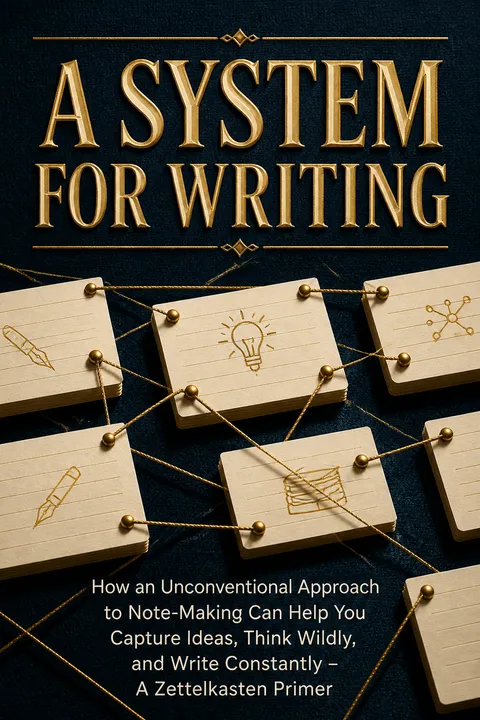

核心要点
1. 捕捉想法,释放大脑
大脑是用来产生想法的,不是用来存储想法的。
外化思维。 我们的大脑更擅长产生想法,而非储存它们。将转瞬即逝的念头、任务和提醒写下来,可以腾出心理空间,让我们专注于更深层次的思考和创造性解决问题。外化是将模糊思绪转化为连贯想法的第一步。
转瞬笔记至关重要。 转瞬笔记是快速捕捉信息的提醒,随时记录,不求永久保存,而是为更成熟的想法提供原料。无论是笔记本、纸片还是笔记应用,选择最方便的工具即可。
收件箱系统。 将转瞬笔记先放入收件箱,待后续处理。这个收件箱提醒我们,zettelkasten的特殊性在于,只有最有趣、最相关的想法才会进入你的网络。定期清理收件箱,避免积压过多,确保zettelkasten始终是宝贵资源。
2. 参考笔记连接输入与输出
参考笔记让我们在不打断思路的情况下做笔记,完成后还能回头查阅。
边参与边捕捉。 参考笔记是在主动阅读、聆听或观看时做的,记录关键观点和段落,形成个人内容索引。与转瞬笔记不同,参考笔记存入zettelkasten,成为源材料与主笔记之间的桥梁。
多样化方法。 参考笔记的方式多种多样:简单记录页码和关键词,添加标签追踪主题,或简短说明观点关联。数字工具还能捕捉整段引用。关键是找到最适合自己的方法。
边注作为参考。 不要小看直接在书上写边注的力量。边注结合参考笔记,是捕捉和利用洞见的有力手段。标记有趣段落,再将最相关内容摘录进参考笔记。
3. 主笔记:思想的基石
主笔记是你转瞬笔记的升华。
聚焦单一思想。 主笔记是zettelkasten的核心。每条笔记应只包含一个明确的思想,便于连接和再利用。思想的原子性带来更大灵活性和创造力。
必要组成。 主笔记应包括标题、单一思想、与其他笔记的链接、引用或来源记录、使用记录及唯一编号。这些元素让笔记更有用、更易连接、更易记忆。
处理转瞬笔记。 通过处理收件箱中的转瞬笔记来创建主笔记。用完整句子重写思想,思考其与其他笔记的关系,添加合适的字母数字编号。为笔记起一个简洁概括思想的标题。
4. 连接思想,激发新见解
Luhmann式zettelkasten由相互连接的思想网络构成。
关系至关重要。 zettelkasten不仅是笔记集合,更是思想网络。建立思想间的联系,是产生新见解和构建长篇论证的关键。链接让你形成可追溯、可扩展的思路链。
质疑你的思想。 建立联系时,不妨拓展思想的相关性。提问、解读潜台词,思考某个思想如何影响看似无关的话题。即使联系初看牵强,未来也可能带来意想不到的洞见。
语境化连接。 明确说明为何连接两个或多个思想,有助于未来记忆关系,深化对思想本身的理解。避免“链接堆砌”,为每个连接提供背景说明。
5. 字母数字编号:导航思想迷宫
字母数字系统,后称“folgezettel”或“后续笔记”,使Luhmann能非层级地工作。
唯一标识。 字母数字编号为每条笔记赋予永久身份,无论内容如何变化都可引用。此系统便于定位笔记、重建思路链、建立思想联系。
非层级系统。 字母数字编号非为构建层级树状结构。思想按生成顺序导入,而非语义最合理顺序。这样思想可向任意方向分支。
章节标题助组织。 可添加章节标题以归类相关笔记,但标签应在添加思想后使用,不应用于决定新思想位置。章节标签仅帮助定位zettelkasten中的区域。
6. 拥抱无序:混沌系统中的高层视角
便签盒提供了从未计划、从未预设的组合可能。
分布式网络。 zettelkasten的主体是思想的无序网络,每个思想既是交汇点,也是出发点。非层级结构促成意外联系和新颖洞见。
枢纽笔记为入口。 枢纽笔记帮助你导航zettelkasten,指向思考的不同方向。它们是进入常用思路链的入口,方便快速跳转。
结构笔记促语义连贯。 结构笔记是进一步发展思路链内容的空间。它们帮助你组织和解释思想间关系,构建更连贯的思维理解。
7. zettelkasten指引你,但你必须写作
zettelkasten不会告诉你该写什么。
zettelkasten作为指南。 zettelkasten能指引你写作方向,揭示连接密集区域,参考笔记显示关注焦点,结构笔记为写作奠基。但写作本身仍需你亲自完成。
避免碎片化。 不要简单复制笔记到稿件。重写思想以适应论证语境,添加语义连接,使内容连贯。记住,zettelkasten是工具,不是替代你思考和写作的存在。
拥抱编辑。 编辑对清晰有力的写作至关重要。勇于删减无关内容,善用脚注和尾注,记住思路链中不必每条笔记都纳入稿件。
8. 为读者写作:互动、打磨与成长
意义在于共同创造。
为互动而写。 为读者写作不仅是表达思想,更是参与对话。发布作品,获取反馈,挑战信念,完善思考。
短内容测试想法。 利用主笔记创作推文、短文等短内容,快速测试想法,获得即时反馈。
博客主题探索。 用zettelkasten生成主题博客文章,灵活调整篇幅,打造连贯作品集。与评论互动,激发新想法,指导后续写作。
9. 管理写作:各阶段的系统支持
写作远不止写作本身。
每日日志跟踪进展。 保持每日日志,记录活动、思考和未来工作建议。日志是工作日的核心枢纽,助你保持条理和专注。
创意日志管理项目。 用创意日志跟踪具体写作项目进度。记录已做事项、待处理内容和下一步建议,帮助你续写并保持动力。
任务导向项目管理。 面对截止期限,采用任务导向管理系统。明确项目,头脑风暴任务,收集资源,只做当天任务,记录进展。助你按时完成目标。
读者评价
《写作系统》因其实用的Zettelkasten方法实施方案而备受赞誉。读者们欣赏其清晰的讲解、具体的案例以及切实可行的建议。许多人认为,相较于其他同类书籍,尤其是针对初学者来说,本书更易理解。该书以简明而全面的方式涵盖了笔记技巧与写作流程,赢得了广泛好评。一些读者指出,本书作为理论著作的补充具有重要价值。尽管部分章节对个别读者而言相关性较低,但总体而言,本书对于希望提升写作与知识管理能力的人士来说,极具推荐价值。
其他人还在读





常见问题
What's "A System for Writing" about?
- Holistic approach: "A System for Writing" by Bob Doto introduces a holistic approach to writing that integrates note-making, idea capturing, and writing as a continuous process.
- Zettelkasten method: The book focuses on the Zettelkasten method, a system for organizing and connecting ideas to facilitate writing and creativity.
- Practical guidance: It provides practical guidance on capturing fleeting thoughts, making main notes, and connecting ideas to produce coherent writing.
- Writing as a process: The book emphasizes writing as a process that includes capturing, refining, and connecting ideas before they are transformed into text.
Why should I read "A System for Writing"?
- Enhance creativity: The book offers techniques to enhance creativity by capturing and organizing ideas effectively.
- Improve writing skills: It provides a structured approach to writing that can help improve writing skills and productivity.
- Unique methodology: The Zettelkasten method is a unique and unconventional approach that can offer new insights into personal knowledge management.
- Comprehensive guide: It serves as a comprehensive guide for writers looking to develop a consistent and productive writing practice.
What are the key takeaways of "A System for Writing"?
- Note-making importance: The importance of capturing fleeting thoughts and transforming them into main notes for future use.
- Connecting ideas: The book emphasizes the significance of connecting ideas to create a dynamic network of thoughts.
- Writing process: Writing is presented as a process that involves capturing, refining, and connecting ideas before they are written down.
- Zettelkasten benefits: The Zettelkasten method is highlighted as a tool for enhancing creativity and writing productivity.
How does the Zettelkasten method work according to Bob Doto?
- Capture ideas: The method involves capturing ideas in the form of fleeting and reference notes.
- Transform notes: These notes are then transformed into main notes that are stored and organized.
- Connect ideas: Main notes are connected to each other to form a network of ideas that can be used for writing.
- Bottom-up approach: The Zettelkasten method is a bottom-up approach where the structure emerges from the relationships between ideas.
What are fleeting notes and how are they used in the Zettelkasten method?
- Quick captures: Fleeting notes are quick captures of thoughts, ideas, or reminders that are taken on the go.
- Temporary storage: They are stored temporarily in an inbox until they can be processed into main notes.
- Potential transformation: Not all fleeting notes become main notes; only those that are relevant and valuable are transformed.
- Foundation for main notes: Fleeting notes serve as the foundation for creating more detailed and connected main notes.
What are main notes in the Zettelkasten method?
- Single idea focus: Main notes focus on a single idea and are more detailed than fleeting notes.
- Connected network: They are connected to other notes to form a network of ideas.
- Components: Main notes typically include a title, a single idea, links to other notes, and sometimes quotes or references.
- Building blocks: They serve as the building blocks for writing and developing complex trains of thought.
How does Bob Doto suggest connecting ideas in the Zettelkasten method?
- Establish relationships: Ideas are connected by establishing relationships between them, often using links or references.
- Contextual connections: Connections are made by considering the context and relevance of ideas to each other.
- Dynamic network: The goal is to create a dynamic network of ideas that can be used for writing and creativity.
- Explore possibilities: Connecting ideas allows for exploring new possibilities and insights that may not have been initially apparent.
What role do hub notes and structure notes play in the Zettelkasten method?
- Hub notes: Hub notes act as access points or highways between topics, helping to orient the user within the Zettelkasten.
- Structure notes: Structure notes organize related ideas into a coherent train of thought, often resembling a table of contents.
- High-level views: Both types of notes provide high-level views of the Zettelkasten, making it easier to navigate and engage with ideas.
- Facilitate writing: They facilitate writing by organizing and making sense of the network of ideas within the Zettelkasten.
How can the Zettelkasten method help in writing for readers?
- Idea development: The method helps in developing ideas into coherent writing by organizing and connecting them.
- Reader engagement: Writing for readers involves putting ideas out into the world to engage with others and gain feedback.
- Content creation: The Zettelkasten method supports content creation for various formats, including blogs, articles, and books.
- Continuous process: Writing is seen as a continuous process of capturing, refining, and connecting ideas for reader engagement.
What are some common misconceptions about the Zettelkasten method?
- Not a second brain: The Zettelkasten is not a comprehensive second brain; it focuses solely on ideas.
- Not a writing substitute: It is not a substitute for writing skills; it enhances creativity and productivity but requires writing effort.
- Not hierarchical: The method is non-hierarchical and does not rely on predefined categories or folders.
- Not a quick fix: It requires practice and effort to see the benefits, and it is not a quick fix for writing challenges.
What are the best quotes from "A System for Writing" and what do they mean?
- "Writing is bigger than writing." This quote emphasizes that writing involves more than just putting words on a page; it includes capturing, refining, and connecting ideas.
- "The mind is for having ideas, not holding them." This highlights the importance of externalizing thoughts through note-making to free up mental space for creativity.
- "A zettelkasten is a form of controlled chaos." This suggests that while the Zettelkasten method may seem chaotic, it is a structured way to manage and connect ideas.
- "Let the writing tell you what it wants to be." This encourages writers to be open to the evolution of their writing and to let the process guide them.
How does Bob Doto address the challenges of using the Zettelkasten method?
- Getting lost: The book acknowledges the fear of getting lost in the Zettelkasten and offers strategies for navigating it effectively.
- Overcoming chaos: It emphasizes embracing the controlled chaos of the method to discover unexpected connections and insights.
- Balancing structure: The book provides guidance on balancing the non-hierarchical nature of the Zettelkasten with the need for organization.
- Continuous practice: It highlights the importance of continuous practice and engagement with the method to see its benefits.
下载 PDF
下载 EPUB
.epub digital book format is ideal for reading ebooks on phones, tablets, and e-readers.








































