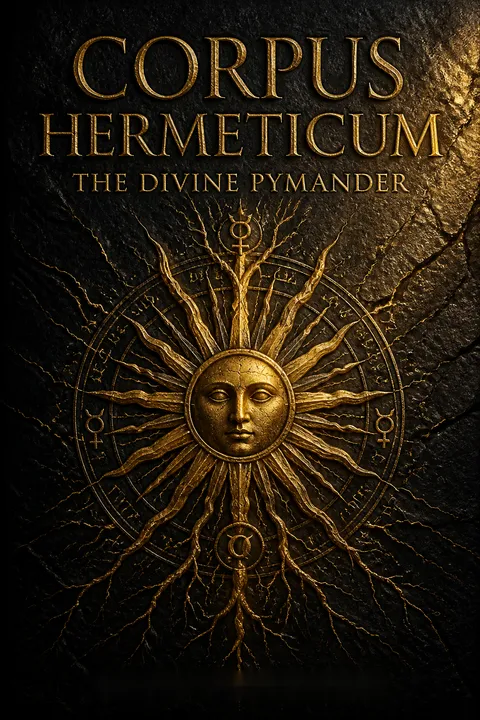

핵심 요약
1. 포에만더가 드러낸 창조의 신성한 비전
“나는 위대한 주님의 마음, 가장 강력하고 절대적인 황제인 포에만더라. 네가 원하는 바를 알고 있으며 항상 네 곁에 있노라.”
창조의 비전. 헤르메스는 거대한 존재인 포에만더(위대한 주님의 마음)가 나타나 만물과 신의 본질에 대해 가르쳐주겠다고 약속하는 신비로운 환상을 이야기한다. 이 신성한 만남은 헤르메스를 우주의 비밀로 이끈다.
우주의 전개. 포에만더는 우주가 원초적 빛과 어둡고 습한 본성에서 비롯되었음을 밝힌다. 빛에서 나온 거룩한 말씀이 자연과 결합하여 불과 공기를 위로 분리하고, 땅과 물은 아래에 남겼다. 신(생명과 빛)에게서 태어난 작업자 마음이 감각 세계와 그 일곱 통치자(운명)를 창조했다.
인간의 기원. 아버지 마음은 자신의 형상대로 아름답고 사랑받는 인간을 낳았다. 인간은 작업자의 창조물을 보고 자신도 창조하고자 하여 생성의 영역으로 내려왔다. 그는 일곱 통치자의 본성을 나누어 갖고, 습한 본성에 비친 자신의 모습을 사랑하며 그것과 섞여 두 가지가 되었다. 몸은 죽을 운명이지만 본질은 불멸이다.
2. 현실의 위계적 구조: 신, 세계, 인간
“첫째는 신, 둘째는 세계, 셋째는 인간이다.”
우주의 질서. 현실은 궁극적 근원에서부터 명확한 위계로 구성되어 있다. 신이 근원이며, 그 다음이 세계, 그리고 인간이 따른다. 이 질서는 존재와 영향의 사슬을 의미하며, 각 단계는 위의 단계에 의존한다.
상호연관성. 세계는 인간을 위해 존재하고, 인간은 신을 위해 존재한다. 이 관계는 우주 구조 내에 목적이 있음을 보여주며, 창조가 무작위가 아니라 신성한 목적을 향해 질서 있게 이루어졌음을 시사한다. 인간은 중요한 중재자 역할을 한다.
신성한 관계. 신은 세계를 소유하고, 세계는 인간을 소유한다. 세계는 신의 아들이며, 인간은 세계의 자식으로 여겨진다. 이러한 가족적 언어는 현실의 각 단계 간 친밀한 연결과 의존을 강조한다.
3. 신의 본성: 드러나지 않으나 가장 드러난 선
“신이란 무엇인가? 변하지 않는, 혹은 바뀌지 않는 선이다.”
신은 선이다. 신은 절대적이고 변하지 않는 선으로 정의되며, 모든 선이 흘러나오는 근원이다. 이 선은 움직임이나 생성이 없는 본질이지만, 모든 것 안에 존재하며 아무것도 바라지 않고 풍성히 베푼다.
숨겨졌으나 보이는 존재. 신은 궁극적 본질에서 드러나지 않고 나타나지 않으며, 생성되거나 만들어지지 않았다. 그러나 모든 것을 나타나게 함으로써 모든 것 안에서, 그리고 모든 것에 의해 드러난다. 특히 마음의 눈으로 그를 찾는 이들에게 그렇다.
창조를 통해 드러남. 신의 존재와 본성은 우주의 질서—태양, 달, 별, 그리고 인간 몸의 정교한 설계—를 관찰함으로써 이해할 수 있다. 이들은 드러나지 않는 신의 솜씨로서 그의 존재와 능력을 증명한다.
4. 인간의 이중 구성: 죽을 몸과 불멸의 마음
“이 때문에, 지상에 사는 모든 것 중 인간은 이중적이다. 몸 때문에 죽을 존재이고, 실체적 인간 때문에 불멸이다...”
두 본성. 인간은 죽고 변하는 몸과 불멸하며 변하지 않는 본질 또는 마음을 가진 복합 존재다. 몸은 생성과 부패, 운명의 영향에 지배받지만, 마음은 본질적으로 신성하다.
내적 갈등. 몸 안에 거하는 영혼은 욕망과 악에 휘둘린다. 불멸의 마음은 몸의 욕망과 하위 요소들의 영향에 맞서 선과 진리를 향해 자신을 끌어올려야 한다.
신성화의 가능성. 죽을 몸을 가졌음에도 인간은 선의 아름다움을 묵상하고 마음이 영혼을 다스리게 함으로써 신성해질 잠재력을 지녔다. 이는 몸의 감각과 욕망에서 영혼을 해방시키는 길이다.
5. 진리로 가는 길: 경건, 지식, 그리고 재생
“경건의 투쟁은 신을 아는 것이며, 누구에게도 해를 끼치지 않는 것이다. 이 길이 곧 마음이 된다.”
경건과 철학. 잘 살고 복되게 죽는 참된 길은 경건과 종교를 통해서이며, 이는 철학과 불가분의 관계다. 경건함은 존재하는 것들과 그것들이 어떻게, 누구에 의해 질서 지어졌는지 아는 것이며, 창조주에 대한 감사와 경탄으로 이어진다.
지식이 핵심. 신과 진리에 대한 지식은 영혼의 덕목으로 선과 신성을 이끈다. 이 지식은 단지 육체 감각으로 얻어지는 것이 아니라 마음의 지적 작용을 통해 얻어지며, 종종 신성한 침묵이나 환상으로 묘사된다.
재생. 구원은 재생을 통해 이루어진다. 이는 마음 안에서 새로 태어나는 과정으로, 물질 세계와 그 거짓에서 멀어지는 것이다. 이 지적 생성은 어둠의 고통을 몰아내는 신성한 힘의 유입으로 완성된다.
6. 무지와 욕망의 고통
“아들아, 고통 하나는 무지이며, 둘째는 슬픔, 셋째는 절제 없음, 넷째는 욕망, 다섯째는 불의, 여섯째는 탐욕, 일곱째는 속임수, 여덟째는 시기, 아홉째는 사기, 열째는 분노, 열한째는 경솔함, 열두째는 악의다.”
고통의 근원. 인류는 무지와 육체의 욕망에서 비롯된 열두 가지 주요 고통과 악에 시달린다. 이 힘들은 영혼을 물질 세계에 묶어두고 신성한 지식으로 상승하는 것을 막는다.
무지가 근본이다. 가장 큰 고통이자 모든 악의 뿌리는 신을 알지 못하는 것이다. 이 무지는 영혼을 눈멀게 하여 몸과 욕망에 복종하게 만들고, 고통과 선으로부터의 분리를 초래한다.
악을 극복함. 이 고통들은 지식, 기쁨, 절제, 금욕, 정의, 교제, 진리 등 열 가지 신성한 힘의 유입으로 몰아내진다. 재생은 이 힘들에 의해 정화되어 지적 생성이 완성되는 과정이다.
7. 마음과 이성: 신이 인류에게 준 특별한 선물
“아들아, 또한 생각하라. 신은 인간에게 다른 모든 생명체 위에 마음과 말, 즉 이성을 자유롭게 주었으니, 이는 불멸과 동등하다.”
독특한 인간 능력. 신은 인간에게 마음(누스)과 말(로고스)이라는 독특한 선물을 주어 비이성적 존재들과 구별했다. 이 능력들은 불멸과 같으며, 인간이 신을 알고 그와 대화할 수 있게 한다.
마음의 역할. 마음은 신의 본질 그 자체이며 인간 영혼의 은인이자 다스리는 자다. 마음은 몸의 욕망에 저항하며 선으로 이끈다. 비이성적 존재에서는 마음이 단지 본능이나 자연으로 작용한다.
말과 마음. 말은 마음의 형상이며, 마음은 신의 형상이다. 모든 생명체가 소리를 내지만, 오직 인간만이 말을 통해 이해를 드러내고 신성한 지식을 전달할 수 있다.
8. 신의 편재성과 만물 포괄성
“오직 그만이 만물이다.”
신은 만물이다. 신은 단순한 창조자가 아니라 존재의 총체다. 그는 모든 것 안에 있고 모든 것을 통해 존재하며, 우주 전체를 품고 생명과 활력을 준다. 신이 아닌 것은 존재하지 않는다.
속성을 초월함. 신은 크기, 장소, 질, 형상, 시간 등의 일반적 속성을 초월한다. 그는 모든 것의 존재 원인이며 마음, 영, 빛의 근원이지만, 제한된 의미에서 이들 중 어느 것도 아니다.
행위와 능력. 신의 본성은 순수한 행위와 능력이다. 그의 작용은 막을 수 없으며 모든 것을 만들고 우주의 생명과 운동이 된다. 아무것도 게으르거나 공허하지 않다. 모든 것은 신의 활동적 현존으로 가득 차 있다.
9. 가장 큰 악은 신을 알지 못함이다
“신을 알지 못하는 것이 가장 큰 악이다.”
악의 근원. 신을 모르는 무지는 최고의 악으로, 육체적 고통이나 맹수보다도 영혼에 더 파괴적이다. 이는 불경과 고통, 육체 욕망에 사로잡힌 삶으로 이끈다.
무지의 결과. 무지한 영혼은 눈멀어 몸에 복종하며 외부 세력에 지배당한다. 자신의 신성한 잠재력을 발휘하지 못하고 악에 시달리며 육체에 집착하여 불멸이나 선에 참여하지 못한다.
선으로 가는 길. 반대로 신을 아는 것은 영혼의 덕이며 선하고 경건하며 신성해지는 길이다. 이 지식만이 인간에게 진정한 건강을 주며 신성한 근원으로 돌아가게 한다.
10. 해체는 파괴가 아닌 갱신이다
“아들아, 그들은 죽지 않는다. 복합체로서 해체될 뿐이다.”
변화의 본질. 물질 세계에서 죽음이나 부패로 보이는 것은 사실 해체와 갱신의 과정이다. 복합체는 분해되지만 그 구성 요소와 그 안의 작용은 계속 존재한다.
불멸의 작용. 행위나 작용은 비물질적이기에 불멸하며 항상 어떤 형태의 몸 안에 존재한다. 죽을 몸이 해체되어도 그와 관련된 작용들, 예를 들어 해체 자체는 남은 물질에 계속 작용한다.
우주의 순환. 세계 전체는 변하지 않지만 그 부분들은 끊임없이 변한다. 이 변화는 파괴가 아니라 생성과 갱신의 연속 과정으로, 우주에서 어떤 것도 진정으로 사라지거나 존재가 비어 있지 않음을 보장한다.
11. 영혼에게 주어진 신성한 마음의 잔
“능력이 있는 자여, 이 잔이나 그릇에 몸을 담그고 씻으라. 믿는 자여, 이 잔을 보낸 이에게 돌아갈 것을, 네가 만들어진 목적을 인정하는 자여.”
마음의 선물. 신은 기쁨으로 모든 영혼 가운데 마음을 두고 큰 잔에 마음을 가득 채워 내려보냈다. 이는 영혼들이 참여하라는 초대였다.
지식에의 초대. 이 선언은 능력 있고 자신의 신성한 기원과 목적을 믿는 자들에게 이 잔에 몸을 담그라 부른다. 마음에 ‘세례’를 받은 자는 지식을 얻고 완전하며 불멸의 인간이 된다.
거부의 결과. 선언을 놓친 자들은 말은 받지만 마음은 받지 못한다. 그들의 감각은 야만적이며 육체적 쾌락에 중독되어 진정한 목적을 모르고, 인간이 오직 낮은 욕망을 위해 존재한다고 믿는다.
12. 참된 예배: 신을 알고 선을 행함
“신에 대한 유일한 봉사는 악하지 않는 것이다.”
단순한 봉사. 신에 대한 가장 깊고 경건한 봉사는 복잡한 의식이 아니라 악하지 않는 기본 행위에 있다. 이는 경건과 지식, 덕을 지니고 신을 본받아 사는 삶을 의미한다.
경건과 지식. 참된 예배는 신을 아는 것이며, 이는 선하고 경건한 삶으로 이어진다. 이 지식은 마음을 통해 얻어지며, 영혼은 신을 찬양하고 선을 행하는 데 결코 만족하지 않는다.
아버지의 모방. 마음에 이끌린 경건한 영혼은 말과 행실에서 선을 행하며 신을 본받는다. 이러한 삶의 방식이 신께 드리는 합당한 희생이며, 순수한 영혼과 신을 향한 마음에서 나오는 이성적인 봉사다.
리뷰 요약
코퍼스 헤르메티쿰은 대체로 긍정적인 평가를 받으면서도 엇갈린 반응을 불러일으킨다. 많은 독자들은 이 책이 깊이 있고 깨우침을 주는 내용이라며, 그 영적 지혜와 철학적 깊이를 높이 평가한다. 반면, 고어체와 난해한 개념들 때문에 여러 차례 반복해서 읽어야 이해할 수 있다는 어려움을 호소하는 이들도 있다. 비평가들은 기독교적 영향과 해석의 난해함을 지적하기도 한다. 독자들은 이 책이 역사적으로 중요한 의미를 지니며, 비전통적 사상에 큰 영향을 끼쳤다는 점을 높이 산다. 그러나 일부는 혼란스럽거나 종교적 편향이 있다고 느끼기도 한다. 전반적으로 이 책은 오컬트 문헌의 기초가 되는 텍스트로 여겨지며, 고대 신비주의와 영성에 대한 통찰을 제공한다.
다른 독자들이 읽은 책
자주 묻는 질문
1. What is "Corpus Hermeticum: The Divine Pymander" by Hermes Trismegistus about?
- Ancient Hermetic Philosophy: The book is a foundational text of Hermeticism, presenting philosophical, spiritual, and cosmological teachings attributed to Hermes Trismegistus, a legendary figure said to be an ancient Egyptian sage.
- Seventeen Books of Wisdom: It consists of 17 books (or treatises), each exploring different aspects of the divine, the cosmos, the nature of man, and the path to spiritual enlightenment.
- Dialogue and Revelation: Much of the text is structured as dialogues between Hermes and his disciples (notably Tat and Asclepius), as well as visionary revelations from the divine Mind (Poemander).
- Focus on Divine Knowledge: The central theme is the pursuit of gnosis—direct knowledge of God, the universe, and the self, leading to spiritual regeneration and immortality.
2. Why should I read "Corpus Hermeticum: The Divine Pymander" by Hermes Trismegistus?
- Foundation of Western Esotericism: The text is a cornerstone of Western mystical, alchemical, and philosophical traditions, influencing thinkers from antiquity through the Renaissance and beyond.
- Universal Spiritual Insights: It offers profound insights into the nature of God, the cosmos, and the human soul, transcending specific religious boundaries.
- Path to Self-Knowledge: The book emphasizes the importance of self-knowledge and spiritual transformation, which remain relevant to seekers today.
- Historical and Literary Value: As one of the oldest philosophical texts, it provides a window into ancient wisdom and the evolution of metaphysical thought.
3. What are the key takeaways from "Corpus Hermeticum: The Divine Pymander" by Hermes Trismegistus?
- God as the Source: God is the ultimate, unknowable source of all existence, both manifest and unmanifest, and is the only true Good.
- The Divine Mind and Creation: The universe is created through the operation of the Divine Mind (Nous), with all things emanating from and returning to this source.
- Dual Nature of Man: Humans are both mortal (body) and immortal (mind/soul), capable of knowing God and transcending material existence through gnosis.
- Regeneration and Salvation: Spiritual rebirth (regeneration) is essential for salvation, achieved by overcoming ignorance and aligning with the divine.
- The Unity of All: All things are interconnected, and understanding this unity is key to wisdom and piety.
4. Who was Hermes Trismegistus, according to "Corpus Hermeticum: The Divine Pymander"?
- Legendary Sage: Hermes Trismegistus is presented as an ancient Egyptian philosopher, king, and priest, often identified with the Greek god Hermes and the Egyptian god Thoth.
- Thrice-Greatest Intelligencer: His title "Trismegistus" means "thrice-greatest," signifying his mastery in philosophy, priesthood, and kingship, or his knowledge of the three kingdoms: mineral, vegetable, and animal.
- First Teacher of Writing: He is credited as the first to communicate knowledge to humanity through writing and engraving.
- Pre-Mosaic Figure: The text claims he lived long before Moses, making his teachings among the most ancient in the world.
5. How does "Corpus Hermeticum: The Divine Pymander" by Hermes Trismegistus describe the nature of God?
- Unmanifest Yet Manifest: God is described as both hidden and most manifest, being the source of all that is, yet beyond all comprehension and form.
- The Only True Good: God alone is truly good, unchanging, and self-sufficient, with all other things being mixtures of good and evil.
- Creator Through Will: God creates all things through his will and word, not by physical means but by divine operation.
- All-Encompassing Unity: God is the One, containing all things within himself, and is both immanent in creation and transcendent above it.
6. What is the process of creation and the structure of the universe in "Corpus Hermeticum: The Divine Pymander"?
- Emanation from the Mind: Creation begins with the Divine Mind (Poemander), from which light, word, and the elements emanate.
- The Seven Governors: The Mind creates seven spiritual powers or governors (planets), who shape the sensible world and govern fate.
- Duality of Nature: The cosmos is divided into the incorporeal (spiritual) and corporeal (material), with the spiritual governing the material.
- Man as Microcosm: Humanity is created in the image of God, possessing both mortal and immortal aspects, and is given dominion over creation.
7. What is the concept of "regeneration" or spiritual rebirth in "Corpus Hermeticum: The Divine Pymander"?
- Essential for Salvation: Regeneration is the process by which the soul is purified and reborn into a higher, divine state, necessary for attaining immortality.
- Overcoming the Lower Nature: It involves overcoming the passions, ignorance, and attachments of the material body.
- Baptism in the Mind: The metaphor of being "baptized in the Cup of Mind" signifies immersion in divine knowledge and the reception of the divine intellect.
- Achieved Through Gnosis: True regeneration comes from direct knowledge of God and the self, leading to a transformation of consciousness.
8. How does "Corpus Hermeticum: The Divine Pymander" by Hermes Trismegistus define the relationship between man, God, and the cosmos?
- Man as a Mortal God: Humans are described as "mortal gods," possessing divine intellect and the potential to ascend to the divine.
- The Chain of Being: God is above all, the cosmos is the body of God, and man is the offspring of the cosmos, linking the divine and material realms.
- Purpose of Existence: Man exists to know God, give thanks, and act as a steward of creation, with the ultimate goal of returning to the divine source.
- Interconnectedness: All levels of being are interconnected, and man's actions and knowledge affect both the earthly and heavenly realms.
9. What is the role of ignorance and knowledge in "Corpus Hermeticum: The Divine Pymander" by Hermes Trismegistus?
- Ignorance as the Greatest Evil: The text repeatedly states that not knowing God is the greatest evil in man, leading to suffering and bondage.
- Knowledge as Salvation: True knowledge (gnosis) of God, the cosmos, and the self is the path to liberation and immortality.
- The Veil of the Body: The material body and its passions are seen as a "garment" that obscures true knowledge and must be overcome.
- The Teacher's Role: The wise guide others to knowledge, but only those prepared and willing can receive and benefit from it.
10. What practical advice or methods does "Corpus Hermeticum: The Divine Pymander" by Hermes Trismegistus offer for spiritual seekers?
- Practice Piety and Philosophy: The highest philosopher is one who is pious and religious, continually giving thanks to God and seeking understanding.
- Seek Solitude and Silence: Avoid the ignorance and malice of the multitude; cultivate inner silence and contemplation.
- Purify the Soul: Overcome the "torments" of ignorance, sorrow, intemperance, and other passions through self-discipline and virtue.
- Contemplate the Divine: Engage in meditation, prayer, and hymns of praise to attune the mind to the divine and receive enlightenment.
11. What are the most important concepts and definitions in "Corpus Hermeticum: The Divine Pymander" by Hermes Trismegistus?
- The All and the One: The universe is a living whole, emanating from the One (God), who is both immanent and transcendent.
- The Mind (Nous): The divine intellect is the intermediary between God and creation, and the source of all knowledge and order.
- The Soul and the Body: The soul is immortal and divine, while the body is mortal and subject to change; their union and separation are central to human experience.
- Truth and Falsehood: Only the eternal and unchanging is truly real; the material world is a realm of appearances and impermanence.
12. What are the best quotes from "Corpus Hermeticum: The Divine Pymander" by Hermes Trismegistus and what do they mean?
- "Man is a mortal god, and God is an immortal man." — This highlights the divine potential within humanity and the closeness between the human and the divine.
- "The greatest evil in man is not knowing God." — Emphasizes that ignorance of the divine is the root of all suffering and error.
- "God is not manifest, and yet most manifest." — Expresses the paradox of the divine: hidden in essence, yet revealed in all creation.
- "If thou learn and believe thyself to be of the Life and Light, thou shalt again pass into Life." — Suggests that self-knowledge and recognition of one's divine origin lead to spiritual immortality.
- "Avoid all conversation with the multitude or common people." — Advises seekers to distance themselves from ignorance and focus on inner wisdom and truth.
PDF 다운로드
EPUB 다운로드
.epub digital book format is ideal for reading ebooks on phones, tablets, and e-readers.








































