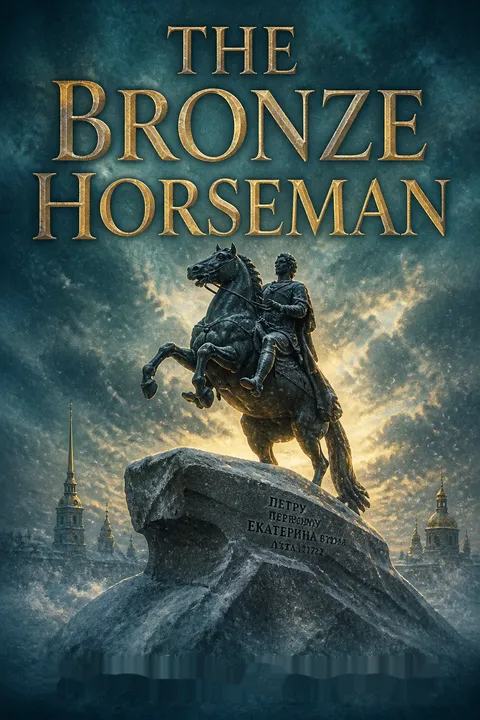

Resumen de la trama
El crepúsculo radiante de Leningrado
En el verano de 1941, Leningrado se ilumina con las noches blancas, una época de inocencia juvenil para Tatiana Metanova. Su vida está llena de alegrías sencillas hasta que la radio anuncia la invasión alemana de la Unión Soviética. La familia Metanov se sumerge en el caos, y el hermano de Tatiana, Pasha, es enviado lejos por seguridad. En medio de este torbellino, Tatiana conoce a Alexander, un soldado cuya presencia despierta profundas emociones en su interior. Su conexión es inmediata pero complicada, ya que la hermana de Tatiana, Dasha, ya está encaprichada de él. Esto marca el comienzo del viaje de Tatiana a través del amor y la guerra.
El implacable yugo de la guerra
A medida que la guerra se intensifica, la vida de Tatiana se convierte en un ciclo implacable de trabajo y anhelo en la fábrica Kirov. Sus días transcurren entre el clamor de la maquinaria y el peso de las palabras no dichas. Las visitas de Alexander se convierten en su consuelo, aunque cada encuentro está teñido por el conocimiento de los sentimientos de Dasha. El yugo de la guerra se aprieta y Tatiana se ve obligada a confrontar las duras realidades de su mundo, donde el amor y el sacrificio están en conflicto. Su lucha interna refleja el caos exterior, mientras lidia con el costo del amor en un mundo en guerra.
La lucha silenciosa de un soldado
Alexander, un soldado con un pasado misterioso, se debate entre el deber y el corazón. Su conexión con Tatiana es innegable, pero está atado por la lealtad a Dasha y atormentado por los recuerdos del trágico destino de sus padres. Mientras navega por las complejidades de la guerra y el amor, la lucha interna de Alexander se convierte en una batalla silenciosa, una que amenaza con deshacer los frágiles lazos que ha formado. Su pasado se cierne sobre su relación, una sombra que amenaza con desbaratar la frágil paz que han encontrado.
La implacable desesperación del hambre
Con la llegada del invierno, Leningrado se sume en la oscuridad y el frío. La ciudad se queda sin electricidad, agua ni calefacción, y la familia Metanov lucha por sobrevivir con raciones insignificantes. Tatiana es testigo de la desesperación que la rodea, con personas que recurren a comer pegamento para papel tapiz y a quemar libros para calentarse. La familia se ve obligada a tomar decisiones difíciles para sobrevivir, y el espíritu antes vibrante de Tatiana se apaga ante la lucha incesante por conseguir comida y calor. A pesar de las terribles circunstancias, la presencia de Alexander reconforta a Tatiana, quien se aferra a la esperanza de que sobrevivirán juntos al invierno.
Amor entre las ruinas
A pesar de la devastación que los rodea, la conexión entre Tatiana y Alexander se fortalece. Encuentran consuelo en la presencia del otro, incluso mientras navegan por las complejidades de su relación en medio de la guerra. Su amor se convierte en un faro de esperanza en la oscuridad, un recordatorio de aquello por lo que luchan al enfrentar los desafíos que se avecinan. Al hacerse promesas silenciosas, se ven obligados a confrontar la realidad de su situación. La guerra los ha cambiado a ambos, y los secretos que guardan podrían unirlos para siempre o separarlos irremediablemente.
Secretos y promesas silenciosas
El pasado de Alexander se cierne sobre su relación, una sombra que amenaza con desbaratar la frágil paz que han encontrado. Tatiana intuye el peso de los secretos que él carga, pero decide confiar en el amor que comparten. Al hacerse promesas silenciosas, se ven obligados a confrontar la realidad de su situación. La guerra los ha cambiado a ambos, y los secretos que guardan podrían unirlos para siempre o separarlos irremediablemente. Su amor es un santuario, un escape momentáneo del caos que los rodea.
Un plan de escape desesperado
A medida que la amenaza del NKVD se acerca, Tatiana diseña un audaz plan de escape para sacar a Alexander de la Unión Soviética. Con la ayuda del Dr. Sayers, un médico de la Cruz Roja, planean disfrazar a Alexander de piloto finlandés y escapar a Helsinki. La determinación de Tatiana por salvar a Alexander es inquebrantable, incluso al enfrentar la realidad de su peligrosa situación. El amor que siente por él la impulsa a asumir riesgos, y está dispuesta a hacer lo que sea necesario para garantizar su seguridad. El plan de escape es una prueba de su coraje y determinación, y sirve como catalizador en su viaje hacia la libertad.
El peligroso cruce de la frontera
El plan de escape se pone en marcha mientras Tatiana, Alexander y Dimitri se dirigen hacia la frontera finlandesa. El viaje está plagado de peligros, ya que deben sortear puestos de control y evitar ser detectados por el NKVD. La tensión es máxima ante la posibilidad de ser capturados en cualquier momento. La determinación de Tatiana se pone a prueba al enfrentar la realidad de la situación, pero su amor por Alexander le da las fuerzas para perseverar. El cruce de la frontera es un momento crucial, una prueba de su valor y de su empeño por alcanzar la libertad.
Comienza una nueva vida
Tras un viaje desgarrador, Tatiana llega a América cargando con el peso de su pasado y la esperanza de un nuevo comienzo. Está decidida a construir una vida para ella y su hijo, incluso mientras lidia con la pérdida de Alexander. Su resiliencia y fortaleza quedan de manifiesto al enfrentar los desafíos de su nuevo mundo. El viaje de Tatiana es un testimonio de su espíritu inquebrantable y de su amor eterno por Alexander, cuya memoria lleva consigo hacia el futuro. Su historia es una prueba del poder perdurable del amor, incluso ante una pérdida inimaginable.
Analysis
Amor perdurable en medio del caos de la guerraEl jinete de bronce, de Paullina Simons, es una conmovedora exploración del amor y el sacrificio ambientada en el marco de la Segunda Guerra Mundial. La novela profundiza en las complejidades de las relaciones humanas en medio del caos de la guerra, destacando los conflictos morales y emocionales que enfrentan los personajes. La historia de amor de Tatiana y Alexander es un testimonio del poder perdurable del amor, incluso ante una pérdida inimaginable. La novela subraya la resiliencia del espíritu humano, mientras los personajes navegan por los desafíos de la supervivencia y el costo del amor en un mundo desgarrado por la guerra. A través de su rica narrativa y personajes complejos, El jinete de bronce ofrece una poderosa reflexión sobre los temas del amor, el sacrificio y la esperanza.
Resumen de reseñas
El jinete de bronce es una polarizadora novela de romance histórico ambientada durante la Segunda Guerra Mundial en Leningrado. Muchos lectores la elogian como una historia de amor épica y emotiva entre Tatiana y Alexander, con vívidos detalles históricos y una pasión intensa. Sin embargo, otros critican a los personajes por ser poco atractivos y a su relación por resultar problemática. El estilo de escritura y el ritmo dividen opiniones: mientras algunos lo consideran bellamente escrito, otros lo encuentran excesivamente largo. A pesar de las opiniones encontradas, el libro evoca reacciones intensas y muchos fanáticos lo consideran inolvidable.
También leyeron


Characters
Tatiana Metanova
Tatiana es el corazón de su familia, asumiendo la carga de la supervivencia en la ciudad sitiada. Su fuerza y determinación se ponen a prueba mientras navega por las duras realidades de la guerra, pero su amor por Alexander y por su familia la impulsa a seguir adelante. A pesar de las dificultades, Tatiana sigue siendo un faro de esperanza y resiliencia, decidida a construir un futuro con Alexander y, más tarde, a honrar su memoria criando a su hijo con la misma fuerza y entereza que él encarnaba.
Alexander Belov
Alexander es un soldado abrumado por el peso de su pasado. Su amor por Tatiana es una fuente de consuelo y fortaleza, pero los secretos que oculta amenazan con destruir su relación. Se debate entre el deber y el deseo de proteger a Tatiana, y su lucha interna es una batalla constante. A pesar de los desafíos que enfrentan, su devoción por Tatiana es inquebrantable y está decidido a construir una vida con ella. Su sacrificio final es un doloroso recordatorio del costo del amor en un mundo desgarrado por la guerra.
Dasha Metanova
Dasha es la hermana mayor de Tatiana, cuyos sueños de amor están entrelazados con Alexander. Su relación con él es una fuente de tensión y conflicto, ya que desconoce la profundidad de los sentimientos de Tatiana. El optimismo y los ideales románticos de Dasha contrastan con las crudas realidades de la guerra. Su muerte es un recordatorio constante del costo de la guerra, y su presencia se percibe en las decisiones que toman Tatiana y Alexander. Tatiana lucha con la culpa de haber sobrevivido cuando su hermana no lo logró, y la ausencia de Dasha es un eco nostálgico de la vida que alguna vez conocieron.
Dimitri Chernenko
Dimitri es una figura compleja en la vida de Alexander, un amigo cuyos motivos suelen ser poco claros. Su presencia es una fuente de tensión, ya que sus acciones y secretos amenazan con perturbar la frágil paz que Tatiana y Alexander han encontrado. La naturaleza oportunista de Dimitri resalta las ambigüedades morales de la guerra, mientras persigue sus propios deseos en medio del caos. Su camino está marcado por la ambigüedad moral mientras navega por las complejidades de la guerra y la amistad.
Irina Metanova
Irina es la madre de Tatiana, quien lucha por mantener unida a su familia en medio del caos. El dolor por la pérdida de su esposo y los desafíos de la supervivencia pesan gravemente sobre ella, pero su determinación de proteger a sus hijas se mantiene firme. La resiliencia de Irina es un testimonio de la fuerza del amor materno mientras afronta los desafíos de su nueva realidad.
Georgi Metanov
Georgi es el padre de Tatiana, cuya perspectiva pragmática de la vida se ve puesta a prueba por la guerra. Su esperanza en el regreso de Pasha es una fuente de fortaleza y, a la vez, de negación, mientras lidia con la incertidumbre de su situación. Su relación con Tatiana es de apoyo silencioso y entendimiento implícito mientras enfrentan los desafíos de su nueva realidad.
Dr. Matthew Sayers
El Dr. Sayers es un médico de la Cruz Roja que se convierte en aliado de Tatiana y Alexander. Su compasión y recursos resultan fundamentales para el plan de escape. La disposición del Dr. Sayers para ayudar a Tatiana y Alexander es un testimonio de su carácter, y sus acciones desempeñan un papel crucial en su viaje hacia la libertad.
Plot Devices
War as a Catalyst
La guerra funciona como un catalizador para los acontecimientos de la historia, guiando las acciones y decisiones de los personajes. Crea un trasfondo de tensión e incertidumbre que los obliga a confrontar sus temores y deseos más profundos. El impacto de la guerra en la vida de los personajes es profundo, moldeando sus relaciones y sus destinos. El sitio de Leningrado, en particular, pone de relieve las incesantes dificultades que enfrentan, poniendo a prueba su resiliencia y su determinación para sobrevivir.
Love and Sacrifice
Los temas del amor y el sacrificio son fundamentales en la narrativa, mientras los personajes navegan por las complejidades de sus relaciones en medio de la guerra. El amor entre Tatiana y Alexander es un faro de esperanza, mientras que los sacrificios que realizan evidencian el costo moral y emocional de la supervivencia. El sacrificio final de Alexander es un doloroso recordatorio del costo del amor en un mundo desgarrado por la guerra, y el viaje de Tatiana es un testimonio del poder perdurable del amor, incluso ante una pérdida inimaginable.
Secrets and Revelations
Los secretos que guardan los personajes generan tensión e impulsan la trama. El pasado de Alexander y los temores de Tatiana son verdades ocultas que, al revelarse, traen consecuencias significativas para su relación. Estas revelaciones funcionan como puntos de inflexión en la narrativa, obligando a los personajes a confrontar las realidades de su mundo y las decisiones que deben tomar. La interacción de estos temas resalta los conflictos morales y emocionales que enfrentan.
The Escape Plan
El plan de escape es un recurso argumental central que impulsa la narrativa y genera tensión y suspenso. El plan está lleno de peligros, ya que Tatiana y Alexander deben sortear puestos de control y evitar ser detectados por el NKVD. El plan de escape es una prueba de su coraje y determinación, y sirve como catalizador en su viaje hacia la libertad. Destaca los extremos a los que Tatiana está dispuesta a llegar para proteger a Alexander y asegurar su futuro juntos.
Preguntas frecuentes
Synopsis & Basic Details
What is The Bronze Horseman about?
- Epic Wartime Romance: The Bronze Horseman is a sweeping historical romance set during World War II, primarily focusing on the brutal Siege of Leningrad. It chronicles the intense and forbidden love story between Tatiana Metanova, a young, innocent Russian girl, and Alexander Belov, a Red Army officer with a mysterious past.
- Survival Against Odds: The narrative plunges readers into the harrowing realities of a city under siege, depicting the relentless struggle for survival amidst starvation, bombing, and unimaginable loss. It explores how ordinary people endure extraordinary hardship, clinging to hope and humanity.
- Love and Sacrifice: At its core, the novel is a testament to the resilience of the human spirit and the transcendent power of love. Tatiana and Alexander's relationship becomes a sanctuary against the chaos, forcing them to make profound sacrifices and confront moral dilemmas in their fight for a future together.
Why should I read The Bronze Horseman?
- Emotional Depth & Intensity: Readers should delve into The Bronze Horseman for its raw, unflinching portrayal of human emotion under extreme duress. The novel masterfully evokes profound love, devastating loss, and unwavering hope, creating an immersive and deeply moving experience.
- Historical Immersion: Beyond the romance, the book offers a vivid and meticulously researched depiction of the Siege of Leningrad, providing a powerful historical backdrop that educates and engrosses. It brings to life the daily struggles, the propaganda, and the sheer will to survive that defined this period.
- Complex Character Arcs: The characters, particularly Tatiana and Alexander, undergo immense transformation, revealing layers of resilience, vulnerability, and moral complexity. Their journey of self-discovery and mutual salvation makes for compelling psychological analysis and a truly unforgettable reading experience.
What is the background of The Bronze Horseman?
- Historical Context: Siege of Leningrad: The novel is set against the real historical backdrop of the Siege of Leningrad (1941-1944), one of the longest and most destructive sieges in history. This period saw millions of civilians trapped, facing extreme cold, starvation, and constant bombardment by Nazi German forces.
- Author's Personal Tribute: Paullina Simons explicitly states in the appendix, "Lev and Maria's Story," that the novel is a tribute to her own grandparents, Maria and Lev Handler, who survived World War II, the Siege of Leningrad, and evacuation. This personal connection imbues the narrative with authenticity and emotional resonance.
- Soviet Life and Ideology: The story deeply embeds itself in the cultural and political realities of Soviet Russia, showcasing communal living, pervasive propaganda, the omnipresent NKVD (secret police), and the stark contrast between official narratives and lived experiences. This background is crucial for understanding character motivations and societal pressures.
What are the most memorable quotes in The Bronze Horseman?
- "Our cause is just. The enemy will be crushed. Victory will be ours.": This quote, delivered by Comrade Molotov in the opening chapter, encapsulates the initial, propagandistic optimism of the Soviet government, starkly contrasting with the brutal reality of the war that unfolds. It highlights the theme of Soviet propaganda vs. reality.
- "Life is so unpredictable. That's what I like least about it. If only life were more like math.": Deda's poignant reflection on life's unpredictability, shared early in the novel, foreshadows the immense chaos and unforeseen tragedies that will befall the Metanova family. This quote underscores the fragility of existence and the human desire for order amidst chaos.
- "I will not break my sister's heart.": Tatiana's resolute declaration to Alexander, repeated multiple times, defines her initial moral compass and the profound internal conflict she faces. This quote is central to the themes in The Bronze Horseman of love and sacrifice, showcasing Tatiana's unwavering commitment to her family even at immense personal cost.
What writing style, narrative choices, and literary techniques does Paullina Simons use?
- Immersive and Sensory Prose: Simons employs a highly descriptive and sensory writing style, immersing readers in the sights, sounds, smells, and physical sensations of besieged Leningrad and the characters' experiences. This vivid detail, from the "acrid acidity" of burning sugar to the "piercing, frozen deluge" of the Neva, creates a visceral reading experience.
- Dual Perspective and Internal Monologue: While primarily told from Tatiana's third-person limited perspective, Alexander's internal thoughts (especially in his letters) and occasional direct address to Tatiana provide crucial insights into his motivations and struggles. This narrative choice deepens the character analysis and emotional complexity.
- Symbolism and Foreshadowing: Simons masterfully weaves in symbolism (e.g., the white dress, the Bronze Horseman statue, food, water, light/darkness) and subtle foreshadowing (e.g., Deda's warnings, Alexander's veiled truths about the war's progression). These literary techniques enrich the narrative, adding layers of meaning and enhancing the reader's interpretive engagement with the themes in The Bronze Horseman.
Hidden Details & Subtle Connections
What are some minor details that add significant meaning?
- Tatiana's "Quarterlies": Early in the book, Tatiana laments her irregular menstrual cycle, contrasting it with Dasha's predictable "monthlies." This seemingly minor detail subtly highlights Tatiana's lingering innocence and delayed physical maturity compared to her older sister, foreshadowing her emotional and sexual awakening later in the story. It also subtly hints at her initial lack of readiness for the harsh realities of adulthood and war.
- The Missing Bolt in the KV-1 Tank: Alexander recounts the story of Karl Ots, the Kirov plant director, who was purged because a single bolt was missing from a tank. This detail, seemingly about industrial efficiency, is a chilling reminder of the pervasive paranoia and arbitrary brutality of the Soviet regime, emphasizing the constant threat of the NKVD and the high stakes of even minor errors in their society. It underscores the themes in The Bronze Horseman of totalitarian control and individual vulnerability.
- Alexander's "Gibberish": When Alexander is driving the truck to Luga, he mutters "Dad, I'm going for her" in English, and Sergeant Kashnikov dismisses it as "gibberish." This small moment is a poignant callback to Alexander's American identity and his deep, unspoken motivation for risking his life for Tatiana, a detail unknown to anyone else. It subtly reinforces the Alexander Belov motivations and the hidden layers of his character.
What are some subtle foreshadowing and callbacks?
- Deda's Prophetic Warnings: From the very first chapter, Deda's pronouncements, such as "the life you know is over. Mark my words. From this day forward, nothing will be as you have imagined," subtly foreshadow the complete upheaval and devastation that the war will bring to their lives, far beyond Tatiana's initial excitement for evacuation. This sets a tone of impending doom that contrasts with early innocence.
- The Hermitage Art Evacuation: Alexander points out the evacuation of priceless art from the Hermitage, stating that "paintings can't fight for Leningrad," but the people will. This conversation subtly foreshadows the immense human cost of the siege and the idea that human lives are expendable for the preservation of cultural heritage or the state's ideology, a grim reality that Tatiana will later experience firsthand. It's a powerful symbolism in The Bronze Horseman of the state's priorities.
- Alexander's "Indifferent Face": Alexander repeatedly refers to his "indifferent face" as a shield, particularly when interacting with Tatiana in public or when discussing painful truths. This is a callback to his coping mechanism developed during his traumatic past, subtly foreshadowing moments where his true emotions will break through, revealing the depth of his feelings despite his attempts to conceal them. This is key to Alexander Belov's psychological complexities.
What are some unexpected character connections?
- Tatiana and Slavin's Shared Vulnerability: While Slavin is initially portrayed as a "crazy," malodorous communal apartment resident, Tatiana later finds a strange connection with him, borrowing his Primus stove and even cooking for him. His seemingly nonsensical ramblings often contain unsettling truths about the war and the regime, making him an unexpected, albeit disturbing, source of insight and a reflection of the psychological toll of their environment.
- Alexander's Link to Colonel Stepanov's Son: The revelation that Alexander received his first medal of valor for attempting to rescue Colonel Stepanov's son, Yuri, from the Finnish swamps creates a profound and unexpected bond between Alexander and his commanding officer. This connection explains Stepanov's later leniency and trust in Alexander, highlighting a hidden layer of personal sacrifice and loyalty that transcends military duty. This is a crucial Alexander Belov motivation detail.
- Tatiana's Unconscious Connection to Alexander's Past: Tatiana's seemingly random choice of the "Banya" story by Zoshchenko, her fascination with the "Fabriqué en France" dress, and her later ability to instinctively understand Alexander's unspoken pain, all subtly connect her to elements of Alexander's American past and his longing for cleanliness, freedom, and genuine connection, even before she knows his true origins. This hints at a deeper, almost fated, bond between them.
Who are the most significant supporting characters?
- Deda (Tatiana's Grandfather): Deda serves as the family's moral compass and a voice of prescient wisdom. His early warnings about Hitler and the war, his quiet foresight in stockpiling food, and his unwavering integrity ("no less moral," "no less righteous") provide a stark contrast to the family's denial and the regime's lies. His death marks a significant turning point, symbolizing the loss of traditional values and wisdom in the face of overwhelming chaos.
- Naira Mikhailovna (Lazarevo Grandmother): Naira, Alexander's "aunt" by his assumed identity, becomes a surrogate grandmother figure for Tatiana in Lazarevo. She and the other old women provide a sense of community, warmth, and traditional Russian life that Tatiana desperately needs after the horrors of Leningrad. Their well-meaning but intrusive gossip and their deep affection for both Alexander and Tatiana highlight the cultural context of village life and the enduring human need for connection.
- Dr. Matthew Sayers: Dr. Sayers, the American Red Cross doctor, is more than just a plot device for Alexander's escape. He represents an external, compassionate perspective on the Soviet reality, bringing not only medical aid but also a glimpse of the outside world and a different set of values. His willingness to risk his own safety for Alexander and Tatiana underscores the theme of universal humanity transcending political divides, and his role is pivotal in the escape plan explained.
Psychological, Emotional, & Relational Analysis
What are some unspoken motivations of the characters?
- Tatiana's Need for Purpose and Validation: Beyond her stated desire to find Pasha, Tatiana's impulsive journey to Tolmachevo and her later dedication to nursing are driven by an unspoken need to prove her worth and capability, especially after overhearing her parents' preference for Pasha and their dismissal of her as "timid and weak." This motivation fuels her extraordinary resilience and self-sacrifice.
- Alexander's Quest for Redemption: Alexander's relentless drive to protect Tatiana and later, to escape with her, is deeply rooted in his unspoken guilt over his parents' fate and his inability to save them. His desire to "redeem" himself by saving Tatiana becomes a powerful, almost obsessive, motivation, as he seeks to rectify past failures through present actions. This is a core Alexander Belov motivation analysis.
- Dasha's Desire for Stability and Acceptance: Dasha's infatuation with Alexander, and her later clinging to the idea of marriage, stems from an unspoken longing for stability and a conventional life, especially as the world around her crumbles. Her seemingly superficial romanticism masks a deeper need for security and validation, which she believes Alexander can provide. This adds depth to Dasha Metanova's character analysis.
What psychological complexities do the characters exhibit?
- Tatiana's Dissociation and Resilience: Tatiana exhibits a complex psychological response to trauma, often detaching from horrific realities (e.g., her initial excitement for war, her ability to "turn off" emotions). This dissociation allows her to function and survive, but it also creates internal walls. Her resilience is not just strength, but a learned coping mechanism to endure unimaginable suffering, often at the cost of her own emotional processing.
- Alexander's Burden of Knowledge and Control: Alexander carries the immense psychological burden of knowing the truth about the war's progression and the regime's brutality, while being forced to maintain a facade of normalcy or even optimism. His need for control, evident in his military precision and his attempts to dictate Tatiana's actions, stems from a deep-seated fear of helplessness, a direct result of his past trauma. This is central to Alexander Belov's psychological complexities.
- Dimitri's Self-Preservation and Envy: Dimitri's character is a study in extreme self-preservation, bordering on amorality. His constant maneuvering for personal safety and comfort, coupled with a deep-seated envy of Alexander's perceived ease and success, reveals a complex psychological landscape. His actions are driven by a cynical worldview shaped by the harsh Soviet reality, where survival at any cost is the ultimate virtue. This offers a nuanced Dimitri Chernenko character analysis.
What are the major emotional turning points?
- Pasha's Presumed Death and Parental Betrayal: The news of Pasha's train being blown up, combined with Tatiana overhearing her parents wish she had died instead of him, is a devastating emotional turning point. This moment shatters Tatiana's remaining innocence, forcing her to confront the harsh realities of familial love under duress and propelling her into a desperate search for purpose and self-worth.
- Alexander's Revelation of His American Past: Alexander's confession of his American origins and his parents' execution by the NKVD is a pivotal emotional moment. It strips away his mysterious facade, revealing profound vulnerability and a shared history of suffering that deepens Tatiana's empathy and love for him, forging an unbreakable bond built on shared trauma and trust. This is a key Alexander Belov character development point.
- Tatiana's Confrontation with Alexander in Lazarevo: The explosive argument in Lazarevo, where Tatiana confronts Alexander about his lies and perceived indifference, is a major emotional climax. It forces both characters to articulate their deepest fears and desires, leading to a raw, honest reckoning of their complex relationship and ultimately, a deeper understanding and commitment to each other. This scene is crucial for Tatiana Metanova's emotional analysis.
How do relationship dynamics evolve?
- Tatiana and Dasha: From Sisterly Bond to Bitter Rivalry: Initially, Tatiana and Dasha share a close, if somewhat imbalanced, sisterly relationship. However, Dasha's infatuation with Alexander and Tatiana's hidden love for him gradually introduce a bitter rivalry and deep-seated deception. Dasha's eventual death, and Tatiana's subsequent guilt, leave a complex legacy of love, sacrifice, and unspoken resentment that continues to influence Tatiana.
- Alexander and Dimitri: From Friendship to Antagonism: Their relationship evolves from a complex friendship, rooted in Alexander's need for Dimitri's father's help, to a tense antagonism fueled by Dimitri's envy and Alexander's growing contempt for Dimitri's self-serving nature. Dimitri's constant threats and manipulations ultimately force Alexander to make impossible choices, highlighting the corrosive effects of war on personal bonds. This is a central aspect of Dimitri Chernenko's relationship dynamics.
- Tatiana and Alexander: From Forbidden Love to Unbreakable Union: Their relationship transforms from a clandestine, guilt-ridden affair into an unbreakable bond forged in shared suffering and mutual salvation. They move from tentative intimacy to profound emotional and physical communion, becoming each other's sole source of strength and purpose. Their marriage, though unconventional, symbolizes their absolute commitment to each other against all odds, embodying the themes in The Bronze Horseman of enduring love.
Interpretation & Debate
Which parts of the story remain ambiguous or open-ended?
- The Fate of Alexander's American Money: While Tatiana finds Alexander's hidden dollars and uses some, the ultimate fate and significance of the remaining money are left somewhat open. It's unclear if it truly represents a viable escape route or merely a symbol of a lost dream, adding to the ambiguity of their future in America. This detail invites debate on the practicality versus symbolism of material wealth in their desperate
El jinete de bronce Serie


Descargar PDF
Descargar EPUB
.epub digital book format is ideal for reading ebooks on phones, tablets, and e-readers.








































