
Plot Summary
Exile's Beginning
In the early 1930s, young Alexander Barrington is uprooted from his American childhood when his idealistic parents, Harold and Jane, abandon the United States for the Soviet Union, seeking to live out their communist beliefs. The transition is jarring: the family faces poverty, suspicion, and the slow erosion of hope as they navigate the harsh realities of Stalinist Russia. Alexander's American identity is gradually subsumed by the demands of survival and the need to adapt. The family's sacrifices, once noble in theory, become a source of pain and regret. Alexander's coming-of-age is marked by loss, disillusionment, and the constant tension between his parents' dreams and the grim Soviet reality. The seeds of his future resilience and longing for freedom are sown in this crucible of exile.
Love Across War's Divide
Amid the devastation of World War II, Alexander, now a Red Army officer, meets Tatiana Metanova, a young nurse, in besieged Leningrad. Their love is immediate, intense, and fraught with danger—not only because of the war, but also because of Tatiana's family and Alexander's hidden past. The city's starvation and violence mirror the couple's desperate need for each other. Their relationship becomes a sanctuary, a rebellion against the surrounding death and despair. Yet, every moment together is shadowed by the threat of discovery and the impossibility of a future. Their love story is both a lifeline and a source of agony, as they are forced to make impossible choices to protect one another.
Escape and Sacrifice
As the war intensifies, Alexander and Tatiana hatch a plan to escape the Soviet Union. Alexander, aware that his American origins make him a target, orchestrates a ruse to fake his own death, ensuring Tatiana's safe passage out of Russia. The escape is harrowing, involving forged documents, dangerous alliances, and the constant risk of betrayal. Tatiana, pregnant and alone, must summon all her courage to survive and reach safety. Alexander's sacrifice is both an act of love and a sentence to his own suffering, as he remains behind, facing the wrath of the Soviet regime. Their separation is a crucible, testing the limits of their devotion and hope.
Prisoners of Two Worlds
Alexander is arrested by the NKVD and endures brutal interrogations, accused of espionage and treason. His American past and Soviet present collide, leaving him with no place to belong. Meanwhile, Tatiana arrives in America, a stranger in a new land, haunted by loss and the uncertainty of Alexander's fate. Both are prisoners—he of the Soviet system, she of her memories and longing. Their parallel struggles highlight the cost of divided loyalties and the pain of exile. Each clings to the hope of reunion, even as the world conspires to keep them apart.
The Second America
Through flashbacks, Alexander's family's journey from American idealism to Soviet disillusionment is revealed. The promise of a "second America" in Russia gives way to suspicion, deprivation, and the slow destruction of the Barrington family. Alexander's parents are broken by the system they once revered, and Alexander himself is forced to adopt a new identity to survive. The chapter explores the psychological toll of ideological betrayal and the loss of innocence. The dream of building a better world is replaced by the harsh necessity of endurance.
Survival and Separation
Tatiana, now a mother, struggles to build a life in America while mourning Alexander. She finds solace in her son, Anthony, and in the friendships she forms with fellow immigrants and hospital staff. Yet, the trauma of war and separation lingers. Alexander, meanwhile, is sent to penal battalions and later to German POW camps, surviving through sheer will and the memory of Tatiana's love. Both are shaped by their ordeals, learning to survive in worlds that are indifferent to their suffering. Their stories are marked by resilience, but also by the ache of absence.
The Bridge to Holy Cross
As the war ends, Alexander is swept westward with the retreating German forces, eventually landing in Colditz, a notorious POW camp. Tatiana, driven by hope and haunted by uncertainty, volunteers with the Red Cross to search for survivors in Europe. Their journeys are perilous, marked by near-misses and the constant threat of discovery. The "bridge to Holy Cross" becomes a metaphor for the tenuous hope that sustains them—a crossing over from despair to the possibility of reunion. Both are tested by the shifting allegiances and chaos of postwar Europe.
The Ordeal of Faith
Alexander's time in Soviet and German captivity is marked by betrayal—not only by the systems that imprison him, but by those he once trusted. Friends become informants, and survival often means compromising one's soul. Tatiana, too, faces betrayal: by the world that refuses to acknowledge her loss, by the bureaucracy that thwarts her search, and by her own doubts. Yet, both refuse to surrender hope. Their faith—in each other, in the possibility of redemption—becomes an act of defiance. The ordeal strips them to their core, revealing the strength and fragility of the human spirit.
Shadows of Betrayal
As Alexander endures the Gulag and the treachery of fellow prisoners, he is forced to confront the limits of trust. Ouspensky, once a comrade, is revealed as an informant, deepening Alexander's sense of isolation. Tatiana, meanwhile, faces the temptations and dangers of her new life, struggling to remain true to Alexander's memory. Both are haunted by the betrayals that have shaped their journeys. The chapter explores the psychological scars left by treachery and the difficulty of forgiveness—in others and in oneself.
The Long Return
With the war over, Tatiana embarks on a desperate quest across Europe to find Alexander, following the faintest traces of his existence. Her journey is fraught with danger, bureaucracy, and the ever-present threat of Soviet retribution. Alexander, weakened but unbroken, seizes a final chance to escape captivity. Their paths, long divergent, begin to converge amid the ruins of postwar Germany. The long return is both literal and metaphorical—a journey through loss, memory, and the hope of renewal.
Reunion in Ruins
Against all odds, Tatiana and Alexander are reunited in a Soviet prison camp in Germany. Their meeting is a collision of joy and pain, as years of longing and suffering are brought to the surface. The world around them is still hostile, and their freedom is far from assured. Yet, in each other's arms, they find a measure of healing. Their reunion is not an end, but a new beginning—one that will require courage, sacrifice, and the willingness to fight for a future together.
The Price of Freedom
Tatiana orchestrates a daring escape for Alexander, risking everything to free him from Soviet captivity. Their flight is a test of ingenuity, trust, and endurance, as they evade pursuers and navigate the dangers of occupied Berlin. The price of freedom is steep: they must confront the trauma of their past, the uncertainty of their future, and the moral compromises required to survive. Their love, once a refuge, becomes a crucible—reforged in the fires of adversity.
The Weight of Memory
Safe in the American sector, Tatiana and Alexander must reckon with the memories that have shaped them. The ghosts of lost family, friends, and innocence linger, threatening to undermine their hard-won happiness. The world demands that they move on, but the past is not easily left behind. Their struggle is not only for survival, but for the right to remember, to grieve, and to hope. The weight of memory is both a burden and a testament to the love that has sustained them.
The Choice to Live
As they await the uncertain verdict of American authorities, Tatiana and Alexander are forced to confront the possibility of separation once more. The choice to live—to embrace the future despite the scars of the past—is not easy. Both must decide whether to surrender to despair or to fight for the life they have dreamed of. Their love, tested by war and exile, becomes a source of strength, enabling them to choose hope even in the face of overwhelming odds.
The Final Escape
With the help of allies old and new, Tatiana and Alexander secure their passage to freedom. Their final escape is not only from physical captivity, but from the psychological chains of guilt, regret, and fear. They must learn to forgive themselves and each other, to accept the losses they have endured, and to believe in the possibility of happiness. The journey is not without cost, but it is a testament to the resilience of the human heart.
Homeward Bound
Tatiana and Alexander return to America, reunited with their son and determined to build a life together. The challenges of assimilation, healing, and starting anew are daunting, but they face them with the hard-won wisdom of survivors. Their love, forged in the crucible of war and exile, becomes a foundation for hope. The promise of home is not the absence of pain, but the presence of love, memory, and the courage to begin again.
The Test of Love
Even in safety, Tatiana and Alexander must navigate the lingering effects of trauma, jealousy, and the fear of loss. Their relationship is tested by the demands of ordinary life, the shadows of the past, and the need to forgive—not only each other, but themselves. The test of love is not in grand gestures, but in the daily acts of kindness, patience, and understanding that sustain a marriage. Their journey is a reminder that love is both a gift and a choice, renewed each day.
The Bronze Horseman Endures
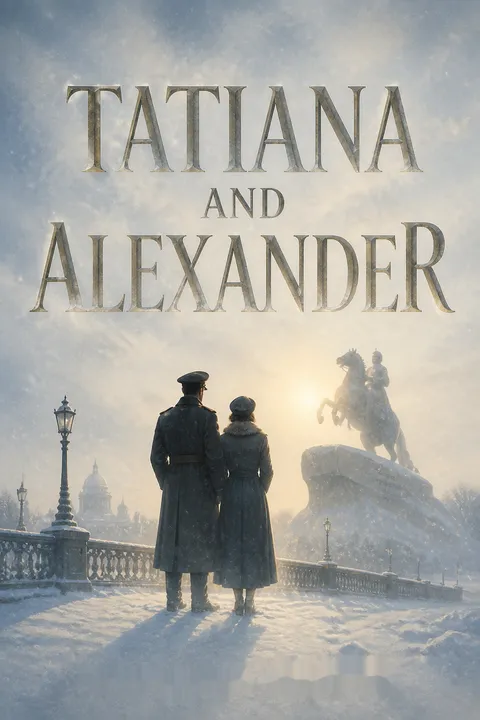
As they settle into their new life, Tatiana and Alexander reflect on the journey that has brought them to this point. The bronze horseman—a symbol of fate, endurance, and the relentless pursuit of hope—remains with them. Their story is not only one of survival, but of transformation. The scars of war and exile become part of their legacy, a testament to the power of love to endure, to heal, and to inspire. In the end, their greatest triumph is not escape, but the courage to live, love, and remember.
Analysis
A modern epic of love, endurance, and the search for homeTatiana and Alexander is a sweeping, emotionally charged novel that explores the intersection of personal and historical trauma. At its core, it is a love story—one that refuses to romanticize suffering, but instead examines the ways in which love can both wound and heal. The novel's power lies in its unflinching portrayal of the costs of ideology, war, and exile, and in its celebration of the resilience of the human spirit. Through the journeys of its protagonists, the book interrogates the meaning of home, the possibility of forgiveness, and the necessity of hope. The lessons are clear: survival is not merely endurance, but the willingness to choose life, to embrace love even when it seems impossible, and to find meaning in the act of remembering. In a world marked by displacement and uncertainty, Tatiana and Alexander offers a testament to the enduring power of connection, the courage to begin again, and the belief that, even in the face of overwhelming odds, love can prevail.
Review Summary
Tatiana and Alexander, the second book in Paullina Simons' Bronze Horseman trilogy, receives overwhelmingly positive reviews (4.29/5 stars). Readers describe it as an epic, emotionally devastating love story that follows Tatiana and Alexander's separation during WWII. The book alternates between perspectives and timelines, revealing Alexander's past while showing both characters' struggles to survive. Many reviewers praised the intense emotions, beautiful writing, and character development, though some found the war descriptions lengthy and the separation difficult to read. Most agree it's a heartbreaking, unforgettable masterpiece that equals or surpasses the first book.
People Also Read

Characters
Alexander Barrington / Belov
Alexander is the novel's central figure—a man shaped by exile, war, and the relentless demands of survival. Born in America but raised in the Soviet Union, he is forced to navigate conflicting identities and loyalties. His early idealism is eroded by the brutality of Stalinist Russia and the trauma of war. As a Red Army officer, he is both a hero and a target, his American origins making him perpetually suspect. Alexander's love for Tatiana is the anchor of his existence, driving him to acts of sacrifice and endurance. His psychological journey is marked by guilt, resilience, and the struggle to reconcile his past with the hope of a future. His transformation from idealistic youth to hardened survivor is both tragic and inspiring, embodying the novel's themes of love, loss, and redemption.
Tatiana Metanova / Barrington
Tatiana is the heart of the story—a young woman whose innocence is shattered by war, but whose spirit remains unbroken. As a nurse in Leningrad, she witnesses unimaginable suffering, yet refuses to surrender her compassion or hope. Her love for Alexander is both a refuge and a source of pain, demanding sacrifices she never imagined. In exile, she must rebuild her life, raising their son and forging new bonds while haunted by loss. Tatiana's journey is one of growth: from sheltered girl to courageous survivor, from passive victim to active agent of her own destiny. Her faith, kindness, and determination are a counterpoint to the brutality around her, making her a symbol of endurance and the possibility of healing.
Harold Barrington
Harold is Alexander's father, whose unwavering belief in communism leads the family to the Soviet Union. His idealism is both admirable and tragic, blinding him to the suffering he inflicts on his family. As the realities of Stalinist Russia become clear, Harold's faith is tested, and he is ultimately destroyed by the system he once revered. His relationship with Alexander is complex—marked by love, disappointment, and the burden of expectations. Harold's arc is a cautionary tale about the dangers of ideology divorced from compassion and the cost of dreams pursued at the expense of those we love.
Jane Barrington
Jane is Alexander's mother, a woman caught between loyalty to her husband and the needs of her son. The hardships of Soviet life erode her strength, leading to alcoholism and despair. Her love for Alexander is fierce, but she is ultimately unable to protect him or herself from the forces that destroy their family. Jane's psychological unraveling is a poignant exploration of the toll of displacement, loss, and the failure of dreams. Her story is a reminder of the quiet casualties of history.
Pasha Metanov
Pasha is Tatiana's beloved brother, whose disappearance and presumed death haunt her throughout the novel. His fate—caught between loyalty to his family and the demands of survival—mirrors Alexander's own struggles. When he reappears as a commander fighting for the enemy, his story becomes a meditation on the moral ambiguities of war and the cost of survival. Pasha's arc is tragic, marked by loss, guilt, and the longing for redemption.
Dasha Metanova
Dasha is Tatiana's older sister, whose beauty and vivacity are extinguished by the war. Her relationship with Alexander and Tatiana is fraught with jealousy, love, and betrayal. Dasha's death is a turning point for both protagonists, marking the end of innocence and the beginning of a new, harsher reality. Her memory lingers as a symbol of what was lost and what might have been.
Nikolai Ouspensky
Ouspensky is a fellow soldier and, for a time, Alexander's ally. His eventual betrayal—motivated by fear and the hope of survival—underscores the corrosive effects of totalitarianism and war. Ouspensky's arc is a study in the psychology of complicity, the ease with which ordinary people become instruments of oppression, and the difficulty of forgiveness. His relationship with Alexander is marked by camaraderie, suspicion, and ultimately, disillusionment.
Dimitri Chernenko
Dimitri is Alexander's childhood friend, whose envy and weakness lead him to betray Alexander to the authorities. His actions set in motion much of the novel's tragedy. Dimitri is a complex figure—both pitiable and despicable, a product of a system that rewards treachery and punishes loyalty. His arc is a cautionary tale about the dangers of resentment and the ease with which friendship can be corrupted by fear.
Edward Ludlow
Edward is an American doctor who befriends Tatiana in exile. His kindness and stability offer her the possibility of a new life, free from the shadows of the past. Edward's love is patient and selfless, but ultimately, he cannot compete with the memory of Alexander. His presence in the novel highlights the challenges of moving on after trauma and the difficulty of embracing happiness when haunted by loss.
Vikki Sabatella
Vikki is Tatiana's closest friend in America, a vivacious and supportive presence who helps her navigate the challenges of exile and motherhood. Vikki's own struggles with love and identity mirror Tatiana's, and their friendship becomes a source of strength for both. Vikki's loyalty, humor, and resilience provide a counterpoint to the novel's darker themes, reminding readers of the importance of connection and community.
Plot Devices
Dual Narrative and Interwoven Timelines
The novel employs a dual narrative structure, alternating between Alexander's and Tatiana's perspectives, as well as between past and present. This interweaving of timelines allows the reader to experience the characters' emotional arcs in tandem, highlighting the ways in which their lives are shaped by history, memory, and longing. Flashbacks to Alexander's childhood and the Barrington family's journey to Russia provide context for his later choices, while Tatiana's experiences in America and Europe mirror his struggles. The structure creates a sense of inevitability and suspense, as the reader is drawn toward the possibility of reunion even as the obstacles mount.
Symbolism and Motifs
The novel is rich in symbolism: the bronze horseman statue represents fate and the relentless pursuit of hope; bridges and rivers symbolize the crossings—literal and metaphorical—that the characters must make; bread and food evoke both survival and the comforts of home. The motif of exile—being caught between worlds, languages, and identities—pervades the narrative, reinforcing the characters' sense of displacement and longing. The recurring references to Perseus, the stars, and mythic journeys elevate the personal struggles of the protagonists to the level of universal human experience.
Foreshadowing and Irony
The narrative is laced with foreshadowing, as early decisions and sacrifices reverberate throughout the story. The Barringtons' idealistic move to Russia is revealed in hindsight as a tragic error, while Alexander's efforts to protect Tatiana set in motion a chain of events that nearly destroys them both. Irony abounds: the "second America" promised by communism becomes a prison, and the escape to freedom is fraught with new dangers. The novel's use of dramatic irony—where the reader knows more than the characters—heightens the emotional impact and underscores the unpredictability of fate.
Psychological Realism
The novel delves into the psychological effects of war, exile, and betrayal, portraying the characters' inner lives with nuance and empathy. The trauma of loss, the burden of memory, and the struggle to maintain hope are rendered with authenticity. The characters' choices are shaped by their histories, fears, and desires, making their journeys both specific and universal. The narrative's attention to psychological detail invites the reader to reflect on the ways in which love, faith, and endurance can sustain us in the darkest of times.
The Bronze Horseman Series


Download PDF
Download EPUB
.epub digital book format is ideal for reading ebooks on phones, tablets, and e-readers.








































