
Wichtigste Erkenntnisse
1. Geld ist eine vom freien Markt gewählte Ware
„Geld ist schlichtweg eine Ware. Es unterscheidet sich von anderen Waren dadurch, dass es hauptsächlich als Tauschmittel nachgefragt wird.“
Natürliche Marktauslese. Geld entsteht organisch durch freiwillige menschliche Interaktionen, nicht durch staatliche Verordnungen. Im Laufe der Geschichte dienten verschiedene Waren wie Salz, Vieh und Perlen als Geld, wobei sich Gold und Silber letztlich als die effektivsten Geldwaren durchsetzten – dank ihrer einzigartigen Eigenschaften.
Wesentliche Anforderungen an Geld:
- Teilbarkeit
- Haltbarkeit
- Transportfähigkeit
- Knappheit
- Austauschbarkeit
Marktentdeckungsprozess. Der freie Markt wählt durch zahllose freiwillige Tauschvorgänge ganz von selbst die marktfähigste Ware als Geld aus. Dieser Prozess wird von individuellen Präferenzen und praktischer Nützlichkeit bestimmt – nicht von zentraler Planung oder staatlicher Manipulation.
2. Staatliche Eingriffe zerstören die monetäre Stabilität
„Regierungen sind von Natur aus inflationär, da Inflation ein verlockendes Mittel ist, um Einnahmen für den Staat und seine bevorzugten Gruppen zu generieren.“
Systematische Kontrolle des Geldwesens. Regierungen dringen zunehmend in monetäre Systeme ein und verwandeln freie Marktmechanismen in kontrollierte, inflationäre Instrumente. Jede Intervention schafft neue Probleme, die weitere Eingriffe erfordern und letztlich zu wirtschaftlichen Verzerrungen führen.
Stufen staatlicher Intervention:
- Monopolisierung der Münzprägung
- Einführung von gesetzlichen Zahlungsmitteln
- Aufbau von Zentralbanksystemen
- Einführung von Fiat-Währungen
- Abschaffung des Goldstandards
Folgen der Eingriffe. Indem sie marktbasierte monetäre Beschränkungen aufheben, schaffen Regierungen Bedingungen, die systematische Vermögensumverteilung durch Inflation ermöglichen und so wirtschaftliche Transparenz sowie individuelle ökonomische Souveränität untergraben.
3. Inflation ist eine versteckte Form der Besteuerung
„Inflation bringt keinen allgemeinen gesellschaftlichen Nutzen; sie verteilt das Vermögen zugunsten der Frühankömmlinge und zulasten der Nachzügler im Rennen um Ressourcen um.“
Unsichtbare Vermögensabschöpfung. Inflation wirkt als ausgeklügeltes Besteuerungsinstrument, das stillschweigend die Kaufkraft des Geldes mindert. Im Gegensatz zu direkten Steuern trifft Inflation alle, ohne explizite gesetzliche Zustimmung, was sie für Regierungen zu einem politisch attraktiven Mittel der Einnahmenerzielung macht.
Opfer der Inflation:
- Arbeitnehmer mit festem Einkommen
- Rentner
- Sparer
- Anleihegläubiger
- Inhaber von Bargeldreserven
Wirtschaftliche Verzerrung. Durch die Verwässerung des Geldwerts erzeugt Inflation künstliche ökonomische Signale, die Investitionsentscheidungen fehlleiten und langfristige Wirtschaftsplanung erschweren.
4. Zentralbanken ermöglichen systematische Vermögensumverteilung
„Zentralbanken sind oft nominell im Besitz privater Personen oder, wie in den USA, gemeinschaftlich privater Banken; sie werden jedoch stets von staatlich ernannten Beamten geleitet und fungieren als verlängerte Arme der Regierung.“
Zentralisierte Geldkontrolle. Zentralbanken verschaffen Regierungen beispiellose Macht, monetäre Systeme zu manipulieren, und fungieren effektiv als ausgeklügelte Mechanismen zur Vermögensumverteilung, getarnt als wirtschaftliche Steuerungsinstrumente.
Instrumente der Zentralbanken:
- Monopolisierung der Geldschein-Ausgabe
- Kontrolle der Bankreserven
- Manipulation der Zinssätze
- Beliebige Ausweitung der Geldmenge
- Bereitstellung „notfallmäßiger“ Finanzhilfen
Systemische Folgen. Durch die Konzentration monetärer Macht schaffen Zentralbanken Rahmenbedingungen, in denen Regierungen Vermögen zwischen gesellschaftlichen Gruppen systematisch und ohne transparente demokratische Prozesse umverteilen können.
5. Der Goldstandard gewährleistet natürliche monetäre Disziplin
„Der klassische Goldstandard des 19. Jahrhunderts war zwar nicht perfekt und erlaubte relativ kleine Boom- und Bust-Zyklen, bot uns jedoch bei weitem die beste monetäre Ordnung, die die Welt je gekannt hat.“
Marktgetriebene monetäre Stabilität. Der Goldstandard ist ein sich selbst regulierendes Geldsystem, bei dem der Wert der Währung an eine greifbare, knappe Ware gebunden ist und willkürliche Geldmengenausweitung verhindert.
Vorteile des Goldstandards:
- Begrenzung staatlicher Geldmanipulation
- Vorhersehbare internationale Wechselkurse
- Konstante Kaufkraft
- Verhinderung von galoppierender Inflation
- Förderung fiskalischer Verantwortung
Natürliche wirtschaftliche Rückkopplung. Goldstandards schaffen inhärente Mechanismen, die wirtschaftliche Ungleichgewichte automatisch durch marktgetriebene Prozesse korrigieren, statt durch bürokratische Eingriffe.
6. Monetäre Manipulation stört die wirtschaftliche Harmonie
„Mangelnde monetäre Sicherheit stört den Handel zusätzlich. Der Lebensstandard in jedem Land sinkt dadurch.“
Unbeabsichtigte Folgen von Eingriffen. Staatliche Versuche, das Geldsystem zu kontrollieren, erzeugen zwangsläufig mehr Komplexität, Unsicherheit und wirtschaftliche Reibungen und untergraben so die natürliche Effizienz freier Markttransaktionen.
Störfaktoren:
- Künstliche Wechselkurse
- Währungskontrollen
- Fraktionelle Reservebanken
- Schwankungen von Fiat-Währungen
- Internationale monetäre Konflikte
Globale wirtschaftliche Auswirkungen. Monetäre Manipulationen zerschneiden die internationale wirtschaftliche Zusammenarbeit und ersetzen reibungslose, freiwillige Austauschprozesse durch politisch motivierte, ineffiziente Interaktionen.
7. Individuelle Freiheit erfordert monetäre Freiheit
„Wenn der Staat über Geld bestimmt, hat er bereits eine entscheidende Schaltstelle zur Kontrolle der Wirtschaft erobert und sich einen Trittstein zum vollständigen Sozialismus gesichert.“
Monetäre Souveränität. Individuelle wirtschaftliche Freiheit ist untrennbar mit der Fähigkeit verbunden, monetäre Instrumente ohne staatliche Eingriffe frei zu wählen und zu nutzen.
Monetäre Voraussetzungen für Freiheit:
- Freiwillige Wahl des Geldes
- Schutz vor willkürlicher Entwertung
- Transparente monetäre Mechanismen
- Begrenzte staatliche Geldkontrolle
- Freie Marktprozesse im Austausch
Philosophische Grundlage. Monetäre Freiheit ist ein wesentlicher Bestandteil umfassender individueller wirtschaftlicher und persönlicher Freiheiten.
8. Historische Geldsysteme offenbaren staatliche Übergriffe
„Jede Regierung hat Schritt für Schritt den freien Markt überfallen und die vollständige Kontrolle über das Geldsystem an sich gerissen.“
Schrittweise Kontrolle. Regierungen erweitern systematisch ihre Geldkontrolle durch subtile, scheinbar harmlose Eingriffe, die nach und nach die Mechanismen des freien Marktes untergraben.
Historische Interventionsphasen:
- Monopolisierung der Münzherstellung
- Einführung gesetzlicher Zahlungsmittel
- Aufbau von Zentralbanken
- Abschaffung des Goldstandards
- Einführung von Fiat-Währungen
Evolutionäres Muster. Die historische Entwicklung des Geldwesens zeigt eine beständige Tendenz der Regierungen zur Zentralisierung und Kontrolle wirtschaftlicher Systeme.
9. Wirtschaftlicher Wohlstand beruht auf soliden Geldprinzipien
„Wir haben gesehen, dass ein freier Geldmarkt, entgegen der landläufigen Meinung, nicht chaotisch wäre, sondern ein Modell von Ordnung und Effizienz darstellt.“
Marktgetriebene monetäre Stabilität. Wirtschaftlicher Wohlstand entsteht durch Geldsysteme, die individuelle Wahl, Transparenz und freiwilligen Austausch über zentrale Kontrolle stellen.
Prinzipien des Wohlstands:
- Freiwillige Geldwahl
- Begrenzte staatliche Eingriffe
- Transparente Austauschmechanismen
- Schutz individueller wirtschaftlicher Entscheidungen
- Marktgetriebene Wertfindung
Ökonomische Optimierung. Solide Geldprinzipien schaffen Rahmenbedingungen, in denen wirtschaftliche Interaktionen mit maximaler Effizienz und minimalen Reibungsverlusten stattfinden können.
10. Fiat-Währungen führen zu systemischer wirtschaftlicher Instabilität
„Jede ‚Lösung‘ ist schneller zusammengebrochen als ihre Vorgängerin.“
Künstliche Geldsysteme. Fiat-Währungen sind grundsätzlich instabile monetäre Konstrukte, die anfällig für systematische Manipulationen und letztlich für den Zusammenbruch sind.
Anzeichen der Instabilität:
- Ständige Abwertung der Währung
- Zunehmende monetäre Komplexität
- Abnehmende Effizienz des internationalen Handels
- Wachsende wirtschaftliche Unsicherheit
- Systematische Vermögensumverteilung
Zyklischer Zerfall. Fiat-Währungssysteme erzeugen unausweichlich immer gravierendere wirtschaftliche Störungen, die immer komplexere Eingriffe erfordern.
Rezensionsübersicht
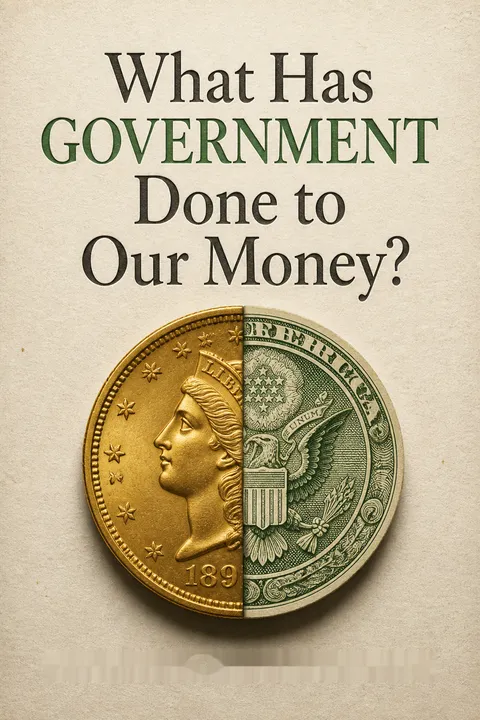
Was hat die Regierung mit unserem Geld angestellt? gilt als eine tiefgründige Kritik an staatlichen Eingriffen in Geldsysteme. Leser schätzen Rothbards klare Erläuterungen komplexer wirtschaftlicher Zusammenhänge, die die Entwicklung des Geldes nachzeichnen und Schwächen von Zentralbanken sowie Fiatwährungen aufdecken. Viele empfinden das Werk als hochaktuell, insbesondere im Hinblick auf Inflation und moderne wirtschaftliche Herausforderungen. Zwar bemängeln einige Kritiker eine gewisse Vereinfachung, doch die Mehrheit sieht darin eine unverzichtbare Einführung in die Österreichische Schule der Ökonomie und die libertäre Geldtheorie. Dieses Buch empfiehlt sich allen, die das Verhältnis zwischen Staat und Geld wirklich verstehen wollen.
FAQ
What is "What Has Government Done to Our Money?" by Murray N. Rothbard about?
- Explores the nature of money: The book examines how money originates, its role in a free society, and how it functions as a commodity chosen by the market.
- Analyzes government intervention: Rothbard details the history and consequences of government interference in monetary systems, including inflation, central banking, and legal tender laws.
- Critiques fiat money and central banking: The author argues that government control over money leads to inflation, economic instability, and loss of individual freedom.
- Advocates for free-market money: Rothbard makes the case for a return to commodity money (like gold or silver) and a free-market approach to monetary systems.
Why should I read "What Has Government Done to Our Money?" by Murray N. Rothbard?
- Understand monetary fundamentals: The book provides a clear, accessible explanation of what money is and how it develops in society.
- Gain historical perspective: Rothbard traces the evolution of money and banking, showing how government policies have shaped economic outcomes.
- Challenge mainstream economics: The book offers a critical perspective on central banking and fiat currency, questioning widely accepted economic practices.
- Empower financial literacy: Readers will be better equipped to understand current economic events, inflation, and the impact of government policy on their personal finances.
What are the key takeaways from "What Has Government Done to Our Money?" by Murray N. Rothbard?
- Money is a market commodity: Money arises naturally from voluntary exchange and is best managed by the free market, not by government decree.
- Government intervention distorts money: State control over money leads to inflation, debasement, and economic cycles that harm society.
- Central banking enables inflation: Central banks remove natural checks on money creation, allowing governments to inflate the money supply at will.
- Return to sound money: Rothbard advocates for a return to commodity-based money (like gold), private coinage, and the elimination of government monopolies over currency.
How does Murray N. Rothbard define money in "What Has Government Done to Our Money?"?
- Money as a commodity: Rothbard defines money as a commodity chosen by the market for its superior marketability and use as a medium of exchange.
- Not just a unit of account: He rejects the idea that money is merely an abstract unit or a government-created token, emphasizing its roots in real goods like gold or silver.
- Emerges from barter: Money develops through indirect exchange, solving the problems of barter such as indivisibility and lack of coincidence of wants.
- Determined by supply and demand: The value (purchasing power) of money is set by the interplay of its supply and the demand to hold it.
What is Rothbard’s explanation of how money originates and functions in a free society?
- Originates from market choice: Money arises when individuals, seeking to facilitate trade, select the most marketable commodity as a medium of exchange.
- Solves barter limitations: The use of money overcomes the inefficiencies of barter, such as indivisibility and the need for a double coincidence of wants.
- Private coinage and warehousing: In a free society, private firms can mint coins and offer money warehousing services, with competition ensuring quality and honesty.
- No need for government control: Rothbard argues that all aspects of money—its supply, form, and standards—can be managed by voluntary market processes.
How does "What Has Government Done to Our Money?" by Murray N. Rothbard critique government intervention in money?
- Monopoly over coinage: Rothbard shows how governments seized control of minting, debased coins, and separated currency names from their gold or silver content.
- Legal tender laws: He explains how legal tender laws force acceptance of inferior money, enabling inflation and harming creditors.
- Central banking and inflation: The book details how central banks remove market checks on money creation, allowing for unchecked inflation and economic cycles.
- Destruction of international trade: Government manipulation of money fragments the world market, leading to currency blocs, trade barriers, and economic conflict.
What is Rothbard’s view on inflation and its effects, as presented in "What Has Government Done to Our Money?"?
- Inflation as hidden taxation: Rothbard argues that inflation is a subtle way for governments to expropriate resources from the public without direct taxation.
- Redistributes wealth unfairly: Inflation benefits those who receive new money first (like government and banks) at the expense of late receivers (like fixed-income earners).
- Distorts economic calculation: It creates false profits, misleads businesses, and leads to malinvestment and business cycles.
- Leads to monetary breakdown: Prolonged inflation can result in hyperinflation, currency collapse, and a reversion to barter or alternative currencies.
How does "What Has Government Done to Our Money?" explain the role and dangers of central banking?
- Centralizes money creation: Central banks monopolize note issuance and coordinate the banking system, enabling widespread credit expansion.
- Removes market discipline: By acting as a lender of last resort and coordinating bank policies, central banks eliminate natural checks on inflation.
- Facilitates government spending: Central banks make it easier for governments to finance deficits through money creation rather than taxation.
- Leads to economic instability: The book links central banking to recurring cycles of boom and bust, monetary crises, and eventual currency devaluation.
What is Rothbard’s argument regarding the supply of money and the concept of “the proper amount of money”?
- No optimal money supply: Rothbard asserts that any supply of money is sufficient; increasing the supply only dilutes purchasing power without benefiting society.
- Market determines supply: The free market, through mining and demand for non-monetary uses, should set the supply of money.
- Inflation is not beneficial: Unlike other goods, more money does not increase wealth; it simply raises prices and redistributes resources.
- Government manipulation is harmful: Attempts to regulate or stabilize the money supply or price level interfere with individual preferences and market efficiency.
How does "What Has Government Done to Our Money?" address the issue of “hoarding” and the demand for money?
- Hoarding is not harmful: Rothbard explains that holding cash balances (often called hoarding) is a rational response to uncertainty and does not damage the economy.
- Adjusts purchasing power: When people increase their demand for money, prices fall, making each unit more effective; when demand falls, prices rise.
- Essential for monetary system: The existence of cash balances is necessary for money to function; without them, the monetary system would collapse.
- No need for government intervention: Changes in the demand for money are best handled by the market, not by government policies.
What historical phases of monetary breakdown does Rothbard describe in "What Has Government Done to Our Money?"?
- Classical gold standard: A period of relative stability and prosperity, with money tied to gold and international trade flourishing.
- World War I and after: Governments abandoned gold to finance war, leading to inflation, currency devaluation, and economic chaos.
- Gold exchange and fiat standards: Attempts to restore stability through gold-exchange standards and later fiat currencies led to recurring crises, inflation, and the breakdown of international monetary order.
- Modern era: The move to floating fiat currencies, central banking, and international monetary institutions has resulted in persistent inflation and economic instability.
What are the best quotes from "What Has Government Done to Our Money?" by Murray N. Rothbard, and what do they mean?
- “Money is not an abstract unit of account, divorceable from a concrete good; it is not a useless token only good for exchanging; it is not a ‘claim on society’; it is not a guarantee of a fixed price level. It is simply a commodity.”
- Rothbard emphasizes that money must be a real, market-chosen commodity, not a government-created abstraction.
- “Inflation is a powerful and subtle means for government acquisition of the public’s resources, a painless and all the more dangerous form of taxation.”
- This highlights Rothbard’s view that inflation is a hidden tax that erodes wealth and purchasing power.
- “Freedom can run a monetary system as superbly as it runs the rest of the economy. Contrary to many writers, there is nothing special about money that requires extensive governmental dictation.”
- Rothbard argues that money, like any other good, is best managed by the free market, not by government.
- “For money as for all other activities of man, ‘liberty is the mother, not the daughter, of order.’”
- This quote encapsulates the book’s central message: true order in money and society comes from liberty, not from government control.
Über den Autor
Weitere Bücher von Murray N. Rothbard
PDF herunterladen
EPUB herunterladen
.epub digital book format is ideal for reading ebooks on phones, tablets, and e-readers.








































